
REVIEW · GUIDED
Pompeii: Group Tour with an Archeologist Guide
Pompeii hits hard, even in a short tour. This 2-hour walk with an archaeologist guide turns the ruins into a story, with skip-the-line access and whisper headsets that keep a large group moving. I love how the route focuses on the western core of town, so you see the big public landmarks fast, and I love the human touch of plaster casts that make the tragedy feel real.
The main consideration is simple: it is a full walking tour and it is not suitable for people with mobility impairments, so wear solid shoes and plan for uneven ground.
Key highlights you will feel right away
- Skip-the-line entry so you spend more time in the ruins and less time waiting
- Whisper headsets for big-group clarity, even when the crowd surges
- Western Pompeii focus with major stops like the Forum, baths, and theaters
- Named houses and the Garden of the Fugitives for context beyond just stone walls
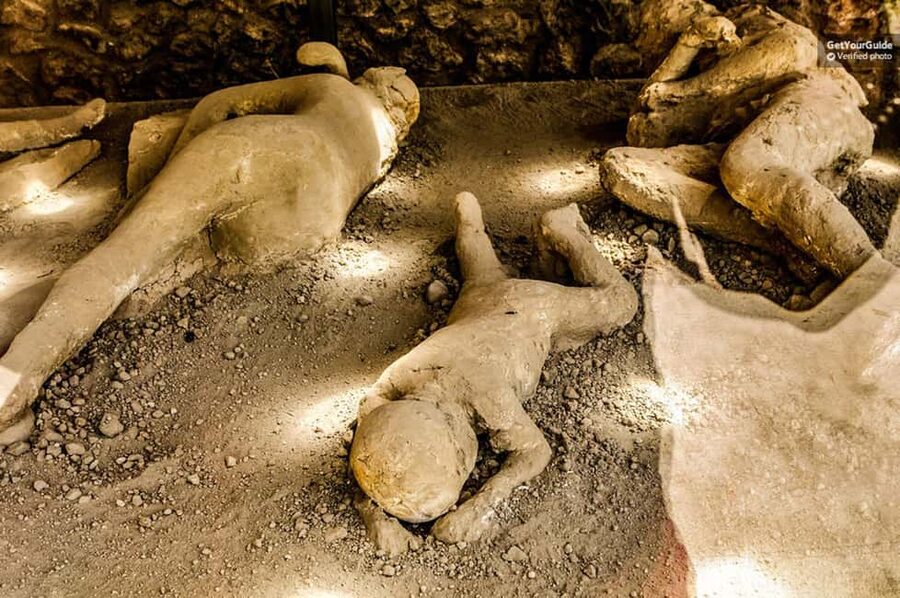
- Plaster casts that connect the site to the people who lived there
- A guide who adds real explanations, with guide names that have earned strong praise like Alfonso, Ernaldo, Lena, Giuseppe, Laura, and Antonio
Two Hours in Pompeii: fast walking, strong payoff
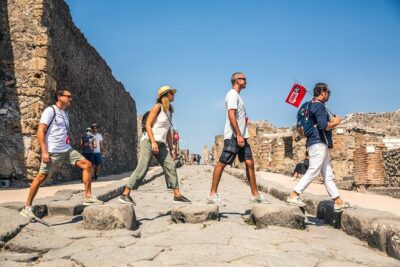
Pompeii is big, and trying to wing it can turn into a scavenger hunt. This tour is built for speed with direction. You get a 2-hour guided experience that takes you through some of the most famous parts of town, with a professional archeologist guide explaining what you are looking at as you move.
At this length, the goal is not to cover everything. The goal is to give you bearings fast. By the end, you should recognize key spaces like the Forum and understand how people moved through streets, public buildings, and neighborhoods. If you only have a half-day, or you are fitting Pompeii into a cruise day, this is the kind of structure that makes sense.
Getting Started at Tempio Travel, then straight into the site
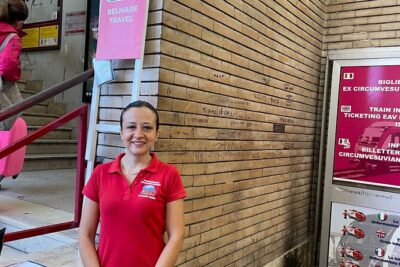
Your tour meets at Tempio Travel, at the office on the 1st floor of the Circumvesuviana train station. The start and end both return you back to that meeting point, which keeps logistics simple.
In practice, the start is about getting in quickly and staying oriented. The tour includes skip-the-line entrance tickets, and you should expect to process security at the entrance. One useful detail from past participants is how clearly the operation runs once you find the right desk. If you arrive and feel rushed, take a breath, locate the Tempio Travel office (look for the red logo), and use the stairs to reach the second floor area if needed.
Also note the small but important rules:
- Not allowed: luggage or large bags
- Bring: passport or ID card, and comfortable shoes
- Not included: food and drinks, plus no hotel pickup or drop-off
This matters because it is one less thing to manage while you are trying to enjoy the ruins.
Porta Marina and the western Pompeii route that makes sense
Right after the start, you begin at Porta Marina (Marina Gate). From there, the tour emphasizes the western part of town, where many of the most important public buildings sit.
Why does that help you? Because Pompeii is not one attraction. It is a whole city plan. A focused route lets you see how key institutions relate to each other. Instead of bouncing randomly, you get a logical sweep: entry area, public gathering spaces, entertainment, and the everyday infrastructure that made the city run.
You will also be offered named stops and major sights that people travel for. The list includes:
- Marina Gate
- Basilica
- Forum
- Baths
- Lupanar brothel
- Main street
- Theaters
- Plaster casts
- Garden of the Fugitives
- House of the Tragic Poet
- House of the Golden Cupid
- Plus other famous named houses
The trade-off of any “highlights” tour is that you will not linger like you would on a self-guided day. If you love museum pacing, plan to add more time on your own after the tour.
Marina Gate to the Basilica: reading Pompeii like a city

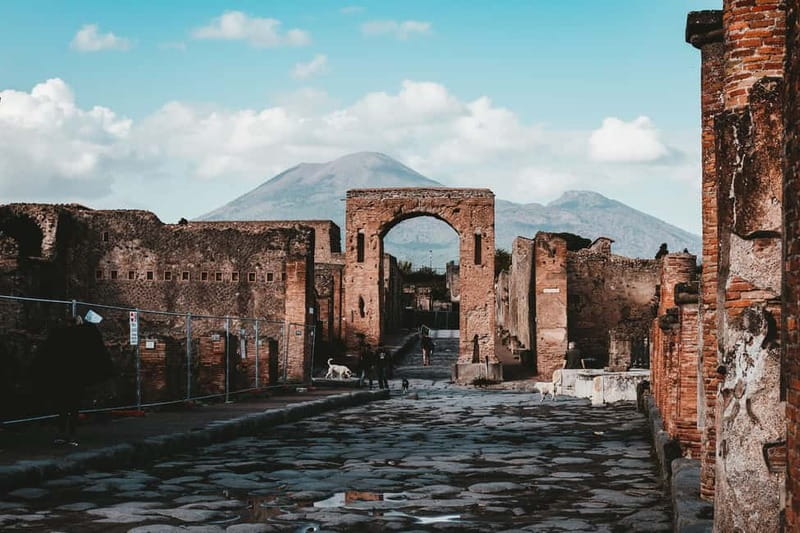
The walk from Porta Marina into the central area gives you your first big mental map. Marina Gate is an entry point you can connect to movement and traffic, so early on you start thinking in paths and flows, not just isolated monuments.
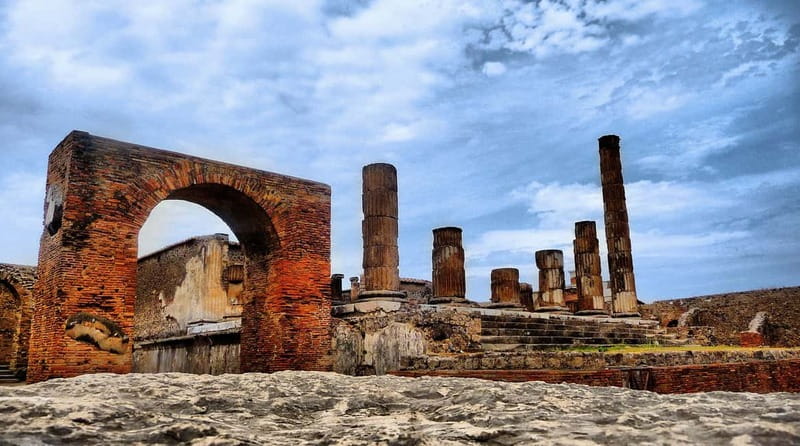
Then comes a key jump into public life with the Basilica. Even if you have no background, the guide’s job here is to point out what these buildings were for and why people would have cared. The Basilica was not just architecture. It was part of civic and legal life, and seeing it on the ground makes those concepts feel less abstract.
A quick practical tip: Pompeii is full of details and your eyes will want to zoom in and out. In a group tour, that is where the whisper headsets matter. They help you catch explanations without having to turn your head and lose the surrounding view.
The Forum and baths: where daily life becomes obvious
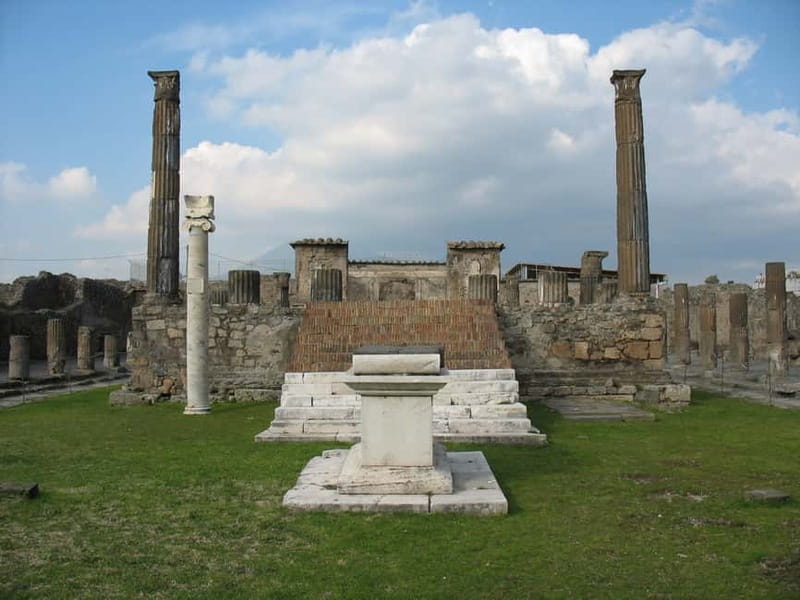
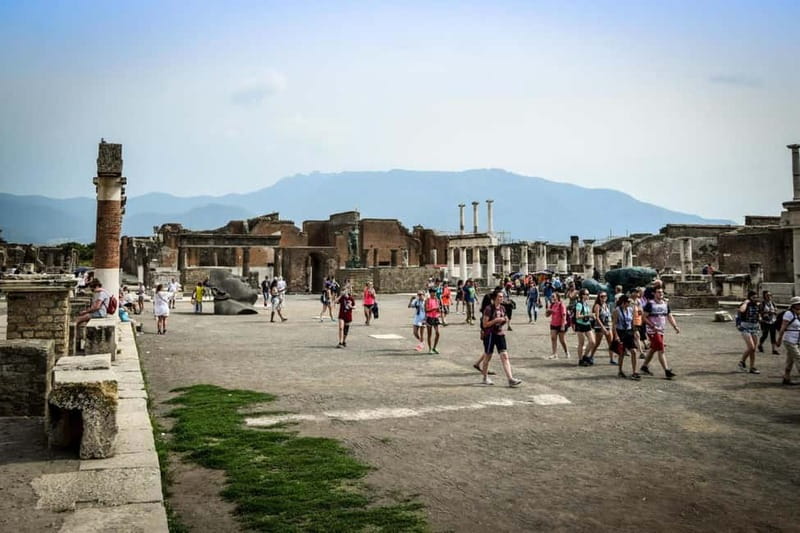
The Forum is one of those places you can understand fast once you see it in context. As the tour moves through it, you should start connecting the spaces around you to what Romans did: talk, conduct business, and gather as a community.
After the Forum, you shift into another essential part of daily routine: the baths. Baths in Pompeii are not only about hygiene. They show social patterns, architecture, and the importance of leisure in Roman life. If your last stop is a public square, baths feel like the next chapter, like switching from “town meeting” to “regular life.”
This is also where a good archaeologist guide changes everything. Several people praised guides by name, including Alfonso, Ernaldo, and Laura, for giving clear explanations and keeping a lively pace. When that happens, the city stops feeling like a set of ruins and starts feeling like lived-in spaces.
Lupanar, main street, and theaters: entertainment, commerce, and spectacle
Pompeii has a reputation for tragedy, but it is also full of human routines. The tour reflects that balance with stops like:
- Lupanar brothel
- Main street
- Theaters
The Lupanar is a charged site, and the guide’s framing is what keeps it informative instead of awkward. Expect discussion that connects what you see to how the city worked and what that kind of business meant in Roman neighborhoods.
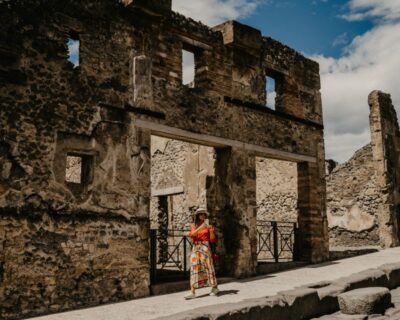
Then you step onto the main street, which is where you feel the scale of the city’s everyday movement. Watching the layout as you walk makes the ruins more readable. You can start thinking about where people would have walked for work, food, or entertainment.
Finally, the theaters give you a sense of the public entertainment culture. Even in a short tour, these stops help you answer a big question: what did Pompeii’s people do when they were not surviving or working? Theaters are a strong signal of that.
Plaster casts and the Garden of the Fugitives: the most emotional part
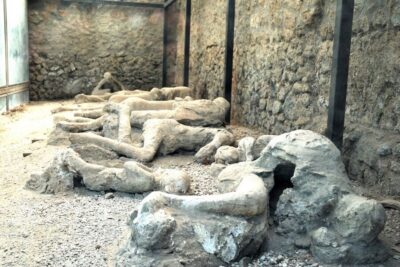
The emotional weight of Pompeii is unavoidable once you see the evidence. The tour includes plaster casts of Pompeii’s tragic citizens, which are meant to give the human scale of the event in 79 AD, when Vesuvius buried the city.
This is usually the moment where the tour goes quiet for a second. Not because you are supposed to be solemn, but because it is hard not to feel the real stakes behind the stones. Seeing casts alongside major buildings also helps you connect the tragedy to the city’s layout, instead of treating it like a separate exhibit.
From there, you also visit the Garden of the Fugitives. If you want the site to stop being a list of names and become a narrative, this is one of the best stops for that. It is specifically designed to represent what people faced in their last moments, and it adds meaning to the rest of what you saw earlier.
Named houses: House of the Tragic Poet and House of the Golden Cupid

After the public spaces and emotional stops, the tour moves into residential architecture through named houses. You will visit the House of the Tragic Poet and the House of the Golden Cupid, plus other famous houses.
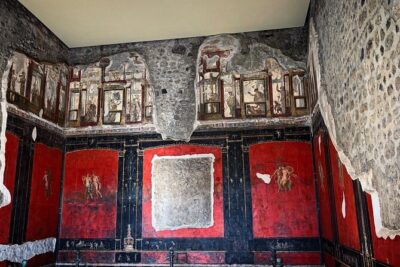
These named houses matter because they help you understand class and daily life. You are no longer just walking through “city buildings.” You are learning how people structured space in their homes and how homes communicated status through design and decoration.
One value here is the guided framing. Even if you recognize the basics, it is easy to miss the point while wandering. A guide can connect rooms and features to what they likely meant, which turns a quick glance into something you remember.
This is also where the route length works in your favor. In two hours, you get a sample of what Pompeii’s residential world looks like without losing the thread of the overall city story.
What the archaeologist guide actually adds (and why it matters)
Pompeii is famous. That is the problem. It can feel like you already know it, just because you have seen photos. The guide is what fixes that.
People repeatedly praised guides for:
- Clear explanations delivered in plain language
- Good pace that keeps the group together
- Attention to detail, like what to notice in frescoes and building layouts
- Humor and engagement, which helps in a long walk through hard surfaces and crowds
Names that came up with strong praise include Alfonso, Ernaldo, Lena, Giuseppe, Laura, and Antonio. Since guides are part of what you are buying here, that track record matters.
Also, there is a practical benefit: a guide helps you avoid the “we walked and we forgot what we saw” trap. Pompeii is too big for that. With direction, you leave with more than photos, you leave with understanding.
Group tour logistics that can make or break your comfort
This is a group tour, and it can be a pretty big group. That means you should expect some waiting at key pinch points, but the experience is designed to reduce frustration with whisper headsets.
Comfort tips based on what people reported:
- It can be very hot even in the afternoon, so plan sun protection.
- One smart idea from past participants: a paper umbrella can be bought outside the entrance stalls for around 10 Euros, and you might not find umbrellas sold inside the site.
- Bring comfortable shoes. Pompeii ruins are uneven, and your feet will notice after two hours.
If you want the tour to feel enjoyable instead of tiring, aim for a steady walking pace and keep an eye on where the group is heading.
Pairing your tour with more time in modern Pompeii
The tour ends back at the meeting point, but you are not done with the area. Your guide provides suggestions for spending the rest of the day in modern Pompeii.
One named option is the Sanctuary Dedicated to Our Lady of the Holy Rosary, which is described as only a few steps from the archaeological site. If you like a break from ancient walking, this kind of stop helps you decompress while staying close to where you already are.
This also helps with an important emotional rhythm. Pompeii can feel intense. If you walk straight into lunch and then back into more ruins, you might feel overloaded. A short modern stop gives you a reset.
Price and value: $50.11 for a guided Pompeii bearings-first plan
At around $50.11 per person for a 2-hour visit, the value depends on what you need most: time or depth.
Here is why this price can feel fair:
- You get a professional archaeologist guide, not just a basic talking pass
- Skip-the-line entrance tickets help if your day is tight
- Whisper headsets make the experience smoother in larger groups
- Free parking is included if open and available, which can reduce stress if you are driving
- The tour covers a high-impact slice of town, from the Forum area to baths, theaters, and named houses
The cost makes most sense if you:
- Only have a few hours in Pompeii
- Want a structured route to major sites
- Hate wasting time in lines
- Like learning while you walk, not after you return home
If you crave total freedom to linger in one spot for an hour, or you want to read every wall inscription at your own speed, then a guided highlights tour may feel a bit quick. But for most people, this hits a sweet spot.
Also, if your plans are in motion, note that free cancellation is available up to 24 hours in advance, and there is a reserve now, pay later option.
Should you book this Pompeii archaeologist tour?
Book it if you want Pompeii to make sense fast. This is a strong choice for first-timers and time-limited visitors because the route hits the big public landmarks, adds emotional context with plaster casts and the Garden of the Fugitives, and gives you named houses like the House of the Tragic Poet and House of the Golden Cupid.
Skip it or think twice if:
- You need a low-impact or seated experience, because it is not suitable for people with mobility impairments
- You are traveling with luggage or large bags, since those are not allowed
- You want a slow, choose-your-own-adventure day. Two hours is great for bearings, not for deep roaming
If you do book, show up with comfortable shoes, travel light, and go in with an open mind. Pompeii can be shocking, but with a good guide and headsets, it becomes more than a famous site. It becomes a real place you can picture.
FAQ
How long is the Pompeii group tour with an archaeologist guide?
The tour lasts 2 hours.
Where do I meet for the tour?
Meet at the Tempio Travel office on the 1st floor of the Circumvesuviana train station. The tour ends back at the same meeting point.
What’s included in the tour ticket?
You get a 2-hour guided tour, skip-the-line entrance tickets, whisper headsets for large groups, and free parking if open and available.
Which languages are the tours offered in?
The live tour guide speaks English and Italian.
Is the tour suitable for people with mobility impairments?
No, it is listed as not suitable for people with mobility impairments.
Are luggage or large bags allowed during the tour?
No. Luggage or large bags are not allowed.
With a Local Guide
- Pompeii: Entry Ticket with Optional Audio Guide★ 4.2 · 12,360 reviews
- Pompeii: Skip-the-Line Guided Tour with Expert Archaeologist★ 4.8 · 196 reviews
- Pompeii: Skip-the-Line Guided Archaeological Discovery Tour★ 4.2 · 13 reviews
More Tours in Pompeii Archaeological Site
- Pompeii: Archaeological Park Tour with Ticket on request★ 4.5 · 2,283 reviews
- Pompeii Ruins Private Tour with Optional Skip-the-Line Entry★ 4.9 · 732 reviews
- Pompeii: Exclusive Tour with Archaeologist and Entry Tickets★ 4.9 · 634 reviews
- Pompeii: Skip-the-Line Tickets and Tour with Archaeologist★ 4.9 · 467 reviews
- Pompeii: Skip-the-Line Guided Tour with Expert Archaeologist★ 4.8 · 196 reviews
More Tour Reviews in Pompeii Archaeological Site
- Pompeii: Entry Ticket with Optional Audio Guide★ 4.2 · 12,360 reviews
- Pompeii: Archaeological Park Tour with Ticket on request★ 4.5 · 2,283 reviews
- Pompeii Ruins Private Tour with Optional Skip-the-Line Entry★ 4.9 · 732 reviews
- Pompeii: Exclusive Tour with Archaeologist and Entry Tickets★ 4.9 · 634 reviews
- Pompeii: Skip-the-Line Tickets and Tour with Archaeologist★ 4.9 · 467 reviews
More ways into Guided.
 ★ 4.8Pompeii: Entry Ticket and Guided Tour with an ArchaeologistFrom $3519,459 reviews
 ★ 4.2Pompeii: Entry Ticket with Optional Audio GuideFrom $2612,360 reviews
 ★ 4.0Pompeii: Skip-the-Line Entrance Ticket with Audio GuideFrom $392,509 reviews
 ★ 4.6Pompeii: Skip-the-line-Ticket and Guided TourFrom $641,152 reviews
 ★ 4.9Pompeii: Guided Tour with Skip-the-Line EntryFrom $58812 reviews
 ★ 4.1Pompeii: Skip-the-Line Entry Ticket with Digital Guide AppFrom $22770 reviews
 ★ 4.5Pompeii Express Guided Tour by Train from SorrentoFrom $65770 reviews
 ★ 4.5Skip-the-Line Pompeii Guided Tour from SorrentoFrom $90722 reviews