
REVIEW · TICKETS
Pompeii: Entry Ticket and Guided Tour with an Archaeologist
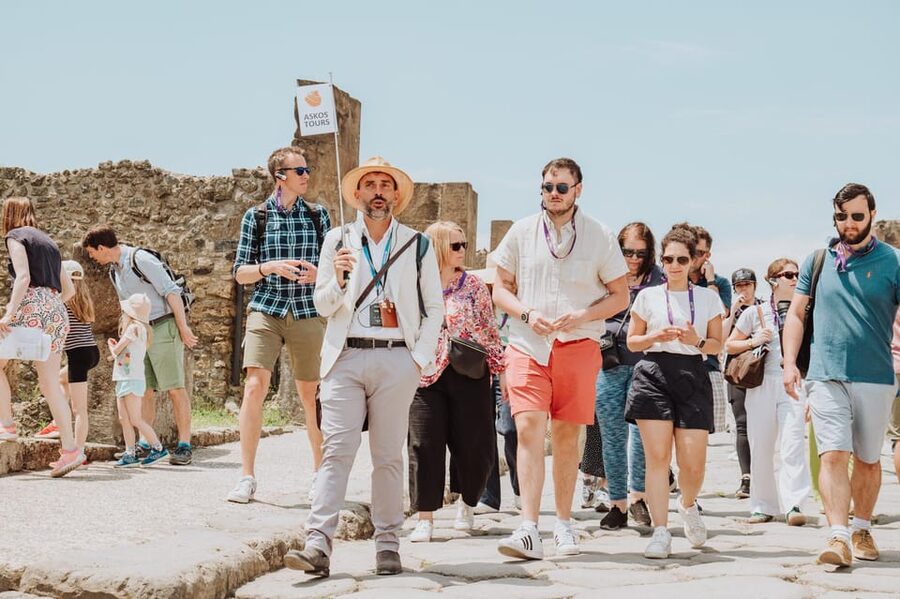
Pompeii hits different with an archaeologist on your side. You get skip-the-line entry plus a small group up to 20 people, so you spend less time stuck in crowds and more time understanding what you are seeing. One heads-up: Pompeii paths are uneven, and you will handle steps, so comfortable shoes are not optional.
This tour is built for first-timers and repeat visitors alike. It runs about 2 hours on foot, with a structured route that hits major sights like the Forum area, baths, the Lupanar, and standout homes such as the House of the Faun and House of Menander. If you get a guide like Teresa or Anna Sorrento, expect a lively storytelling style that makes the ruins feel like real places, not just stones.
You also get practical extras that matter in Pompeii. Headsets are included for groups of 10 or more, and your guide wraps up with recommendations so you can plan your next walk after the tour ends.
Key highlights worth showing up for
- Skip-the-ticket line so you start seeing Pompeii faster
- Small group up to 20 for tighter pacing and easier questions
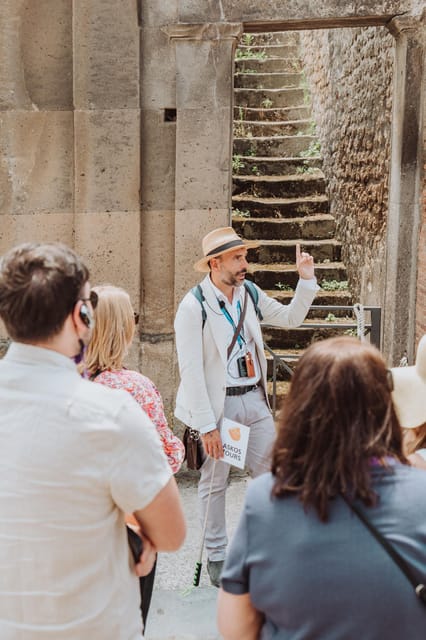
- Archaeologist-led interpretation that turns buildings into context
- Top sights in 2 hours, including the House of the Faun, Lupanar, and House of Menander
- Headsets for larger groups, helping you hear clearly in busy areas
Skip the line and start making sense of Pompeii
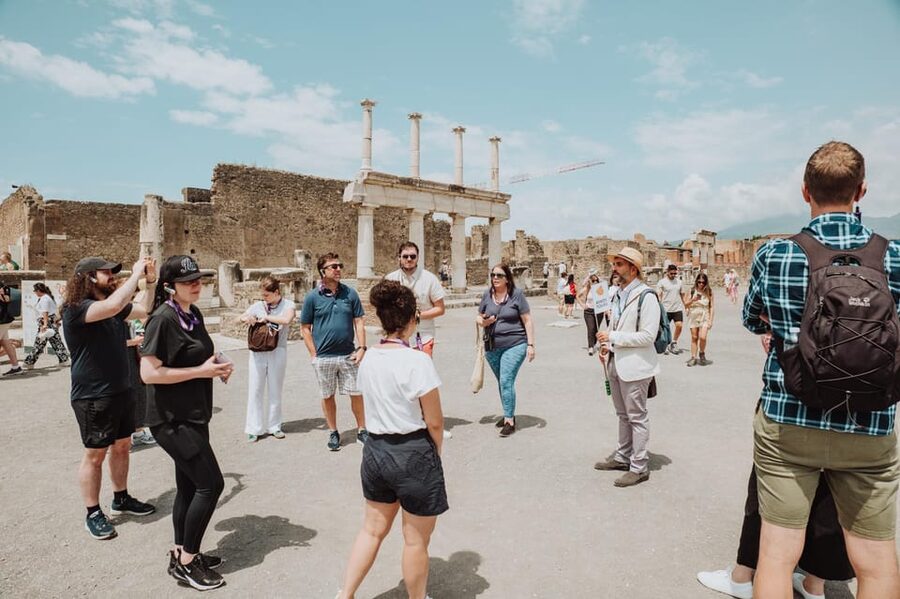
Pompeii is huge, and the crowd rhythm can turn your visit into guesswork. This tour fixes that by combining a real entrance ticket with a guided archaeologist-led route, then keeping the group small (up to 20). That size is a big deal. Smaller groups move with less stopping-and-starting, and your guide can actually read the room, adjust pace, and answer questions without shouting.
At $35 per person, the value is less about the price tag and more about time and clarity. Pompeii does not explain itself. Walk into the wrong area for 45 minutes and you can leave thinking you saw a lot but understood very little. Here, the guide’s job is to connect the dots for you, so your two hours feel purposeful rather than frantic.
Also, check your expectations about audio. Headsets are included for groups of 10 or more, and they help a lot in loud sections. One review noted ear pieces can be fiddly enough that you might have to hold them to hear well when crowds thicken. Not a deal-breaker, but it is a good reason to test your headset position early.
Your 2-hour Pompeii route, and why the pacing helps
This is a walking tour, and it is designed to be long enough to change how you see Pompeii, but short enough to keep energy up. Expect to cover a meaningful slice of the site, starting near Porta Marina and moving through major civic, religious, and residential zones. You will also hit some of the darker, more emotional pieces that Pompeii is famous for, including the Plaster Casts of victims and the Lupanar (brothel).
Time is tight in Pompeii, mostly because the site layout makes it easy to drift. Your guide keeps you on a route where stops build on each other. You start with the city’s bones, then move into places that show daily life, work, worship, and social behavior. By the end, you are not just seeing famous buildings. You are gaining a map in your head.
A practical note from the tour experience vibe: you will walk quite a bit. Bring water, even if you think you will be fine. One review said being out past tour time without it left them dehydrated and hungry. For a two-hour visit, that still translates to: start hydrated, and plan a snack afterward.
Porta Marina and the civic core, where the city shows itself first
The tour kicks off with a pass by Porta Marina. Even if you do not spend a long time standing there, it works as a mental starting point. Gates and entry points help you understand flow, trade, and movement. Pompeii is not one museum room. It is a city with patterns, and the gate-to-center connection is part of that.
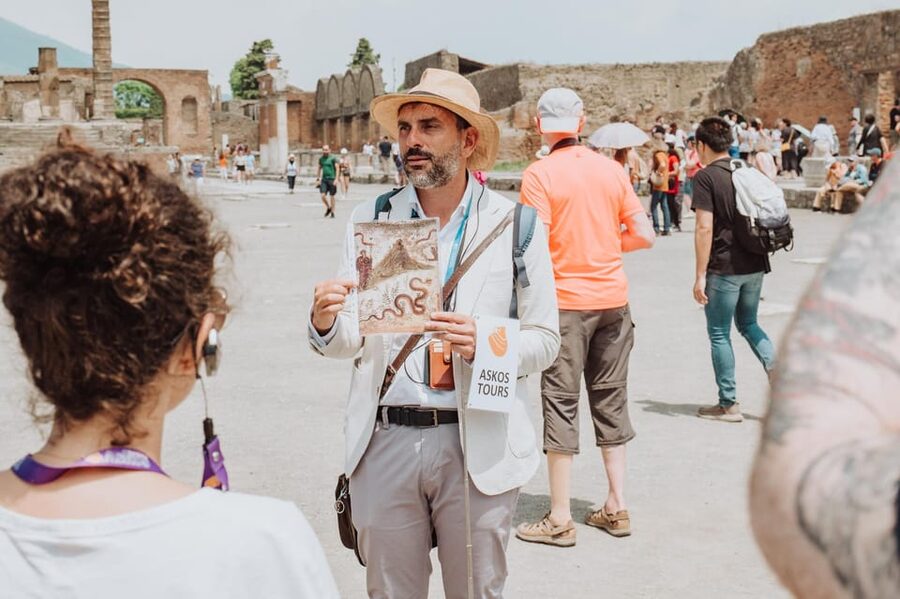
Next comes the Foro Civile di Pompei (civic forum area). This is where guides can do their best work: taking you from “this is a big open space” to “this is where power, business, announcements, and community life happened.” Your guide’s narration matters most here. Without it, forums can blend together into generic ruins. With it, you start noticing the layout logic: how people would have approached spaces, how the city’s public life would have felt, and how the surrounding buildings supported that rhythm.
You will also pass by or see major nearby landmarks like the Basilica and the Forum zone. Those stops help you build a sequence instead of a checklist.
Temples and markets: Apollo, Jupiter, and what people did all day
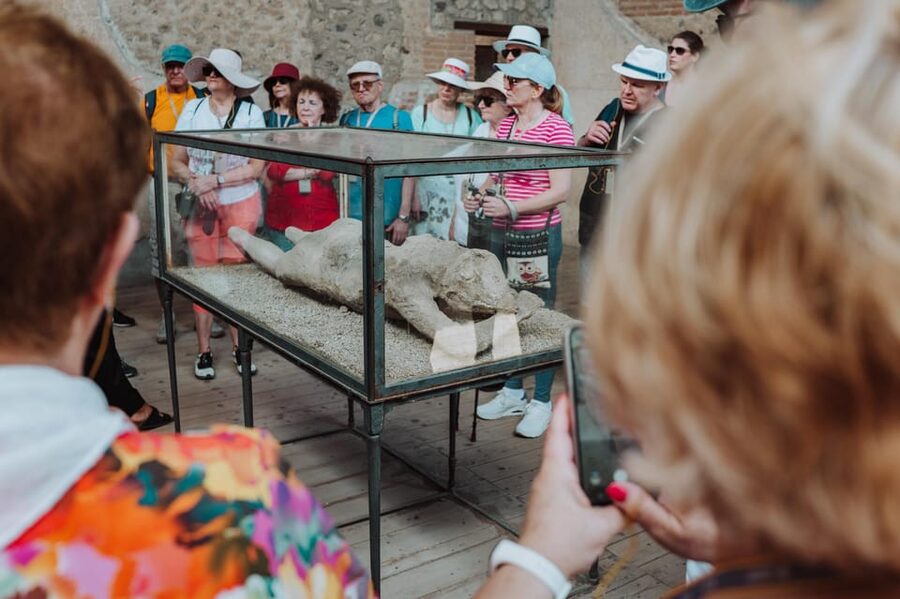
Pompeii’s religious sites are not separate from daily life. They sit in the same world as commerce and street activity. Your route includes Temple of Apollo (a pass-by stop) and also highlights Temple of Jupiter as one of the key landmarks you will discover.
For me, the temple element is one of the best ways to make the city feel real. When your guide points out the role of religious spaces, you stop treating them like scenic photo stops. You start treating them like community anchors.
Then you move into commerce and food culture territory with stops like the Macellum of Pompeii and the Termopolium. A market and a snack counter are the kind of places where life is loud, fast, and practical. That is exactly why they are valuable on a guided walk. Pompeii is stone, but your guide can connect those spaces to what people would have done there, like buying, eating, and passing news.
If you like seeing how everyday life worked, these stops are where you will feel the biggest payoff for the time spent walking.
House of the Faun and House of Menander: how private life reads in stone
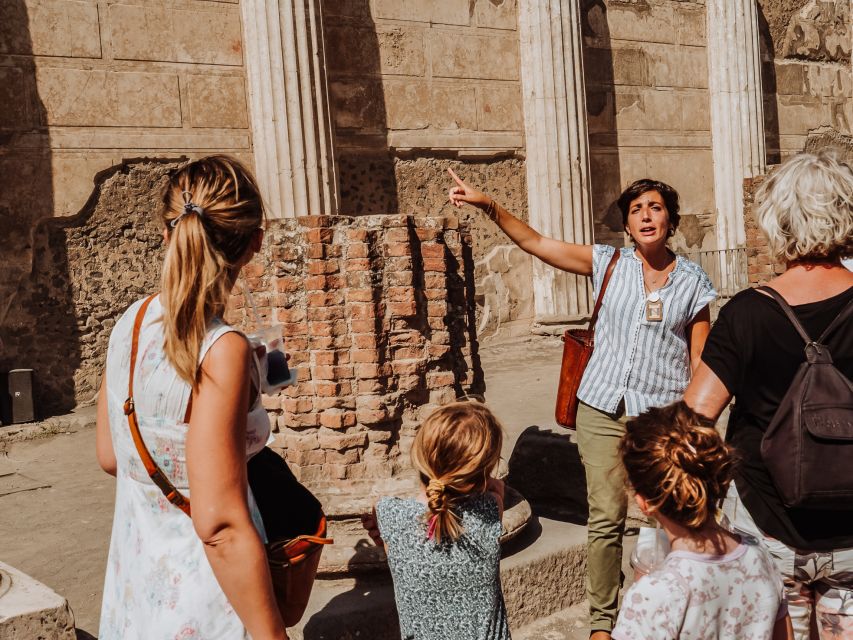
The residential stops are where Pompeii often becomes personal. You get time at the House of the Faun, and you also visit the House of Menander. These are described as celebrated homes in the tour overview, and the fact that you are guided through them is key.
Homes like these can be overwhelming if you do not know what to look for. With an archaeologist guide, you start noticing patterns: what rooms were used for public-facing moments versus private life, how the home’s layout supports social status, and what decoration suggests about owners and taste.
The House of the Faun is specifically called out as celebrated, and it is often the kind of place where people start making mental comparisons to other Roman sites they have seen. If you are the type who likes architecture and layout, you will get more out of this guided house segment than from simply snapping photos from the doorway.
The House of Menander keeps that theme going, giving you another “window” into household life. It is not just expensive stone. It is a story about wealth, art, and routine.
The Lupanar and the plaster casts, not for the faint-hearted
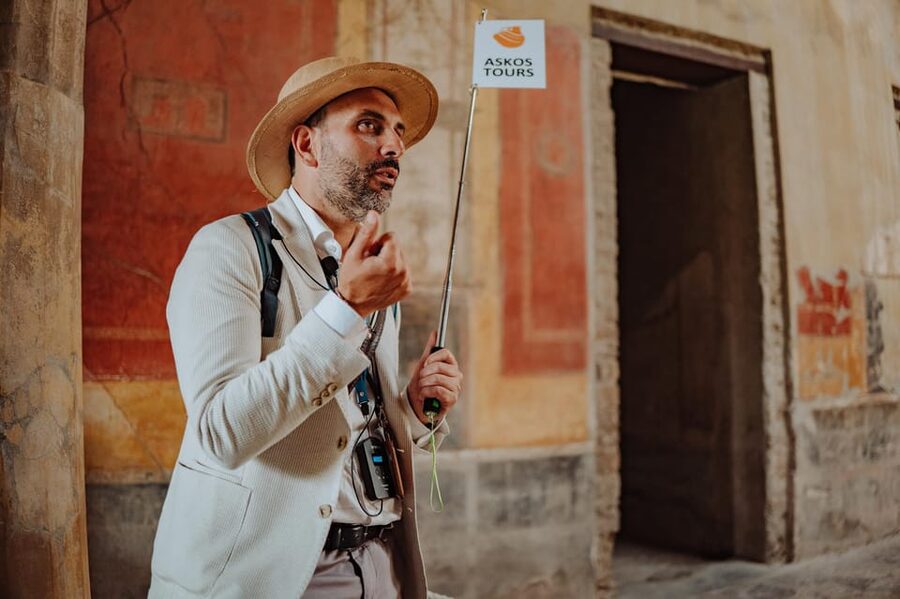
Two stops in Pompeii can hit harder than you expect: the Lupanar and the Plaster Casts of victims.
The Lupanar is the brothel area. The tour includes guided time there, which is exactly what you want if you are uncomfortable guessing what you are looking at. A good guide explains what those spaces were, how they functioned socially, and why Pompeii preserves them with such clarity. This is also where you may find the tour’s tone shifts from sightseeing to something closer to history with consequences.
Then there are the plaster casts of victims, described as poignant in the tour outline. This is the emotional center of many Pompeii visits. It is not just “sad bodies.” It is a reminder of what a sudden disaster does to an ordinary day. If you are traveling with children, note the tour does not allow unaccompanied minors, and Pompeii’s content can be adult in nature due to the Lupanar stop.
Go into this part of the tour ready to feel something, not just to learn something.
Forum Baths and public life, where routine becomes visible
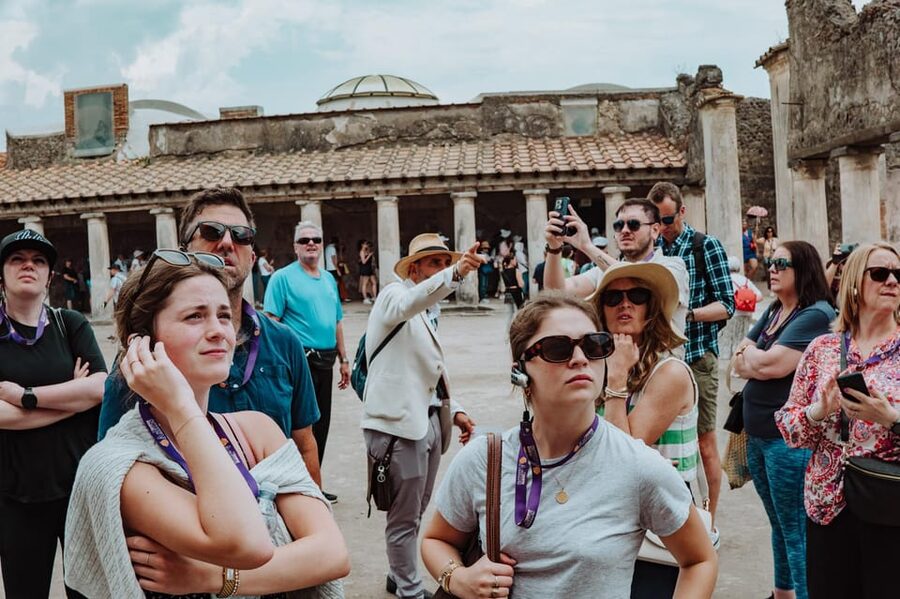
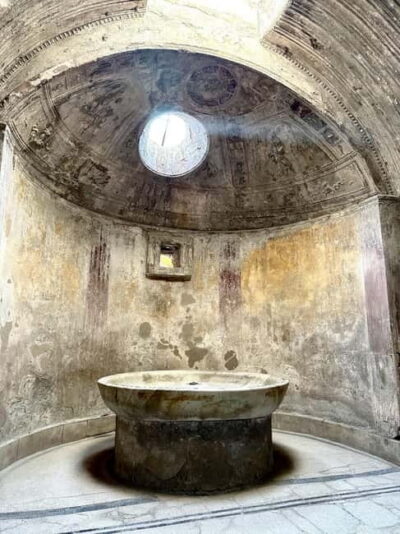
Your route also includes Forum Baths for guided time. Bathing in Roman cities was social, practical, and routine, which makes it a smart stop to include in a short tour. Baths can seem like “just ruins” if you do not get context. With a guide, you start seeing it as a place where people met, exercised, relaxed, and talked.
This stop also helps you round out the tour’s city portrait. You have civic life in the Forum area, worship near the temples, commerce at markets and snack counters, private life in the homes, and then public routine in the baths. In two hours, that is a solid structure.
And since the walking is already substantial, placing baths here keeps the tour from feeling like only grand sights. It adds texture.
Practical tips so your 2 hours stay enjoyable
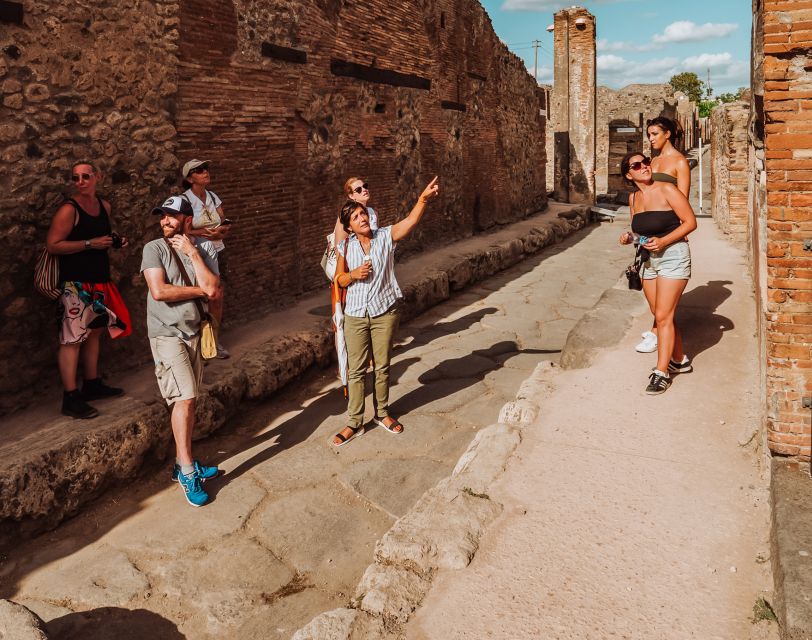
Pompeii is famous, but it is also physically demanding. Here is what I would plan around based on the tour experience details you are given.
- Wear good, comfortable shoes. The paths are uneven, and you may climb a few steps during the route.
- Bring water. Even though the guided portion is two hours, you will likely want a few minutes after the tour ends. One experience report mentioned dehydration and hunger when they got lost after the tour, which is a reminder to plan for the moments after.
- Expect crowds. Headsets are provided for groups of 10 or more, but busy sections still require you to position your headset properly.
- Use the guide to get your bearings. Pompeii is easy to wander in the wrong direction if you do it solo right after a long walk. Your guide’s route helps you build a mental map fast.
Also, you cannot bring mobility scooters, and the tour is not suitable for wheelchair users. If anyone in your group has mobility issues, you will want to think hard about whether a walking tour is realistic for them.
Who should book this Pompeii archaeologist tour?
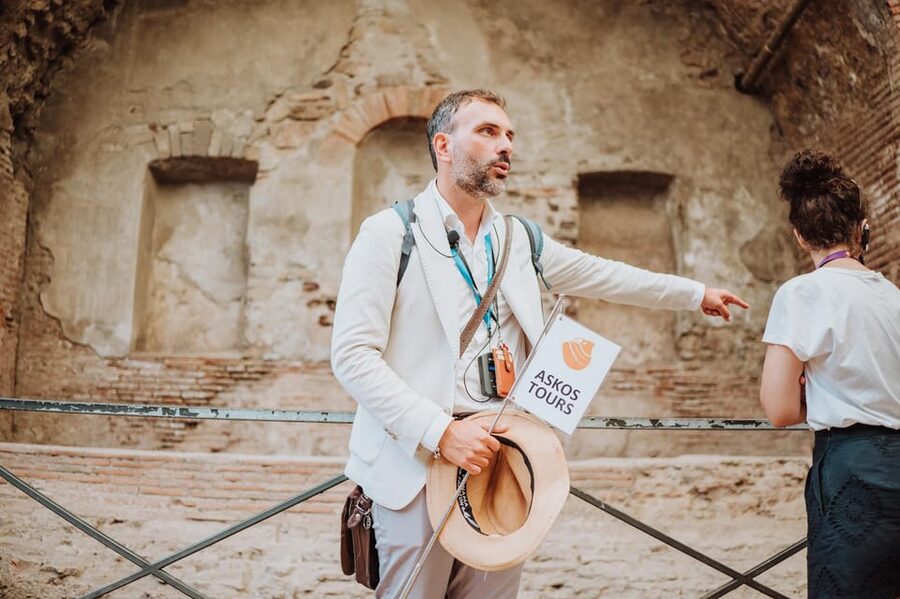
This is a strong pick if you fall into one of these categories:
- You are a first-timer and want a route that makes Pompeii make sense fast.
- You want to see famous houses like the House of the Faun and House of Menander but also understand what you are looking at.
- You like learning from professionals. Many guides listed in the tour experience include archaeologists and PhD-level archaeologists in the feedback, and the style is often story-driven and funny, not dry.
- You want skip-the-line access and a structure that keeps you from wasting time.
Recent guide names that show up frequently in the experience feedback include Teresa, Anna Sorrento, Alfredo, Raffaella, Giancarlo, Paolo, Mario, Mina, Jolanda, and Sergio. You can see a pattern: guides tend to be energetic, answer questions, and share practical suggestions for what to do after the tour.
If you are the type who enjoys wandering streets without context, you might also love Pompeii on your own. But you will likely feel the value of this tour most if you want interpretation, not just scenery.
Should you book? My bottom line
Book this tour if you want Pompeii to feel understandable in real time. The combination of small group pacing, skip-the-line entry, and an archaeologist guide is built for people who hate feeling lost among ruins. At $35 for a two-hour guided visit, it is one of the better ways to pay for clarity rather than just access.
Skip it, or at least reconsider, if you cannot do uneven ground and steps. Also think twice if the Lupanar and plaster casts are likely to be too much for your group, especially if you have young kids.
If you do book, plan for shoes, water, and energy after the tour. Then use your guide’s closing recommendations to steer your next walk. That is when Pompeii stops being a destination and starts feeling like a place you can navigate.
FAQ
How long is the Pompeii entry ticket and guided tour?
The tour duration is 2 hours.
What is included in the price?
Your package includes Pompei Express entrance ticket, an archaeologist guide, a small group tour, and headsets for groups of 10 people or more.
Does this tour skip the ticket line?
Yes, it includes skip-the-line access.
How big is the group?
It is a small group tour, with up to 20 people.
Where does the tour meet?
The meeting point may vary depending on the option booked.
What languages are available for the live guide?
The live tour guide is available in English, Spanish, French, Italian, Portuguese, and German.
Is this tour wheelchair friendly?
No. It is not suitable for people with mobility impairments and wheelchair users.
Are mobility scooters allowed?
No, mobility scooters are not allowed.
Are unaccompanied minors allowed?
No, unaccompanied minors are not allowed.
Are pets allowed?
Only dogs that do not exceed 10 kg in weight and a maximum height of 40 cm are permitted. The dog must be on a leash and held in the arms inside buildings, and you must collect their excrement.
What is the cancellation policy?
You can cancel up to 24 hours in advance for a full refund.
Choose the Right Entry
- Pompeii: Skip-the-Line Entrance Ticket with Audio Guide★ 4.0 · 2,509 reviews
- Pompeii: Skip-the-line-Ticket and Guided Tour★ 4.6 · 1,152 reviews
- Pompeii: Skip-the-Line Entry Ticket with Digital Guide App★ 4.1 · 770 reviews
- Pompeii: Afternoon to Sunset Guided Tour with Ticket★ 4.9 · 484 reviews
- Pompeii: Skip-the-Line Ticket with Audio Guide and Map★ 4.0 · 117 reviews
More Tours in Pompei Campania
- Pompeii: Small Group Tour with an Archaeologist★ 4.8 · 12,264 reviews
- Pompeii: Skip-the-line-Ticket and Guided Tour★ 4.6 · 1,152 reviews
- Pompeii: Small-Group Tour of Pompeii and Herculaneum★ 4.8 · 867 reviews
- Pompeii: Guided Tour with Skip-the-Line Entry★ 4.9 · 812 reviews
- Pompeii 3hours Villa of Mysteries tour with an Archaeologist★ 4.8 · 486 reviews
More Tour Reviews in Pompei Campania
- Pompeii: Small Group Tour with an Archaeologist★ 4.8 · 12,264 reviews
- Pompeii: Skip-the-Line Entrance Ticket with Audio Guide★ 4.0 · 2,509 reviews
- Naples: Pompeii and Mt. Vesuvius with Lunch and Wine Tasting★ 4.5 · 2,454 reviews
- Pompeii: Skip-the-line-Ticket and Guided Tour★ 4.6 · 1,152 reviews
- Pompeii: Small-Group Tour of Pompeii and Herculaneum★ 4.8 · 867 reviews
More ways into Tickets.
 ★ 4.2Pompeii: Entry Ticket with Optional Audio GuideFrom $2612,360 reviews
 ★ 4.0Pompeii: Skip-the-Line Entrance Ticket with Audio GuideFrom $392,509 reviews
 ★ 4.5Pompeii: Archaeological Park Tour with Ticket on requestFrom $312,283 reviews
 ★ 4.6Pompeii: Skip-the-line-Ticket and Guided TourFrom $641,152 reviews
 ★ 4.1Pompeii: Skip-the-Line Entry Ticket with Digital Guide AppFrom $22770 reviews
 ★ 5.0Pompeii Ticket + Tour with Optional Tasting Experience at PompeiiFrom $35663 reviews
 ★ 4.9Pompeii: Exclusive Tour with Archaeologist and Entry TicketsFrom $50634 reviews
 ★ 4.1Ercolano: Herculaneum Entry Ticket with Optional Audio GuideFrom $21581 reviews