

REVIEW · AUDIO TOURS
Pompeii: Skip-the-Line Entrance Ticket with Audio Guide
Pompeii hits hard, fast. With skip-the-line entry and an included audio guide, you can get into the UNESCO ruins quickly and then learn as you wander through Roman amphitheater, theater spaces, and everyday life details on your own schedule. The only real downside is that a headset is not included, so bring your own headphones and plan for a pick-up stop that can feel confusing if you arrive right at the start.
This is a solid format if you like going at your speed. Pompeii is big, hot, and not laid out like a simple walking loop, so having a map is more than a nice extra, it’s how you avoid backtracking. Just remember luggage or large bags are not allowed, so travel light and keep your day focused on ruins, not logistics.
Key highlights worth clocking

- Skip-the-line admission by exchanging your voucher at the provider office near the Circumvesuviana station.
- Audio guide plus map so you can control pacing while still getting historical context.
- Top Pompeii stop list built in, including Roman amphitheater, small theater, public gym, and houses or banquet areas.
- Frescoes and casts of people and pets give you visual anchors for daily life, not just ruins.
- Real-world timing advice from people who came early, when heat and crowds are easier to handle.
Skip-the-Line Entry and Where You Exchange Your Voucher in Pompei

The main win here is what you get when everyone else is stuck waiting. Instead of spending your morning in the slow-moving ticket line, you use this as an access ticket tied to an exchange at the official meeting point.
You exchange your voucher at the activity provider’s office on the first floor of the Circumvesuviana train station (Via Villa dei Misteri, 1, 80045 Pompei NA, Italia). That location matters because it’s close to where you’ll naturally be before you walk into the Pompeii entrance area. One practical theme you’ll notice from people’s experience: once they found the office, everything felt straightforward.
There can still be some queuing when you reach the attraction, even with skip-the-line access. That’s not a failure of the ticket, it’s simply Pompeii’s popularity and crowd flow at entry points. So I treat the skip-the-line benefit as “avoid the worst line,” not “walk in like it’s a quiet museum.”
If you’re trying to reduce friction, arrive with a little breathing room. Several people noted it can take a moment to locate the exchange point, especially if you come in close to your start time. If you’re early, you might still have to wait for the moment you’re allowed to enter, but at least you’re not standing at the ticket window all day.
If you drive, there’s a helpful note: if it’s open and space is available, there’s a chance for free parking at Osteria Nonna Cherubina, Via Andolfi 46, 80045 Pompei. It’s not guaranteed, but it’s worth knowing before you start circling.
Audio Guide and Map Setup, Including What to Bring
This ticket includes an audio guide and a map. Those two pieces work together. Pompeii isn’t a small site where you can simply follow one obvious path. It’s large, and it can feel like you’re walking through a city grid that doesn’t always make sense on the first pass. The map helps you choose a route instead of wandering until you accidentally end up miles away from what you wanted to see.
Now the key practical detail: a headset is not included. The instructions say to bring headphones, and that matches what makes sense. You will need to plug in or connect your own listening setup to hear the commentary as you go.
One tip that came up: people sometimes receive a phone-style audio guide. If that’s the format you get, having the right type of headphone cable helps. If you have an aux cable or a headphone setup that works well with phone jacks, bring it. It’s a small thing, but it can save you from the annoying moment of “why won’t this audio connect?”
Also, be ready for the sun. Pompeii can have very limited shade, and people strongly recommended bringing water and using sunscreen. That’s not just general travel advice. If you’re relying on the audio guide for navigation, you might stop more often than you would in a rush, so plan hydration like it’s part of the tour.
What about the language? The audio guide is available in French, German, Italian, English, and Spanish. The host or greeter languages include the same set. If you’re picky about language accuracy, aim to choose your language at pickup so you’re not trying to make it work once you’re already inside.
Getting Your Bearings at the Roman Amphitheater and Small Theater

When people talk about Pompeii, they often start with the big visual hits. The audio guide route built into this experience includes the Roman amphitheater and the small theater, which is smart for first-timers.
Why start with the amphitheater?
It’s one of the easiest places to understand the scale of the city. You see how built spaces supported public life, and you get a sense for how crowded events must have felt. With the audio guide, you don’t just look at seating. You get historical framing that helps you picture what “going out” meant in Roman times.
What about the small theater?
The small theater is more intimate in feel, and it’s a good contrast to the amphitheater. You can spot how different venues served different kinds of performances and gatherings. The audio guide commentary helps you move beyond the visible shells and toward what activity was likely happening here.
My practical advice for these two stops: give yourself time to look slowly, then re-check the map and audio guide notes before you move on. People often rush because the site is so compelling. But Pompeii rewards pause moments, especially when you realize you’re looking at rooms that once had real people moving through them.
If you want a navigation shortcut, these venues also help you anchor your route. They’re obvious landmarks, which matters in a place that can otherwise feel like a maze.
The Public Gym and Everyday Pompeii Life You Can Actually Follow
The audio guide and map combo is particularly useful when you shift from major public spaces into the rhythm of daily life. This experience explicitly points you toward the public gym and areas connected to how Romans lived and gathered for banquets.
Here’s the key idea: Pompeii isn’t only about spectacular buildings. It’s about ordinary routines frozen in place. The public gym is a great example. It’s linked to training, exercise, and social time. In Roman cities, these spaces were part of status and community life, not just physical activity.
Then comes the daily-life part. The audio guide takes you through places where Romans lived and held social events, including banquet spaces. That’s where Pompeii stops feeling like “old stones” and starts feeling like a place with human patterns. Even if you don’t catch every detail, the audio commentary helps you interpret what you’re seeing: where someone might have gathered, how rooms might have been used, and how social life worked in a city that was more interconnected than most people expect.
Two practical notes based on real visitor experience:
1) Pompeii is huge, and it takes longer than you think to move between zones. So choose a route and stick to it, using the map to prevent drifting.
2) If you skip the audio, you lose a lot of the meaning. Several people said they didn’t use the audio guide as much because it was hard to follow, or because they already knew what they wanted to see. If you’re a first-timer, I’d plan on using the audio at least for the major transitions, amphitheater to residential life to fresco sections.
Frescoes, “Frozen” Color, and the Casts That Make You Stop Walking
Pompeii’s frescoes are one of the main reasons you come. The experience highlights centuries-old frescoes, and this is where the audio guide can do real work for you, because you are seeing art made for living people, not for museum crowds.
Frescoes in Pompeii can feel almost unreal at first. They’re detailed, bright, and oddly intimate. When you pair that with the audio guide’s historical context, you start noticing patterns: the kinds of scenes that were popular, the choices people made for rooms they inhabited, and how art reflected identity and social status.
Then there are the casts of citizens and their pets. Those are included as a major emotional anchor in the route described for this experience. This is where you usually stop walking more often than you planned. It’s not just a dramatic moment, it’s a reminder that the site is about real lives, not only architecture.
Practical tip: don’t treat these as quick photo stops. Give yourself time to absorb. Pompeii is one of those places where your brain needs a few minutes to shift from sightseeing mode to understanding mode. The audio guide helps that shift, but you still control the pace.
If you’re traveling with people who want different tempos, this setup helps you compromise. You can linger at frescoes while others may move on faster, then regroup using the map.
Timing Tips for Heat, Crowds, and a Smooth One-Day Plan
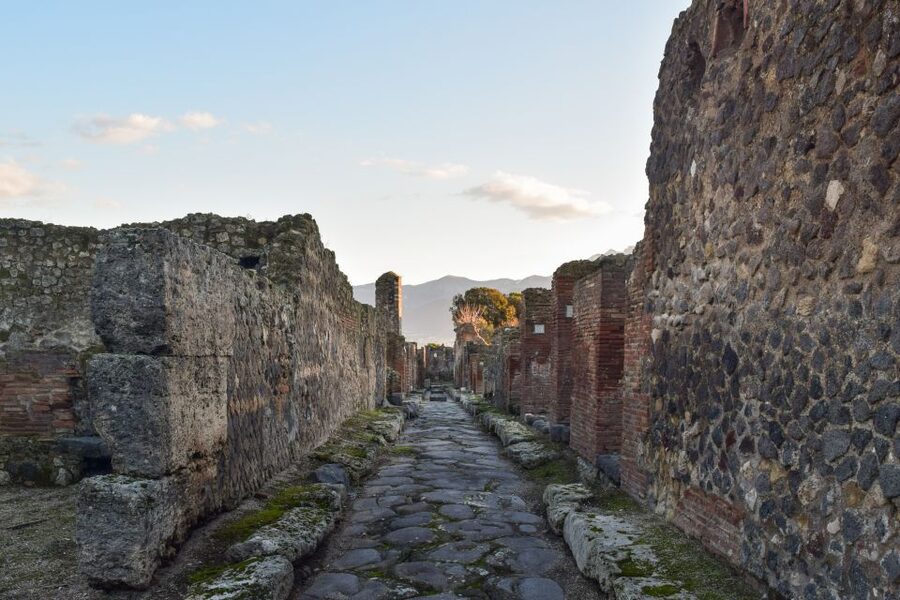
This experience is listed as a one-day visit with starting times based on availability. That means you should plan your day around the start slot you choose, then build a realistic exploration timeline.
Here’s what I’d do if I had only one day:
- Go early if you can, ideally around the time many visitors target to reduce heat.
- Expect some crowd movement at entry even with skip-the-line access.
- Plan breaks for water, especially in open areas with limited shade.
One consistent theme from visitor notes: Pompeii heat can sneak up on you, even when you think you’re being careful. Wear sunscreen. Bring water. Don’t let your day become a frantic sprint between stops because the sun and crowd pressure will steal your attention from what you came to see.
Because it’s self-paced, the audio guide is your timing tool. Use it to decide how long to linger in each zone. If you find yourself moving too slowly, you can skip one of the smaller audio segments and still get the value from the major stops like theaters, gym, frescoes, and daily-life areas.
Also, take the rules seriously. Luggage or large bags are not allowed. If you show up with a large backpack, you might end up spending your time solving a problem instead of exploring.
Price and Value: What You Pay For at $39.97

The price is $39.97 per person, and I look at value here as three items bundled together:
- skip-the-line access,
- an audio guide,
- a map.
If you would have paid to enter Pompeii anyway, the question becomes whether you’ll actually use the audio guide. If you’re the kind of traveler who wants more than a basic explanation, you’ll get your money’s worth. You’ll hear background on history and Roman daily life as you walk between key stops.
If you hate wearing devices, have no headphones, or plan to race through without listening, then the audio piece may feel wasted. In that case, you might prefer a different ticket style. But if you’re even moderately curious, Pompeii is the kind of place where audio adds meaning fast.
One more value angle: self-guided flexibility.
In reviews, people appreciated not being locked into a coach schedule. That matters at Pompeii because your ideal route depends on what you care about most, frescoes vs theaters vs everyday life details. With this ticket you can shape your day instead of accepting a one-size path.
Some people also mentioned paying an additional fee for an extra guided tour on the spot, describing it as very worthwhile and lasting a bit over two hours. That suggests there’s room to upgrade if you want more structure. Just keep expectations realistic: the core value here is the skip-the-line entry plus audio and map.
Who Should Buy This Pompeii Skip-the-Line Audio Ticket
This is a good match if:
- you want to avoid the worst ticket line pressure at the entrance,
- you prefer exploring at your own pace,
- you like historical context but don’t necessarily want a full guided march all day,
- you can bring headphones and travel light.
It’s also smart for language comfort. Audio is offered in multiple languages, and the greeter language set is the same, which reduces the chance you feel lost at pickup.
You might not love it if:
- you strongly prefer a live guide for everything and dislike listening to devices,
- you don’t plan to use the audio guide much,
- you show up without headphones and then have to figure out options inside.
If you’re traveling with mixed preferences, this setup usually works. You can all move together but use the audio to guide your own attention, stopping when something grabs you.
Should You Book This Pompeii Skip-the-Line Audio Ticket?
Yes, if your goal is a high-value Pompeii day without wasting time on ticket lines. The combo of skip-the-line entry, audio guide, and a map is exactly what you need for a site this large. Add water and sunscreen, bring your own headphones, and use the audio for the big transitions so Pompeii feels understandable, not just impressive.
Book it especially if this is your first Pompeii visit and you want a way to learn while still keeping your own rhythm. If you already know you want a fully guided experience every minute, you may want to compare with a tour format that includes a live guide throughout. But for most people, this is a practical, flexible way to see the essentials and then linger where your attention goes.
FAQ
What is included with the Pompeii skip-the-line entrance ticket?
It includes skip-the-line entry, an audio guide, and a map.
Do I need to bring headphones for the audio guide?
Yes. A headset is not included, and you’re instructed to bring headphones.
Where do I exchange my voucher before entering Pompeii?
You exchange your voucher at the activity provider’s office on the first floor of the Circumvesuviana train station, Via Villa dei Misteri, 1, 80045 Pompei NA, Italia.
How long is the Pompeii experience?
This activity is listed as 1 day. You’ll need to check availability to see starting times.
Which languages are available for the audio guide?
The audio guide is available in French, German, Italian, English, and Spanish.
Are luggage or large bags allowed?
No. Luggage or large bags are not allowed.
What should I bring with me?
Bring a passport or ID card, a driver’s license, and headphones.
Is there any free cancellation?
Yes. Free cancellation is available up to 24 hours in advance for a full refund.
Are there any age or entry-cost notes for kids and young adults?
Children aged 0 to 17 years go for free. People aged 18 to 24 years from the European community with an identification document pay €2.
Is free parking available near the meeting point?
If the option is open and space is available, there may be free parking at Osteria Nonna Cherubina, Via Andolfi 46, 80045 Pompei.
With a Local Guide
- Pompeii: Entry Ticket and Guided Tour with an Archaeologist★ 4.8 · 19,459 reviews
- Pompeii: Skip-the-line-Ticket and Guided Tour★ 4.6 · 1,152 reviews
- Pompeii: Guided Tour with Skip-the-Line Entry★ 4.9 · 812 reviews
- Pompeii: Skip-the-Line Entry Ticket with Digital Guide App★ 4.1 · 770 reviews
- Pompeii: Afternoon to Sunset Guided Tour with Ticket★ 4.9 · 484 reviews
Choose the Right Entry
- Pompeii: Entry Ticket and Guided Tour with an Archaeologist★ 4.8 · 19,459 reviews
- Pompeii: Skip-the-line-Ticket and Guided Tour★ 4.6 · 1,152 reviews
- Pompeii: Skip-the-Line Entry Ticket with Digital Guide App★ 4.1 · 770 reviews
- Pompeii: Afternoon to Sunset Guided Tour with Ticket★ 4.9 · 484 reviews
- Pompeii: Skip-the-Line Ticket with Audio Guide and Map★ 4.0 · 117 reviews
More Tour Reviews in Pompei Campania
- Pompeii: Entry Ticket and Guided Tour with an Archaeologist★ 4.8 · 19,459 reviews
- Pompeii: Small Group Tour with an Archaeologist★ 4.8 · 12,264 reviews
- Naples: Pompeii and Mt. Vesuvius with Lunch and Wine Tasting★ 4.5 · 2,454 reviews
- Pompeii: Skip-the-line-Ticket and Guided Tour★ 4.6 · 1,152 reviews
- Pompeii: Small-Group Tour of Pompeii and Herculaneum★ 4.8 · 867 reviews
More ways into Audio Tours.
 ★ 4.2Pompeii: Entry Ticket with Optional Audio GuideFrom $2612,360 reviews
 ★ 4.1Ercolano: Herculaneum Entry Ticket with Optional Audio GuideFrom $21581 reviews
 ★ 4.0Ercolano: Herculaneum Skip-the-Line Ticket & Audio GuideFrom $35275 reviews
 ★ 4.0Pompeii: Skip-the-Line Ticket with Audio Guide and MapFrom $44117 reviews
 ★ 3.8Herculaneum Archaeological Park smart Audio TourFrom $470 reviews
 ★ 4.0From Naples: Vesuvius & Pompeii with Transfer & Audio GuideFrom $10858 reviews
★ 4.0Pompeii: Skip-the-Line Ticket with Audio Guide and MapFrom $4414 reviews
★ 4.0From Naples: Vesuvius & Pompeii with Transfer & Audio GuideFrom $10858 reviews
★ 4.0Pompeii: Skip-the-Line Ticket with Audio Guide and MapFrom $4414 reviews
 ★ 3.4Pompei: Audio guide of the archeological siteFrom $513 reviews
Other useful routes from here