
REVIEW · TICKETS
Pompeii: Exclusive Tour with Archaeologist and Entry Tickets
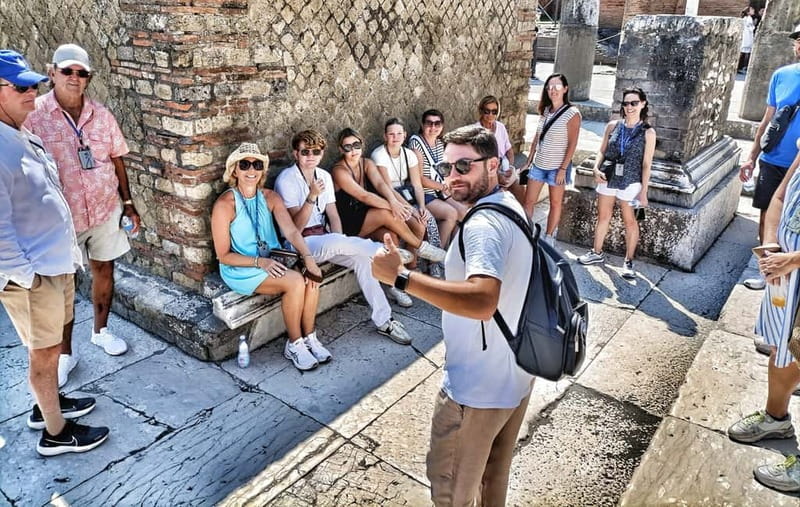
Pompeii changes when someone explains it. This Pompeii VIP tour gets you inside quickly and then helps the ruins click into place with a licensed archaeologist guiding the walk. You step into Roman streets near Mt. Vesuvius, where daily life and sudden disaster from 79 AD sit side by side.
I really like two things here. First, the skip-the-line entry means you spend your time in Pompeii, not in queues. Second, the headset listening setup helps you keep up with the story as you move, which matters in a large site where it’s easy to get lost in your own silence.
The main drawback is the 2-hour pace. It’s a focused highlights route, so if you want long, slow wandering in every corner, you’ll still have that itch to come back later.
Key things I’d clock before you go

- Skip-the-line access with entry tickets included, so you start sightseeing fast
- Licensed archaeologist guide sharing site experience and excavation context
- Macellum plaster casts that bring the eruption victims into human focus
- A tight route covering Forum, temples, baths, major houses, and the Theatre District
- Headsets so you hear your guide clearly during the walk
- Small group or private slot, depending on your pace and comfort level
Why this archaeologist-led Pompeii route feels different
Pompeii can look like a lot of stone until you know what you’re looking at. What I like about this tour is that it treats the ruins like a place where people actually lived, argued, shopped, ate, and worshipped, long before the ash froze everything.
You also get a practical structure. Instead of trying to self-navigate a huge archaeological park, you follow a curated path with commentary that explains what you’re seeing and why it mattered. That makes the site feel less overwhelming and more readable.
And the timing is realistic. At 2 hours, you can cover a lot of the “big story” without burning the entire day. It’s a great way to start your Pompeii visit with context, even if you plan to explore more on your own after.
Finding the meeting point at Porta Marina (Pompei Scavi station area)
Meeting is outside Pompeii’s Porta Marina entrance. This is right in front of the train station Pompei Scavi – Villa dei Misteri (Circumvesuviana), so it’s straightforward if you’re arriving by train.
Your guide holds a sign with the tour name, Pompei VIP. The best move is to arrive a few minutes early, not because of a complicated process, but because the entrance area is busy and you want to catch your group before you start second-guessing directions.
Porta Marina Superiore start: the Roman gate you can still feel
Your walk begins at Porta Marina Superiore, an original Roman gate that still stands at the city’s edge. Starting here matters. It sets a physical sense of arrival and boundary, like you’re crossing from the outside world into the Pompeii people knew.
From the moment you enter, your guide ties what you’re looking at to daily life. Expect commentary that connects the Forum, markets, and neighborhoods to how Pompeians lived right up to 79 AD.
Practical note: this tour is not suitable for wheelchair users or people with mobility impairments. Since it’s a walking-focused route, you’ll want comfortable shoes and a good bit of stamina.
Basilica and Foro Civile: where Roman civic life becomes clear
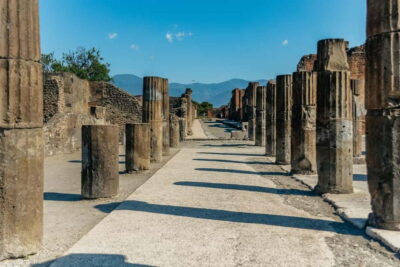
One of the core stops is the Roman Forum area, including the Basilica and the Foro Civile di Pompei. This is the beating heart of civic life: politics, law, public meetings, and the everyday performance of power.
With an archaeologist-led explanation, it stops being “cool ruins” and starts feeling like a functioning public space. You’ll learn how the Forum worked, what the Basilica did, and why these buildings sat at the center of social and political action.
I also like the way the route is managed. The goal is to keep you moving, without turning the whole visit into a sprint. In a place like Pompeii, that pacing is what helps the details land.
Temples of Jupiter and Apollo: religion you can walk through
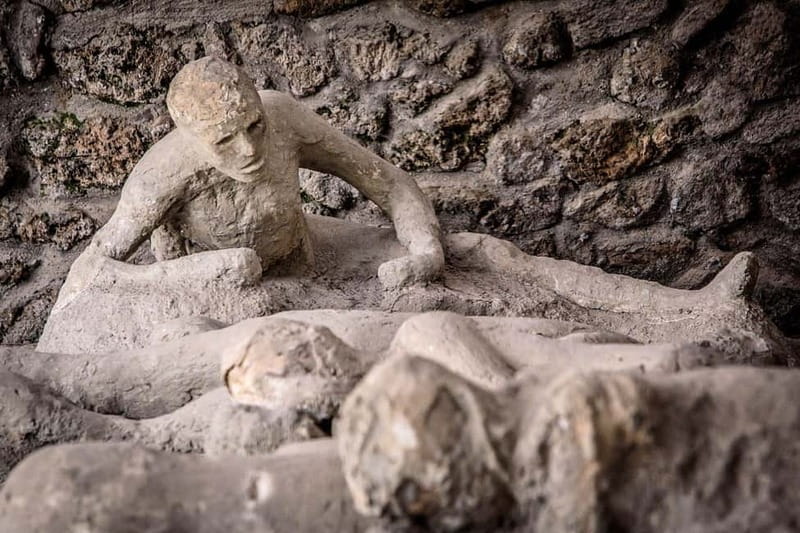
Next come temple spaces dedicated to Jupiter, Venus, and Apollo, with specific stops including the Temple of Jupiter and the Temple of Apollo. Pompeii’s religious buildings are more than set dressing.
They help you understand that worship wasn’t a separate activity. It was part of the city’s rhythm, tied to civic pride and public identity. Your guide’s job here is to connect the architecture and purpose so you’re not just looking at columns and podiums.
A plus is the comparison effect. When you’ve seen the Forum first, the temples start to make emotional sense. You can feel the shift from civic business to ritual life, and then back again as you move onward.
Forum Baths and daily routine: the city’s in-between spaces
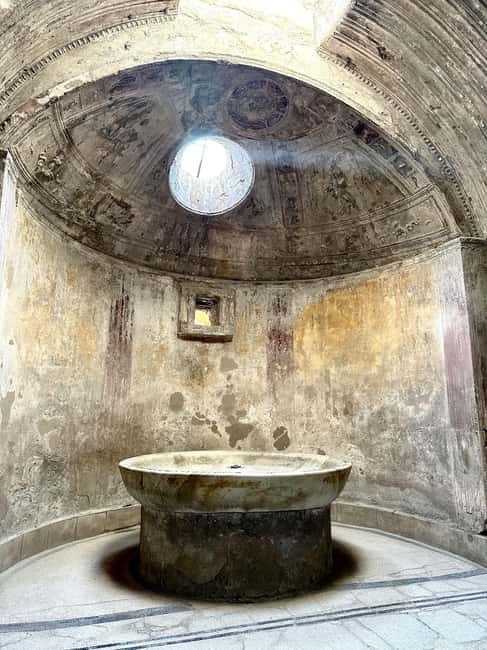
Then you hit the Forum Baths. These are great for breaking up the heavier civic and religious areas, because bath culture was a social hub as much as a hygiene system.
Even with limited time, this stop gives you a feel for routine. Pompeii isn’t only dramatic destruction scenes. It’s also the in-between moments, where people gathered and talked.
From the way guides explain these spaces, you’ll also get better at reading the layout. You start noticing how Pompeian spaces supported movement, conversation, and everyday habits.
Macellum market plus plaster casts: where the story turns human
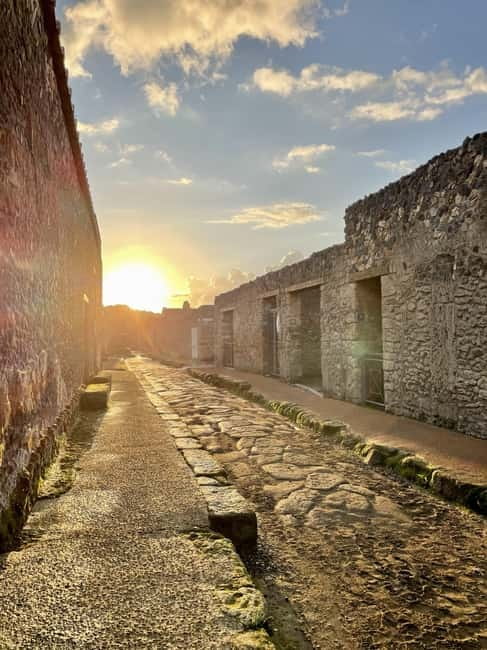
The Macellum is where this tour earns its emotional impact. The market area becomes a stage for archaeology to do its most important work: turning the eruption into real people, not just dates.
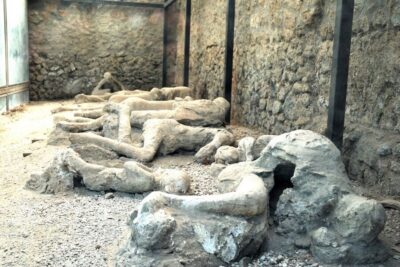
You’ll see haunting plaster casts of victims. These are some of the most direct reminders that Pompeii was full of individuals with families and futures. It’s not the kind of stop you rush, and the headset audio helps you stay connected to the explanation without craning your neck or losing the group.
Your guide also helps you place the Macellum in the broader city story. Markets were for trade and food, but also for daily contact and news. Once you understand that, the casts hit harder, because you can picture what was happening right before the ash fell.
Houses of the Vettii and the Faun: frescoes, mosaics, and “how people wanted to live”

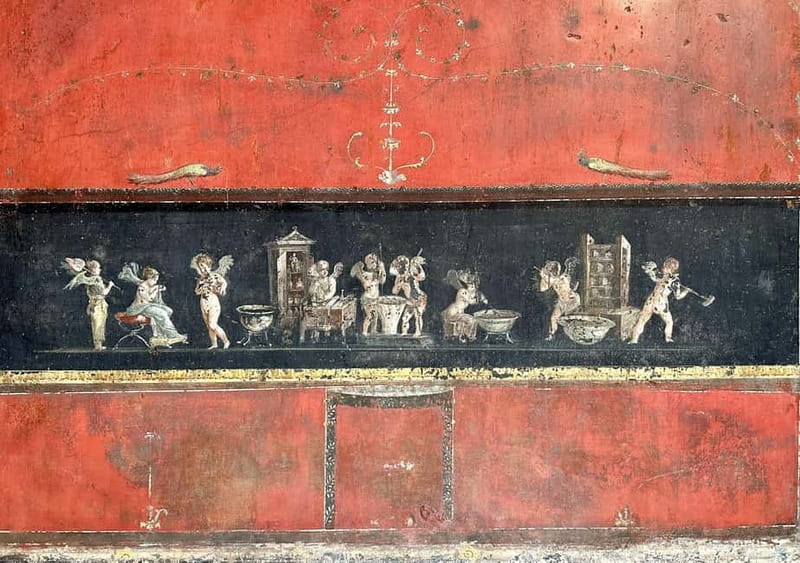
The itinerary includes major private houses, including the House of the Vettii and the House of the Faun, plus the House of the Tragic Poet. This is where you see the artistry of Pompeii in a close, walk-by format.
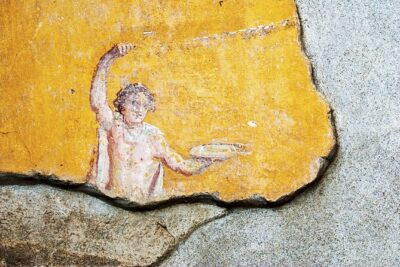
The big value here is interpretation. Your guide doesn’t just point out decorations. They connect frescoes and mosaics to status, taste, and the social world inside those homes. That turns art into a clue, not just a pretty surface.
Two things I’d expect you to notice when a good guide leads this segment:
- How domestic space reflects public identity. People decorated for visitors, and they also used art to shape how they were seen.
- How different houses reveal different “levels” of daily life, from entertainment spaces to quieter corners.
If you’re into visual details, this part can keep you busy and impressed. But it’s also easy to miss in self-guided visits because rooms and floors blur together. With a guide, you get the key “what to look for” moments without losing time.
Lupanare and the Theatre District: contrasts you shouldn’t skip
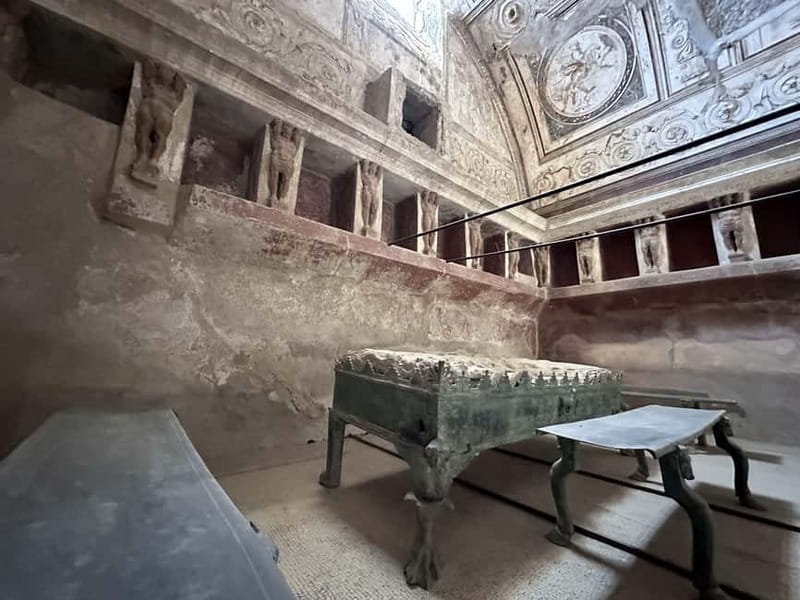
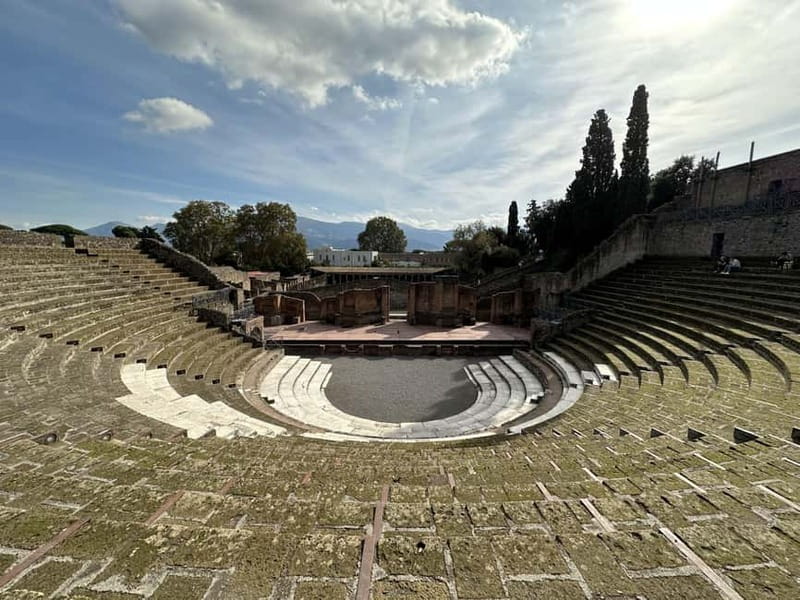
The tour includes the Lupanare and stops in the Theatre District, including the Large Theatre. This is where Pompeii shows its full range, from formal entertainment to the darker edges of city life.
The Lupanare is a tough but important stop. It helps show that Pompeii wasn’t only beautiful or noble. It had the same messy human mix you’d find in any city, including spaces tied to exploitation and desire.
Then the Theatre District shifts you toward leisure and public performance. Seeing the Large Theatre in context gives you a sense of how Roman entertainment shaped community life. When you’ve just heard about a grim private space, the theatre feels even more vivid, because you can compare how people used Pompeii socially.
Your guide’s job in this stretch is to keep you from getting lost in shock or fascination. You should come away with perspective, not just reaction.
How the 2 hours actually plays out (and what you’ll want after)
This is a highlights route, not an all-day deep study. With an archaeologist leading the walk, you’ll cover major anchors like Porta Marina, the Forum complex, temples, baths, the Macellum, key houses, and the Theatre District.
What this timing does well is set you up to explore more later if you want. A lot of people prefer this approach because it gives them a mental map. After the tour, you’re not staring at ruins and hoping you guess correctly.
Also, the guide will point out must-sees after the visit with the group. That kind of quick direction is practical when you’re deciding what to return for, because Pompeii is so large that “good intentions” can turn into wandering.
Price and value: is $50 worth it?
At $50 per person for a 2-hour tour, the value depends on what you’re optimizing for: time, clarity, or both.
Here’s what you get that helps justify the cost:
- Skip-the-line entry plus a Pompeii admission Express ticket
- A licensed archaeologist and guide who explains what you’re seeing
- Headsets that make explanations easier to follow while you walk
- A small group setup, with an option for private booking
- Entry tickets included, so you are not doubling costs at the gate
If you were paying separately for entry and trying to do it on your own, you could lose time to lines and miss context that makes the site meaningful. The guide component is the main “multiplier,” because Pompeii becomes more than scenery once someone helps you read it.
The price might feel high if you prefer fully self-guided travel. But if you want Pompeii to make sense quickly, $50 can be a smart buy.
Who this tour suits best (and who should reconsider)
This tour is a strong fit if you:
- Want a fast, high-impact Pompeii introduction
- Prefer a structured route over indecisive wandering
- Like learning from professionals who can answer real questions on site
- Are visiting with teens or mixed-age groups and want something that stays understandable
It’s less ideal if you:
- Need wheelchair-friendly access, since it’s not suitable for wheelchair users
- Want a slow, no-rush exploration of every single block and room
Also bring realistic expectations. Pompeii can be emotionally intense, especially around the Macellum casts. Having a guide helps keep the tone balanced and the explanations grounded.
Before you go: IDs on tickets, what to bring, and what not to bring
Pompeii has a ticketing system update where your ticket must include your full name and surname, plus ages for participants. You’ll need to send the participant list through the booking messaging system, and you should bring ID or passport (a photo is fine) for both adults and children.
What to bring:
- Passport or ID card
- Comfortable shoes
- Water
What’s not allowed:
- Swimwear
- Alcohol and drugs
- Electric wheelchairs
- Pets
This is one of those tours where being prepared makes the experience smoother, because you don’t want to spend your precious 2 hours sorting out paperwork.
Should you book Pompeii VIP?
Yes, if you want Pompeii to feel legible and not just impressive. This tour is built around speed with meaning: skip-the-line entry, a licensed archaeologist, headsets, and a route that hits the Forum, temples, baths, Macellum casts, major houses, and the Theatre District.
I’d especially recommend it if you’re short on time or you’ve never visited Pompeii before. The big advantage is that you won’t just see the site, you’ll understand how the spaces connect, and you’ll know what to look for if you keep exploring afterward.
If you’re the type who wants to linger for hours in one neighborhood, or you need accessibility support beyond what this tour can handle, you might want a different format. But for most people, this is a very solid way to get the best stories into your head before the ruins start to blur.
FAQ
How long is the Pompeii VIP tour?
The duration is 2 hours.
What does the tour include?
It includes skip-the-line entry tickets, Pompeii admission Express ticket, a licensed guide (archaeologist), small group experience or private slot, and headsets for better listening. The guide also shares what is a must to see after the visit.
Where do we meet the guide?
Meet outside Pompeii’s Porta Marina entrance, in front of the train station Pompei Scavi – Villa dei Misteri (Circumvesuviana). The guide holds a sign with the name Pompei VIP.
Is transportation or food included?
No. Food and drinks are not included, and transportation is not included.
What languages are available for the live guide?
The tour is offered in English, Italian, French, and Spanish.
What do I need to bring?
Bring a passport or ID card, comfortable shoes, and water. Children also need a passport or ID card.
Are there items that are not allowed during the visit?
Yes. Swimwear, alcohol and drugs, electric wheelchairs, and pets are not allowed.
Who should not book this tour?
It’s not suitable for people with mobility impairments and wheelchair users.
Choose the Right Entry
- Pompeii: Entry Ticket with Optional Audio Guide★ 4.2 · 12,360 reviews
- Pompeii: Archaeological Park Tour with Ticket on request★ 4.5 · 2,283 reviews
- Pompeii: Skip-the-Line Tickets and Tour with Archaeologist★ 4.9 · 467 reviews
- Pompei: Pompeii and Vesuvius Combo with Transfer and Tickets★ 3.9 · 130 reviews
- Pompeii: Skip-the-Line Ticket and Virtual Museum★ 4.5 · 66 reviews
More Tours in Pompeii Archaeological Site
- Pompeii: Archaeological Park Tour with Ticket on request★ 4.5 · 2,283 reviews
- Pompeii Ruins Private Tour with Optional Skip-the-Line Entry★ 4.9 · 732 reviews
- Pompeii: Group Tour with an Archeologist Guide★ 4.4 · 490 reviews
- Pompeii: Skip-the-Line Tickets and Tour with Archaeologist★ 4.9 · 467 reviews
- Pompeii: Skip-the-Line Guided Tour with Expert Archaeologist★ 4.8 · 196 reviews
More Tour Reviews in Pompeii Archaeological Site
- Pompeii: Entry Ticket with Optional Audio Guide★ 4.2 · 12,360 reviews
- Pompeii: Archaeological Park Tour with Ticket on request★ 4.5 · 2,283 reviews
- Pompeii Ruins Private Tour with Optional Skip-the-Line Entry★ 4.9 · 732 reviews
- Pompeii: Group Tour with an Archeologist Guide★ 4.4 · 490 reviews
- Pompeii: Skip-the-Line Tickets and Tour with Archaeologist★ 4.9 · 467 reviews
More ways into Tickets.
 ★ 4.8Pompeii: Entry Ticket and Guided Tour with an ArchaeologistFrom $3519,459 reviews
 ★ 4.2Pompeii: Entry Ticket with Optional Audio GuideFrom $2612,360 reviews
 ★ 4.0Pompeii: Skip-the-Line Entrance Ticket with Audio GuideFrom $392,509 reviews
 ★ 4.5Pompeii: Archaeological Park Tour with Ticket on requestFrom $312,283 reviews
 ★ 4.6Pompeii: Skip-the-line-Ticket and Guided TourFrom $641,152 reviews
 ★ 4.1Pompeii: Skip-the-Line Entry Ticket with Digital Guide AppFrom $22770 reviews
 ★ 5.0Pompeii Ticket + Tour with Optional Tasting Experience at PompeiiFrom $35663 reviews
 ★ 4.1Ercolano: Herculaneum Entry Ticket with Optional Audio GuideFrom $21581 reviews