
REVIEW · POMPEII TICKETS
Skip-the-Line Pompeii Guided Tour from Sorrento
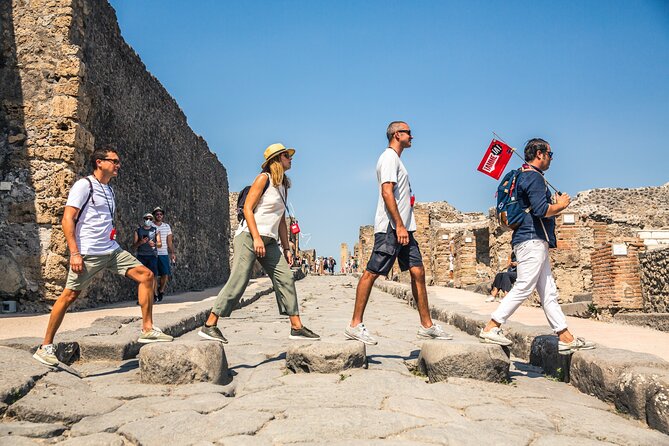
Pompeii without the queue headaches. This skip-the-line tour runs from Sorrento with an air-conditioned coach and a guide-led walk through the places that explain how Romans lived, worked, and prayed. You’ll see major highlights like the Forum and the baths, then circle back before your day gets cooked by the afternoon crowd.
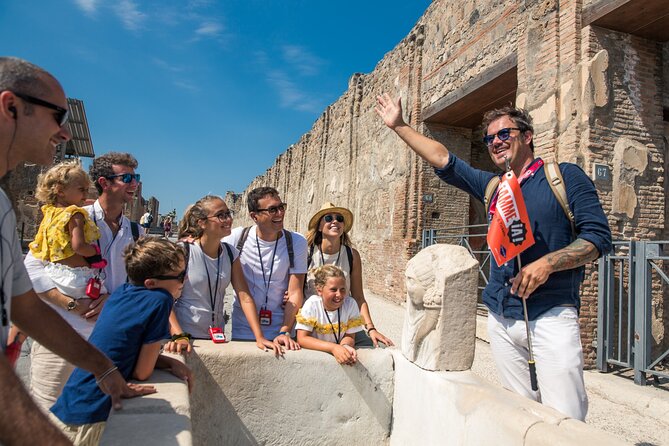
I really like the comfortable coach transfers from Sorrento. I also love that Pompeii entry is included, and you get headphones on-site (especially helpful when groups are over 10), so you can actually follow the stories while you walk.
One drawback to plan around: Pompeii is physically tough in spots. Expect uneven ancient streets, steps, and inclines, and wheelchair access is not allowed, so pace and mobility can make or break the experience.
Key things that make this Pompeii tour worth your time
- Skip-the-line admission helps you get into the Archaeological Park faster, instead of losing your morning to lines.
- Air-conditioned round-trip transport makes the transfer from Sorrento easier, especially in warm months.
- A guided route through the core sites connects the Forum to daily life, not just random ruins.
- Headphones in Pompeii help you hear the guide clearly when the group is larger.
- Short stops along the route mean you’ll see a lot, but you need to be okay with limited freestyle time.
Sorrento to Pompeii: the ride matters more than you think
The tour starts in central Sorrento at IAMME IA! – Gray Line Amalfi Coast, Piazza Torquato Tasso, 16. From there, you head straight to Pompeii by air-conditioned vehicle, which is a big deal when the day starts warm and you know you’ll be outside for a good chunk of time.
Pompeii is huge, so the first goal is simple: get you on-site and oriented. This tour is built for that, with a schedule that includes time inside Pompeii and a return transfer back to Sorrento at the end.
If you’re sensitive to heat or you just don’t want to spend your limited time in Campania stuck in traffic or waiting around, the coach transfer is one of the easiest parts of the day to appreciate.
Entering the Archaeological Park fast with skip-the-line admission
Pompeii’s ruins are unforgettable, but the approach can be frustrating if you arrive unprepared. The big value here is the skip-the-line admission, which lets you move from transfer mode into exploration mode right away.
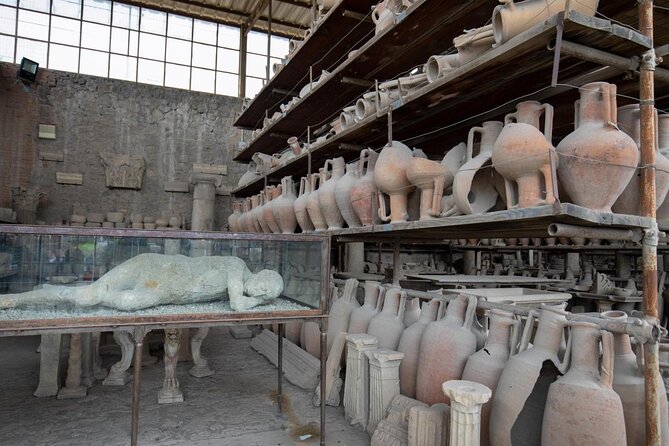
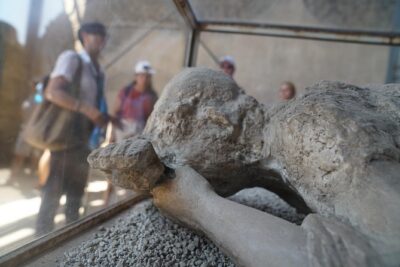
Once inside, you’re not staring at a ticket booth and guessing where to go. You’re guided through key areas that help you understand what you’re looking at, starting with Pompeii as a whole: a once-busy Roman city buried after Mount Vesuvius erupted in 79 A.D., preserving streets, houses, and daily life in a way that’s almost impossible to replicate elsewhere.
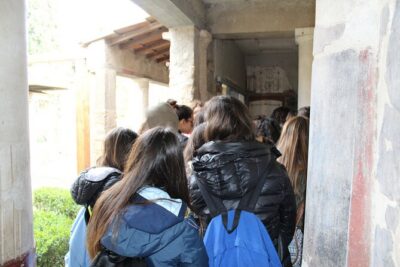
This is also where headphones make sense. When you’re walking and the group stays together, hearing the guide clearly is the difference between a rushed glance and actually learning what matters.
Forum core tour: Civil Forum, Temple of Jupiter, Macellum, Basilica
Your route pushes you into Pompeii’s public heart, starting with the Civil Forum. This wasn’t just a pretty square. It was where administration and justice happened, where business ran, and where religious life blended into everyday routines.
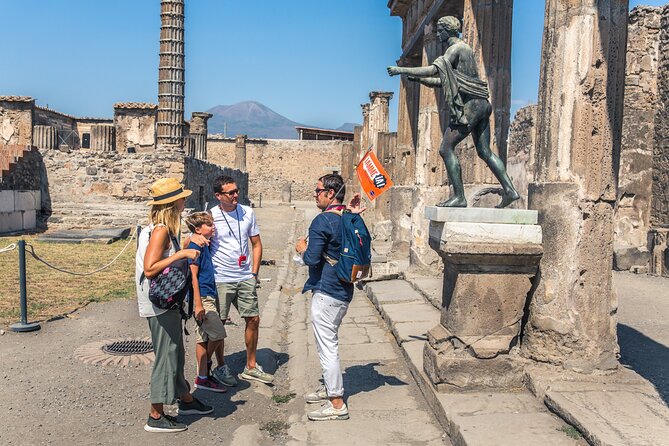
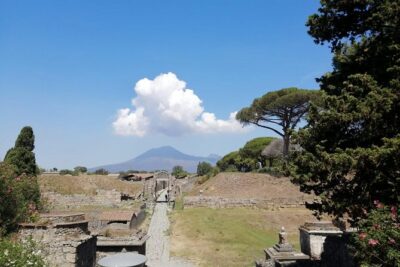
From there, the story zooms in on the Temple of Jupiter, which dominates the north side of the Forum. You get a sense of how this space was redesigned after the colony was founded, with Jupiter, Juno, and Minerva placed so they could be seen by people passing through the Forum square. And with Mount Vesuvius in the background, you’ll understand how visually dramatic this region is, even when you’re standing in ruins.
Next comes the Macellum, the marketplace complex. The interesting part is the mix of functions: there’s an area for worship, niches for statue fragments, and rooms that connect to the imperial cult and local social life. In practical terms, this stop helps you stop thinking of Pompeii as only tragedy and start seeing the ordinary machinery of a city.
Then you move to the Basilica, a large public building used for business and administration of justice. It’s one of those places where scale helps. When you can sense its size and function, you understand that Pompeii was built for crowds, commerce, and official life.
If you like ruins that have context, this Forum sequence is the strongest part of the itinerary. It gives you the framework that makes later homes, baths, and shops feel connected instead of scattered.
Via dell’Abbondanza and Stabian Baths: daily movement and public living
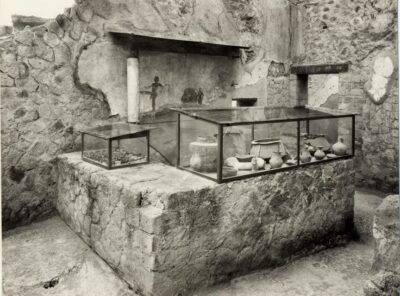
After the Forum stops, you step onto Via dell’Abbondanza, the city’s main east-west street, with the decumanus maximus layout in mind. The guide route keeps this stop short, but it’s long enough to get the idea: crowded streets, storefronts and workshops (officinae), snack and drink places, and constant foot traffic.
Even if you’re short on time, this is a great stop to mentally replay. The stones are quiet, but your brain starts to fill in the noise and movement once you understand what this street was for.
Then you head into the Stabian Baths (Terme Stabiane). This is one of those Pompeii areas where you immediately get why people spent time here. You see how the bath system worked with distinct spaces for different temperatures, including dressing and varying warmth zones.
The baths also carry a timeline lesson. They date to the years after the colony of veterans by General Silla (80 BC), and the building was damaged by the earthquake of 62 AD. That means you’re not only seeing how Romans lived, you’re seeing a city adapting after disruption.
Real-world tip: baths and street segments can mean uneven ground and small ramps. Plan slow down moments for yourself. Even if the guide keeps the group moving, you’ll enjoy this stop more if you pause to look at the layout rather than just speed through photos.
Lupanar and the House of the Faun: Roman street life and elite taste
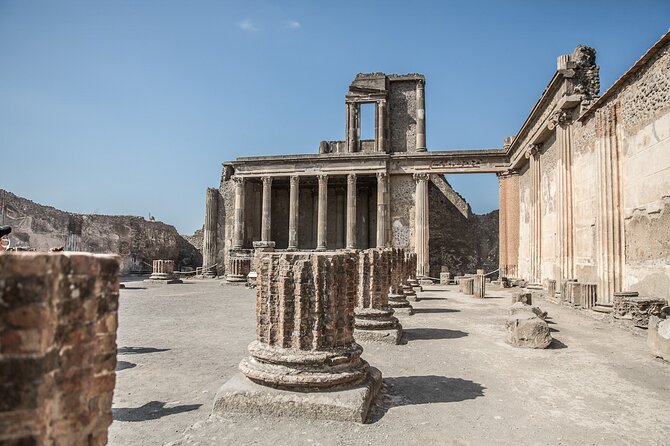
From public life, you shift to something more shocking and very specific: the Lupanar. This official brothel sat in a narrow side street near the center of Pompeii, and it’s famous for its well-preserved erotic frescoes above the doorways, plus the graffiti left by visitors.
This stop hits a key reality check. Pompeii wasn’t a sanitized museum world. It included class differences, entertainment, and the messy variety of human behavior. What makes it fascinating is that the building is purpose-built, with small rooms and masonry beds that show the business design behind it.
Next comes the House of the Faun (Casa del Fauno), one of Pompeii’s largest and most luxurious homes. The tour points you toward the bronze dancing faun statue that gives the residence its name, and it highlights the home’s most famous feature, the Alexander Mosaic. Even if you’ve seen mosaics before, this one reads differently in context, because it’s located in a whole residence that signals wealth and power.
I like how this contrast works in one route. A brothel tells you what people did when they sought pleasure. A grand private residence tells you what wealthy owners displayed when they wanted status.
Teatro Grande and the practical art of seeing a lot in 5 hours
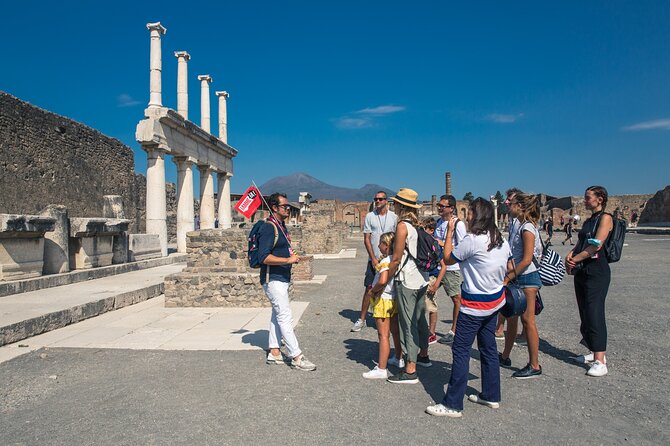
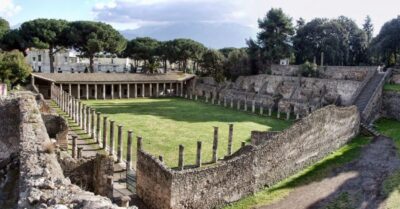
The final major stop is Teatro Grande, the large theater built into a hillside. The layout into sectors and the use of the natural depression means you’re seeing how Romans engineered the stage and seating so performances could hold an audience.
You’ll likely get context about the kinds of plays staged, including Greco-Roman tragedies. But what really sticks here is the shape of the space. When you can picture the auditorium and the stage relationship, Pompeii feels less like fragments and more like a functioning place.
Now, the practical timing: the tour runs about 5 hours in total, with roughly 2 hours inside Pompeii plus short walking stops that add up. That structure is efficient, and it can be perfect if you want the highlights without planning your own route.
But it can also feel tight if you love to linger. One common issue with any Pompeii guided route is that you need to follow the pace. A couple of people noted there wasn’t much time to step out on your own to re-check something up close, and there’s also the reality that Pompeii’s terrain does not forgive slow movement.
If you want to buy a postcard, linger at a mosaic longer than the group, or stop in the gift shop, you’ll need to manage those impulses. The tour gives you a guided path and some time early and late, but the middle is intentionally structured.
Comfort, crowds, and walking reality on ancient stone
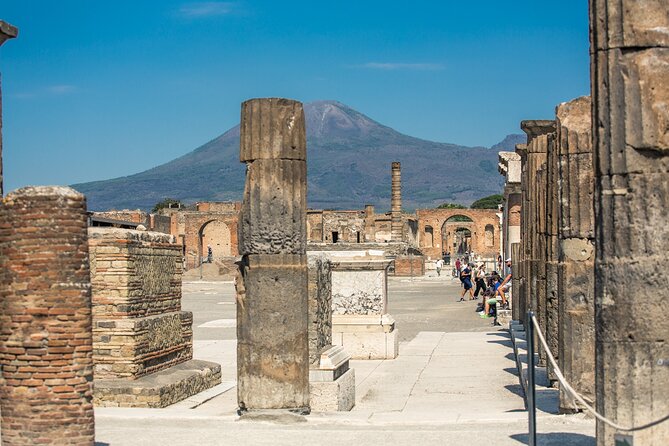
The tour includes round-trip transportation and a capped group size of up to 29 travelers. That’s usually a sweet spot. It’s large enough that logistics are smooth and smaller than the huge bus crowds that can feel chaotic.
You’ll also want to pick your departure time thoughtfully. The itinerary offers morning or afternoon departures, and the difference is real. In warm months, earlier usually means less intense heat and fewer people fighting for the same viewpoints.
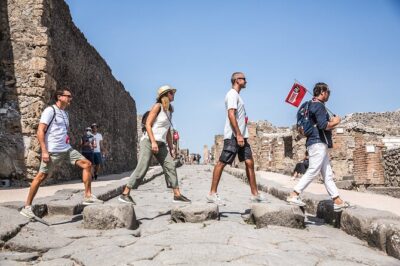
On the physical side, Pompeii is uneven. Expect steps, inclines, and rough surfaces. One review-style note that matters for your planning: wheelchairs are not allowed, while strollers are okay. If that affects you, don’t wait until you arrive to decide. Ask before you book what the route would mean for your situation.
There’s also the question of keeping up with the group. If you can’t match the walking pace, you might miss parts of the commentary. This is not about the guide being wrong. It’s about Pompeii forcing faster movement than your body expects when you’ve only seen a few photos online.
Who should book this Pompeii guided tour from Sorrento?
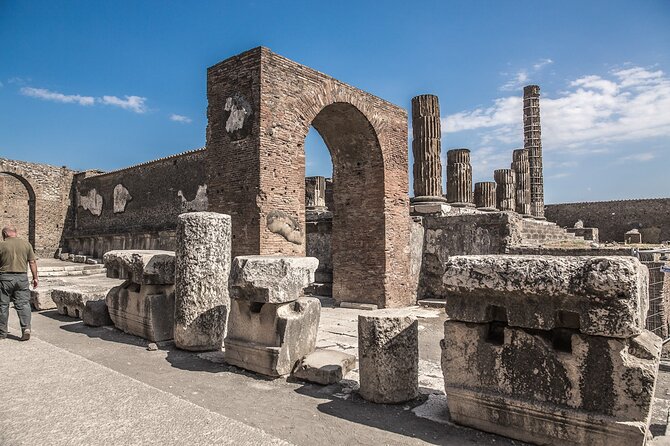
This tour fits best if you want a guided overview that hits major sites without you building a route from scratch. It’s great for:
- First-time Pompeii visitors who want context at the Forum, baths, marketplace areas, and major monuments
- People who value skip-the-line admission and a comfortable transfer from Sorrento
- Families and mixed-age groups, since the route includes clear highlights and a guide-led storyline
- Anyone who appreciates hearing the story through headphones while walking through complex ruins
It might be less ideal if:
- You need frequent breaks and a very slow pace over uneven terrain
- You strongly prefer solo time to wander and take multiple long pauses
- You don’t want a structured route where you follow the group the whole time
Should you book? My take on value and fit
At $90.70 per person, the price isn’t low, but it’s also not random. What you’re buying is time and friction reduction: skip-the-line entry, guided interpretation across multiple key Pompeii zones, and a comfortable round-trip coach from Sorrento.
If you were going to piece together transport plus admission plus a self-guided plan, you might spend similar money once you factor in the value of not getting lost in a huge site. The fact that your admission and official guide are included is the core reason this is good value for most visitors.
If you’re traveling in a group or you simply hate waiting, this is the kind of tour that makes Pompeii feel doable in half a day without turning it into a frantic sprint. Choose the morning departure when you can, wear grippy shoes, and plan to treat it as a highlights tour with story context, not a slow museum day.
FAQ
How long is the Pompeii guided tour from Sorrento?
It runs about 5 hours (approximately).
Where do I meet in Sorrento?
Meet at IAMME IA! – Gray Line Amalfi Coast, Piazza Torquato Tasso, 16, 80067 Sorrento, Italy.
Is Pompeii admission included?
Yes. Entry and admission to the Pompeii Archaeological Site are included, with skip-the-line access.
What transport is included, and is it comfortable?
You get round-trip transportation by an air-conditioned vehicle, with a pickup in Sorrento and return back to the meeting point.
Do you provide headphones during the Pompeii portion?
Yes. Headphones are provided in Pompeii to hear the guide clearly for groups bigger than 10 passengers.
Is food included in the tour price?
No. Food and drinks are not included.
Can I cancel for a full refund?
Yes, you can cancel up to 24 hours in advance of the experience for a full refund.
More Tours in Sorrento
- Sorrento: Exclusive Capri Boat Tour and Optional Blue Grotto★ 4.8 · 3,170 reviews
- Capri Blue Grotto Small-Group Boat Day Tour From Sorrento★ 4.5 · 2,511 reviews
- From Sorrento/Nerano: Amalfi and Positano Boat Tour★ 4.6 · 2,440 reviews
- Sorrento: Skip-the-Line Pompeii Express Tour by Train★ 4.8 · 2,038 reviews
- From Sorrento: Capri Boat Tour with Blue Grotto Visit★ 4.7 · 1,759 reviews
More Tour Reviews in Sorrento
- Sorrento: Exclusive Capri Boat Tour and Optional Blue Grotto★ 4.8 · 3,170 reviews
- Sorrento Farm and Food Experience including Olive Oil, Limoncello, Wine tasting★ 5.0 · 2,524 reviews
- Capri Blue Grotto Small-Group Boat Day Tour From Sorrento★ 4.5 · 2,511 reviews
- From Sorrento/Nerano: Amalfi and Positano Boat Tour★ 4.6 · 2,440 reviews
- Day Trip to Positano, Amalfi & Ravello from Sorrento★ 4.5 · 2,371 reviews
Through the Pompeii Gates
- Sorrento: Skip-the-Line Pompeii Express Tour by Train★ 4.8 · 2,038 reviews
- Skip the line Pompeii Guided Tour★ 4.5 · 24 reviews
- Private Skip-the-line Pompeii & Mt. Vesuvius Tour from Sorrento★ 5.0 · 15 reviews
- Skip the Line Pompeii Guided Tour from Sorrento★ 5.0 · 10 reviews
- Skip-the-Line Pompeii and Vesuvius Tour★ 4.0 · 8 reviews
More ways into Pompeii Tickets.
 ★ 4.8Skip-the-Line Pompeii Express Tour by TrainFrom $632,038 reviews
 ★ 5.0Pompeii Ticket + Tour with Optional Tasting Experience at PompeiiFrom $35663 reviews
 ★ 5.0Skip-the-Line Pompeii Tour for Kids with an ArchaeologistFrom $11989 reviews
 ★ 5.0Private Skip-the-Line Pompeii & Mt. Vesuvius Tour from PositanoFrom $75046 reviews
 ★ 5.0Skip-the-Line Pompeii & Volcano Vesuvius Day Tour w Hotel or Port PickupFrom $54228 reviews
 ★ 4.5Skip the line Pompeii Guided TourFrom $9624 reviews
 ★ 5.0Private Skip-the-line Pompeii & Mt. Vesuvius Tour from SorrentoFrom $63515 reviews
 ★ 3.9Skip-the-Line Pompeii Tour and Vineyard LunchFrom $15715 reviews
Other useful routes from here