
REVIEW · GUIDED
Guided Private Tour in Pompeii
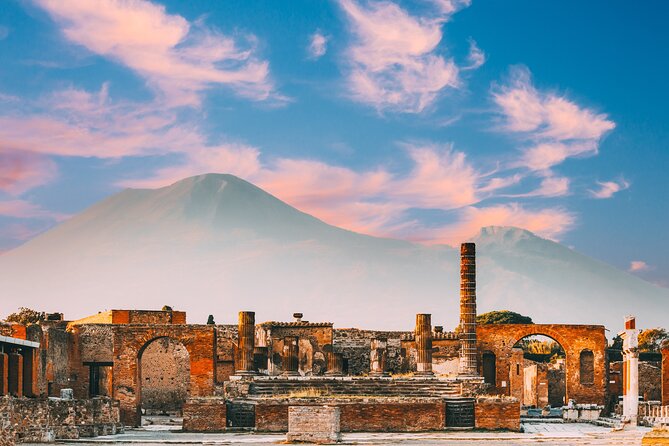
Pompeii feels personal on this guided route, with an archaeologist leading you through the city’s real daily rhythm, not just famous ruins. I especially like the private, up to 5 person format that keeps the pace comfortable, and I also like the planned stops that mix civic life (the forum and temples), home life (a luxury villa), and public routines (the baths and food market). One thing to consider, the theater viewpoint area may not be fully accessible right now, so you should be ready for seeing some parts from outside angles instead of going into every space.
What makes the experience click is how the guide connects stone and silence to ordinary Roman habits. You’ll get a guided walk through Pompeii’s streets, plazas, and key landmarks, with enough structure to hit the major themes without feeling like you’re sprinting. And yes, you will walk more than you would on a bus tour, but you’ll also leave with a clearer sense of how people actually ate, bathed, shopped, worshiped, and socialized.
Key points before you go
- Private group of up to 5 means you can shape the pace to your energy and interests
- Archaeologist-led explanations keep the story anchored in what was found and why it matters
- Entry at Piazza Esedra, Porta Marina Inferiore helps you start with a strong orientation and can reduce wasted queue time
- Roman baths and food stops turn sightseeing into day-in-the-life learning
- Major civic and temple stops help you understand Pompeii beyond the big name monuments
- Some theater access may be limited right now, but you still get key sightlines and context
A 2.5-hour Pompeii plan that feels efficient, not rushed
Pompeii is big, and if you show up cold, it is easy to get overwhelmed by “cool stuff” without understanding what you are seeing. This tour solves that with a tight route designed for comprehension. In about 2 hours 30 minutes, you cover a wide range of building types, so you come away with a mental map of the city’s main functions.
The private angle matters. With a group of up to 5, I like that you can ask questions and get answers that fit what you care about. If you want more on everyday routines, you will steer toward baths, markets, and homes. If you lean toward politics and religion, the route gives you the forum and major sanctuaries. Either way, the time stays focused.
Also, your tickets are handled as a mobile ticket experience. That tends to reduce friction on-site, especially when you are trying to stay on schedule.
Start at Ristorante Suisse, then into Pompeii through the port area
You meet at Ristorante Suisse, Piazza Esedra 10/13 in Pompeii. This matters more than it sounds, because getting positioned well at the start lets you build momentum instead of spending your first half hour figuring out where to go.
From there, the tour heads to the Pompeii Archaeological Park entrance at Piazza Esedra, Porta Marina Inferiore. The big practical win here is that you start in a way that helps you avoid the worst of the line situation, and you also get a better first view of the ancient port area context. That port perspective is a smart primer, because Pompeii was shaped by trade and travel. When you later see where commerce and daily life happened, the whole city feels less random.
This stop also includes the admission ticket as part of the tour entrance time, but note the important detail: the Pompeii Archaeological Park entrance fee is not included in the price you pay. The listed fee is 18 euros per person (free under 18). Plan to budget for that on top of the tour price.
Teatro Grande and Tempio di Iside: how Pompeii entertained and worshiped
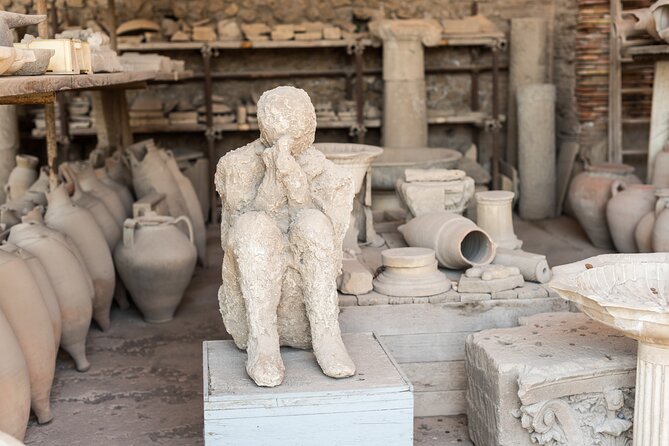
The next phase leans into public life. You’ll look at the Teatro Grande and Teatro Piccolo area from a panoramic viewpoint. The catch is that these spaces are noted as not accessible at the moment, so your expectation should be seeing and understanding from the accessible parts, not walking into every section. In practice, that can still work well, because the goal here is comprehension, not ticking boxes.
From an interpretation standpoint, the theater viewpoint is useful because it shows how entertainment fit into a city where religion, politics, and social life overlapped. Pompeii was not just a place where people worked and went home. It was a community where people gathered.
Then you shift to the Tempio di Iside. This stop is interesting because you will also visit a house positioned right in front of the temple area, tied to why finds were made there. The value here is seeing how religious spaces sat alongside domestic or adjacent structures, so the temple does not feel like a lone monument. It feels like part of the city’s everyday fabric.
Stabian Baths: the Roman routine of bathing, safety, and social time
If you want one stop that changes how you picture Roman life, make it the Stabian Baths (Terme Stabiane). You spend about 20 minutes here, and the tour frames it as a real public complex, tied to how people stayed safe and cared for themselves in Roman time.
Even if you have visited baths in other places, Pompeii’s preserved layout makes the idea concrete. You see a bathing environment that was social and structured, not just functional. The tour also sets you up for a Roman-style bathing ritual experience, which is often the part that turns “I read about it” into “I get it.”
Practical note: baths areas can be uneven or textured, so wear shoes you feel good walking in. This is not a sit-down museum moment.
Termopolio di Vetuzio Placido and the Macellum: eat like a Roman
Pompeii is one of the best places in Italy to talk about food and daily living because so much of the city is grounded in what people actually did day after day. This tour gives you that through two linked food-and-snack experiences.
First, you visit the Termopolio di Vetuzio Placido, a kind of high-traffic quick-stop for Roman food, known for its striking frescoes. This is where the city’s street life shows up visually. You get to connect the idea of a casual meal with the art that decorated these everyday corners.
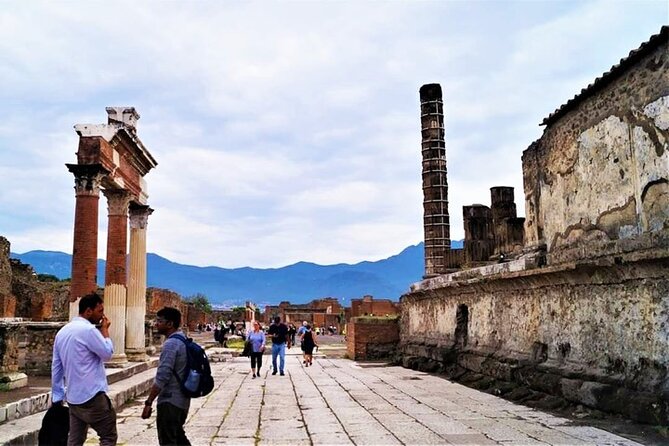
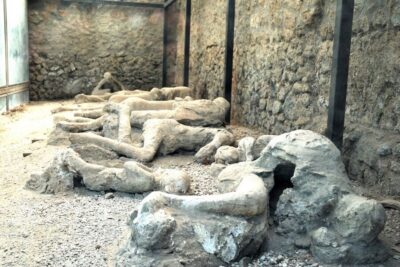
Then you go to the Macellum, the food market. The tour time here is about 15 minutes, and it highlights the market’s impressive frescoes and the presence of body casts. That cast detail is heavy, but it is also important, because it brings the city’s final moment into view in a way that words alone cannot replicate.
If you are a foodie, you will appreciate that the overall experience includes sampling freshly baked bread and Roman-style snacks. The practical value is that the food stops act like “story anchors.” You do not only look at structures, you also taste the era through simple, guided samples.
Piccolo Lupanare: facing the red-light district in context
Next comes the Piccolo Lupanare, a small brothel area, often described as Pompeii’s red-light district. The tour includes about 20 minutes here, with a chance to see the space and understand how the city’s realities included both public culture and private commerce.
It can be a sensitive topic, but the key is context. The tour approach here is interpretive, not sensational. You are being shown how Pompeii worked as a complete society, including its social edges and the ways people lived.
If you are uncomfortable with sexual content, you should still know that this stop is part of the route, and you will be walking through and learning about it. It is better to decide that ahead of time than to be surprised mid-tour.
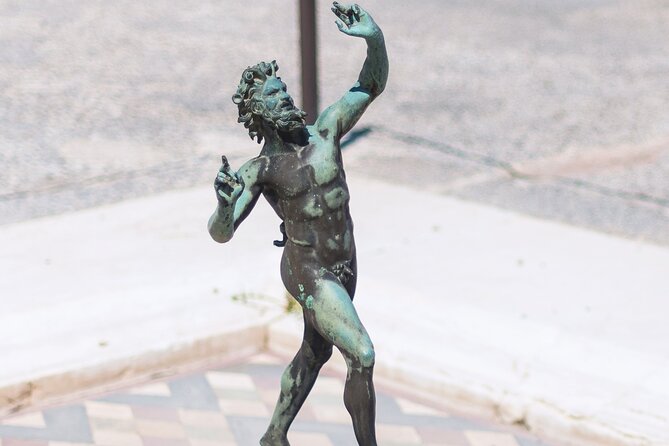
Casa del Fauno: luxury living, frescoes, and household space
Then you step into the Casa del Fauno, one of Pompeii’s best examples of a luxury house. The visit is about 20 minutes, and the tour emphasizes domestic life, including frescoes and the way the home supported both private and semi-public rhythms.
This stop is a major payoff if you want more than a walking list of monuments. In a luxury villa, you start to see how wealth shaped daily movement, how rooms and courtyards worked, and how decoration signaled identity.
The tour also includes time in a Roman villa garden experience, with a glass of wine during a reflective moment. That part matters because it gives you a slow break after the more intense public stops. It also makes the space feel less like a distant ruin and more like a lived environment, which is exactly what you want from a well-designed guide.
Basilica and the Forum: Pompeii’s political heart in plain sight
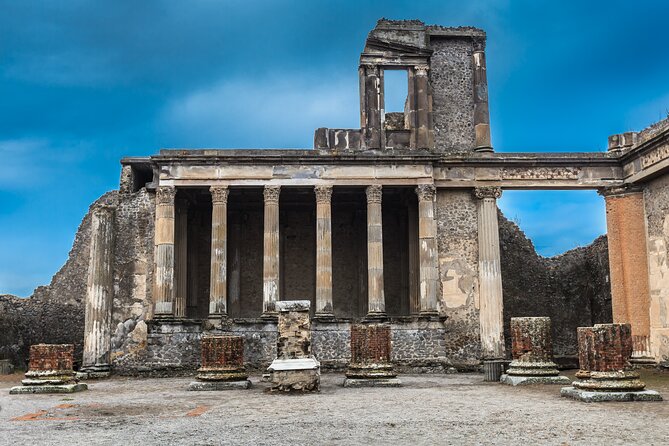
You then move into the core civic zone, including the Pompei La Basilica, often linked to the city’s “parliament” concept, and the Foro di Pompeya, the main square. The basilica stop is short, around 5 minutes, but it’s framed around big architectural statements, including high-style marble decoration.
The forum stop is about 15 minutes and is where the tour becomes especially effective for first-timers. Here, you connect the earlier entertainment and religious stops to political life. You see the square where community business and announcements would make sense.
This is also where the tour highlights the idea of public speech in the Roman forum linked to the sanctuary of the Temple of Jupiter (Capitolino). Even if you do not know Roman history in detail, the guide’s framing helps you follow what the spaces were for.
Temples of Apollo, Venus, and Jupiter: why sanctuaries shaped the city
In the final sweep through the highlights, you see multiple sanctuaries that show Pompeii as a religious city with public meaning. You visit:
- the Temple of Apollo
- the Tempio di Venere
- the Tempio di Giove Capitolino
Each temple stop is short, around 5 minutes, but they do not feel random. The tour uses them to show how worship, civic identity, and street life braided together. When you stand near these areas after seeing the market, baths, and villas, you get a fuller picture of what “daily Roman life” meant in practice.
If you tend to enjoy architecture but struggle with names and dates, this is a good route. The guide’s storytelling style is designed to help you keep track of why each place mattered, even when the stops are brief.
Price and value for a private group up to 5
The tour price is $326.72 per group, up to 5 people, for about 2.5 hours. That sounds like a lot at first, but the private format changes the math. For a full group, you are roughly looking at about $65 per person for the guided service, before the separate site entrance fee.
The key cost you must add is 18 euros per person for Pompeii Archaeological Park admission. If you are going with a smaller group, the tour price per person rises, but you still get that high-value mix of an archaeologist-led guide and a route that covers many building types in a focused time.
This tour feels like strong value if you fall into one of these buckets:
- you have limited time in Pompeii and want a structured highlights route
- you want more interpretation than an audio guide gives
- you are traveling in a small group and want flexibility rather than a crowded join-in tour
- you enjoy daily-life details like food routines and bath culture
It is less of a deal if you already know Pompeii well and you just want to wander freely. In that case, you might spend less by self-guiding and extending your time on your own priorities.
Who this tour suits best, and who should reconsider
This is a great match for you if you want Pompeii to feel understandable. I think it works best for first-timers and for visitors who know the basics but want clearer connections between spaces.
It also fits well if you like a guide who can adjust pacing for time limits. The guide style tied to this tour is described as meticulous, with story-driven explanations and personalization to your interests and schedule.
You might reconsider if:
- you hate the idea of walking through preserved ruins for a couple of hours
- you would rather spend half a day lingering in fewer spots than moving through many themes
- you are not comfortable with the lupanare stop as part of the daily-life interpretation
Should you book this Pompeii private tour?
Book it if you want Pompeii to make sense fast, with an archaeologist guide and a route built around how Romans lived. The combination of forum and temples, baths, food stops with samples, and a luxury home garden break is a smart mix for learning without losing your energy.
I would book it especially if you are traveling with up to 4 other people and want private pacing. The group cap keeps it personal, and the guide’s approach is geared toward story clarity, not just facts.
If you are the kind of visitor who wants to roam for hours with zero structure, you may prefer a self-guided plan. But if your goal is to see major Pompeii highlights with real context in about 2.5 hours, this is one of the more efficient ways to do it.
FAQ
Is the Pompeii Archaeological Park entrance ticket included?
No. The Pompeii Archaeological Park entrance fee is not included, and it is listed as 18 euros per person (free under 18).
How long is the guided Pompeii tour?
The tour duration is about 2 hours 30 minutes.
What does the tour include besides the guide?
You get a private tour with an authorized archaeologist guide service. The experience also uses a mobile ticket format. Admission to the archaeological park is not included in the tour price.
Where does the tour start and end?
It starts at Ristorante Suisse, Piazza Esedra 10/13, 80045 Pompei NA, Italy and ends back at the same meeting point.
What are the main Pompeii areas covered?
The route includes major highlights across civic, religious, and domestic life, including the forum area, baths, temples (Apollo, Venus, Jupiter), the theater area, and food-focused stops like the market and termopolio.
Is this tour private or shared?
It is a private tour/activity, so only your group participates.
What should I know about theater access during the visit?
The theater stop is described as a panoramic view, and it notes that the theater area is not accessible at the moment. You should expect a viewpoint-focused visit rather than full access to every section.
With a Local Guide
- Skip the Line Guided Tour of Pompeii led by an Archaeologist★ 5.0 · 703 reviews
- Pompeii private tour with an Official Guide★ 5.0 · 631 reviews
- Pompeii Skip-the-line Tour with Archaeologist Guide★ 5.0 · 559 reviews
- Pompeii Guided Tour & Horse Riding on Vesuvius with Lunch★ 5.0 · 419 reviews
- Complete Pompeii Skip the Line Tour with Archaeologist Guide★ 4.5 · 379 reviews
More Tours in Pompeii
- Pompeii Small Group Tour with an Archaeologist★ 5.0 · 6,593 reviews
- Pompeii and Herculaneum Small Group Tour with an Archaeologist★ 5.0 · 1,350 reviews
- Skip the Line Guided Tour of Pompeii led by an Archaeologist★ 5.0 · 703 reviews
- Pompeii Ticket + Tour with Optional Tasting Experience at Pompeii★ 5.0 · 663 reviews
- Pompeii private tour with an Official Guide★ 5.0 · 631 reviews
More Tour Reviews in Pompeii
- Pompeii Small Group Tour with an Archaeologist★ 5.0 · 6,593 reviews
- Discover the Ancient Ruins of Pompeii: Day Trip from Rome★ 3.5 · 2,247 reviews
- Pompeii and Herculaneum Small Group Tour with an Archaeologist★ 5.0 · 1,350 reviews
- Skip the Line Guided Tour of Pompeii led by an Archaeologist★ 5.0 · 703 reviews
- Pompeii Ticket + Tour with Optional Tasting Experience at Pompeii★ 5.0 · 663 reviews
More ways into Guided.
 ★ 4.8Pompeii: Entry Ticket and Guided Tour with an ArchaeologistFrom $3519,459 reviews
 ★ 4.2Pompeii: Entry Ticket with Optional Audio GuideFrom $2612,360 reviews
 ★ 4.0Pompeii: Skip-the-Line Entrance Ticket with Audio GuideFrom $392,509 reviews
 ★ 4.6Pompeii: Skip-the-line-Ticket and Guided TourFrom $641,152 reviews
 ★ 4.9Pompeii: Guided Tour with Skip-the-Line EntryFrom $58812 reviews
 ★ 4.1Pompeii: Skip-the-Line Entry Ticket with Digital Guide AppFrom $22770 reviews
 ★ 4.5Pompeii Express Guided Tour by Train from SorrentoFrom $65770 reviews
 ★ 4.5Skip-the-Line Pompeii Guided Tour from SorrentoFrom $90722 reviews