
REVIEW · POMPEII ARCHAEOLOGIST TOURS
Pompeii Skip-the-line Tour with Archaeologist Guide
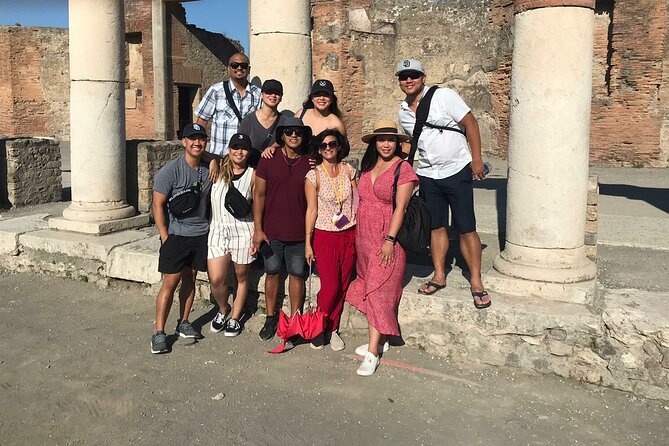
Pompeii feels personal with the right guide. This skip-the-line walk with an archaeologist guide turns a huge archaeological site into something you can actually picture, from wagon-rut cobbles to the forum. You also get clear context for how Mt. Vesuvius (AD 79) buried Pompeii and preserved so much of everyday life.
I love the small group setup, capped at 16 people. It makes it easier to ask questions and keep track of what matters, plus it avoids that lost-in-the-crowd feeling. I also love the way guides like Lello and Italo narrate the site with humor and real dig experience, so the ruins stop feeling like random piles of stone.
One consideration is that 2 hours goes fast, especially when the sun is strong and you are walking on original streets. If you want to linger at every doorway, you will probably want to plan extra time after the tour.
Key things I’d bet on before you go
- A real archaeologist-led walk: you get explanations tied to what you are standing on
- Up to 16 people: small-group pace with time for questions
- The “main hits” route: forum, theater, bathhouse areas, and the brothel (Lupanare)
- You walk the ancient way: cobblestones, plus lava rock surfaces
- Clear hearing can matter: some groups note that ear sets are provided
- A guided path through Pompeii’s scale: you see more than what most people spot on their own
Pompeii makes sense when the guide does the heavy lifting
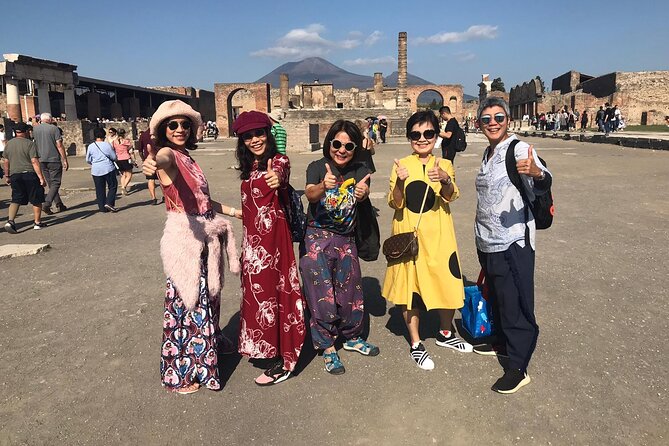
Pompeii is big. It is also confusing, especially when you arrive on your own and try to connect rooms, streets, and building types without a storyline. With this tour, you get that storyline fast. Your guide frames what you are seeing in plain language, so you understand what each location tells you about Roman life before the eruption.
Mt. Vesuvius is the backbone of the experience. You learn how the AD 79 eruption buried Pompeii and helped preserve buildings, streets, and even small everyday details. Once you know that, the site stops being just impressive scenery. It becomes a snapshot of a city frozen in time.
Where you meet and how the tour actually gets you in
You will meet at Hotel Vittoria, Piazza Esedra, 80045 Pompei NA, and the tour ends back at the same meeting point. The experience is designed so you meet your guide near the entrance area, then walk into the site as a group.
Important detail: this is not a stand-alone ticket to wander the ruins on your own. Your confirmation works with the guide, so show up on time, find your group, and follow their entry process. If you are late or you miss the tour, there are no refunds, so treat meeting time seriously.
If you are coming from Naples or Sorrento, take the Circumvesuviana train to Pompei Scavi station. From there, you can make your way to the meeting area. This is one of those routes that saves you time compared to more complicated logistics, and it keeps your day simple.
Walking Pompeii’s streets on lava rock and wagon-rut cobbles
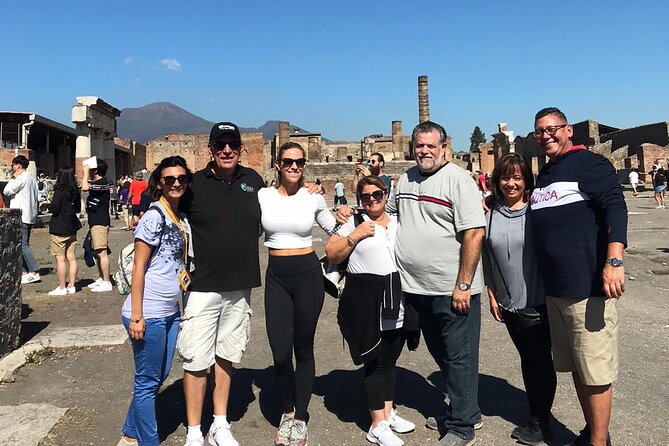
This tour is hands-on. You walk over original paths, including ancient cobblestones and lava rock surfaces. You will feel the uneven ground underfoot, and you will understand why Pompeii is not a quick, sit-on-a-bench kind of attraction.
One of the neat moments is spotting the ruts left by wagon wheels. That small detail is a reminder that people and carts moved here every day, long before the city was sealed off by the eruption.
Practical tip: pack a hat for summer sun and wear comfortable shoes. The walking is part of the lesson. If you show up in fashion sneakers or you hate climbing over uneven ground, the tour will feel longer than it should.
Archaeological Park highlight run: what you see in about 2 hours
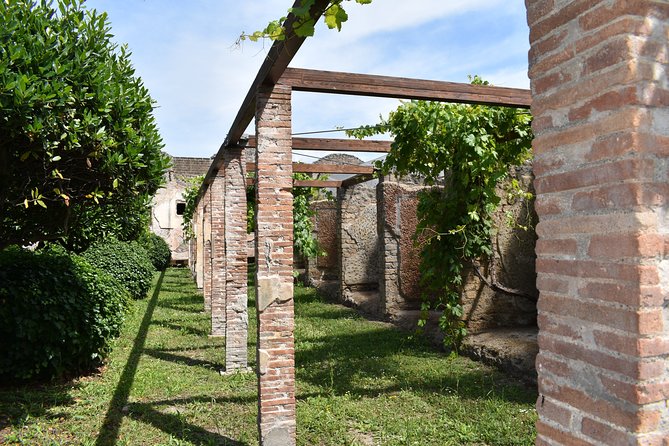
You cover a focused set of Pompeii highlights in roughly two hours, with admission included. Even though you are not trying to see every square meter of the site, you get the big anchors that help you build a mental map.
You start by moving through areas that show how the city functioned day to day. That includes spaces used for entertainment, bathing, training, commerce, and public life. You also get stops that many people photograph, but here they come with explanations that tell you what the space likely meant and how people used it.
Theater: tragedy and comedy in stone form
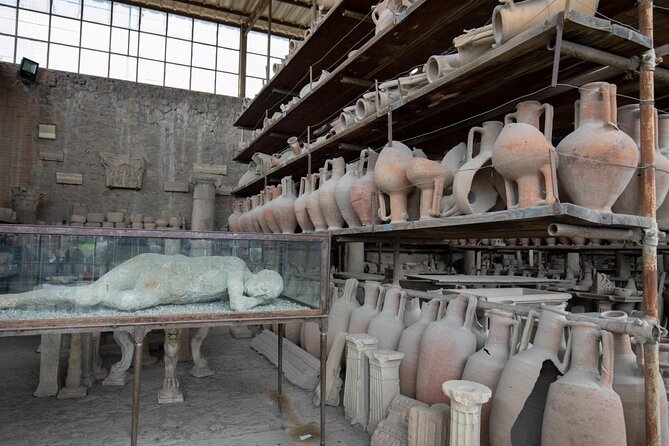
In the theater, you get a feel for Roman entertainment beyond modern assumptions. You learn how performances included tragedy and comedy, and how this venue worked as a social stage where communities came together. Standing inside this kind of space, you start to see why the eruption is so haunting: the city was mid-life when it was abruptly ended.
Thermal bathhouse: bathing, exercise, and gossip
The bathhouse section helps you picture a routine you might not expect in an archaeological park. This was not only about cleanliness. It was also for exercise and, importantly, social talk. You see how public and private life mixed in a place like this, and how residents would regularly return for both body and conversation.
Local shops and food businesses: signs of daily spending
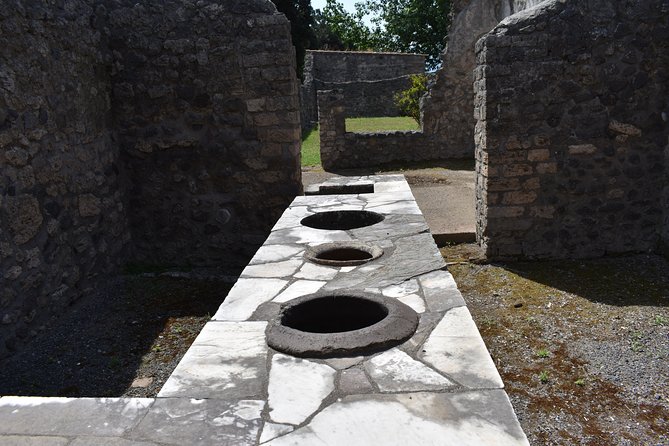
You will also pass through areas tied to businesses, including spots like restaurants, bars, and shops that sold food and clothing. You do not just see walls. You get help interpreting what kind of place it might have been and why it mattered in a working city.
If you have ever walked through a museum gallery and thought, Okay, but what did people actually do here, this is the antidote.
The forum and civic buildings: where religion met politics
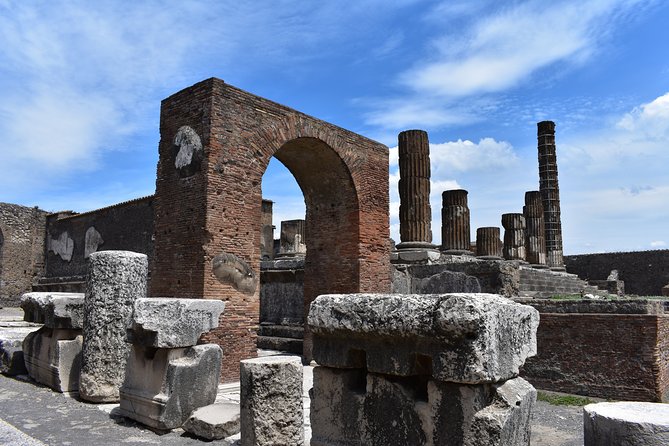
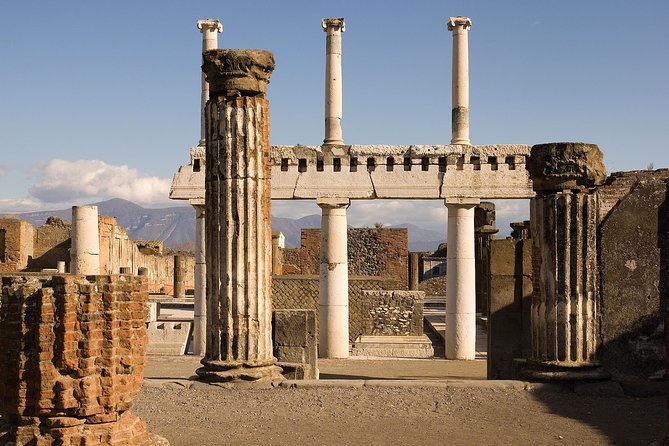
The forum is the center of a Roman city, and the guide makes sure you understand why. You look at ruins tied to temples and civic buildings, the places where priests and politicians overlapped in real life. This is where public decisions happened and where belief was part of the civic rhythm.
What I like about this part of the tour is how it connects the buildings to behavior. Instead of just naming structures, you learn what roles people played there and how the space supported those roles. Even if you have visited other Roman sites, Pompeii’s forum gives you a sharper sense of how a city’s public life worked day to day.
Gladiator barracks and the training behind the spectacle
Roman entertainment was not only for the audience. It also depended on preparation, training, and housing for performers like gladiators. You see barracks where gladiators trained and lived, and your guide explains what you are looking at in practical terms.
This stop adds balance. It reminds you that the theater was not the only place where performance culture lived. There was a whole support system behind it, with routines and space dedicated to the work.
If you think about it, that detail helps Pompeii feel less like a collection of famous photos and more like a real city.
The reconstructed Lupanare brothel: the most discussed stop, handled well
The brothel, called the Lupanare, is one of Pompeii’s most popular attractions. This is the kind of stop where it is easy to fall into shallow gawking if you are on your own.
On this tour, you get context that helps you see the site as social history, not just a sensational headline. The guide points out what you are seeing and connects it back to the way businesses served different groups in the city. You also learn why this particular site became so well known, and how reconstruction affects what you think you are looking at.
I recommend you treat this stop as a place to learn, not just a place to react. It lands better that way.
How the best guides turn Pompeii into a story (Lello, Italo, Cela)
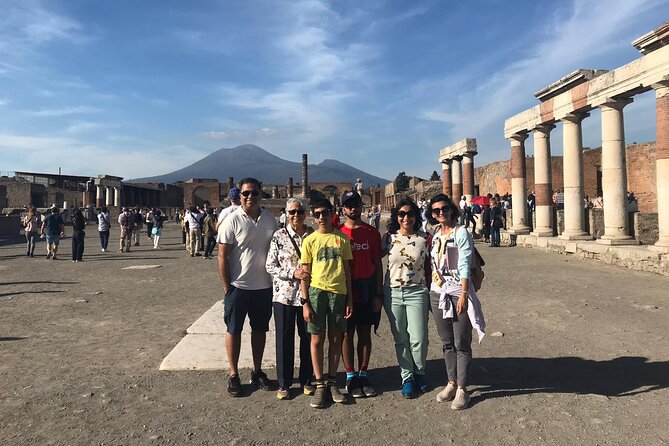
A big reason this tour scores so high is the guide style. You can feel it when a guide is comfortable talking and moving with the group, and when they can point out small features that would otherwise vanish in the chaos of a huge site.
In the feedback I used to shape my expectations, names like Lello and Italo come up often, with guides described as energetic, witty, and deeply familiar with the site. Another name you may encounter is Cela, mentioned as very personable and highly informed.
Even if your guide is different, the pattern matters. The tour works best when your guide is willing to explain what you are seeing, answer odd questions, and keep a steady pace so you do not miss the main attractions.
Some groups also note that ear sets are provided, which helps you hear clearly. That is not a small thing at Pompeii, where noise, distance, and crowds can scramble audio.
Price and value: what $71.35 buys you in real time
At $71.35 per person, this is not the cheapest way to visit Pompeii. But it is also not priced like a luxury day.
Here is what you get for the money based on the tour details:
- Local guide (the part you cannot easily DIY)
- Admission tickets included for the tour experience
- A tight route that hits forum, theater, bathhouse areas, and the Lupanare
- Small group size, up to 16 people
- About 2 hours, which is a sweet spot if you do not want to spend the whole day stuck in museum mode
If you only have a half day, a guided format is often better value than buying separate entry tickets and trying to guess what to prioritize. Pompeii’s scale is the catch. Without a guide, you might see a lot, but you may not understand much of what you are seeing.
If you have more time, the guided tour can still be a win because it gives you a framework. After that, you can wander with purpose rather than random roaming.
Timing, pace, and what to do right after
The tour runs about 2 hours. There is also a note that the 5 pm tour lasts 2 hours, so do not plan a long dinner right after without buffer time.
Because you are walking the ancient streets and moving between key areas, you will cover ground quickly. That is ideal if you want momentum, but it can feel intense if you get tired easily on uneven surfaces.
If you still have energy after the tour, stick around. Pompeii is huge, and even with a guide route, you will probably want to return to sections you loved most. Think of the tour as a smart orientation, not as the final word.
Who this Pompeii tour fits best
This is a strong match if you:
- Want an introduction that connects ruins to real Roman life
- Prefer a guide to interpret the site rather than piecing things together yourself
- Like smaller groups, with room for questions
- Have limited time and want the main attractions in one pass
It is also a good option for families or mixed ages who benefit from structure. You get a sequence of stops that feel varied, from public life in the forum to entertainment in the theater, and then the bathing and business parts that flesh out daily routines.
Just be honest with yourself about the walking. You are on original ground and lava rock, so comfortable shoes matter.
Should you book this skip-the-line Pompeii tour?
I think you should book it if you want Pompeii to feel clear and guided, not like a scavenger hunt. The included admission, small group size up to 16, and the focus on major stops make it a solid value for a 2-hour window.
Skip it only if you want total freedom to wander slowly on your own, or if you dread uneven ancient ground. Otherwise, this tour is a practical way to see Pompeii’s best-known areas with the explanations that actually make them click.
FAQ
How long is the Pompeii skip-the-line tour?
It runs for about 2 hours.
Is admission to Pompeii included?
Yes. Admission tickets are included as part of the tour.
Does this come with food?
No. Food is not included.
Is this a general ticket you can use to enter by yourself?
No. This is guided tour confirmation, and you can use it only with the guide.
Where do I meet the guide in Pompeii?
The meeting point is Hotel Vittoria, Piazza Esedra, 80045 Pompei NA, Italy, and the tour ends back at the meeting point.
How do I get to Pompeii from Naples or Sorrento?
You can take the Circumvesuviana train from Naples or Sorrento to Pompei Scavi station, then make your way to the tour area.
What group size and language should I expect?
The tour is offered in English and has a maximum of 16 travelers.
Can I cancel for a full refund?
Yes, you can cancel up to 24 hours in advance for a full refund. If you cancel less than 24 hours before the start time, you do not get a refund.
More Tours in Pompeii
- Pompeii Small Group Tour with an Archaeologist★ 5.0 · 6,593 reviews
- Pompeii and Herculaneum Small Group Tour with an Archaeologist★ 5.0 · 1,350 reviews
- Skip the Line Guided Tour of Pompeii led by an Archaeologist★ 5.0 · 703 reviews
- Pompeii Ticket + Tour with Optional Tasting Experience at Pompeii★ 5.0 · 663 reviews
- Pompeii private tour with an Official Guide★ 5.0 · 631 reviews
More Tour Reviews in Pompeii
- Pompeii Small Group Tour with an Archaeologist★ 5.0 · 6,593 reviews
- Discover the Ancient Ruins of Pompeii: Day Trip from Rome★ 3.5 · 2,247 reviews
- Pompeii and Herculaneum Small Group Tour with an Archaeologist★ 5.0 · 1,350 reviews
- Skip the Line Guided Tour of Pompeii led by an Archaeologist★ 5.0 · 703 reviews
- Pompeii Ticket + Tour with Optional Tasting Experience at Pompeii★ 5.0 · 663 reviews
Pompeii with an Archaeologist
- Explore Pompeii with an Archaeologist★ 5.0 · 511 reviews
- Complete Pompeii Skip the Line Tour with Archaeologist Guide★ 4.5 · 379 reviews
- Pompeii Private Tour with an Archaeologist Guide★ 5.0 · 184 reviews
- Tour in the ruins of Pompeii with an archaeologist★ 5.0 · 150 reviews
- Semi – Private Tour of Pompeii with an Archaeologist★ 5.0 · 99 reviews
More ways into Pompeii Archaeologist Tours.
 ★ 5.0Explore Pompeii with an ArchaeologistFrom $35511 reviews
 ★ 4.5Pompeii: Tour with Archaeologist Guide & Skip-the-Line EntryFrom $57478 reviews
 ★ 4.5Complete Pompeii Skip the Line Tour with Archaeologist GuideFrom $71379 reviews
 ★ 5.0Pompeii Private Tour with an Archaeologist GuideFrom $178184 reviews
 ★ 5.0Tour in the ruins of Pompeii with an archaeologistFrom $338150 reviews
 ★ 5.0Semi – Private Tour of Pompeii with an ArchaeologistFrom $3699 reviews
 ★ 5.02.5-Hour Guided Tour of Pompeii with an ArchaeologistFrom $7178 reviews
 ★ 4.9Positano: Old Town Walking Tour with Archaeologist GuideFrom $11233 reviews
Other useful routes from here