
REVIEW · GUIDED
Visit Pompeii with a local expert guide
Pompeii clicks when a guide sets the scene. You get certified guidance and a tight plan that uses your time well, with admission tickets included for the main stops. The one catch: three hours is a lot of walking, so come prepared and comfortable with stairs and uneven ground.
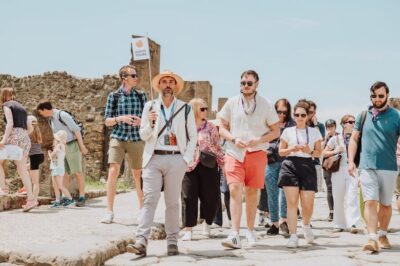
This is a private experience for up to 10 people, led by Guide Turistiche Campania di Febronia Amato. It starts at Piazza Esedra (9:00am) and runs about 3 hours, ending back where you began, with the option to choose your language for the explanations.
If you want Pompeii as more than a photo stop, this kind of guided format helps you understand what you’re seeing and why it mattered to daily Roman life.
Key highlights at a glance
- Small private group up to 10, so questions stay easy and the pace is adjustable.
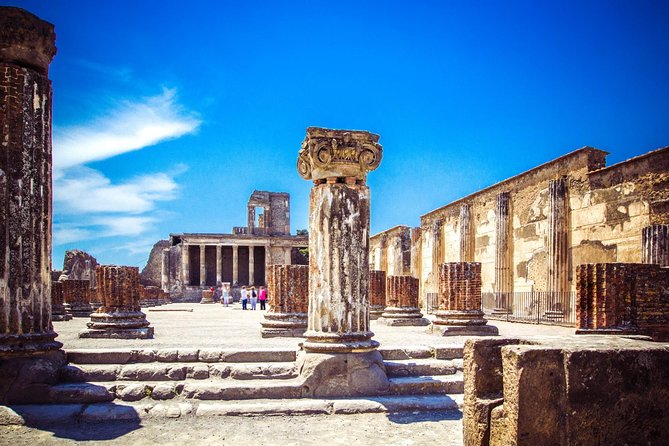
- Admission tickets included for the key sites on the route, like Foro and Teatro Grande.
- Two “must-know” locations picked for how they show public life and social habits.
- Morning start at Piazza Esedra, which helps you get moving early.
- Guide-led facts and stories, including the kind of witty, attentive teaching that keeps younger visitors engaged.
- A provider backed by experienced guides, with names like Alessia, Soraya, and Piero showing up in strong feedback.
Pompeii at a human pace: a 3-hour private walk with a pro
Pompeii is one of those places where your eyes can easily zoom past the details that make it meaningful. A good guide stops that. Instead of you guessing what you’re looking at, you get a running explanation of how this city worked, what people did, and how the buildings fit together.
I like that this tour is built around a short, focused time window. About 3 hours is enough to see major highlights without turning the whole visit into a blur. You also get a private setting, not a crowded herd. That matters at Pompeii, because the best parts are often the small ones, like how a space was used, who would have been there, and what the design signals about daily life.
The setup also helps you mentally. You start at Piazza Esedra, then move into public Pompeii: the places where people gathered, performed, traded, and discussed politics. That structure makes the ruins feel like a functioning city, not a random collection of walls.
Where you start: Piazza Esedra morning meeting, then back again
The meeting point is Piazza Esedra, 80045 Pompei NA, Italy, with the tour starting at 9:00am. Ticket redemption is also listed at 80045 Pompei, Metropolitan City of Naples, Italy, so the whole morning is designed to keep friction low.
This is the kind of logistics that helps you enjoy the experience. You are not stuck coordinating separate transport once you arrive, because the tour ends back at the meeting point. It’s also described as near public transportation, which is helpful if you’re handling your own trip from Naples or the surrounding area.
One practical note: the tour includes guide service, but private transportation is not included. So you’ll want to plan how you’ll get to Pompeii on your own. The day feels easiest if you already know your route in advance, especially if you’re traveling with a group of mixed ages.
Also, this activity requires good weather. If weather is poor, it may be canceled and you’ll be offered another date or a full refund, so don’t plan anything tight right after your Pompeii slot.
Stop 1, Foro de Pompeya: how Romans lived in public
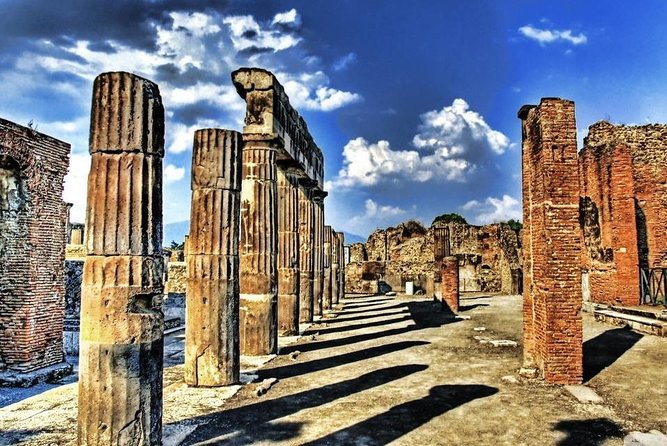
The tour’s first stop is Foro de Pompeya for about 30 minutes, with the admission ticket included. This is the heart-of-the-city idea, the public zone where Roman civic life happened.
Here’s what I think you’ll get out of this stop if your guide is doing the job well: you stop treating the Forum like a big open space and start seeing it as a schedule of social behavior. You learn what the Forum meant, not just what it looks like. It’s where status and power showed up in everyday ways. It’s where people would have walked, talked, watched, and conducted business.
A strong guide approach matters here because the Forum can feel confusing at first. You might wonder what’s important and what’s just background. In feedback connected to this Pompeii guiding style, you’ll see guide names like Alessia and Soraya tied to the kind of teaching that helps you form a clear mental map. That is exactly what you want in the first 30 minutes.
Potential drawback to keep in mind: 30 minutes is just enough time to understand the big picture, not to linger over every detail forever. If you love reading inscriptions or taking lots of slow photos, you’ll likely want to do some extra exploring on your own after the tour ends.
Stop 2, Teatro Grande: dating the building and reading human behavior
Next up is Teatro Grande, around 50 minutes, again with admission included. This stop is longer, and for a reason. A theater is not just architecture. It’s a window into habits, schedules, and community life.
Your guide will likely connect the dots between performance culture and how the city organized itself socially. That means you’re not just looking at seating and stonework. You’re learning about why this space existed, how people gathered there, and what audiences were doing when they came to hear plays or performances.
This is also one of Pompeii’s great “wow” zones. The structure is preserved in a way that makes it easy to picture the scene. In the feedback tied to this experience, people describe the feeling as a return to the past with strong clarity about how the people lived right before the disaster. That clarity often comes from stops like a theater, where the human purpose is obvious even when the event is gone.
As for timing, 50 minutes gives you time to grasp the main ideas and still look around. Still, Pompeii is not a museum where you can stop at one display and take your time forever. The ruins are spread out, and the ground can be uneven. Wear shoes you trust.
The middle moments: public places that connect the dots
Between the two named stops, you’ll cover public places as part of the route. The itinerary doesn’t list every single stop by name, but the idea is clear: you are not simply hopping from ticketed highlight to ticketed highlight. You’re guided through the connections that make Pompeii feel like a lived-in city.
This is where a guide earns their pay. The best Pompeii guides don’t make you feel like you’re only chasing top sights. They help you connect what you see in one space to what you saw earlier, so you can build an understanding as you walk.
I also like this segment because it’s where questions often come up naturally. You’ll see features and wonder about daily routines, social rules, or how certain spaces were used. In a small private group, you can usually ask on the spot, instead of waiting your turn behind a bigger crowd.
If you’re someone who gets overwhelmed by too many facts in one sitting, this connecting route can help. It turns scattered visuals into a line of reasoning.
Language options and the comfort of a private group
The tour offers a choice of language you prefer. That sounds simple, but in practice it’s huge for Pompeii. You’re dealing with ancient names, architecture terms, and social context. When you understand the explanation clearly, you enjoy the ruins more.
This is also private, meaning only your group participates. The price is listed per group, up to 10 people. That detail matters if you’re traveling with friends, a family, or anyone who wants the experience to feel personal rather than like a large-group lecture.
Feedback tied to this style of Pompeii visiting repeatedly emphasizes how guides stay attentive and adjust to the group. Names that show up in strong feedback include Alessia, Alicia, Soraya, and Piero. The consistent thread is teaching that feels both expert and human. You see people calling out guides for being attentive, funny, and professional, not robotic.
One practical consideration: your group size affects pacing. With up to 10 people, it should still stay manageable, but if you have anyone with slower walking pace, you may want to mention that early to help your guide adjust the rhythm.
Tickets included, but plan your time like a walker
Admission tickets are included for the main stops: Foro de Pompeya and Teatro Grande. That’s a real value point, because it saves you from dealing with separate purchases and keeps the start time focused.
Still, Pompeii is a site where your time is more about movement than ticking boxes. The tour runs about 3 hours, starting at 9:00am. That’s enough time to build understanding and see key architecture, but not enough time to do everything at a slow museum pace.
If you want extra time for exploring on your own, keep it in mind. You can always add self-guided wandering after the tour returns you to the meeting area. That’s a smart approach because your guided hours act like orientation, then your extra hours let you follow what grabbed your attention.
Also remember: this experience requires good weather. If you’re traveling in a shoulder season or a rainy period, check forecasts. Your best experience comes with walking comfort and visibility.
Price value: what $210.52 per group really buys
The price is listed as $210.52 per group, up to 10 people, for about 3 hours. On paper, that might look high compared with per-person museum tickets. But grouped tours often work out better when you consider what you’re actually paying for.
You’re paying for:
- a guide service (the explanations are the product, not just entry),
- included admission for the two main sites,
- a private format for your group rather than a shared schedule,
- and a short route that targets public-life essentials.
If your group is near the 10-person limit, the per-person cost is very reasonable. If you’re a smaller group, it costs more per person, but you gain the benefit of private attention.
This is the kind of tour that can prevent wasted time. Pompeii can be overwhelming without a framework. A guide who gives you a clear picture can save you from getting lost in the wrong details and missing the bigger meaning of the ruins.
If you’re traveling as a couple or small family and want the best experience without trying to plan everything, this is a good value category. The tour is short enough that it stays realistic for teens and adults, and the focus on public life and social spaces helps everyone connect to the story.
Who should book this Pompeii guided visit
I’d put this in the sweet spot for:
- first-timers to Pompeii who want structure and clarity fast,
- couples and families who want a private, calm pace,
- small groups up to 10 who prefer a guide over an audio app,
- visitors who like learning how spaces worked socially, not just what they used to be called,
- people who are nervous about navigating on their own and would rather follow a plan.
It may not be the best fit if you want a long, self-paced explore-every-corner day. Three hours is a sprint through key public areas. You’ll leave with a strong understanding of the big picture, but you might crave more time in the quieter side streets and less obvious zones.
For anyone sensitive to heavy walking, plan accordingly. Pompeii is not smooth ground, and even a well-paced tour involves stairs and uneven sections.
Small tips to make the most of your 9:00am start
A few practical moves can make this tour feel easier and more rewarding:
- Wear shoes with good grip. Pompeii ground can be rough, and you’ll be on your feet for most of the 3 hours.
- Bring water. The tour doesn’t list water supplies, so plan for your own.
- Give yourself a few extra minutes at the start. Meeting at Piazza Esedra is straightforward, but arriving early reduces stress.
- If you have interests, tell your guide early. Are you curious about politics in the Forum, or how a theater shaped community life? A good guide can steer the storytelling.
- If you’re photo-focused, decide whether you want a few key shots or lots of slow browsing. Your best time is when you pair photos with understanding.
The goal is to leave Pompeii feeling oriented. When you can “read” the ruins, you remember more and enjoy the place more.
Should you book this Pompeii tour?
Book it if you want a guided Pompeii visit that concentrates on what the city felt like to live in, especially the public spaces like the Forum and Teatro Grande. The private group size, the included admission, and the morning start make it an efficient way to understand the ruins without spending your energy on guesswork.
Pass or consider adding extra time if you’re the type who wants a long, unhurried wander across many areas. This tour is designed for momentum and clear takeaways, not a full-day self-guided marathon.
If you’re choosing between a basic ticket and a guided plan, I’d pick the guided plan. Pompeii is one of those places where the difference between seeing and understanding is often just one good guide standing beside you.
FAQ
How long is the Pompeii tour with a local expert guide?
The tour lasts approximately 3 hours.
What is the meeting point for the tour?
You meet at Piazza Esedra, 80045 Pompei NA, Italy.
Where does the tour end?
The activity ends back at the meeting point.
Is the admission ticket included?
Yes. Admission tickets are included for the stops listed, including Foro de Pompeya and Teatro Grande.
Is this a private tour?
Yes. It is a private tour or activity, and only your group participates.
How much does the tour cost?
The price is $210.52 per group, up to 10 people.
Does the tour include private transportation?
No. Private transportation is not included.
What is the cancellation policy?
You can cancel for a full refund if you cancel up to 24 hours in advance. If you cancel less than 24 hours before the start time, you will not receive a refund. The experience requires good weather, and if it is canceled due to poor weather you will be offered a different date or a full refund.
With a Local Guide
- Skip the Line Guided Tour of Pompeii led by an Archaeologist★ 5.0 · 703 reviews
- Pompeii private tour with an Official Guide★ 5.0 · 631 reviews
- Pompeii Skip-the-line Tour with Archaeologist Guide★ 5.0 · 559 reviews
- Pompeii Guided Tour & Horse Riding on Vesuvius with Lunch★ 5.0 · 419 reviews
- Complete Pompeii Skip the Line Tour with Archaeologist Guide★ 4.5 · 379 reviews
More Tour Reviews in Pompeii
- Pompeii Small Group Tour with an Archaeologist★ 5.0 · 6,593 reviews
- Discover the Ancient Ruins of Pompeii: Day Trip from Rome★ 3.5 · 2,247 reviews
- Pompeii and Herculaneum Small Group Tour with an Archaeologist★ 5.0 · 1,350 reviews
- Skip the Line Guided Tour of Pompeii led by an Archaeologist★ 5.0 · 703 reviews
- Pompeii Ticket + Tour with Optional Tasting Experience at Pompeii★ 5.0 · 663 reviews
More ways into Guided.
 ★ 4.8Pompeii: Entry Ticket and Guided Tour with an ArchaeologistFrom $3519,459 reviews
 ★ 4.2Pompeii: Entry Ticket with Optional Audio GuideFrom $2612,360 reviews
 ★ 4.0Pompeii: Skip-the-Line Entrance Ticket with Audio GuideFrom $392,509 reviews
 ★ 4.6Pompeii: Skip-the-line-Ticket and Guided TourFrom $641,152 reviews
 ★ 4.9Pompeii: Guided Tour with Skip-the-Line EntryFrom $58812 reviews
 ★ 4.1Pompeii: Skip-the-Line Entry Ticket with Digital Guide AppFrom $22770 reviews
 ★ 4.5Pompeii Express Guided Tour by Train from SorrentoFrom $65770 reviews
 ★ 4.5Skip-the-Line Pompeii Guided Tour from SorrentoFrom $90722 reviews