
REVIEW · SKIP THE LINE
Pompeii Skip-the-Line Tour with Expert Archeological Guide
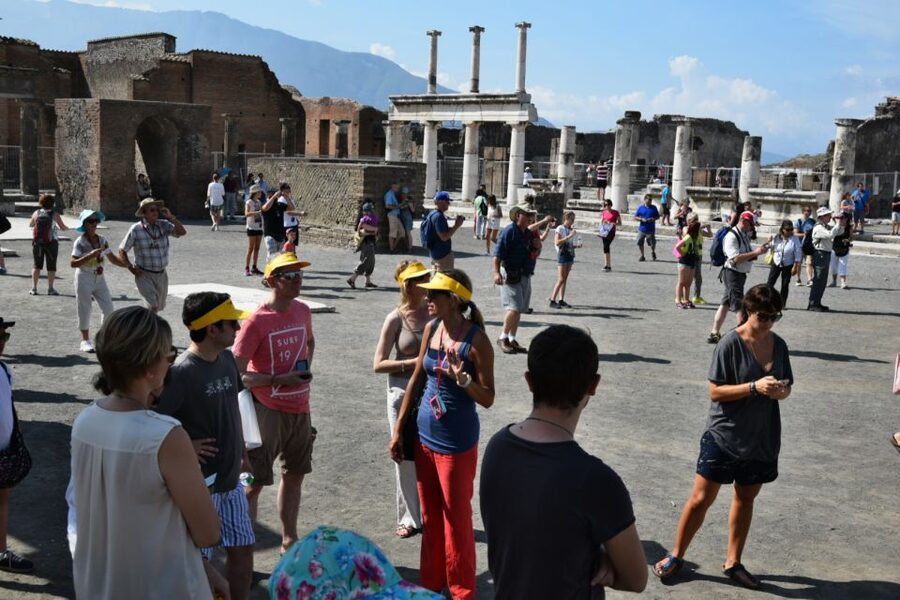
Pompeii hits different when someone guides the pace. This skip-the-line Pompeii tour is built for getting you into the best-preserved parts fast, with an archaeologist explaining daily life as you walk the streets and buildings frozen since 79 AD. You also get a short stop at a cameo workshop before you start.
I love that the tour is led by a licensed archaeology guide who connects sights like the Forum, villas, shops, and preserved brothels to real Roman routines. I also like the concentrated route, because you visit major zones in about 2 hours inside the ruins instead of wandering lost in a huge site.
One thing to think about: the experience can feel time-pressured at busy moments, and some people find the audio setup (ear pieces) uncomfortable or hard to keep in place.
Key highlights to know before you go
- Licensed archaeologist guide with English, Italian, Spanish, or French (and sometimes bilingual support)
- Skip-the-line entry that saves energy when the site gets crowded
- Cameo workshop stop with a live carving demonstration, plus a quick shop
- Major Pompeii stops: Forum areas, baths, markets, and two standout homes (Vettii and Menander)
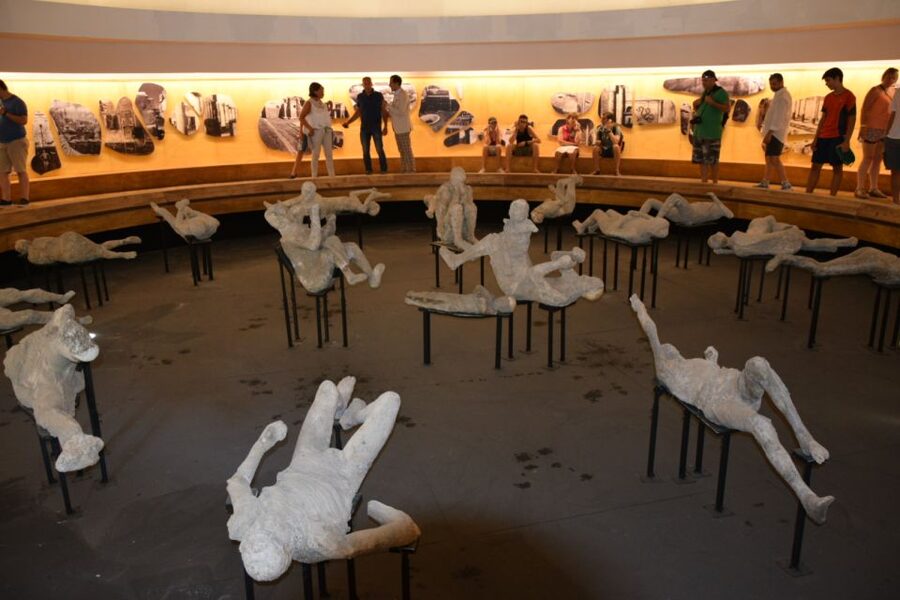
- Eruption cast viewing that adds emotional weight to the history
- Small group style, but group sizes can vary by departure and circumstances
Why 2 Hours in Pompeii Can Actually Feel Like Enough
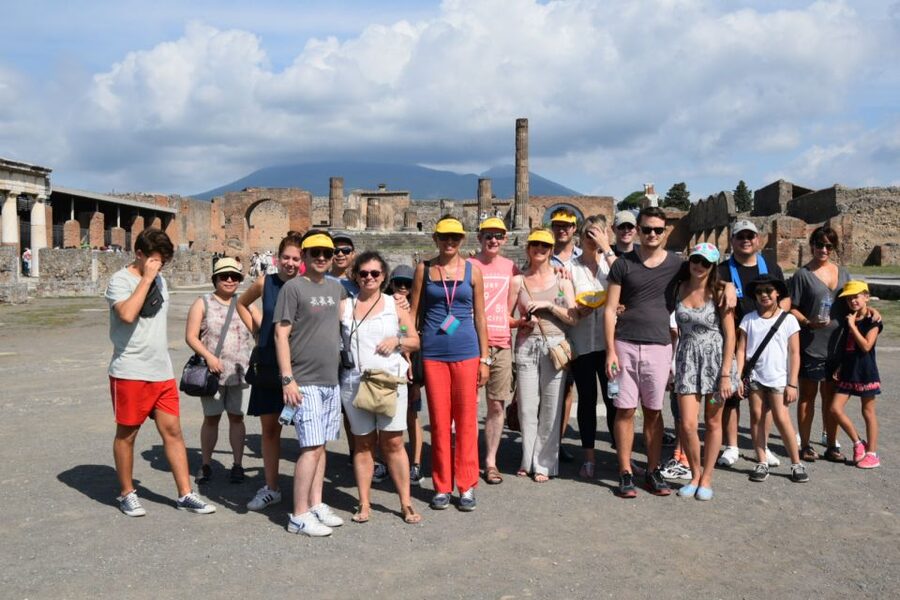
Pompeii is big, and on your own you can spend half the day just getting your bearings. This tour solves that by keeping the focus on the parts that tell the clearest story of how Romans lived, ate, prayed, worked, and socialized.
The best part is the structure. You are not meant to do everything. You are guided through the core of the city in a tight loop, with enough time at each stop to understand what you are looking at and take photos where you can.
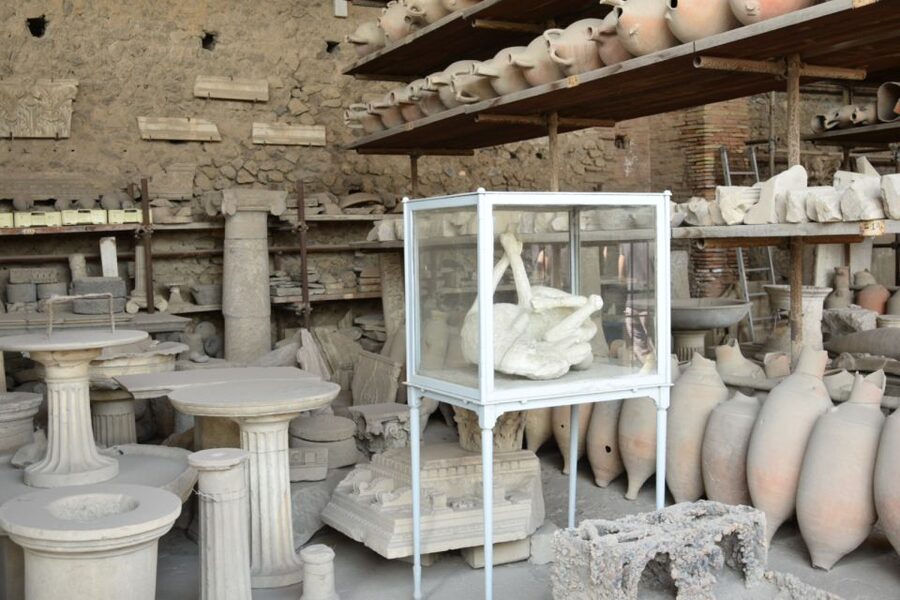
You will also get a small emotional reset during the walk. The route includes viewing plaster casts of victims from Vesuvius’ eruption in 79 AD, so the site stops being just “ruins” and turns into people, panic, and everyday life cut short.
Skip-the-Line Entry: Saving Time for the Good Stuff
You are paying for two things: skip-the-line access and expert interpretation. The entrance part matters because Pompeii can have slow-moving lines even when you plan ahead.
With a guide, that saved time turns into more time on foot inside the ruins. And instead of asking yourself, What am I looking at?, you get context while you are standing in front of it.
Also note this practical wrinkle: on the first Sunday of each month, admission to the archaeological site is free for eligible visitors. The catch is that tickets can’t be reserved ahead of time, so entry is not guaranteed. If that day matters to you, show up early and be ready for contingencies.
Fortuna Village Meeting Point: Don’t Overthink It, Just Be Early
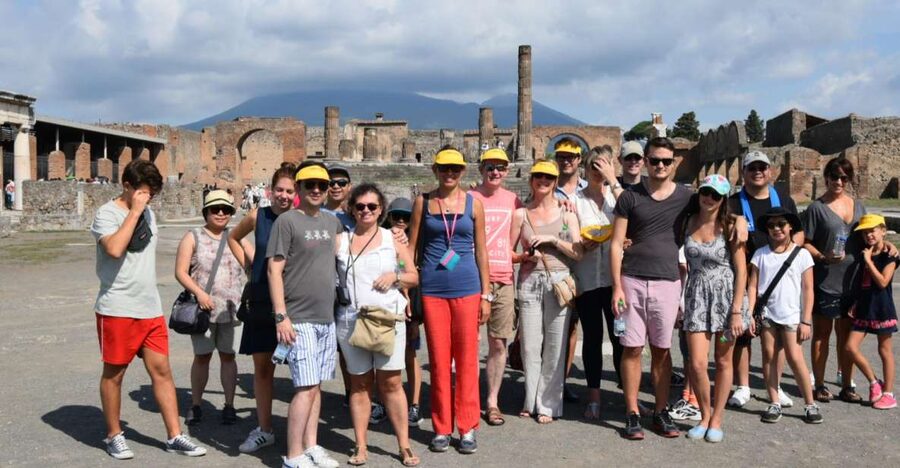
Meet your guide outside the entrance of Fortuna Village Pompei. The guide holds a sign with the company name, so look for that before you start scanning the crowd.
Plan to arrive a bit early. Pompeii arrival points can feel chaotic, and if you are even slightly off, you can lose the timing of a smooth start. Bringing your tour confirmation details (on your phone or paper) also helps, especially if you need to communicate quickly.
The Cameo Workshop Stop: A Short Detour That Adds Color
Before you enter Pompeii, the tour includes a brief stop at a traditional cameo workshop. You can watch artisans carving delicate shell cameos by hand, which is a nice contrast to everything you’re about to see in the ruins.
This is not a long museum-style detour. It is quick, practical, and usually timed so you can reset your legs and check the day.
There is also a restroom break at this stage. If you go in knowing where it is, you’ll spend less mental energy later in the ruins when bathrooms are not convenient.
Inside Pompeii: From Theatres and Street Food to the Civic Heart
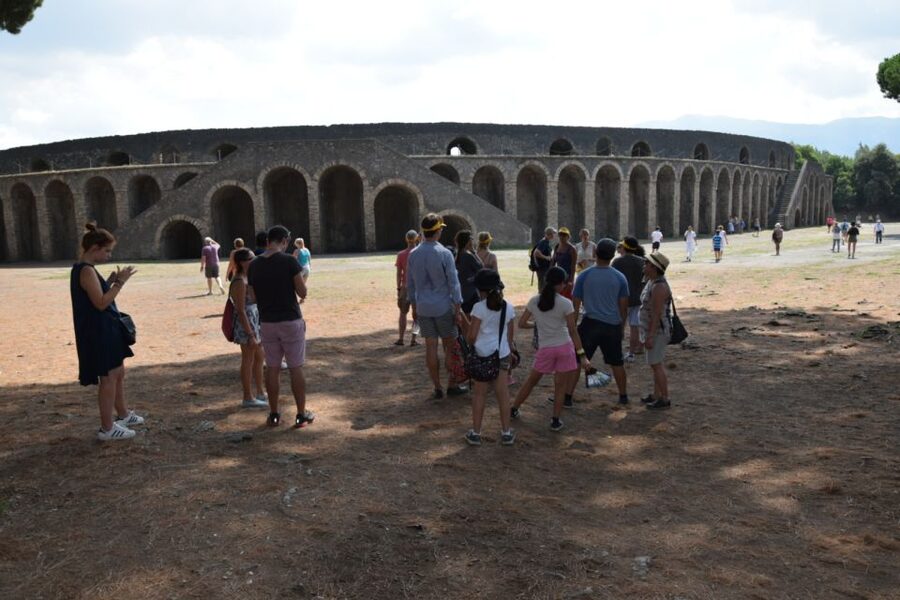
The guided walk is paced to keep you moving, but you still get real time at key stops. The first phase uses the city’s public spaces and everyday commerce to build context fast.
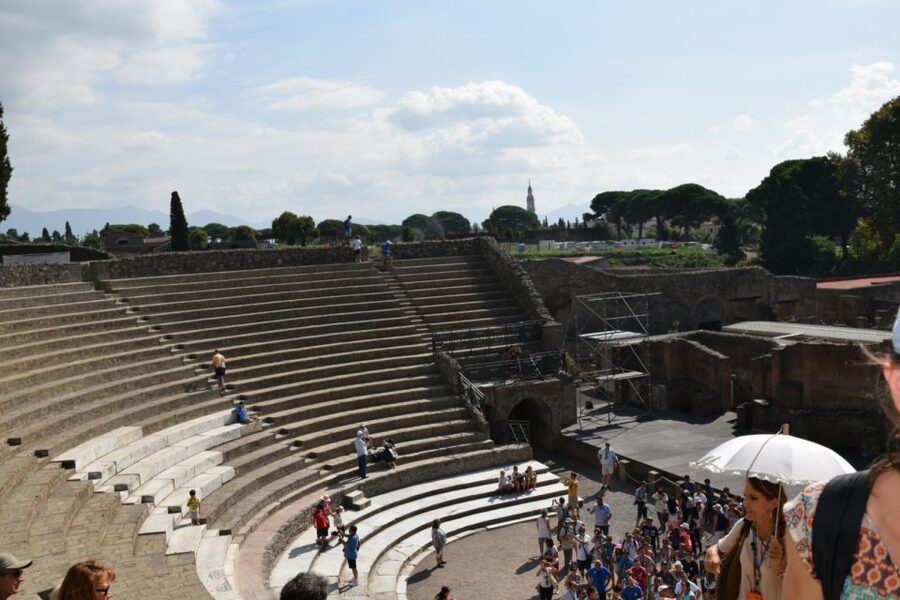
- Large Theatre (about 5 minutes): You’ll get an idea of Roman public entertainment without a long stop. It is a good opener because it signals how the city gathered people in one place.
- Teatro Piccolo (photo stop about 5 minutes): You’ll get a quick shot opportunity. Treat it like a visual comparison point, not a long lecture.
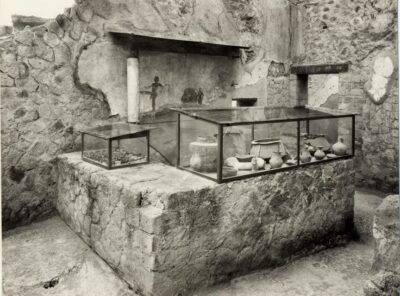
- Thermopolium (about 5 minutes): This is where Roman street life shows up. A thermopolium was a casual food spot, and the guide’s explanations help you see it as daily routine, not just a pretty ruin wall.
- Foro Civile di Pompeii (about 10 minutes): This is the civic center zone, and it’s where politics, public identity, and civic movement become clearer. Expect the guide to connect these spaces to what people did and how they interacted.
The overall value of this first stretch is momentum. You are learning the “shape” of the city as you go, so later stops make more sense.
House of the Vettii and House of Menander: Seeing Roman Homes With a Story
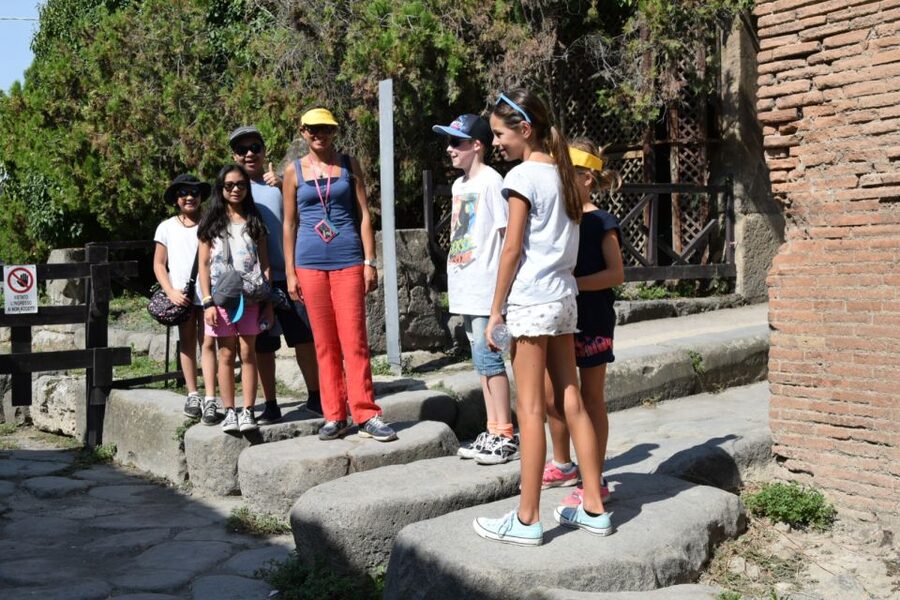
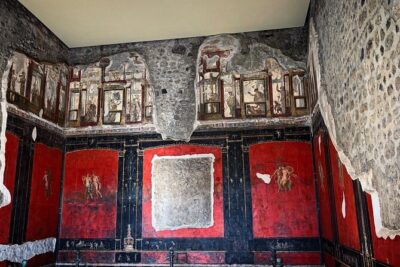
Two of the biggest domestic stops are the House of the Vettii and the House of Menander, each with about 20 minutes on the schedule.
What makes these stops work on a guided tour is that you are not just looking at stone walls. You are learning how homes functioned in Pompeii: where people met, how rooms related to daily work and socializing, and how status showed up in domestic spaces.
If you want a practical tip, keep your camera ready but don’t treat photos as your only job. Spend a little time letting the guide point out the cues that make these houses feel lived-in rather than archaeological puzzles.
Also, the tour is designed to include the kind of preserved areas that help you understand daily Roman life, including shops, markets, and preserved brothel spaces mentioned as part of the highlights. That blend is what makes Pompeii feel like a city instead of a collection of monuments.
Forum Baths and Macellum: How People Cleaned, Traded, and Talked
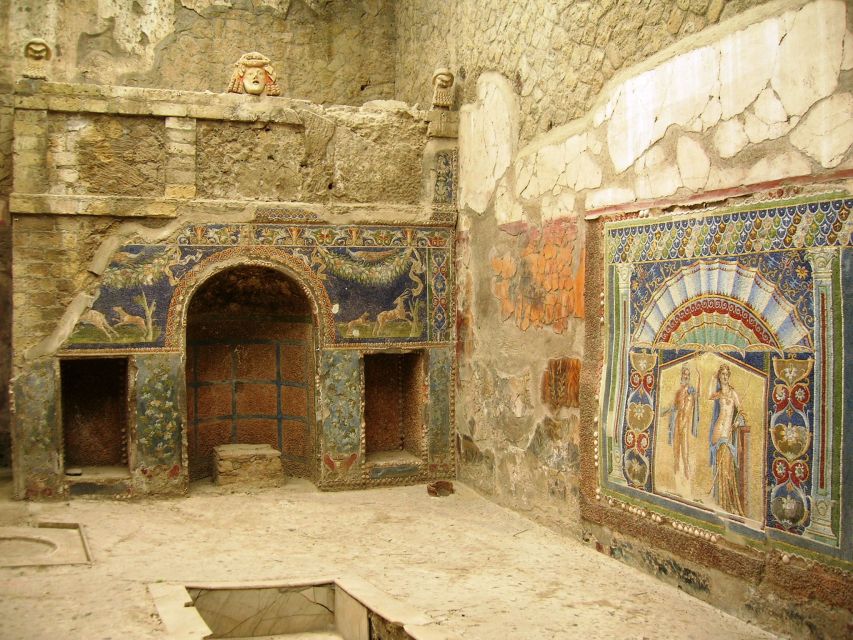
The Forum Baths get about 20 minutes, which is a smart slot because baths were more than washing. In Roman life, baths were social hubs where conversation happened alongside routine.
You also visit the Macellum of Pompeii for about 10 minutes. This market stop matters because it connects the city to food, trade, and daily purchasing. Even if you do not know Roman product names, you’ll understand the setting through the guide’s explanation.
This is also where you can feel why the tour lasts about two hours. You are hitting the “living system” of Pompeii, not just the biggest scenic points.
Temples of Jupiter and Apollo: Quick Photo Stops With Clear Context
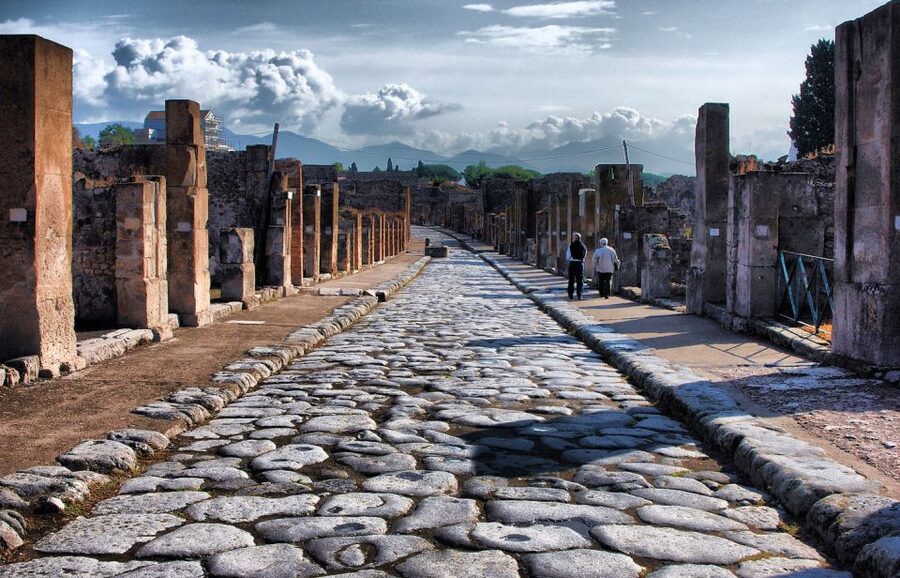
The schedule finishes with religious landmarks, timed to keep the loop efficient.
- Temple of Jupiter (photo stop about 5 minutes)
- Temple of Apollo (visit about 10 minutes)
The photo stop format is not ideal if you want long lingering, but it works if the guide gives you enough context to appreciate what you are seeing. The Apollo visit is the more substantial stop here, and it gives you a chance to slow down slightly before you exit.
If religion is not your first interest, don’t skip the guide’s explanations. In Pompeii, the temples are part of daily rhythm, not separate from everyday life.
Plaster Casts and the Emotional Weight of 79 AD
One of the most impactful parts of this tour is the moment the story turns personal. During the walk, you will encounter plaster casts of victims from Vesuvius’ eruption in 79 AD.
This is not just a sad photo opportunity. The guide’s narration helps connect what you see to how quickly disaster changed ordinary routines. It is the thing that often makes Pompeii stay with you longer than the architecture.
Guide Quality, Ear Pieces, and Group Size: What You Should Plan For
Most of the value here comes down to how smoothly the guide keeps the group together and how clearly you can hear explanations.
Language support is solid on paper, with live guide options in English, Italian, Spanish, and French, and the tour may be bilingual. In practice, speaking speed can vary. For example, one guide experience named Donna noted that the guide spoke quickly with a heavy accent, while another moment with Michael was praised for clear, understandable information.
Audio gear is another factor. Some departures provide ear pieces, and at least one group reported that the ear pieces felt awful, did not fit well, and kept falling off. If you are sensitive to headsets, plan to advocate for yourself early. Adjust the fit quickly, and if it still doesn’t work, ask to hear the guide more directly when possible.
Group size can also be a reality check. The tour markets a small group feel, but some departures ran larger than expected. If you prefer quiet and lots of individual attention, arrive early, stand where you can hear, and ask questions when the guide pauses.
Price and Value: Why $31 Might Be a Good Deal
At $31 per person for a roughly two-hour guided circuit, the value comes from two practical advantages.
First, you skip the ticket line and you get entry handled for you. That reduces stress and time lost at the gate.
Second, you pay for a licensed archaeologist guide who can tell you what you are looking at while you are looking at it. In a place as visual and confusing as Pompeii, that interpretation is the difference between seeing buildings and understanding a city.
One more value note: this tour also includes the cameo workshop stop, so the day feels more like a local experience and less like a straight archaeological sprint. That small add-on can make the overall outing feel more complete.
What to Bring, What Not to Bring, and Who This Tour Fits
Wear comfortable shoes. Pompeii has uneven surfaces, and you will be walking for the whole two-hour guided portion plus the cameo stop time.
Bring a passport or ID card, because entry rules apply to free admission for children under 18 and you may need valid identification. Also bring water, a camera, and comfortable clothes for warm conditions.
Items not allowed include pets, luggage or large bags, drones, and walking sticks. And there are rules around minors, with unaccompanied minors not allowed.
Accessibility note is important: this tour is not suitable for mobility impairments and wheelchair users. The schedule assumes you can walk through the ruins comfortably.
Best fit? This is ideal if you:
- want skip-the-line convenience
- like learning from a guide while you walk
- want a structured sampler of Pompeii in a short time
- are okay with a quick pace and photo stops at some landmarks
Should You Book This Pompeii Skip-the-Line Tour?
I think this is a strong pick if you want Pompeii with less guessing and more meaning. The price is reasonable for a guided, time-efficient visit, and the route includes both the civic center and domestic life, with standout stops like the House of the Vettii, House of Menander, Forum Baths, and the Macellum.
Book it if you like your history explained in real time and you don’t want to spend your energy figuring out what is where. I would hesitate only if you know you struggle with audio ear pieces or you need a very slow pace with lots of extra time at each stop.
If you want a guided Pompeii that feels organized and emotionally grounded, this tour is easy to recommend.
FAQ
How long is the guided portion inside Pompeii?
The guided tour lasts approximately 2 hours inside the ruins.
Is skip-the-line entry included?
Yes. The tour includes Pompeii skip-the-line entrance.
Where do we meet the guide?
Meet the guide outside the entrance of Fortuna Village Pompei. The guide holds a sign with the company name.
What languages are available for the live guide?
The live tour guide is available in English, Italian, Spanish, and French. The tour may be bilingual.
Is this tour wheelchair accessible?
No. This tour is not suitable for people with mobility impairments, and it is not for wheelchair users.
What should I bring and what is not allowed?
Bring passport or ID, comfortable shoes, camera, water, and comfortable clothes. Pets, luggage or large bags, drones, walking sticks, and unaccompanied minors are not allowed.
With a Local Guide
- Pompeii: Entry Ticket and Guided Tour with an Archaeologist★ 4.8 · 19,459 reviews
- Pompeii: Skip-the-Line Entrance Ticket with Audio Guide★ 4.0 · 2,509 reviews
- Pompeii: Skip-the-line-Ticket and Guided Tour★ 4.6 · 1,152 reviews
- Pompeii: Guided Tour with Skip-the-Line Entry★ 4.9 · 812 reviews
- Pompeii: Skip-the-Line Entry Ticket with Digital Guide App★ 4.1 · 770 reviews
More Tours in Pompei Campania
- Pompeii: Entry Ticket and Guided Tour with an Archaeologist★ 4.8 · 19,459 reviews
- Pompeii: Small Group Tour with an Archaeologist★ 4.8 · 12,264 reviews
- Pompeii: Skip-the-line-Ticket and Guided Tour★ 4.6 · 1,152 reviews
- Pompeii: Small-Group Tour of Pompeii and Herculaneum★ 4.8 · 867 reviews
- Pompeii: Guided Tour with Skip-the-Line Entry★ 4.9 · 812 reviews
More Tour Reviews in Pompei Campania
- Pompeii: Entry Ticket and Guided Tour with an Archaeologist★ 4.8 · 19,459 reviews
- Pompeii: Small Group Tour with an Archaeologist★ 4.8 · 12,264 reviews
- Pompeii: Skip-the-Line Entrance Ticket with Audio Guide★ 4.0 · 2,509 reviews
- Naples: Pompeii and Mt. Vesuvius with Lunch and Wine Tasting★ 4.5 · 2,454 reviews
- Pompeii: Skip-the-line-Ticket and Guided Tour★ 4.6 · 1,152 reviews
More ways into Skip the Line.
 ★ 4.0Pompeii: Skip-the-Line Entrance Ticket with Audio GuideFrom $392,509 reviews
 ★ 4.8Skip-the-Line Pompeii Express Tour by TrainFrom $632,038 reviews
 ★ 4.6Pompeii: Skip-the-line-Ticket and Guided TourFrom $641,152 reviews
 ★ 4.9Pompeii: Guided Tour with Skip-the-Line EntryFrom $58812 reviews
 ★ 4.1Pompeii: Skip-the-Line Entry Ticket with Digital Guide AppFrom $22770 reviews
 ★ 4.9Pompeii Ruins Private Tour with Optional Skip-the-Line EntryFrom $254732 reviews
 ★ 4.5Skip-the-Line Pompeii Guided Tour from SorrentoFrom $90722 reviews
 ★ 5.0Skip the Line Guided Tour of Pompeii led by an ArchaeologistFrom $95703 reviews
Other useful routes from here