
REVIEW · MUSEUMS
Pompeii: Skip-the-Line Ticket and Virtual Museum
Pompeii without the waiting is a rare treat. This combo works because you start with a Virtual Museum that helps you picture the Forum, baths, and amphitheater, then you walk the real 50-hectare site with skip-the-line entry.
What I like most is how the virtual portion gives you instant context, and how the on-site time stays flexible, so you can slow down for fresco fragments, street layouts, and domus details.
One possible drawback: this is not a guided tour, so if you want nonstop interpretation, you’ll be doing more self-reading and deciding your own route through the ruins.
Key points before you go
- Skip-the-line entry saves you time at one of Italy’s most visited ruins
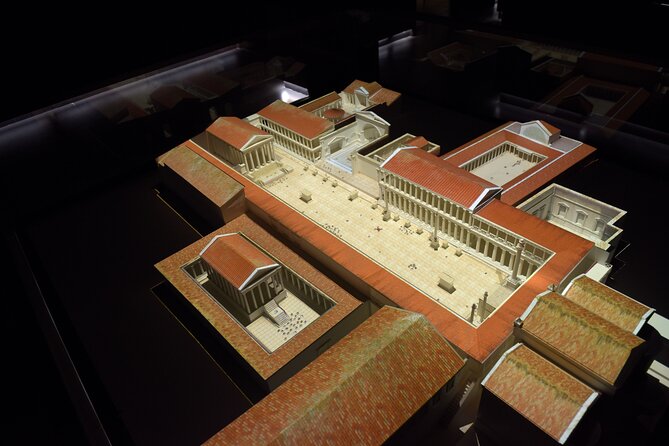
- Virtual Archaeological Museum uses animated and 3D reconstructions to explain what you are seeing
- Self-paced walking lets you spend as long as you want on the Forum, baths, houses, and shops
- Focus on major highlights including Amphitheater and dramatic theater, plus colorful fresco remnants
- City map and Wi-Fi help you keep your bearings without extra add-ons
- No guided tour or audio guide included, so plan to read signs and guide yourself
Pompeii in one day, without rushing (or guessing)
Pompeii is huge in feel, even if you only have a day. The ruins cover over 50 hectares, which means you will be making choices, even with skip-the-line entry. The smart part of this experience is that it blends two modes: an organized explanation first, then free exploring after.
You get a reserved ticket for the Virtual Museum, then you head to the archaeological site with a skip-the-line entry ticket. The Virtual Museum is built around animated reconstructions and 3D scenes, including key public spaces and a later recreation of Pompeii’s final moments in the Vesuvius eruption of 79 AD.
The value here is pacing. You are not trying to understand Pompeii from scratch while standing in front of stone fragments. You watch the reconstructions first, so your eyes catch more details once you’re walking the streets.
Meeting point and what to bring for a smooth start
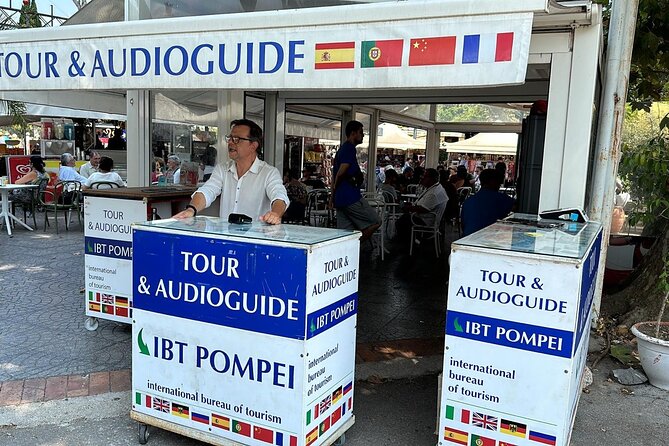
You meet at the Office IBT Center/Touristation next to Chalet Donna Lucia. Go with enough time to handle check-in calmly, because the whole point is that you avoid delays at the entrance, not at the start.
Bring your passport or ID card, since ID is required for all participants. For onsite rules, you cannot bring luggage or large bags, and you should expect strict behavior policies: no smoking, and no alcohol or drugs.
If you travel with a small dog, it is permitted inside the archaeological area, but it must be kept on a leash and carried when inside the buildings. Pets are not allowed otherwise, so plan ahead if your companion is not a small dog.
Virtual Museum first, then real streets: why the order matters
The Virtual Museum is not just a video room. It’s designed as a way to see the site through the eyes of a Pompeian citizen, then connect that viewpoint to the ruins you will walk through.
In practice, that means you get animated reconstructions of the Forum, public baths, and the Amphitheater. You also see 3D reconstructions of important buildings, plus a multimedia video reconstruction that leads into the eruption spectacle associated with the end of the city.
This matters because Pompeii can be visually confusing if you arrive cold. In one place you might see doorways without frames, columns without their roofs, and walls with patches of color that are easy to underestimate. The virtual portion gives your brain “hooks,” so you start noticing patterns in the masonry and layout while you’re on-site.
Language can be a deciding factor. The Virtual Museum presentation is described as multilingual, and I’d strongly suggest checking what language options you’ll get when you book. One traveler experience highlighted the benefit of the Virtual Museum in French at the very beginning, which made the later walk feel clearer instead of overwhelming.
Skip-the-line entry: what it buys you in real time
The entrance is where many people lose the energy they need for Pompeii. Skip-the-line entry is valuable because it turns your arrival into a start, not a wait. That can be the difference between a day that feels manageable and a day where you feel behind from minute one.
Once you’re in, the experience is essentially self-guided exploration. You can move at your own pace, choose how long to linger, and avoid the frustration of a group pace that forces you to rush through the details.
You do not get a guided tour or an audio guide included. So skip-the-line is not a shortcut to understanding. It’s a shortcut to time. You’ll spend that time either reading signs, using your city map, or leaning on what you learned in the Virtual Museum.
Planning your self-paced route inside Pompeii
Because you’re exploring independently, you need a simple plan. Here’s a route logic that matches what this experience emphasizes, while still giving you freedom.
Start with the central area and work outward. Pompeii is structured by major public spaces and connecting streets, so you’ll benefit from seeing the Forum-like core early. Then follow the trail of everyday life, shifting from public infrastructure to homes and businesses. Finish with the big entertainment venues like the amphitheater and dramatic theater, where the scale helps you imagine crowds.
Also, keep your expectations realistic. This is a ruin site, so some things are gone. Your job is to connect fragments you can see with the purpose they had in Roman life.
The Forum and central streets: the best place to orient your eyes
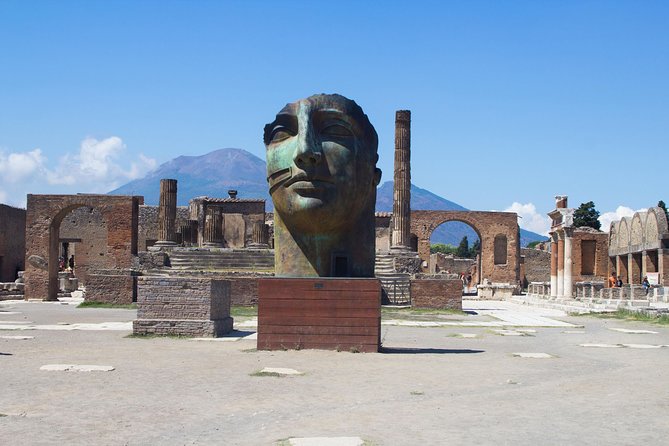
The central Forum is where you get Pompeii’s “city center” feeling. You’ll walk around the forum area and take in the surroundings with Mount Vesuvius in the background, which is hard to forget once you’ve seen it from the ruins.
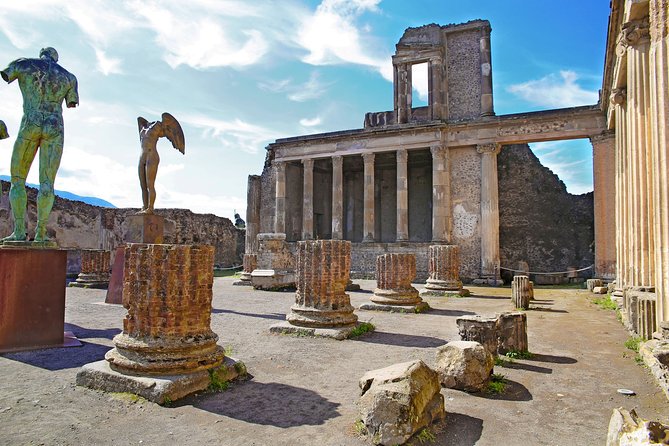
Look for what remains: remnants of columns and doorways that show where buildings used to frame the space. Even when the tops are gone, these outlines tell you where movement happened, where people gathered, and how the street network funneled foot traffic.
A practical tip: spend a bit more time here than you think. If you start in the center and then wander outward, the rest of Pompeii becomes easier to place. You’ll have less of that feeling of walking through random walls.
Everyday life in stone: fountains, aqueducts, baths, and shops
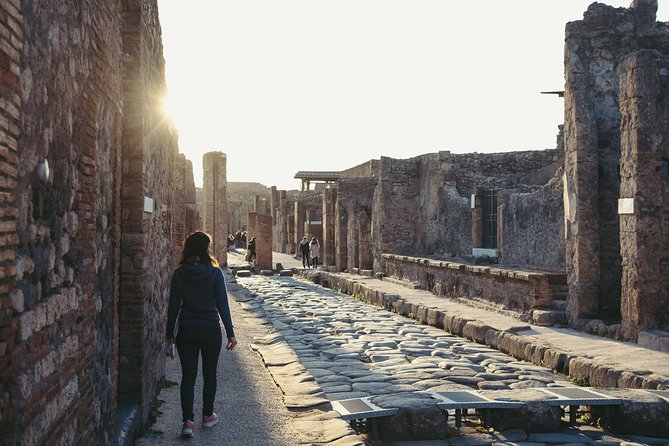
Pompeii’s power is that it feels like a real city, not a museum display. As you wander through streets, you’ll see remnants of the city’s aqueduct and street fountains, plus public baths and private houses.
The aqueduct and fountains are especially useful for understanding daily rhythm. They are not glamorous, but they explain how Romans kept water moving through the city. When you see a fountain spout or a channel line, you’re seeing infrastructure that shaped everyday life.
In the same self-paced flow, you’ll also encounter the parts of Pompeii that resemble an urban neighborhood: businesses, residential spaces, and statues. Even if you do not get a verbal guide walking you through it, the variety helps you build a map in your mind.
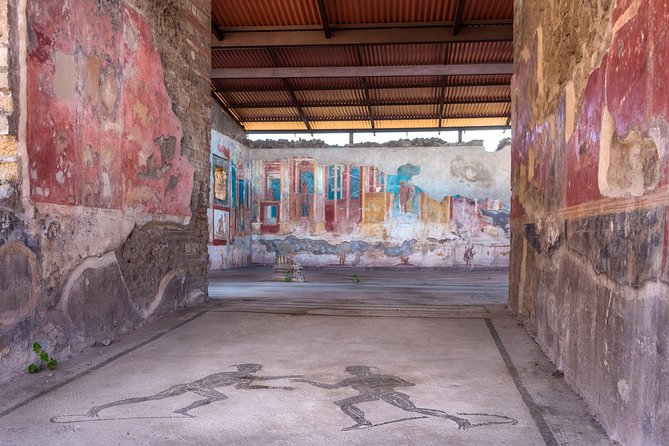
And yes, there are colorful fresco remnants. The experience highlights what’s left of frescoes from houses and businesses. When you see those fragments in context, you stop thinking of Pompeii as frozen ashes and start seeing it as a place with style, taste, and commerce.
Public baths and private homes: what the ruins can still teach you
The baths are one of those places where Pompeii’s design language becomes obvious. The experience specifically points you toward baths in the virtual reconstructions and in the on-site walk, so you can compare “how it would have looked” to “what remains.”
On-site, you can focus on layout clues: room groupings, passages, and how different spaces connect. Even with gaps, these structures show the social and functional logic of bathing and public gathering.
Private houses are where fresco fragments can change your whole perspective. A wall section with color surviving here and there tells you that interiors had personality, not just utility. You can also look for how shops and homes relate to the street, because that’s a big part of Pompeii’s daily texture.
Amphitheater and dramatic theater: imagining the crowd
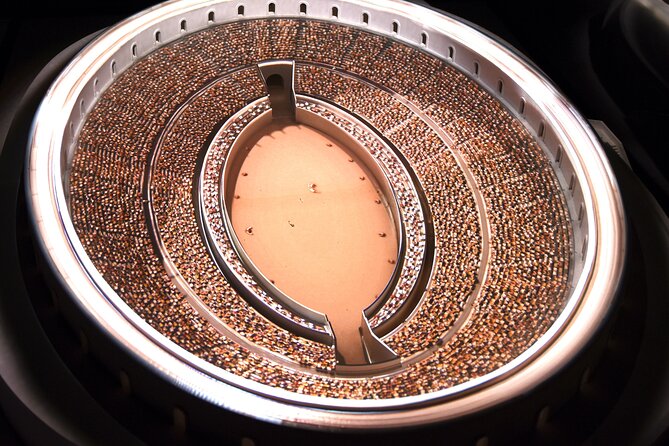
The amphitheater is a must for many people, and this experience explicitly includes it as a highlight. The virtual reconstructions are built to help you understand the Forum-like public spaces and then scale up to major venues where crowds gathered.
When you stand in the area of the amphitheater, think in terms of sound and sight lines. Even when seating is damaged or missing, the geometry and remaining structures hint at how an audience would have faced the stage or arena.
The dramatic theater is also mentioned as a highlight. Watching reconstructions first helps here, because performance spaces can be hard to interpret when you’re looking at remaining stone without the original staging.
Finishing with the eruption spectacle: the emotional ending
A lot of Pompeii visits end with silence, which is fitting, but it can also feel abrupt. This experience uses a multimedia video reconstruction that ties together life before and during the eruption in 79 AD.
In the Virtual Museum, the experience ends with the spectacle of the terrible eruption of Vesuvius. Whether you are a history buff or just curious, this part helps you remember the stakes behind what you are walking through.
If you prefer a lighter tone, you might want to mentally pace yourself here. The final sequence is intense by design, and it can shift how you process the ruins afterward.
Price and value: is $60 per person a fair deal?
At $60 per person for a one-day outing, the question is what you’re really paying for. In this setup, your money covers two things that normally cost you time or extra effort on your own: skip-the-line entry to Pompeii, and a reserved Virtual Museum ticket with reconstructions.
You are not paying for a guided tour. That’s important. You’ll save money if you’re happy to self-navigate and you value the virtual context instead of live narration. You might feel like it’s overpriced if you expect a fully guided experience with an audio guide or interpretation during the walk, because those are not included.
On the upside, the value is practical. Skip-the-line can be worth it on a crowded day, and the Virtual Museum can make your on-site time more productive because you know what to look for.
What is not included, and how to handle it
A few key items are not part of this experience:
- Guided tour and audio guide are not included
- Villa dei Misteri is not included
- Food and drinks are not included
- Transportation is not included
The lack of a guided tour means you should plan to read signage and use your city map. If you want deeper explanations, you might consider pairing this with another small guide service later, or simply commit to taking your time with what’s in front of you.
Also, if Villa dei Misteri is on your list, you’ll need to plan it separately. Since it is explicitly not included, don’t assume it’s part of the core route.
For food, you’ll want to eat on your own plan. Pompeii is a day where energy and hydration matter, especially if you walk a lot across the site.
Who this Pompeii experience fits best
This tour-style combo is a good match if you want:
- A managed start with the Virtual Museum so Pompeii makes sense faster
- Flexibility to explore on your own without a group pace
- A skip-the-line entry day when you want to protect your time
It may feel less ideal if:
- You expect a live guide narrating history throughout
- You want an audio guide as a built-in substitute for interpretation
- You think the Virtual Museum has to be perfect and up-to-the-minute in every version
That said, the overall design is clear: context first, then real-world walking, and then an emotional closing sequence tied to the eruption.
Should you book this Pompeii skip-the-line plus Virtual Museum?
I’d book it if you want the best blend of time-saving and comprehension. The Virtual Museum helps you look smarter at the ruins, and skip-the-line entry helps you get there without losing your day to waiting.
If you are the type who loves roaming without reading, or you want a strict guided narrative, you might find the self-paced nature less satisfying. In that case, you may prefer a tour that includes an on-site guide or audio interpretation.
My practical advice: check the Virtual Museum language you’ll get, arrive with an open mind for multimedia reconstructions, and plan to spend extra attention in the Forum area early. Do that, and Pompeii will feel less like random ruins and more like a lived-in city stopped mid-breath.
FAQ
How long is the Pompeii skip-the-line and Virtual Museum experience?
It’s listed as a 1 day experience.
What does the price include?
You get a skip-the-line ticket for the Pompeii archaeological site, a reserved ticket for the Virtual Museum, plus a city map and Wi-Fi.
Is there a guided tour or audio guide included?
No. A guided tour and an audio guide are not included.
Where do I meet for this activity?
Meet at the Office IBT Center/Touristation next to Chalet Donna Lucia.
What should I bring with me?
Bring a passport or ID card, since ID is required for all participants.
Are pets allowed?
Pets are not allowed.
Are small dogs allowed?
Small dogs are permitted inside the archaeological area, but they must be kept on a leash and carried when inside the buildings.
Is the booking refundable?
This activity is non-refundable.
Choose the Right Entry
- Pompeii: Entry Ticket with Optional Audio Guide★ 4.2 · 12,360 reviews
- Pompeii: Archaeological Park Tour with Ticket on request★ 4.5 · 2,283 reviews
- Pompeii: Exclusive Tour with Archaeologist and Entry Tickets★ 4.9 · 634 reviews
- Pompeii: Skip-the-Line Tickets and Tour with Archaeologist★ 4.9 · 467 reviews
- Pompei: Pompeii and Vesuvius Combo with Transfer and Tickets★ 3.9 · 130 reviews
More Tour Reviews in Pompeii Archaeological Site
- Pompeii: Entry Ticket with Optional Audio Guide★ 4.2 · 12,360 reviews
- Pompeii: Archaeological Park Tour with Ticket on request★ 4.5 · 2,283 reviews
- Pompeii Ruins Private Tour with Optional Skip-the-Line Entry★ 4.9 · 732 reviews
- Pompeii: Exclusive Tour with Archaeologist and Entry Tickets★ 4.9 · 634 reviews
- Pompeii: Group Tour with an Archeologist Guide★ 4.4 · 490 reviews
More ways into Museums.
 ★ 4.8Amalfi: Vertical Lemon Farm Tour, Tastings, and Rural MuseumFrom $41196 reviews
 ★ 4.5Private Guided Multimedia Exhibition on the History of SorrentoFrom $1590 reviews
 ★ 5.0Paestum: Private Tour of Greek Temples and Archaeological MuseumFrom $20260 reviews
 ★ 4.5Pompeii: Virtual Museum ticketFrom $1437 reviews
 ★ 5.0Tour at the Temples and the National Museum of PaestumFrom $15016 reviews
 ★ 4.9Pompeii & Virtual Museum Private 2-in-1 Kid’s TourFrom $2379 reviews
 ★ 4.0Paestum Private: Temples & Archaeological Museum with Your Local ArchaeologistFrom $3099 reviews
 ★ 4.5Pompeii Skip-the-Line Ticket and Virtual MuseumFrom $608 reviews
Other useful routes from here