
REVIEW · POMPEII ARCHAEOLOGIST TOURS
Pompeii: Skip-the-Line Private Tour with Archaeologist Guide
Pompeii feels huge, even in just 2.5 hours, when an archaeologist helps you read the site like a story. You get skip-the-line priority entrance to the ticket office and a private archaeologist-led tour, so you can spend your time understanding what you’re looking at, not waiting in queues. The big idea here is simple, you come away knowing how daily life worked in the last hours of the city.
What I like most is the focus on the buildings that people actually used. You’ll move through public spaces like the amphitheater, gymnasium, baths, and forum, then see the ancient domus with original mosaics and frescoes.
The main drawback to consider is timing around the first Sunday of the month. Entrance is free, but tickets cannot be reserved ahead, so entry is not guaranteed.
Key highlights worth marking on your map
- Priority entrance to the ticket office helps you start learning faster instead of losing time in line
- Archaeologist-led interpretation turns ruins into a believable routine of Roman life
- Mosaics and frescoes up close make the art feel personal, not distant
- Public Pompeii stops give context through the amphitheater, gymnasium, baths, and forum
- Private group pacing means the guide can adapt to your questions and your comfort level
Pompeii, seen with context not chaos
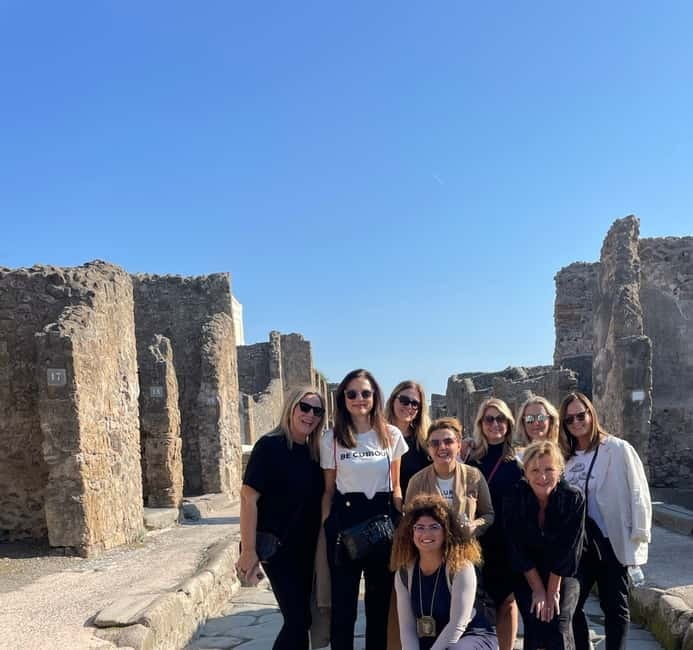
Pompeii is one of those places where you can get lost fast, in the best and worst ways. The streets look orderly, but your brain needs help linking the dots. That’s why a private tour with an archaeologist guide is such a smart match for Pompeii’s layout and its layers of meaning.
I like that this tour is built around how Pompeii functioned. You’re not just collecting photos. You’re seeing how people gathered, worked, trained, shopped, bathed, and lived inside homes decorated with mosaics and frescoes. Even if you only have a short visit, you’ll leave with a clearer picture of what the city felt like in everyday terms.
And because it’s a private group, you’re not stuck in a rigid script. If you want more explanation at one building, you can usually ask, and if you want to move on faster, the pace can flex.
Skip-the-line priority entry: what it really buys you
The tour includes priority entrance to the ticket office, not a “you never wait for anything” promise. Still, in Pompeii, that difference matters. When crowds stack up at the entry process, your tour can shrink, even if the official duration looks fine.
What you’re aiming for is time leverage. Use that freed-up energy to get oriented early, so the site does not feel like a random scatter of walls. With priority handling at the ticket office, you can start your guided route sooner and settle into the visit while your brain is still fresh.
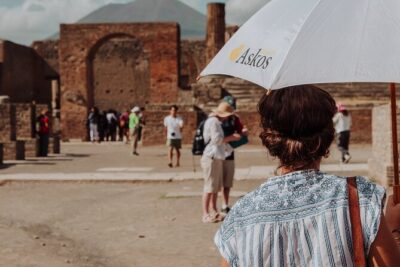
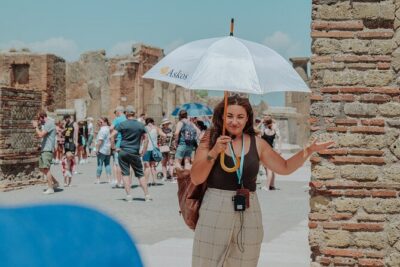
Practical tip: plan to arrive a few minutes early at the meeting spot. The guide waits at the entrance to the excavations with a sign showing your clients’ names, so you can get matched up quickly and keep the start smooth.
Your archaeologist guide: how the ruins become a lived city
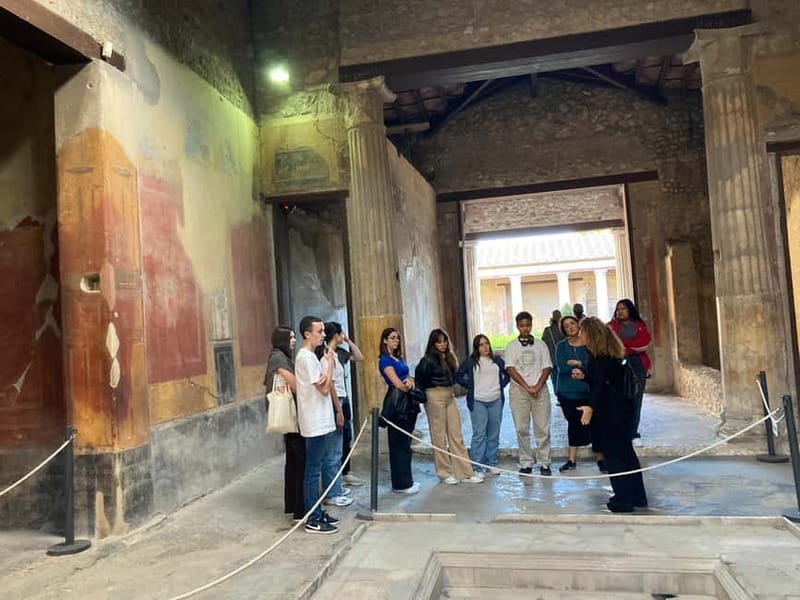
This tour is guided by a local archaeologist, and that shapes everything. The goal is to show Pompeii through a professional lens, focusing on specific buildings and how they worked for Roman life. The guide’s approach emphasizes the daily rhythms of the city, especially by taking you to major public points of view first, then shifting into private and semi-private spaces.
You’ll see the amphitheater and understand why public entertainment mattered. You’ll visit the gymnasium and baths and connect them to social life and physical routines, not just architecture. Then, when you move into domus spaces, the mosaics and frescoes stop being decoration and start acting like evidence of taste, wealth, and personal identity.
Two things make this kind of interpretation feel better than a standard walkthrough. First, you get explanations that help you “read” the buildings as systems. Second, you get a tour that can be tailored to your group’s pace. One of the strongest takeaways from the guide style is adaptability, avoiding unnecessary crowd friction while still keeping the core route moving.
Amphitheater, gymnasium, baths, forum: the public Pompeii route
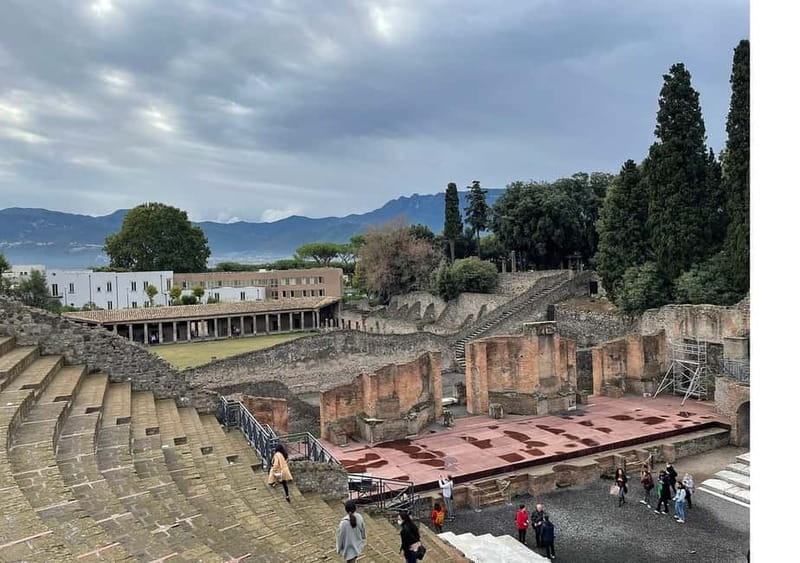
If you’ve ever visited a big archaeological site and felt like you were just looking at stuff, start here. The tour is anchored in public buildings that help you understand what Pompeii was as a city, not just as ruins.
Amphitheater
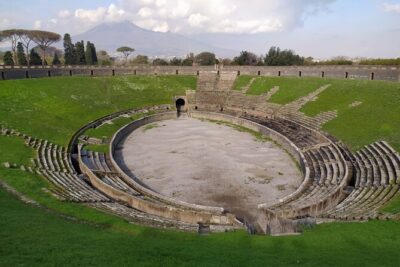
The amphitheater is a clear anchor for the idea of spectacle. You’ll be able to connect the space to gatherings and crowd energy. Even if you’re not focused on sports or performance, the structure shows why entertainment was a communal event.
A drawback to keep in mind: public areas can be busier later in the day. If you care about calmer visuals, your early start matters. Priority entry helps you get into the flow sooner.
Gymnasium
The gymnasium gives you a different angle on Roman daily life. It’s about training, routines, and social contact, the kind of place where people would see each other regularly. You’ll get context that makes the space feel like a practiced habit, not an empty shell.
Baths
Pompeii’s baths help you understand the city through sensory life, not just buildings. The baths were social hubs and essential infrastructure, and the guide’s interpretation helps you understand why people would spend time there.
Forum
The forum pulls it together by showing the political and communal heart of Pompeii. You’ll walk away with a better sense of how civic space worked, where public life happened, and how people moved through authority and everyday needs.
The value of this sequence is that it builds a framework. After the public stops, the private spaces feel less random, because you can place them on the map of social life.
Domus, frescoes, and mosaics: the art of ordinary status
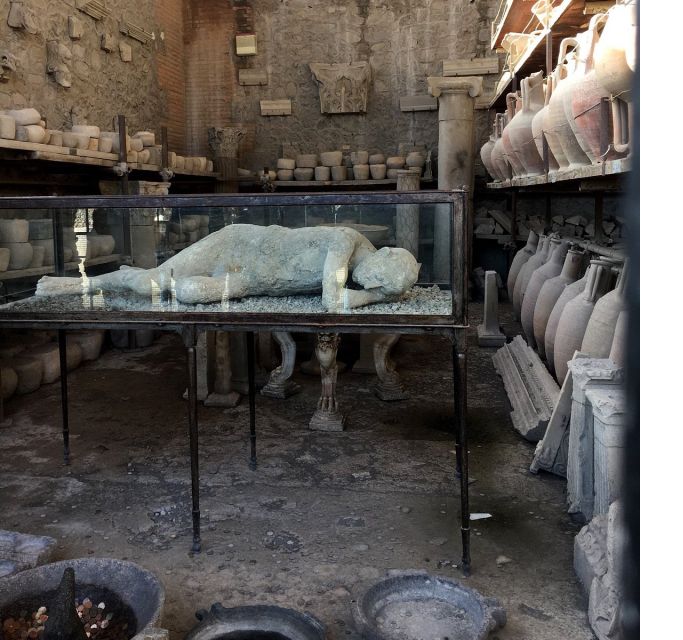
Pompeii’s domus are where the city starts to feel personal. This is not just a “look at pretty art” section. The original mosaics and frescoes show you how residents expressed themselves, and how beauty and status played out in floor and wall design.
What I like about this part of the tour is that it helps you notice detail with purpose. Instead of rushing through, you’re encouraged to look at the surfaces and connect them to Roman tastes and daily movement. Mosaics guide your eye and your steps, frescoes shape how rooms feel, and together they show why domestic life in Pompeii was visually meaningful.
If you’re the kind of traveler who normally skips captions, don’t here. Let the guide frame what you’re seeing. You’ll understand why a particular scene matters, not just that it exists.
One more practical note: domus areas can include uneven stone and tighter paths. Comfortable shoes are not optional, they’re your best friend for staying relaxed.
Ancient shops in a modern rhythm: laundry, fast food, bakery
This tour has a smart way of making Pompeii feel relatable. The route includes ancient shops that echo modern functions, like the laundry, fast food style places, and a bakery. The point is not that ancient Pompeii copied modern life perfectly. The point is that the city had practical commerce at street level.
When you see these spaces explained alongside daily life, you start to think in routines. Someone needed bread. Someone needed clothes cleaned. Someone needed quick food. That mindset changes the whole experience.
And it’s a fun kind of recognition. You get that wow, people used to have the same basic needs, just with different tools. It helps you picture the city’s last hours with more realism.
The ancient brothel: uncomfortable, but important to understand
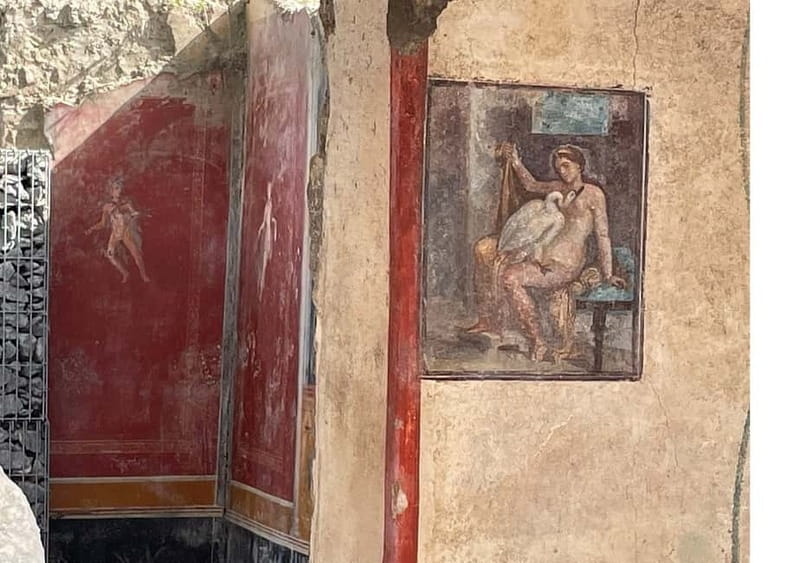
Yes, the tour includes the ancient city brothel. This is one of those Pompeii features that can feel sensitive, but it’s also a key part of how the city worked. Roman society included complex systems around desire, commerce, and privacy, and Pompeii preserves the physical evidence better than many other ancient sites.
The guide’s archaeologist perspective matters here. Instead of treating it like a spectacle, you can understand it as part of the urban ecosystem. It’s another “function stop” that helps you see Pompeii as a whole living environment, not a curated set of pretty ruins.
If you prefer tours that stay strictly in the realm of art and architecture, this section may be more than you expected. Still, it is included as one of the major lived-in building types, and that is exactly why this tour format works.
How the independent time works after the tour
The experience does something helpful: after the guided portion, you have freedom to explore the archaeological site independently. That matters because it lets you turn the guide’s context into personal discovery.
Here’s how to use that free time well. Don’t immediately sprint off. First, take a few minutes to re-orient to the parts you just learned. Then return to the spots that sparked your questions during the tour. You can also slow down for mosaics, frescoes, or viewpoints where the guide may have only given you the essentials.
This structure works especially well if you’re traveling with people who have different interests. One person can linger on art details, another can focus on public spaces, and you can still meet up without feeling lost.
Duration, group size, and pacing that fits real days
The tour runs for about 2.5 hours. That’s long enough to build understanding, short enough to fit into a travel schedule. It also avoids the common problem at Pompeii, where a half-day can turn into sensory overload.
It’s priced per group up to 20, at $192.58 per group. That’s one of the key value points here. If you’re traveling with family or friends, the “per group” structure can be more cost-effective than per-person tours. Even if you’re only a small group, you still get a private setting, which usually means more direct pacing control than standard group tours.
One timing consideration: start times vary, so check availability before you lock your plans. Early or mid-morning options often feel better at Pompeii because the light and crowd levels can be kinder for photos and walking.
What to bring so you enjoy the walk
Pompeii is a walking experience, and the basics make a real difference. Bring comfortable shoes, a sun hat, and water. The site is exposed in many areas, and even if you love history, you won’t love it if you’re tired and thirsty.
Also, wear layers if the weather is changeable. You’re outdoors for the guided portion and then again during independent exploration time.
Who this private tour is best for
This tour fits best when you want more meaning per minute. I’d recommend it if you:
- want an archaeologist’s interpretation rather than a facts-only audio style visit
- prefer a private group pace and fewer crowd headaches
- enjoy mosaics, frescoes, and how domestic life shows up in art and space
- like seeing multiple building types in one route, public, domestic, commercial, and semi-private
It may not be the right choice if you only want broad surface sightseeing. Pompeii can be enjoyed that way, but this route is clearly about learning the “how did this city work” story.
Price and logistics: the value checklist
Here’s how I think about the cost. You’re paying for three things: a professional archaeologist guide, priority entry at the ticket office, and a private group format with a planned route. The entrance ticket itself is not included, so you need to budget separately for admission.
For value, ask yourself what you get most from. If you love architecture, art, and Roman daily life, the guide component is the major win. If you’re mainly after pictures and a quick skim, you might feel the spend more than the learning.
Also, note that the meeting point is at the entrance to the excavations, with the guide waiting with a sign displaying your names. The tour ends back at the meeting point, so you’re not left guessing where to go next.
Should you book this skip-the-line private tour?
Book it if you want Pompeii to make sense fast. The priority entrance helps you get moving. The archaeologist guide helps you connect buildings to daily life. And the mix of public spaces, domus with mosaics and frescoes, everyday shops, and the ancient brothel gives you a more complete picture of the city’s final hours.
Skip it only if you’re determined to self-guide with no real interpretation. If you’re the kind of traveler who likes to understand, not just to see, this private format is a strong match for the time you have.
FAQ
Is the entrance ticket included?
No. The tour includes guidance and priority entrance to the ticket office, but the Pompeii entrance ticket is not included.
How long is the Pompeii tour?
The duration is listed as 2.5 hours.
Does this tour include skip-the-line entry?
It includes priority entrance to the ticket office, which helps you avoid long waits during the ticket process.
What languages are available for the live guide?
The live tour guide is available in English, French, and Italian.
Where do we meet the guide?
The guide waits at the entrance to the excavations with a sign displaying the clients’ names.
Can I explore Pompeii on my own after the tour?
Yes. After the guided portion, you have freedom to explore the archaeological site independently.
Is it wheelchair accessible?
The activity is listed as wheelchair accessible, but it is also marked not suitable for people with mobility impairments. Check with the provider before booking if you have specific mobility needs.
Is entry guaranteed on the first Sunday of the month?
On the first Sunday of each month, entrance is free of charge, but tickets cannot be reserved ahead of time, so entry is not guaranteed.
What should I bring?
Bring comfortable shoes, a sun hat, and water.
More Tours in Pompei Campania
- Pompeii: Entry Ticket and Guided Tour with an Archaeologist★ 4.8 · 19,459 reviews
- Pompeii: Small Group Tour with an Archaeologist★ 4.8 · 12,264 reviews
- Pompeii: Skip-the-line-Ticket and Guided Tour★ 4.6 · 1,152 reviews
- Pompeii: Small-Group Tour of Pompeii and Herculaneum★ 4.8 · 867 reviews
- Pompeii: Guided Tour with Skip-the-Line Entry★ 4.9 · 812 reviews
More Tour Reviews in Pompei Campania
- Pompeii: Entry Ticket and Guided Tour with an Archaeologist★ 4.8 · 19,459 reviews
- Pompeii: Small Group Tour with an Archaeologist★ 4.8 · 12,264 reviews
- Pompeii: Skip-the-Line Entrance Ticket with Audio Guide★ 4.0 · 2,509 reviews
- Naples: Pompeii and Mt. Vesuvius with Lunch and Wine Tasting★ 4.5 · 2,454 reviews
- Pompeii: Skip-the-line-Ticket and Guided Tour★ 4.6 · 1,152 reviews
Pompeii with an Archaeologist
- Pompeii: Tour with Archaeologist Guide & Skip-the-Line Entry★ 4.5 · 478 reviews
More ways into Pompeii Archaeologist Tours.
 ★ 5.0Pompeii Skip-the-line Tour with Archaeologist GuideFrom $71559 reviews
 ★ 5.0Explore Pompeii with an ArchaeologistFrom $35511 reviews
 ★ 4.5Pompeii: Tour with Archaeologist Guide & Skip-the-Line EntryFrom $57478 reviews
 ★ 4.5Complete Pompeii Skip the Line Tour with Archaeologist GuideFrom $71379 reviews
 ★ 5.0Pompeii Private Tour with an Archaeologist GuideFrom $178184 reviews
 ★ 5.0Tour in the ruins of Pompeii with an archaeologistFrom $338150 reviews
 ★ 5.0Semi – Private Tour of Pompeii with an ArchaeologistFrom $3699 reviews
 ★ 5.02.5-Hour Guided Tour of Pompeii with an ArchaeologistFrom $7178 reviews
Other useful routes from here