
REVIEW · POMPEII ARCHAEOLOGIST TOURS
Pompeii Private Tour with an Archaeologist Guide
Pompeii clicks when an archaeologist explains it. This is a private Pompeii tour with an archaeologist guide, so you get real answers at the places that matter, plus undivided attention to ask anything you want. One catch to plan for: the park entrance ticket can cost extra, even if the details look a bit unclear during booking.
What I like most is how the route is built for understanding, not just wandering. You’ll cover homes, bath complexes, theaters, and the Forum area in a tight 2-hour visit, and guides such as Mena, Paolo, and Jolanda have a knack for keeping you moving while still making time for questions. One more consideration: Pompeii is big, so 2 hours is best for highlights and context, not for seeing every corner.
Key highlights worth your time
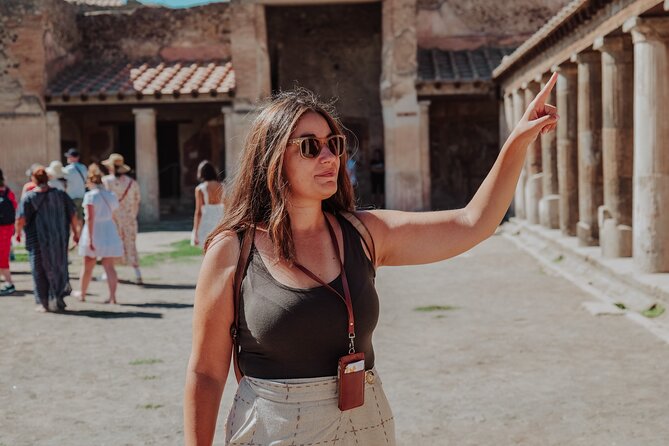
- Archaeologist-guided Pompeii in English for about 2 hours, designed around the site’s most important zones
- Stop-by-stop context at places like the House of the Faun and the Forum, so you know what you’re looking at
- A route that favors flow, with guides helping you navigate crowds and keep the pace comfortable
- Homes plus public life, including Casa dei Vettii, the Lupanar, and a termopolium (fast-food style counter)
- Baths and markets in the same sweep, including Stabian Baths, Forum Baths, and the Macellum
- Comfort-focused planning tips, including closed shoes for the uneven ground
Two hours in Pompeii: why this private format works
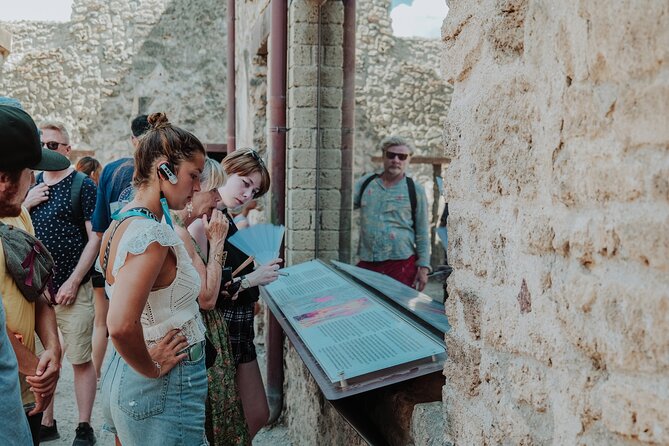
Pompeii is one of those places where silence can feel a little wrong. When you stand in a Roman doorway or in a public square, it helps to have someone translate the clues: what class lived where, what the buildings were for, and what everyday life looked like.
This tour format is built for focus. With a private archaeologist guide, you can ask questions as you go instead of waiting your turn or hoping a group tour leader gets to your topic. It is also practical for hot days and busy days, because you are not stuck in a long line of people waiting for the same photo.
The big trade-off is time. Pompeii is enormous, and a 2-hour run is an efficient orientation to major sites. If you want to linger in one neighborhood, study artworks for longer, or do a slower walk through side streets, you may end up wishing you had booked extra time.
Still, for most first-time visitors, the value is in the combination: the route covers both private life (homes) and public life (baths, markets, and the Forum). You leave with a stronger sense of how the city functioned, not just a list of stops.
Where you meet and how to walk the route comfortably
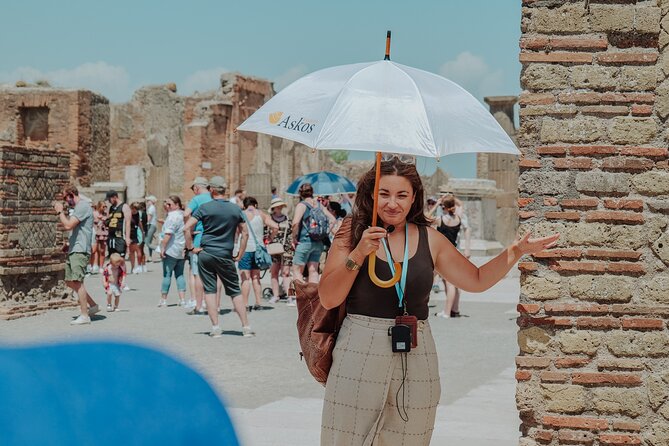
You start at Via Villa dei Misteri, 1, 80045 Pompei NA, Italy. The guide meets you near the main entrance of the archaeological site, holding a sign that says Askos Tours, at Porta Marina Superiore.
At the end, you finish at the ruins of Pompeii, and the guide can help you with practical info on how to get back to your accommodation or the closest train station. Transportation is not included, so plan to get yourself to the meeting point.
For footwear, I take Pompeii seriously. Closed shoes are best because walking over old stone and uneven surfaces can be tough in open footwear. It also helps you keep your footing if you move between sites with short bursts of walking.
The tour is offered in English, and it’s designed for most people to participate. Service animals are allowed, and because it is private, the pacing can be more adaptable for your group’s needs.
If you are booking soon, note that this tour tends to be reserved about a month ahead on average. Pompeii is popular, and private guided slots go first, especially during peak seasons.
Casa dei Vettii to the Lupanar: learning daily life, not just ruins
The route starts inside the Archaeological Park, then moves into a sequence of sites that tells you how Pompeii worked. You begin with a guided orientation at the main entrance area, then step into residential spaces where Roman life becomes specific.
Casa dei Vettii is one of the highlights early on. This is a chance to see how an upper-class home looked, and it is the kind of stop where your guide can point out details that you would otherwise miss. Even if you only have 10 minutes there, the payoff is the context: why rooms were arranged a certain way, and what the decorations suggest.
Next comes the Lupanar. This site can be emotionally uncomfortable for some people, but it is historically significant. The value of a guide here is explanation, not shock value. You are not just looking at a label on a building, you are learning what this space represented in the city.
Then you’ll see the House and Thermopolium of Vetutius Placidus. A thermopolium is basically a counter where people grabbed quick food, and one guide connection that sticks in my mind from similar tours is how guides explain it as a Roman version of fast food. When you understand that this was a place of daily routine, the stop feels less like a random detour and more like a snapshot of the streets.
The draw here is pacing. These stops are short, but the guide can connect the dots between them so the city starts to feel coherent.
The termopolium and homes: a short stop that adds big meaning
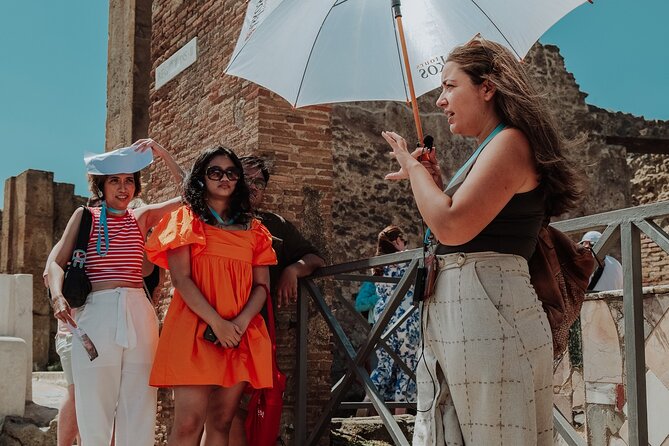
Two things make these “10-minute” interior stops work on a private route. First, the guide can focus you on the most telling features instead of letting you get lost in the details. Second, you can ask questions right there, which turns a quick look into something memorable.
At the House and Thermopolium of Vetutius Placidus, you benefit from having a guide who can explain how spaces were used. You are not just seeing structures, you’re learning the logic behind them: where people came in, how counters and rooms functioned, and what daily habits looked like.
With Pompeii, the difference between confusion and understanding often comes down to a few key points. A good guide will help you see things like how a home’s design matched status, how public and semi-public spaces blended into daily patterns, and why some areas were built for flow through the city.
If you are visiting with kids or teens, this kind of stop-by-stop explanation can help keep attention. One family-focused approach I’ve seen work well is a guide who uses clear comparisons and makes the city feel human, not like a museum display.
Just keep expectations grounded: 2 hours means each site is a slice. The goal is to leave with a framework you can build on while you explore afterward.
Teatro Grande and the House of Faun: public spaces with personality
After the residential and street-life stops, the route pivots to larger public spaces and major landmarks.
The Teatro Grande is next. Even with only about 5 minutes allocated, it is an important stop because it gives you the civic heartbeat of Pompeii. You can often feel the social role of theaters instantly, and a guide’s job is to help you picture how performances fit into the city’s rhythm.
Then you’ll visit the House of Faun. This is another signature Pompeii home that works well for first-time visitors because it helps you grasp scale. When you compare the House of Faun to smaller homes you might see later on your own, you start to understand the city’s class system.
From here, the tour connects you to more public patterns. Pompeii’s main streets and open areas matter, and your guide uses them to show how people moved through the city.
In some routes, you may also catch a view toward Vesuvius from certain vantage points along the way. The time you spend in theaters and open corridors is often where that kind of view becomes possible, depending on the exact path and conditions on your day.
Stabian Baths, Forum Baths, and the Macellum: where people met
Baths are not just about water. In Roman cities, baths were social hubs, where you talked, watched, and relaxed. That is why the Stabian Baths matter so much on this itinerary.
You get a focused look at Terme Stabiane, and the guide can explain how these spaces worked beyond the obvious. Even if the stop is brief, the goal is to help you read the architecture like a functioning building, not like an empty shell.
Next is Via dell’Abbondanza. This is where the tour turns into street-level understanding. You walk a stretch of this major road, and that short walk can be surprisingly useful because it helps you connect the stops into a mental map. When you understand street layout, the rest of Pompeii becomes easier to navigate during your own wandering.
Then you’ll reach the Forum Baths. This is a smart pairing with the Stabian Baths because it lets you compare two bathing environments tied to different parts of the city. You start to see how public spaces were organized around daily life and civic structure.
After that, the Macellum is a great reality check. A market building is where commerce and food culture show up in physical form. Again, you do not need a long visit to get the idea, because a guide helps you interpret what the space was used for and how it fit into the city’s routine.
If you like the idea of Pompeii as a working city rather than a disaster site, these stops deliver.
House of Menander, Granaries, and the Forum: the center of the city
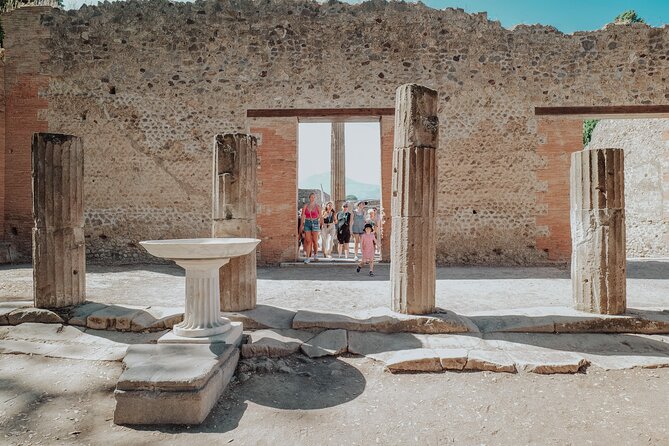
The final stretch leans hard into the city core. You’ll see the House of Menander, then move through major public and supply-related areas, including the Granaries of the Forum and the Foro di Pompeya.
House of Menander is a good next step because it continues the theme of high-status living while keeping you close to civic life. The guide can help you connect what these homes say about wealth and taste to the world those residents moved through daily.
The Granaries of the Forum are particularly interesting if you want to understand how Pompeii supported itself. Food supply and storage are basic needs, and seeing the scale and purpose of these spaces gives you a more grounded view of daily survival and planning.
Then you finish at the Forum area. The Foro di Pompeya is the big civic stage. Even if your visit is short, this is the place where you can feel why Pompeii’s public architecture mattered. You start to understand why a city centers on gatherings, commerce, and administration.
This ending is also useful if you want to explore afterward on your own. The Forum region is a strong anchor point for orientation, and you’ll have a mental framework for where you’ve been and what you want to see next.
Price and logistics: is $178.45 per person worth it
$178.45 per person for a private, archaeologist-guided 2-hour tour is not a budget option. But the value comes from what you get: a trained guide’s time, your own group’s pace, and an itinerary designed to hit major sites that explain the city.
You are also paying for something hard to replace at Pompeii: interpretation. Without a guide, you can walk for hours and still struggle to understand how the pieces fit together. With a guide, the same stones start making sense.
Two practical cost notes matter.
1) Admission is not listed as included in the tour price. In real-world booking scenarios, you should plan on paying the Pompeii park entrance ticket separately.
2) Transportation is not included, so your total day cost depends on how you get to Pompeii and how you return.
The tour can still be a smart spend if you have limited time, if crowds stress you out, or if you want the city explained as you go. Guides like Rossana and Maria have been described as setting a comfortable pace while covering major highlights, which is exactly what you want when you only have a slice of time.
If you have a lot of free hours and you like slow exploration, you might get more out of extending your day. One guide experience even suggested that 2 hours can be tight for the sheer size of the site, with a longer visit being better if Pompeii is your only major stop.
Who should book this Pompeii private tour, and who might want longer
This tour is ideal if you want Pompeii’s key places with guided context. It fits well for first-timers who want the big picture fast, and it also works for families because a good guide can keep explanations clear and relevant.
It is also a solid choice if you’re visiting in heat or on a busy day. Private routing makes it easier to manage crowd pressure, and a guide can choose when to linger and when to move.
If someone in your group needs to go slowly, a private guide can be more flexible than a standard group tour. In at least one experience with a visitor who had a broken foot, the guide adjusted the pace, paused as needed, and still delivered explanations that made the ruins feel alive. That is the kind of advantage you only get with a private format.
Who might want more time? Anyone who plans to take lots of photos, anyone who wants to see far more residential blocks, or anyone who is hoping to fully absorb the art and inscriptions. Pompeii can overwhelm in the best way, but 2 hours is still a compressed plan.
If Pompeii is the main event of your trip, consider pairing this tour with extra self-guided time after. You’ll understand what to look for once you’ve got the framework from your archaeologist.
Should you book Askos Tours for Pompeii?
If you want a guided orientation to Pompeii’s biggest stories in a tight window, I think this is an easy yes. You cover major residential sites, the bathing complexes, the theater, the market area, and the Forum core, and you can ask questions along the way without feeling rushed.
Book it if:
- you only have about half a day in Pompeii
- you want a private archaeologist guide who can explain what you see
- you prefer a route that helps with crowd flow
- your group includes kids or anyone who benefits from explanations in real time
Skip it or upgrade your expectations if:
- you’re hoping to explore deeply in only one neighborhood
- you want a full-day Pompeii immersion
- you are sensitive to the fact that the park entrance ticket may add to the total cost
One last practical note: you can cancel for a full refund if you do it at least 24 hours before the experience starts, so if your schedule is still forming, you can hold the spot and decide later.
FAQ
How long is the Pompeii private tour?
The tour lasts about 2 hours.
What sites are included on the tour?
The main stops include the Archaeological Park of Pompeii (Porta Marina Superiore), Casa dei Vettii, the Lupanar, the House and Thermopolium of Vetutius Placidus, Teatro Grande, the House of Faun, Stabian Baths, Via dell’Abbondanza, Forum Baths, Macellum, the House of Menander, Granaries of the Forum, and the Foro di Pompeya.
Is this tour private?
Yes. Only your group participates.
Where do we meet, and where does the tour end?
You meet at Via Villa dei Misteri, 1, 80045 Pompei NA, Italy. The tour ends at the ruins of Pompeii, and the guide can help you with information on getting back to your accommodation or the closest train station.
Is the Pompeii entrance ticket included?
Pompeii entrance ticket is listed as not included. The itinerary notes may include ticket details, so you should budget for the park admission fee.
Is the tour offered in English?
Yes, it is offered in English.
Do I need to wear closed shoes?
Yes. Closed shoes are recommended because Pompeii can be difficult to walk through with open shoes.
Is transportation included in the price?
No. Transportation is not included.
Can I cancel for a full refund?
Yes. You can cancel up to 24 hours in advance for a full refund. If you cancel less than 24 hours before the start time, the amount paid is not refunded.
More Tours in Pompeii
- Pompeii Small Group Tour with an Archaeologist★ 5.0 · 6,593 reviews
- Pompeii and Herculaneum Small Group Tour with an Archaeologist★ 5.0 · 1,350 reviews
- Skip the Line Guided Tour of Pompeii led by an Archaeologist★ 5.0 · 703 reviews
- Pompeii Ticket + Tour with Optional Tasting Experience at Pompeii★ 5.0 · 663 reviews
- Pompeii private tour with an Official Guide★ 5.0 · 631 reviews
More Tour Reviews in Pompeii
- Pompeii Small Group Tour with an Archaeologist★ 5.0 · 6,593 reviews
- Discover the Ancient Ruins of Pompeii: Day Trip from Rome★ 3.5 · 2,247 reviews
- Pompeii and Herculaneum Small Group Tour with an Archaeologist★ 5.0 · 1,350 reviews
- Skip the Line Guided Tour of Pompeii led by an Archaeologist★ 5.0 · 703 reviews
- Pompeii Ticket + Tour with Optional Tasting Experience at Pompeii★ 5.0 · 663 reviews
Pompeii with an Archaeologist
- Pompeii Skip-the-line Tour with Archaeologist Guide★ 5.0 · 559 reviews
- Explore Pompeii with an Archaeologist★ 5.0 · 511 reviews
- Complete Pompeii Skip the Line Tour with Archaeologist Guide★ 4.5 · 379 reviews
- Tour in the ruins of Pompeii with an archaeologist★ 5.0 · 150 reviews
- Semi – Private Tour of Pompeii with an Archaeologist★ 5.0 · 99 reviews
More ways into Pompeii Archaeologist Tours.
 ★ 5.0Pompeii Skip-the-line Tour with Archaeologist GuideFrom $71559 reviews
 ★ 5.0Explore Pompeii with an ArchaeologistFrom $35511 reviews
 ★ 4.5Pompeii: Tour with Archaeologist Guide & Skip-the-Line EntryFrom $57478 reviews
 ★ 4.5Complete Pompeii Skip the Line Tour with Archaeologist GuideFrom $71379 reviews
 ★ 5.0Tour in the ruins of Pompeii with an archaeologistFrom $338150 reviews
 ★ 5.0Semi – Private Tour of Pompeii with an ArchaeologistFrom $3699 reviews
 ★ 5.02.5-Hour Guided Tour of Pompeii with an ArchaeologistFrom $7178 reviews
 ★ 4.9Positano: Old Town Walking Tour with Archaeologist GuideFrom $11233 reviews
Other useful routes from here