
REVIEW · SKIP THE LINE
Pompeii Small Group with an Archaeologist and Skip The Line
Pompeii is too big to wander. This small-group Pompeii tour gets you inside faster with skip-the-line tickets and an on-site archaeologist guide, including Eliana Sandretti leading the way. You get a focused route through the city’s key areas, with time to ask questions as you go.
I especially like the tour’s shape: it hits major “you can’t miss this” moments without pretending you can cover every street and chapel in one visit. You’ll see the Teatro Grande and the Stabian Baths, plus the parts of Pompeii that explain how people worked, worshiped, performed, and lived.
One drawback to plan around: the whole experience is about two hours, and many stops are short. If you want long, slow wandering in just one neighborhood, you may feel rushed, especially in hot weather.
Key things that make this Pompeii tour work
- Skip-the-line entry with a mobile ticket, so you lose less time at the gate
- Archaeologist guide included, with real focus on what you’re looking at
- Small group up to 10, which helps the pace feel relaxed
- The big Pompeii highlights in one route, from theatres to baths to major homes
- Short stop format, ideal if you have limited time but want the essentials
- Heat is real, so bringing water and sun protection matters
Skip-the-line at Pompeii: what you actually gain
Pompeii moves fast, mostly because it has to. Even if you’re excited, the site can swallow hours in lines and logistics, and then you’re watching the clock instead of the walls. This is why the skip-the-line ticket matters. You start with your entry handled, which helps you spend your limited time doing the good part, seeing the ruins and learning how they fit together.
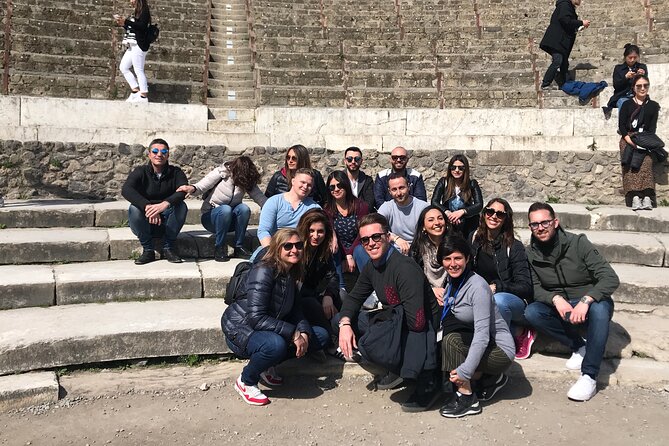
The tour duration is about two hours, so every minute counts. That two-hour window is set up for a “greatest hits” visit: you see a range of Pompeii spaces, not just one area. And since the group is capped at up to 10 people, you get a calmer flow through narrow streets and busy zones than you would on a larger bus tour.
Here’s what this looks like in practice. You meet in the morning area around Ristorante Suisse in Pompeii, then you head to the archaeological park with your ticket already covered. From there, the tour keeps moving site to site, with short explanations that help you recognize what you’re seeing. If you’re the type who wants to understand the “why” behind the rubble, this structure is a big win.
The one thing to keep your expectations aligned: Pompeii is not a museum you can exhaust in two hours. If you love one theme, like baths or theatre, you might wish you had an extra hour to linger. But if you want a smart overview that makes the rest of Pompeii easier to explore later, this format fits.
Your archaeologist guide: Eliana Sandretti and the in-the-field style
The biggest advantage here is the guide. The experience includes an archaeologist and authorized guide, and the provider behind many of these tours is Eliana Sandretti. More than just facts, the guide style is built around what the site lets you see right now: how rooms were used, how the city’s layout worked, and what everyday life might have looked like before the eruption.
In Pompeii, details are everywhere, but they’re easy to miss when you’re walking on your own. A good guide helps you connect small visual clues to big ideas. You learn what you’re looking at in the theatre spaces, why certain buildings function the way they do, and what the preserved surfaces tell you about daily life.
I also like that the guide team is described as flexible. Even when schedules shift, the key goal stays the same: keep the visit moving while still explaining what you’re seeing. One guide may be swapped for another (for example, Dario or Francesco stepping in), but the tour stays focused on the core highlights. That matters because Pompeii visits get disrupted by travel delays and timing changes, and you want continuity, not a scramble.
And if you like asking questions, this is one of those tours where your questions can actually shape the walk. The small group size helps. You’re not just listening through a wall of noise from a headset crowd.
One practical note: in an outdoor site, hearing can be tricky. Some people found it harder to catch the guide’s words when they were farther away or when the surrounding noise was high. If you have hearing needs, it helps to position yourself closer at each stop and ask the guide to repeat key points.
Two hours, 10 big stops: what you’ll see and why it matters
This route is built to help you grasp Pompeii as a whole city, not a scattered collection of monuments. Many stops last around 10 to 15 minutes, with just enough time for context and photos before moving on.
Stop 1: Pompeii Archaeological Park, plus the small theatre
You begin at the park entrance area with your ticket already covered. Then you head toward the theatre spaces, including the small theatre where music and singing performances were meant to happen. Even without a performance happening, you can still get a sense of how public life worked. Pompeii wasn’t just private homes, it was also stages, streets, and gatherings.
A short theatre is a good place to start because it trains your eye. You begin noticing how Pompeii’s public spaces were designed for viewing, acoustics, and movement. That helps later when you see larger theatres.
Stop 2: Teatro Grande and the theatre culture
Next comes the Teatro Grande, the place for Greek-Roman comedies and tragedies. This is where Pompeii shifts from “architecture you can photograph” to “culture you can visualize.” The seats, the stage area, and the way the space was organized all give you clues about what kind of events mattered to the city.
If you’ve only seen modern theatre, this feels different fast. It’s older, more civic, and tied closely to daily community life. This is a great stop if you want the tour to explain not just what something is, but who used it and why.
Stop 3: Granai del Foro, the forum barns, and the plaster casts
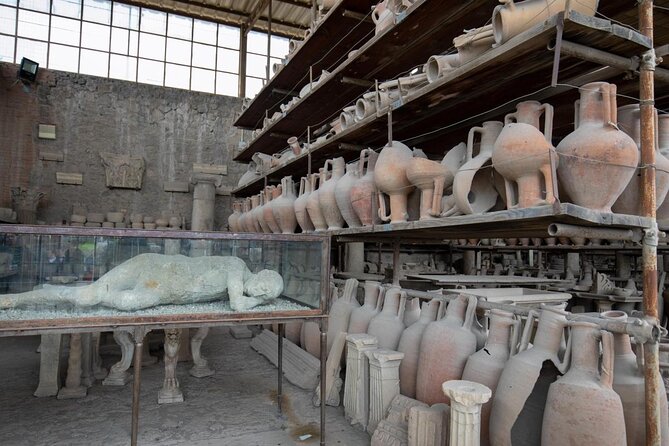
Then you head to the Granai del Foro, the barns in the forum area, where plaster casts show victims who died during the eruption of 79 AD. This is one of the emotionally heavy moments in any Pompeii visit.
The value of having a guide here is that you don’t just look at figures and move on. You get help placing this tragedy inside the city’s geography. The forum area was central, and understanding that helps you feel the scale of what happened where people lived, worked, and gathered.
If you’re sensitive to heavy history, go in knowing this stop is intense. It’s also one of the reasons Pompeii affects people so strongly.
Stop 4: Stabian Baths, the frescoes you’ll remember
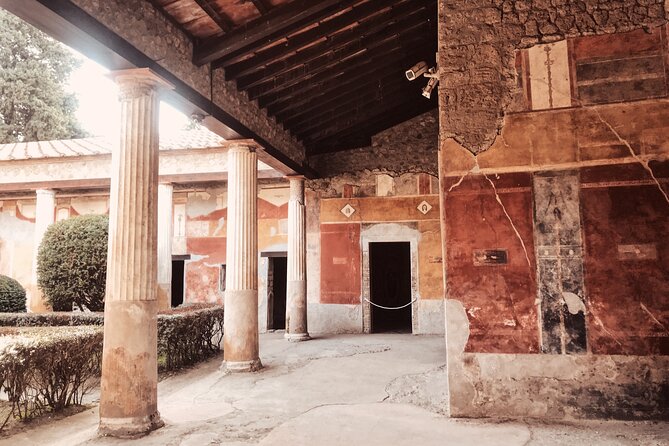
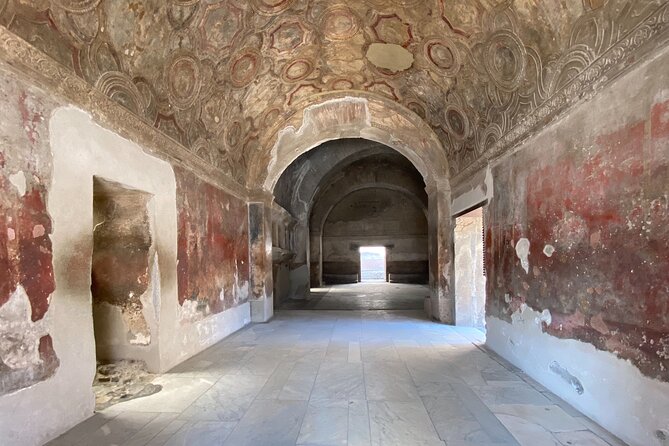
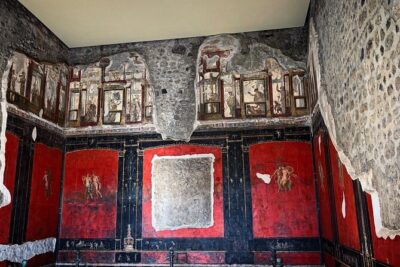
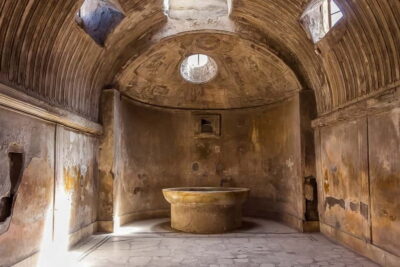
Next is the Stabian Baths (Terme Stabiane), famous for colorful frescoes. This is where many people stop dead, because the preserved colors feel almost unreal in an open-air ruin.
Even with a short visit, the baths are worth it because they show Pompeii as a place of comfort and routine, not only shock and tragedy. You learn that baths were social spaces as much as they were functional ones.
I like that the guide ties the visual detail to the lived experience. Frescoes are not just decoration here; they tell you what people expected to see while relaxing.
Stop 5: Foro di Pompei, the city square
From baths, you move to the Foro di Pompei, the ancient forum or main square. This stop gives you the political and civic spine of the city. Once you’ve seen the forum square, you can better imagine Pompeii as a working urban center.
Because the time at each stop is limited, the guide focuses on the big picture. You’ll get enough orientation to understand why the forum mattered and how other areas you see later connect back to it.
Stop 6: Basilica, the seat of justice
Then it’s the Basilica of Pompeii, described as the ancient seat of the court where justice was administered. This is another stop where a guide adds real value. If you’re on your own, it can be easy to see a large building and miss why it was central to public life.
Here you’re looking at how law, power, and civic process shaped everyday existence.
Stop 7: Temple of Jupiter with Vesuvius as a backdrop
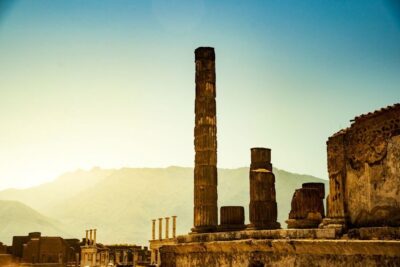
Next you get the Temple of Jupiter, with Vesuvius as a dramatic backdrop. This stop is a reminder that Pompeii’s story is tied to the volcano from every direction.
The guide helps you connect the temple’s role to the city’s identity. You don’t just see stone, you understand what the space signaled to people in that culture.
Stop 8: Quadriporticus area and the gladiator barracks
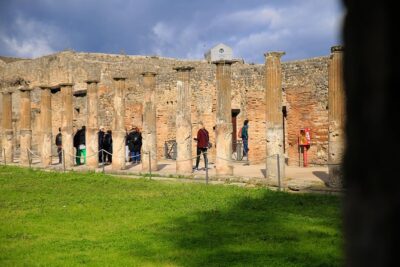
Then you move through the Quadriporticus of the theatres area, and specifically the gladiator barracks, where gladiators trained and where their living spaces were. This adds a whole new Pompeii angle. You shift from civic and religious spaces into the world of sport, status, discipline, and spectacle.
If you’re interested in entertainment and labor, this is a key stop. The guide’s job is to connect the training life to the built environment you’re standing in.
Stop 9: Lupanar, the old Red Light District
After that comes the Lupanar, the older red light district. This is another emotionally and socially complex area. A good guide helps you avoid turning it into something overly sensational and instead focuses on what the site reveals about commerce, behavior, and daily social reality in Pompeii.
It’s also one of the reasons this tour feels grounded. It doesn’t only show grand buildings. It helps you see the full range of city life.
Stop 10: Temple of Venus and Casa del Fauno, the wealthy side of Pompeii
The final run includes the Temple of Venus and Casa del Fauno, one of the richest and most luxurious residences in Pompeii. This is the big finish: you leave with a clear contrast between public spaces, everyday routines, and elite domestic architecture.
Casa del Fauno is often the kind of place where you suddenly understand what you were learning all along. The city’s values show up in these homes, and you can better grasp the social gaps Pompeii contained.
Price and value: is $217.69 a smart use of time?
At about $217.69 per person, this isn’t a budget Pompeii tour. You’re paying for three things that matter in Pompeii:
First, you pay for skip-the-line entry. Time at the entrance is time you cannot buy back, especially in peak seasons.
Second, you pay for an archaeologist-led approach. In Pompeii, the ruins are visually stunning, but the meaning comes from interpretation. When a guide can explain rooms, routines, theatre function, and civic life, the experience becomes more than sightseeing.
Third, you pay for the group size. Up to 10 people is what lets the guide actually guide, not just speak into a crowd.
Where the price becomes less appealing is if you have unlimited time in Pompeii and you love wandering with no structure. But for most visitors with a limited window, the value comes from getting the core sites in order and leaving with a mental map.
If you’re traveling with a stroller or you need extra support during the walk, a smaller group can also help the flow. Some guides have been able to adapt when paths get rough or when mobility is a concern.
Timing, heat, and how to get the most from a short route
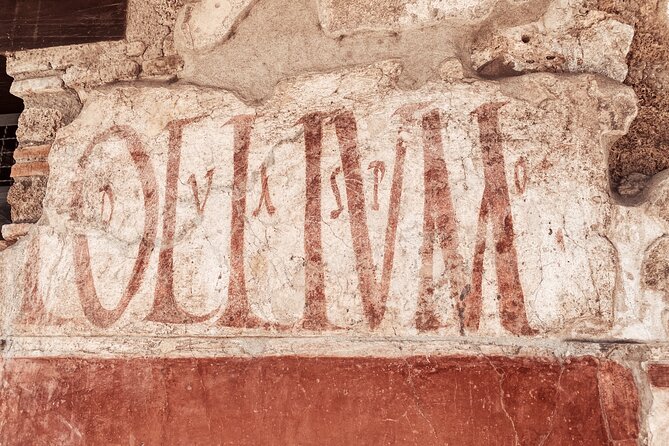
Pompeii can be brutally hot. One thing I’d treat as non-negotiable: bring water, plus sun protection like sunscreen, a hat, or an umbrella if you use one. Two hours in direct sun can feel longer, especially when you’re pausing for explanations.
You’ll also want shoes that handle uneven ground. Pompeii is not a smooth path. Even when the tour covers “important” areas, you’re still walking through old streets and transitions between ruins.
If you can, consider your day plan around crowd levels. A smart approach is to visit earlier or later when it’s less packed, then use this guided window to lock in the main sights. If you only have a short visit window, this tour is designed for exactly that.
One more timing thought: the tour ends back at the meeting point area. That makes it easier to plan your next stop without worrying about complex transfers.
When plans shift: small-group tours are flexible, but you should be ready
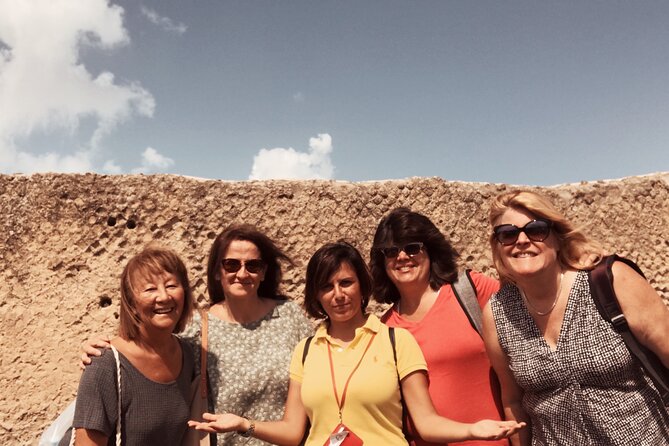
Pompeii visits are subject to real-world disruptions. Trains arrive late. People get stuck in traffic. And sometimes a scheduled group doesn’t fill as expected.
From what’s shared with guests, the company can offer options if there aren’t enough people for the group format, such as switching to a private tour arrangement. That can change the pace, and it can affect your expectations for how the tour runs.
If your trip is tight, keep your schedule flexible when you can. The more you can avoid rigid timing, the more likely your guide can keep the visit smooth.
A helpful sign: the guide team has been described as responsive and willing to problem-solve, including waiting when people were delayed and helping coordinate follow-on plans. That kind of support is not guaranteed in every tour, and it’s worth valuing.
Should you book this Pompeii small-group archaeologist tour?
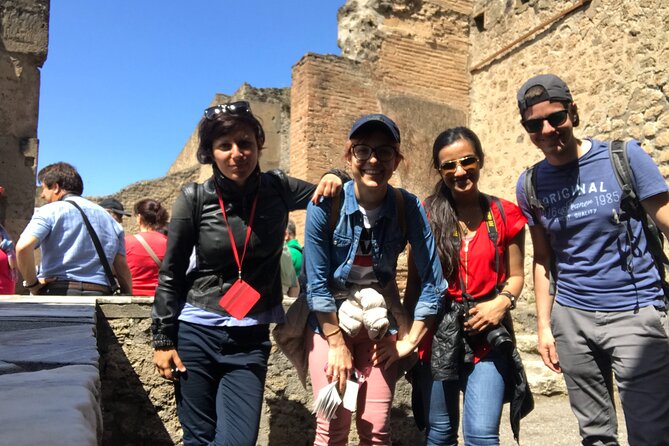
Book it if you want the biggest Pompeii landmarks in about two hours, plus real explanation that helps you understand what you’re seeing. It’s a strong fit if you’re short on time, you like to ask questions, or you want an archaeologist to translate the ruins into daily life and civic culture.
Skip it or reconsider if you want a long, free-form Pompeii day where you can linger in one spot for an hour. Also think twice if you’re very sensitive to noise and distance in outdoor settings, since a couple of guests noted it could be hard to hear at times.
My take: if your Pompeii visit has to do a lot in a little time, this is one of the more sensible ways to get your bearings and see the essentials with meaning.
FAQ
What is the duration of the Pompeii tour?
The tour lasts about 2 hours.
Is skip-the-line entry included?
Yes. You get fast-track skip-the-line tickets so you can spend more time inside.
How big is the group?
It is a small-group tour with a maximum of 10 travelers.
What language is the tour offered in?
The tour is offered in English.
Where do I meet the tour?
The meeting point is Ristorante Suisse, Piazza Esedra, 10/13, 80045 Pompei NA, Italy.
Which areas of Pompeii are covered?
You’ll visit major sites such as the Pompeii Archaeological Park, Teatro Grande, Granai del Foro, Stabian Baths, Foro di Pompei, the Basilica, the Temple of Jupiter, the gladiator barracks area, the Lupanar, the Temple of Venus, and Casa del Fauno.
What’s included in the price?
Included items are the archaeologist and tour guide, assistance during the tour, admission tickets for the main attractions, and fees and taxes for the entrance ticket. You also receive a mobile ticket.
What is not included?
Food and drinks, tips, and transport are not included.
What is the cancellation policy?
You can cancel for a full refund up to 24 hours before the experience’s start time. The experience requires good weather, and if it’s canceled due to poor weather you are offered a different date or a full refund.
More Skip the Line in Pompeii
- Skip the Line Guided Tour of Pompeii led by an Archaeologist★ 5.0 · 703 reviews
- Pompeii Private Tour with an Archaeologist and Skip The Line – 3 hours★ 5.0 · 564 reviews
- Pompeii Skip-the-line Tour with Archaeologist Guide★ 5.0 · 559 reviews
- Pompeii Private Tour with an Archaeologist and Skip The Line★ 5.0 · 391 reviews
- Complete Pompeii Skip the Line Tour with Archaeologist Guide★ 4.5 · 379 reviews
More Tour Reviews in Pompeii
- Pompeii Small Group Tour with an Archaeologist★ 5.0 · 6,593 reviews
- Discover the Ancient Ruins of Pompeii: Day Trip from Rome★ 3.5 · 2,247 reviews
- Pompeii and Herculaneum Small Group Tour with an Archaeologist★ 5.0 · 1,350 reviews
- Skip the Line Guided Tour of Pompeii led by an Archaeologist★ 5.0 · 703 reviews
- Pompeii Ticket + Tour with Optional Tasting Experience at Pompeii★ 5.0 · 663 reviews
More ways into Skip the Line.
 ★ 4.0Pompeii: Skip-the-Line Entrance Ticket with Audio GuideFrom $392,509 reviews
 ★ 4.8Skip-the-Line Pompeii Express Tour by TrainFrom $632,038 reviews
 ★ 4.6Pompeii: Skip-the-line-Ticket and Guided TourFrom $641,152 reviews
 ★ 4.9Pompeii: Guided Tour with Skip-the-Line EntryFrom $58812 reviews
 ★ 4.1Pompeii: Skip-the-Line Entry Ticket with Digital Guide AppFrom $22770 reviews
 ★ 4.9Pompeii Ruins Private Tour with Optional Skip-the-Line EntryFrom $254732 reviews
 ★ 4.5Skip-the-Line Pompeii Guided Tour from SorrentoFrom $90722 reviews
 ★ 5.0Skip the Line Guided Tour of Pompeii led by an ArchaeologistFrom $95703 reviews
Other useful routes from here