
REVIEW · SKIP THE LINE
Pompeii Private Tour with an Archaeologist and Skip The Line
Pompeii feels less overwhelming with a real plan. This private tour with an archaeologist is built for a tight 2-hour hit of the most meaningful places, plus skip-the-line help once you have your ticket sorted.
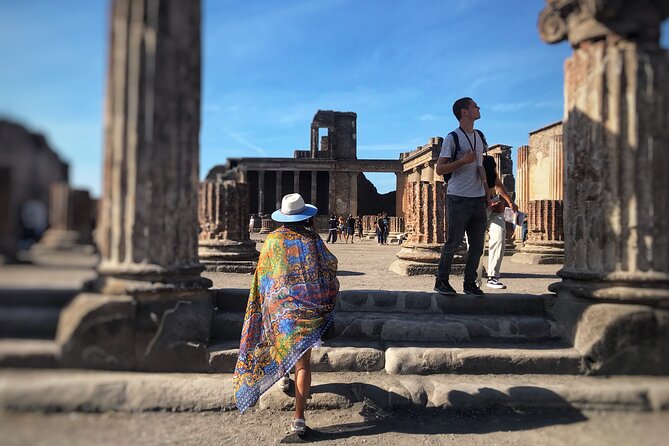
I especially like the high-yield route that moves you through theaters, baths, the forum, and daily street life without dragging. I also love the casts of people from 79 AD woven into the story, so the site feels human, not just stone.
One thing to watch: the Pompeii entrance ticket is not included, and you still need to buy it (typically €19 per person) for the skip-the-line part to work smoothly.
Key highlights to know before you go
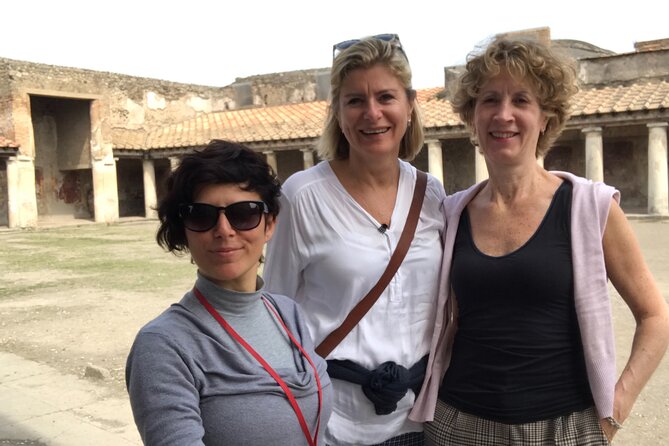
- Private group (up to 10) means you can set the pace and ask questions without feeling rushed.
- Skip-the-line support is included, but you must have your official site ticket for it to pay off.
- 2 hours is fast, so the tour is designed around Pompeii’s “must-understand” areas.
- Roman daily life stops go beyond temples and walls, including shops and the lupanar district.
- Stabian Baths + forums give you a clear picture of public life in Pompeii, not random sightseeing.
- Guide flexibility helps the experience feel tailored, even for families and mixed ages.
Pompeii entry fast: skip-the-line help plus the €19 ticket reality
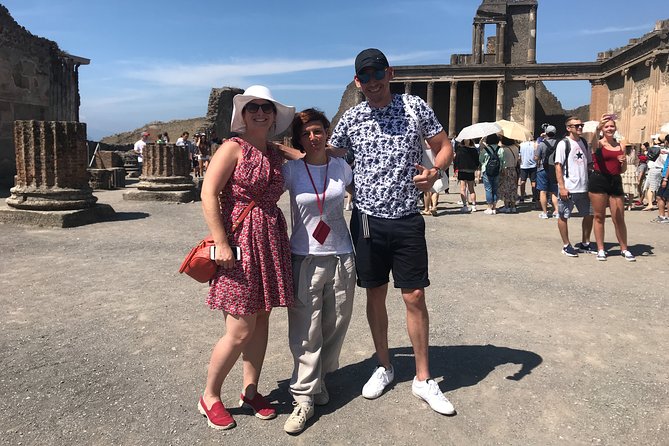
This tour is priced per group (up to 10 people), not per person. At $375.05 for the group, the math can work well if you’re traveling with family or friends and can fill out a small group.
But here’s the key logistics piece: the Pompeii admission ticket is not included in the tour price. The site ticket is €19 per person, and it’s free for visitors under 18 (with ID or passport because they can check the birthdate).
What the tour includes is the “skip-the-line” advantage, plus a link sent one day before the tour so you can buy online and avoid the worst ticket-office lines. In practical terms, this is ideal if you hate standing around while everyone else is walking through history.
My advice: don’t treat the booking confirmation as your entry ticket. You’re doing two things:
1) Pay for the tour.
2) Buy your Pompeii site ticket separately.
Also, in high season, buy the entrance ticket in advance. If you don’t, you risk turning a “fast entry” day into a “slow waiting” day.
You’ll meet at Piazza Esedra, 10, 80045 Pompei NA, Italy and you’ll end back there. Expect the full experience to feel like a guided walk with smart stops, not a museum-style sit-and-read tour.
Why a private archaeologist-led route beats wandering in circles
Pompeii is big. Even if you have a map, you can end up seeing the “pretty stuff” and missing the places that explain how the city worked.
That’s where a private archaeologist-led format helps. You’re not just hearing facts. You’re building a mental model of Pompeii: entertainment, worship, commerce, justice, and everyday habits, all in one concentrated loop.
What you’ll likely appreciate most is pacing. Private tours make it easier for your guide to keep momentum while still answering questions. It’s also the kind of tour where you can tailor attention: if your group cares more about daily life than big monuments, the tour can follow that energy.
Based on what’s worked for past groups, guides tend to be strong on:
- Keeping you out of heavier crowds when possible
- Pointing out details that are easy to miss on your own
- Adjusting pace for kids, elders, or anyone who needs shade and slower walking
And yes, if you’re a photo person, expect frequent chances to stop long enough to actually get the shot.
The trade-off is time. A private 2-hour plan is powerful, but it will not replace a full day of wandering, because Pompeii simply does not fit inside two hours. Think of this as your best “first Pompeii visit” or your best “I have limited time” option.
Pompeii Archaeological Park: theaters, temples, baths, streets, and the human story
The tour begins inside the Pompeii Archaeological Park with your main guided segment. After you handle the site ticket, you’ll move through a mix of classic highlights and some genuinely telling “Roman life” areas.
Here’s what this early stretch includes:
- Theaters and temples that show how public culture and religion shaped daily life
- A rich house, so you can compare elite domestic life with public spaces
- Stabian baths (spa), which matter because bathing wasn’t just hygiene, it was social time
- Shops and fast food, which help you understand the economy of a working city
- The lupanar area, Pompeii’s famous red district context
- The Forum, the main square where political and daily business converged
- The area of the gladiators, tying entertainment to training and status
- Casts of people who died during the eruption
The casts are the emotional gut-punch of Pompeii. They’re not “scenery.” They’re preserved bodies that make the disaster feel immediate. Even if you’ve seen photos before, seeing them in context within the walking route makes the story land harder.
Now the possible downside. This is a lot of territory in a short time. If you want slow looking, sketching, and lingering over tiny inscriptions, you’ll need to add self-guided time after the tour. During the 2-hour portion, your guide will keep moving, because the whole point is to hit the most important places.
One more practical note: food and drinks are not included. Pompeii has snack options around, but your tour budget should include your own water and a plan for breaks.
Odeion and Teatro Grande: Roman acoustics and big theater energy
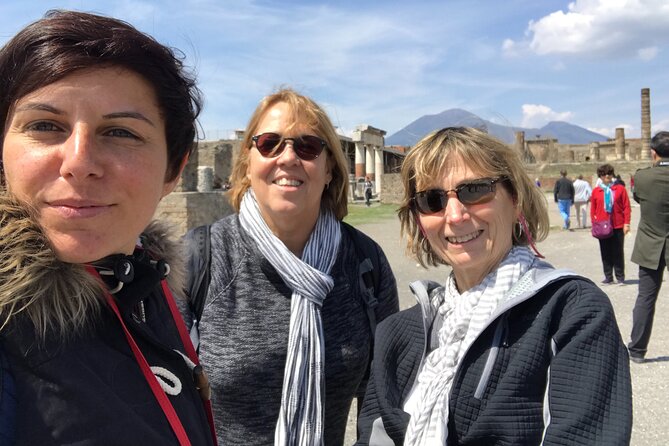
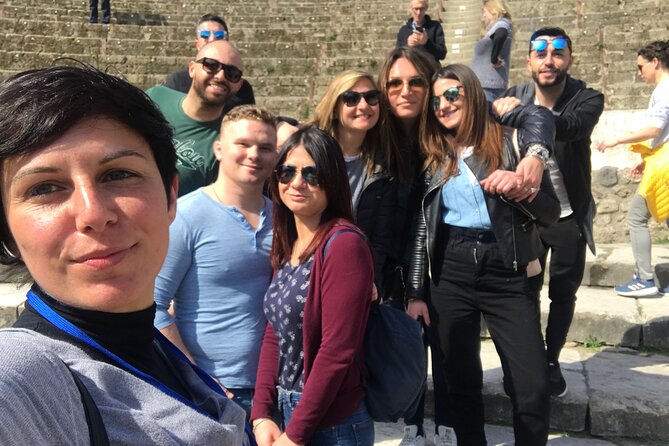
After the main park segment starts, you’ll hit a quieter, more specialized stop: the Small Theater (Odeion). The point here is the sound. Romans were seriously proud of their acoustics, and this stop gives you a “wait, that makes sense” understanding of why these buildings were designed the way they were.
Then you’ll shift to the Teatro Grande, the Great Theater of Pompeii. This is one of the most important theaters in the archaeological site, and you’ll spend about 15 minutes there.
What I like about pairing these two is contrast:
- the Odeion helps you understand the craft of listening
- the Teatro Grande shows scale and public culture
If your group includes kids or teens, theaters usually work well because they’re visually dramatic and conceptually easy. Even if nobody knows Roman drama, you can still connect the dots to civic life and entertainment.
Via dell’Abbondanza: the main street where you feel the city’s rhythm
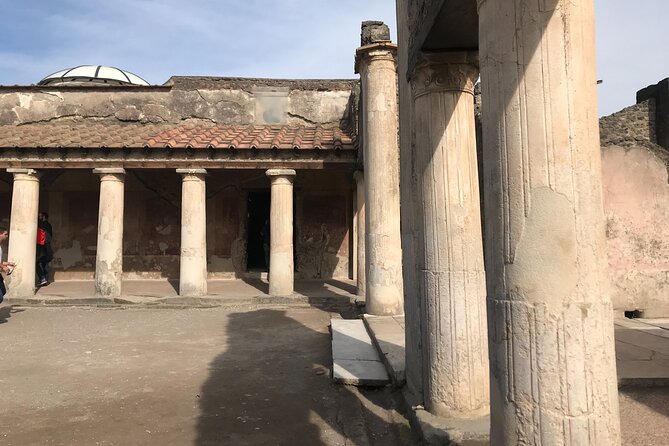
Next you’ll cross via dell’Abbondanza, Pompeii’s main street. This is the part of Pompeii that feels like a real place with movement, commerce, and built-in public space.
Crossing it with a guide matters because you’re not just walking a street. You’re learning how the city structured pedestrian life, shopfronts, and circulation between major areas like the Forum and theaters.
This stop is short, but it acts like a reset button. You go from intense cultural sites to everyday street logic, then onward toward the forum area and the baths.
Granaries of the Forum: amphora storage and the casts’ second perspective
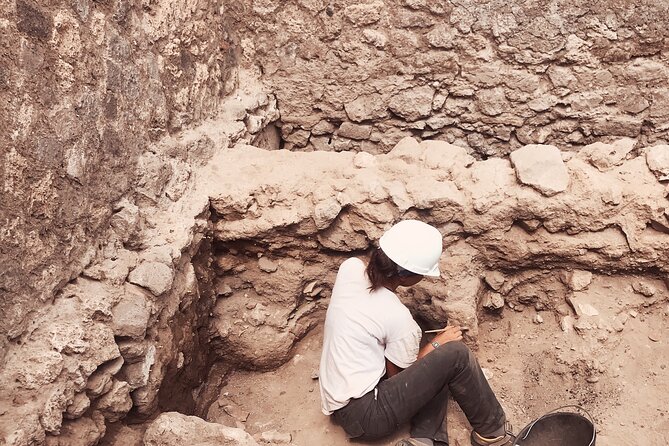
You’ll then visit the Granaries of the Forum (Granai del Foro). This is one of those stops where it’s easy to underestimate the importance until you actually stand in the space.
You’ll get about 15 minutes here and the focus is twofold:
- The archaeological deposit with amphorae and work tools, which tells you how food supply and storage worked
- The casts connected to the people who died during the eruption, giving a second emotional lens to what you saw earlier
What I find valuable is that this stop connects the disaster to logistics. People didn’t just die in the abstract. They died in specific locations tied to the city’s functioning, routines, and movement.
If you want to understand Pompeii as a system instead of a set of ruins, this is a strong pivot.
Stabian Baths (Terme Stabiane): Pompeii’s best Roman spa stop
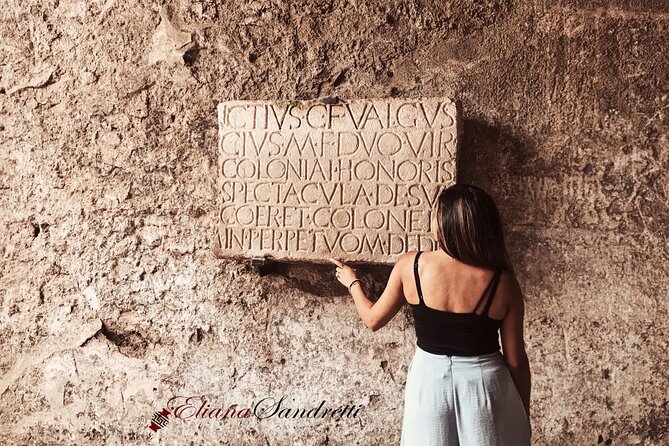
Next is the Stabian Baths (Terme Stabiane), often described as the best SPA of the Roman Empire in Pompeii. You’ll spend around 15 minutes there.
Even in a short visit, baths are one of the best places to learn “how Romans behaved.” You’re looking at how people gathered, washed, socialized, and moved through connected rooms and spaces.
The practical drawback is timing. A spa complex is hard to fully appreciate in 15 minutes, especially if you like architecture details. The upside is that your guide helps you see the layout quickly, so even a brief stop gives you a real mental map.
If anyone in your group needs a break from the hottest stretches of stone, baths can work as a natural pause because you’ll be shifting focus from street walking to indoor-like spaces.
Foro di Pompei, Basilica, and the Temple of Jupiter: where power was performed
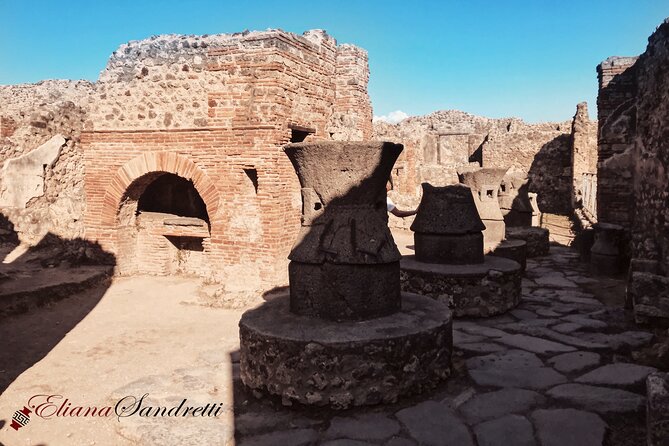
Now you’re entering the core civic zone:
- Foro di Pompei (about 10 minutes): the main square with markets and temples
- Basilica of Pompeii (about 15 minutes): the ancient court where justice was administered
- Temple of Jupiter: located in the main square area
This trio is your fastest route to understanding how Pompeii ran. The Forum isn’t just pretty stones. It’s where public life happened, and the Basilica is the legal brain of that system.
One thing to pay attention to is how religion and government sit in the same neighborhood. With this tour route, you’ll see the Forum as a place where worship and civic order were visually and spatially tied together. That’s a big part of why Pompeii feels so legible when you have a guide who explains the connections.
Quadriporticus of the theatres and gladiator barracks: training, status, and daily routine
Next up is a stop linked to the entertainment machinery behind the city:
- Quadriporticus of the theatres, including the Gladiator Barracks
- You’ll see apartments and where gladiators trained
- Plan on about 15 minutes
Gladiators are famous, but it’s easy to treat them like movie characters. This stop helps you understand the practical side: living spaces, training needs, and the everyday rhythm of a profession that mixed violence with performance and fame.
It’s also a smart stop for groups because it’s story-friendly. You can picture schedules, routines, and training even if you don’t know Roman terminology.
Vicolo del Lupanare and the Temple of Venus: contrast of spectacle and devotion
You’ll visit Vicolo del Lupanare, the ancient red district light area, focused on the lupanar (brothel). You’ll spend about 15 minutes, and it’s listed as free admission within the tour sequence.
It’s worth mentioning this respectfully: this area can be uncomfortable if you’re sensitive to the topic. The value is historical context. You’re seeing how different kinds of commerce and desire were part of city life, right alongside entertainment and worship.
Then you’ll go to the Temple of Venus, where the city’s divinity was venerated. This is an important balancing act in the route. After the lupanar stop, Venus reminds you that Pompeii also organized life around belief, identity, and ritual.
The tour does a good job showing that the Romans weren’t “one thing.” They had entertainment and devotion in the same footprint, not separated into different worlds.
Casa del Fauno: elite living as a final stop
You’ll wrap with Casa del Fauno (house of the faun), one of the richest and most luxurious residences in Pompeii. Expect about 15 minutes.
This is the kind of stop that helps you compare the city’s layers:
- public life at the Forum and Basilica
- entertainment around the theaters
- commerce and street life
- private power in elite homes
Casa del Fauno is a fitting final note because it gives you the “who lived here and why” perspective. Even if you never step foot inside modern museums, you leave with a strong sense of social class differences baked into the layout of the city.
How to make the most of your 2-hour Pompeii plan
Here are a few ways to get more from the time you have:
- Buy the Pompeii entrance ticket ahead and keep it ready on your phone or print, so the skip-the-line part actually works.
- Bring water and plan for a restroom break before you commit to the whole loop. The tour does not include food and drinks.
- Wear comfortable shoes. Pompeii is stone walking over uneven ground, and stopping often does not mean sitting.
- If you care about specific themes, tell your guide early. This tour is described as tailor made, so your priorities matter.
- If you’re traveling with kids or elders, use the private format to your advantage. Prioritizing shade and the most engaging stops can make a big difference.
And one more tip: Pompeii can feel emotional fast, especially once you’re seeing casts and disaster-linked contexts. If your group needs a slower moment, ask your guide. A good guide will find a way to keep you moving while letting your brain catch up.
Should you book this Pompeii private tour?
I’d book this if you want:
- A private archaeologist-led experience in about 2 hours
- The “big Pompeii” highlights without the stress of planning every turn
- A guide who can explain how spaces connected, from baths and theaters to the Forum and elite homes
- A route built for less crowd time, which matters in peak season
I would hesitate if:
- You dislike the idea that Pompeii entry tickets are extra (budget for €19 per person)
- Your group wants a slow, deep, no-rush exploration. Two hours is a highlights sprint.
- You can’t or won’t buy the entrance ticket in advance. Skip-the-line guidance is only useful once you’re holding the official ticket.
Bottom line: if you want the best odds of leaving Pompeii feeling like you actually understood it, this private plan is strong value, especially when split across a group of up to 10.
FAQ
Is the Pompeii entrance ticket included in the tour price?
No. The tour does not include the Pompeii site entrance ticket. The ticket costs €19 per person, and under 18 visitors get free entry with ID or passport.
Does the skip-the-line feature require a separate ticket purchase?
Yes. Skip-the-line is included with the tour, but it is tied to having your Pompeii entrance ticket. You are sent a link one day before the tour to buy online in advance.
How long is the tour, and what is the pacing like?
The tour is about 2 hours. It is structured as a focused route through key areas, so expect a steady walk between main stops.
Where do we meet for the tour?
You meet at Piazza Esedra, 10, 80045 Pompei NA, Italy. The tour ends back at the same meeting point.
What language is the tour offered in?
The tour is offered in English. Multiple languages are possible only on request.
What happens if the weather is bad or there is a storm?
This experience requires good weather. If it is canceled due to poor weather, you can choose a different date or get a full refund. In case of storm, you can choose another date or receive a full refund.
Just Your Group
- Pompeii private tour with an Official Guide★ 5.0 · 631 reviews
- Pompeii Private Tour with an Archaeologist and Skip The Line – 3 hours★ 5.0 · 564 reviews
- Visit in Pompeii – Pompeii Private Tour with Ada★ 5.0 · 436 reviews
- Pompeii Vineyard Escape: Private Wine Tasting & Lunch★ 5.0 · 329 reviews
- Private Day Tour to Vesuvius, Herculaneum & Pompeii with Pick Up★ 5.0 · 279 reviews
More Tours in Pompeii
- Pompeii Small Group Tour with an Archaeologist★ 5.0 · 6,593 reviews
- Pompeii and Herculaneum Small Group Tour with an Archaeologist★ 5.0 · 1,350 reviews
- Skip the Line Guided Tour of Pompeii led by an Archaeologist★ 5.0 · 703 reviews
- Pompeii Ticket + Tour with Optional Tasting Experience at Pompeii★ 5.0 · 663 reviews
- Pompeii private tour with an Official Guide★ 5.0 · 631 reviews
More Tour Reviews in Pompeii
- Pompeii Small Group Tour with an Archaeologist★ 5.0 · 6,593 reviews
- Discover the Ancient Ruins of Pompeii: Day Trip from Rome★ 3.5 · 2,247 reviews
- Pompeii and Herculaneum Small Group Tour with an Archaeologist★ 5.0 · 1,350 reviews
- Skip the Line Guided Tour of Pompeii led by an Archaeologist★ 5.0 · 703 reviews
- Pompeii Ticket + Tour with Optional Tasting Experience at Pompeii★ 5.0 · 663 reviews
More ways into Skip the Line.
 ★ 4.0Pompeii: Skip-the-Line Entrance Ticket with Audio GuideFrom $392,509 reviews
 ★ 4.8Skip-the-Line Pompeii Express Tour by TrainFrom $632,038 reviews
 ★ 4.6Pompeii: Skip-the-line-Ticket and Guided TourFrom $641,152 reviews
 ★ 4.9Pompeii: Guided Tour with Skip-the-Line EntryFrom $58812 reviews
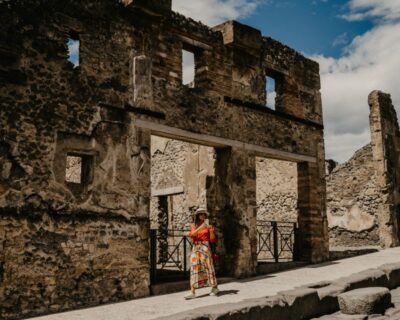 ★ 4.1Pompeii: Skip-the-Line Entry Ticket with Digital Guide AppFrom $22770 reviews
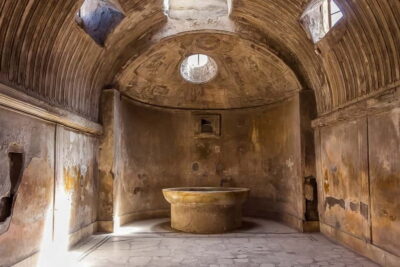 ★ 4.9Pompeii Ruins Private Tour with Optional Skip-the-Line EntryFrom $254732 reviews
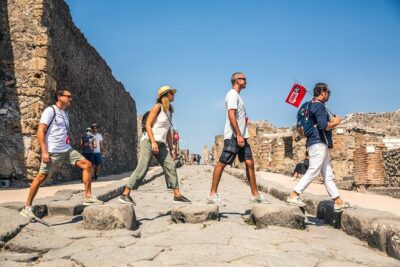 ★ 4.5Skip-the-Line Pompeii Guided Tour from SorrentoFrom $90722 reviews
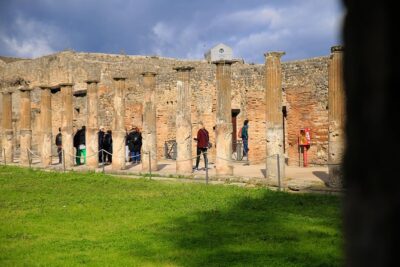 ★ 5.0Skip the Line Guided Tour of Pompeii led by an ArchaeologistFrom $95703 reviews
Other useful routes from here