

REVIEW · SKIP THE LINE
Ancient Pompeii Private Tour: Skip the Line & Kid-Friendly Option
Pompeii hits hard when you skip the lines. This private tour bundles skip-the-line tickets with an English-speaking guide who can adjust the route to your interests, so you start seeing the good stuff fast. It is built for a tight 2-hour visit with an emphasis on the big highlights at Pompeii, a UNESCO World Heritage Site.
In my view, the star is the combo of fast entry and expert guidance, because Pompeii is huge and you want your time to count.
I also love the family-friendly setup, including a Pompeii4kids kit with a map, stickers, games, and clues for children (recommended for ages 6 to 11). The guide can tailor the route to keep kids engaged without turning it into a boring lecture for adults. One possible drawback is that it is still a walking tour over ancient surfaces, so plan for moderate fitness and wear comfortable, grippy shoes.
Key highlights at a glance
- Skip-the-line access so you lose less time waiting at entry.
- A private, English-speaking Blue Badge guide who can tailor the pace and route.
- Pompeii4kids for ages 6 to 11, with map, stickers, activities, and a guided family approach.
- Forum to baths to temples coverage of key public and private life in the city.
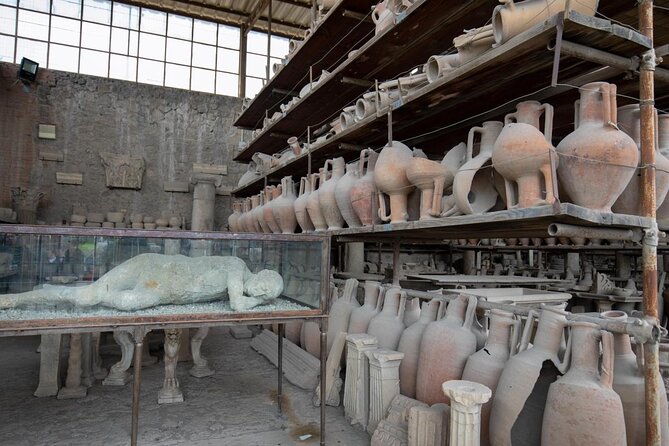
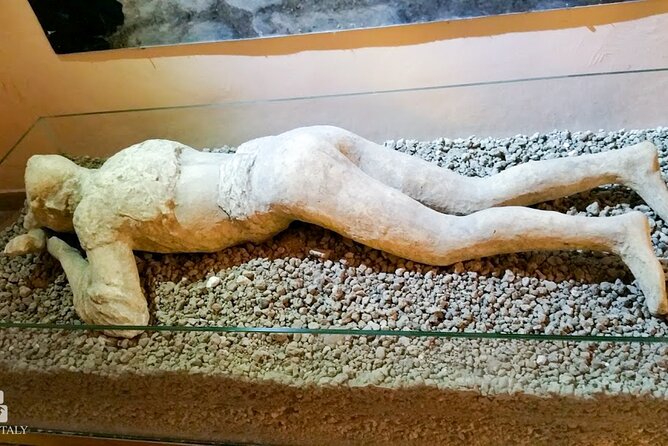
- Antiquarium victim casts included, where the tragedy is seen up close.
- Ends back at the meeting point for an easy, low-stress finish.
Private Pompeii in 2 hours: why this format works
Pompeii is one of those places where a self-guided visit can feel like running through a museum without captions. This private format fixes that. You get a guide who can shape what you focus on, and you do not have to keep up with a large pack.
The pace matters here. The tour is listed at about 2 hours, which is short enough that you will feel satisfied rather than exhausted, but long enough to cover meaningful sections of the site. If you care about how people lived, worked, prayed, ate, bathed, and shopped, this route gives you that “daily life” thread instead of scattered stops.
And since it is private, your group sets the tempo. That is a big deal with kids, especially on a hot day when patience can get thin.
Skip-the-line tickets and fast-track entry, what you actually gain
The biggest practical win is the skip-the-line element. Pompeii can be busy, and waiting at the entrance is the easiest way to waste part of your visit. This tour includes admission ticket access and also notes that guides have access to a fast-track line, meaning tickets can be bought quickly on the spot.
You also get a mobile ticket, which cuts down on fuss when you are meeting and checking in. You still want to have your ticket ready on your phone, but you avoid the scramble of printing or hunting for paperwork.
In real terms, this matters because Pompeii does not reward rushing. Once you are inside, you want time to look closely at details like wall-paintings, floor-mosaics, and the street layout that reflects how the city handled flooding and sewage.
Your guide sets the tone, and that shapes what you remember
This is a private guided walking tour with a Blue Badge guide, offered in English. That matters because Pompeii is not just “old buildings.” It is a snapshot of a Roman city frozen in time by the eruption of Mt. Vesuvius in AD 79.
A strong guide turns the ruins into a story you can follow. In this tour, the guide starts by framing the eruption and what it did to the city, then connects each location to daily life and civic power. You are told what you are seeing, not just where it is.
The tour also specifically notes flexibility. If there is something you want to focus on, you can tell your guide and they can tailor the route. That is how you keep the visit from feeling like a generic checklist.
Pompeii for kids (ages 6 to 11): map, stickers, games, and clues
If you are traveling with children, the family option is one of the best reasons to choose this tour. It is built around a kid-sized learning tool: the Pompeii4kids kit, which includes a map with stickers, activities, and an activity-book.
The family approach uses games, puzzles, and clues, and the guide gears the walking route toward youngsters. You are not just reading labels together. The idea is to get kids participating, so they are looking for answers while you are learning the stories behind the stones.
This is also where the private format shines. Kids can move slower, ask more questions, and need breaks. A guided family route can slow down without derailing the whole day.
At the end, the family tour returns you to the original starting point when you say goodbye to your guide.
The walk starts at Via Villa dei Misteri, 2, and stays simple
Meet at Via Villa dei Misteri, 2, 80045 Pompei NA, Italy. The tour ends back at the meeting point, so you are not stuck figuring out transportation mid-route or at the far end of the site.
It is also listed as near public transportation, which helps if you are arriving from elsewhere in the region. If your travel plans include juggling buses or trains, this “return to base” ending keeps logistics calmer.
You should also expect a walking tour with moderate physical fitness needed, and the tour notes good walking shoes are recommended. Pompeii is old, and the ground can be uneven, so comfort matters.
Stop-by-stop: Forum, Via dell’Abbondanza, and what public life felt like

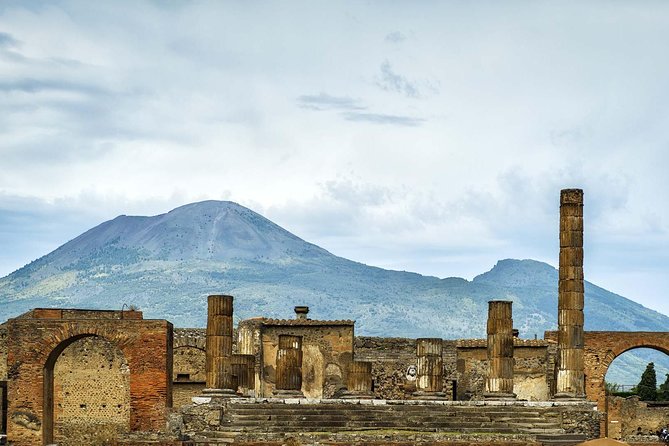
Stop 2: The Forum of Pompeii
The Forum is the city’s heart in every sense. It is described as the primary political, religious, and commercial center, a rectangular pedestrian plaza measuring about 157 by 38 meters and off-limits to chariot traffic.
In a private tour, I like using the Forum early because it gives you a baseline. Once you understand where civic life happened, the rest of the ruins make more sense. You stop, you learn what it was used for, and then your guide can connect later sights back to this “center.”
Stop 3: Via dell’Abbondanza
Next up is Via dell’Abbondanza, Pompeii’s main commercial and social street, also known as the Decumanus Inferior. It runs from the Forum to the Sarno Gate and is described as the city’s longest and most important street.
This is one of the best segments for imagining how the city moved. Streets like this are where you get the feeling of daily rhythm: people going about business, neighbors crossing paths, and the city acting like a living network.
The tour also references basalt-laden streets and squares. That detail helps you picture the physical city, not just its institutions.
Stop 4: Terme del Foro (Forum Baths)
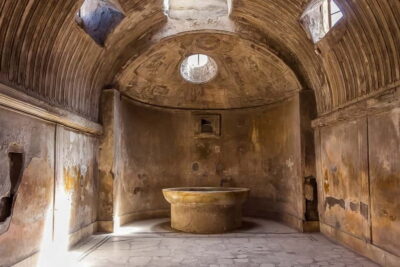
Right behind the Temple of Jupiter, the Forum Baths are a highlight for anyone curious about how Romans structured leisure and routine. They are built around 80 BC and are described as the only public baths still operational at the time of the eruption in AD 79.
You walk through a sequence of Roman bathing spaces: the Apodyterium (changing room), Frigidarium (cold bath), Tepidarium (warm room), and Calidarium (hot room). The ceilings are barrel-vaulted with stucco reliefs and terracotta telamones.
This stop works especially well because it is not just monuments. It is an actual daily-life system, laid out room by room.
Temple of Apollo and the Basilica: religion and power in the same area
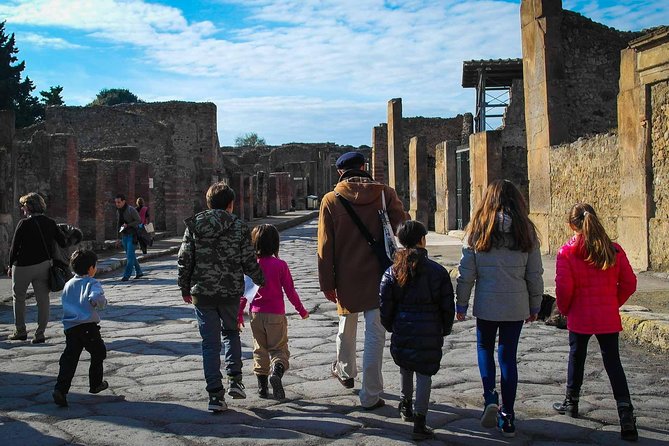
Stop 5: Temple of Apollo
The Temple of Apollo is one of the oldest religious sites in Pompeii, with origins dating back to the 6th century BC. It sits in the Forum area and acts like a landmark for your walking tour, which is useful in a short visit.
It is described as a blend of Greek and Italic styles, with an elevated podium and stairs plus a portico supported by 48 columns. The tour notes bronze replicas of Apollo and his twin sister Diana, while the original Hellenistic bronze pieces are preserved in the National Archaeological Museum in Naples.
You do not need to be a classical scholar to appreciate this. The temple gives you a sense that the city’s spiritual life was embedded in public space.
Stop 6: Basilica
Next is the Basilica, described as the most imposing public building in Pompeii, located in the southwestern corner of the Forum. It dates to the 2nd century BC and is noted as one of the oldest examples of its kind in the Roman world.
Even if you do not memorize the timeline, a Basilica stop helps you understand the scale of civic architecture. This is where public life likely looked official, imposing, and structured.
In a private guide setting, you are not left guessing. You are told what you are seeing and how it fits together.
Casa dei Vettii and Teatro Grande: private wealth and public performance
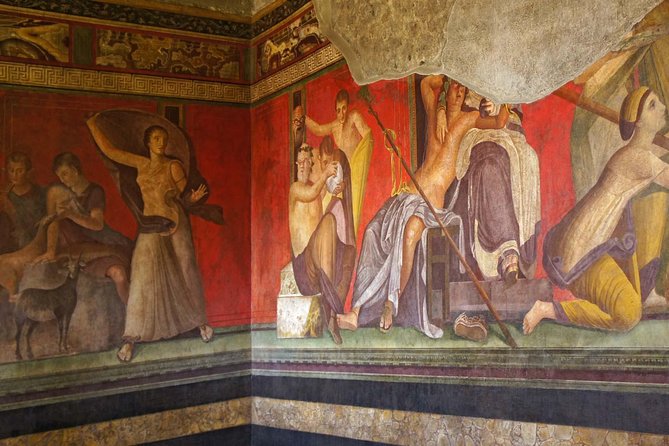
Stop 7: Casa dei Vettii, Pompeii’s Sistine Chapel comparison
The tour includes Casa dei Vettii (Casa dei Vettii), described as the Pompeii equivalent of a Sistine Chapel, reopened in 2023 after a meticulous 20-year restoration. That detail alone signals why it is a must-do: preserved luxury that lets you see what people emphasized when they had money.
This home belonged to two former slaves who became wealthy wine merchants, Aulus Vettius Conviva and Aulus Vettius Restitutus. The tour says the design flaunted their new status and luxury, which helps you read the house as a statement, not just a residence.
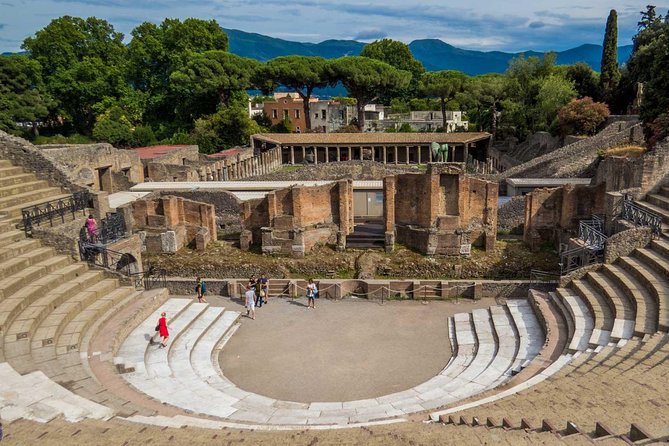
Stop 8: Teatro Grande
Then you shift from private opulence to public culture with the Teatro Grande. It is one of the world’s oldest surviving masonry theaters, built in the 2nd century BC, carved into a natural lava hillside. The tour notes it illustrates the transition from Greek to Roman architectural styles.
If your group has kids, this is often a great moment. It is visual, memorable, and it helps balance the heavier theme stops.
Antiquarium di Pompei: the victim casts and how the story lands
Stop 9: Antiquarium di Pompei
The tour’s emotional peak is the Antiquarium di Pompei, the site’s primary museum. It is climate-controlled and designed to protect fragile finds from the ruins.
Here you see the famous plaster casts of victims, including small children preserved in their final moments. The tour notes that some casts remain in situ at the ruins, but the museum displays especially poignant examples.
This is not a quick photo stop. In this type of private tour, your guide can help you understand what you are looking at and why it was made and preserved. If your group includes younger kids, consider whether they are ready for this topic, and talk to your guide about pacing.
The payoff is that the eruption stops being a big historical date and starts feeling like a human event.
What else you might see on the route, beyond the main stops
Even within a short, structured visit, the tour description points to additional Pompeii must-sees your guide can incorporate. You can expect time that connects the big story of AD 79 to the physical city around you.
That includes city walls and the Porta Marina gate, once an entryway to the harbor. You also get stops tied to everyday life, like streets and squares with stepping-stones designed to cross frequently flooded, sewage-filled lanes. The tour also references must-sees such as the Temple of Apollo, the Macellum market, and public weighing scales.
It also says you can see thermal baths as a popular Roman pastime and even visit an old brothel. If you care about those angles, tell your guide early so they can shape the route.
Price and value: is $165.05 per person worth it?
At $165.05 per person for about 2 hours, you are paying for three things: speed, expertise, and stress reduction.
1) Skip-the-line access reduces one of the biggest drains on a Pompeii visit, waiting time.
2) A private guide is not just about answers. It is about connecting details across multiple sites, from streets to public buildings to private homes.
3) For families, the included Pompeii4kids kit is a real value add. It turns learning into play, and that can prevent the usual “kids versus ruins” battle.
The one thing to watch is admission fees, because the information is a bit mixed in how it is presented. The included details list admission fee access, and the itinerary also indicates admission ticket included for stops. Still, when you book, check your confirmation message so you know exactly what is covered for your exact date.
Who should book this private Pompeii tour?
Book it if you want Pompeii to feel organized and explained, not overwhelming. It is especially good if:
- You are visiting with kids (family option is recommended for ages 6 to 11).
- You want skip-the-line help and a guide who keeps your time tight.
- You care about both public life (Forum, baths, temple) and the human story (victim casts).
- You prefer a flexible pacing style, where you can request something specific you want to see.
It is less ideal if you want a totally freeform wandering day. This tour is structured, and you get the most value when you let your guide set the route rhythm.
Should you book this Ancient Pompeii Private Tour?
I think it is a solid choice if you want the best parts of Pompeii in about two hours, without wasting the day in queues. The private guide plus skip-the-line tickets is the practical win, and the family option adds a smart, kid-focused way to learn.
If your group is sensitive to the darker side of history, plan for the Antiquarium victim casts and ask your guide about pacing. Otherwise, this tour is a strong way to leave Pompeii feeling like you actually understood what you saw, not just that you walked through ruins.
FAQ
How long is the Pompeii private tour?
It is listed as about 2 hours.
Is the tour in English?
Yes, it is offered in English.
Is this a private tour?
Yes. It is a private activity, and only your group participates.
Where do we meet for the tour?
The meeting point is Via Villa dei Misteri, 2, 80045 Pompei NA, Italy.
Where does the tour end?
The tour ends back at the meeting point.
Are skip-the-line tickets included?
Skip-the-line tickets are included, and the guide has access to a fast-track line to buy tickets quickly on the spot.
Are admission tickets included?
Admission tickets are shown as included for stops in the itinerary, and the tour also mentions admission fee inclusion. However, the information also says admission fees are not included, so it is worth double-checking your booking confirmation to be sure for your exact date.
Do you offer a family option for kids?
Yes. The family option includes a Pompeii4kids kit with a map, stickers, activities, and a trained guide, and it is recommended for kids ages 6 to 11.
Do we need a passport for children?
Yes. A current valid passport is required on the day of travel for children under 18 years.
Is pickup and drop-off included?
No. Pick up and drop off not included.
Just Your Group
- Pompeii private tour with an Official Guide★ 5.0 · 631 reviews
- Pompeii Private Tour with an Archaeologist and Skip The Line – 3 hours★ 5.0 · 564 reviews
- Visit in Pompeii – Pompeii Private Tour with Ada★ 5.0 · 436 reviews
- Pompeii Private Tour with an Archaeologist and Skip The Line★ 5.0 · 391 reviews
- Pompeii Vineyard Escape: Private Wine Tasting & Lunch★ 5.0 · 329 reviews
More Tours in Pompeii
- Pompeii Small Group Tour with an Archaeologist★ 5.0 · 6,593 reviews
- Pompeii and Herculaneum Small Group Tour with an Archaeologist★ 5.0 · 1,350 reviews
- Skip the Line Guided Tour of Pompeii led by an Archaeologist★ 5.0 · 703 reviews
- Pompeii Ticket + Tour with Optional Tasting Experience at Pompeii★ 5.0 · 663 reviews
- Pompeii private tour with an Official Guide★ 5.0 · 631 reviews
More Tour Reviews in Pompeii
- Pompeii Small Group Tour with an Archaeologist★ 5.0 · 6,593 reviews
- Discover the Ancient Ruins of Pompeii: Day Trip from Rome★ 3.5 · 2,247 reviews
- Pompeii and Herculaneum Small Group Tour with an Archaeologist★ 5.0 · 1,350 reviews
- Skip the Line Guided Tour of Pompeii led by an Archaeologist★ 5.0 · 703 reviews
- Pompeii Ticket + Tour with Optional Tasting Experience at Pompeii★ 5.0 · 663 reviews
More ways into Skip the Line.
 ★ 4.0Pompeii: Skip-the-Line Entrance Ticket with Audio GuideFrom $392,509 reviews
 ★ 4.8Skip-the-Line Pompeii Express Tour by TrainFrom $632,038 reviews
 ★ 4.6Pompeii: Skip-the-line-Ticket and Guided TourFrom $641,152 reviews
 ★ 4.9Pompeii: Guided Tour with Skip-the-Line EntryFrom $58812 reviews
 ★ 4.1Pompeii: Skip-the-Line Entry Ticket with Digital Guide AppFrom $22770 reviews
 ★ 4.9Pompeii Ruins Private Tour with Optional Skip-the-Line EntryFrom $254732 reviews
 ★ 4.5Skip-the-Line Pompeii Guided Tour from SorrentoFrom $90722 reviews
 ★ 5.0Skip the Line Guided Tour of Pompeii led by an ArchaeologistFrom $95703 reviews
Other useful routes from here