
REVIEW · POSITANO TOURS
Positano: Old Town Walking Tour with Archaeologist Guide
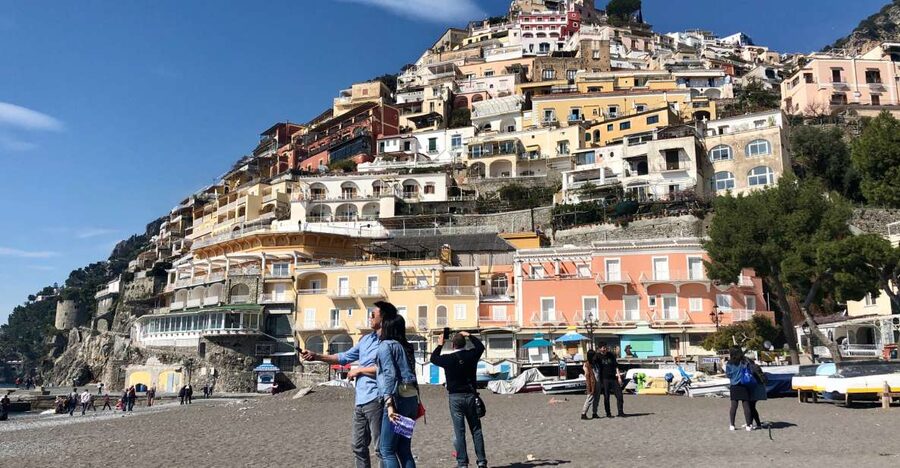
Positano can be a lot, fast. This 2-hour old town and downtown walk is a smart way to get oriented, then hit the best history stop, an underground Roman villa with frescoes. I love the way you move off the main path early, so the town feels smaller and more human, and I also love the focus on what life looked like here, not just photo stops. One consideration: this is significant walking with stairs down to the beach, so plan for your legs and shoes.
What makes it especially interesting is the mix of views, everyday Positano details, and archaeology in one compact route. You’ll get a small group experience with a licensed guide, plus an archaeologist who helps bring the villa to life. I also like that you visit both Old Town lanes and Downtown streets, then see local beach life at Fornillo before finishing near Piazza dei Mulini. The downside is that it’s not for everyone if you need step-free access, since there’s no wheelchair suitability and the route includes stair climbing and descending.
The tour runs rain or shine, so bring a light layer just in case. If you’re the type who likes real context while walking, you’ll probably feel like your two hours were money well spent.
Key things to know before you go
- Small group of up to 10 keeps the pace calmer and the guide easier to hear.
- Archaeologist-led Roman villa includes a guided entrance, plus time to look closely at the frescoes.
- Old Town lanes and panoramic staircases give you viewpoints without needing a car.
- Fornillo Beach is a locals-style stop, not a full-on beach club scene.
- Downtown Positano shop street walk includes ceramics, sandals, and gallery work.
- Santa Maria Assunta and the monastery connection adds meaning to what you see on the hill.
Getting your bearings at Art Hotel Pasitea
The experience starts at the main entrance of Art Hotel/Hotel Pasitea. From the moment you meet your guide, the goal feels clear: you’re heading into Positano’s walking world while avoiding the crush as much as possible. The early minutes matter here. Positano’s charm is tied to how steep it is, and a guide helps you read the town fast instead of spending your time wondering which stair goes where.
You also get a real sense of the town’s “levels.” You’ll be going from Old Town lanes to Downtown streets and down toward the beaches, which makes the geography click. I like tours that do this. You leave with a mental map, not just pictures.
The group is limited to 10 participants, and that small size comes through in how the tour feels. If you’ve ever done a big-group city walk where you’re constantly turning your head to keep up, this one is designed to be easier to manage.
Old Town paths, staircases, and that 13th-century fort
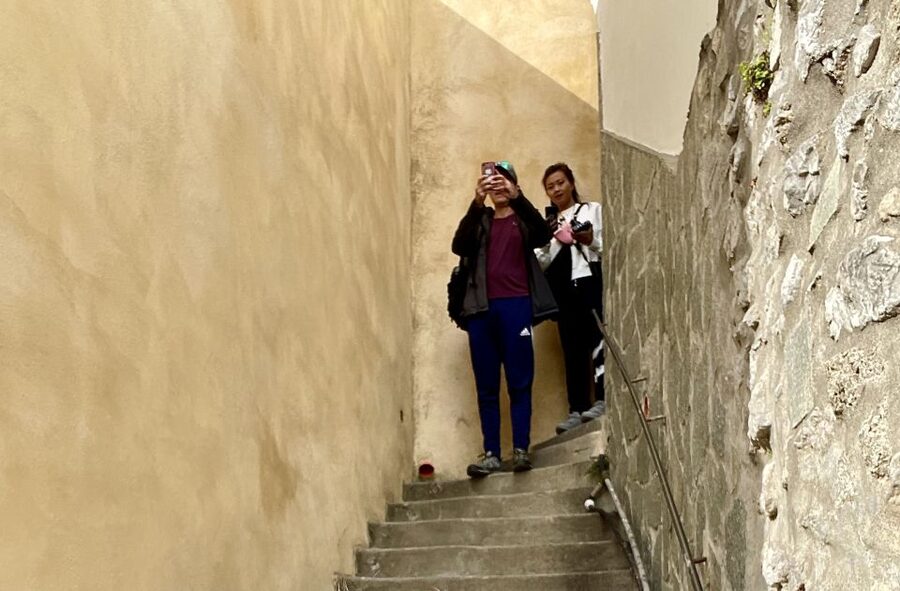
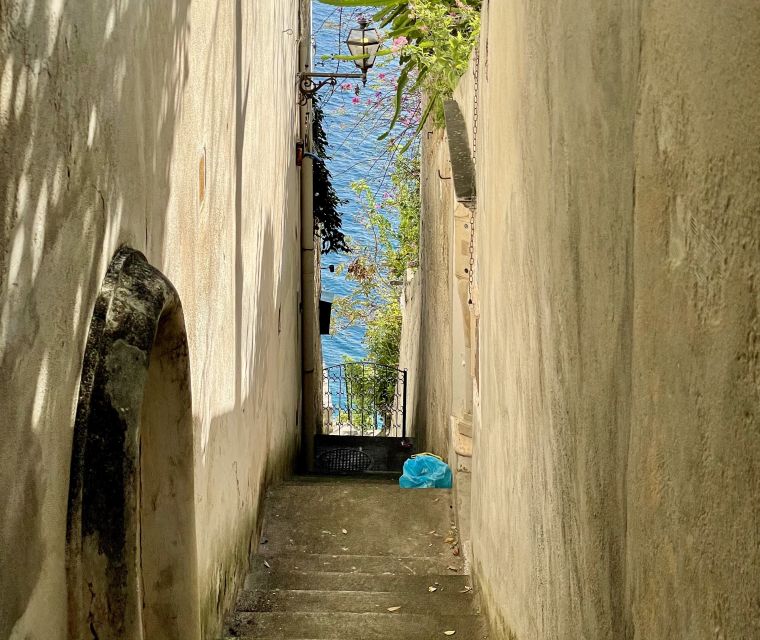
Once you’re moving, the route leans into what Positano does best: narrow lanes, steep steps, and sudden views. You’ll walk down the hill along narrow paths and amazing panoramic staircases. It’s the kind of walking that forces you to slow down, because you’ll want to pause every few corners for the view.
Along the way, you pass a 13th-century fort from the medieval age. That’s a detail I appreciate because it turns the town from “pretty and steep” into “built over centuries.” Your guide will help you connect what you see in the streets to what those stones were protecting long ago.
One practical point: this is a walk where you should wear shoes you trust. Even if the pace feels friendly, the terrain is real, and you’re going to be on steps for a while. If you’re thinking about high heels or thin-soled sandals, save them for later.
Downtown Positano shopping streets, ceramics, sandals, and local art
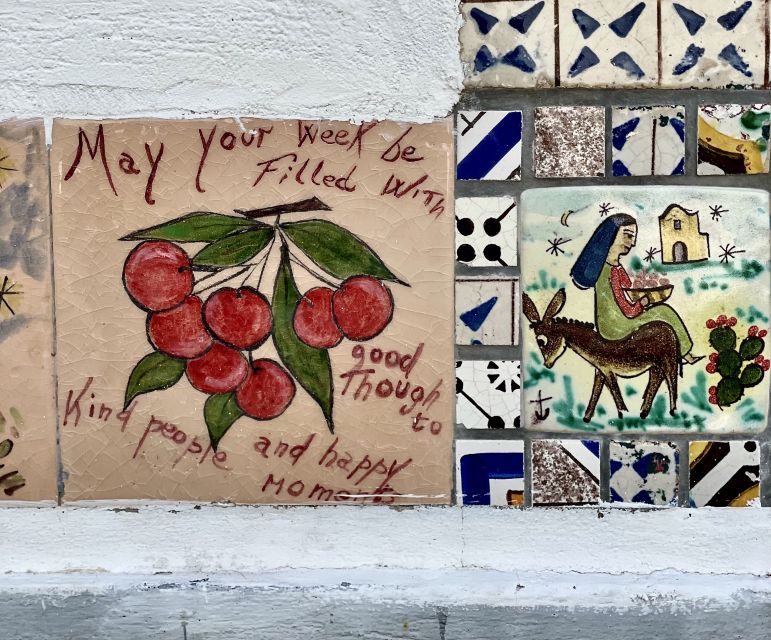
After the Old Town feel, the walk shifts toward Downtown Positano. This is where the tour becomes more than scenery, because you’re guided through the kinds of shops you’d otherwise wander into without much context. You’ll spend time around streets with a variety of ceramics shops, sandal makers, and shoemakers, plus galleries featuring local artists.
I like this part because it’s not just window shopping. A good guide can point out why certain crafts thrive here and how the street layout shapes commerce. Even if you don’t buy anything, you’ll start noticing patterns, like where people cluster and where craftsmanship is built into the street life.
For shopping, the main advice is simple: don’t over-plan. You’ll naturally find yourself in the places that match what you’re curious about, and you’re time-limited. If you want a souvenir, aim for one or two pieces you truly care about, not a spree.
Santa Maria Assunta and the monastery roots
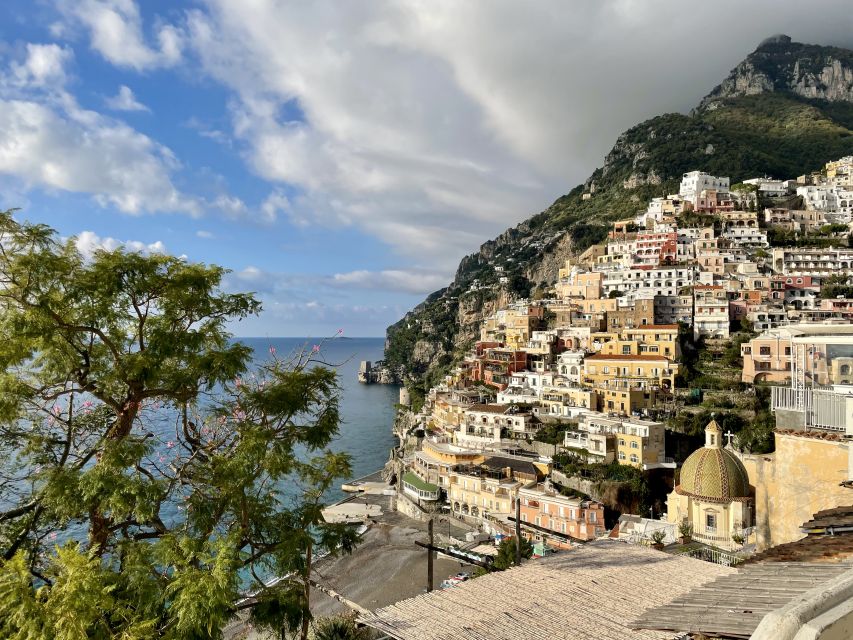
As the walk continues, you approach the Church of Santa Maria Assunta. The tour gives you important context about it being originally the abbey of Positano’s 10th-century Benedictine monastery. That kind of background changes how you see a church, even from the outside.
Instead of treating it like a landmark to check off, you can read it as a spiritual and historical anchor. When a guide ties a building to its older role, you get a fuller picture of how Positano evolved around faith, community, and power over time.
This is also a good moment to slow your pace. By now you’ve done plenty of steps, and you’ll want a short reset before the biggest “wow” stop.
The underground Roman villa with an archaeologist guide
This is the highlight for a reason. The tour includes an amazing underground Roman Villa, opened to the public after being recently discovered, and you get an archaeologist guide to talk you through it. In practical terms, that means you’re not just walking into a room and taking selfies. You’re learning what you’re looking at.
The standout feature is the frescoes. Seeing frescoes in a setting that feels sealed and protected is different from seeing them in a museum. Underground spaces change the atmosphere. You tend to look longer because you can’t help it.
What I find valuable is the way the archaeologist framing helps you connect the art to daily life. Frescoes weren’t made for display in the way we think today, so your guide helps you understand them as part of architecture, status, and taste in a real Roman context.
If you’re the type who loves “how did they build this?” and “what does this mean?”, this stop will feel worth the entire tour cost on its own.
Beach time: central beach views, then Fornillo, then Spiaggia Maggiore
Positano isn’t just cliffs and churches. The beaches shape the town’s rhythm, and this tour gives you a two-part look at that.
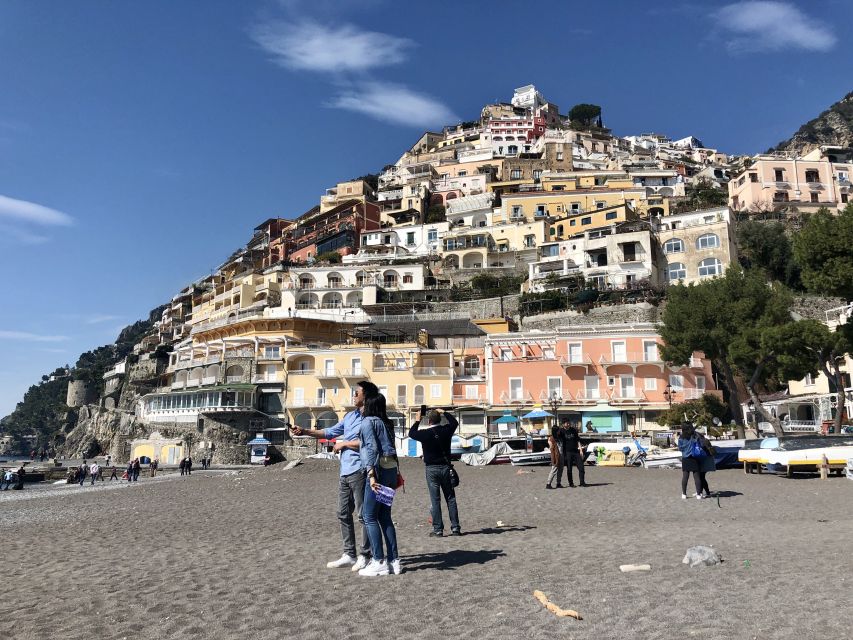
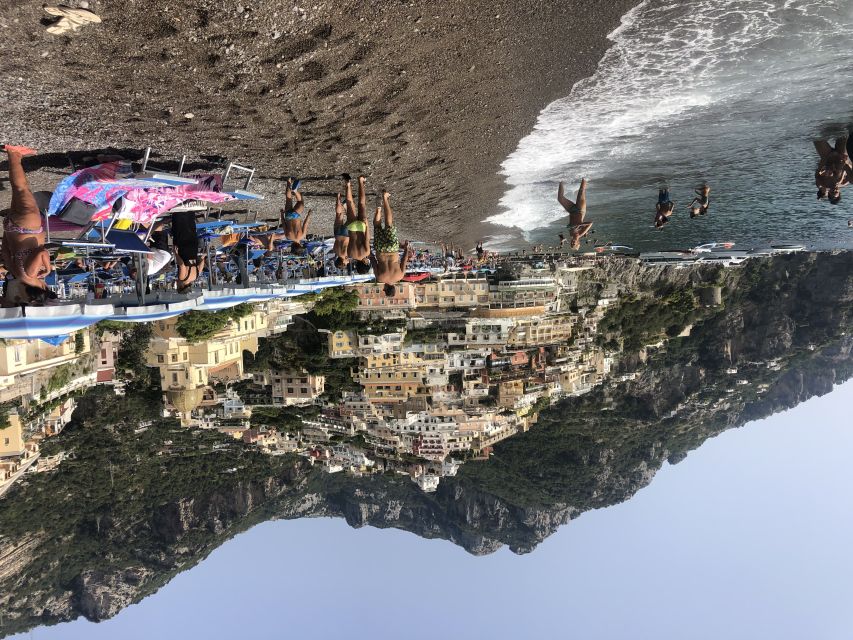
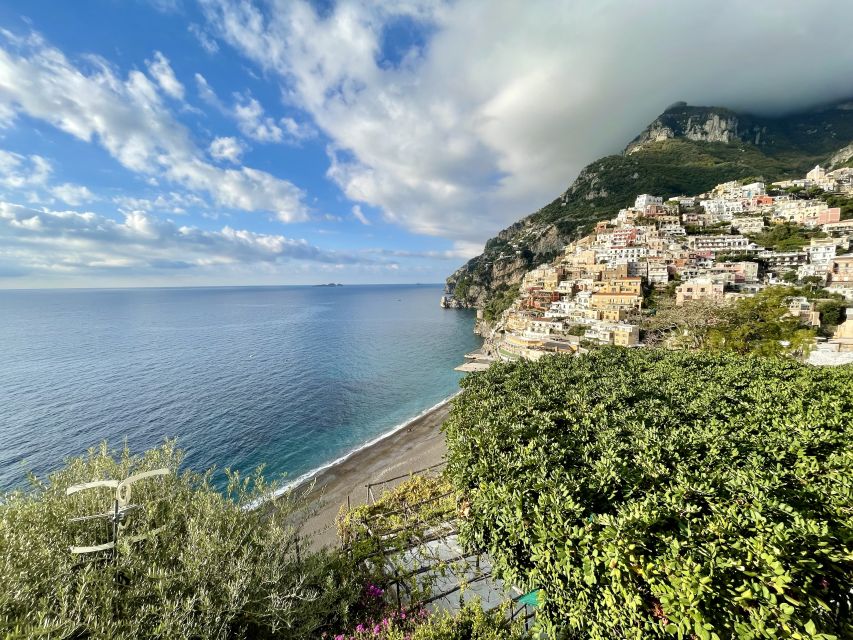
First, you’ll enjoy spectacular views from a central beach area as you walk. Then, you get a chance to spend time at Fornillo Beach, where the locals go to sunbathe. I love that the stop is framed this way. It helps you experience Positano beyond the obvious main shoreline energy.
Finally, you move down toward the main beach, Spiaggia Maggiore. This is where the town’s “hub” vibe is strongest. Even a short time here is useful, because it helps you understand why the older streets stayed the way they did and why the town keeps stacking upward from the water.
One important consideration: the route down to the beach involves walking down stairs. If stairs already feel tiring for you, you’ll want to pace yourself early. Bring water if you can, and expect that your legs will feel the day’s work.
Shop street to church, then back into the flow near Piazza dei Mulini
The route is built like a loop through viewpoints, streets, and key sites. You start at Art Hotel/Hotel Pasitea and finish near Piazza dei Mulini. That ending matters because it’s a natural “anchor” area in Positano. After you come back up, you’re not left stranded at the edge of nowhere with no context for where you are.
This kind of ending also helps with planning the rest of your day. You can keep walking, grab a meal, or switch to a slower, more casual pace right after the tour.
Price and what you actually get for $112.15 per person
At $112.15 per person for about 2 hours, this is not a bargain-basement stroll. But it’s also not just a walking map. What you’re paying for is the combination of guided orientation plus a paid entry ticket for the Roman villa, plus the additional archaeologist guidance inside the site.
For a place like Positano, that matters. Many tours focus only on walking and views, and you’d be left to line up or pay separately for attractions. Here, the Roman villa entrance is included, and the archaeological perspective is part of the experience, not an optional extra.
The small group of up to 10 also affects value. You get time to hear details and ask questions, rather than being swept through.
If your priority is history, frescoes, and a guide who can connect the dots, this cost starts to look reasonable fast. If your priority is purely beaches and shopping without stepping into historical sites, you might want a different style of tour.
How the guides shape the experience, and why you’ll notice
One of the strongest signals from past tours is how guides bring the town to life. People specifically praised guides like Lucianna for being enthusiastic and full of Positano know-how. Others highlighted Emilia as delightful and very well prepared.
There’s also a practical detail I really like in the real world: in one small-group situation, a guide spoke loud enough for a guest who uses hearing aids. That tells you something about tour handling. In a town full of echoes, narrow lanes, and background noise, clear voice projection and good group management can make the difference between enjoying the tour and just following.
So when you book, choose a start time that fits your energy. You’ll hear more and enjoy the day more if you’re not rushing from another activity.
Who this tour is perfect for, and who should skip it
This walking tour is a great fit if you want:
- A guided walk that helps you understand where everything is, fast
- A meaningful history anchor, especially the Roman villa and frescoes
- A mix of Old Town lanes, Downtown shops, and beach time
- A small group pace, where you can actually hear instructions
You might want to skip it or choose a different format if:
- You need wheelchair accessibility, since it’s not suitable for wheelchair users
- You have limits on stairs, because the route includes walking down stairs to reach the beach and involves significant walking overall
- You have constraints due to weight or age, since it’s not suitable for people over 331 lbs (150 kg) and people over 95 years
Also note what’s not allowed: baby strollers, alcohol and drugs, and explosive substances. That’s standard for many guided archaeological and walking experiences, but it can matter if you travel with kids or plan a celebratory stop.
Should you book this Positano Old Town and Roman Villa walk?
Book it if your ideal Positano day includes steep streets, a guide who can explain what you’re seeing, and one big indoor payoff. The underground Roman villa is the kind of experience you can’t easily replicate on your own without extra planning, and the archaeologist guide makes the frescoes more than just a pretty stop.
Think twice if you want minimal stairs, or if you’re planning a day where your legs will already be tired. Two hours sounds short until you factor in Positano steps.
If you’re deciding between a pure viewpoint tour and a history-focused one, this is the sweet spot. You get the views and beach angles, but you also come away with real context, especially once you’re standing underground looking at the frescoes.
FAQ
How long is the Positano Old Town walking tour?
The tour lasts 2 hours.
Where do we meet the guide?
You meet your guide in front of the main entrance of Art Hotel/Hotel Pasitea.
What is the tour highlight?
The standout included experience is the underground Roman Villa entrance, guided by an archaeologist, with frescoes.
Does the tour run in rain or shine?
Yes, the tour takes place rain or shine.
What languages are available?
The live tour guide is available in English, Italian, German, and Spanish.
Is it suitable for wheelchair users?
No, the tour is not suitable for wheelchair users.
How large is the group?
The group is small, limited to 10 participants.
More Tour Reviews in Positano
- Cooking class with Pasta, mozzarella and Tiramisu with wine★ 5.0 · 549 reviews
- Private Amalfi Coast Boat Trip from Positano, Praiano or Amalfi★ 5.0 · 431 reviews
- Olive oil tasting in Sorrento★ 5.0 · 413 reviews
- Small Group Day Trip to Capri from Positano or Praiano★ 4.5 · 354 reviews
- From Positano: Sorrento Coast & Capri Full-Day Trip by Boat★ 4.7 · 340 reviews
More Paths into Positano
- Private Amalfi Coast Boat Trip from Positano, Praiano or Amalfi★ 5.0 · 431 reviews
- Small Group Day Trip to Capri from Positano or Praiano★ 4.5 · 354 reviews
- From Positano: Sorrento Coast & Capri Full-Day Trip by Boat★ 4.7 · 340 reviews
- Very Small Group Capri Boat Excursion with Transfer from Positano★ 4.5 · 334 reviews
- From Positano, Praiano, or Amalfi: Capri Full-Day Boat Tour★ 4.5 · 318 reviews
More ways into Positano Tours.
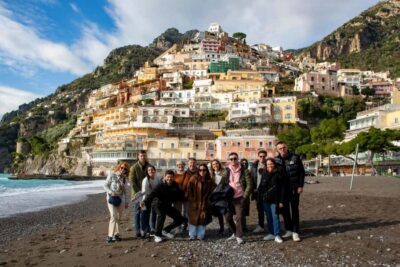 ★ 4.6From Naples: Sorrento, Positano and Amalfi Full-Day TourFrom $10710,988 reviews
 ★ 5.0From Naples: Sorrento, Positano & Amalfi Coast – Small Group TourFrom $768,643 reviews
 ★ 4.8From Naples: Premium Tour of Sorrento, Positano, AmalfiFrom $853,606 reviews
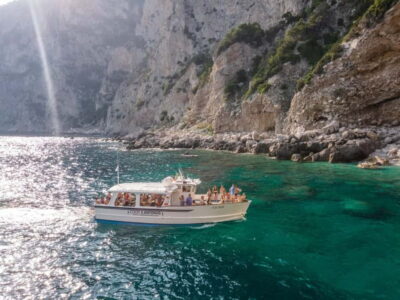 ★ 4.6From Sorrento/Nerano: Amalfi and Positano Boat TourFrom $702,440 reviews
 ★ 4.5Day Trip to Positano, Amalfi & Ravello from SorrentoFrom $1312,371 reviews
 ★ 4.7From Naples/Salerno: Group Tour to Positano, Amalfi, RavelloFrom $1012,033 reviews
 ★ 4.9Positano and Amalfi Boat Trip with TransferFrom $1741,598 reviews
 ★ 4.0Positano and Amalfi Day CruiseFrom $621,500 reviews
Other useful routes from here