
REVIEW · GUIDED
Pompeii Guided Tour with Archaeologist
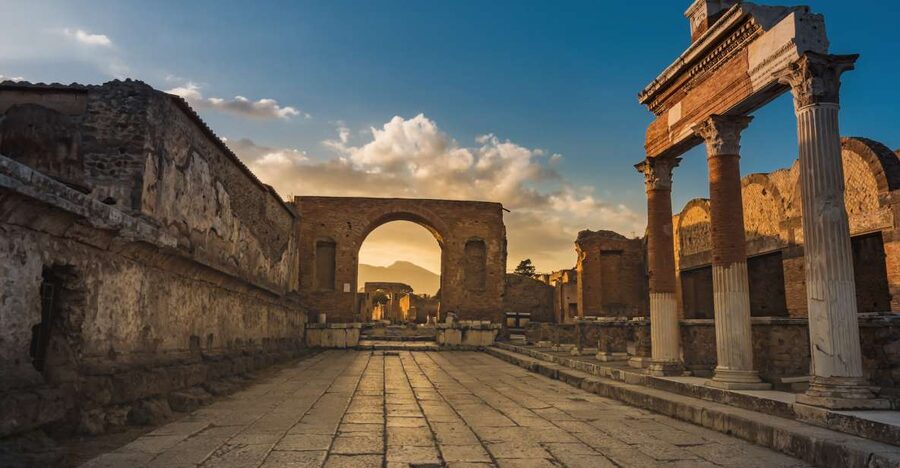
Pompeii can hit you like a movie scene. This guided tour is a smart way to see the city’s big-name highlights without wasting time, and it’s led by an archaeologist who explains what you’re looking at as you walk. You meet at Porta Marina Superiore and go straight to key areas like the forum and plaster casts.
Two things I really like: first, the setup helps you skip the long queue at the entrance, so you start seeing Pompeii sooner. Second, the group stays small, up to 16 people, which makes it easier to ask questions and keep the pace human.
One thing to consider: the tour is only 2 hours, and in practice you may lose some time at the start for logistics like radio headsets. Also, this visit covers part of the site, and you’ll likely want to continue on your own after the guide finishes.
Key points before you go
- Skip-the-line entry plus express security helps you get into Pompeii faster
- Archaeologist-led explanations connect street-level ruins to daily life
- Small group (max 16) keeps the walk interactive, not crowded
- Forum, suburban baths, and plaster casts are chosen for maximum impact in limited time
- Villa of the Mysteries is not included, so plan that separately if it matters to you
- You can stay after the tour and ask for follow-up suggestions for the rest of Pompeii
Entering at Porta Marina Superiore, then moving fast

This tour begins at the main entrance of Pompeii, Porta Marina Superiore. You’ll meet the guide holding the company sign, then get directed into the site while avoiding the longest lines at the gate.
I like this because Pompeii is big, and time evaporates fast once you’re inside. If you arrive with a game plan, you see more and feel less like you’re just trying to “cover ground.” Also, the express security check matters here, because entrance lines can turn your visit into a waiting room.
Practical tip: show up a little early at Porta Marina Superiore and double-check you’re in front of the correct company sign. One past guest reported a start confusion about meeting location, followed by being chauffeured to the right place without much explanation. That’s rare, but it’s a good reminder to be obvious about where you’re supposed to stand.
Two hours inside Pompeii: what the guide packs in
The guided portion lasts 2 hours, and it’s designed to focus on the most important and most evocative parts of Pompeii rather than trying to see everything. This is the right philosophy for a first visit, because you get context, not just snapshots.
As you walk, the archaeologist explains how Pompeii worked day to day, using what you see in the streets, buildings, and public areas. You also get a guided rundown of what happened during the Vesuvius eruption in 79 A.D., which helps you understand why these ruins look the way they do and what changed overnight.
One note from the experience itself: some people found the “2 hours” felt shorter because time can be consumed by getting set up at the start, including radio headset distribution. If you want a full experience, plan to spend extra time inside Pompeii overall, not just during the official tour window.
The forum stop: where public life becomes real
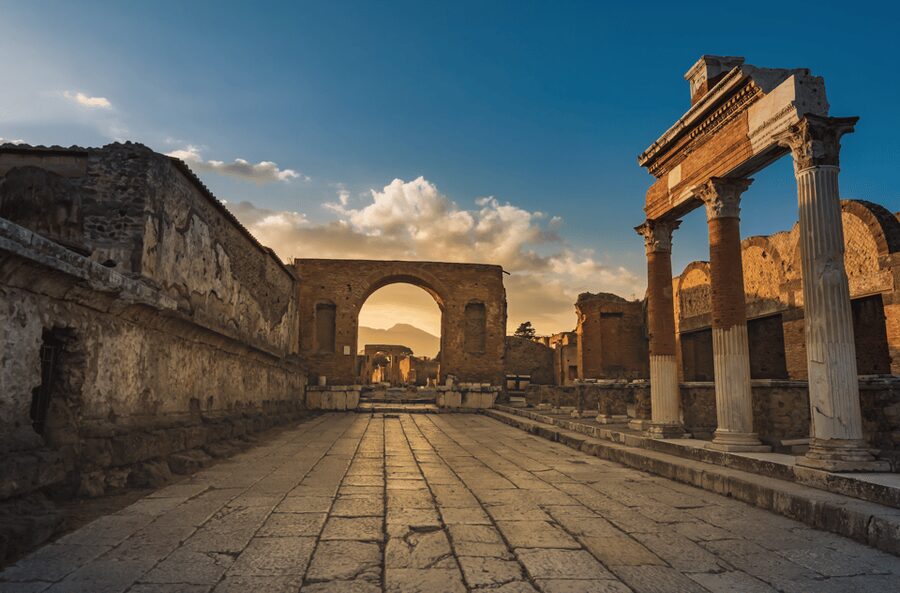
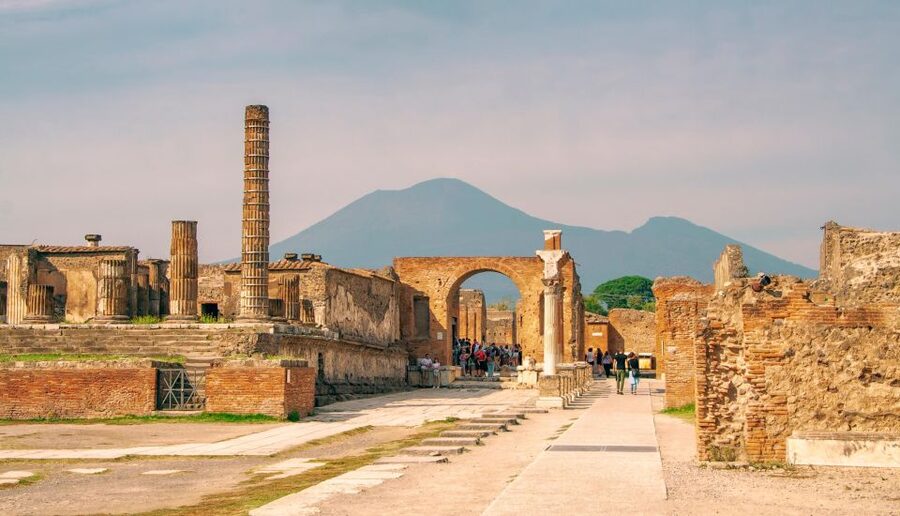
One of the main areas on the route is the forum. This is where Pompeii’s civic and commercial life would have centered, so it’s a natural anchor point for a guided visit. Even if you’ve seen photos, the forum hits differently when someone points out how the space functioned and why it mattered.
With an archaeologist guiding you, the forum becomes more than a set of stones. You start to connect the architecture to the rhythm of daily decisions: where people gathered, how power showed up in public space, and how commerce mixed with religion and government.
Drawback to keep in mind: the forum is also a popular area, so expect it to be busy even with the group size kept small. The value comes from what the guide helps you notice in that busyness.
Suburban baths: Pompeii’s everyday rhythm
Next on the route are the suburban baths. This stop is a great choice because baths weren’t only for hygiene. They were social hubs where people talked, relaxed, and worked out part of their day.
I like that this tour doesn’t stay only in the “big dramatic” zones. The baths help you picture Pompeii as a working city with routines, schedules, and hangouts. When a guide explains the layout and purpose, it clicks fast, even for first-time visitors.
A good guide also makes this area feel grounded. One guest highlighted a balanced style that mixed history with humor, and that kind of delivery can turn a technical site into something you actually remember later.
Plaster casts: seeing what was lost
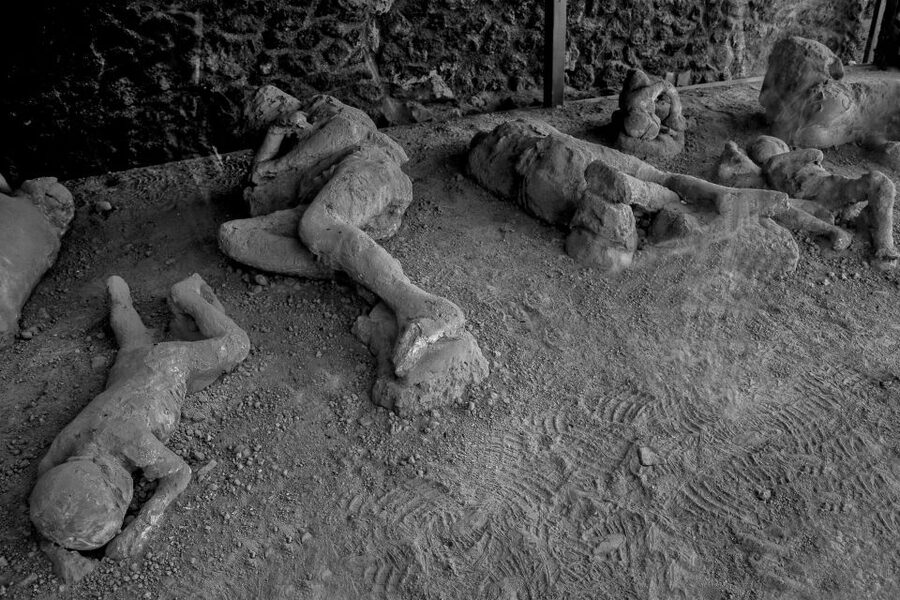
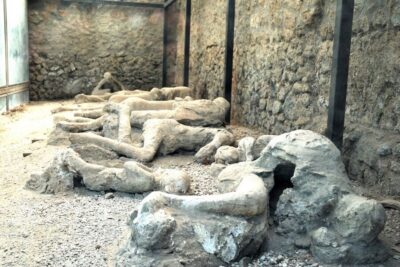
Another key highlight is the plaster casts. This is where Pompeii becomes especially emotional and memorable, because you’re not just looking at buildings. You’re looking at evidence that forces you to think about real bodies and real moments.
The guide’s job here is to walk you through what you’re seeing and why it matters. When that explanation lands, the casts stop being a “must-see photo spot” and become part of the broader story of the eruption and its impact on the city.
If you’re the type who likes meaning, not just movement, this stop is worth paying attention to. It’s also a prime place to ask questions, since you can’t easily read the full story from the stones alone.
The 79 A.D. eruption story, explained where it counts
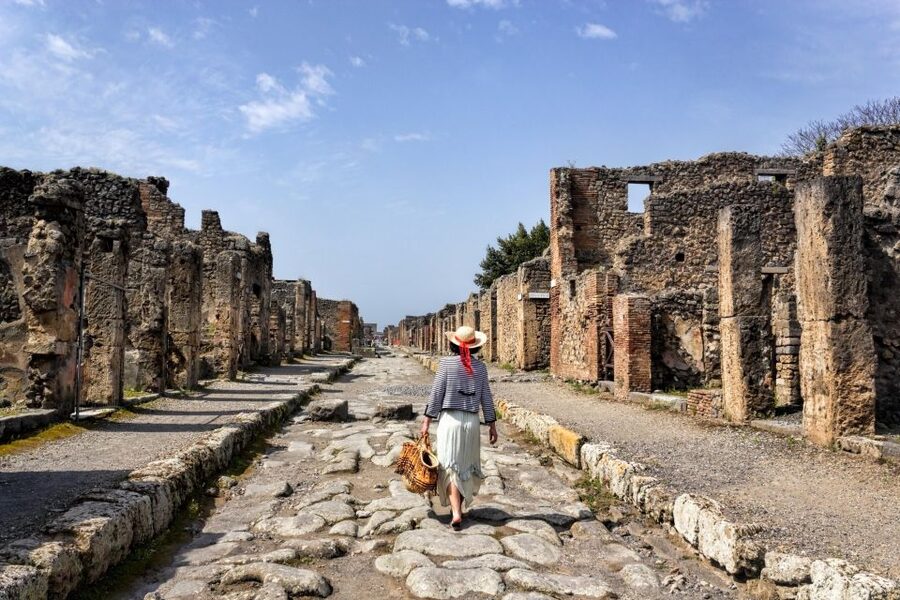
Pompeii’s eruption is the headline event, but it’s easy to learn the facts and still not feel them. That’s why I value getting the 79 A.D. context during the walk, as you look at the city’s daily life side by side with what changed.
A good archaeologist connects the dots: what the city was like right up to the moment of catastrophe, and what the ruins tell us afterward. You’re not reading about disaster in the abstract, you’re standing in the setting.
From the guide style noted in real experiences, a key strength is pacing. One guest described the guide as balancing history and humor, which usually means you’re less likely to tune out during longer explanations. Another guest said the guide adjusted the tour to their group’s tempo, which can be a big deal if you want time for photos or extra questions.
Small group energy, plus English and Italian support
This tour runs in a small group, with a maximum of 16 people. That number matters in Pompeii because crowd pressure can make the site feel chaotic. A smaller group tends to keep you moving at a steady walking pace and give the guide room to speak clearly.
Language options are English and Italian. In at least one case, the guide was able to provide French for just two people, which is the kind of flexibility that can make a tour feel personal and easier for Q and A.
If you’re traveling as a mixed group, this kind of bilingual or flexible approach helps. One guest with a group including Italian and American participants reported the guide switching between Italian and English without making anyone feel awkward. That’s exactly what you want from a guide in a shared experience.
After the tour: keep exploring on your own
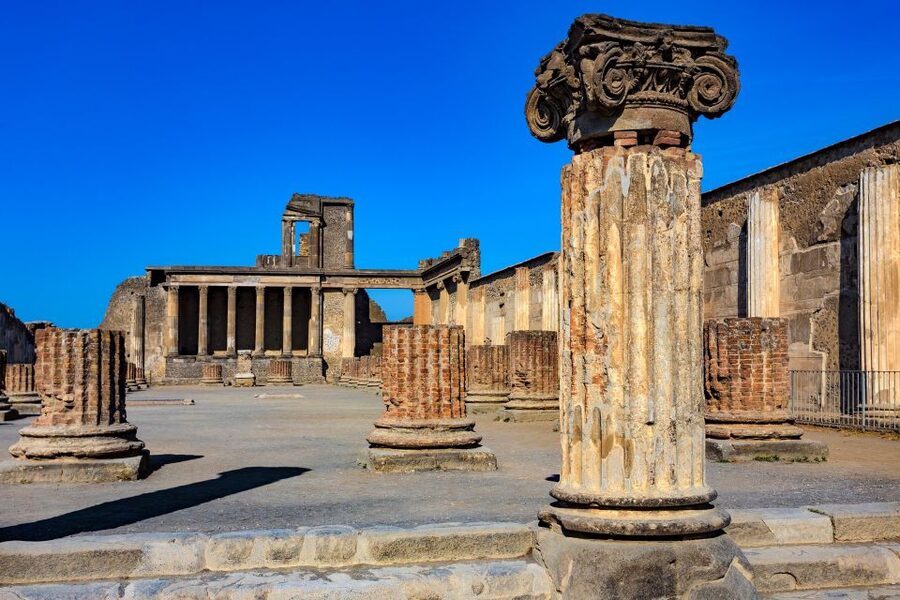
Once the 2-hour guided part ends, you can stay inside the ruins as long as you want. This is one of the best value features of the experience, because it turns a guided tour into a launchpad for the rest of your day.
You can also ask your guide for recommendations for what to see nearby. That’s practical because Pompeii can overwhelm you. A guide who just walked you through the main areas can point you toward “next best stops” based on your interests.
One important planning detail: the guided section focuses on only a portion of the wider archaeological park, about 25% according to one account. That means you should expect to do follow-up exploring on your own, ideally with a site map you buy beforehand. It’s not optional if you want to keep your sanity.
Villa of the Mysteries: plan it separately
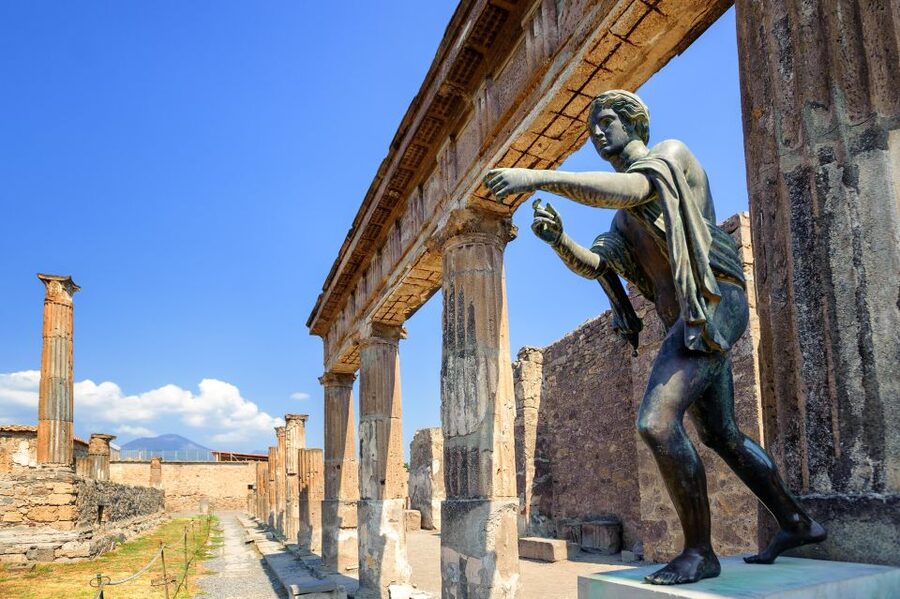
The Villa of the Mysteries is explicitly not included. This matters because some people treat that villa like the main reason they came, especially for its painted interiors.
So if the Villa of the Mysteries is on your list, don’t assume you’ll see it during this tour. Instead, treat it as an add-on you schedule separately so you’re not left scrambling when the guide finishes the core highlights.
Price and value for $64 per person
At $64 per person, this tour isn’t the cheapest way into Pompeii, but it can be excellent value for the right traveler. You’re paying for two things: skip-the-line help plus a live 2-hour guided walk with a regional archaeologist, and the price includes an entry daily ticket.
When I think about value here, I weigh time and understanding. Pompeii is huge, and without context you can walk past the very features you paid to see. A guide helps you get traction fast on your first visit, and small group size improves the payoff because you get more attention per person.
Where value can feel weaker is if you were expecting a full, comprehensive tour of every major area. The guided route is built for highlights, not everything. If you want the whole park, you’ll need extra time after the tour, and you might still add other ticketed stops like the Villa of the Mysteries.
Who should book this Pompeii archaeologist tour
This is a strong fit if you:
- want a first Pompeii experience that gives context, not just wandering
- prefer small groups and a guide you can actually hear and ask questions of
- like the most famous areas, especially the forum, baths, and plaster casts
- have limited time and want the “best of” route in 2 hours
It’s less ideal if you:
- want to see the entire archaeological park in one go
- are planning to focus heavily on the Villa of the Mysteries during the guided window
- dislike tours where the “2-hour” duration might feel tight once set-up time is included
Should you book it?
I think you should book this Pompeii guided tour if you want a confident start to your day. The mix of archaeologist-led explanations and targeted stops helps you understand what you’re seeing quickly, and the skip-the-line approach saves a lot of frustration.
Book it with your eyes open: treat the guided portion as a high-impact “core” visit, then plan to keep exploring afterward with a map. If you do that, you’ll get the best of both worlds, guided context plus freedom to roam where your curiosity pulls you next.
FAQ
Where is the meeting point for the Pompeii guided tour?
You meet at the main entrance of Pompeii called Porta Marina Superiore.
How long is the guided tour?
The experience includes a 2-hour guided tour.
What is included in the ticket price?
The price includes the entry daily ticket and a 2-hour guided tour with a regional archaeologist.
Is the Villa of the Mysteries included?
No, the Villa of the Mysteries is not included in this tour.
What languages are available on the tour?
The tour is available in English and Italian.
Can I cancel or pay later?
Yes. You can cancel up to 24 hours in advance for a full refund, and you can reserve now and pay later.
With a Local Guide
- Pompeii: Entry Ticket and Guided Tour with an Archaeologist★ 4.8 · 19,459 reviews
- Pompeii: Skip-the-Line Entrance Ticket with Audio Guide★ 4.0 · 2,509 reviews
- Pompeii: Skip-the-line-Ticket and Guided Tour★ 4.6 · 1,152 reviews
- Pompeii: Guided Tour with Skip-the-Line Entry★ 4.9 · 812 reviews
- Pompeii: Skip-the-Line Entry Ticket with Digital Guide App★ 4.1 · 770 reviews
More Tours in Pompei Campania
- Pompeii: Entry Ticket and Guided Tour with an Archaeologist★ 4.8 · 19,459 reviews
- Pompeii: Small Group Tour with an Archaeologist★ 4.8 · 12,264 reviews
- Pompeii: Skip-the-line-Ticket and Guided Tour★ 4.6 · 1,152 reviews
- Pompeii: Small-Group Tour of Pompeii and Herculaneum★ 4.8 · 867 reviews
- Pompeii: Guided Tour with Skip-the-Line Entry★ 4.9 · 812 reviews
More Tour Reviews in Pompei Campania
- Pompeii: Entry Ticket and Guided Tour with an Archaeologist★ 4.8 · 19,459 reviews
- Pompeii: Small Group Tour with an Archaeologist★ 4.8 · 12,264 reviews
- Pompeii: Skip-the-Line Entrance Ticket with Audio Guide★ 4.0 · 2,509 reviews
- Naples: Pompeii and Mt. Vesuvius with Lunch and Wine Tasting★ 4.5 · 2,454 reviews
- Pompeii: Skip-the-line-Ticket and Guided Tour★ 4.6 · 1,152 reviews
More ways into Guided.
 ★ 4.8Pompeii: Entry Ticket and Guided Tour with an ArchaeologistFrom $3519,459 reviews
 ★ 4.2Pompeii: Entry Ticket with Optional Audio GuideFrom $2612,360 reviews
 ★ 4.0Pompeii: Skip-the-Line Entrance Ticket with Audio GuideFrom $392,509 reviews
 ★ 4.6Pompeii: Skip-the-line-Ticket and Guided TourFrom $641,152 reviews
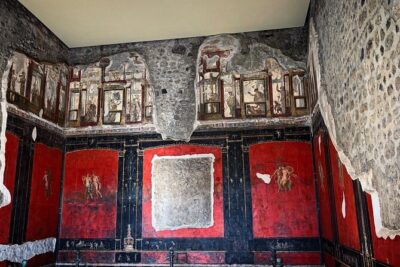 ★ 4.9Pompeii: Guided Tour with Skip-the-Line EntryFrom $58812 reviews
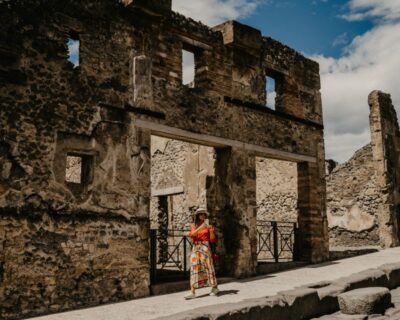 ★ 4.1Pompeii: Skip-the-Line Entry Ticket with Digital Guide AppFrom $22770 reviews
 ★ 4.5Pompeii Express Guided Tour by Train from SorrentoFrom $65770 reviews
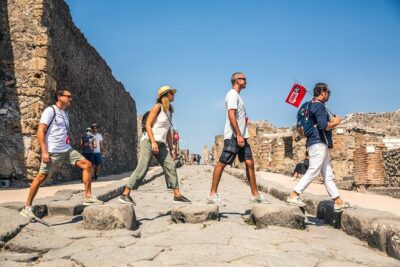 ★ 4.5Skip-the-Line Pompeii Guided Tour from SorrentoFrom $90722 reviews