
REVIEW · PASTA
Pompeii: guided tour of the ruins and cooking class fresh pasta
Pompeii plus fresh pasta is a rare combo. This private day pairs a guide-led loop through Pompeii’s biggest sights with a real cooking session at Giardini Balestrieri, where you eat what you help make. I especially like the small group size (max 10) and the Gragnano wine at lunch, and there is one tradeoff: you only get a set time in the ruins, and the Pompeii ticket is for a single entry.
The day starts at Scavi di Pompei and keeps moving, with private transportation between the ruins and the countryside garden. You will see the theaters, major temples, the forum area, and famous domestic spaces with frescoes, then shift gears to olive and citrus trees with a view of Vesuvius and the Lattari Mountains. If you want total freedom to roam Pompeii for hours on your own, this schedule may feel a bit tight.
Key points before you go
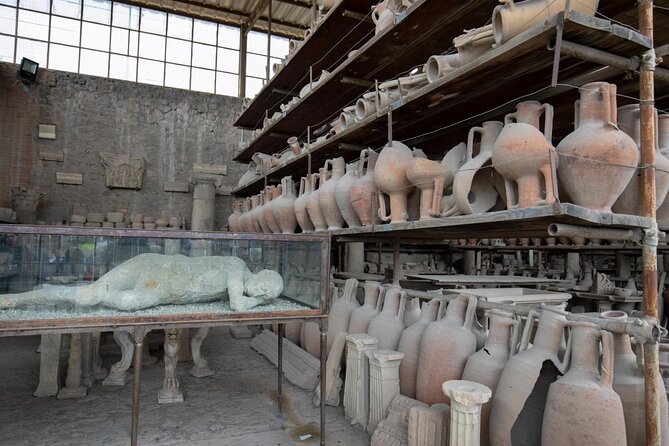
- Private Pompeii with a guide covers theaters, baths, forum monuments, and key temples without you needing to play archaeologist.
- Garden lunch at Giardini Balestrieri puts the meal in a working farm setting, with Vesuvius views.
- Produce picked by you (or with your group) means the cooking starts with ingredients from the garden.
- Fresh pasta class teaches technique, not just assembly, with a host who explains ingredients and steps clearly.
- Gragnano DOC wine is included with lunch, plus sodas, water, dessert, and plenty to talk about.
Entering Pompeii’s ruins with direction, not guesswork
Pompeii is one of those places where you can wander for hours and still feel like you only saw walls. This tour fixes that with a guided walk through the main areas, using a guide who helps you connect what you see to how people lived.
Stop 1 is at the Archaeological Park of Pompeii and it is planned for about 2 hours. You walk with a guide or archaeologist, and the route is built around recognizable anchors, like the theaters, standout houses with frescoes, and the central streets where daily life once played out.
In past groups, guides have included people like Clelia, Carla, Lucy, and Lello, and the through-line is the same: clear explanations as you move from place to place. That matters because Pompeii is not laid out like a museum with everything labeled for you.
The route that actually makes sense: Via dell’Abbondanza to the temples
The stop list is where this tour earns its time. You are not just taking a photo tour of a few famous corners. You get a structured walk that hits the big storytelling zones.
You will cover the theaters, then move into important houses with frescoes and decorations. That domestic part is key, because it shows you Pompeii was not only public monuments. It also reveals how art, color, and everyday rituals were part of home life.
Next comes the walk along Via dell’Abbondanza, the famous main street with shops and workshops. This is one of those stretches where a guide helps you picture how goods moved, where people likely gathered, and why the street mattered.
Then you visit the thermal baths, including the feel of their spaces and how sophisticated daily routines could be. The tour also includes the brothel, often referenced as the House of Pleasure, plus the forum with its monuments. You also get the Temple of Apollo, the Temple of Jupiter, and the Basilica. Those aren’t random stops, they map out the political and religious heartbeat of the city.
A practical consideration: because you are covering major areas, you should plan on steady walking and shifting pace. If anyone in your group has mobility limits, tell the operator ahead of time and be ready for a slower rhythm.
The real payoff: swapping ruins for a farm garden lunch
After the archaeological park visit, the tour shifts to a setting that feels like a palate cleanser. Instead of more stone and shadows, you go to a garden in the Pompeian countryside with views of Vesuvius and the Lattari Mountains.
Stop 2 is about 3 hours, and it is anchored at Giardini Balestrieri. The setting is surrounded by olive and citrus trees, and that farm feel is part of why this combo works. You end up learning the city, then tasting something that connects you to the region’s modern food culture.
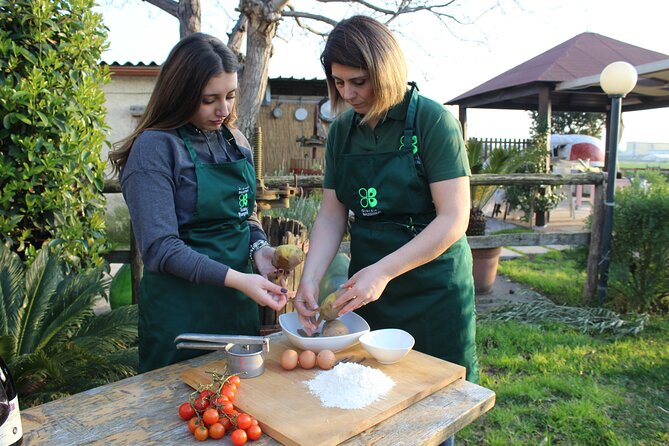
You prepare your lunch there, and the ingredients come from the garden. That is not just a marketing detail, it changes the whole mood of the meal. You see produce as something living and seasonal, not just plated food on a table.
Fresh pasta from scratch, and why the technique matters
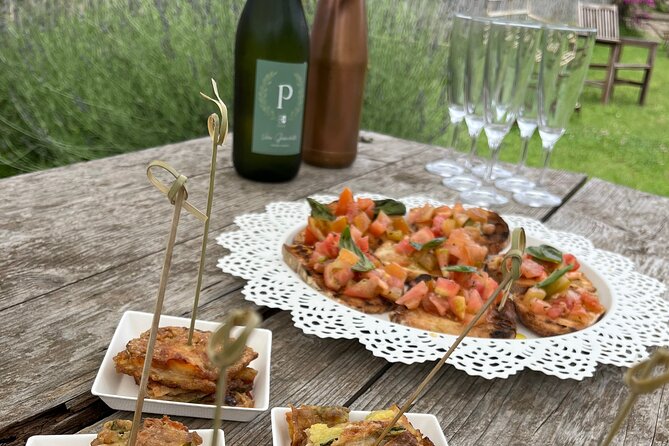
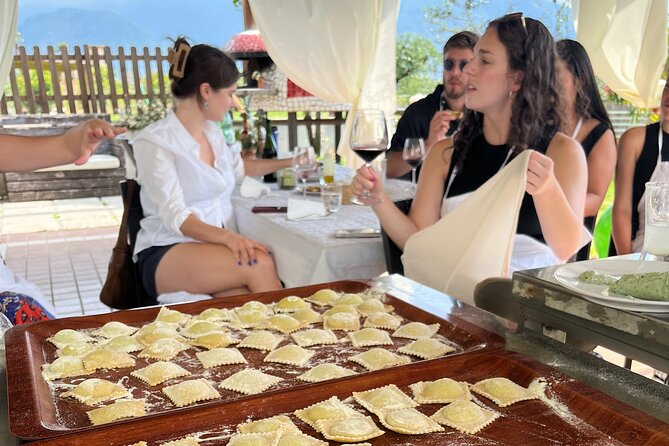
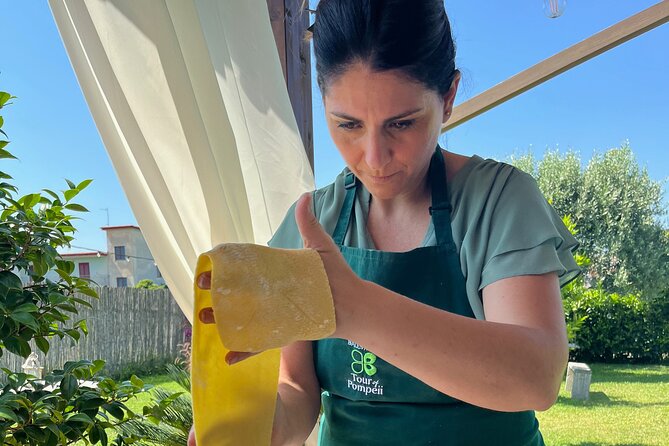
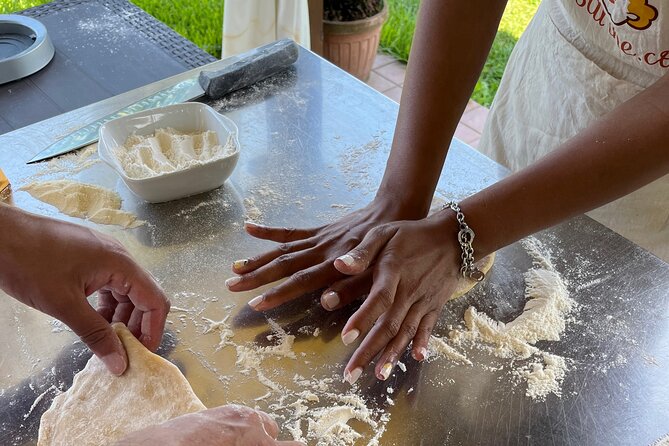
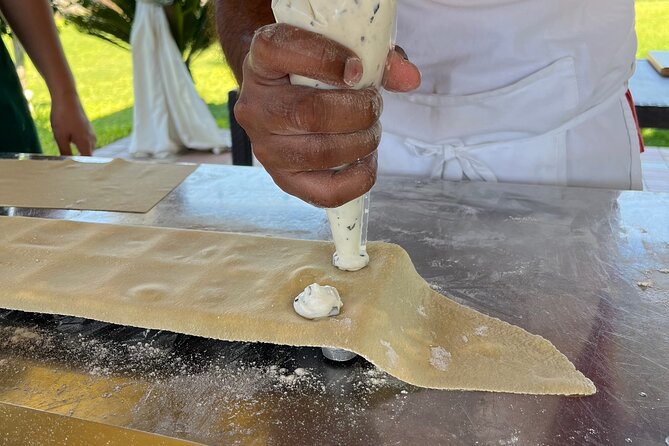
The cooking class focuses on making fresh pasta from scratch, and you learn in a hands-on way. The point is not just eating, it is understanding what goes into the dough, the fillings, and the finishing touches.
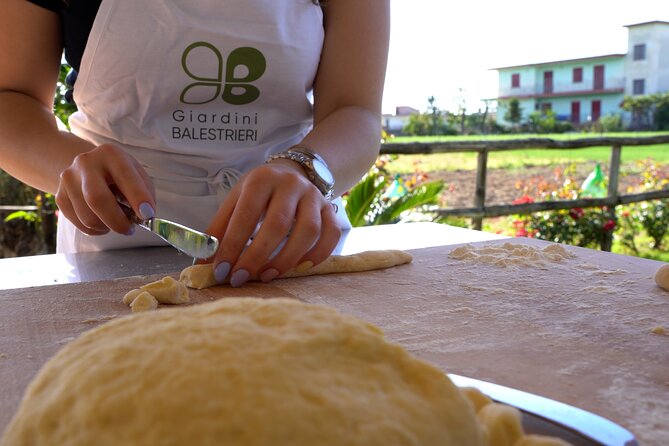
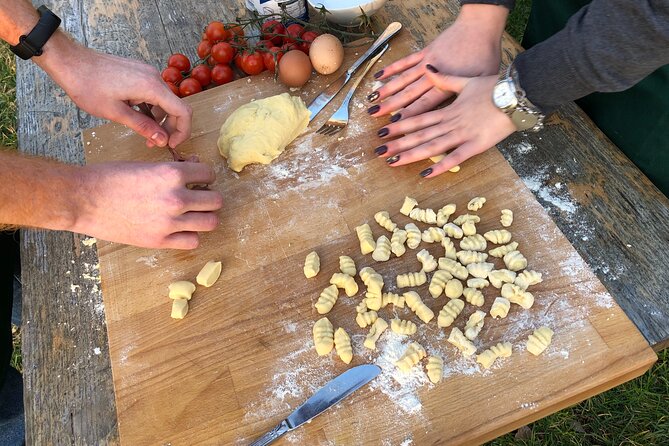
In several experiences, the pasta workshop has included shaping items like ravioli and learning how to prepare fillings such as ricotta and spinach. In other sessions, the class has also featured making gnocchi with potato-based dough and a simple sauce. The exact dish can vary by group and season, but the core idea stays consistent: you participate, not just watch.
Before the main pasta work, you typically get a chance to snack. Examples from past sessions include bruschetta with fresh veggies from outside, which takes the edge off before the kneading begins. Then you each make your own pasta pieces, guided step-by-step.
This format is great for most skill levels. If you are confident in the kitchen, you get to focus on technique. If you are not, you still get a clear process and tools set up for you.
What you’ll eat and drink: Gragnano wine, dessert, and real conversation fuel
Lunch comes with a set of extras that make the time feel generous, not rushed. The included items are soda (still and sparkling water), dessert, and lunch or dinner depending on the day’s flow. You also get one glass of Gragnano DOC wine.
Gragnano is a wine choice with local credibility. When you drink it while you eat what you cooked, it helps the whole day feel like one experience instead of two unrelated activities stitched together.
Food timing is part of the value here. You are not leaving the ruins hungry and scrambling for something nearby. You have a planned transition into lunch, with a break built in by the countryside setting and the snack before pasta work.
Dessert has also shown up as items like lemon cake and tiramisu in past versions of the experience. Even if your day is different, the common thread is a sweet finish that keeps the meal from ending too abruptly.
Price and timing: is $300.40 worth it?
At $300.40 per person, plus about €20 per person for the Pompeii entrance ticket, this is not a budget outing. So you have to ask what you are paying for.
First, you are paying for a private tour structure with private transportation. That matters in a place like Pompeii where getting from point to point and timing entry can drain the day.
Second, you are paying for a two-part experience: a guided ruins route plus a hands-on cooking session in a farm garden. If you tried to DIY it, you would spend time coordinating entry, hiring a guide, and then finding a cooking class nearby. Here, the day is already stitched together.
Third, it is capped at a maximum of 10 travelers, which is a big deal. In practice, smaller groups tend to mean more interaction, better pacing, and a better chance that your questions get answered while the guide is walking.
Timing is the other factor. The ruins portion is about 2 hours, and the cooking portion is about 3 hours, for a total 5 to 6 hours. This is long enough to feel like you accomplished something, but short enough that you should not count on wandering Pompeii afterward for long.
One more thing to know: the Pompeii entry ticket used for this setup is for one entry. If you want extra time in the ruins beyond the guided window, plan that carefully because you will not be able to simply return later without another ticket.
Who should book this Pompeii tour, and who should skip it
I think this combo is ideal if you want a balanced day. You like history, but you also want your time to end with something tangible, food you helped make, and a view that is not just ruins.
It also fits groups who want flexibility on a small scale. In past outings, hosts and guides have worked around real-life issues like slower pacing due to a foot injury. That suggests the day can adjust without turning into chaos.
Where you might want to reconsider: if you are the type who wants to spend most of the afternoon wandering Pompeii at your own speed, the guided schedule may feel limiting. You also need to be comfortable with the idea that the ticket is a one-entry situation, so you cannot easily hop back later.
This experience is offered in English, and it is set up for most travelers. Service animals are allowed, and it is near public transportation, which can be handy if you are managing your own logistics around it.
Should you book it?
If you want Pompeii with context, plus a cooking class that feels genuinely local, I say yes. The value is strongest for couples, small families, and groups who would otherwise be torn between a ruins guide and a food experience.
Book it if you want to see a lot of the city in a planned route, including theaters, houses with frescoes, baths, forum monuments, and major temples, then end in a countryside garden where the lunch is part of the lesson. Pass on it if your priority is maximum free time in the ruins, or if you are trying to keep the day lean on cost.
If you do book, pick your mindset: this is a structured 5 to 6 hour experience. When you go in expecting a great guide, a real farm setting, and a hands-on pasta session, it delivers.
FAQ
Is the Pompeii entrance fee included?
No. Pompeii ruins tickets are not included and cost about €20 per person.
How long is the experience?
Expect about 5 to 6 hours total, with around 2 hours at the ruins and about 3 hours for the cooking class and garden lunch.
What language is the tour offered in?
The experience is offered in English.
What does lunch include?
Lunch includes the meal you prepare during the cooking class, plus dessert. You also get soda or water (still and sparkling).
Is wine included?
Yes. You get 1 glass of Gragnano DOC wine with your lunch.
How big is the group?
The experience has a maximum of 10 travelers.
With a Local Guide
- Skip the Line Guided Tour of Pompeii led by an Archaeologist★ 5.0 · 703 reviews
- Pompeii private tour with an Official Guide★ 5.0 · 631 reviews
- Pompeii Skip-the-line Tour with Archaeologist Guide★ 5.0 · 559 reviews
- Pompeii Guided Tour & Horse Riding on Vesuvius with Lunch★ 5.0 · 419 reviews
- Complete Pompeii Skip the Line Tour with Archaeologist Guide★ 4.5 · 379 reviews
More Tours in Pompeii
- Pompeii Small Group Tour with an Archaeologist★ 5.0 · 6,593 reviews
- Pompeii and Herculaneum Small Group Tour with an Archaeologist★ 5.0 · 1,350 reviews
- Skip the Line Guided Tour of Pompeii led by an Archaeologist★ 5.0 · 703 reviews
- Pompeii Ticket + Tour with Optional Tasting Experience at Pompeii★ 5.0 · 663 reviews
- Pompeii private tour with an Official Guide★ 5.0 · 631 reviews
More Tour Reviews in Pompeii
- Pompeii Small Group Tour with an Archaeologist★ 5.0 · 6,593 reviews
- Discover the Ancient Ruins of Pompeii: Day Trip from Rome★ 3.5 · 2,247 reviews
- Pompeii and Herculaneum Small Group Tour with an Archaeologist★ 5.0 · 1,350 reviews
- Skip the Line Guided Tour of Pompeii led by an Archaeologist★ 5.0 · 703 reviews
- Pompeii Ticket + Tour with Optional Tasting Experience at Pompeii★ 5.0 · 663 reviews
More ways into Pasta.
 ★ 4.8Pasta and Tiramisu Cooking Class with Wine597 reviews
 ★ 5.0Cooking class with Pasta, mozzarella and Tiramisu with wineFrom $72549 reviews
 ★ 5.0Pasta & Traditional Sorrento Cuisine with Pickup – 100% Hands OnFrom $181393 reviews
 ★ 5.0Pasta and Pizza Master Class with Pick Up in SorrentoFrom $181380 reviews
 ★ 5.0Amalfi: Prepare fresh pasta, mozzarella and tiramisuFrom $78315 reviews
 ★ 5.0Amalfi: Cooking Class with Pasta, Mozzarella, and TiramisùFrom $66202 reviews
 ★ 5.0Authentic Pasta & Pizza Cooking Class with Sorrento Coast PickupFrom $157175 reviews
 ★ 4.5Pasta and Tiramisu Cooking Class with Lunch and WineFrom $107165 reviews
Other useful routes from here