
REVIEW · TICKETS
Pompeii Archaeological Area Entrance Ticket
Pompeii hits you fast, then never lets go. This is a pre-booked entrance ticket to walk Roman streets and homes buried by Vesuvius ash in 79 AD. I love the freedom to explore at your own pace, and I love the practical lineup help of guaranteed line skipping for your chosen entrance time. The one drawback to factor in is that voucher redemption and signage can be a little confusing on arrival, so build in extra time to get inside cleanly.
You’ll be walking a lot. The Pompeii Archaeological Area is huge at 66 hectares (163 acres), and the park is designed for wandering, not speed. My advice: come with comfortable shoes and a simple game plan, because it is easy to choose the wrong route and miss your top priorities.
Key highlights to plan around
- A pre-booked entrance time so you can control when you start, not just when you arrive
- Self-guided wandering through Pompeii’s houses, streets, shops, and public buildings
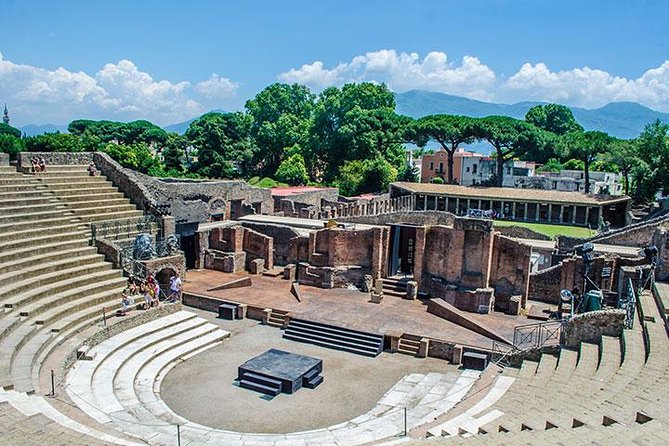
- The big 3 sights route potential includes the Forum, Theatre, and the Lupanare
- A free route map inside the gate to help you connect the dots quickly
- Multiple access points and loops that let you build a shorter or longer visit
- Clear visitor rules keep you safe and protect fragile mosaics, frescoes, and stonework
Ticket Access at the Gates: What the Skip-The-Line Really Means
This experience is an entrance ticket. No guide walks you through. That sounds simple, but it changes how you should prepare. Your value is in getting into the park with less waiting, then spending your limited time seeing the right sites.
In theory, you arrive, show your pre-booked ticket, and you go in. The ticket also comes with multiple entrance times across the day. If you want to avoid peak crush, picking a timed entry is a smart move.
Here’s the consideration I want you to keep in mind: even with a voucher, you may still have to spend a few minutes at a ticket kiosk if staff need to recognize or exchange your voucher before entry is confirmed. You can’t control how busy the gate is, and signage can be tough when you are tired and jet-lagged. So plan to arrive early for your time slot, not at the exact minute.
Once you’re inside, you’re done with formalities. Your visit ends when you exit the park. No lingering tour pickup. No scheduled finish line.
Choosing the Right Entrance Time for a 2 to 3 Hour Visit
The ticket is listed as about 2 to 3 hours, but Pompeii can bully your schedule. The site is a sprawling outdoor maze, and the highlights are not all in one tight cluster. If you love street-level details, mosaics, and inscriptions, you will want more time.
My practical recommendation: pick an entrance time that matches your energy and the heat. You have park access during the listed hours, Monday through Sunday, from 9:00 AM to 1:00 PM for the date range given. Morning entry is usually the easiest way to enjoy more without rushing.
Also, don’t count on one route covering everything. The park offers different loops starting from different areas. Your best move is to decide which “anchor” sites you care about most, then build a route around them. The free map inside the gate is meant for exactly that.
If you only have a short window, focus on one zone and its connected highlights. If you have more time, you can string two sections together, but you’ll be doing it on foot and at Pompeii pace, not museum pace.
From Porta Marina: City Walls, Temples, and Official Pompeii
One of the best ways to start is from Porta Marina. This area helps you understand Pompeii’s public face: walls, temples, and civic buildings, not just private homes.
From here, you can see:
- Porta Marina and the city walls
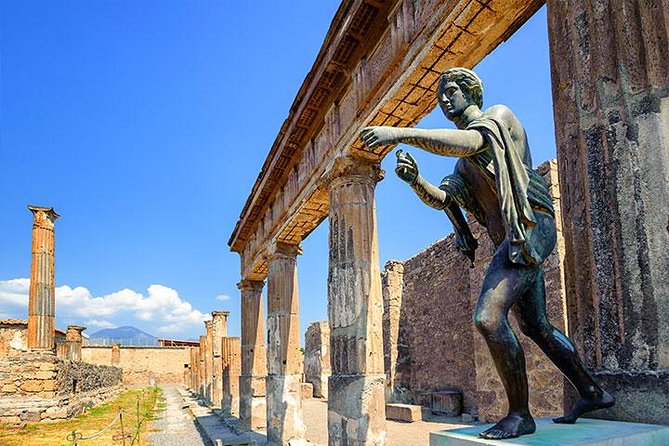
- Temple of Apollo
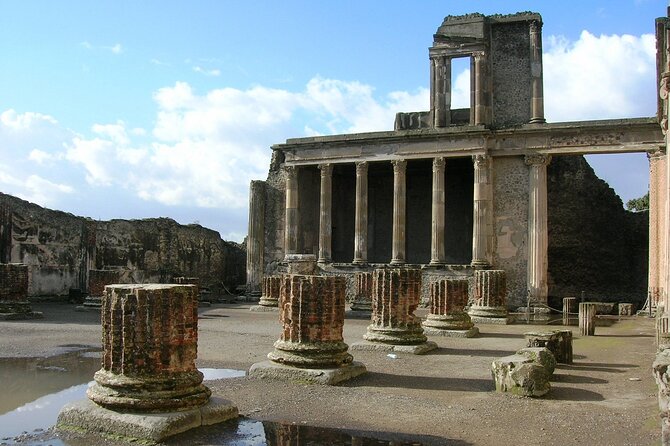
- Basilica
- Public Administration Buildings
- Building of Eumachia
Why this matters: Pompeii wasn’t just a collection of houses. It was a functioning city with religion and local government built into everyday life. The Basilica and administration buildings give you a sense of how civic decisions were made. The Temple of Apollo is a reminder that religious space shaped street-level movement too.
This route is also useful if you like “big picture” landmarks. Even if you do not memorize names, you’ll get a better map in your head by connecting gates, walls, and major public sites.
If you’re tight on time, Porta Marina is a strong kickoff because it sets context quickly. If you are hoping to focus mostly on frescoes and domestic life, you may still want to keep this section shorter and save more energy for the denser residential blocks later.
Piazza Esedra Route: Forum Energy, Shops, and Domestic Detail
Piazza Esedra is where Pompeii starts to feel like a daily-life city. This loop blends public spaces with household life and small commercial stops.
On this route, you can pick up:
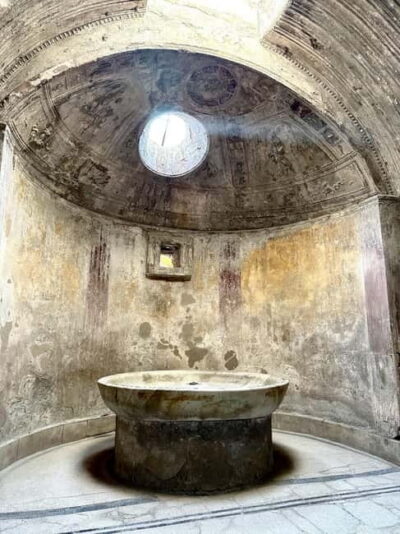
- Forum Baths
- Temple of Fortuna Augusta
- House of Pansa
- House of the Tragic Poet
- Thermopolium (a place to buy hot food)
- House of the Faun
- House of Cecilio Giocondo
- House of Citharist
- Fullonica Stephanus (cloth-launderer)
What to look for when you’re walking this loop:
- In the Baths area, notice how Roman social life used public buildings as routine meeting points.
- At the Thermopolium, the idea of eating street food becomes real, not theoretical. It’s one of the quickest ways to picture daily life.
- At the launderer site, you’re seeing work, not luxury. Pompeii’s economy and trades were right there in the neighborhoods.
The houses on this loop can be a lot to process in a short visit. If you’re doing a 2 to 3 hour plan, choose one or two houses to focus on instead of trying to tick every box. Pick the one with the clearest features for you, then move on.
Piazza Anfiteatro Loop: Amphitheater Views and Religious Corners
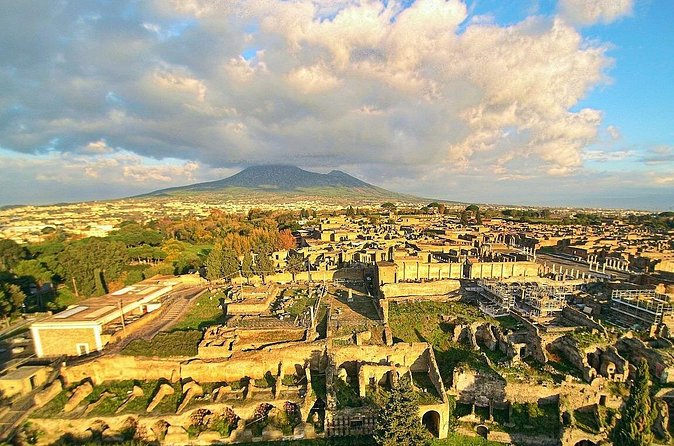
If you like big structures and sweeping space, start with Piazza Anfiteatro. This route includes Pompeii’s major performance spaces and several religious sites.
Highlights include:
- Necropolis of Porta Nocera
- Porta Nocera and walls
- Garden of the Fugitives
- House of the Garden of Hercules
- House of Octavius Quartio
- House of Venus in the shell
- Amphitheater
- Fullonica Stephanus (cloth-launderer)
- Small Theater (Odeion)
- Great Theater
- Temple of Isis
- Triangular Forum
- Doric Temple
What makes this loop special is how it mixes categories. You get civic entertainment (the theatres and amphitheater), work (launderer), and belief (Temple of Isis). That mix helps you see why people moved around so much, not just to “visit sights.”
Also, the amphitheater is a natural anchor if you’re trying to build a shorter visit. You can orient yourself around it and then decide how much more you want to do. If you have limited mobility, the guidance you have is to enter from Piazza Anfiteatro and limit your visit to the surroundings of the Amphitheater.
The Garden of the Fugitives is another area that tends to be memorable. Pompeii is emotionally heavy. Standing in spaces connected to what happened in 79 AD can hit harder than you expect, even when you stay respectful and calm.
Lupanare and the Shock of Frescoes, Victim Casts, and Ash-Buried Life
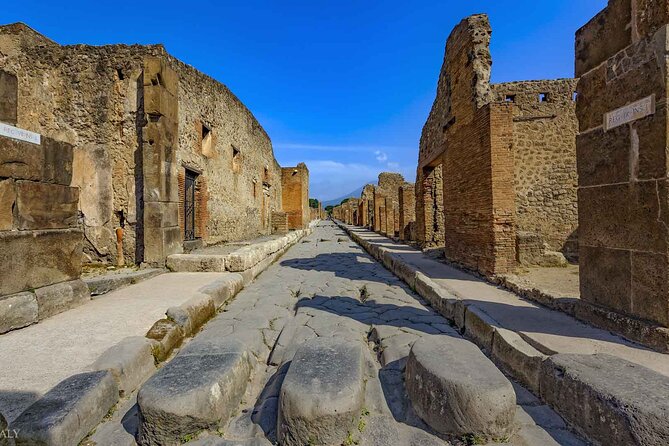
Some stops in Pompeii do not feel like “sights.” They feel like evidence.
Two of the most talked-about highlights are:
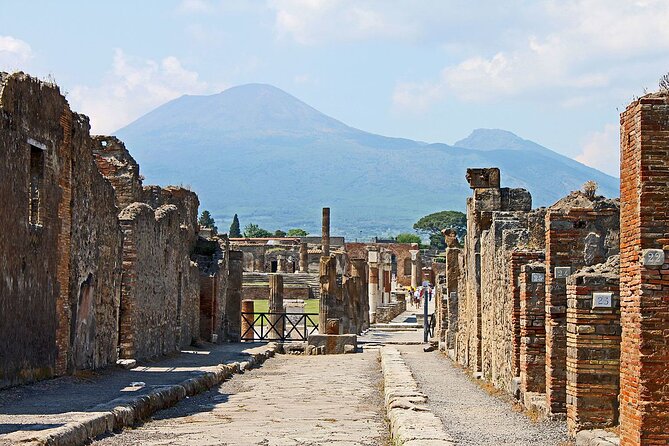
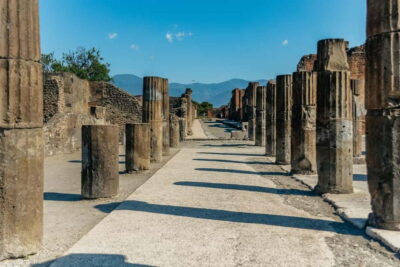
- The Forum
- The Theatre
And the most distinctive domestic highlight is the Lupanare, Pompeii’s two-story brothel, famous for its erotic frescoes still painted on the walls.
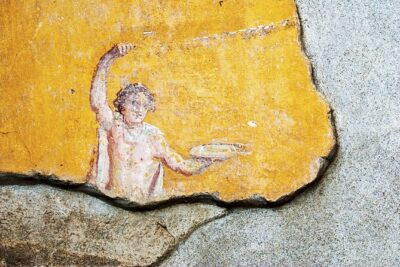
If you visit only one “shock” stop, this is the one that changes how people remember Pompeii. The frescos make the city feel specific and human in a way that generic ancient ruins never do. You’ll also see how close daily life was to entertainment, commerce, and politics.
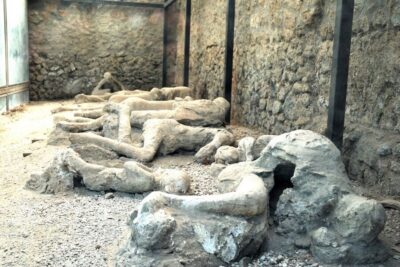
Another emotionally intense piece is seeing casts of the victims’ bodies. The site is preserved in ash, and these casts turn that distance into something immediate. It is powerful, and it can make you walk slower without realizing it.
One caution: frescoes and mosaics are fragile. Pompeii is also a heat-soaked outdoor site, so keep your hands to yourself and don’t press against surfaces. You’ll get a better look from a respectful viewing distance.
Practical Rules That Actually Improve Your Visit
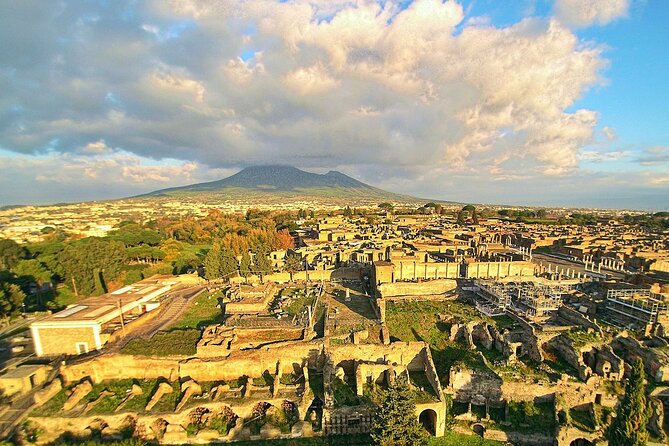
The rules are not just for authority. They protect the site and protect you. Pompeii is fragile, and the excavations are not a place to treat the edges like a souvenir ledge.
Use these basics to make your visit smoother:
- Leave bags, backpacks, umbrellas, and bulky items at the wardrobe
- Walk with care, do not stop on the edges of excavations, and do not climb on walls
- Don’t smoke
- Use flat soles, because the ground can be uneven
- Be respectful, no shouting, no writing on walls, and dispose of waste properly
- Photography and filming are allowed for private use only
- Tripods, flash, and artificial light require contacting the Office of the Superintendent for authorization
Also, there’s a real-world detail people forget in planning: stray dogs may be present near the perimeter. Stay away from them and keep your attention where you’re walking.
Comfort matters too. The ticket experience assumes moderate physical fitness. You are walking through an outdoor archaeological area, and the routes you choose will determine how much distance you cover.
If you want a reset, there is a picnic area near Porta Nola. That can help you recharge if you end up stretching beyond the planned 2 to 3 hours.
Price and Logistics: Is $54.44 Good Value?
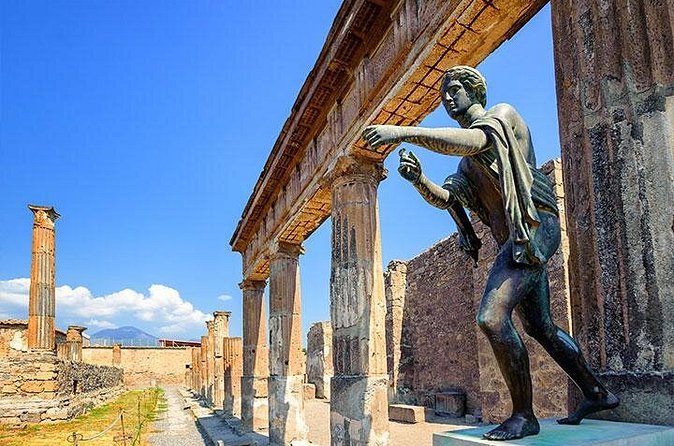
At $54.44 per person, you are paying for two things: a specific timed entry option and guaranteed help skipping long lines. That can be a big deal at Pompeii, where the site is so large that losing time at the gate can wreck your plan inside.
This ticket is not a guided tour. There’s no included interpretation staff. So the value is highest if you are comfortable exploring on your own and using a site map and your own reading.
It’s also a good value if you want to avoid uncertainty. Even though some visitors report confusion around voucher exchange and wayfinding, the whole point here is that you should arrive with a pre-booked ticket ready to show. When you get in smoothly, you gain time back for the parts you care about.
If you want a structured narrative, with someone explaining what you’re seeing and where to focus, you may end up feeling the lack of a guide. In that case, consider pairing this entrance with a separate guided option later in your trip planning, or choose a route you can follow cleanly with the free map.
Should You Book This Pompeii Entrance Ticket?
Book it if:
- You want to control your entry time and minimize gate waiting
- You like self-guided wandering and can follow a map
- Forum, Theatre, and the Lupanare are on your must-see list
- You can handle heat and lots of walking over uneven ground
Skip it or reconsider if:
- You strongly prefer guided explanation and fixed pacing
- You hate any chance of voucher or kiosk friction and would rather buy on the spot
- You only want a very short, tightly managed experience, because Pompeii can easily stretch past 2 to 3 hours
If you do book, show up a bit early for your entrance time, keep the map in mind, and pick one main loop. Then you’ll enjoy Pompeii for what it is, a whole Roman city revealed under ash, not a checklist you rush through.
FAQ
How long does the Pompeii entrance ticket last?
It’s listed as approximately 2 to 3 hours, and you can explore the ruins at your own pace during that time.
What is included with the ticket?
The ticket includes admission to the Pompeii Archaeological Area and access to explore the ruins independently.
Do I get a guided tour with this ticket?
No. A guided tour is not included.
Where should I go on the day of my visit?
You make your own way to the Pompeii Archaeological Area entrance. There is no hotel pickup or drop-off included.
Can I choose an entrance time?
Yes. There are multiple entrance times throughout the day, and you book your preferred entrance time.
Is there a map available inside the entrance?
Yes. You can collect a complimentary map inside the gate with recommended routes.
What should I do about bags and comfort?
You should leave bags, backpacks, umbrellas, and other bulky items at the wardrobe. Flat-soled shoes are recommended, and you should have moderate physical fitness for the walking.
What are the photography rules?
Photography and filming are authorized for private use only. For tripods, flash, and artificial light, you need to contact the Office of the Superintendent for authorization.
Choose the Right Entry
- Pompeii Ticket + Tour with Optional Tasting Experience at Pompeii★ 5.0 · 663 reviews
- 2 hours Pompeii Tour with Local Historian – Ticket Included★ 5.0 · 335 reviews
- Pompeii Guided Group Tour with Entry Ticket and Archaeologist★ 4.5 · 269 reviews
- Pompeii 2-hour Private Tour with an Archaeologist-Ticket included★ 5.0 · 181 reviews
- Pompeii: Skip the line ticket (art) + audioguide + map★ 3.5 · 155 reviews
More Tour Reviews in Pompeii
- Pompeii Small Group Tour with an Archaeologist★ 5.0 · 6,593 reviews
- Discover the Ancient Ruins of Pompeii: Day Trip from Rome★ 3.5 · 2,247 reviews
- Pompeii and Herculaneum Small Group Tour with an Archaeologist★ 5.0 · 1,350 reviews
- Skip the Line Guided Tour of Pompeii led by an Archaeologist★ 5.0 · 703 reviews
- Pompeii Ticket + Tour with Optional Tasting Experience at Pompeii★ 5.0 · 663 reviews
More ways into Tickets.
 ★ 4.8Pompeii: Entry Ticket and Guided Tour with an ArchaeologistFrom $3519,459 reviews
 ★ 4.2Pompeii: Entry Ticket with Optional Audio GuideFrom $2612,360 reviews
 ★ 4.0Pompeii: Skip-the-Line Entrance Ticket with Audio GuideFrom $392,509 reviews
 ★ 4.5Pompeii: Archaeological Park Tour with Ticket on requestFrom $312,283 reviews
 ★ 4.6Pompeii: Skip-the-line-Ticket and Guided TourFrom $641,152 reviews
 ★ 4.1Pompeii: Skip-the-Line Entry Ticket with Digital Guide AppFrom $22770 reviews
 ★ 5.0Pompeii Ticket + Tour with Optional Tasting Experience at PompeiiFrom $35663 reviews
 ★ 4.9Pompeii: Exclusive Tour with Archaeologist and Entry TicketsFrom $50634 reviews