
REVIEW · 3-HOUR EXPERIENCES
Pompeii VIP 3h Tour: Skip-the-line with your Archaeologist
Pompeii feels real with an expert beside you. This VIP 3-hour tour is built for skip-the-line entry and a personal archaeologist, so you spend less time waiting and more time seeing the places that explain the eruption and daily life. I especially like how you pass through key zones like the forum and baths with real interpretation, not just dates, and how the route includes spaces tied to the last excavations, like the recently opened houses and restored rooms. The main consideration is that Pompeii now puts full names onto your tickets, so you must send participant names and bring original ID or a passport, and you really do need to arrive on time since tickets are personal.
If you want Pompeii in one compact sweep, this is a strong fit. You get a focused route across major sights, plus time to look closely at artifacts and building details while your archaeologist ties it all together. The tour is private, wheelchair accessible, and offered in English, French, Spanish, and Italian, which makes it easier to get the explanation style you want.
Key Points You’ll Appreciate on This Pompeii VIP Tour
- Skip-the-line entry with admission tickets included, so your morning starts moving right away.
- A personal archaeologist who focuses on what the site is telling you, from excavations to everyday objects.
- The last excavations and recently opened homes, including well-known restored spaces like the House of Golden Cupids.
- A route that hits the main story points, forum, temples, baths, theaters, and the Garden of the Fugitives.
- A tight 3-hour format that works for first timers who don’t want to wander and guess.
- Wheelchair accessible private group with a clear start and end at Porta Marina Superiore.
Why a Personal Archaeologist Changes Pompeii
Pompeii is big, and it can trick your brain. You can see a wall, a doorway, a mosaic, and feel like you understand it. Then you hear the right explanation and suddenly it clicks: why that building layout mattered, what people did there, and what the excavators learned from the eruption evidence.
This tour is priced per group (up to 1), which can actually be good value if you care about meaning more than collecting photos. Admission is included, and the skip-the-line service means you spend your energy on the ruins, not the queue. With a private group and a full assistance setup, you also get fewer bottlenecks at each stop.
I also like the type of interpretation promised here. You start with the Porta Marina area and then move through the major public and residential zones, while your guide points out excavation finds and how they change what we think we know. One guide name that stands out in the tour’s reputation is Ricardo, described as a trained archaeologist with strong know-how. Another name you may encounter in this guide pool is Federica, praised for combining a trip back in time with how science from excavations explains what happened.
A private archaeologist is not magic, though. Pompeii is still outdoors, and this is still a walking tour. Bring your comfortable shoes and plan for sun and uneven stone paths.
Your 3-Hour Route, From Porta Marina to the Amphitheater
The tour is designed as a “last days of Pompeii” story arc in three hours. You meet at Porta Marina Superiore, right in front of Hortus Bar, and the tour ends back at the same spot. That round-trip structure helps you avoid the end-of-tour confusion that can happen when you’re not sure where to go for the next part of your day.
The pacing is practical. You won’t be stuck at one point for ages, but you do get stops where your archaeologist can explain what you are looking at. The itinerary moves from gateway to public spaces, then into the mix of temples, shops, and homes, and finally into the more intense eruption-related areas and performance spaces.
Here’s the flow you should expect:
- You start at the main entrance zone and begin walking into the city.
- You pass through an antiquarium area where your guide shows objects from newer discoveries.
- You head into major public architecture like the Basilica and forum spaces.
- You continue along the main thoroughfares toward homes, baths, and theater-adjacent areas.
- You reach the Garden of the Fugitives, where the eruption story becomes painfully physical.
- You finish at the Amphitheater, after stops that support the larger picture.
If you’re short on time, this format is a win. If you want to linger for a long time on mosaics or want a deep architectural study, you might want a longer tour. But for many visitors, three focused hours is the sweet spot.
Porta Marina, Antiquarium Stops, and the Big-Picture Start
You begin where the story of the city’s last moments feels most grounded: Porta Marina and the ruin of the main entrance area. This start matters because it gives you a route sense early on. Once you understand how people entered and moved through Pompeii, the later stops make more spatial sense.
From there, you head toward the antiquarium area and look at artifacts tied to the latest excavations. The tour description highlights specific examples like a coin that changed our understanding of the eruption date, plus a heavy golden arm cuff. Even if you don’t know the Roman world well, these kinds of objects give you a hook: it’s not just ruins, it’s evidence. When a guide connects finds like coins to dating, you get why historians argue and how archaeology actually tightens the timeline.
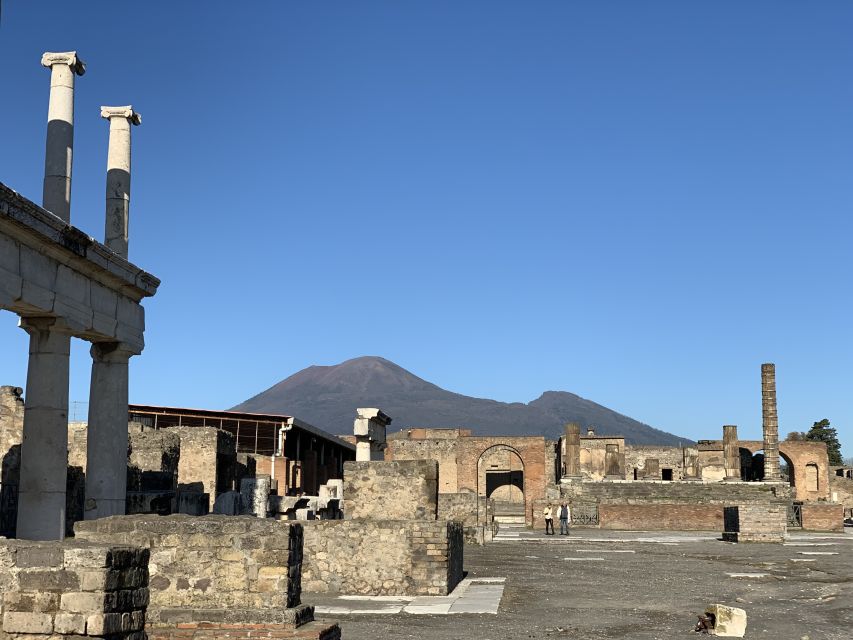
Then you move into the civic heart. Stops like the Basilica and the Foro Civile di Pompei are where you see how Pompeii functioned as a city, not just a scenic set. These buildings help you picture official meetings, commerce, and religious importance in one place.
One practical note: this early part is also where you’ll likely spot the variety in restoration work. Pompeii shows both originals and repaired sections. Your guide can point out what is restoration versus original fabric, and why that matters for how you interpret the site.
Basilica, Forum Spaces, and the Temples That Define Daily Life
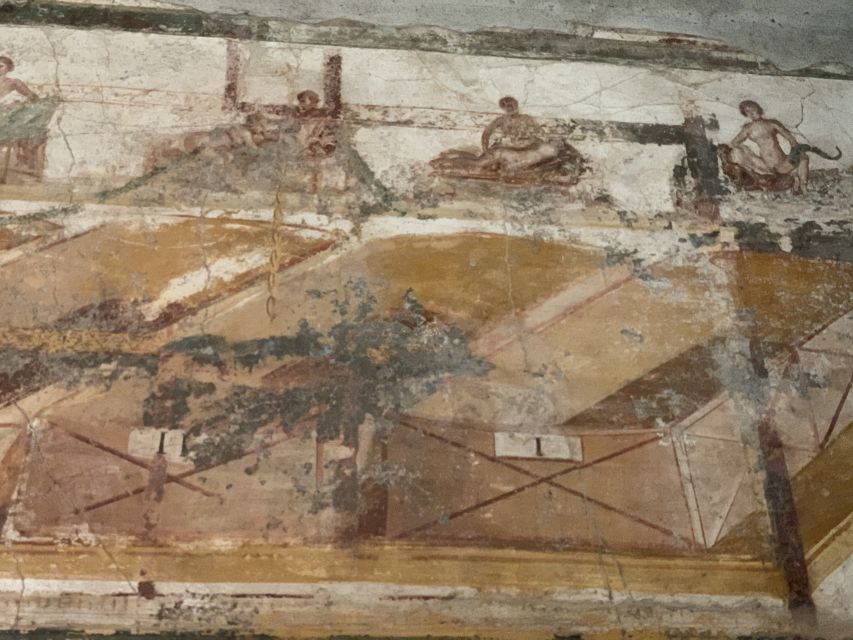
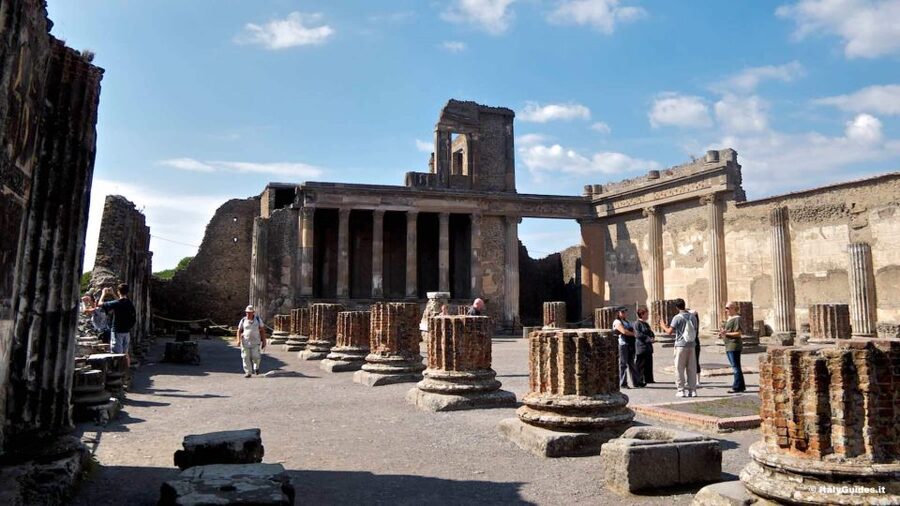
After the initial gateway and antiquarium, you step into the zone that teaches you Pompeii’s rhythm. You’ll visit the Basilica, plus forum spaces where temples and markets sit near one another. This is one of the best ways to understand the city quickly because Pompeii’s public areas mix politics, religion, and everyday transactions.
The forum area is also where the tour’s “Roman day” goal starts showing up. You hear how people gathered, where commerce happened, and how temples created a shared visual and cultural focus. You also see the layout logic behind the city’s main routes, like the Greater Decumano.
Along the way, your archaeologist points out the thermal system details and the Lupanare area as part of the walking narrative. You might not think of baths and entertainment as historical anchors, but they are. They explain how people filled their time, how the city supported daily routines, and how buildings were designed around those routines.
You’ll also reach major temple stops, including the Temple of Apollo and later the Temple of Jupiter. These stops help you see how different gods were honored and how temple spaces fit into the civic map. Even if you skip the finer inscriptions, your guide’s context can make the buildings feel less random and more like a functioning religious network.
Drawback to consider here: Pompeii can be visually intense. If you show up without any interest in how cities worked, the forum-and-temple sequence can feel like a lot of big stone in a short time. But if you like to understand what people did, this section is where the tour earns its reputation.
Markets, Baths, and the Houses the Eruption Could Not Erase
This tour doesn’t only focus on public areas. It pushes into residential life too, including some of the most compelling house stops and restoration highlights.
You’ll visit the Macellum of Pompeii, which is the market area. Markets are a great entry point for a first-time visitor because they connect architecture to food and daily supply. You learn what kinds of spaces supported trade and how the market sat inside the urban system.
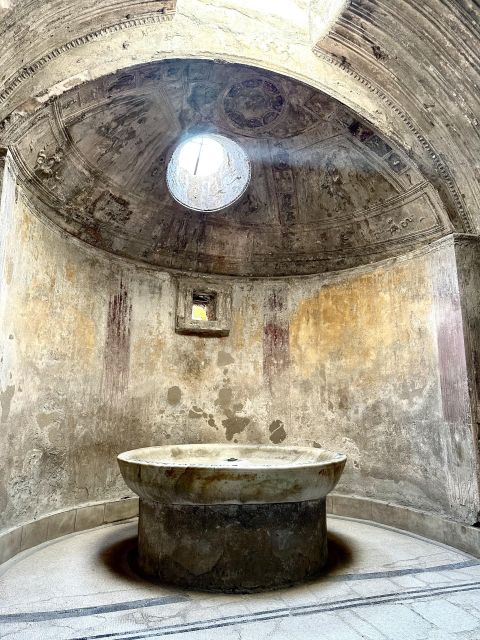
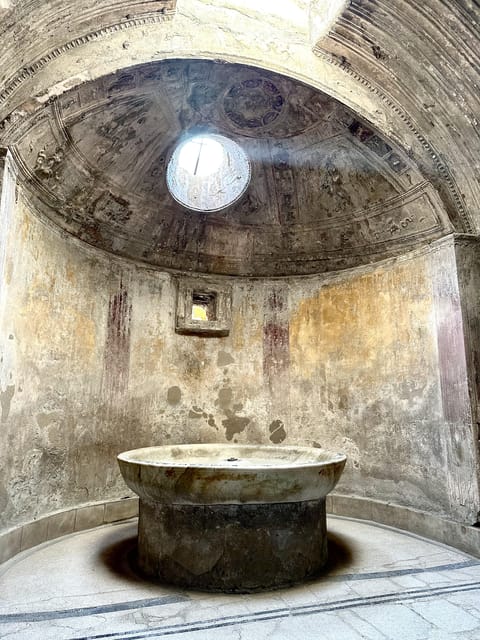
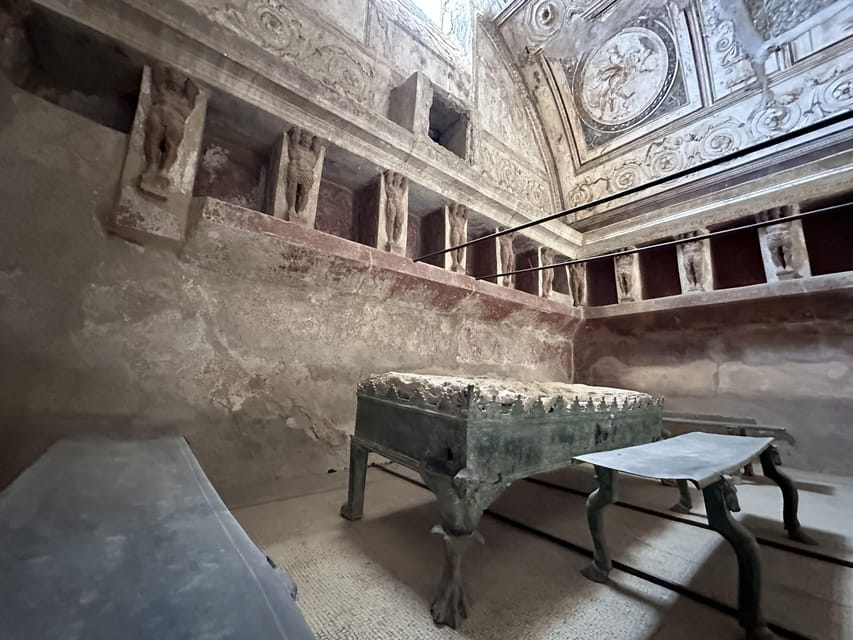
Then you move into the Forum Baths. Baths are where you start seeing Roman comfort culture, engineering, and social habits together. When your guide explains the thermal system details, you’ll likely find yourself looking at walls and channels differently. Instead of thinking only about decoration, you think about heating, water flow, and daily routine.
The tour also includes multiple house stops, including the House of the Tragic Poet and the House of Menander. These homes are where Pompeii stops feeling like a museum display and starts feeling like real living space. Your archaeologist can explain layout clues, and you’ll have a chance to see newly opened or less-commonly seen areas mentioned in the tour highlights. Restorations like the House of Golden Cupids also come into view as part of the “what changed” story of excavation work.
A couple of practical things to plan for in this section:
- Indoor or semi-protected areas can still feel hot and bright.
- Some house floors and doorways are uneven, so keep your shoes locked in.
The Garden of the Fugitives and the Proof of What Happened
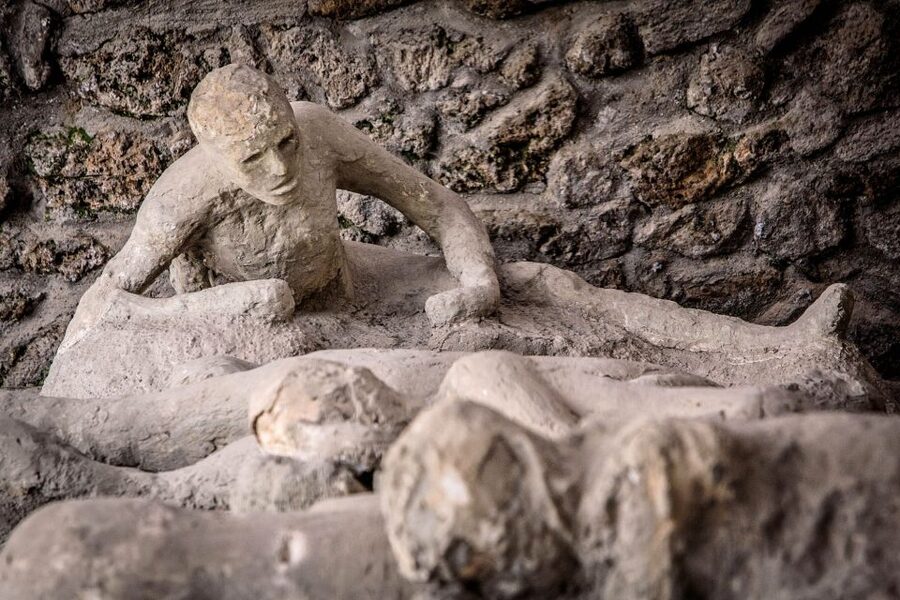
This part is the emotional center of Pompeii, and this tour treats it with clear focus. You will reach the Garden of the Fugitives, where during the eruption people tried to escape but unfortunately perished. The tour description specifically notes that you can see body moulds.
Seeing those moulds is hard in a way that doesn’t depend on your background knowledge. Your guide’s role here is to frame what you are seeing in a way that stays respectful and accurate. With a good archaeologist beside you, you don’t just stare, you understand what evidence looks like in archaeology: the physical record created by disaster and time.
Your route also includes stops around performance and public gathering areas, such as the Great Gymnasium and later theater-related sites. That matters because Pompeii wasn’t only about tragedy. It was also a place where people exercised, watched shows, argued in public, and lived their normal routines right up until the eruption interrupted everything.
If you’re sensitive to disaster imagery, it’s smart to mentally prepare. This stop is the one that will stick with you.
Theaters, Amphitheater, and What to Notice Before You Leave
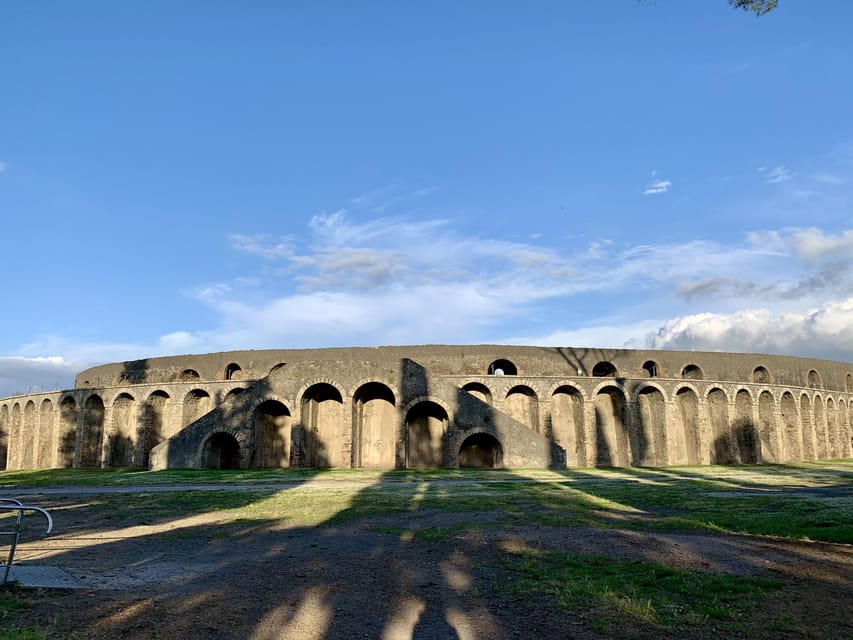
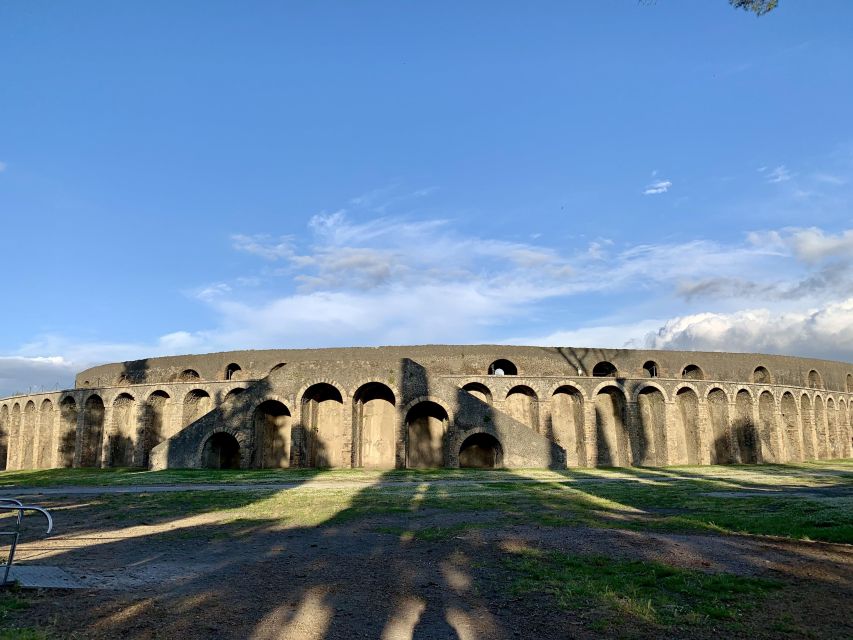
The tour culminates at the Amphitheater, after you cover major performance and gathering spaces earlier. You’ll also visit the Large Theatre, which helps set up the final amphitheater stop. Together, they show how Pompeii staged public events at different scales and for different formats.
When you reach these sites, don’t treat them as just big rooms. Use your guide’s framing to look for practical details: how crowds would move, where visibility mattered, and what these spaces tell you about social life. Your archaeologist can point out how the city’s layout supported gatherings and how daily routines connected to public entertainment.
One more detail worth noting from the tour description: the itinerary walks along major routes like Via dell’Abbondanza and the Greater Decumano, and also includes stops such as the Lupanare and thermal system. That means the end is not random. By the time you see the amphitheater, you have already built a city map in your head.
Then you wrap up back at Porta Marina Superiore. Ending where you started is simple. You can head straight to your next plan without re-tracing your steps.
Price, Timing, and Logistics That Actually Matter
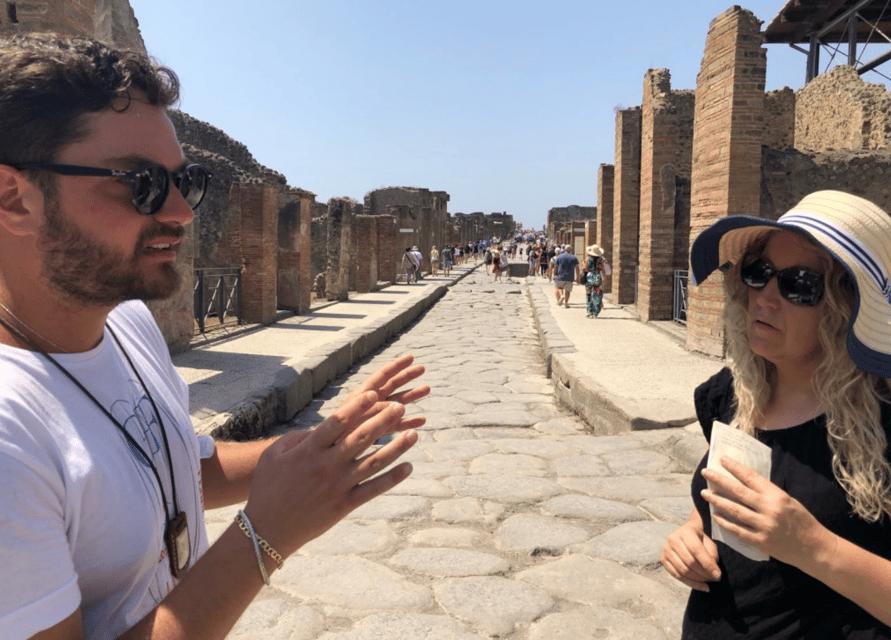
Let’s talk value, not just cost. At $407.83 per group up to 1, you’re paying for four big things that are hard to DIY at the same quality:
- Skip-the-line service
- Admission tickets included
- Private guidance with a personal archaeologist
- A pre-set route that keeps you from getting lost or stuck in the wrong area
If you’re visiting during a busy season, skip-the-line can turn the day from stressful into smooth. Even outside peak demand, the time savings still matter because Pompeii’s best moments depend on being at the right places early enough to avoid a packed bottleneck.
Timing is also important because your tickets are personal. Pompeii requires you to send the full names of all participants who will be on the ticket, and you must bring original ID or a passport. Also, you must be on time since tickets are personal. If your group runs late, it can create problems.
Other practical tips from the tour details:
- Wear comfortable shoes (Pompeii’s ground is not designed for fashion sneakers).
- Bring sunscreen and plan for sun exposure.
- Don’t expect food or drinks to be included, so plan a break before or after.
If flexibility helps you, the tour offers free cancellation up to 24 hours in advance, and it also supports reserve now, pay later.
Should You Book This Pompeii VIP 3h Tour?
You should book if you want a guided, archaeologist-led Pompeii that covers the big story points without wasting time. It’s especially worth it if you like science-based explanations, want to see recently opened and excavated areas, and prefer a plan where the route makes sense hour by hour.
You might skip or choose a different format if you plan to spend long hours inside houses or you enjoy wandering without structure. Also, if you do not want to deal with the personal ticket name rules and ID requirements, you may find this more hassle than you want.
Overall, this tour is built for visitors who want Pompeii to be more than ruins. In about three hours, you get public life, private life, eruption evidence, and the performance spaces that shaped the city’s social calendar.
FAQ
Where does the tour start and end?
You start at Porta Marina Superiore, right in front of Hortus Bar. The tour ends back at the same meeting point.
How long is the Pompeii VIP tour?
The duration is 3 hours. Starting times depend on availability.
Is skip-the-line entry included?
Yes. The tour includes skip the ticket line service.
Are admission tickets included?
Yes. Admission tickets are included in the tour.
Is transportation included to and from Pompeii?
No. Transportation isn’t included, so you’ll need to arrange getting to the meeting point on your own.
What languages is the tour offered in?
The live tour guide is available in English, French, Spanish, and Italian.
Do I need to bring ID for the tickets?
Yes. Pompeii requires that full names be added to tickets, and you must bring an original ID or passport for adults and kids.
Are pets allowed?
No. Pets are not allowed on this activity.
More VIP in Pompei Campania
- From Naples: Pompeii and Herculaneum VIP Tour with Lunch★ 4.4 · 129 reviews
- From Naples: Pompeii Ruins VIP Guided Tour★ 4.4 · 35 reviews
More Tours in Pompei Campania
- Pompeii: Entry Ticket and Guided Tour with an Archaeologist★ 4.8 · 19,459 reviews
- Pompeii: Small Group Tour with an Archaeologist★ 4.8 · 12,264 reviews
- Pompeii: Skip-the-line-Ticket and Guided Tour★ 4.6 · 1,152 reviews
- Pompeii: Small-Group Tour of Pompeii and Herculaneum★ 4.8 · 867 reviews
- Pompeii: Guided Tour with Skip-the-Line Entry★ 4.9 · 812 reviews
More Tour Reviews in Pompei Campania
- Pompeii: Entry Ticket and Guided Tour with an Archaeologist★ 4.8 · 19,459 reviews
- Pompeii: Small Group Tour with an Archaeologist★ 4.8 · 12,264 reviews
- Pompeii: Skip-the-Line Entrance Ticket with Audio Guide★ 4.0 · 2,509 reviews
- Naples: Pompeii and Mt. Vesuvius with Lunch and Wine Tasting★ 4.5 · 2,454 reviews
- Pompeii: Skip-the-line-Ticket and Guided Tour★ 4.6 · 1,152 reviews
More ways into 3-Hour Experiences.
 ★ 5.0Pompeii Private Tour with an Archaeologist and Skip The Line – 3 hoursFrom $302564 reviews
 ★ 5.0Pompeii 3 Hours Walking Tour Led by an ArchaeologistFrom $256126 reviews
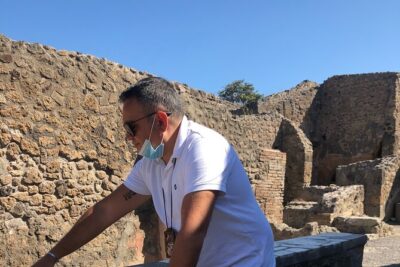 ★ 5.0Pompei three hours with an expert guideFrom $41682 reviews
 ★ 5.0Complete Private Guided Three-Hour Tour on the Capri CoastFrom $42878 reviews
 ★ 4.6Capri: 3-Hour Private Boat Tour with Blue Grotto VisitFrom $45054 reviews
 ★ 5.0Private boat tour of Capri (relaxation tour three hours)From $58054 reviews
 ★ 5.03 Hours Private Tour of Capri IslandFrom $52254 reviews
 ★ 5.03-hour private boat tour of the island of CapriFrom $44352 reviews
Other useful routes from here