
REVIEW · 3-HOUR EXPERIENCES
Pompeii 3 Hours Walking Tour Led by an Archaeologist
Pompeii feels simpler with the right guide. This private 3-hour walk pairs an archaeologist with admission tickets included, and it brings the city to life in a way you can actually follow. The main tradeoff is Pompeii is hot and exposed with minimal shade, so plan for sun.
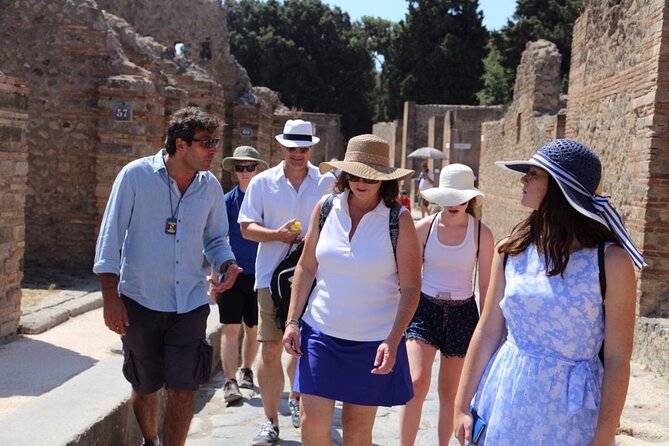
I like that the route stays focused and human-sized. You’ll move through the Forum and main streets, then shift to daily life, from baths and a famous brothel to big-name houses and theaters, all in English. Expect a lively, question-friendly pace, and bring comfortable shoes.
Key highlights at a glance
- Archaeologist-led explanations that connect architecture to real Roman routines
- Private tour format so you can ask questions and keep the pace comfortable
- Forum to theaters in one loop, hitting both public life and private life
- Thermal baths and major houses like the Stabian Baths, House of Menander, and House of the Faun
- Packed-in admissions and site entries, so you are not doing ticket math mid-visit
- Sun-smart planning helps, since most of Pompeii is out in the open
Pompeii in 3 hours, with the “why” behind every stone
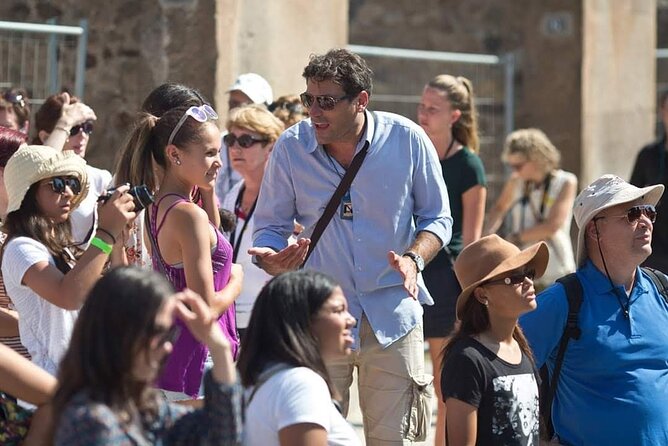
Pompeii is huge. If you go in cold, you can spend your time playing Where is it? and What am I looking at? A 3-hour archaeologist-led walk solves that fast. You are not just checking boxes, you are learning what you are seeing and why it mattered.
I also like how the tour is built around Roman daily life. You start with big civic spaces, then move into homes, baths, and entertainment. That gives you a fuller picture than a quick highlight tour.
The big consideration is the weather reality. The park is vast and very exposed, with minimal shade. Even if you love history, you will enjoy this more if you dress for heat and pace yourself.
Meeting at Porta Marina Superiore, plus a smooth start
You meet at the Pompeii Archaeological Park at Porta Marina Superiore, with your guide holding an Askos Tours sign. The start point is listed near Via Villa dei Misteri, 1, 80045 Pompei NA, Italy, and the tour ends back at that same address, with the guide able to help you get going toward your accommodation or the nearest train station.
This matters more than it sounds. Pompeii entrances can be confusing, and finding the right group can burn time right when you want to begin. A sign-in meeting point helps you get your footing fast.
One very practical perk: there is a free luggage store at the meeting place. If you have a heavier day bag, you can leave it safely and walk lighter.
The early stops: Basilica and the Forum, where Roman life made noise
The tour hits the Basilica first. It was an open portico, a covered space where merchants and public activity happened. Think of it as part shelter, part business stage. When you see the space with an archaeologist’s explanation, you start to notice how people would have moved through it and used it as a social and economic hub.
Next comes the Foro de Pompeya, Pompeii’s main square. This is where you get your bearings for the city’s rhythm. Even if you do not remember every Latin term, the layout starts to make sense: the square, the activity around it, and the feeling of a working city rather than a museum set.
Time here is short, about 20 minutes each. That is a good thing for a first pass through Pompeii. You get key context early without turning the tour into a long lecture.
Walking the main street: the quickest way to feel the city’s layout
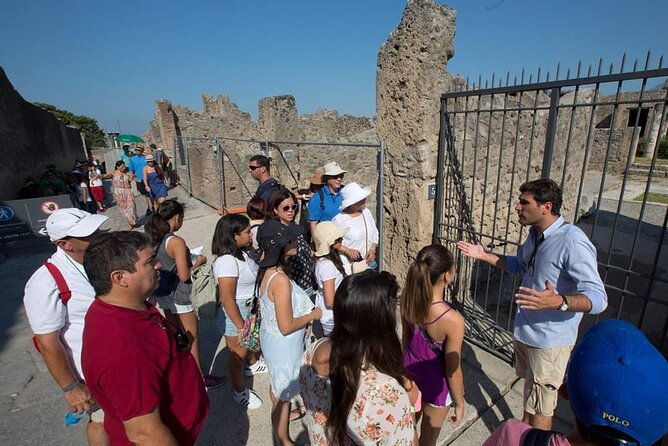
Between the Forum and the next major stops, you walk the main street of Pompeii. This is where Pompeii shifts from “big monuments” to “normal life.”
It is also a smart pacing decision. After you orient yourself in the square and civic zones, walking the main thoroughfare helps you visualize how people actually traveled between places. You are not just looking at isolated ruins, you are building a mental map.
If you tend to like structure, this is where the tour works especially well. You start linking buildings, entrances, and how daily movement would have looked.
Granaries and victim casts: when Pompeii gets emotional fast
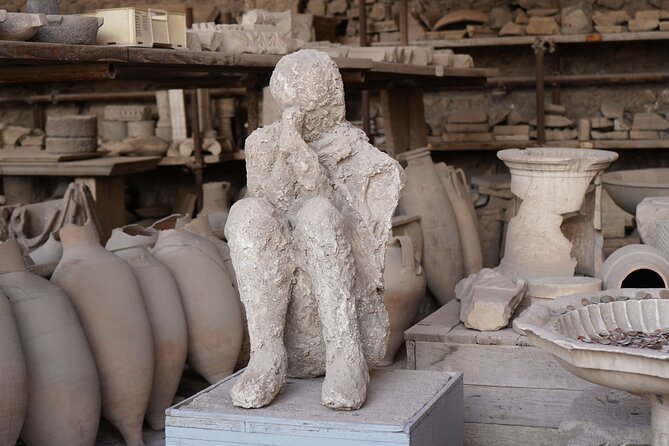
Granaries of the Forum are a turning point in the emotional tone of the visit. You spend about 20 minutes here, and the stop includes an admission ticket fee.
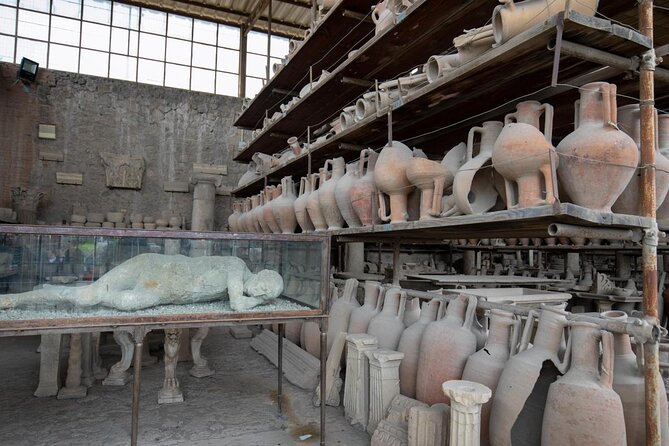
Inside, you will see details that help you understand how the city functioned, including marble tables and baths for fountains that adorned entrances of houses. You also get to see casts of victims of the eruption, plus casts of a dog and a tree.
That animal and nature detail is one of the most striking parts of Pompeii. It reminds you that the disaster was not just about human tragedy. When you pair that with guide-led context, Pompeii stops feeling like a “famous eruption site” and starts feeling like a real place that had routines, pets, and even the presence of plants.
This stop can hit hard. It is worth going slowly here rather than rushing for photos.
House of Menander: high-status private life in 20 minutes
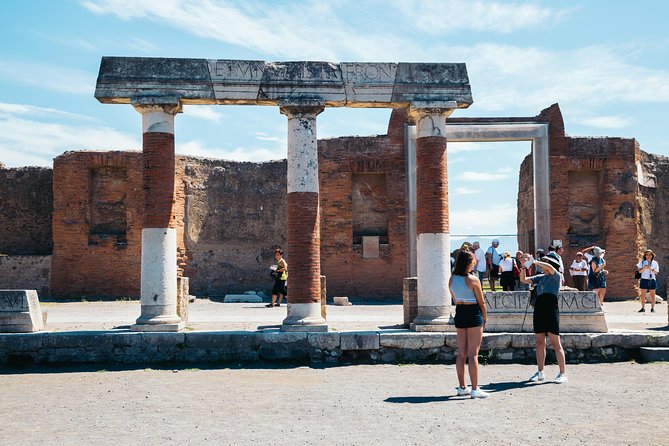
Next up is the House of Menander, one of the richest and most magnificent houses in Pompeii in architecture, decoration, and contents. You have around 20 minutes.
This is where the tour becomes personal. Public spaces show you systems. A major house shows you wealth, taste, and how elites occupied space.
You will notice how the home is not just one room. Pompeii houses are complex, with areas that suggest movement, privacy, and social display. With a proper guide, the decorations stop being random wall art and start reading like statements about status and identity.
If you love houses but only have half a day, this is a good balance. You do not get lost in side rooms. You get the main ideas and signature features.
Stabian Baths and the real meaning of Roman leisure
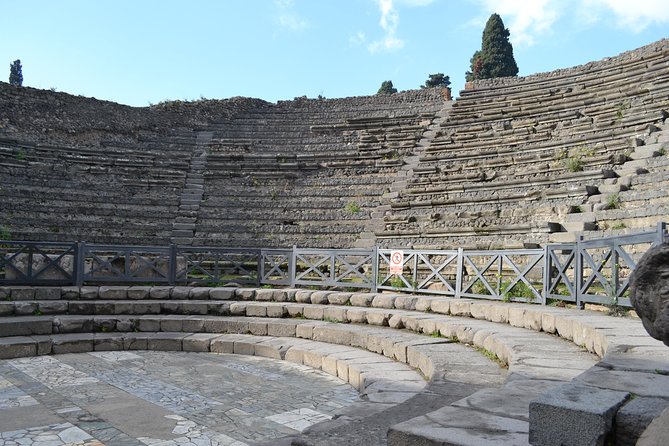
Then you move to the Stabian Baths, or Terme Stabiane. This takes about 25 minutes, and it is free entry at this stop.
These baths occupy a vast area between key crossroads and lanes, and they are described as the oldest thermal complex in the city. More importantly for your experience, baths were not just for hygiene. They were social spaces with routines.
When the guide explains what the complex looked like in use, the ruins stop feeling like broken stone. You start picturing the flow of people, where they would meet, and how daily leisure tied to the city’s schedule.
This stop is also a good break from the open square feeling. Baths are still exposed, but the focus shifts from civic space to bodily routine. It is a nice mental reset inside a single tour.
Lupanar: the brothel stop that changes how you read everything else
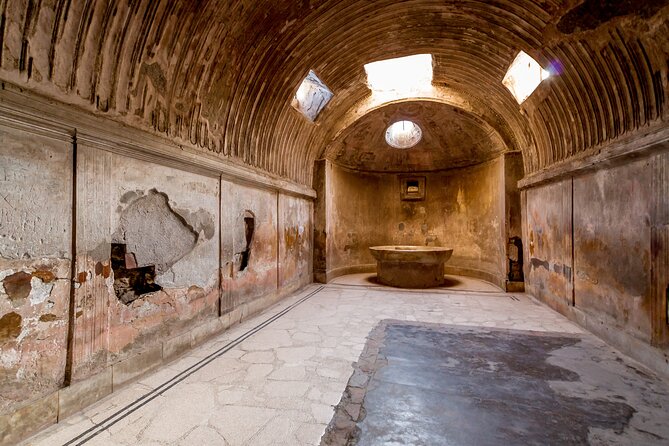
The Lupanar is one of Pompeii’s most famous brothels. You spend about 20 minutes here, and it is free entry on the itinerary.
This is a blunt reminder that Pompeii was a working city, not a curated postcard. Seeing the space with guided context helps you understand how certain businesses operated, and how even “seedy” areas were built into urban life.
It is not everyone’s favorite stop, but it is one of the most revealing. Roman cities had public religion and theaters, and they also had industries and services that kept money moving. This stop makes that reality hard to ignore.
House of the Faun and Teatro Piccolo: big names, quick hits
The House of the Faun is next, with about 20 minutes. It is described as one of the largest and most impressive private residences in Pompeii.
This is another elite-home stop, but with a different emphasis. The idea is to compare how wealth expressed itself across different properties. The tour keeps it efficient, so you do not spend an hour stuck deciding where to look.
After that, you get a short look at Odeon, also known as Teatro Piccolo. It is a brief stop, around 5 minutes. The purpose here is orientation and recognition, so you know what you are looking at when you see smaller theaters within Pompeii’s broader performance culture.
Teatro Grande: the final wow moment for many first-timers
You finish at Teatro Grande, the most important theater in Pompeii, with about 20 minutes.
The theater is where the city’s public life comes back into focus. Even in ruins, the scale helps you understand how performance, gatherings, and civic events would have worked.
If you have limited time, this is a great closer. After homes, baths, and the Lupanar, a major theater gives you a clean sense of how Pompeii entertained and organized crowds.
Price and value: what $256.99 buys you, and what it does not
At $256.99 per person for an approximately 3-hour private walking tour, the price is not budget. It is a premium way to see Pompeii.
Here is what you are paying for, and why it can be worth it:
- A professional archaeologist guide, not just a general guide
- Admission ticket fees included as part of the experience
- A private format, meaning only your group participates
- A route that covers major civic, residential, and leisure sites in one session
The itinerary also includes guided time at stops where admission is ticketed, while other stops are free. That structure helps you avoid the common problem of spending your day juggling tickets instead of learning.
What is not included: transportation to and from the attractions. So you will still handle your own way into Pompeii and back out.
If you are traveling as a small group, this type of private guided structure can feel like better value. You are buying time and clarity. If you are a solo traveler on a tight budget, you might decide you prefer self-guided hours and a guide only for one or two high-priority sections.
Who this tour suits best (and who might want something else)
This works especially well if you:
- Have only a half day to see Pompeii
- Want more than photos, you want explanations and context
- Like a paced route with minimal wandering
- Prefer a private experience where you can ask questions in the moment
It may feel less ideal if you want to linger for long periods at one single site. The tour is designed to cover a lot in 3 hours. That means you get breadth and interpretation, not hours of slow study.
Also, if you strongly dislike sun, plan carefully. Pompeii’s minimal shade makes it hard to turn this into a casual stroll. The good news is the tour length is short enough that smart prep can make it comfortable.
Guide quality is the real difference, and it shows in the names
The most highly praised aspect of this experience is the guide element. Across guide highlights, you can see a pattern: guides bring deep academic grounding and a teaching style that makes details click.
For example, Monica is described as having a PhD in archaeology. Daniela Mantice is described as an art historian, with an ability to bring Pompeii to life, including the chemistry involved in how Vesuvius’s storms affected painted surfaces. Other named guides include Antonella, Anna Sorrento, Nicoletta, and Lia, with consistent praise for clarity, humor, and moving through major sites efficiently.
Even if your guide is different, that track record matters. It suggests you are not going to get a dry rundown. You will get someone who can answer follow-up questions and explain how architecture and objects relate to daily routines.
Practical tips so you enjoy Pompeii in real life
Pompeii can be physically demanding, and this tour is no exception. You are walking a substantial circuit for about 3 hours across uneven terrain and exposure.
A few things to do before you go:
- Wear supportive shoes, because you will be doing real walking
- Bring sunscreen and a hat, since there is minimal shade
- Keep water handy, since the itinerary stays outdoors
- If you want great photos, plan to use your time smartly at each stop rather than saving all photography for the end
One small but helpful detail: at the start area there is luggage storage, so you can reduce what you carry while you walk. That can make a noticeable difference when you are out in the sun.
Should you book this Pompeii 3-hour archaeologist walking tour?
If you want a clear, high-value first experience in Pompeii, I think this is a strong pick. The private format plus a professional archaeologist guide is the centerpiece, and admission ticket fees included helps you feel less nickel-and-dimed on the day.
Book it if your priority is:
- Getting oriented quickly
- Seeing major public spaces and daily-life ruins
- Leaving with a real understanding, not just souvenirs
Skip it or look for a different option if:
- You want to spend most of the day exploring at your own pace
- You hate sun exposure and do not want a condensed route
- Your budget does not allow for a private, admission-included guide
If you can handle the heat and you like guided structure, this tour is a practical way to make Pompeii feel readable and real.
FAQ
How long is the Pompeii 3-hour walking tour?
It lasts about 3 hours.
Is this tour private?
Yes. It is a private tour/activity, and only your group participates.
Is the tour offered in English?
Yes, it is offered in English.
What is included in the price?
The tour includes a professional archaeologist guide and admission ticket fees.
What is not included?
Transportation to and from attractions is not included.
Where do we meet, and where does the tour end?
You meet at the Pompeii Archaeological Park at the main entrance called Porta Marina Superiore, where the guide holds an Askos Tours sign. The tour starts and ends at Via Villa dei Misteri, 1, 80045 Pompei NA, Italy, and the guide can help you with getting back to your accommodation or the nearest train station.
Is there luggage storage at the meeting point?
Yes. There is a safe luggage store for free at the meeting place.
Does the tour run in bad weather?
The tour takes place rain or shine.
What should I bring, and can children join?
Pompeii is vast and very exposed with minimal shade, so you should bring sunscreen and a hat. Children must be accompanied by an adult.
What is the cancellation policy?
Free cancellation is available. You can cancel up to 24 hours in advance for a full refund. If you cancel less than 24 hours before the start time, the amount paid is not refunded.
Pompeii on Foot
- Explore Pompeii: 2-Hour Guided Walking Tour with Included Ticket★ 4.5 · 77 reviews
- Pompeii: walking tour with 3D glasses and with entrance ticket★ 4.5 · 61 reviews
- Pompeii walking tour★ 5.0 · 29 reviews
- Small Group Guided Walking Tour of Ancient Pompeii Highlights★ 5.0 · 27 reviews
- Pompeii Walking Tour with a licensed Guide★ 5.0 · 19 reviews
More Tours in Pompeii
- Pompeii Small Group Tour with an Archaeologist★ 5.0 · 6,593 reviews
- Pompeii and Herculaneum Small Group Tour with an Archaeologist★ 5.0 · 1,350 reviews
- Skip the Line Guided Tour of Pompeii led by an Archaeologist★ 5.0 · 703 reviews
- Pompeii Ticket + Tour with Optional Tasting Experience at Pompeii★ 5.0 · 663 reviews
- Pompeii private tour with an Official Guide★ 5.0 · 631 reviews
More Tour Reviews in Pompeii
- Pompeii Small Group Tour with an Archaeologist★ 5.0 · 6,593 reviews
- Discover the Ancient Ruins of Pompeii: Day Trip from Rome★ 3.5 · 2,247 reviews
- Pompeii and Herculaneum Small Group Tour with an Archaeologist★ 5.0 · 1,350 reviews
- Skip the Line Guided Tour of Pompeii led by an Archaeologist★ 5.0 · 703 reviews
- Pompeii Ticket + Tour with Optional Tasting Experience at Pompeii★ 5.0 · 663 reviews
More ways into 3-Hour Experiences.
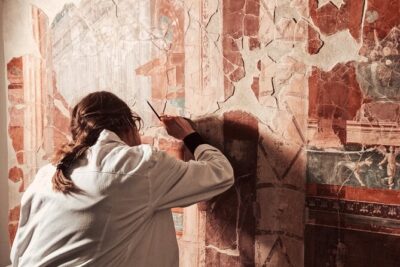 ★ 5.0Pompeii Private Tour with an Archaeologist and Skip The Line – 3 hoursFrom $302564 reviews
 ★ 5.0Pompei three hours with an expert guideFrom $41682 reviews
 ★ 5.0Complete Private Guided Three-Hour Tour on the Capri CoastFrom $42878 reviews
 ★ 5.0Private boat tour of Capri (relaxation tour three hours)From $58054 reviews
 ★ 5.03 Hours Private Tour of Capri IslandFrom $52254 reviews
 ★ 4.6Capri: 3-Hour Private Boat Tour with Blue Grotto VisitFrom $45054 reviews
 ★ 5.03-hour private boat tour of the island of CapriFrom $44352 reviews
 ★ 4.5Capri Private Boat Tour from Capri (3 Hours) with Blue GrottoFrom $49242 reviews
Other useful routes from here