
REVIEW · POMPEII TOURS FROM SORRENTO
Pompeii: Small-Group Tour of Pompeii and Herculaneum
Pompeii hits fast, then keeps hitting. This small-group tour pairs Pompeii and Herculaneum with an archaeologist guide so you are not just wandering stone piles. You get a guided walk that connects the eruption of 79 A.D. to the houses, shops, and everyday routines you see on the ground.
Two things I really like here are the archaeologist-led explanations and the small group size. People have praised guides like Sergio and Diego for steering the group to the best areas and making the sites make sense, not just look impressive. With a maximum of 20, plus headsets when the group is bigger than 10, it is easier to hear and stay oriented.
One drawback to plan for: the Pompeii break is short. You get about 30 minutes before you head to the train, so if you want a proper sit-down lunch, you may feel rushed.
Key things to know before you go
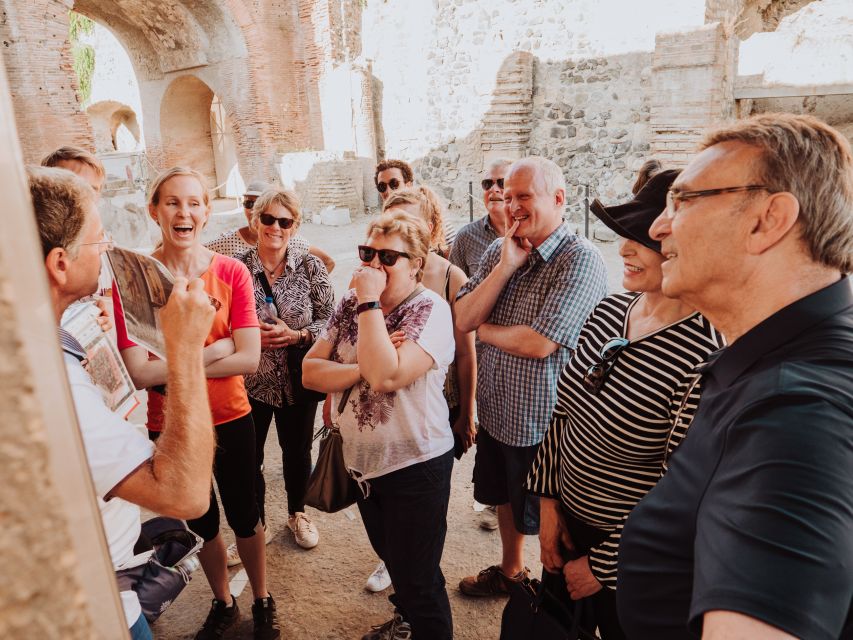
- Archaeologist guide, English-speaking, so the ruins turn into real stories.
- Small group up to 20, which helps you move and ask questions.
- Skip-the-ticket-line setup, so you spend more time inside the sites.
- Train transfer to Herculaneum via Circumvesuviana, roughly 20 minutes in transit.
- Herculaneum is the preservation winner, smaller than Pompeii but showing more intact details.
- The tour ends in Ercolano, so you will need your own plan to get back to Pompeii after.
Pompeii and Herculaneum in one day, and why a guide matters
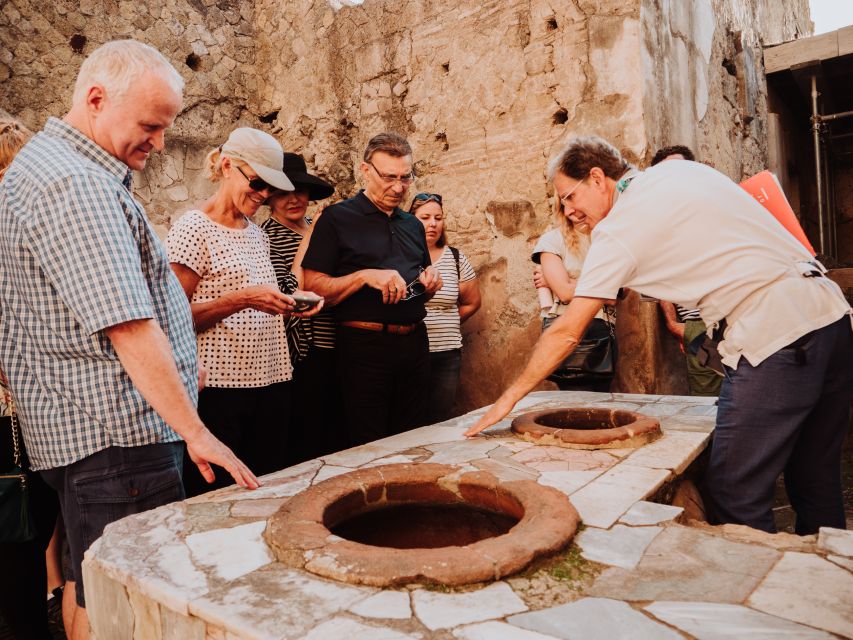
This is a classic combo for a reason. Pompeii gives you scale. Herculaneum gives you detail. Together, they show the same tragedy from two very different angles, both shaped by what Vesuvius hurled down in 79 A.D.
Here is the real win: a guide helps you stop treating the sites like an open-air museum and start treating them like a neighborhood. Pompeii is huge, and the paths can feel confusing fast. Herculaneum is smaller, but it is also more layered, with walls, mosaics, and household spaces that are easier to misread without context. With a guide, you learn what you are looking at, and you notice much more in the same 5.5 hours.
The tour is designed for walking, and it stays group-paced. You will get guided time in Pompeii, then break time, then a train ride, then guided time again in Herculaneum. People consistently describe the day as long but worthwhile, and the archaeologist framing is a big part of why it sticks.
Meeting point at Porta Marina Inferiore, and how not to get stuck
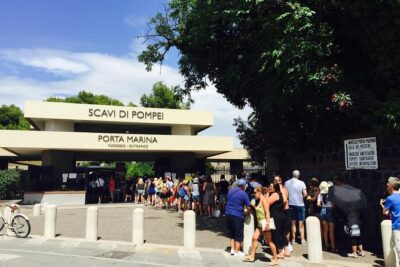
The day starts at Piazza Porta Marina Inferiore 1, at the left side of the Pompeii entrance called Porta Marina Inferiore, near the Arte bus stop. Your guide holds a sign that says Askos Tours, so you can spot them without playing guessing games.
If you like to be early, do it. Pompeii can be busy, and at meeting time there are many tour groups around. Give yourself a few extra minutes so you can confirm you are in the right place before the entry flow starts.
The tour runs for about 5.5 hours total, so arriving on time matters. A late start can squeeze your already-limited break and keep you moving tight between sites.
First guided walk: Pompeii’s streets, homes, and what 79 A.D. preserved
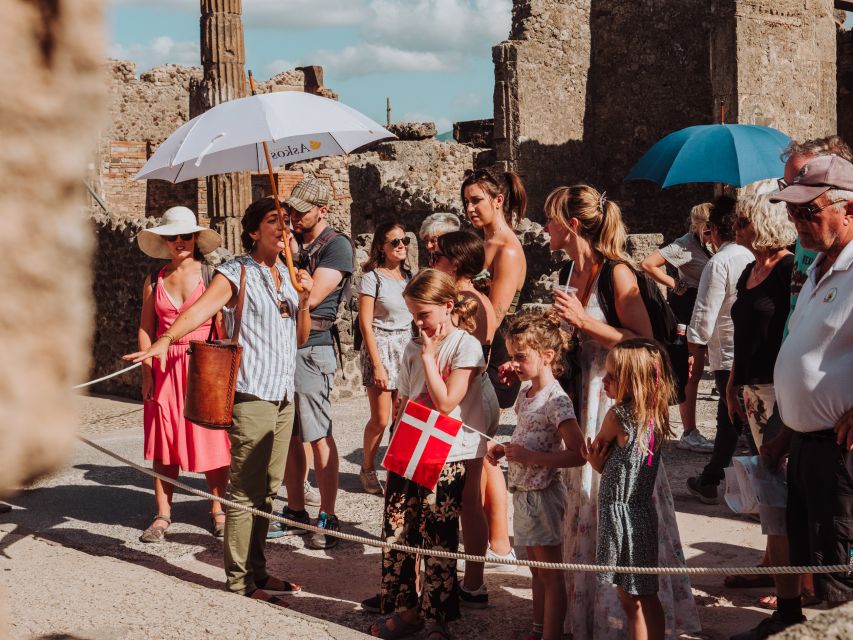
Your Pompeii block is about 2 hours of guided touring, which is a smart amount. Pompeii is too big to “see everything,” even with a guide. Instead, this setup focuses on the most important zones and the themes that help you read the city.
What Pompeii is famous for is not just the eruption itself. It is the way it froze daily life. The site was buried under pumice and volcanic ash, and Pompeii ended up under several meters of material. That depth is part of why so many everyday objects survived long enough for excavation to reveal how people lived.
During the walk, you will learn how to connect the visible architecture to function: where people worked, where they gathered, and how households were arranged. One recurring praise in guides is that they direct you toward the most interesting areas rather than turning the day into a scattershot tour.
Also, pay attention to how guides explain inscriptions and wall details. Several guides have been noted for pointing out specific features and reading them in a way that makes Pompeii feel human, not just historic.
The 30-minute Pompeii break, and how to use it well
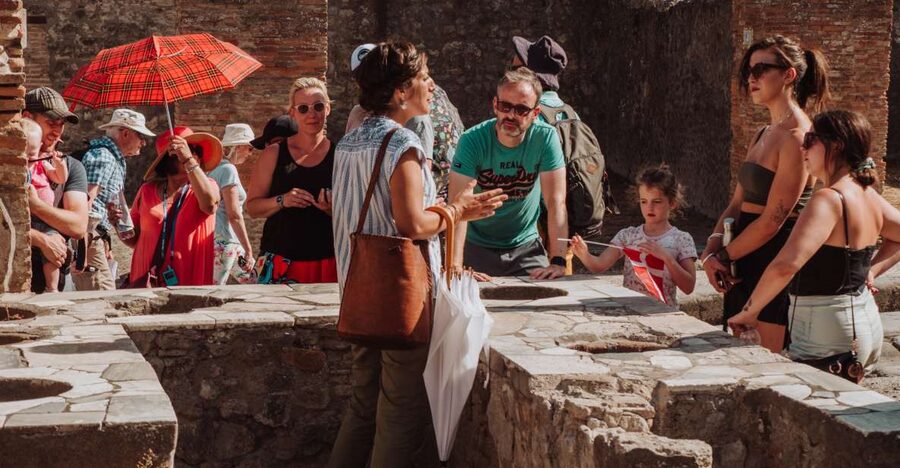
You get around 30 minutes as a break in Pompeii. This is enough to reset, use the restroom, refill water, and grab something quick. It is not enough for a relaxed meal with a full sit-down.
That is the main complaint you should take seriously. If you plan to eat, think “fast and practical,” not “slow lunch.” Bring water habits too, since Pompeii can be intense in summer.
A small tip that helps: use the break to regroup and decide what you want to notice in the remaining Pompeii portion. When you come back from a break with a plan, the second stretch often feels richer because your brain is already tuned to the right questions.
Circumvesuviana to Ercolano: the transfer that keeps the day moving
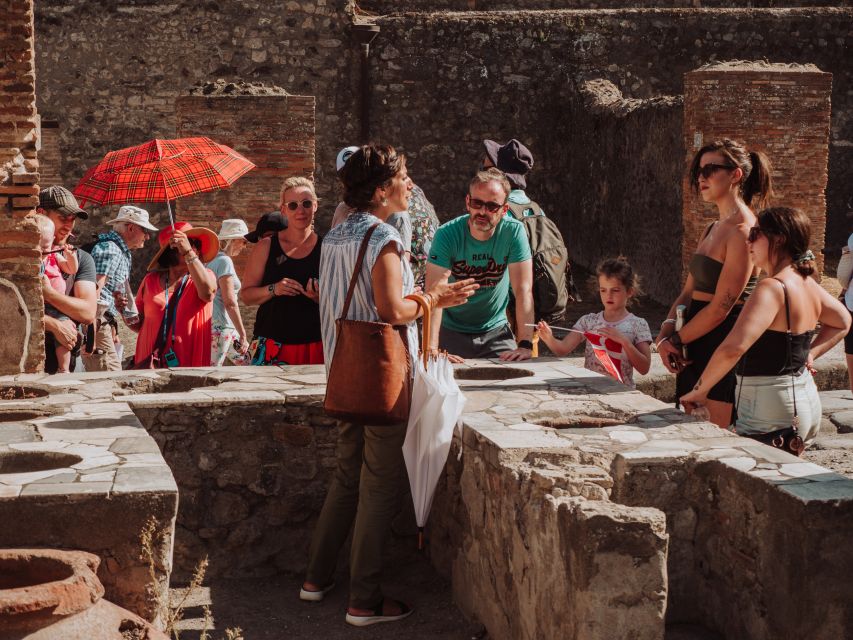
Next you take the Circumvesuviana train to Ercolano (also called Herculaneum). The schedule allows about 30 minutes total for this step, and the ride itself is about 20 minutes.
This matters because it saves time and keeps the day efficient. Pompeii and Herculaneum are close enough that you can do both in one day, but not close enough to comfortably forget transit. Doing it by train keeps you from wasting precious touring hours on traffic or long drives.
During the ride, guides may share extra context. People have mentioned that guides use the transit time to connect the dots between sites, including how people in the countryside and the city lived in the same broader Roman world.
Herculaneum guided tour: smaller city, better preservation
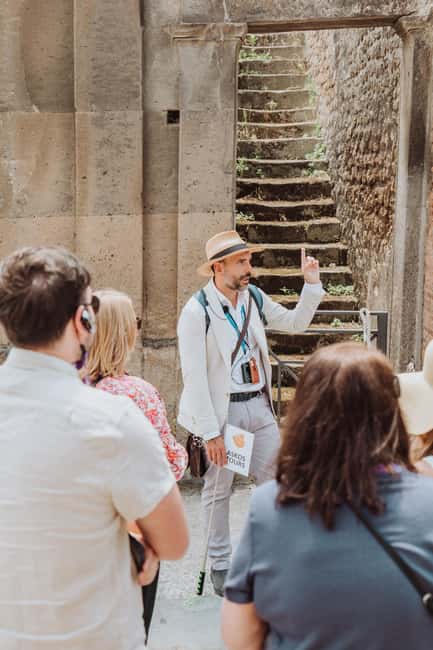
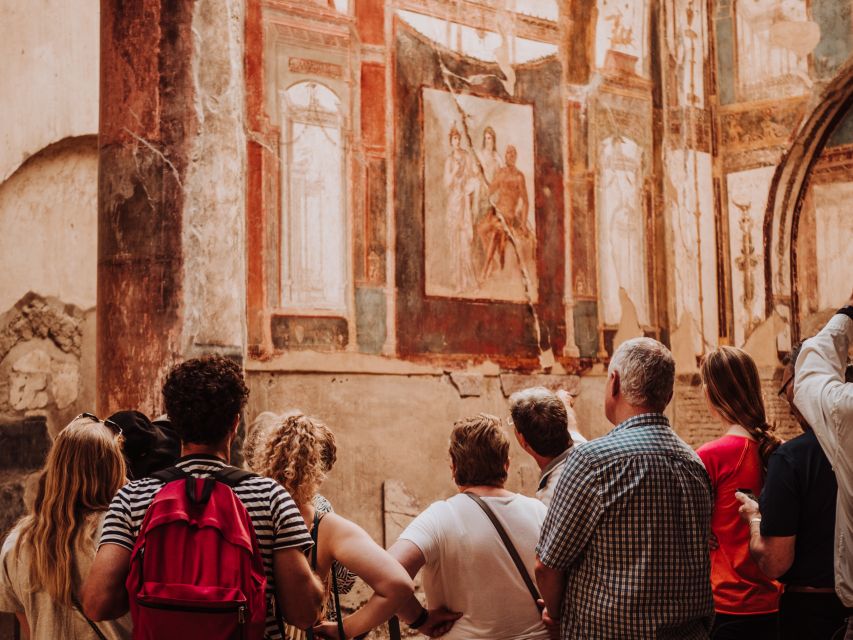
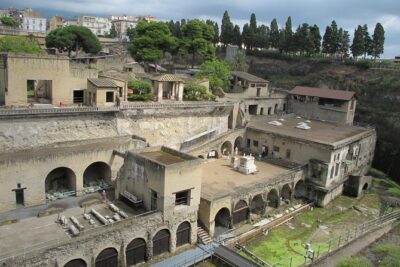
Then comes the second 2-hour guided tour, this time at Parco Archeologico di Ercolano. If Pompeii is the big emotional hit, Herculaneum is the careful look. Herculaneum is smaller, but the preservation is often the headline.
Here is what you need to know to appreciate it: Pompeii was buried in ash, but Herculaneum was buried under a thick mud flow, described as around 20 meters. That different burial environment helped preserve details that can be rare elsewhere, including household surfaces and painted elements.
In Herculaneum you are more likely to notice:
- more intact wall surfaces
- mosaics and decorative floors
- paintings and color where you would not expect it
- carbonized wooden objects (where available)
Some guides also help you understand why preservation quality changes what we learn. You can’t treat the cities as identical “before and after” moments. They are different stories shaped by the forces that buried them.
One of the strongest recurring themes is that Herculaneum gives a more intimate snapshot of daily life, especially for people who lived more comfortably. Pompeii shows plenty of wealth too, but Herculaneum can feel more personal because so much detail survives.
What the best guides do with Pompeii and Herculaneum
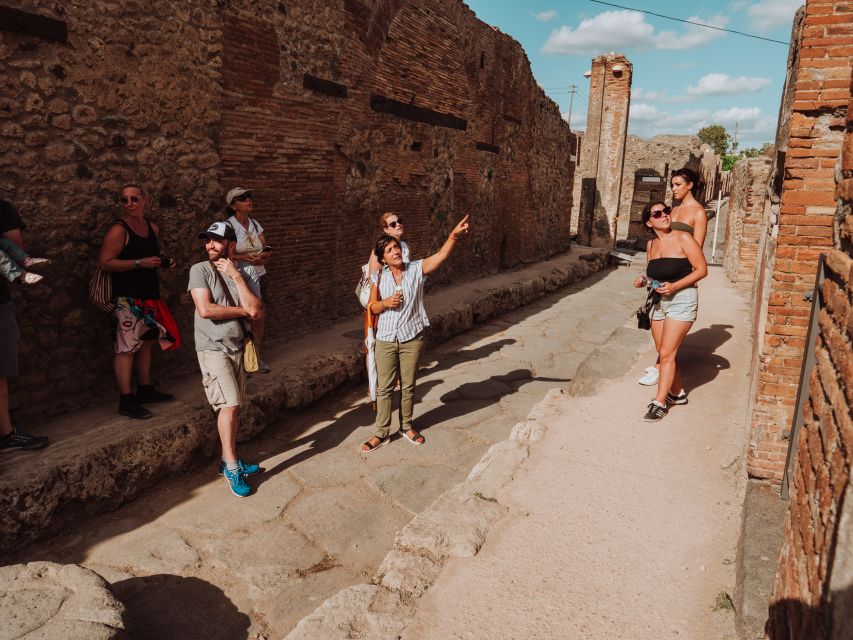
Most people understand that a guide is helpful. The difference here is how many guides are praised for making the material feel like a story, not a slideshow.
In the field, you can only cover so much ground. Guides who get high marks for this route do two things well.
First, they point you to the right “readable” spots. Someone like Alfredo has been described as giving a lot of information while keeping the group moving smoothly even in tough weather. Diego and Sergio have been noted for steering the group toward interesting areas and answering questions in a way that feels like it came from field experience, not just a script.
Second, they help you turn ruins into daily routines. You hear about social life, household function, and how Roman cities actually worked. Paulo and Antonio have been praised for humor and clear explanations that connect the dots quickly.
If you are the type who likes to ask questions, this format works well. You get enough time with the guide that you can actually clarify details, instead of hearing a fast talk and then getting stuck on your own.
Headsets, shade, and group logistics that affect your comfort
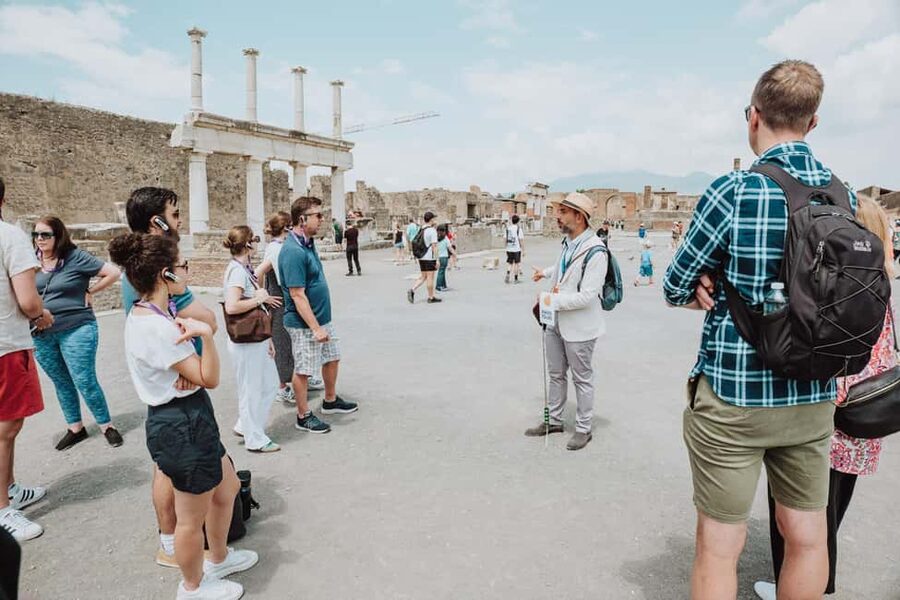
This is where small-group tours quietly win. When groups get larger, hearing the guide can become a problem. This tour provides headsets for groups of more than 10 participants, and people have praised how well the ear pieces work.
Comfort is another factor. Pompeii and Herculaneum can be hot, and the walking is steady. Several guide styles have been described as managing the heat by keeping the group in shade when possible and staying flexible when people are struggling with weather.
Bring the basics:
- comfortable walking shoes
- sunglasses and a hat in summer
- water
- a rain poncho if storms pop up
Also note: this tour is not suitable for mobility impairments or wheelchair users. The sites involve uneven ground and lots of walking.
Tickets and value: what you are really paying for
Entry tickets are a real line item, and in this booking setup you are not meant to get stuck at the ticket counter. The experience includes skip-the-ticket-line entry.
Herculaneum’s ticket pricing is listed clearly: 16.00 euros for adults and 2.00 euros for EU citizens aged 18 to 25. Pompeii pricing is not spelled out in your provided details, but you can assume you are paying for official site access either within the booking or alongside it.
So where is the value? It is not only the entrances. It is the time efficiency plus expert guidance. With Pompeii, the biggest risk is spending hours seeing “stuff” without a map for what it means. With Herculaneum, the biggest risk is missing the preservation details because they look pretty but do not automatically tell you what you are seeing.
When the guide is strong, you save effort and gain understanding fast. And since the tour packs Pompeii plus Herculaneum into one day, you also save planning energy.
Where you finish, and how to get back without stress
The tour ends at Parco Archeologico di Ercolano. That means you should have a plan for your evening transportation.
One important logistics note from experience with this specific routing: the tour does not provide transportation back to Pompeii. You will likely need the local commuter train or another way to return, and one person shared that getting back involves using the local train and dealing with an uphill walk.
To keep the day from feeling stressful at the end, check your return plan before you go. Decide how you will get from Ercolano back toward your next stop.
If you have luggage, you may be relieved to hear that both sites have free luggage storage reported in the experience details you provided. That can be a lifesaver if you are continuing your trip afterward.
Who this tour is best for
This tour fits best if you want:
- a guided plan through two major sites without getting overwhelmed
- context from an archaeologist guide, not just audio explanations
- a small group experience with room to ask questions
- a day trip friendly schedule, since it is only about 5.5 hours
It can also work well for families who can handle walking, since multiple guides were praised for keeping groups engaged and managing the pace.
If you struggle with long walks, uneven ruins, or you use a wheelchair, this route is not the right match based on the stated limits.
Should you book Pompeii and Herculaneum with this small-group archaeologist tour?
Book it if you want a day that makes sense and feels grounded in how archaeologists interpret what they see. The biggest reason is the pairing: Pompeii for scale and emotion, Herculaneum for preservation and detail, both read through an English-speaking archaeologist guide.
Skip it or think twice if you need a long sit-down lunch, since the break is about 30 minutes. Also think ahead about how you will get back after the tour ends in Ercolano.
If you want the ruins explained clearly, keep the group small, and move through both sites without getting lost in the scale, this is a strong choice.
More Tour Reviews in Pompei Campania
- Pompeii: Entry Ticket and Guided Tour with an Archaeologist★ 4.8 · 19,459 reviews
- Pompeii: Small Group Tour with an Archaeologist★ 4.8 · 12,264 reviews
- Pompeii: Skip-the-Line Entrance Ticket with Audio Guide★ 4.0 · 2,509 reviews
- Naples: Pompeii and Mt. Vesuvius with Lunch and Wine Tasting★ 4.5 · 2,454 reviews
- Pompeii: Skip-the-line-Ticket and Guided Tour★ 4.6 · 1,152 reviews
More Days in Herculaneum
- Pompeii and Herculaneum: Guided Tour with an Archaeologist★ 5.0 · 164 reviews
- From Naples: Pompeii and Herculaneum VIP Tour with Lunch★ 4.4 · 129 reviews
- Pompeii & Herculaneum: Skip-the-line & Digital Guide App★ 4.0 · 35 reviews
- Pompeii, Herculaneum, and Vesuvius: Full-Day Tour★ 3.7 · 21 reviews
- From Herculaneum to Pompeii: Audioguides + Entrance Tickets★ 3.6 · 19 reviews
Sorrento to Pompeii, More Ways
- Discover Pompeii: French Walking Tour of the Buried City★ 4.8 · 253 reviews
- Pompeii: Day Tour of Pompeii and Vesuvius with Bus Transfer★ 4.2 · 250 reviews
- From Positano: Pompeii Ruins Small Group Guided Tour★ 4.8 · 82 reviews
- From Naples: Pompeii Ruins VIP Guided Tour★ 4.4 · 35 reviews
- Amalfi Coast: Pompeii Ruins Guided Tour★ 5.0 · 32 reviews
More ways into Pompeii Tours from Sorrento.
 ★ 4.9Pompeii Ruins Private Tour with Optional Skip-the-Line EntryFrom $254732 reviews
 ★ 4.0Pompeii Ruins Half-Day Tour from Sorrento with GuideFrom $97714 reviews
 ★ 5.0Skip the Line Guided Tour of Pompeii led by an ArchaeologistFrom $95703 reviews
 ★ 4.3Day Tour to Pompeii Ruins and Mount VesuviusFrom $130489 reviews
 ★ 5.0Sharing Tour of PompeiiFrom $193487 reviews
 ★ 5.0Pompeii Tour & Lunch with Wine Tasting ExperienceFrom $120383 reviews
 ★ 5.02 hours Pompeii Tour with Local Historian – Ticket IncludedFrom $48335 reviews
 ★ 4.5Guided Day Tour of Pompeii and Herculaneum with Light LunchFrom $185311 reviews
Other useful routes from here