
REVIEW · GUIDED
Pompeii: Guided Tour with Archaeologist with max. 12 People
Pompeii clicks into focus fast. This guided walk with archaeologist Benedetto turns the ruins into a working Roman city, from shopfronts and houses to the Forum and the famous plaster casts. I especially like the small group size (max 12), which keeps the pace human and questions easy. I also like that this tour centers real archaeological interpretation, not just postcard facts. The only real drawback is time, 2 hours is great for highlights, but it is not enough if you want to wander every corner for yourself.
You meet at Ristorante Suisse, and you start from Porta Marina Inferiore, moving through theaters and then the residential areas where mosaics and frescoes do the talking. Expect stops that map out daily life: the public thermal baths, the lupanare, major civic buildings, and then the Forum where the story ends with the plaster casts.
One more consideration: Pompeii is uneven and stair-heavy, so this is not suitable for people with mobility impairments or wheelchair users. If you have any doubt about how much walking and ground unevenness you can handle, you should think twice before booking.
Key highlights that make this Pompeii tour worth it
- Archaeologist-led explanations with a true dig-site perspective, not a scripted museum talk
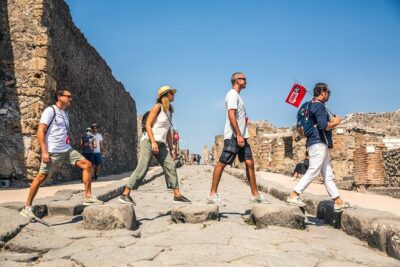
- Max 12 people, so you can ask questions and keep the group together
- A focused route that hits the House of Menander, Terme Stabiane, lupanare, Forum, and plaster casts
- Small-crowd strategy, including guidance on where to stand and when to move
- Headsets for larger groups (if your group is over 8), so you still hear the guide clearly
- Free time to explore afterward, so you can turn what you just learned into personal sightseeing
Pompeii makes more sense with Benedetto, the archaeologist guide
Pompeii can feel like a pile of stone until someone connects it to how people actually lived. What I like about this tour is that you are not just watching ruins, you are getting explanations that help you imagine routines, public spaces, and private decoration choices. That matters because many parts of the site are worn down or incomplete, and you need interpretive help to understand what you are looking at.
Benedetto is presented as an archaeologist guide, and that shows in how he frames the city. Instead of treating the eruption of AD 79 as the only story, he also walks you through everyday Roman life, from houses and painted decoration to civic buildings and public areas. In plain terms, the day becomes less about tragedy alone and more about a society that had rhythm right up until the end.
There is also a practical bonus: the tour is designed to keep you moving with purpose through the site. Reviews repeatedly point to smart routing to avoid the worst crowd knots, plus a pace that keeps you engaged instead of herding you from one distant point to another. When you do not have to fight the crowds, you actually get to see the details the guide points out.
Finally, the small group size is not a luxury. It changes the experience. You can ask questions, and the guide can adjust in the moment, including for families and different comfort levels with the story.
A 2-hour route that starts at Suisse and gets you into Porta Marina
This tour begins at Suisse Restaurant, and your guide meets you there with a sign showing your name. That is a small detail, but it is a big deal on a busy day. You do not have to hunt, and you can start the site visit without stress.
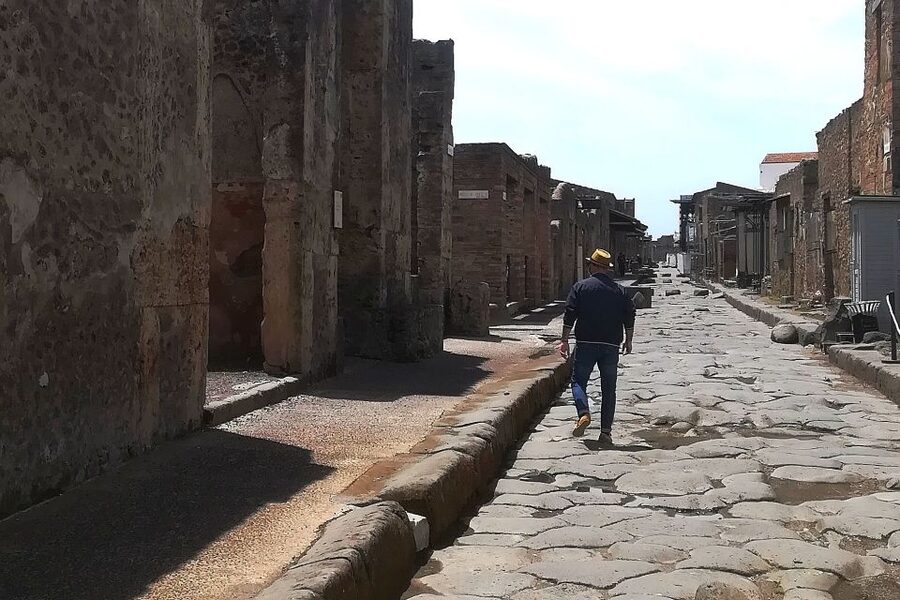
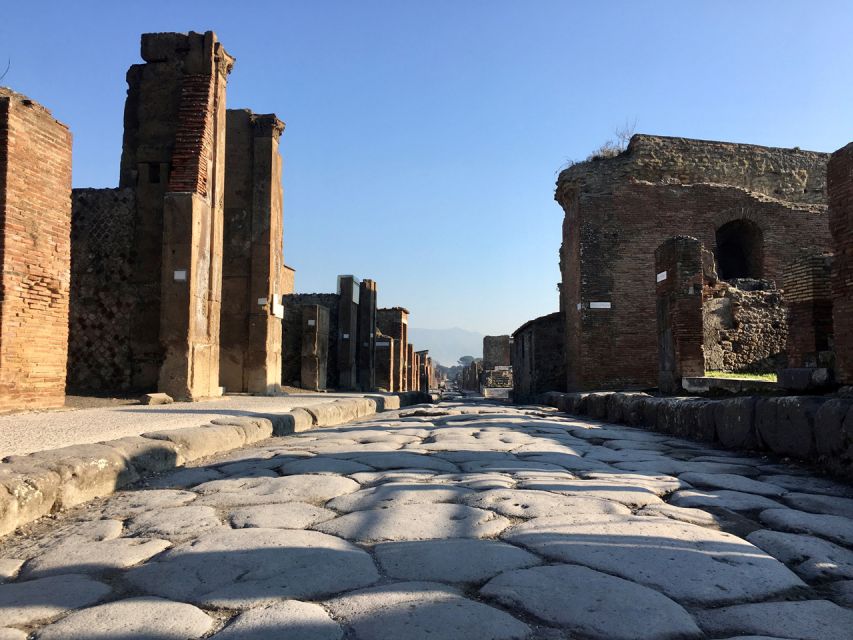
From there, you head into Pompeii starting at Porta Marina Inferiore. The early section moves through the area of the theaters. This matters because it sets the city layout in your head before you hit the residential zones. Once you understand where public entertainment fits, the homes and shops feel less random.
The pacing is one of the best parts of the experience. The itinerary is built to take you through a clear sequence: houses and decorations, then commercial street life, then public thermal baths, then the lupanare, and finally the Forum with public buildings and the plaster casts of the victims. You end with the most memorable visual and emotional stop, rather than cutting it off halfway through.
One more practical note: the tour includes an express entry ticket. That means you skip the slowest ticket process and spend more of your limited time inside the ruins. For a 2-hour visit, saving time at the entrance is not just convenient, it is value.
House of Menander, mosaics, frescoes, and what to actually notice
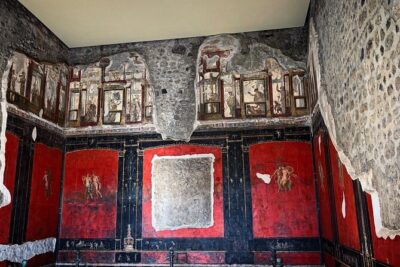
The tour includes a stop at the House of Menander, plus additional time in ancient houses described as having beautiful decorations, including mosaics, frescoes, and marbles. Even if you only remember one thing from Pompeii after you leave, you want it to be how art lived right alongside daily life.
In houses like these, your eyes need a target. I recommend you look for decoration that signals status and routine, not just pretty color. The tour helps here because the guide points out what each area likely meant in a Roman household. Instead of staring at fragments and guessing, you get a framework that makes the surviving surfaces more meaningful.
After the residential stops, the tour moves along streets flanked by shops, ancient Roman bakeries, and old snack bars. That section is important because Pompeii is famous for buildings, but you experience the city through movement. Those storefronts and service areas show you how often people likely interacted with food, goods, and small business life.
Now, a reality check. Pompeii does not have modern signage everywhere in a way that makes self-navigation feel easy. That is why the guide helps. With an archaeologist leading, you do not waste your energy trying to figure out what you are looking at.
If you are the type who wants every detail, 2 hours will still feel tight. But for most people, the value is that you get enough structure to explore deeper afterward.
Terme Stabiane and the lupanare: public life and the city’s social edges
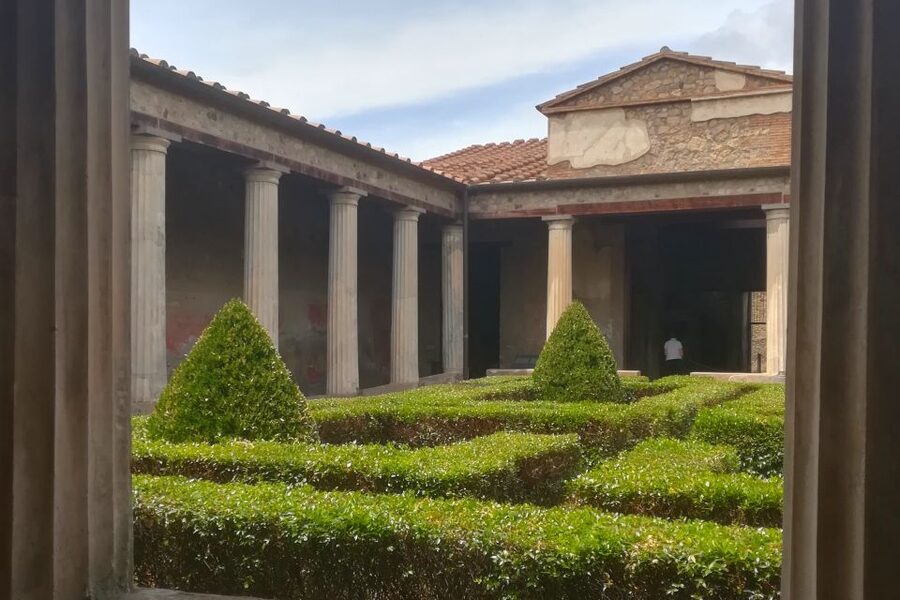
Next up are the public thermal baths, including Terme Stabiane in the itinerary. Public baths are one of the best places to understand Roman social life because they are not only about hygiene. They are about gathering, routines, and shared public space.
What I like about including this stop is that it breaks the day into different kinds of Roman experiences. Houses and shops show daily commerce and domestic life. Baths add the public rhythm. You begin to see the city as a system, not a timeline of ruins.
From there, you reach the lupanare, described as the brothel. This stop is often a highlight because it is so specific in function. It also makes the Roman city feel uncomfortably real in the way it handled everyday needs and desires.
Your guide’s job here is key. Without interpretation, you might only remember the shock factor. With a trained archaeologist leading, you get context for why this space mattered within the layout of Pompeii and how it fits into the broader story of the city.
It is also worth saying this plainly: if you are uncomfortable with adult themes, you may want to prepare yourself mentally. The tour includes it as a major site, and it is not optional in the route.
Forum, civic buildings, and the Temple of Jupiter: the city’s center of gravity
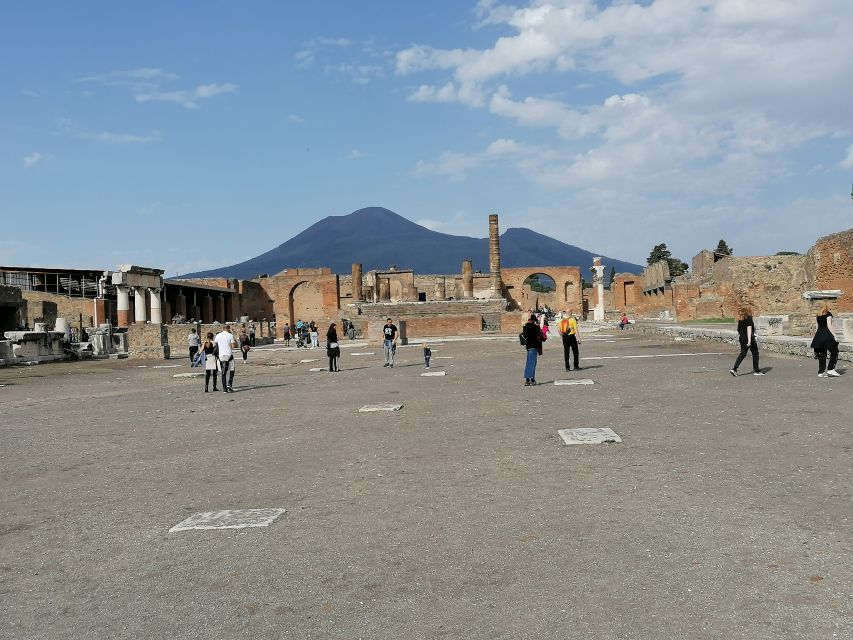
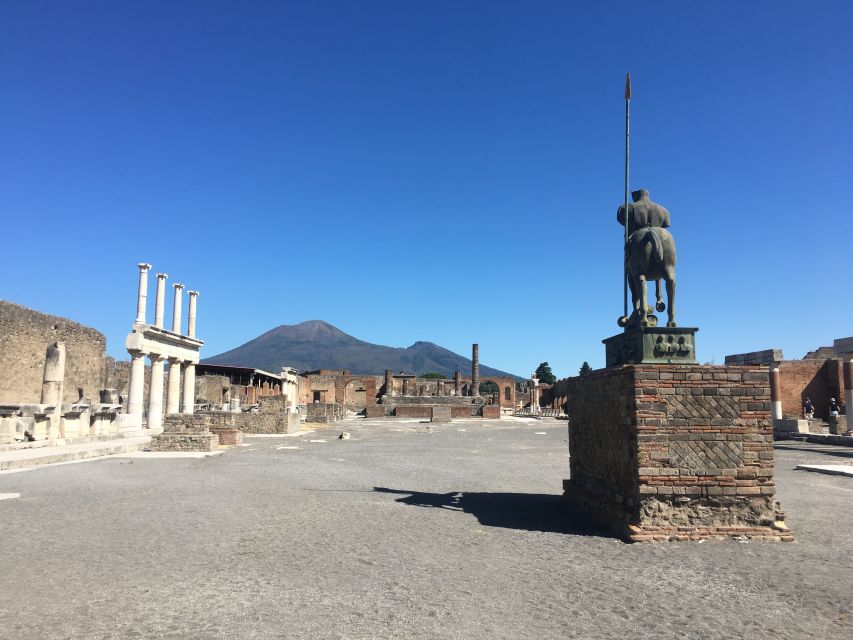
The tour finishes with major civic landmarks, including the Foro Civile di Pompei, the Basilica, Pompeii, and the Temple of Jupiter. It also includes the Macellum of Pompeii. Even if you do not memorize the Roman terms, these stops do the job of showing how Pompeii worked as a public center.
Here is how I think about it: the Forum and surrounding public buildings help you understand what the city did together. Markets and civic spaces turn Pompeii from a residential tragedy into a functioning community with shared institutions and public routines.
The Macellum is included as a guided stop, which is useful if you want to picture the day-to-day economy, because markets are where daily life becomes tangible. The Basilica is another included civic stop, and that helps you see how public meeting spaces shaped the city’s rhythm.
The Temple of Jupiter stop matters because religion and public identity were not separate from daily life. Seeing the temple area on a guided route helps connect the idea of public ritual with the city layout you are already absorbing.
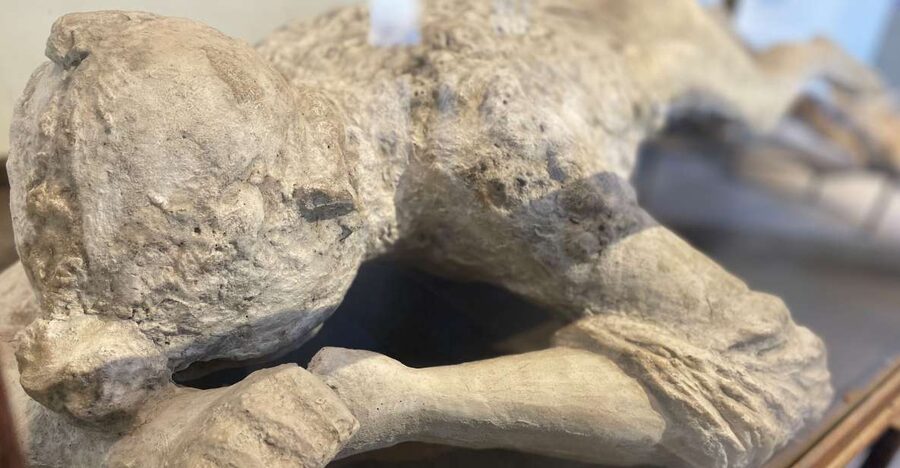
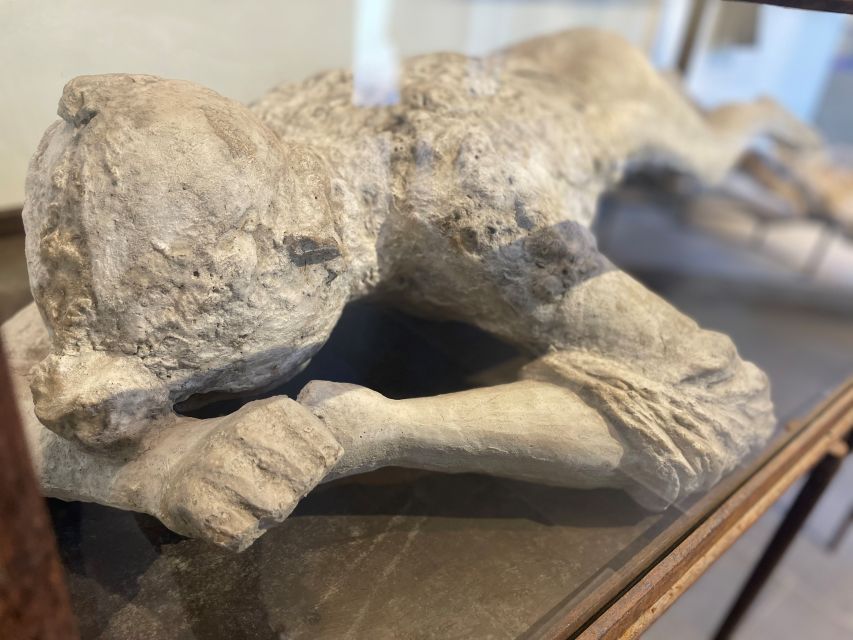
Finally, the tour includes the Forum public buildings and then the plaster casts of the victims. This is the emotional crescendo. If your brain wants to picture bodies because the name plaster casts is vivid, your guide will help you make sense of what these casts represent in the story of AD 79.
The frescoes and plaster casts: how to make the most of the emotional stops
There are two kinds of impact in this Pompeii route. One is visual, mosaics and frescoes in houses. The other is emotional and physical, the plaster casts of the victims.
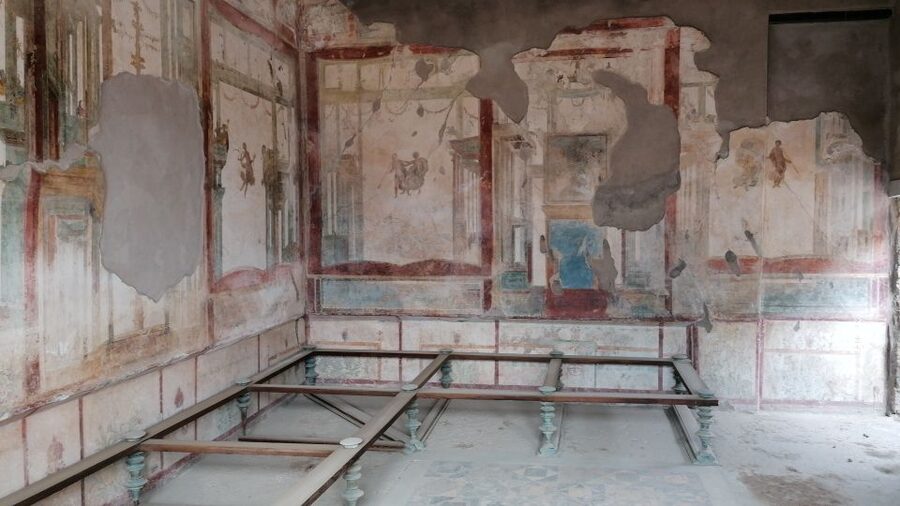
For the frescoes and mosaics, the best mindset is to treat every surviving patch as a clue. Ask yourself what the decoration suggests about a room’s purpose, who used it, and what kind of environment the household wanted to project. A guide helps because the city is fragmented, and interpretation is how you stop feeling lost.
For the plaster casts, keep it slower than you think you need. The route includes them in the final stretch, so you may be tempted to rush for photos. Instead, pause and let the explanation land before you move on. If you bring a curious, respectful approach, you get more than a shock moment. You get a human story tied to the city you already learned to picture.
The tour also includes free time after the guided portion to explore the archaeological site. That is a great match for these two emotional layers. You can revisit what hit you, whether it is art in a house or the weight of the cast displays.
Price, value, and why express entry matters here
At $65 per person for about 2 hours, this tour is priced like a focused premium experience. The value comes from three practical inclusions and one less-tangible benefit.
First, you get an archaeologist guide, which is not just a nice-to-have. At Pompeii, interpretation is the difference between seeing stones and understanding a living city.
Second, you get express entry and a named ticket requirement. When time is tight, skipping the ticket line matters. This is especially true because the tour is only 2 hours, so every minute saved at the entrance protects the core route.
Third, you get headsets for groups larger than 8. Even on small-group tours, hearing clarity changes how well you follow the guide. Headsets help when the site is noisy and your group is moving.
And fourth, you get guided route logic. The best-reviewed aspect, again and again, is how the guide helps you avoid the most crowded areas and still see the big hits. If you have ever spent half a day trying to navigate Pompeii on your own, you already know what you would be trading away.
If you are expecting a deep, all-day archaeological seminar, this is not that. But if you want an intelligent highlights route with an expert who can connect the dots quickly, the pricing makes sense.
Practical tips for your day: shoes, heat, and what to bring
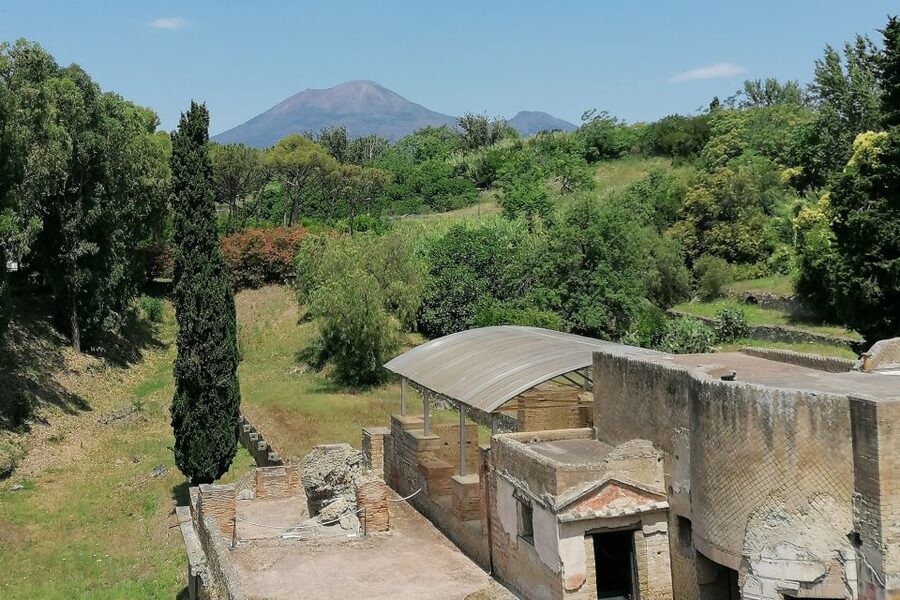
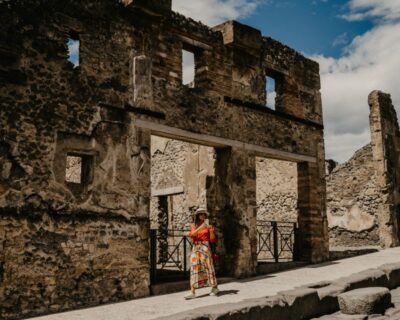
Pompeii is a walking site. Bring comfortable shoes, a hat, and water. The tour itself is 2 hours, but heat and sun can slow you down more than the schedule.
Also bring your passport or ID card, in original. This matters because the Pompeii ticket is named. After booking, you need to provide the list with first and last names of all participants. If your name on the booking does not match your ID, you can end up dealing with preventable hassle.
Language options are also clear: Italian, English, and French. If you want the tour in a specific language, verify availability when you choose your time.
One more small note: the included free time to explore is exactly that, free. Plan to use it for the places that grabbed you most during the guided walk.
Who should book this Pompeii tour (and who should skip it)
I think this tour fits best when you want Pompeii organized and explained. It is ideal for first-timers who feel overwhelmed by the size and want a clear route, plus for repeat visitors who want a more structured look at the story and the art.
It is also a strong choice if you travel with kids or mixed ages. The tour format works well because the group stays small and the guide can answer questions as you go, rather than pushing everyone through on a rigid timeline.
I would skip it if mobility is an issue. The tour is not suitable for people with mobility impairments or wheelchair users, and the uneven terrain at Pompeii is not something you can outsmart with good intentions.
If you love long wandering days, consider booking this as your guided anchor and then using the included free time to keep exploring on your own. Think of it as your Pompeii foundation, not your whole course.
Should you book Pompeii with an archaeologist? My take
If you want Pompeii to feel like a real place instead of a ghost set, book it. The combination of small-group pacing, express entry, and an archaeologist-led route makes the 2 hours feel efficient and meaningful, not rushed.
Skip it only if you need full accessibility accommodations or you know you will hate adult-content stops like the lupanare. Otherwise, I would treat this as one of the easiest ways to get the most from a Pompeii visit, while still leaving you time to explore the site afterward.
FAQ
Where does the tour meet?
Your guide waits at Ristorante Suisse with a sign that shows your name.
How long is the Pompeii guided tour?
The tour lasts 2 hours.
What is included in the price?
Included are an archaeologist guide, an express entry ticket to Pompeii, headsets for groups of more than 8 people, and free time to explore the archaeological site.
What should I bring for the tour?
Bring your passport or ID card (original), comfortable shoes, a hat, and water.
Is the tour suitable for wheelchair users or limited mobility?
No. It is not suitable for people with mobility impairments or wheelchair users.
Do I need to buy food or transport separately?
Yes. Food and drinks are not included, and transportation is not included.
With a Local Guide
- Pompeii: Entry Ticket and Guided Tour with an Archaeologist★ 4.8 · 19,459 reviews
- Pompeii: Skip-the-Line Entrance Ticket with Audio Guide★ 4.0 · 2,509 reviews
- Pompeii: Skip-the-line-Ticket and Guided Tour★ 4.6 · 1,152 reviews
- Pompeii: Guided Tour with Skip-the-Line Entry★ 4.9 · 812 reviews
- Pompeii: Skip-the-Line Entry Ticket with Digital Guide App★ 4.1 · 770 reviews
More Tours in Pompei Campania
- Pompeii: Entry Ticket and Guided Tour with an Archaeologist★ 4.8 · 19,459 reviews
- Pompeii: Small Group Tour with an Archaeologist★ 4.8 · 12,264 reviews
- Pompeii: Skip-the-line-Ticket and Guided Tour★ 4.6 · 1,152 reviews
- Pompeii: Small-Group Tour of Pompeii and Herculaneum★ 4.8 · 867 reviews
- Pompeii: Guided Tour with Skip-the-Line Entry★ 4.9 · 812 reviews
More Tour Reviews in Pompei Campania
- Pompeii: Entry Ticket and Guided Tour with an Archaeologist★ 4.8 · 19,459 reviews
- Pompeii: Small Group Tour with an Archaeologist★ 4.8 · 12,264 reviews
- Pompeii: Skip-the-Line Entrance Ticket with Audio Guide★ 4.0 · 2,509 reviews
- Naples: Pompeii and Mt. Vesuvius with Lunch and Wine Tasting★ 4.5 · 2,454 reviews
- Pompeii: Skip-the-line-Ticket and Guided Tour★ 4.6 · 1,152 reviews
More ways into Guided.
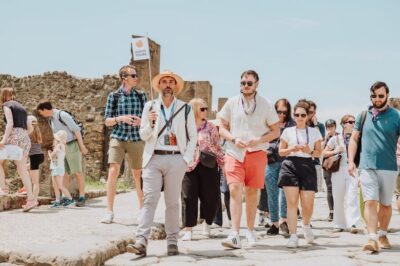 ★ 4.8Pompeii: Entry Ticket and Guided Tour with an ArchaeologistFrom $3519,459 reviews
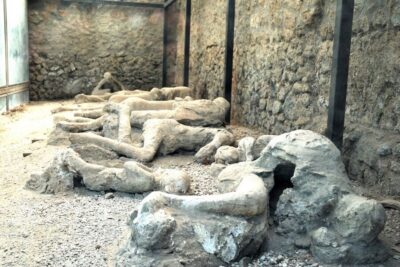 ★ 4.2Pompeii: Entry Ticket with Optional Audio GuideFrom $2612,360 reviews
 ★ 4.0Pompeii: Skip-the-Line Entrance Ticket with Audio GuideFrom $392,509 reviews
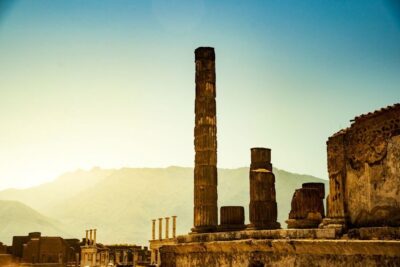 ★ 4.6Pompeii: Skip-the-line-Ticket and Guided TourFrom $641,152 reviews
 ★ 4.9Pompeii: Guided Tour with Skip-the-Line EntryFrom $58812 reviews
 ★ 4.1Pompeii: Skip-the-Line Entry Ticket with Digital Guide AppFrom $22770 reviews
 ★ 4.5Pompeii Express Guided Tour by Train from SorrentoFrom $65770 reviews
 ★ 4.5Skip-the-Line Pompeii Guided Tour from SorrentoFrom $90722 reviews