
REVIEW · 3-HOUR EXPERIENCES
Pompeii 3-Hour Walking Tour
Pompeii hits you fast, and it sticks. I love how this private 3-hour tour turns a massive archaeological site into a clear story, from the city gates to the places people lived, shopped, prayed, and worked. You get expert context on how Pompeii was buried under ash and lava from Vesuvius in 79 A.D., and why the ruins still matter today.
I also like that you cover headline stops without rushing past them. You’ll visit the Forum, Thermal Baths, and an old brothel (Lupanare), then look at the plaster casts of humans and animals preserved at their deaths. One thing to consider: 3 hours is a tight window for a huge site, so you’ll be doing a lot of walking on uneven ground and seeing only the essentials.
Key highlights worth building your day around
- Private pacing, not a herd: you get a guide to keep the route organized for your group
- Skip the ticket line with admission fees included
- Forum to everyday commerce: civic spaces plus places tied to daily routines
- Thermal Baths and the Lupanare: public life and private life in the same walk
- Temples, houses, theaters: you’ll see religious, domestic, and entertainment Rome in one circuit
- Plaster casts: the site’s most emotional stop, explained clearly by an archaeologist
Private guide, major sights: what 3 hours really covers
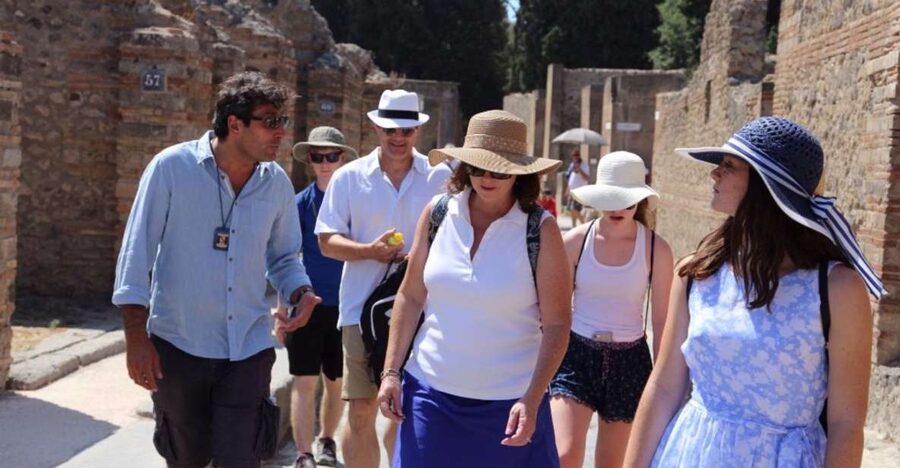
Pompeii can feel like standing inside a giant open-air textbook, but not every tour helps you read it. This one is built for focus. In about three hours, you’re guided through the highest-impact areas, with a trained archaeologist guide helping you understand what you’re seeing and what it meant for Roman daily life.
The value is in the mix. You’re not only looking at big stones. You’re also getting the “how people actually lived” layer, which is where Pompeii becomes more than ruins. The tour highlights public spaces (like the Forum and the Basilica) and also private or semi-private corners (like houses and the Lupanare).
The private format matters. Even at Pompeii, a small group can move differently than a large group. It means you can get answers to the questions that pop up while you’re standing in front of a specific building.
Practical note: you’ll want to be comfortable with walking and staying outdoors. The tour runs in any weather condition, so plan for heat, sun, or rain gear.
From Porta Marina to the Forum Civile di Pompei
Your walk begins at one of two meeting options on Via Villa dei Misteri (2 or 3). From there, you head into Pompeii’s main circuit and start with the feeling of arrival: the city gates and the first stretches that connect you to the heart of urban life.
One early highlight is Porta Marina, often tied to the Marina Gate area. This is a smart place to start because it frames Pompeii as a real city with entrances, movement, and networks, not just a list of “must-see” monuments. You’ll then move toward the Forum zone, including the Foro Civile di Pompei.
Why that matters: the Forum is where Roman public life got done. It’s where civic decisions, legal activity, ceremonies, and regular social traffic all converged. When your guide explains what the Forum was for, the buildings around you stop being random walls and start feeling like a working system.
You’ll also be shown key landmarks around this core area, including the Marina Gate connection, the Basilica (court house), and other Forum-related points. The guide’s job is to help you connect the dots quickly, so you’re not just taking photos, you’re understanding the layout.
Basilicas, courthouses, and the Forum Baths routine
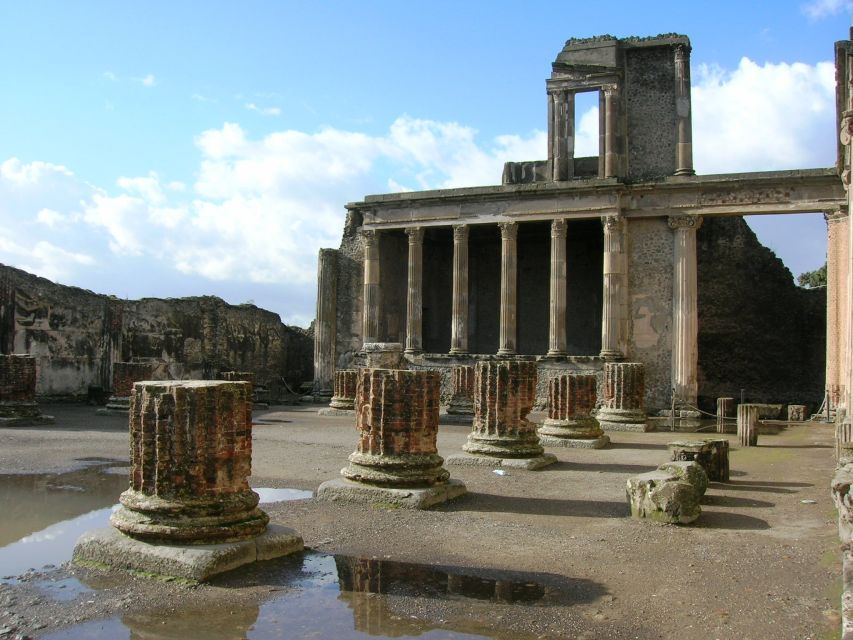
In the Forum area, one of the biggest stops is the Basilica, which functioned as a court house. It’s one of those buildings that makes sense instantly once someone tells you what happened there. The space feels designed for public decision-making, and your guide ties it to Roman Republic life and governance.
From there, you’ll keep moving through the civic rhythm. You also get a look at the surrounding public spaces that bring the city to life, like the Triangolar Forum area and the larger Forum structures that helped people gather.
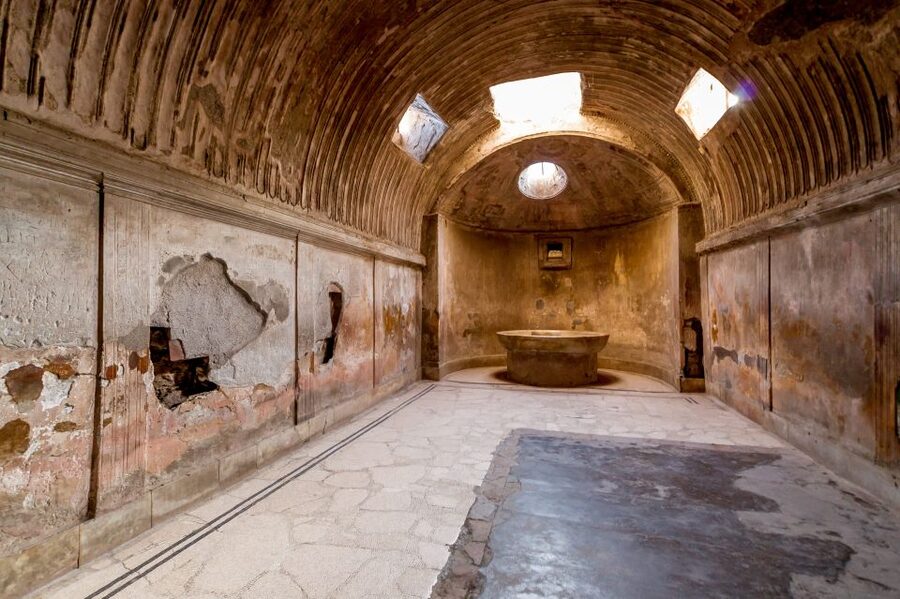
Then comes a shift that I really value: moving from civic buildings to everyday infrastructure. You’ll visit the Forum Baths (often paired with the larger idea of Sarno Baths in Pompeii’s highlight list). Thermal baths were more than hygiene. They were social hubs and part of the regular schedule for many people.
If you’ve ever wondered why ruins can still feel human, this is where Pompeii delivers. A bath complex is basically a snapshot of routine, and the site shows how public spaces shaped community habits.
Along the way, you may also spot places connected to commerce and daily consumption, like a bakery and the Termopolium Capuano (a snack-and-drink type of counter). Even if you don’t stop long at every single detail, your guide will point out what each kind of stop suggests about the city’s everyday economy.
Thermal Baths and the Lupanare brothel stop
This is one of the tour’s most striking sections because it balances the public with the private. After the baths and civic zones, you’ll reach the Lupanare, Pompeii’s old brothel.
It’s not there just to shock you. It’s there because it completes the picture of society. Pompeii isn’t only about temples and theaters. It also shows the less formal, commercial, and personal side of Roman life.
Your guide will help you understand the Lupanare in context, so you can connect it to other parts of the city you’ve seen. The point is not to moralize. The point is to recognize that people had desires, transactions, and social patterns just like anywhere else.
One practical consideration: this area is often emotionally intense because the tour also later discusses death and the plaster casts. If you’re sensitive to heavy history, pace yourself. Use the guide’s framing to stay grounded in facts and context rather than fear.
Temples of Apollo, plus Jupiter and Venus

Pompeii’s religious architecture helps explain what people valued and what they believed. During this tour, you’ll visit the Temple of Apollo and you’ll also see how other major gods, like Jupiter and Venus, fit into the city’s spiritual map.
Temples are easy to treat as background scenery unless someone gives you a sense of their role in civic identity. What I like here is that the guide links temples to the rhythm of the city, so you can see how religion overlapped with daily routines, ceremonies, and public space.
Also, the placement matters. When you see the temples positioned relative to the Forum and civic core, the city starts to read like a plan, not a set of random sites. You understand that Pompeii was organized around more than streets. It was organized around institutions: government, commerce, worship, and entertainment.
This stop is also a good “reset” moment in the route. After baths and brothel context, temples bring you back to how the Romans communicated with the divine, and your guide’s archaeologist-style explanations help you notice details you might otherwise miss.
House stops: Menander, Faun, Vettii, and what Romans did at home
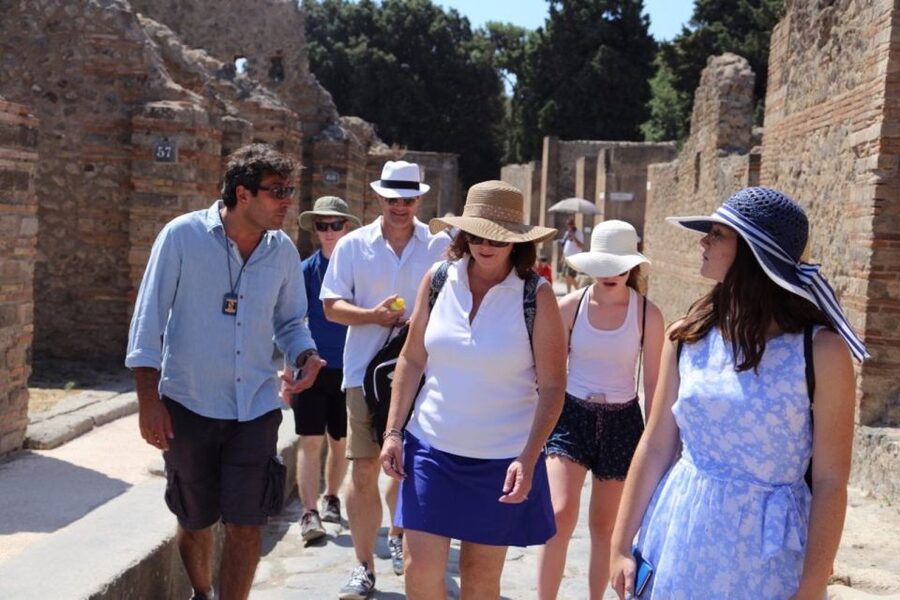
Pompeii is famous for its houses because they show daily life at a scale ruins rarely manage. In this tour, you’ll visit multiple homes, including the House of Menander, the House of the Faun, and the House of the Vettii. You’ll also be taken to the House of Tragic Poet as part of the domestic-life highlights.
Here’s what makes these stops genuinely useful: houses are where you can compare private life with the public life you saw earlier. The Forum and Basilica told one story. The houses tell a different one, tied to status, family life, and how wealthy and middle-class households organized space.
Your guide will describe what you’re looking at, so you understand how a home worked, even when only parts survive. You’ll get a better sense of how rooms connected, how interiors functioned, and how domestic design signaled identity.
Even if you’re not an architecture person, I think this is worth it because it makes Pompeii feel like a community again. These are buildings that were full of ordinary routines before 79 A.D. and full of grief after.
Plaster casts and the Villa of the Mysteries moment
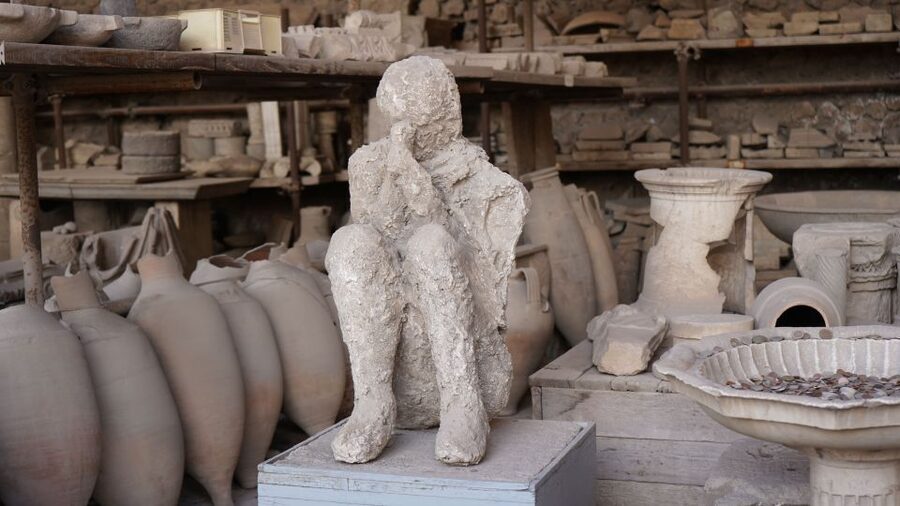
The emotional center of Pompeii is hard to avoid, and this tour brings you there with the right pacing: the plaster casts of humans and animals at the time of death. The idea sounds technical, but standing there with an explanation makes it real. You’re seeing how the eruption’s effects translated into captured forms, and the guide connects that to what happened during the disaster.
A big reason this stop hits is because it turns the disaster into specific individuals and specific animals, not just a blanket tragedy. The tour also frames Pompeii and Herculaneum’s UNESCO status, using language about a complete and vivid picture of society and daily life at a specific moment in the past, without parallel anywhere in the world. That context helps you understand why the site remains so important.
After the casts, the route includes the Villa of the Mysteries. This is a powerful contrast. You’ve just absorbed the most devastating evidence. Then you step into a villa that represents how people planned their lives, expressed meaning, and lived with culture and ritual.
If you only have a short time in Pompeii, this pairing works. The human story keeps you present. The villa keeps you thinking about what life was like before it was interrupted.
Theaters and the Amphitheater: Roman entertainment in stone
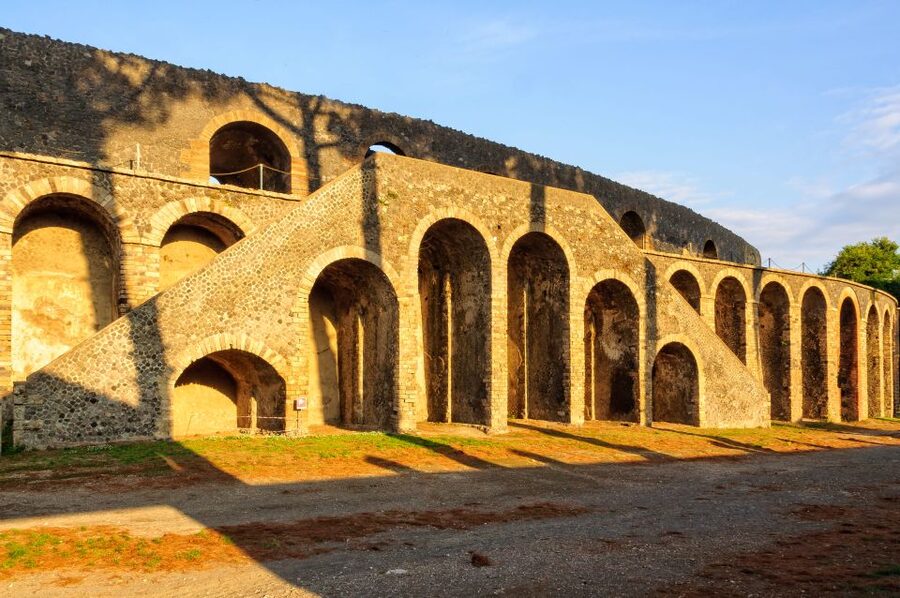
To wrap the tour with a sense of life, you finish with entertainment architecture and public gathering spaces. You’ll visit the Large Theatre and also see the Amphitheater. The tour’s highlight list also points to the Teatro Grande and Odeion (small theatre), which fit the theme of performance and spectatorship.
These buildings are easier to understand once you’ve already learned about the city’s social structure. The Forum showed you how public decisions formed. The baths showed how public routine formed. The theaters and amphitheater show how public emotion and leisure formed.
Your guide will help you read these sites by explaining what kind of events happened there and how that kind of entertainment fit Roman culture. You’re not only looking at seating and stage shapes. You’re learning how crowds experienced the same spaces in a completely different world.
And yes, it still feels strange to look at places built for celebration while knowing the city’s ending. That tension is part of why Pompeii is so memorable. With a good guide, it doesn’t become morbid. It becomes meaningful.
Price, skip-the-line access, and how to judge value
This tour costs $508.15 per group (for up to 1, meaning it’s priced per your private party rather than per person in a fixed group size). That’s not a bargain price, but it’s not meant to be. You’re paying for three things that matter at Pompeii: private guiding, admission fees included, and skip-the-line entry.
If you’re traveling with someone who likes history and asks questions, a private archaeologist-led route can be cost-effective in a practical way. You’re buying time saved at entry and expert guidance that helps you interpret what you see during a short visit.
It can also be a strong choice if you want to avoid the common frustration of Pompeii self-guided wandering, where you spend a lot of time trying to figure out what you’re looking at. Here, you get explanations on the big anchors: Forum, Basilica, baths, Lupanare, houses, temples, theaters, and plaster casts.
The trade-off is simple: because you’re walking for three hours, you may not get the slower, linger-and-revisit style that some people prefer. If you want to spend lots of time in just one house or one artistic detail, you might find this too structured.
Should you book this Pompeii tour?
I’d book this tour if you have a limited time window and you want the site to feel organized and alive. The private format, archaeologist guidance, and hit-list of essential stops make it a smart option for first-time Pompeii visits. It’s especially good if you want both public life (Forum, Basilica, baths) and private life (houses, Lupanare), plus the emotional core (plaster casts).
I would think twice if you prefer a long unstructured walk, because 3 hours is built for coverage, not deep staying power in every single corner.
Quick fit check
- Best for first-time Pompeii visits with limited time
- Great if you want an expert to translate ruins into real daily life
- Less ideal if you want hours of free wandering or you struggle with lots of walking outdoors
FAQ
How long is the Pompeii 3-hour walking tour?
The tour lasts about 3 hours.
Is this tour private?
Yes, it is a private group tour.
Are Pompeii admission fees included?
Yes, Pompeii admission fees are included.
Do you skip the ticket line?
Yes, you skip the ticket line.
What languages are available for the live guide?
The live tour guide can be Spanish, German, Russian, Chinese, English, Italian, Japanese, or Portuguese.
Is the tour wheelchair accessible?
Yes, it is wheelchair accessible.
What should I bring, and what is not allowed?
Bring a passport or ID card. Pets are not allowed (assistance dogs are allowed). Umbrellas and backpacks are not allowed.
Where do I meet the guide?
You meet at Via Villa dei Misteri, either number 2 or number 3, depending on the option booked. The tour ends back at the meeting point.
Pompeii Archaeological Site on Foot
- 2-Hour Private Walking Tour of Pompeii★ 4.7 · 22 reviews
More Tours in Pompeii Archaeological Site
- Pompeii: Archaeological Park Tour with Ticket on request★ 4.5 · 2,283 reviews
- Pompeii Ruins Private Tour with Optional Skip-the-Line Entry★ 4.9 · 732 reviews
- Pompeii: Exclusive Tour with Archaeologist and Entry Tickets★ 4.9 · 634 reviews
- Pompeii: Group Tour with an Archeologist Guide★ 4.4 · 490 reviews
- Pompeii: Skip-the-Line Tickets and Tour with Archaeologist★ 4.9 · 467 reviews
More Tour Reviews in Pompeii Archaeological Site
- Pompeii: Entry Ticket with Optional Audio Guide★ 4.2 · 12,360 reviews
- Pompeii: Archaeological Park Tour with Ticket on request★ 4.5 · 2,283 reviews
- Pompeii Ruins Private Tour with Optional Skip-the-Line Entry★ 4.9 · 732 reviews
- Pompeii: Exclusive Tour with Archaeologist and Entry Tickets★ 4.9 · 634 reviews
- Pompeii: Group Tour with an Archeologist Guide★ 4.4 · 490 reviews
More ways into 3-Hour Experiences.
 ★ 5.0Pompeii Private Tour with an Archaeologist and Skip The Line – 3 hoursFrom $302564 reviews
 ★ 5.0Pompeii 3 Hours Walking Tour Led by an ArchaeologistFrom $256126 reviews
 ★ 5.0Pompei three hours with an expert guideFrom $41682 reviews
 ★ 5.0Complete Private Guided Three-Hour Tour on the Capri CoastFrom $42878 reviews
 ★ 5.0Private boat tour of Capri (relaxation tour three hours)From $58054 reviews
 ★ 5.03 Hours Private Tour of Capri IslandFrom $52254 reviews
 ★ 4.6Capri: 3-Hour Private Boat Tour with Blue Grotto VisitFrom $45054 reviews
 ★ 5.03-hour private boat tour of the island of CapriFrom $44352 reviews
Other useful routes from here