
REVIEW · POMPEII TOURS FROM SORRENTO
2-Hour Private Walking Tour of Pompeii
Pompeii hits differently with a guide. A private walking tour with skip-the-line tickets helps you cut through the chaos and focus on the details that make this Roman town feel real. You’ll move through major highlights of Pompeii, from the Forum heart of civic life to everyday stops like bakeries and public gathering spaces.
I especially like the way you walk the original street surfaces, starting with the basalt road and its light-reflecting travertine marks. I also like that the tour is built to cover the town in a smart way, with stops that represent the different kinds of buildings, not just a random hit list.
One thing to weigh: Pompeii is a lot of walking on uneven ground, and the activity is listed as not suitable for wheelchair users or people with mobility impairments. Even with some flexibility possible in real life, plan for stairs, slopes, and close-up ruins that are hard to navigate.
Key points to know before you go
- Skip-the-line access for all areas within the city walls, so you spend time seeing instead of waiting.
- Basalt road details you can actually notice up close, including travertine flecks tied to torchlight.
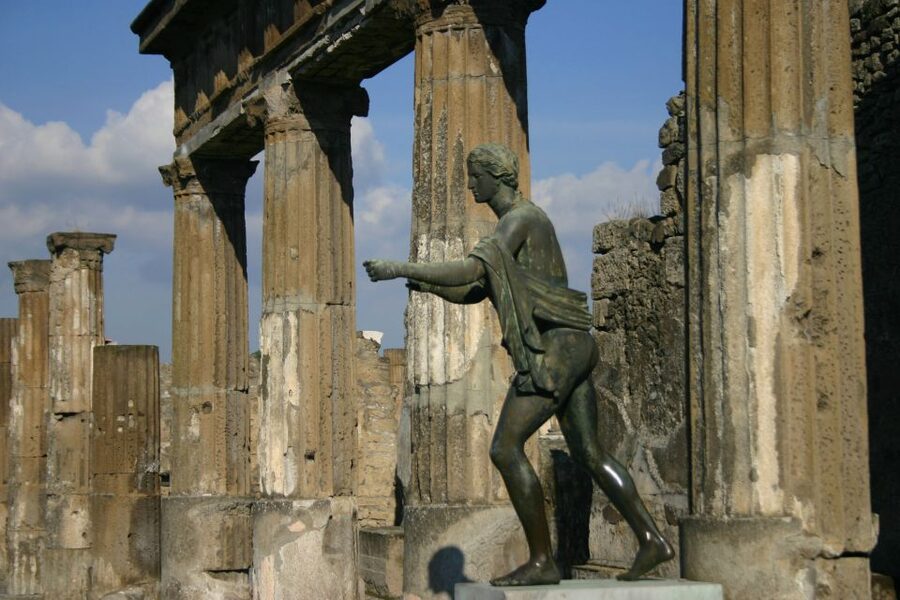
- Forum power center highlights, with major buildings like the Temple of Apollo and Basilica on your route.
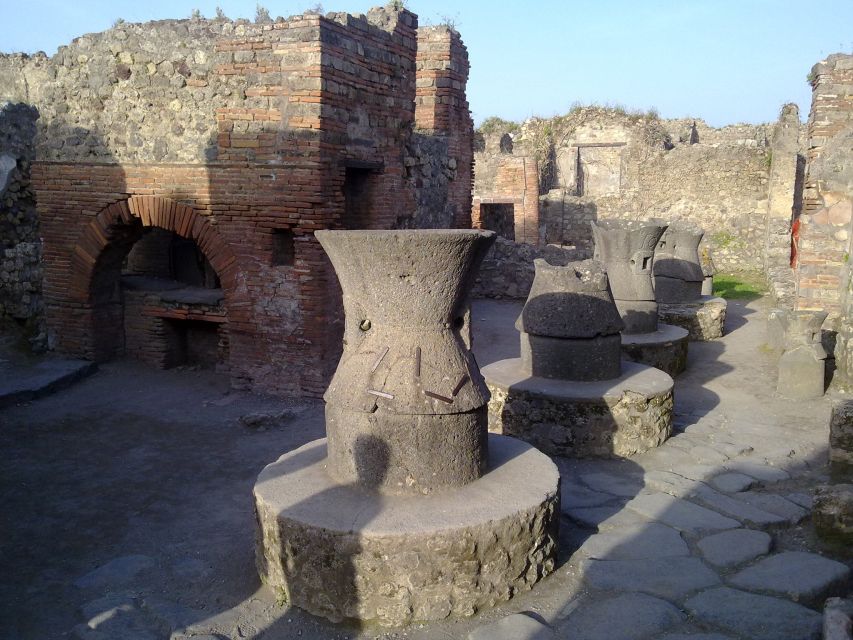
- Everyday Pompeii moments, including bakeries where carbonized bread was found.
- Human casts in their final pose, a sobering stop that helps you understand what 79 AD did.
- Three Pompeii theaters to choose from, depending on what your guide thinks fits your time and interests.
Meeting at Café Hortus Pompeii, then straight into the ruins
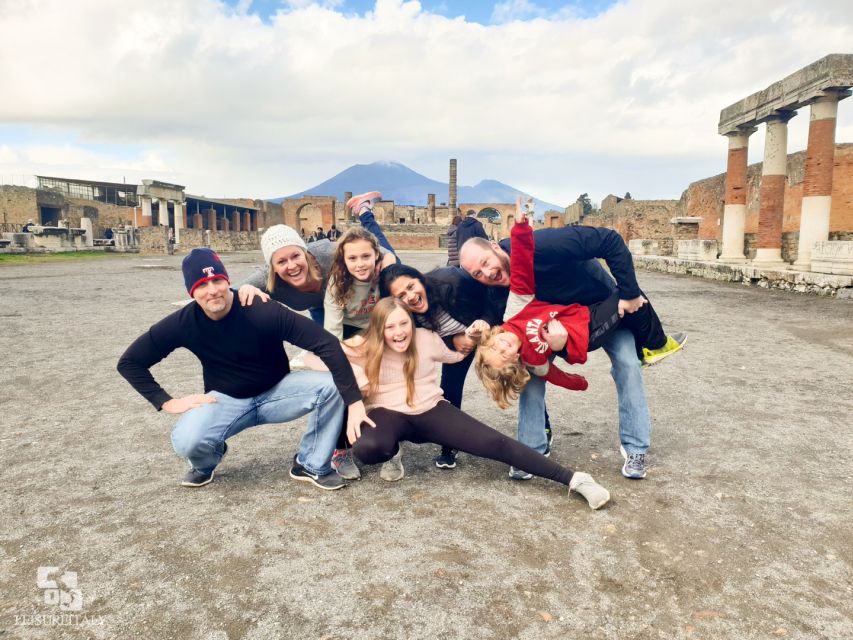
Your tour starts at Café Hortus Pompeii, right in front of the entrance at Via Villa dei Misteri 2, inside Pompeii Archaeological Park. That matters because Pompeii can feel like a maze if you show up cold, and a good start point helps you settle in fast.
You also end back at the meeting point. That keeps the plan clean and reduces the guesswork about how to get out once you’re done.
A smart 2-hour plan that doesn’t feel rushed
This is a 2-hour private walking tour, limited to small group size (up to 10 people). In a place like Pompeii, a short time window can be either frustrating or perfect, depending on whether you have a guide who knows how to prioritize.
The tour is flexible based on your interests and physical ability. The goal is to hit at least one example from each type of building, so you walk away with a sense of the town as a working community, not just a pile of ruins.
Skip-the-line tickets are included, and they’re described as Pompeii Express skip-the-line tickets. In practical terms, that means you can spend your energy inside the site, rather than parked outside waiting to enter.
Basalt streets and torchlight clues on the first walk
One of my favorite parts is the opening stroll along the original basalt road made from volcanic rock. This is the kind of detail you’d miss if you only snapped photos and kept moving.
You’ll look down at hundreds of white travertine spots embedded in the pavement. The idea is that these marks would reflect light from torches, helping illuminate the street at night.
There’s also a practical street feature you can spot, big basalt blocks that pedestrians could use to avoid getting wet when it rained. It’s a small moment, but it connects you to real daily choices, not just the dramatic eruption story.
The Forum route: where religion, trade, and politics met
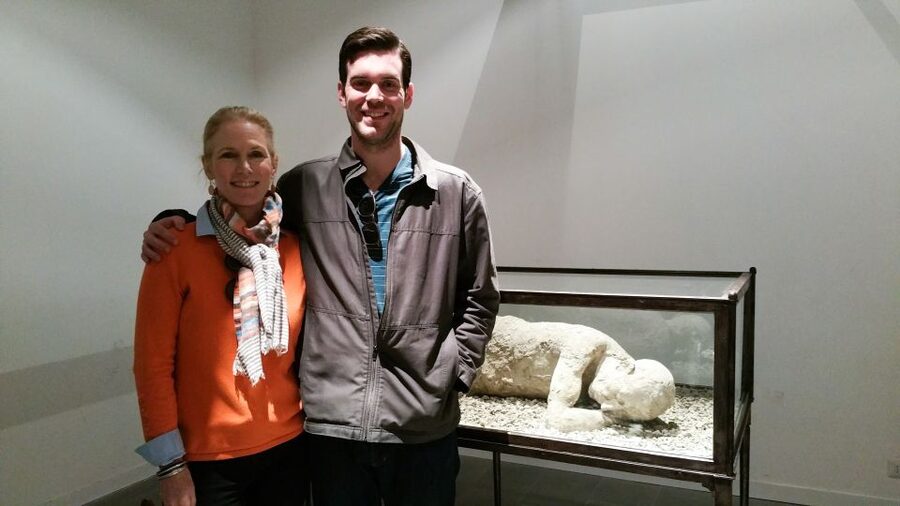
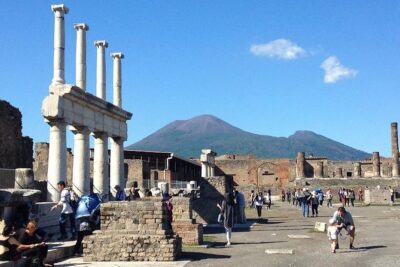
After you get oriented on the street, you’ll focus on Pompeii’s Forum, the city center for religion, trade, administration, and politics. This is where Pompeii stopped being “a place to live” and started functioning like a system.
Your guide shows major buildings you can connect to specific roles:
- Temple of Apollo
- Capitolium
- Temple of the Emperor
- Basilica
You’ll also see the Macellum market, which is the Roman marketplace concept where people shopped and gathered. Even in 79 AD, food and commerce were not separate from power and religion, and the Forum helps you see that link.
The benefit of having a private guide here is pacing. You can linger where your brain wants to, and skip over what feels repetitive. In a 2-hour format, that control makes a difference.
Baths, villas, taverns, and shops: seeing everyday Roman routines
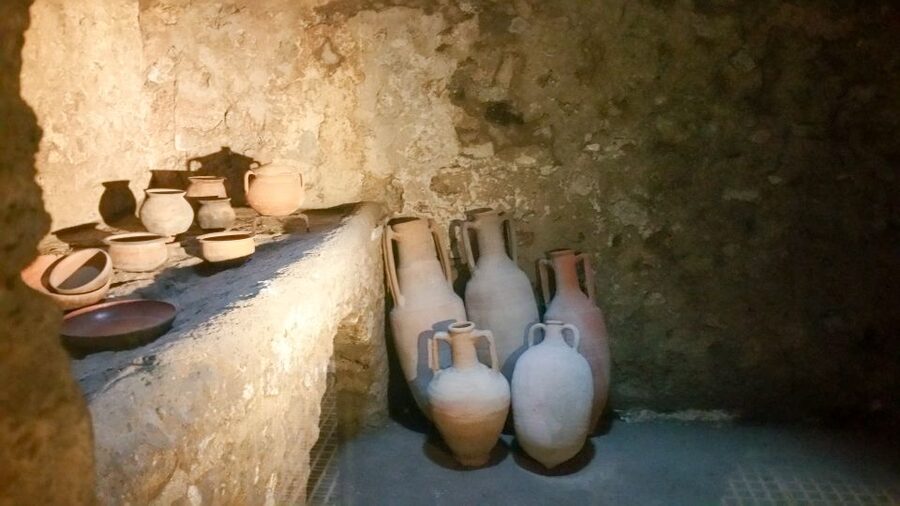
Pompeii wasn’t only temples and grand buildings. The tour includes time for everyday spaces, like public baths, villas, taverns, and shops.
Even if you don’t know Roman terminology, these stops help you picture routine:
- Baths show public hygiene and social life
- Villas hint at domestic comfort and wealth differences
- Taverns and shops connect to daily eating, drinking, and buying goods
- Central public areas show where people spent time beyond work
The tour’s structure aims to include at least one example of each building type. That’s a smart way to use a limited time window. Instead of trying to memorize everything, you walk away with categories that you can later match to what you’ll see on your own.
The Pompeii bakeries stop, the Roman fast-food version
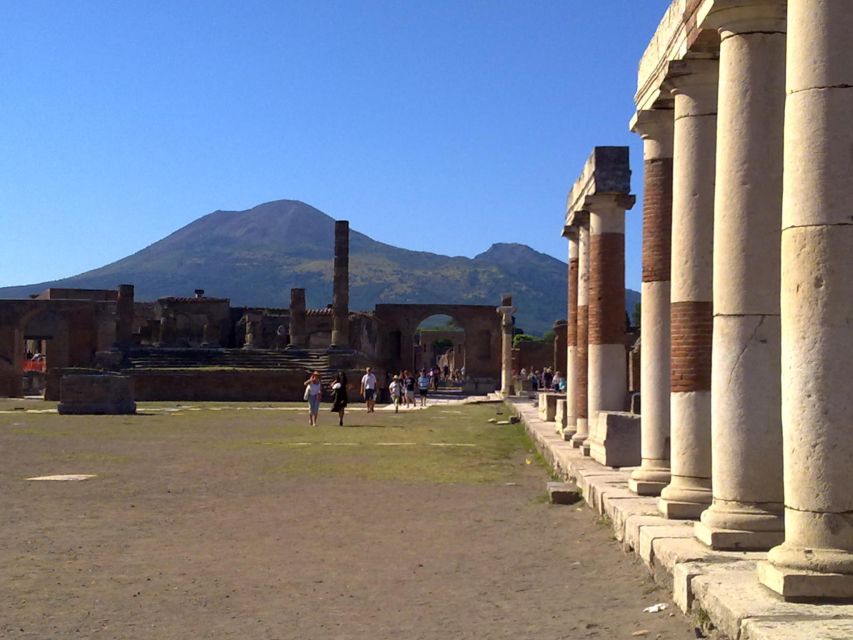
One of the most memorable cultural contrasts is the bakery moment. You’ll go to one of Pompeii’s bakeries and see the Roman equivalent of fast food.
Here’s the key detail: carbonized loaves of bread were found during excavations. That single fact changes the atmosphere of the stop. It’s not just a reconstructed room, it’s proof that people truly used these ovens and ate real food on ordinary days.
If you’ve ever wondered what “street life” looked like in Roman towns, this is the answer you can touch. You see the spaces where bread production happened, and your guide can connect it to the rhythm of the city.
Human casts in their final pose: what to do with the emotion
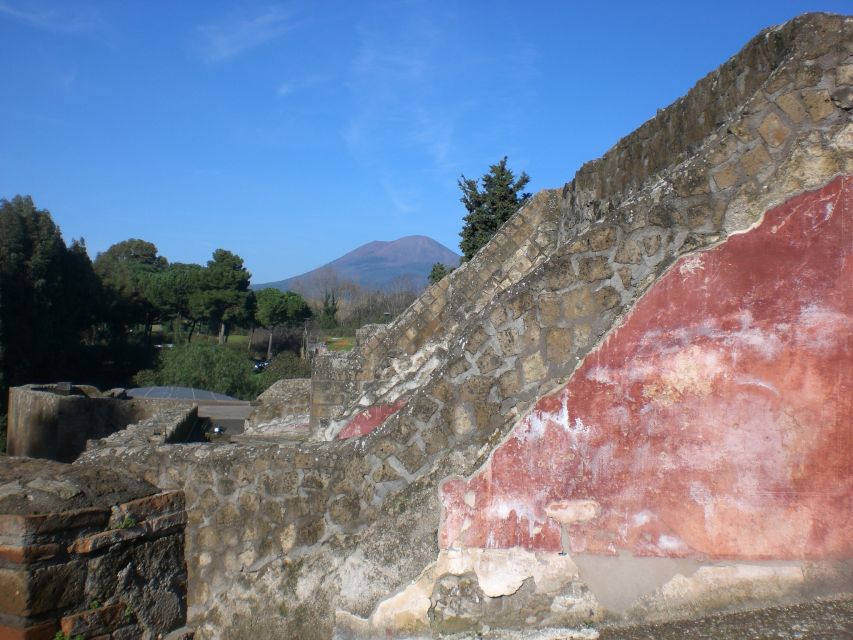
You’ll also see a display of human casts of Pompeii residents. They were caught by the volcano and preserved in the exact pose they died.
This is the kind of stop that deserves a slower pace. I recommend taking a breath before you look closely. The casts are heavy, and it helps to let the moment land before you rush back into more structural details.
The upside of including this stop in a short tour is that it forces context. You don’t just learn about buildings, you understand what catastrophe did to people who were part of normal life.
The former Red Light District and Roman frescoes
Pompeii has a section often described as the former Red Light District, and this tour includes a visit to it to see Roman frescoes with erotic images.
This is not subtle, and your guide will likely frame it in terms of how Roman society communicated through art and public display. If you’re sensitive to explicit imagery, I’d treat this as a “know before you go” stop and decide in advance how you want to handle it.
If you’re comfortable with it, the value here is perspective. These frescoes are not random scandal. They show how everyday spaces could carry messages, humor, or social signals all at once.
Choosing one of three theaters: mime, poetry, tragedy, and comedy
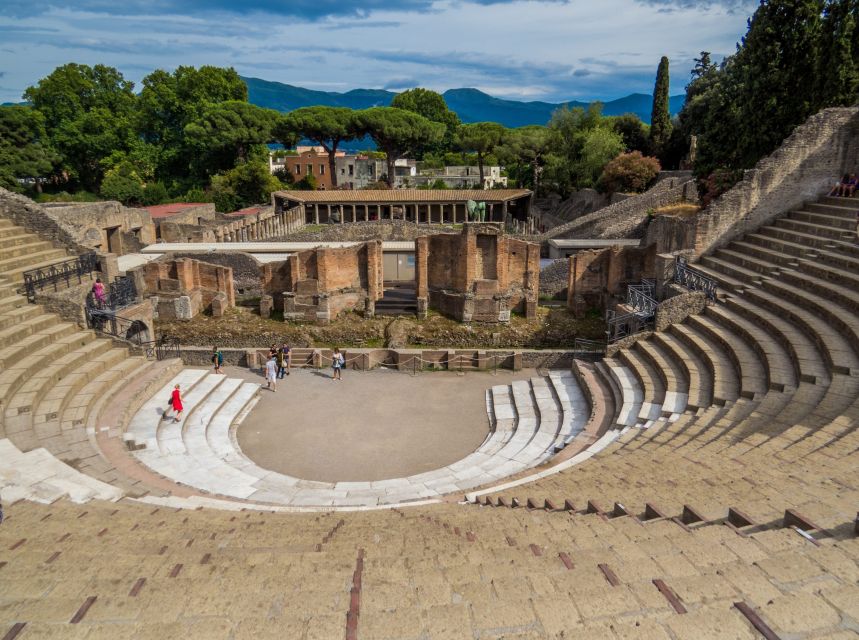
The tour also includes time at one of Pompeii’s three theaters. You’ll see different options depending on what fits the day and your interests.
The theaters on your radar include:
- An outdoor arena for public performances
- An indoor theater for mime and poetry
- An outdoor theater for tragedies and comedies
Why this part works in two hours is simple. Theater is where a city shows off its shared stories. Even if you can’t read the details on stone, you can sense the audience setup and the purpose of gathering.
If you love performance culture, it’s worth asking your guide which theater they’re aiming for and why. The “why” is often where the storytelling lives.
Price and value: what $175.22 buys you
The price listed is $175.22 per person for a 2-hour private tour. That sounds steep until you break down what’s included.
You’re paying for:
- A private guide
- Skip-the-line tickets (Pompeii Express) that allow access to all areas within the city walls
- A focused walk across major Pompeii highlights, not a scattershot route
In Pompeii, time inside matters. If you lose an hour to lines, your experience becomes shorter and more rushed. Paying for skip-the-line access helps protect your schedule and keeps your tour from turning into a waiting game.
Private guiding also changes what you notice. A guide can point out why the basalt road matters, connect building types to daily life, and help you handle the heavier stops like the human casts. That’s hard to replicate on a standard self-guided visit.
Languages, small group size, and how the guide shapes the day
Tours are offered with live guides in Spanish, English, French, and Italian. That means you can get explanations in the language you’ll understand fastest, which matters when you’re moving through fast, complex ruins.
The group is limited to 10 participants, and that keeps the tour from feeling like a production line. You’ll generally have more room to ask questions and have your guide adjust pacing when someone needs a breather or wants to linger.
There’s also evidence of flexibility with physical needs. One note from earlier experiences mentions that when a participant used a wheelchair over slightly longer stretches, the guide adapted and stayed helpful. Still, the activity is listed as not suitable for wheelchair users, so I’d treat that as an example of human flexibility, not a guarantee of access.
Who this Pompeii private walk is best for
This tour is ideal if you want Pompeii to feel understandable in a short time. You’ll like it if you enjoy walking city streets, noticing materials like basalt and travertine, and learning how different building types fit into daily life.
It’s also a good choice for people who want structure without a rigid script. The tour is meant to be tailored to your interests and physical ability, while still covering key Pompeii zones like the Forum, marketplaces, bakeries, theaters, and the red light district fresco area.
I’d be cautious if you have mobility limitations. The tour is listed as not suitable for wheelchair users and not suitable for people with mobility impairments. Pompeii terrain is uneven and hard to navigate.
Should you book this private Pompeii tour?
If your goal is to see the biggest Pompeii highlights in 2 hours, with less waiting and more meaning, I think this is a solid booking. The mix of major public buildings, everyday stops like bakeries, and the human casts stop gives you a rounded picture of Roman town life and the 79 AD event that froze it.
I’d skip it only if you know you will struggle with uneven walking. Otherwise, for the price, you’re buying a focused experience, a guide who can steer you through the right stops, and skip-the-line access that protects your time inside the ruins.
More Tours in Pompeii Archaeological Site
- Pompeii: Archaeological Park Tour with Ticket on request★ 4.5 · 2,283 reviews
- Pompeii Ruins Private Tour with Optional Skip-the-Line Entry★ 4.9 · 732 reviews
- Pompeii: Exclusive Tour with Archaeologist and Entry Tickets★ 4.9 · 634 reviews
- Pompeii: Group Tour with an Archeologist Guide★ 4.4 · 490 reviews
- Pompeii: Skip-the-Line Tickets and Tour with Archaeologist★ 4.9 · 467 reviews
More Tour Reviews in Pompeii Archaeological Site
- Pompeii: Entry Ticket with Optional Audio Guide★ 4.2 · 12,360 reviews
- Pompeii: Archaeological Park Tour with Ticket on request★ 4.5 · 2,283 reviews
- Pompeii Ruins Private Tour with Optional Skip-the-Line Entry★ 4.9 · 732 reviews
- Pompeii: Exclusive Tour with Archaeologist and Entry Tickets★ 4.9 · 634 reviews
- Pompeii: Group Tour with an Archeologist Guide★ 4.4 · 490 reviews
Sorrento to Pompeii, More Ways
- Pompeii Ruins Private Tour with Optional Skip-the-Line Entry★ 4.9 · 732 reviews
More ways into Pompeii Tours from Sorrento.
 ★ 4.8Pompeii: Small-Group Tour of Pompeii and Herculaneum867 reviews
 ★ 4.9Pompeii Ruins Private Tour with Optional Skip-the-Line EntryFrom $254732 reviews
 ★ 4.0Pompeii Ruins Half-Day Tour from Sorrento with GuideFrom $97714 reviews
 ★ 5.0Skip the Line Guided Tour of Pompeii led by an ArchaeologistFrom $95703 reviews
 ★ 4.3Day Tour to Pompeii Ruins and Mount VesuviusFrom $130489 reviews
 ★ 5.0Sharing Tour of PompeiiFrom $193487 reviews
 ★ 5.0Pompeii Tour & Lunch with Wine Tasting ExperienceFrom $120383 reviews
 ★ 5.02 hours Pompeii Tour with Local Historian – Ticket IncludedFrom $48335 reviews
Other useful routes from here