
REVIEW · TICKETS
Pompeii: Guided Tour and Skip-the-Line Ticket
Pompeii comes alive fast with priority access. I like that this tour starts quickly at Porta Marina with skip-the-line entry, then keeps you moving through the places that explain how people actually lived and worked. I also love having a licensed local guide who ties the big sights, like the Forum and the Theater District, to real everyday details. The main drawback to plan for is simple: Pompeii is mostly outdoors, and you will walk quite a bit in sun and heat.
This is a tight, 2 to 2.5 hour experience, which is part of the value. You get a guided route that covers the headline zones without turning your day into a sprint of disconnected stops. You will also hear the story in supported languages like English, Spanish, French, and German, and guides such as Melania, Annarita, and Lucía are specifically called out for keeping things clear and engaging.
For some groups, listening is helped by audio headsets for 8+ people. One more practical thing: meetings can vary by option, with common pickup points like Pompei Parking Zeus, so look for your group signage at the meeting spot.
Key Points at a Glance
- Priority access helps you start fast at Porta Marina instead of waiting at the ticket line
- Licensed local guiding turns stone streets into a clear story of daily life in 79 AD
- Audio headsets improve clarity for groups of 8+
- A smart route hits the Civil Forum, Via dell’Abbondanza, and the Theater District
- Food and daily routine stops include a thermopolium and a pistrinum, plus the Macellum
- Memorial moments include Pompeii’s plaster casts, adding a human side to the ruins
Fast-Track Entry at Porta Marina, Without the Ticket-Line Stress
The best reason to book this Pompeii tour is not just the guide, it is the timing. Priority access means you can meet at the entrance area and begin while other people are still stuck in the slow-moving ticket line. That matters at Pompeii, because the site is large and your best light, cooler shade, and energy tend to come early.
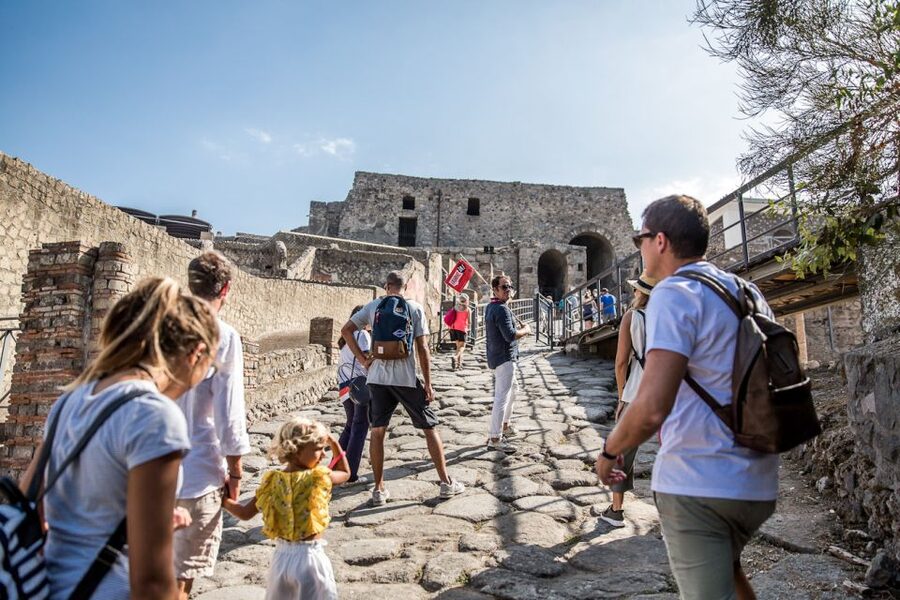
Your visit kicks off at Porta Marina, one of Pompeii’s original gates. From there, the tour moves into the city’s central areas, so you get a framework for what you are seeing, not a random walk through ruins.
One planning note: on the first Sunday of each month, priority entrance may not be available and is determined by crowd levels at the Pompeii ruins ticket office. If you are traveling on that day, give yourself a little extra buffer or keep expectations flexible.
How the Guide Turns Stones Into a Story (and Audio Helps)
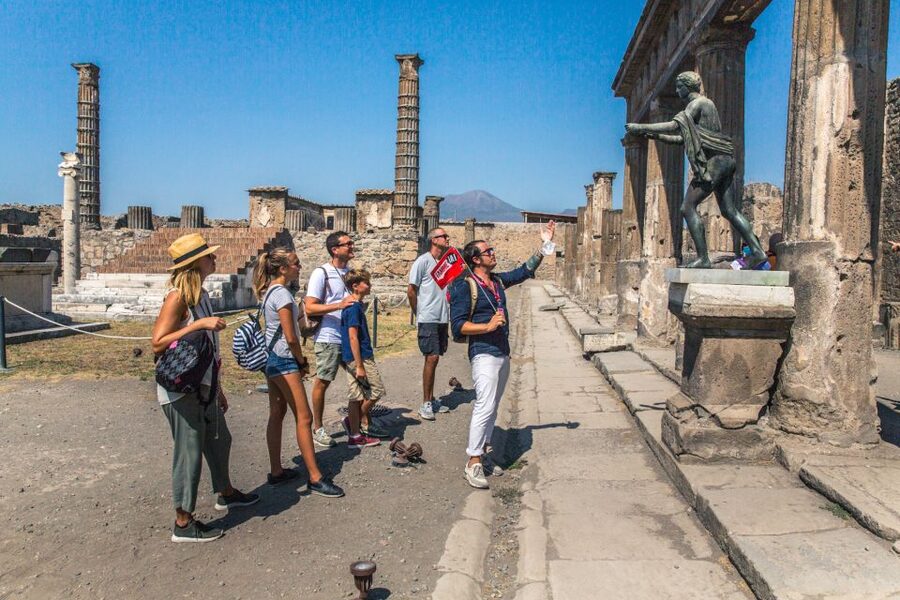
A good guide is the difference between seeing ruins and understanding them. This tour is led by a passionate, licensed local guide, and the format is built for listening while walking. I like that the route is narrated in a way that connects places you might recognize, like the theater, with places you might miss, like bath spaces and street food stops.
If you are in a larger group, audio headsets are included for groups of 8+. That helps you follow along without constantly asking your neighbor what was just said.
Language options are also a practical win. You can join in English, Spanish, French, or German, and the tour may run in multiple languages depending on the group. If you are sensitive to accents, just know that some guides have varied English fluency, so go in ready to focus and ask questions when you can.
Civil Forum and Basilica: Where Pompeii Made Choices
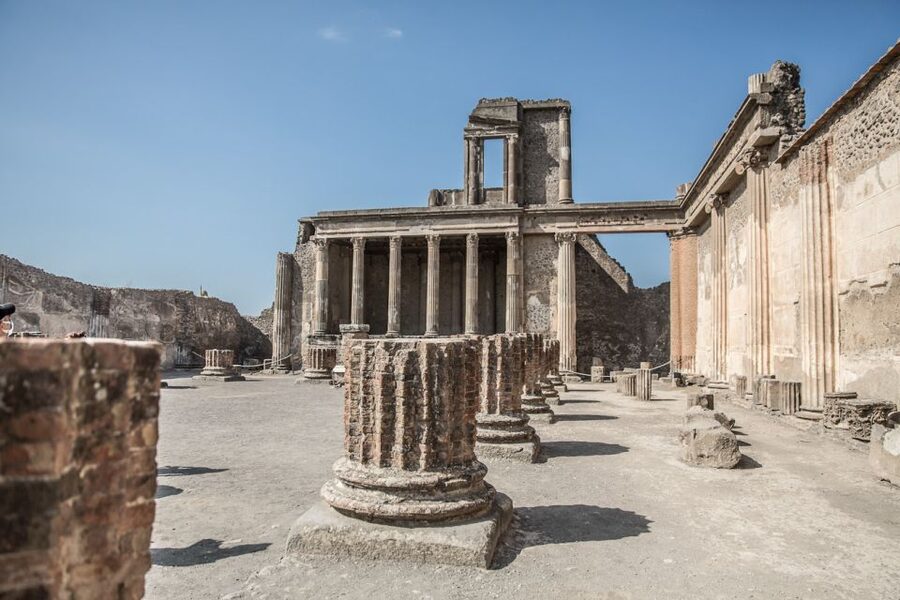
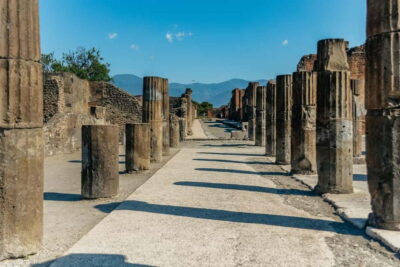
After the gate, the tour heads toward the Civil Forum, described as Pompeii’s political, religious, and commercial center. This is one of the most important stops because it gives you the city’s organization. Once you understand this core, the rest of Pompeii starts clicking into place.
You will see grand public buildings and temples around the Forum. Then you’ll visit the Basilica, a key building used for legal affairs and business dealings. It is a great stop for imagining how people handled work, disputes, and contracts in ordinary Roman life.
As the tour continues, the story keeps returning to Mount Vesuvius, the silent force behind Pompeii’s end in 79 AD. Even though Vesuvius is not exactly part of the architecture, it becomes a mental backdrop for everything you see.
Via dell’Abbondanza and the Theater District: Streets, Grooves, and Stage Life
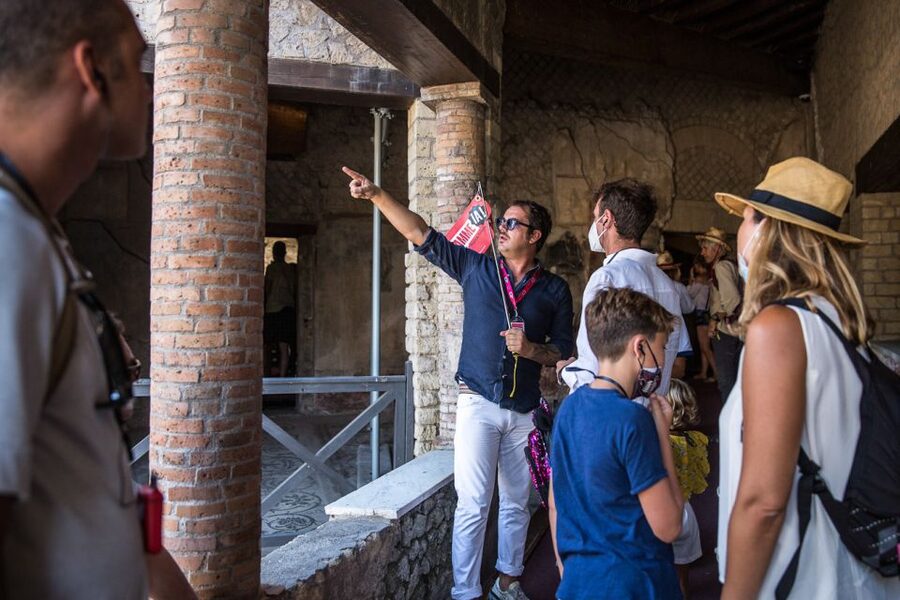
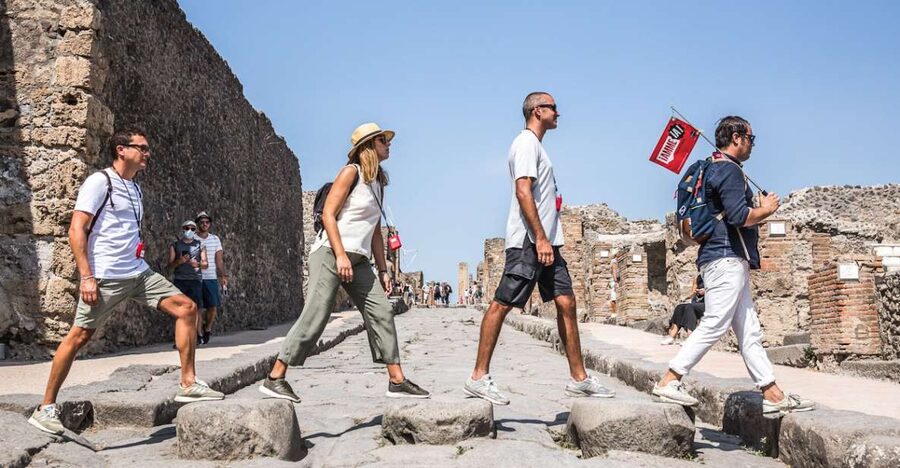
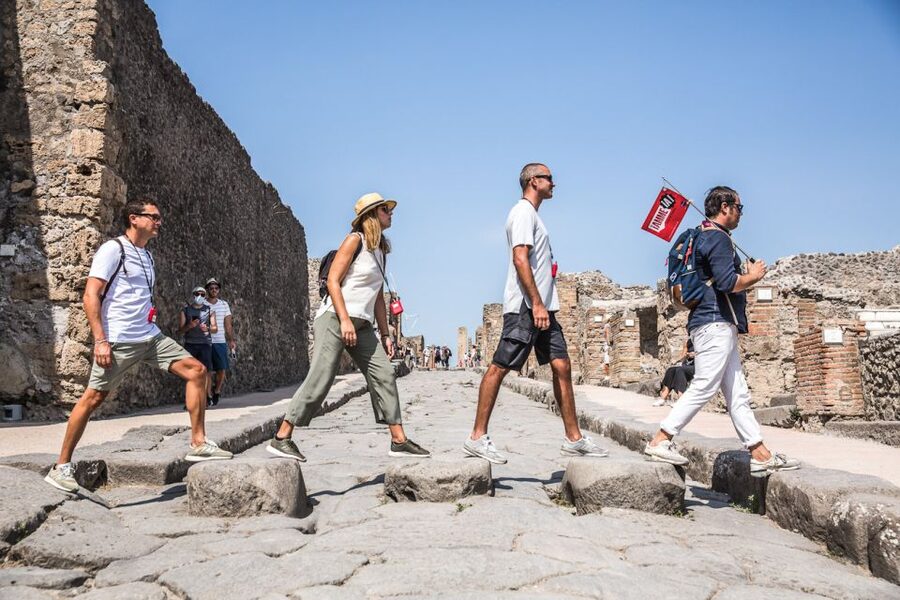
Next comes Via dell’Abbondanza, the main street lined with shops and homes. One of the more fascinating details you will get from a guided walk here is the stone evidence of daily movement, including the chariot grooves etched into the street. These grooves are a reminder that Pompeii was not a staged museum. It was a working city with traffic, deliveries, and constant motion.
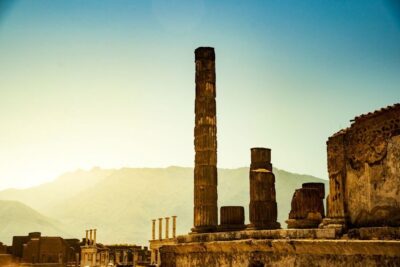
From the main street, you move into the Theater District. Here, the Large Theater is a centerpiece. This is an open-air venue where performances, including comedies, dramas, and music, brought people together.
This stop is worth it because you learn how Romans used public space for culture and social life. Without a guide, it is easy to look at a theater and stop there. With the narration, you get why the setting mattered and what it says about the city’s priorities.
Forum Baths and Roman Wellness: What People Did When They Had Time
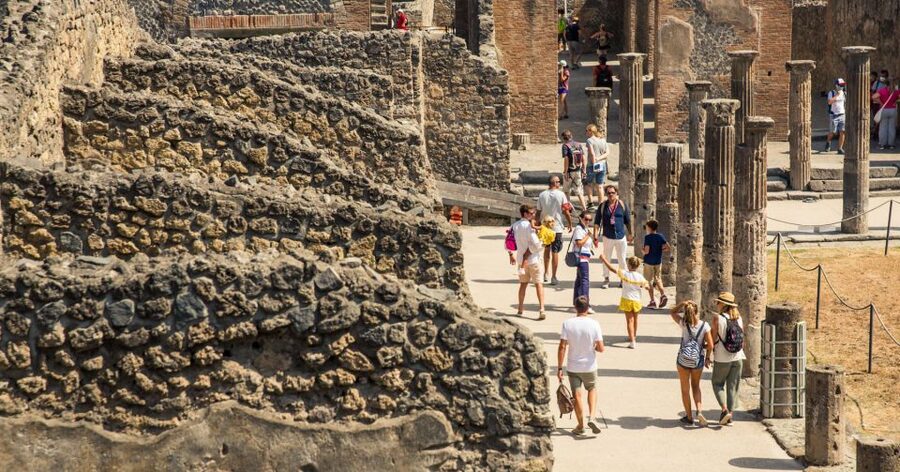
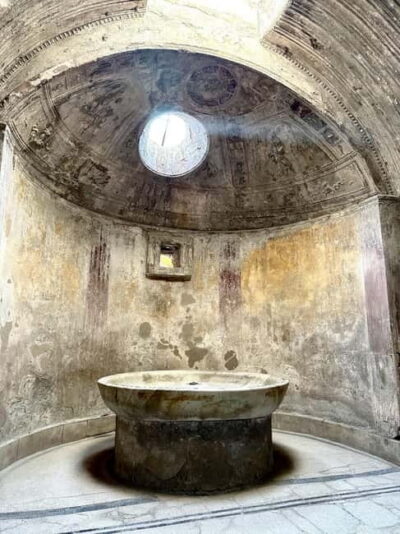
A preserved bath complex, visited as part of the tour, shows Roman relaxation culture in a way you cannot get from a single photo. You will see how bathing was a regular part of social and daily routine, not just a clean-up chore.
The Forum Baths stop works especially well after the busier Forum and street scenes. Your brain gets a breather, and you start noticing the layout and calm rhythms that bathing spaces were built to support.
If it is a hot day, this is also a smart visual pause. Even when the baths are not truly cool, the stone and indoor elements often feel like a tiny reset before the next outdoor stretch.
Thermopolium and Pistrinum: Street Food and Bakery Life You Can Picture
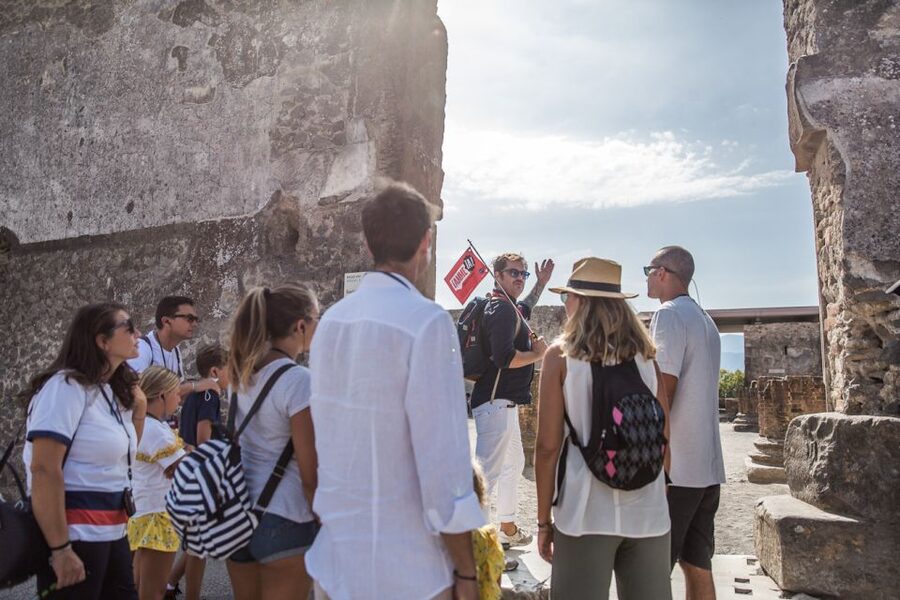
Pompeii is famous for the big public sites, but daily food is where you really start to picture the city as lived-in. The tour includes stops at ancient street food shops, called thermopolium, where you can connect what Romans ate to what you see on the streets.
You will also visit a pistrinum, a bakery with millstones, ovens, and counters. Watching how production likely worked helps you understand the difference between a quick snack and a real bread-making operation.
These stops are practical for your imagination. After you see the machinery and counters, you stop thinking of Pompeii as frozen history and start thinking of it as a place where hot meals and daily errands were part of the rhythm.
Food and beverages are not included on this tour, so if you want snacks, bring them or plan for a meal after. (Pompeii is not the place to trust that you will easily find what you want during your short tour window.)
House of the Faun and the Alexander Mosaic: Wealth, Art, and Status
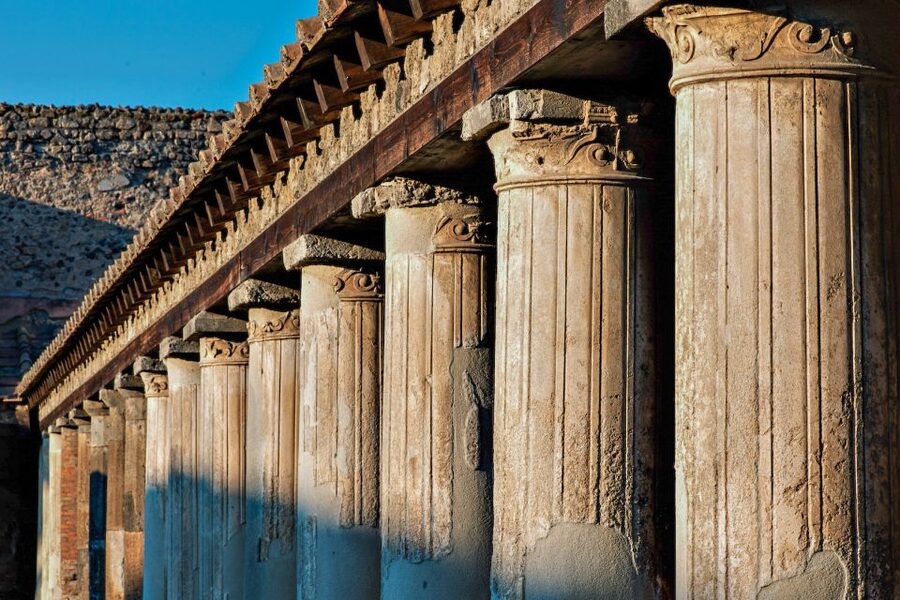
Then you get to one of the biggest wow moments: the House of the Faun. This is presented as an elegant Roman villa known for its mosaics, including the striking Alexander Mosaic.
This stop matters because it gives you a contrast to the street scenes. You see how wealth and power translated into art, layout, and private comfort. It is one thing to walk the public streets. It is another to realize that elite households had their own galleries of meaning, including mosaics used for storytelling and status.
If you only have a short time in Pompeii, the House of the Faun is a smart anchor. It helps you connect the city’s tragedy to its everyday ambition: people invested in beauty even when disaster was on the horizon.
Lupanare, Cast Victims, and the Macellum: The Human Side of Pompeii
This portion of the tour is where emotions can shift quickly. You will visit the Lupanare, an ancient brothel, noted for vivid frescoes and compact stone rooms. It is not the kind of place you enjoy for long, but it is historically important, because it shows a darker, very human side of urban life.
One caution for expectations: with limited time, guides may adjust the pace around long lines or bottlenecks. There is an example of a guide choosing to avoid a lengthy wait at the brothel to protect the rest of the schedule. So if this stop is a top priority for you, aim to be flexible and accept that crowd flow can affect what you see.
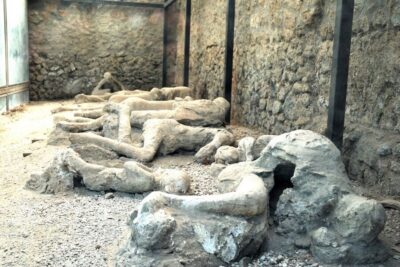
Next comes a powerful moment: the plaster casts of Pompeii’s victims. These casts, featuring men, women, and children frozen in their final moments, are not just dramatic artifacts. They are a reminder that this was a catastrophe that ended real lives, not a neat story on a brochure.
Finally, you return to the Macellum, Pompeii’s food market. This stop helps balance the emotional weight with the bustle of trade, where everyday merchants, buyers, and sellers would have crossed paths. The market setting is often easier to imagine because it connects directly to the food stops you saw earlier.
Timing, Shoes, Sun, and How Much You Can Actually See
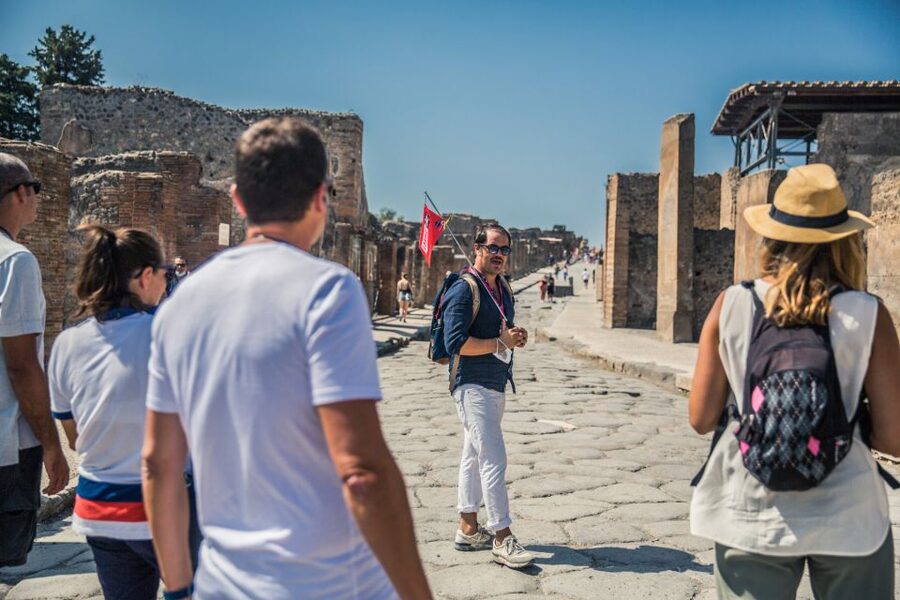
A 2 to 2.5 hour guided route is a sweet spot for many people. It is long enough to cover major anchors like the Forum, theater, a villa, and the market, while still short enough that you will not feel like you got dragged around all day.
Still, be realistic: Pompeii is vast. You will likely want more time after the tour if you want to wander, photograph slowly, or return to a place you loved.
For comfort, plan for real walking and strong sun. Bring comfortable shoes and sunscreen. One practical tip that comes up a lot is carrying an umbrella for shade, because Pompeii can be extremely hot and exposed.
This tour is not suitable for wheelchair users. Also, unaccompanied minors are not allowed, so if you are traveling with children, plan to stay within the tour’s rules and keep everyone together.
Site regulations can also affect group flow. Groups may be divided into smaller parties, each with its own licensed guide. That is normal at Pompeii, and it is often how the tour protects access and pacing.
Price and Value at About $43 for Priority Access
At $43 per person, you are paying for three things that add up quickly: a licensed guide, priority access that can save significant time, and a structured route that covers the best-known and most educational areas.
If you go on your own, you can still do Pompeii, but you will be spending more time figuring out where to go and what you are looking at. With this tour, the guide does the heavy lifting, especially for understanding the Forum, Basilica, and the daily-life spaces like the thermopolium and pistrinum.
Keep in mind what is not included. Food and beverages are not part of the tour. Transportation to and from Pompeii is also listed as not included.
One more planning point: the overall day plan is described as stress-free with round-trip transfers and hydrofoil tickets in the highlights. Since transportation is also listed as not included, it is smart to double-check what you are actually buying versus what is just part of the typical scheduling for people combining activities.
Should You Book This Guided Pompeii Tour?
Book it if you want Pompeii to make sense fast. This is a strong choice for first-timers, families who want a clear route, and anyone who prefers a planned visit over wandering with no context. The priority entry plus expert storytelling is especially worth it if you are on a tight schedule and do not want to lose your morning to ticket lines.
Skip it or consider a different format if you need step-free access, want to spend half a day roaming slowly, or are very sensitive to crowds and heat exposure. Also, if you are traveling on a first Sunday of the month, remember priority entrance can be affected by crowd conditions at the ticket office.
FAQ
FAQ
How long is the Pompeii guided tour?
It runs about 2 to 2.5 hours, so you can fit it into a busy day.
Where do I meet the guide?
The meeting point may vary depending on the option you book, with common options including Porta Marina or Pompei Parking Zeus.
Does this tour include skip-the-line access?
Yes. Priority Access to the Pompeii Archaeological Site is included, helping you avoid the ticket line.
What languages are available?
The live tour guide is available in English, Spanish, French, and German.
Are audio headsets provided?
Audio headsets are included for groups of 8+.
Is the tour wheelchair accessible?
No. This tour is not suitable for wheelchair users.
Is it okay to bring unaccompanied minors?
No. Unaccompanied minors are not allowed.
What should I bring for the tour?
Wear comfortable shoes and bring sunscreen.
Can I cancel if plans change?
Free cancellation is available up to 24 hours in advance for a full refund.
Choose the Right Entry
- Pompeii: Entry Ticket and Guided Tour with an Archaeologist★ 4.8 · 19,459 reviews
- Pompeii: Skip-the-Line Entrance Ticket with Audio Guide★ 4.0 · 2,509 reviews
- Pompeii: Skip-the-line-Ticket and Guided Tour★ 4.6 · 1,152 reviews
- Pompeii: Skip-the-Line Entry Ticket with Digital Guide App★ 4.1 · 770 reviews
- Pompeii: Afternoon to Sunset Guided Tour with Ticket★ 4.9 · 484 reviews
More Tours in Pompei Campania
- Pompeii: Entry Ticket and Guided Tour with an Archaeologist★ 4.8 · 19,459 reviews
- Pompeii: Small Group Tour with an Archaeologist★ 4.8 · 12,264 reviews
- Pompeii: Skip-the-line-Ticket and Guided Tour★ 4.6 · 1,152 reviews
- Pompeii: Small-Group Tour of Pompeii and Herculaneum★ 4.8 · 867 reviews
- Pompeii: Guided Tour with Skip-the-Line Entry★ 4.9 · 812 reviews
More Tour Reviews in Pompei Campania
- Pompeii: Entry Ticket and Guided Tour with an Archaeologist★ 4.8 · 19,459 reviews
- Pompeii: Small Group Tour with an Archaeologist★ 4.8 · 12,264 reviews
- Pompeii: Skip-the-Line Entrance Ticket with Audio Guide★ 4.0 · 2,509 reviews
- Naples: Pompeii and Mt. Vesuvius with Lunch and Wine Tasting★ 4.5 · 2,454 reviews
- Pompeii: Skip-the-line-Ticket and Guided Tour★ 4.6 · 1,152 reviews
More ways into Tickets.
 ★ 4.8Pompeii: Entry Ticket and Guided Tour with an ArchaeologistFrom $3519,459 reviews
 ★ 4.2Pompeii: Entry Ticket with Optional Audio GuideFrom $2612,360 reviews
 ★ 4.0Pompeii: Skip-the-Line Entrance Ticket with Audio GuideFrom $392,509 reviews
 ★ 4.5Pompeii: Archaeological Park Tour with Ticket on requestFrom $312,283 reviews
 ★ 4.6Pompeii: Skip-the-line-Ticket and Guided TourFrom $641,152 reviews
 ★ 4.1Pompeii: Skip-the-Line Entry Ticket with Digital Guide AppFrom $22770 reviews
 ★ 5.0Pompeii Ticket + Tour with Optional Tasting Experience at PompeiiFrom $35663 reviews
 ★ 4.9Pompeii: Exclusive Tour with Archaeologist and Entry TicketsFrom $50634 reviews
Other useful routes from here