

REVIEW · AUDIO TOURS
Pompei: Audio guide of the archeological site
Pompeii sounds different with the right narration. This Pompeii audio guide gives you about 50 minutes of spoken storytelling as you walk the preserved streets, and the link works with offline access so you can keep listening without hunting for signal.
I also like the included map, because it helps you keep moving in a sensible order instead of wandering randomly. The other big win is the tone, built around historical authenticity, with clear explanations of daily life, architecture, and Pompeii’s tragic end. One drawback to plan for, earphones are not included, and you still need your own entrance ticket for the archaeological site.
Key things I’d bet on before you go

- 50 minutes of guided narration that you can start, pause, and replay at your pace
- Offline audio access, useful when Wi-Fi is spotty inside the ruins
- A map to follow the route, which is the difference between enjoying Pompeii and just scraping by
- Story chapters that connect markets, villas, temples, bathhouses, and household frescoes
- Mixed ratings overall, with some people praising it and at least one comment calling it misguided
How the Pompeii audio guide fits real walking time

This is not a bus tour. It is a self-guided Pompeii experience built around an audio track from Echo Audioguides. You get the digital file plus a map, photo, and documentation, and you receive a link to the audio file for unlimited access, even offline.
The listing says 50 minutes of listening, but the “duration” is valid for 2 days. I like that setup, because Pompeii is too big to learn all at once. You can do a first pass through the main themes, then come back on day two for a shorter round and re-listen where you felt rushed.
The host or greeter language options are Italian and English, so you should be able to choose the narration track that matches how you want to absorb the city. And because there is no group you must match, you can slow down when something grabs you, like a wall painting fragment or the outline of a room.
The streets and markets: why the narration helps you read ruins
When you arrive, Pompeii can feel like a maze of stones. That is exactly where a good audio guide pays off. The guide is designed to walk you through how a Roman city functioned, with attention to day-to-day life and how spaces were used.
You’ll get sections focused on markets and the street-level rhythm of the city. The benefit here is not just facts. It’s context. Instead of staring at columns and floor stones wondering what you are looking at, you learn what a place likely served, where people gathered, and why the layout mattered.
Practically, I’d use this listening style early in your visit. Start with the chapters that explain daily life and city architecture, then use your map to keep your movement logical. The included map is a big deal. One of the most repeated positives is that it helps you follow a path, which is exactly what you want in Pompeii.
Possible drawback: if you prefer totally free-form wandering with no structure, a map and suggested order can feel a bit controlling. But for most people, it prevents the common mistake of walking in circles.
Villas and temples: turning architecture into a story you can remember
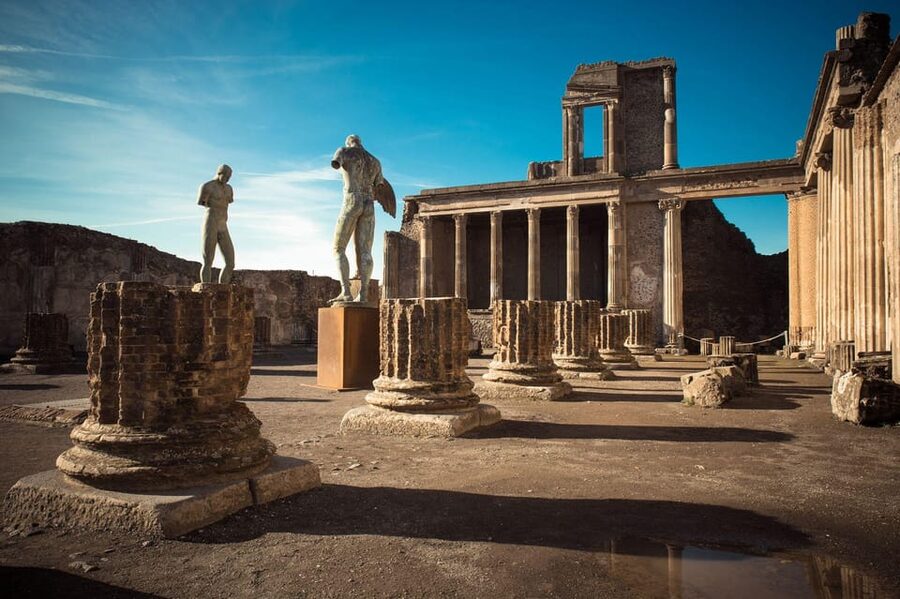
Pompeii’s best moments often come when your brain stops treating the site like a museum and starts treating it like a town. This audio guide tries to give you that mental shift.
The guide includes narration tied to villas and temples. That matters because Pompeii is full of “almost complete” buildings. You can see shapes, doorways, courtyard outlines, and decorative clues, but without interpretation it is easy to miss the meaning. The guide helps you connect those visible elements to how people lived and how religious life worked.
Here’s how I’d use this part of the experience. When you pause at a domestic space, listen for what the guide says about how rooms related to daily routines. When you pause near a religious structure, listen for the civic and spiritual function. The goal is to stop thinking only about what survived, and start thinking about how people used it.
This is where historical authenticity shows up in the way the narration frames the ruins. Not every audio guide can do that without sounding like a Wikipedia reading. The good sign here is that the guide includes clear historical insights rather than only poetic descriptions.
Bathhouses and household frescoes: the small details you’ll actually notice
If you want your visit to feel personal, focus on the intimate evidence. Pompeii is famous for the big structures, but it is also made memorable by the small traces: the places where people washed, ate, met, and decorated their homes.
This guide highlights bathhouses and intimate household frescoes. Those two themes are gold because they give you concrete scenes to imagine. A bathhouse is about routine and public life. A fresco is about taste, status, and everyday decoration. Put together, they help you build a more complete picture of the city, not just its ruins.
A practical tip: plan to listen more slowly during these chapters. You cannot properly “read” a fresco if you are walking fast. Even if the painting fragments are small, the guide’s commentary can direct your attention to the right surfaces and the right kinds of details.
Value angle: these are also the spots where a basic self-guided visit often fails. Without help, you may spend time looking at walls without knowing why it matters. With the audio narration, the same stones become a scene.
Pompeii’s tragic fate: getting the ending right without losing the middle
Pompeii’s story has a hard edge, and the ending matters. The guide covers Pompeii’s tragic fate, helping you understand why the city was preserved and what that preservation means for what you see today.
The best part of this approach is that it doesn’t force you to only think about disaster. You hear about daily life, public spaces, and domestic decoration first. Then, as you get closer to the final chapters, the tragedy lands with more weight because you already know what was lost.
I also like that the narration focuses on the “mysteries” and the broader meaning of what happened, without requiring you to be an expert. You walk away with a stronger sense of cause and effect, even if you are starting from scratch.
If you only have a single day, don’t try to listen to everything at once. Use the tragic fate segment as your emotional checkpoint, then decide if you want to retrace your steps on day two.
Price and value: is $5 a good deal?
At $5 per person, this is one of those “small cost, big payoff” choices, mainly because Pompeii is a place where information improves what you already paid to see.
A lot of the value is in the format. You get a self-guided audio file link for unlimited access with offline support. That means you can re-listen after you walk past something, and you are not paying again for a second attempt at understanding.
To be fair, there are costs the guide does not cover. Entrance tickets are not included, and earphones are not included. But those are normal missing pieces for any audio format. I’d think of this as paying for interpretation, not paying for admission or equipment.
Mixed ratings suggest you should be realistic about expectations. A self-guided experience depends on your own ability to follow the route and use the map. If you hate structure or you expect a guide in-person, you may feel let down. If you enjoy controlling your own pace, the price looks even better.
Practical game plan: how to use the map and audio without getting lost
You’ll get the map plus digital materials like photos and documentation. That is great, because Pompeii rewards people who pause long enough to look, not just sprint.
Here’s the simple routine I’d follow:
- Start your audio with the opening chapters so you understand what you’re looking at
- Use the map to connect your pauses to a logical route
- When you hit villas, temples, bathhouses, or fresco areas, slow down and match your listening to what you can see
- Save your “ending” listening for later, after you’ve built the city in your head
What to bring matters. Since earphones aren’t included, pack your own. Also assume you will run into weak connectivity in outdoor ruins, which is exactly why offline access is a smart feature.
Another practical point: the guide is valid for 2 days. If you only have one full day, plan for one main circuit. If you have two days, do a shorter first listen, then a more detailed second pass where you felt you missed details.
Languages and host support: Italian or English
The host or greeter provides Italian and English. That likely means you can get the audio in the language you prefer, which is more important than it sounds. Pompeii’s terminology is full of words that can blur together if your language skills are stretched.
If you choose English, you’ll get the explanations clearly enough to connect architecture and daily life. If you choose Italian, you may absorb more nuance faster, especially if you’re already comfortable with the language.
In either case, you are not relying on a person to translate mid-walk. You rely on the audio file and the map. That’s a good fit for independent travelers and anyone who doesn’t want to stick to a strict schedule.
Who this Pompeii audio guide is best for
I think this is a strong option if you want flexibility and you like learning at your own speed. It works well for:
- History fans who enjoy structured explanations but do not want a group pace
- Travelers who want to take Pompeii in slowly, with time to stop and look
- People who plan to visit over two days and want a tool they can replay
It may feel less satisfying if you expect a live guide pointing out details on the spot, because this experience is designed around a digital file and self-navigation.
Also note the overall rating is 3.4 out of 5 across 13 reviews, with most comments describing the experience as useful and at least one negative comment saying it was misguided. That doesn’t mean it is bad. It means you should adopt the right mindset: use the map, follow the suggested route, and expect an audio format, not a staff-led tour.
FAQ
FAQ
How long is the Pompeii audio guide?
The guide is described as about 50 minutes of audio narration, and it is valid for 2 days of access.
What do I receive with the Pompeii audio guide?
You receive a map, a digital audio file link, photo materials, and documentation.
Is the entrance ticket to Pompeii included?
No. Entrance tickets to the archaeological site are not included.
Do I need to bring earphones?
Yes. Earphones are not included, so you’ll want to bring your own.
Which languages are available?
The experience is available in Italian and English.
Can I cancel and get a refund?
You can cancel up to 24 hours in advance for a full refund, if your plans change.
Should you book this Pompeii audio guide?
If you want a low-cost, flexible way to understand what you are seeing, I’d say yes. At $5, the combination of 50 minutes of narration, a map to follow the route, and offline access is exactly what turns Pompeii from random ruins into a city with people behind it.
But go in with the right expectations. You still need an entrance ticket, you need your own earphones, and you are responsible for using the map and following the order. If you prefer a live, on-the-ground guide, this won’t replace that feeling.
If you are the kind of person who likes to stop, look closely, and listen while you walk, this is a practical way to get more meaning out of your Pompeii time.
More Self-Guided Tours in Pompei Campania
- Pompeii: Skip-the-Line Entrance Ticket with Audio Guide★ 4.0 · 2,509 reviews
- Pompeii: Skip-the-Line Entry Ticket with Digital Guide App★ 4.1 · 770 reviews
- Pompeii: Skip-the-Line Ticket with Audio Guide and Map★ 4.0 · 117 reviews
- From Naples: Vesuvius & Pompeii with Transfer & Audio Guide★ 4.0 · 58 reviews
- Pompeii & Herculaneum: Skip-the-line & Digital Guide App★ 4.0 · 35 reviews
With a Local Guide
- Pompeii: Entry Ticket and Guided Tour with an Archaeologist★ 4.8 · 19,459 reviews
- Pompeii: Skip-the-Line Entrance Ticket with Audio Guide★ 4.0 · 2,509 reviews
- Pompeii: Skip-the-line-Ticket and Guided Tour★ 4.6 · 1,152 reviews
- Pompeii: Guided Tour with Skip-the-Line Entry★ 4.9 · 812 reviews
- Pompeii: Skip-the-Line Entry Ticket with Digital Guide App★ 4.1 · 770 reviews
More Tour Reviews in Pompei Campania
- Pompeii: Entry Ticket and Guided Tour with an Archaeologist★ 4.8 · 19,459 reviews
- Pompeii: Small Group Tour with an Archaeologist★ 4.8 · 12,264 reviews
- Pompeii: Skip-the-Line Entrance Ticket with Audio Guide★ 4.0 · 2,509 reviews
- Naples: Pompeii and Mt. Vesuvius with Lunch and Wine Tasting★ 4.5 · 2,454 reviews
- Pompeii: Skip-the-line-Ticket and Guided Tour★ 4.6 · 1,152 reviews
More ways into Audio Tours.
 ★ 4.2Pompeii: Entry Ticket with Optional Audio GuideFrom $2612,360 reviews
 ★ 4.0Pompeii: Skip-the-Line Entrance Ticket with Audio GuideFrom $392,509 reviews
 ★ 4.1Ercolano: Herculaneum Entry Ticket with Optional Audio GuideFrom $21581 reviews
 ★ 4.0Ercolano: Herculaneum Skip-the-Line Ticket & Audio GuideFrom $35275 reviews
 ★ 4.0Pompeii: Skip-the-Line Ticket with Audio Guide and MapFrom $44117 reviews
 ★ 3.8Herculaneum Archaeological Park smart Audio TourFrom $470 reviews
 ★ 4.0From Naples: Vesuvius & Pompeii with Transfer & Audio GuideFrom $10858 reviews
★ 4.0Pompeii: Skip-the-Line Ticket with Audio Guide and MapFrom $4414 reviews
★ 4.0From Naples: Vesuvius & Pompeii with Transfer & Audio GuideFrom $10858 reviews
★ 4.0Pompeii: Skip-the-Line Ticket with Audio Guide and MapFrom $4414 reviews
Other useful routes from here