

REVIEW · AUDIO TOURS
Pompeii: Skip-the-Line Ticket with Audio Guide and Map
Pompeii feels bigger than it looks on a map. This skip-the-line ticket plus audio guide helps you move through 66 hectares of Roman ruins with less confusion, and more time actually looking. I especially like the at-your-own-pace approach, because Pompeii rewards slow wandering. The one real catch to plan around is the sheer walking and heat, plus the fact that it is not suitable for mobility impairments.
Two things I like a lot: the audio guide is easy to use, and you get an updated map to help you string together a route without guessing. Many people also find the on-site information limited, so having the audio running in your ear makes the difference between seeing ruins and understanding them. A possible drawback is that the map can be a little tricky, and some items may not line up neatly with what the audio mentions.
If you go in expecting a relaxed, self-guided day, this Pompeii ticket is a strong fit. You’ll focus on the big sights, from frescoed domus to the victims’ casts and a well-preserved amphitheater, without being locked into someone else’s pace.
Key points before you go
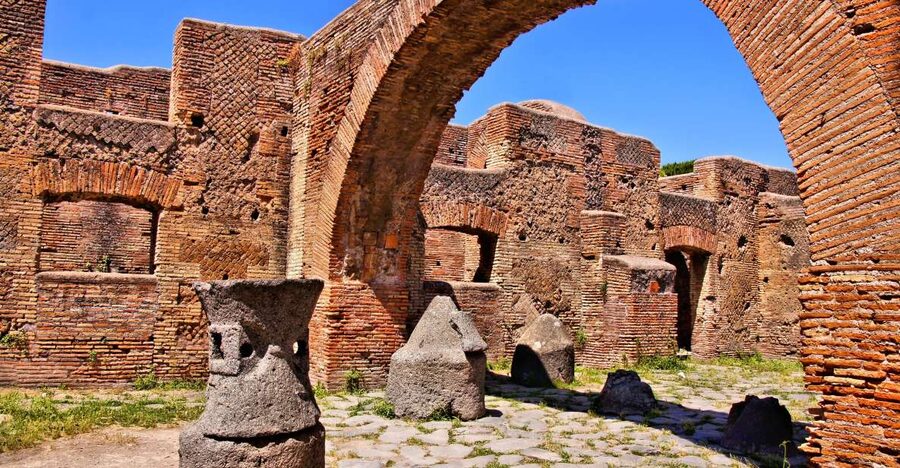
- Skip-the-line entry to help you start sooner
- Audio guide in multiple languages so you can pick your comfort level
- Updated map included to keep your route from turning into guesswork
- Self-guided pacing means you can spend more time on what grabs you
- Plan for warm weather and lots of walking, bring water and comfy shoes
- No large bags or luggage allowed, so travel light
Pompeii Without the Rush, How the Skip Ticket Helps

Pompeii is one of those places where the biggest challenge is not seeing enough, it’s trying to see everything before your feet quit. With a skip-the-line ticket, you are aiming to remove the worst part of the morning bottleneck. That matters because the site is huge, about 66 hectares, and you will burn time just moving between areas.
I like how this setup keeps the day simple. You do not need to match someone else’s stride, and you can shift your plan as you go. If you arrive and realize you want extra time near the theater or the amphitheater, you can do it. If you want to linger in a house with frescoes, you can.
One practical consideration: even with skip access, mornings can still be busy for certain categories of tickets. The takeaway is not to panic, just to build in a little margin, especially if you are traveling with kids.
The Audio Guide and Map: Your On-Site Decoder Ring
The audio guide is the heart of this experience. It is included, and it covers the major highlights you came for, from daily life details to the tragic eruption context. You can listen in English, Chinese, French, Italian, German, Hebrew, Russian, Spanish, and Portuguese, depending on what is available for your selection.
You also get an updated map, which you will use constantly. Pompeii’s streets can make you feel like you are walking in circles, especially when walls look similar and signage is not always crystal clear. The map is there to help you connect the dots, but it is worth knowing that it can be a bit complicated. Some people found certain map items not clearly reflected in the audio, so you may end up bouncing between map and audio a little.
My advice: treat the audio guide and map as partners, not as one perfect system. Use the map for direction and the audio to tell you what you are looking at. If something on the audio does not match your map exactly, follow the general area cues, then adjust.
Where You’ll Spend Your Time: Frescoed Houses and Street Life
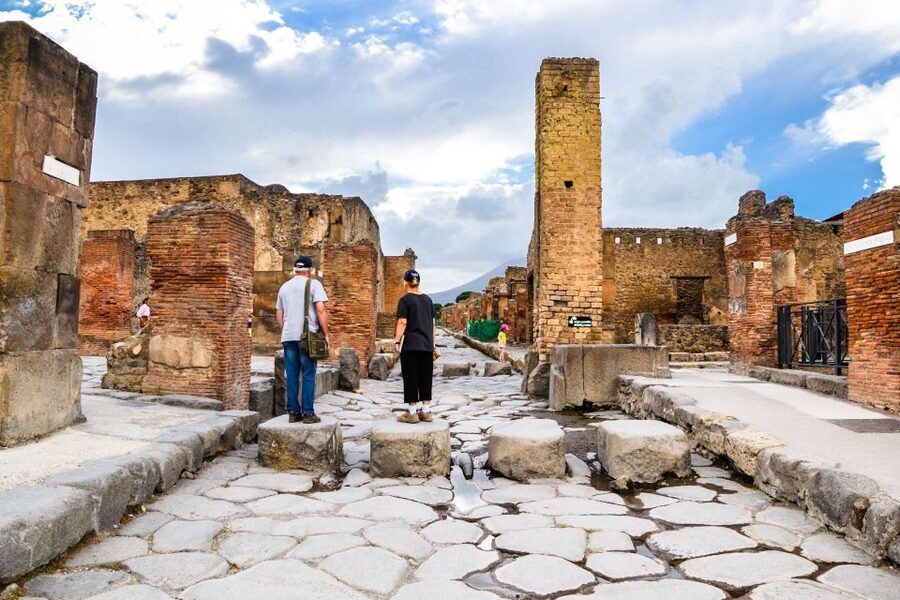
Pompeii was a real city, not a museum display. That shows up fast once you start walking the millenary streets and stepping into the rhythm of Roman daily life.
You’ll want time for the frescoed houses (domus). These homes are not just pretty facades, they give you a sense of how people decorated their lives, how rooms were organized, and what the city prioritized. Frescoes are often the first thing people photograph, but the audio helps you notice the details that are easy to miss when you are moving too quickly.
Then there are the shops and street spaces. Think of this as a place that lets you slow down and imagine errands, trades, and conversations. The audio guide is useful here because on-site explanations can be limited, and without context, you might breeze past features that actually tell you a lot about how Pompeii worked.
Baths, Temples, and the Everyday Rituals of Roman Pompeii
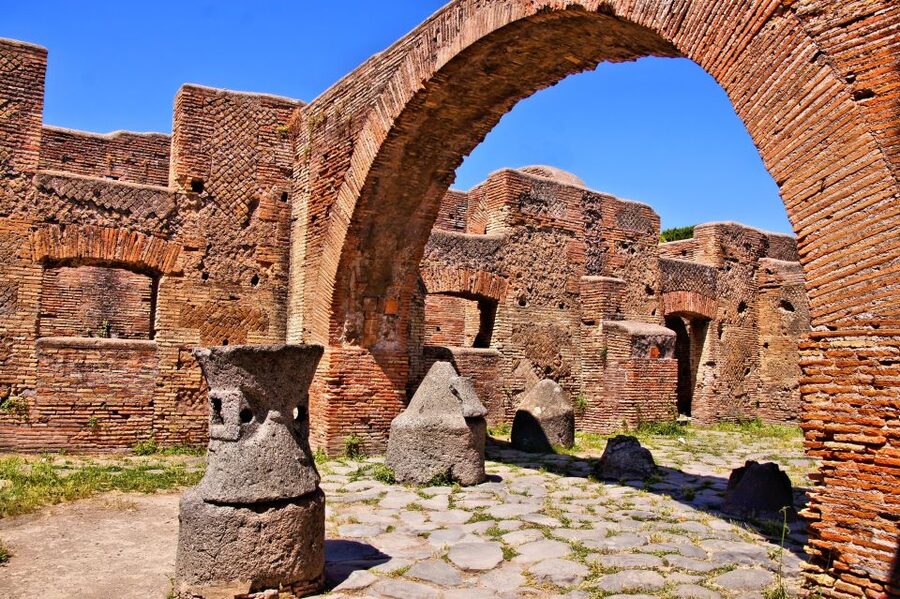
Pompeii isn’t only about houses. You also get the big communal spaces that made the city feel alive.
Look for the spas and temples. The spas are a window into how Romans handled hygiene, social time, and recovery. The temples help you understand the spiritual and civic gravity that shaped public life. Even if you are not a Roman history expert, the audio guide format makes it easier to connect what you see with why it mattered.
This is one of the advantages of a self-guided ticket with audio. You can pause when something clicks, like the function of a bathing area, or you can move on when you want to save your attention for the more dramatic parts, like the amphitheater and the victims’ casts.
Thermopolis, Theaters, and Brothels: Food, Entertainment, and Reality
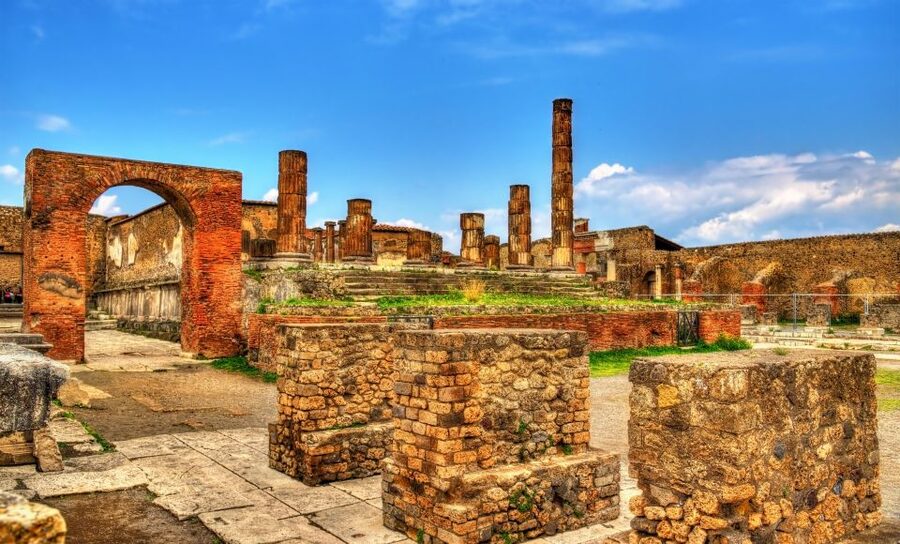
One reason Pompeii keeps pulling visitors back is that it does not try to sanitize the past. It shows Roman life in both practical and uncomfortable ways.
You can explore thermopolies, which were essentially the fast-food spots of the time. If the idea of grabbing a quick meal sounds familiar, that is the point. You are seeing how people ate, drank, and socialized without the modern restaurant experience you might expect. The audio guide helps you interpret those spaces so they feel like living commerce, not just a building outline.
Next up, make time for the theaters. Entertainment in Pompeii was public, and the structure gives you a sense of crowds and noise. After that, you can also visit brothels, which is not everyone’s favorite topic, but it is part of what made the city work. The audio guide provides context so you are not just staring at old rooms, you are understanding what they were for.
This is also where your pacing matters most. If you try to do everything in one sprint, you will miss the meaning. If you spread it out, the city starts to feel like a place where people truly lived.
The Victims’ Casts: When the Story Gets Real
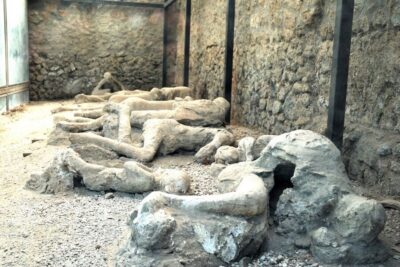
No matter what route you take, you should plan time for the casts of the victims. This section hits harder than most ruins because it transforms the story from abstract disaster into individual tragedy.
It is not just emotional, it is also educational. The audio guide frames what you are seeing in a way that helps the site make sense. You’ll likely want a slower pause here, because the details benefit from taking your time.
I recommend not cramming this stop right before you head to the amphitheater. Give yourself a breather, and then when you step into the amphitheater zone, it will land with more contrast.
Pompeii’s Amphitheater: A Roman Stage Still in Your Head
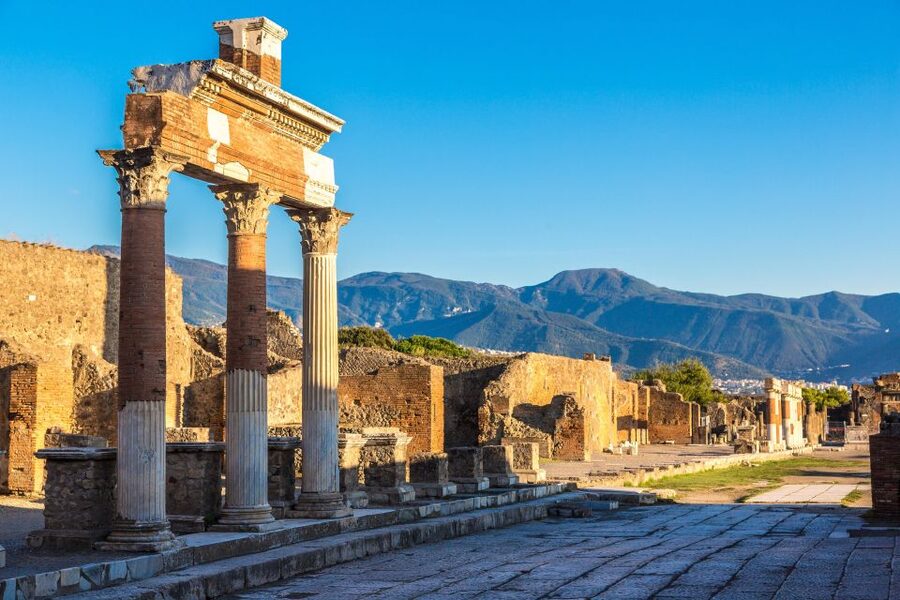
Pompeii includes one of the best-preserved Roman amphitheaters, and it is a strong end point for the day. Even if you do not catch every structural detail, the shape and scale are enough to give you the feeling of what public events meant here.
If you like architecture and crowd geometry, you will probably linger. If you prefer atmosphere, this is still worth it because you can imagine the acoustics and seating arrangement from where you stand. The audio guide helps you connect the amphitheater to the larger theme of entertainment and public life you already saw with the theater.
A nice strategy: do the amphitheater after your more intense stops like the victims’ casts. It feels less like information overload and more like a wrap-up of what the city was built for.
Timing Your Route: How to Build a Calm, Personal Day
This ticket is designed for self-guided exploration. That means you choose the rhythm. Some people built their own day from morning into late afternoon, like a 10:00 to 17:00 window, and felt it worked well for seeing the highlights without rushing every room.
Here is a simple way to think about it:
- Start with the “must-sees” you care about most, like domus with frescoes or the amphitheater.
- Add one or two categories of “Roman life” per section, like baths plus temples, or shops plus thermopolies.
- Leave the victims’ casts for a time when you are alert and not overly tired.
Because Pompeii gets warm and the site is large, your best friend is a flexible plan. If you feel your energy dropping, cut one stop and save your time for the places you already know you want to see.
Practical Stuff That Makes or Breaks the Day
This kind of Pompeii ticket sounds easy, and it is. But the comfort details matter.
Bring comfortable shoes, because you will be walking a lot. Add water and a hat for sun protection, plus sunscreen. One review noted that it can be warm and that finding food can be difficult, so do not count on a convenient meal right when you need it.
Also remember the luggage rule: no luggage or large bags are allowed. Traveling light is not just a hassle reducer, it also saves you from stress at the entrance.
And since it is not suitable for people with mobility impairments, plan alternatives if you need accessibility support. Pompeii’s terrain and walking demands are a real factor, not a minor inconvenience.
Price and Value: What $44 Gets You Here
At around $44 per person, you are paying for three big components: entrance, the audio guide, and the updated map. You are not paying for a private guide, so the value depends on whether you like independent exploration.
If you are the kind of person who likes to wander, this is good value. The audio guide gives you context without telling you where to stand every minute, and the skip-the-line feature helps you avoid the time sink that can derail a full-day visit.
If you want a high-touch, interactive guide who handles everything, this might feel too self-directed. But for many visitors, the combination of skip access plus audio plus map hits the sweet spot for control, comfort, and cost.
Who This Pompeii Ticket Fits Best
This experience is ideal for:
- People who want Pompeii at their own pace and prefer learning through audio
- Visitors who like building a route based on interests, not just walking behind someone
- Travelers who want the highlights covered, from domus and baths to theaters, brothels, casts, and the amphitheater
It may be less ideal if:
- You need mobility-friendly access, since it is not suitable for mobility impairments
- You dislike map-based navigation, because the included map may feel a bit complicated at times
- You want guaranteed perfect alignment between audio topics and map pinpointing, since a few people noticed mismatch issues
Should You Book This Pompeii Audio Ticket?
I would book it if your goal is simple: see Pompeii’s top sights with context, without locking into a strict tour schedule. The skip-the-line element helps your day start better, and the audio guide plus updated map gives you a practical learning path as you walk.
You should also book it if you want to control the pace. Pompeii rewards time, and this format lets you spend it where you care most, whether that is the frescoed houses, the daily-life corners like thermopolies and shops, or the emotional weight of the victims’ casts.
If you are sensitive to heat, go early and bring water. If you are traveling with kids, plan for some possible queueing moments even when skip access is in play.
FAQ
What is included in the Pompeii skip-the-line ticket?
It includes the Pompeii entrance ticket, an audio guide, and an updated map.
Does the ticket include food and drinks?
No. Food and drinks are not included.
How long is the ticket valid?
It is valid for 1 day. You can check availability to see starting times.
What languages are available for the audio guide?
The audio guide is available in English, Chinese, French, Italian, German, Hebrew, Russian, Spanish, and Portuguese.
What languages are available for the host or greeter?
The host or greeter languages include English, Spanish, French, and Italian.
Is luggage or large baggage allowed?
No. Luggage or large bags are not allowed.
What should I bring for a comfortable visit?
Bring comfortable shoes, a hat, sunscreen, and water.
Is this activity suitable for people with mobility impairments?
No, it is not suitable for people with mobility impairments.
With a Local Guide
- Pompeii: Entry Ticket and Guided Tour with an Archaeologist★ 4.8 · 19,459 reviews
- Pompeii: Skip-the-Line Entrance Ticket with Audio Guide★ 4.0 · 2,509 reviews
- Pompeii: Skip-the-line-Ticket and Guided Tour★ 4.6 · 1,152 reviews
- Pompeii: Guided Tour with Skip-the-Line Entry★ 4.9 · 812 reviews
- Pompeii: Skip-the-Line Entry Ticket with Digital Guide App★ 4.1 · 770 reviews
Choose the Right Entry
- Pompeii: Entry Ticket and Guided Tour with an Archaeologist★ 4.8 · 19,459 reviews
- Pompeii: Skip-the-Line Entrance Ticket with Audio Guide★ 4.0 · 2,509 reviews
- Pompeii: Skip-the-line-Ticket and Guided Tour★ 4.6 · 1,152 reviews
- Pompeii: Skip-the-Line Entry Ticket with Digital Guide App★ 4.1 · 770 reviews
- Pompeii: Afternoon to Sunset Guided Tour with Ticket★ 4.9 · 484 reviews
More Tour Reviews in Pompei Campania
- Pompeii: Entry Ticket and Guided Tour with an Archaeologist★ 4.8 · 19,459 reviews
- Pompeii: Small Group Tour with an Archaeologist★ 4.8 · 12,264 reviews
- Pompeii: Skip-the-Line Entrance Ticket with Audio Guide★ 4.0 · 2,509 reviews
- Naples: Pompeii and Mt. Vesuvius with Lunch and Wine Tasting★ 4.5 · 2,454 reviews
- Pompeii: Skip-the-line-Ticket and Guided Tour★ 4.6 · 1,152 reviews
More ways into Audio Tours.
 ★ 4.2Pompeii: Entry Ticket with Optional Audio GuideFrom $2612,360 reviews
 ★ 4.0Pompeii: Skip-the-Line Entrance Ticket with Audio GuideFrom $392,509 reviews
 ★ 4.1Ercolano: Herculaneum Entry Ticket with Optional Audio GuideFrom $21581 reviews
 ★ 4.0Ercolano: Herculaneum Skip-the-Line Ticket & Audio GuideFrom $35275 reviews
 ★ 4.0Pompeii: Skip-the-Line Ticket with Audio Guide and MapFrom $44117 reviews
 ★ 3.8Herculaneum Archaeological Park smart Audio TourFrom $470 reviews
 ★ 4.0From Naples: Vesuvius & Pompeii with Transfer & Audio GuideFrom $10858 reviews
 ★ 3.4Pompei: Audio guide of the archeological siteFrom $513 reviews
Other useful routes from here