
REVIEW · POMPEII ARCHAEOLOGIST TOURS
2 Hours Private Walking Tour in Pompeii with an Archaeologist
Pompeii feels personal with an archaeologist. This private 2-hour walk through a UNESCO site is built for clear answers on Roman daily life and you get a licensed archaeology guide. One catch: the Pompeii entrance fee is not included (currently €20 per person), and the tour needs good weather to run.
I like that the pacing stays realistic. You focus on the big public areas and then shift into the private side, like the thermopolium and homes, so the city stops feeling like random stone. The main consideration is that it is a walking tour, so if you tire easily, you’ll want to plan your energy.
You start at Piazza Esedra and you end right back at the meeting point, and it’s offered in English with a mobile ticket. It’s also priced for a group, up to 8 people, so families and small friend groups can make it feel like good value.
Key Highlights You Should Know
- Private group up to 8 for a more personal pace and questions.
- Licensed archaeologist guide with a degree in archaeology.
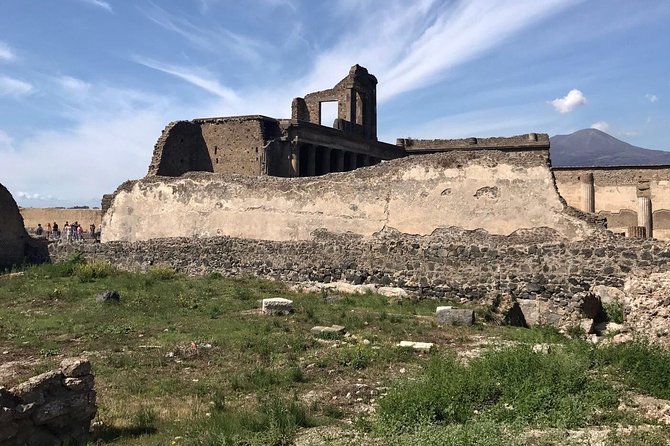
- Public Pompeii made clear with theatres, thermal baths, the Forum, and the Sacred Area.
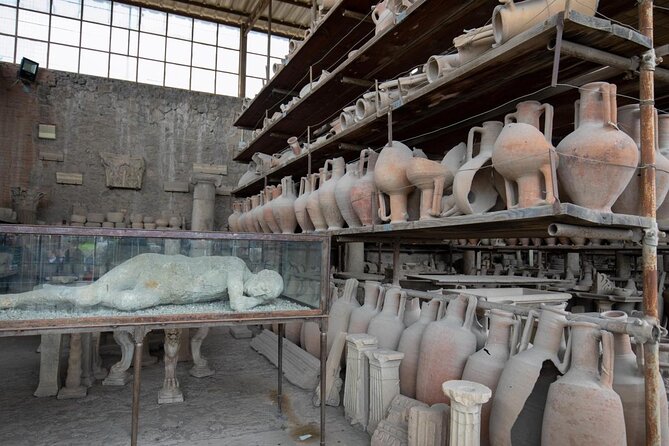
- Roman everyday life in context through a thermopolium, bakery, fabric market, and houses.
- Hidden and lesser-seen areas outside the busiest tourist routes.
- Two tour-time options so you can fit it into your day without stress.
Why This 2-Hour Pompeii Walk Works
Pompeii is huge, and most people try to cram too much in. This tour keeps it tight, about 2 hours, so you spend time understanding what you’re seeing instead of marching past it.
You also get a smart mix of spaces. Pompeii’s ruins can feel like they’re all the same until someone explains the difference between public life, private life, and workaday commerce.
The trade-off is obvious: you cannot cover everything in 2 hours. Instead, you’re choosing the most important areas, plus some lesser-known corners, to build a solid mental picture fast.
The Archaeologist Guide: What You Gain Beyond a Regular Walk
This isn’t just a local storyteller. Your guide is licensed and has a degree in archaeology, which matters in a place like Pompeii where the details can get technical fast.
A degree does not mean you’ll get complicated lecture-style history. It means the guide can point out what likely happened where, and why certain buildings tell clearer stories than others.
One name that stands out from the experience feedback is Yana, praised for being amazing and for matching the tour to what people came for. That matters because Pompeii rewards curiosity. If you like asking questions about daily life, this format is built for that back-and-forth.
Pompeii’s Public Side: Theatres, Thermal Baths, Forum, Sacred Area
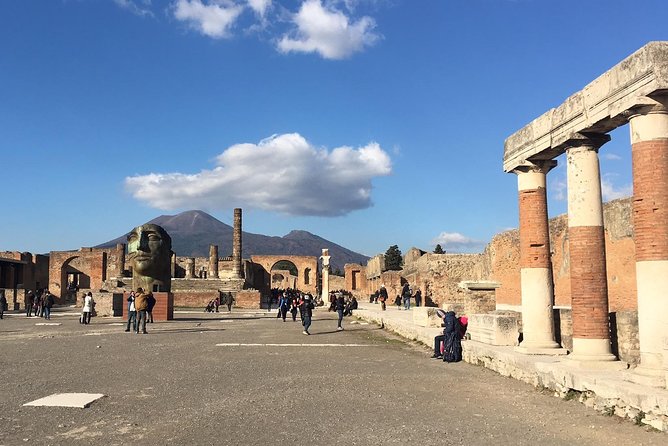
The tour keeps the public buildings grouped in a way that makes sense. You’ll see and understand theatres, thermal baths, the Forum (the main square), and the Sacred Area.
Here’s why that lineup is powerful. The public spaces show how Romans used community buildings to socialize, conduct business, and follow shared routines.
- Theatres help you imagine performances as a normal part of life, not a special event.
- Thermal baths give context for how people spent time together, not just how the water worked.
- The Forum is the social and civic center, so you can connect daily chatter to real decisions.
- Sacred Area points to how religion and public identity were intertwined.
The big advantage is clarity. Even if you’ve read about Pompeii before, a good archaeologist guide can help you see patterns and connections, instead of treating each ruin like an isolated photo stop.
The Food and Trade Story: Thermopolium, Bakery, Fabric Market
This is the part I really like because it moves Pompeii from monuments to routines.
You’ll visit a thermopolium, a Roman “fast food” place, plus a bakery and a fabric market, and you’ll see how those spaces connect to everyday spending. It’s a practical way to understand a city that ran on regular commerce, not just grand gatherings.
Why these stops work well in a 2-hour private tour is simple. They’re concrete. You can picture someone grabbing food, trading goods, and going about their day.
These buildings also help you spot how Roman commerce differed from what many visitors expect. Instead of only thinking about wealthy homes and temples, you get a slice of the working city.
Private Spaces and Homes: Houses and What They Suggest
After the public sites and work areas, the tour shifts into private buildings, including houses.
That shift is crucial. Pompeii can look like a museum if you only focus on the street-level public scene. By seeing houses, you start learning how households lived with family routines, privacy, and different expectations than what you see in the Forum.
Even when the interiors are partly ruined, the guide’s job is to help you interpret what you’re seeing. Houses are where you understand the difference between how Romans lived and how they showed themselves in public.
If you’re the kind of traveler who likes the human scale, this is your sweet spot. You’ll leave with a more grounded sense of daily life rather than just dramatic architecture.
Hidden and Off-Route Corners Without the Chaos
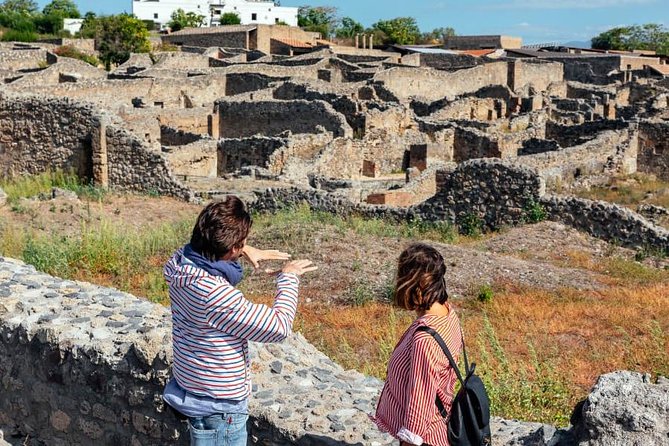
Not everyone wants a big, loud “see everything” tour. This one promises hidden and secret areas out of the tourist routes, while still keeping the experience organized.
That matters because Pompeii’s main lanes can get crowded and fast. When you’re pulled slightly away from the biggest flows, you can actually pay attention to small details and spatial relationships.
Also, the tour is private, so you’re not stuck with the group pace that makes you rush your photos or your questions. You keep your bearings, and the guide decides when it’s worth pausing.
Timing and Tour Times: Fit It Into Your Day
You get options for tour times, which helps a lot in a place like Pompeii. A flexible start means you’re less likely to end up with a plan that clashes with meal breaks, transit, or the heat.
On the practical side, the experience is commonly booked about 7 days in advance on average. If you have a specific time window that matters to you, that’s your cue to lock it earlier rather than later.
The tour also requires good weather. If conditions are poor, you’ll either be offered a different date or a full refund. So if your Pompeii day is on the edge of forecast uncertainty, keep that in mind.
Price and Logistics: How the Entrance Fee Changes the Math
The base price is $336.43 per group, up to 8 people, for about 2 hours.
That group pricing is the key value driver here. If you go as just two people, you’re paying $336.43 for the group share, then each person also pays the entrance fee at the site.
If you spread it across a fuller group:
- With 8 people, the guide cost is about $42 per person before entrance.
- With 4 people, it’s about $84 per person before entrance.
Then add the Pompeii Archaeological Park entrance fee, listed at €20 per person, which is not included in the tour price.
So, when is it worth it? It’s worth it when:
- you want an archaeologist-led explanation, not just guided wandering,
- you’re traveling with others and can share the group cost,
- you care about understanding daily life through both public buildings and everyday commerce.
If you’re traveling solo and you only want a basic overview, you might feel the cost more. If you want interpretation and structure, private helps a lot.
Where You Meet at Piazza Esedra, and How the Tour Ends
You meet at Piazza Esedra, 10/13, 80045 Pompei NA, Italy.
The tour ends back at the meeting point. That’s helpful if you’re planning onward travel, grabbing a snack afterward, or returning to your hotel area without having to figure out a new pickup location.
It’s also noted as near public transportation, which matters in a busy region. Pair that with the private group format and you keep the day smooth.
You’ll use a mobile ticket, and the tour is offered in English.
Who This Pompeii Archaeologist Tour Fits Best
This works especially well if you fall into one of these categories.
If you want a focused Pompeii experience, the 2-hour format keeps you from burning the whole day. If you’re the kind of person who loves understanding how people actually lived, the mix of theatres, baths, Forum spaces, sacred areas, and everyday commercial life (thermopolium, bakery, fabric market) hits the mark.
It also suits small groups. Private tours priced per group tend to become great value once you have enough people to spread the cost.
Good to know for planning: it’s described as suitable for most travelers, and service animals are allowed.
Should You Book This Private Pompeii Tour?
Book it if you want Pompeii to feel like daily life, not a checklist. The real edge is the archaeologist guide with formal training, paired with a route that covers both public spaces and private, workaday settings like a thermopolium, bakery, and fabric market.
Skip it only if you want a super-long Pompeii day, or you’re extremely budget sensitive, because the entrance fee is extra and you still need good weather for the tour to run.
If you can handle some walking and you’d rather understand what you see, this is a strong choice.
FAQ
How much does the private Pompeii walking tour cost?
It costs $336.43 per group, for up to 8 people.
How long is the Pompeii tour?
The tour lasts about 2 hours.
Is this tour private, and how big is the group?
Yes. It is a private tour, and only your group participates, up to 8 people.
What is included in the price?
A licensed guide with a degree in archaeology is included.
Is the entrance fee to Pompeii included?
No. The entrance fee to the Pompeii Archaeological Park is €20 per person.
What language is the tour offered in, and will I get a ticket?
The tour is offered in English, and you receive a mobile ticket.
Where do we meet for the tour?
The meeting point is Piazza Esedra, 10/13, 80045 Pompei NA, Italy.
What areas of Pompeii will we see?
You visit Pompeii Archaeological Park areas including theatres, thermal baths, the Forum, the Sacred Area, plus private buildings such as a thermopolium, bakery, fabric market, and houses.
What happens if the weather is bad or I need to cancel?
The experience is non-refundable and cannot be changed. If it is canceled due to poor weather, you will be offered a different date or a full refund.
More Tours in Pompeii
- Pompeii Small Group Tour with an Archaeologist★ 5.0 · 6,593 reviews
- Pompeii and Herculaneum Small Group Tour with an Archaeologist★ 5.0 · 1,350 reviews
- Skip the Line Guided Tour of Pompeii led by an Archaeologist★ 5.0 · 703 reviews
- Pompeii Ticket + Tour with Optional Tasting Experience at Pompeii★ 5.0 · 663 reviews
- Pompeii private tour with an Official Guide★ 5.0 · 631 reviews
More Tour Reviews in Pompeii
- Pompeii Small Group Tour with an Archaeologist★ 5.0 · 6,593 reviews
- Discover the Ancient Ruins of Pompeii: Day Trip from Rome★ 3.5 · 2,247 reviews
- Pompeii and Herculaneum Small Group Tour with an Archaeologist★ 5.0 · 1,350 reviews
- Skip the Line Guided Tour of Pompeii led by an Archaeologist★ 5.0 · 703 reviews
- Pompeii Ticket + Tour with Optional Tasting Experience at Pompeii★ 5.0 · 663 reviews
Pompeii with an Archaeologist
- Pompeii Skip-the-line Tour with Archaeologist Guide★ 5.0 · 559 reviews
- Explore Pompeii with an Archaeologist★ 5.0 · 511 reviews
- Complete Pompeii Skip the Line Tour with Archaeologist Guide★ 4.5 · 379 reviews
- Pompeii Private Tour with an Archaeologist Guide★ 5.0 · 184 reviews
- Tour in the ruins of Pompeii with an archaeologist★ 5.0 · 150 reviews
More ways into Pompeii Archaeologist Tours.
 ★ 5.0Pompeii Skip-the-line Tour with Archaeologist GuideFrom $71559 reviews
 ★ 5.0Explore Pompeii with an ArchaeologistFrom $35511 reviews
 ★ 4.5Pompeii: Tour with Archaeologist Guide & Skip-the-Line EntryFrom $57478 reviews
 ★ 4.5Complete Pompeii Skip the Line Tour with Archaeologist GuideFrom $71379 reviews
 ★ 5.0Pompeii Private Tour with an Archaeologist GuideFrom $178184 reviews
 ★ 5.0Tour in the ruins of Pompeii with an archaeologistFrom $338150 reviews
 ★ 5.0Semi – Private Tour of Pompeii with an ArchaeologistFrom $3699 reviews
 ★ 5.02.5-Hour Guided Tour of Pompeii with an ArchaeologistFrom $7178 reviews
Other useful routes from here