
REVIEW · HISTORICAL TOURS
Guided Tours of Pompeii Excavations Historical and Cultural Itineraries
One city, and you feel time crack. This half-day Pompeii guided tour is built for understanding, not just walking, with Villa dei Misteri as the standout stop. You’ll move through temples, baths, the forum area, and major houses, all explained through a cultural and historical lens.
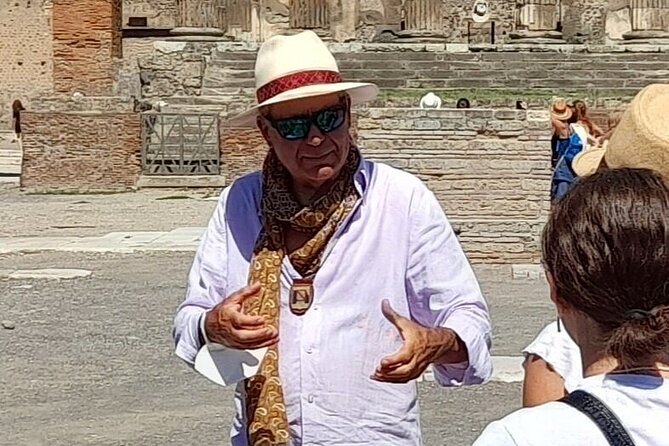
Two things I love here. First, the tour is led by Prof. Bruno Pisano, and his teaching style is described as professional, passionate, and easy to follow. Second, the route hits the big visual lessons fast: Greek-style temple architecture, Roman public space, and the private world of the domus.
One consideration: the Pompeii entrance ticket is not included, and there are no snacks. In about 4 hours and 10 minutes, you will cover a lot, so plan for a steady pace rather than lingering in every room.
Key things to know before you go
- Small group size (max 15), so the guide can explain and keep things moving
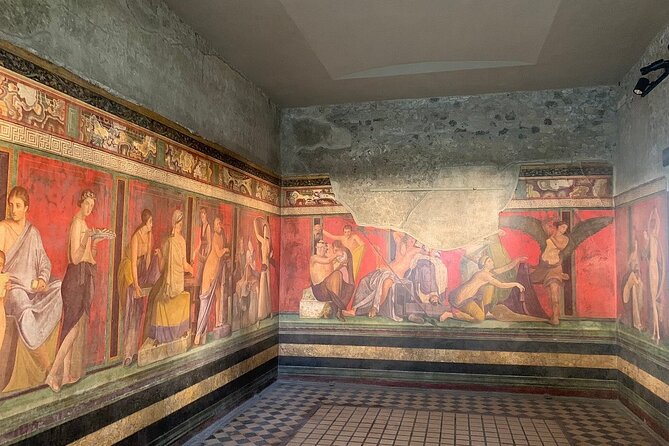
- Villa dei Misteri included, with the world-famous Dionysian fresco and excellent preservation
- A Hellenistic lens on Pompeii, not just a Roman ruins checklist
- Big-name domus highlights, including mosaics and fresco cycles from multiple periods
- Focused stops, about 25 minutes each, so you see a lot without getting lost
- Mobile ticket and meeting at Porta Marina audioguide official, with the tour starting at 9:30 am
Pompeii Makes More Sense When Someone Explains the City

Pompeii is famous because it looks frozen in time. What changes your experience is understanding what kind of city you’re looking at. This tour frames Pompeii as a Hellenistic commercial and industrial hub, with connections across the eastern Mediterranean, instead of treating it as purely Greek or purely Roman.
You also get the story behind the cults that people practiced there. The itinerary points to the Dionysian and Isiac mystery cults, so the famous fresco at Villa dei Misteri doesn’t feel random. It feels like a clue to how ancient residents made sense of life, fear, ritual, and community.
Price and Timing: Is This a Good Value?
At $57.62 per person for about 4 hours and 10 minutes, the price is reasonable for a specialist-led, small-group Pompeii route. You’re paying for interpretation plus a structured path through major sites, not just a “walk and read a sign” experience.
Two cost items matter for budgeting. The Pompeii entrance ticket is not included, and snacks are not included. If you’ve got a tight schedule, the upside is that the tour gives you a plan for how to see key places without spending your whole day figuring it out.
The tour start time is 9:30 am, and you meet at Porta Marina audioguide official (Via Villa dei Misteri, 2, 80045 Pompei NA, Italy). Ending at the same address keeps logistics simple, especially if you want to eat lunch later without playing transport roulette.
How the 4-Hour Route Works (and Why That Matters)
This is a guided, small-group route designed around short, high-impact stops, roughly 25 minutes each. That means you see a lot, but you don’t get endless room-by-room wandering. It’s ideal if you want a complete snapshot and to learn what you’re actually looking at.
The tour is offered with a mobile ticket, and confirmation is received within 48 hours of booking, subject to availability. If you prefer to arrive and go, this setup is built for that. You’ll also find the meeting point is near public transportation, which helps on a busy day in Pompeii.
Service animals are allowed, and most travelers can participate. As always, Pompeii involves uneven stone and archaeological steps, so bring sensible footwear and expect some walking.
Your Pompeii Walk: Temples, Baths, Forums, and the Houses You Can See in One Morning
Here’s what you can expect, in the order the tour guides you through it. I’m describing the “why,” not just the “what,” so you can recognize the bigger patterns as you move.
Stop 1: Pompeii Archaeological Park, Suburban Baths
You start with the Suburban Baths area and focus on spaces like the frigidarium and its decorative features. The frigidarium includes a nymphaeum described as glass paste, plus polychrome and glazed tiles. You also hear about a swimming pool frescoed with Nilotic subjects.
This stop is useful because it teaches you how public and semi-public life worked in Pompeii. Bathing wasn’t just hygiene. It was social time, status time, and a chance to enjoy art while doing something ordinary.
A practical note: since this is your first stop, you’ll want to pay attention right away. Early explanations set the vocabulary for the rest of the morning.
Stop 2: Tempio di Venere, Imperial Cult and Sailors’ Goddess
Next is the Tempio di Venere on a terrace that dominates the surrounding area. The temple is linked to the imperial cult and Venus as the goddess of sailors. You’ll also see an impressive bronze statue by Igor Mitoraj, depicting Daedalus.
This is a smart move in the itinerary because it connects politics and religion. The imperial cult tells you how rulers were represented in daily belief. Venus as a sailors’ goddess signals that Pompeii was tied to trade and movement across the sea.
Stop 3: Pompei La Basilica, Pompeii’s Great Tribunal
The Basilica of Pompeii is described as the largest public building in Pompeii, with three naves. It also anticipates the typology of the Christian basilica, so you’re not only seeing ancient architecture, you’re tracing a design idea that lasted.
The basilica was a major civic space, including legal and administrative functions. When you understand that, the building stops being only “impressive stone,” and becomes a machine for governing a busy city.
Stop 4: Temple of Apollo, Greek-Style Worship and Bronze Figures
The Temple of Apollo is presented as Greek design, with its architectural and plastic configuration described as outstanding. The two bronze statues representing Apollo and Diana dominate the area.
This stop helps you see Pompeii’s cultural mix. You’re looking at a Greek-style temple, but in a city shaped by Mediterranean commerce and Roman-era life. It’s a good contrast moment after the basilica’s public civic role.
If you like art and symbols, focus on what the statues represent and how the space frames the worship space.
Stop 5: Foro de Pompeya, the Commercial and Administrative Heart
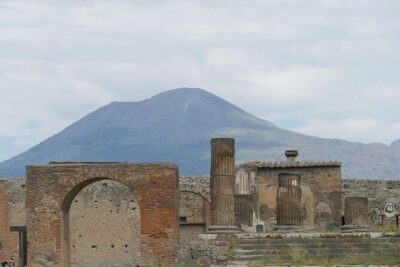
The Forum of Pompeii is the city’s commercial, administrative, and religious center. The tour emphasizes its urban complexity and the majestic Temple of Jupiter, Juno, and Minerva as a dominant feature.
This is where the “day-to-day city” feeling becomes real. The forum was where people met, handled business, and participated in shared religious life. When the guide connects the dots between the forum and the houses later, you’ll feel how the city worked as one system.
In other words, this stop gives you the big picture that makes the private domus stops more meaningful.
Stop 6: Terme del Foro, an Ancient Wellness Center
Then you enter the Terme del Foro, a wellness center and SPA for the community. You’ll hear about the tepidarium with splendid stuccoes from the Neronian school, plus the alabaster labrum in the calidarium, described as having Egyptian origin.
Even if you’re not obsessed with Roman engineering, this stop is valuable because it shows the mix of taste and distance. Egyptian materials plus local design choices tells you how far-reaching Pompeii’s world was.
For planning: since you’ll be walking and reading features in a preserved thermal complex, wear shoes with good grip.
Stop 7: Casa del Fauno, the Hellenistic Palace House
Casa del Fauno is described as the largest house in all of Pompeii and a palace house from the Hellenistic era. A major highlight is a copy of the Battle of Issus mosaic from 333 BC, featuring Alexander the Great against Darius III of Persia.
This stop hits multiple interests at once: scale, art, and political imagination. A mosaic about a major Greco-Persian clash in a Pompeian home says a lot about what wealthy households admired. It also supports the tour’s larger theme that Pompeii was connected to big world narratives through trade and culture.
One consideration: because you have limited time, don’t try to memorize every detail. Instead, look for the guide’s key points about why the artwork mattered.
Stop 8: Casa dei Vettii, Fourth Pompeian Style Frescoes and Priapus
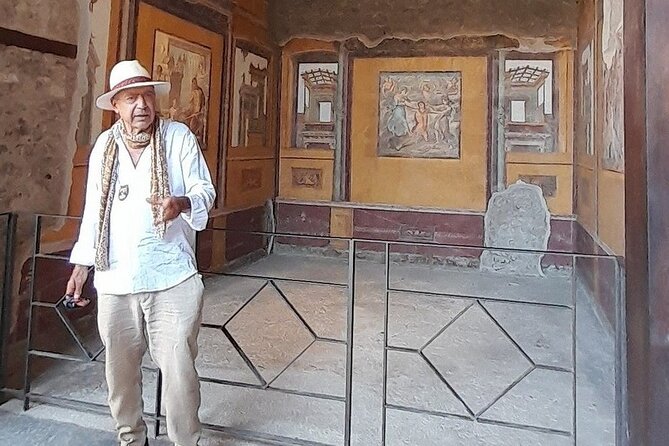
Casa dei Vettii is known for frescoes of the fourth Pompeian style. The itinerary highlights the Priapus fresco of the Neronian school and a grand hall filled with Cupids doing work-like activities. Mythological paintings are described as grandiose, including Daedalus and the Minotaur.
This is a fun stop if you like iconography. Priapus in particular signals a home culture with humor, symbolism, and fertility associations. The Cupids doing practical tasks hints at a world where imagination and daily identity overlap.
It’s also a stop where the guide’s interpretation matters. Without explanation, you might see decorations. With explanation, you see how people used art to express values.
Stop 9: Casa degli Amorini Dorati, Rhodian Peristyle and an Isis Shrine
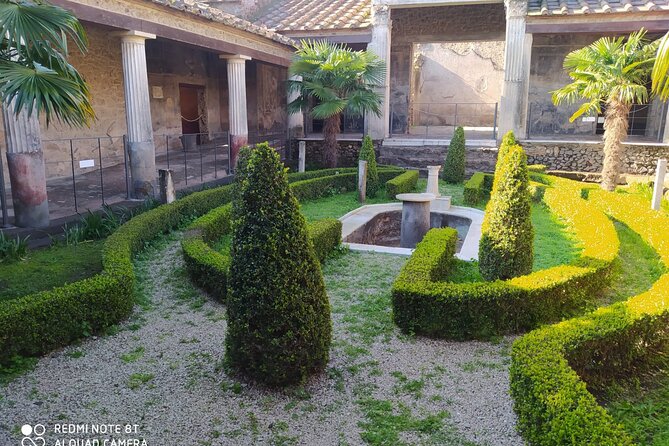
Casa degli Amorini Dorati is described as a perfectly preserved domus with a Rhodian peristyle. You’ll also hear about obsidian mirrors. The tour adds key religious spaces too: a shrine dedicated to the cult of Isis and a Lararium, which protected the household gods. Frescoes dedicated to the Trojan War are called magnificent.
This is one of the most important stops for understanding the “mystery cult” theme that runs through the tour. Isis worship and home-based religious practice show that faith wasn’t only public spectacle. It lived inside everyday spaces, close to family and routine.
Because the domus includes both art and ritual areas, it’s a strong place to slow down mentally. Let the meaning land, even if you don’t have long physical time there.
Stop 10: Villa dei Misteri, the Dionysian Fresco
Finally, Villa dei Misteri is included, with the famous Dionysian fresco from the first century BC. It’s described as unique in the world for its conservation, and this stop acts like the emotional and interpretive payoff for the rest of the morning.
Here, the tour’s cultural interpretation matters most. The guide ties the mystery cults, ritual imagination, and the meaning of the images together. Even if you’ve seen Pompeii photos before, the explanation makes the fresco feel connected to lived belief rather than just an artwork label.
This is the moment you’ll remember when you think of Pompeii later.
What Makes the Guide Matter: Bruno Pisano’s Teaching Style
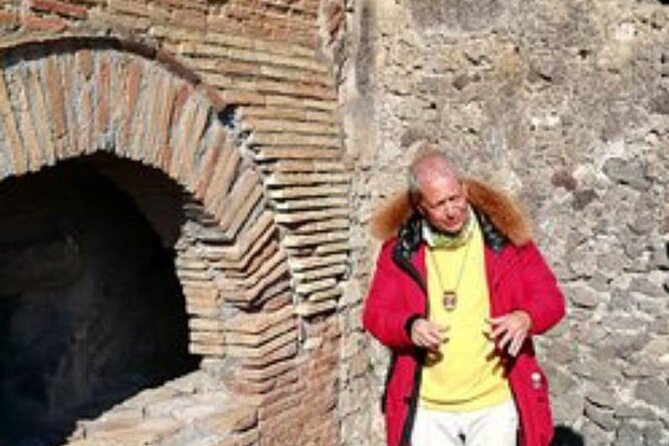
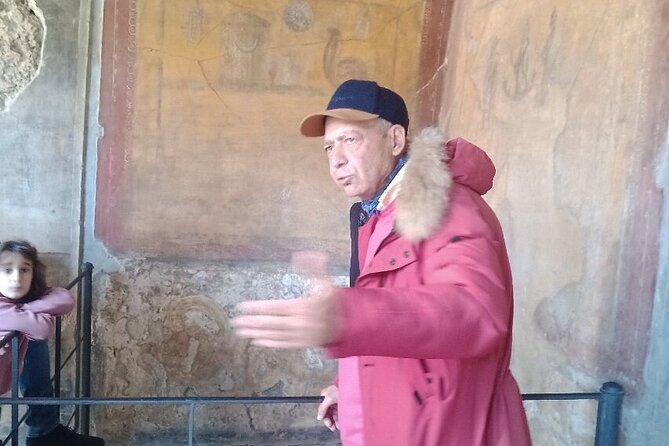
This tour is provided by Bruno Pisano. In the feedback you were given, he’s praised for combining expertise with a friendly, clear delivery. The recurring theme is professionalism and the ability to make connections between ancient life and present-day understanding, including practical notes about habits and human behavior.
That approach is not just style. In Pompeii, context is everything. You might not know what you’re looking at until someone gives you a framework, like:
- what kind of space a building was meant for
- how art signaled identity in elite households
- why a cult image belongs in the broader cultural story
If you travel with teens or kids, the guide’s ability to make complex topics accessible is a strong plus. The route can feel heavy when self-guided, but with a careful guide, it becomes organized learning.
Tradeoffs: What to Expect Beyond the Highlights
This tour is designed for momentum. That means you’ll cover 10 major areas in one morning, with about 25 minutes per stop. The upside is you won’t miss major anchors like the forum area and the biggest houses. The tradeoff is that you won’t have time for deep solo wandering in every single room.
Also, because entrance ticket and snacks are not included, your comfort depends on what you bring. Plan to purchase or arrange the entry ticket separately, and consider a small planned snack elsewhere so you don’t spend the middle of the tour distracted.
Finally, the itinerary covers a lot of key sites, but it does not claim to be every single corner of Pompeii. If you want maximum freedom, you’d pair this with later independent time.
Who This Tour Fits Best
I think this tour is a great match if you:
- want the “most important stops” without planning every turn
- enjoy learning archaeology, history, and how people lived
- like small groups, ideally under 15
- want Villa dei Misteri as part of a guided plan
It’s also a strong option for first-time Pompeii visitors. It gives you a coherent mental map fast, then you can choose what you want to revisit later.
Should You Book This Pompeii Guided Tour?
I’d book it if you want an efficient, guided Pompeii morning with a specialist who explains the city’s meaning. The small group format plus a structured route makes it a good value, especially because Villa dei Misteri and multiple major domus are baked in.
I’d pause and compare options if you strongly prefer long stays in fewer sites, or if you hate the idea of managing the entrance ticket separately. This is a tour built for coverage and clarity, not for slow drifting.
If you’re ready to trade extra wandering time for better understanding, this is one of the more practical ways to see Pompeii in half a day.
FAQ
How long is the Pompeii guided tour?
The tour lasts about 4 hours and 10 minutes.
Is the entrance ticket to the Pompeii Archaeological Park included?
No. The entrance ticket to the Pompeii ruins is not included.
Does the itinerary include Villa dei Misteri?
Yes. Villa dei Misteri is one of the stops, including the Dionysian fresco.
How large is the group for this tour?
The tour has a maximum of 15 travelers per guide.
Where do I meet, and what time does the tour start?
You meet at Porta Marina audioguide official, Via Villa dei Misteri, 2, 80045 Pompei NA, Italy. The start time is 9:30 am, and the tour ends at the same location.
What’s included in the tour price besides the guide?
The included items are guide and assistance for the entire duration of the tour, and a small group format (maximum 15). The ticket is mobile.
Can I cancel for a full refund?
Yes. Cancellation is free, and you can cancel up to 24 hours in advance for a full refund.
With a Local Guide
- Skip the Line Guided Tour of Pompeii led by an Archaeologist★ 5.0 · 703 reviews
- Pompeii private tour with an Official Guide★ 5.0 · 631 reviews
- Pompeii Skip-the-line Tour with Archaeologist Guide★ 5.0 · 559 reviews
- Pompeii Guided Tour & Horse Riding on Vesuvius with Lunch★ 5.0 · 419 reviews
- Complete Pompeii Skip the Line Tour with Archaeologist Guide★ 4.5 · 379 reviews
More Tours in Pompeii
- Pompeii Small Group Tour with an Archaeologist★ 5.0 · 6,593 reviews
- Pompeii and Herculaneum Small Group Tour with an Archaeologist★ 5.0 · 1,350 reviews
- Skip the Line Guided Tour of Pompeii led by an Archaeologist★ 5.0 · 703 reviews
- Pompeii Ticket + Tour with Optional Tasting Experience at Pompeii★ 5.0 · 663 reviews
- Pompeii private tour with an Official Guide★ 5.0 · 631 reviews
More Tour Reviews in Pompeii
- Pompeii Small Group Tour with an Archaeologist★ 5.0 · 6,593 reviews
- Discover the Ancient Ruins of Pompeii: Day Trip from Rome★ 3.5 · 2,247 reviews
- Pompeii and Herculaneum Small Group Tour with an Archaeologist★ 5.0 · 1,350 reviews
- Skip the Line Guided Tour of Pompeii led by an Archaeologist★ 5.0 · 703 reviews
- Pompeii Ticket + Tour with Optional Tasting Experience at Pompeii★ 5.0 · 663 reviews
More ways into Historical Tours.
 ★ 4.5Private Guided Multimedia Exhibition on the History of SorrentoFrom $1590 reviews
 ★ 4.5Guided tour of a historic lemon grove in SorrentoFrom $4871 reviews
 ★ 5.0Authentic Amalfi Lemon Tour & Tasting in the Historical GardenFrom $4952 reviews
 ★ 4.0Visit Costiera Sorrento Coast Between history and legendFrom $6649 reviews
 ★ 4.9Amalfi Organic Lemon Tour & Tasting in the Historical GardenFrom $5946 reviews
 ★ 5.0Guided tour of the history and tradition of the Sorrento lemonFrom $5920 reviews
 ★ 4.5Pompeii Walking Tour: The Real History of the RuinsFrom $4216 reviews
 ★ 5.0Full-Day Private History Tour in Amalfi Coast with Pick UpFrom $45111 reviews
Other useful routes from here