
REVIEW · TICKETS
Pompeii Skip the Line Ticket + Guide Book with itineraries
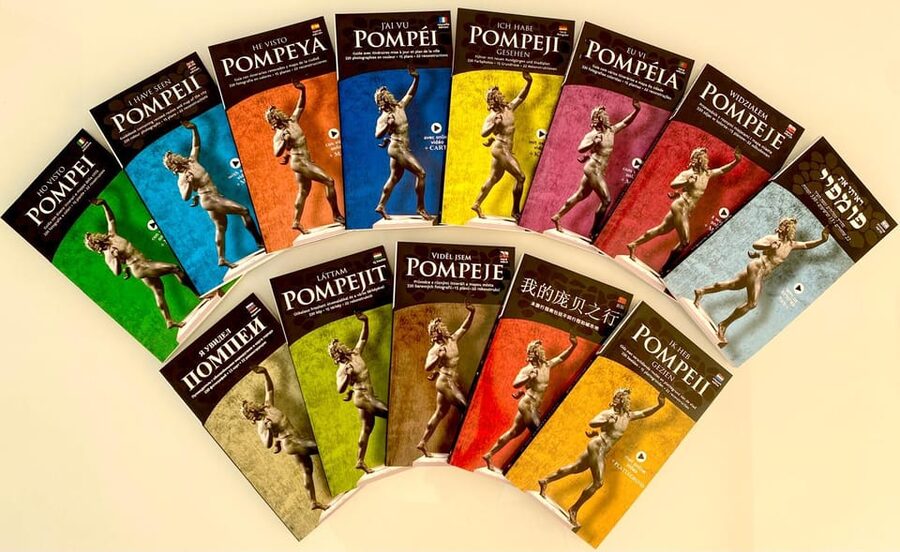
Pompeii, minus the ticket-line stress. This experience pairs a skip-the-line ticket with a 13-language guidebook and built-in timing plans, so you can explore at your own pace. If you like structure without being stuck on a schedule, it’s a nice match.
What I like most is the flexibility. You can enter from 9:00 am until 5:00 pm, and the guidebook gives you itineraries for 2, 4, or 6 hours, depending on how fast you walk and how much you want to read.
One thing to consider: this is self-guided. You get a guidebook and map, but not a live guided commentary as part of the ticket, so you’ll want to be comfortable navigating and learning on your own.
Key Points That Make This Pompeii Plan Work
- Skip-the-line entry using the Piazza Anfiteatro entrance
- 13-language guidebook plus an updated map that stays with you after
- Choose 2, 4, or 6 hours using the guide’s itineraries
- UNESCO-listed Pompeii sites, including the best-preserved Roman amphitheater
- Real street-level details like frescoed houses, spas, temples, shops, and thermopolium (Roman coffee-fast food)
- Visit window runs 9:00 am to 5:00 pm, giving you room to shape your day
Skip the Line at Piazza Anfiteatro, Then Go Your Own Way
The big practical win here is that you do not need to wrestle with the longest line to get into Pompeii. Your reservation gives you access through the Piazza Anfiteatro entrance, and that matters because Pompeii is a maze of streets and entrances, and every minute counts.
When you arrive, plan to meet the operators at the information point on Via Roma 123, Pompei. The process is simple: you show your voucher to get easy access to the Pompeii Archaeological Park at the correct entry point. I like this kind of clarity. It reduces the mental overhead when you are standing in a busy tourist area, checking phones and maps.
You also have the freedom of a full day window. Entry is valid from 9:00 am until 5:00 pm. That lets you avoid the “everyone is rushing” feeling that can happen when a tour is locked to a short timeframe.
Your Guidebook Map: A Souvenir With Built-In Time Choices
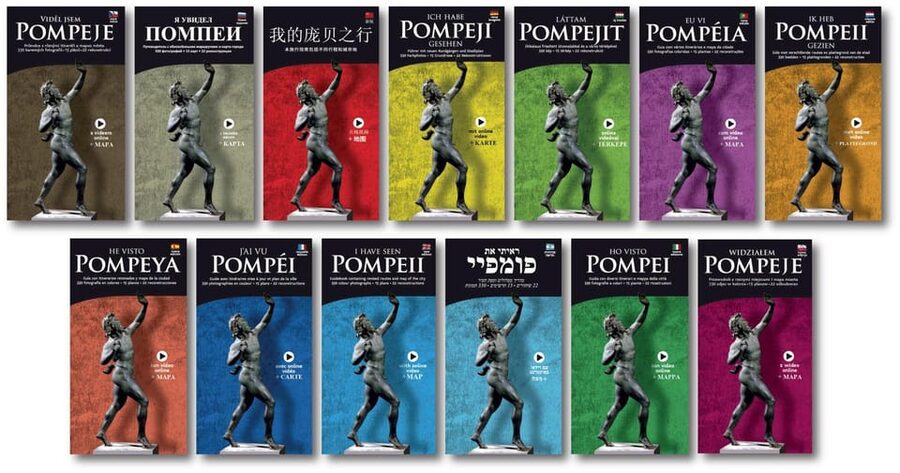
This is not just a ticket. The experience includes a guidebook in 13 languages and an updated map, and that book stays with you as a souvenir. One book is available for every two participants, which is perfect for couples or friends, and something to keep in mind if you are traveling solo.
The guidebook is organized with multiple itineraries, so you can pick a pace before you even step inside. You can follow plans for two hours, four hours, or six hours, all using the included map to help you find the most interesting points.
Why this is valuable: Pompeii is huge, and it is easy to wander into “I saw stuff, but I am not sure what I saw” territory. Having a structured route means you can still move freely while steering your day toward the big highlights, instead of playing it by instinct the whole time.
You may also see instructor language options listed as English, Italian, Spanish, and French. The key takeaway for your planning is language availability, but remember the learning comes mainly from the guidebook and self-paced exploration.
The 2-Hour Plan: Pompeii’s Best Hits Without Feeling Rushed
Two hours in Pompeii is short, but it can be a satisfying “first visit” window when the guidebook is doing the heavy lifting. In this format, I recommend thinking of your time as a visual sampler, not a completion mission.
In a quick itinerary, prioritize the stops that give you the strongest sense of daily life and the scale of the site. The experience includes access to highlights like:
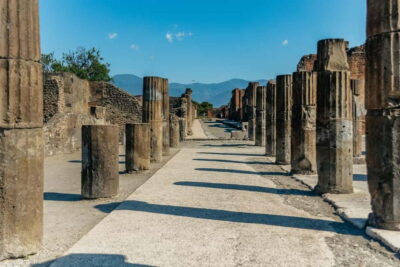
- the streets and frescoed houses
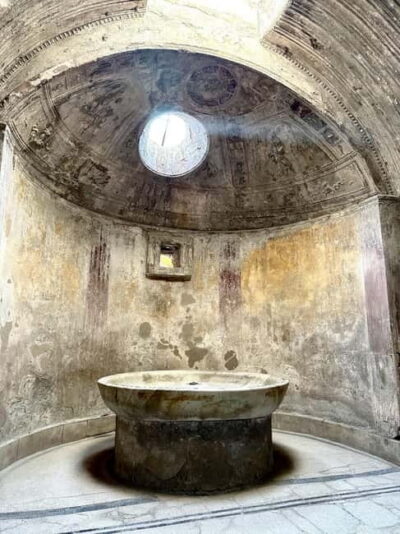
- spas and temples
- shops and the thermopolis, Pompeii’s version of quick food and drink
- the theaters and brothels
- the casts of the victims of the eruption
- and one of the best-preserved Roman amphitheaters
You will likely move in a loop that covers many categories, but you will not linger for long. The practical drawback is that Pompeii does not reward speed. If you’re the type who likes to stop and read details, two hours can feel like you are skimming the surface. Still, it’s a good choice if you want to pair Pompeii with other sights in Campania that same day.
My suggestion: if you choose two hours, set one personal goal in advance, for example, seeing the amphitheater and the victim casts, then letting the rest fill in as you go.
The 4-Hour Itinerary: More Time for Stories and Street-Level Details
Four hours is where Pompeii starts to feel less like a checklist and more like a place. You still get plenty done, but you can slow down enough to notice how the city is laid out and how the buildings connect to everyday activities.
With a four-hour plan, you can better balance the “big, dramatic” stops with the “everyday” ones. Pompeii is fascinating because it is not only monuments. You also get the small life markers, like shops, street-facing spaces, and the thermopolis, the Roman equivalent of a quick stop for hot drinks or snacks.
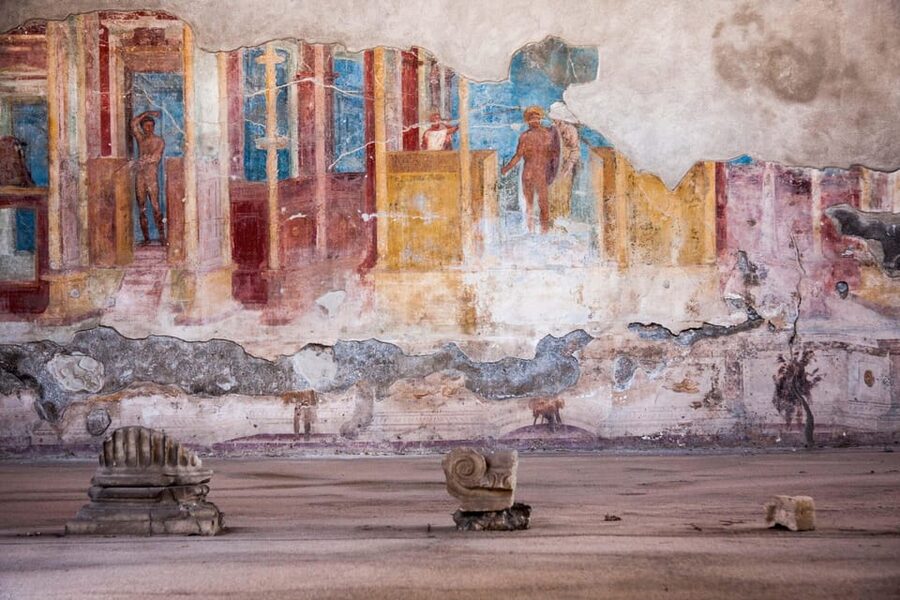
This is also where frescoed houses and spas can make more sense. Instead of rushing past features, you can take a few moments to absorb what you are looking at and why it mattered in a city that was living, working, eating, and socializing.
One consideration: Pompeii’s terrain is walk-heavy, and you do not want to spend your extra time fighting your shoes. Wear comfortable footwear. Also bring water and a sun hat, because the experience specifically tells you to.
The 6-Hour Route: A Relaxed Day With Time to Sit Back and Remember
If you have the time, six hours is often the sweet spot for Pompeii. It is long enough to follow the guidebook itinerary without feeling like you are speed-walking between highlights.
With more time, you can do something valuable in a place like Pompeii: you can actually process what the site is showing you. The included sights go from temples to theaters, from brothels to the casts of victims. That range is part of the emotional weight of Pompeii, and stretching the day gives you room to adjust your pace.
In a longer visit, you will also get a better chance to appreciate why the amphitheater is singled out as one of the best-preserved Roman amphitheaters. It anchors your visit. After you see it, other parts of the city start to feel more connected, like you are walking through the same world rather than jumping between museum stops.
The only real downside to six hours is effort. You will walk more, and you will spend more time in a dense, visually intense place. If you want Pompeii to feel meaningful rather than exhausting, plan a slower rhythm and keep your breaks simple, water first, then sit if you need to.
What You Should Actually Look For in Pompeii
Pompeii is packed with details, and the guidebook style here is designed to help you notice the right things. You’ll be walking the city’s ancient streets and focusing on multiple categories of life.
Here’s what stands out in the experience, and what to pay attention to while you are there:
Frescoed houses
These are the places where art meets daily living. Even if you are not a “fresco expert,” you can still enjoy how the visuals hint at status, taste, and the desire to decorate.
Spas and temples
These remind you that Pompeii was organized around public routines as well as private life. You’re not only seeing architecture, you’re seeing how people used shared spaces.
Shops and the thermopolis
The thermopolis is especially memorable because it’s a translation of ancient life into something you recognize. It’s described as a coffee-fast food of the time. When you see it, think about convenience and habit, not just food.
Theaters and brothels
These categories can feel surprising, but that’s part of what makes Pompeii such a powerful time capsule. The guidebook helps you frame them so they don’t just feel like odd stops, but like pieces of a functioning city.
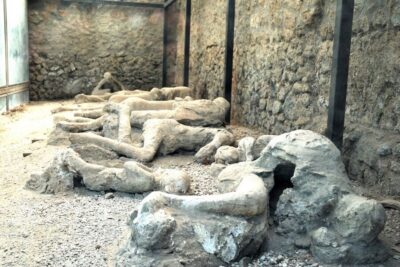
The casts of the victims
This is the emotional center for many visitors. If you’re sensitive, you might want to time this for when you can handle it emotionally. Give yourself a moment to process what you’re seeing rather than trying to “power through.”
The amphitheater
Since it is highlighted as one of the best-preserved Roman amphitheaters, it’s a must. It’s also a great place to pause and orient yourself mentally, so the rest of the route feels less random.
How to Plan Your Day So It Feels Effortless
Even with skip-the-line access, you still need a basic plan. Pompeii is easiest when you respect the fact that you are walking a lot and reading a lot.
Start with your time choice. If you only have a small window, pick the 2-hour plan and commit to it. If you want a more relaxed experience, go 4 hours. If you want to feel like you had a real visit, choose 6 hours.
Then bring the essentials the experience asks for:
- Passport or ID card
- Comfortable shoes
- Sun hat
- Water
- Comfortable clothes
My small practical advice: build in slow minutes. In Pompeii, that can mean just pausing at one building longer than planned to take in the surroundings. The guidebook and map are there to keep you on track, but you’re the one controlling the pace.
Also, confirm your entry timing window. The ticket is valid for the day and entry runs 9:00 am to 5:00 pm, but starting times can depend on availability. Check what is offered when you book so you match your day plan.
Price and Value: Is $41 Worth It?
At $41 per person, the value depends on how you like to travel.
This price includes the Pompeii Ruins entrance ticket, plus a guidebook in 13 languages and an updated map with itineraries for 2, 4, or 6 hours. That combination can be a strong deal if you want flexibility and you like having a physical guide you can keep.
It’s not as strong if you planned to hire a live guide or if you’re expecting a full guided tour. The experience does not include a live guide, and it also does not include food and beverages or transfer. So you need to budget separately for getting there and meals.
One more “think before you buy” note, based on a real booking complaint: if members of your group might qualify for free admission or reduced admission under Pompeii or Italian rules, double-check whether your group is being charged in a way that matches those policies. When entrance cost is the main variable, that mismatch can make a self-guided ticket feel overpriced.
If you are traveling solo, the guidebook setup is also something to consider. One book is available for every two participants. If that means you do not get a second copy, it can be less useful if you planned to share notes on separate devices or want your own book.
Who This Fits Best (And Who Might Want Something Else)

This works best if you:
- want skip-the-line access but still prefer wandering
- like having clear routes without being tied to a group
- enjoy reading on-site and learning from a physical guide
- are comfortable navigating an archaeological park using a map
- travel in a small group, especially a couple, because the guidebook is shared per two participants
You might want a different option if you:
- want a live, in-person guide to interpret details continuously as you walk
- hate planning and would rather follow a group schedule start to finish
- need transfers included in the price
Quick Practical Checklist for Your Pompeii Day
Before you go, keep it simple and pack like a walker:
- Bring your passport or ID card
- Wear comfortable shoes
- Carry a sun hat
- Bring water
- Wear comfortable clothes
That’s the foundation for a smooth day. Add your preferred phone map only if you like redundancy, because the guide already comes with an updated map to help you find the points you care about.
Should You Book This Pompeii Skip-the-Line Ticket + Guidebook?
I think it’s a smart booking for the right traveler.
Book it if you want skip-the-line entry, you like self-paced exploration, and you would appreciate a 13-language guidebook with built-in routes for 2, 4, or 6 hours. The “meeting point at Via Roma 123” plus “enter through Piazza Anfiteatro” is also the kind of straightforward logistics that keep the day calm.
Skip it, or at least compare options, if you’re expecting a full guided tour experience with a person talking to you the whole time, or if you have group members who may qualify for free or discounted admission and you want to be sure you are not paying for something you should not need to.
If you like to move at your pace and you want Pompeii to feel like a real walk through an ancient city, this setup gives you exactly that, with less waiting and more control.
FAQ
What is included with the Pompeii skip-the-line ticket?
You get an entrance ticket for the Pompeii Ruins, a guidebook in 13 different languages, an updated map, and itineraries for 2, 4, or 6 hours.
How long can I visit Pompeii with this ticket?
The activity is valid for 1 day, and you can enter from 9:00 am until 5:00 pm.
Where do I meet to access the archaeological park?
Meet the operators at the information point at Via Roma 123, Pompei. Access is through the Piazza Anfiteatro entrance, and you show your voucher for easy entry.
Do I need to bring a guide?
No live guide is included. You explore independently using the guidebook and map, with the itineraries helping you plan your time.
What languages is the guidebook available in?
The guidebook is available in 13 languages.
Is there a guide/instructor language option too?
Instructor support languages listed are English, Italian, Spanish, and French.
What should I bring, and are there any booking flexibility options?
Bring your passport or ID card, comfortable shoes, a sun hat, water, and comfortable clothes. There is free cancellation up to 24 hours in advance for a full refund, and you can reserve now and pay later.
With a Local Guide
- Pompeii: Entry Ticket and Guided Tour with an Archaeologist★ 4.8 · 19,459 reviews
- Pompeii: Skip-the-Line Entrance Ticket with Audio Guide★ 4.0 · 2,509 reviews
- Pompeii: Skip-the-line-Ticket and Guided Tour★ 4.6 · 1,152 reviews
- Pompeii: Guided Tour with Skip-the-Line Entry★ 4.9 · 812 reviews
- Pompeii: Skip-the-Line Entry Ticket with Digital Guide App★ 4.1 · 770 reviews
Choose the Right Entry
- Pompeii: Entry Ticket and Guided Tour with an Archaeologist★ 4.8 · 19,459 reviews
- Pompeii: Skip-the-Line Entrance Ticket with Audio Guide★ 4.0 · 2,509 reviews
- Pompeii: Skip-the-line-Ticket and Guided Tour★ 4.6 · 1,152 reviews
- Pompeii: Skip-the-Line Entry Ticket with Digital Guide App★ 4.1 · 770 reviews
- Pompeii: Afternoon to Sunset Guided Tour with Ticket★ 4.9 · 484 reviews
More Tour Reviews in Pompei Campania
- Pompeii: Entry Ticket and Guided Tour with an Archaeologist★ 4.8 · 19,459 reviews
- Pompeii: Small Group Tour with an Archaeologist★ 4.8 · 12,264 reviews
- Pompeii: Skip-the-Line Entrance Ticket with Audio Guide★ 4.0 · 2,509 reviews
- Naples: Pompeii and Mt. Vesuvius with Lunch and Wine Tasting★ 4.5 · 2,454 reviews
- Pompeii: Skip-the-line-Ticket and Guided Tour★ 4.6 · 1,152 reviews
More ways into Tickets.
 ★ 4.8Pompeii: Entry Ticket and Guided Tour with an ArchaeologistFrom $3519,459 reviews
 ★ 4.2Pompeii: Entry Ticket with Optional Audio GuideFrom $2612,360 reviews
 ★ 4.0Pompeii: Skip-the-Line Entrance Ticket with Audio GuideFrom $392,509 reviews
 ★ 4.5Pompeii: Archaeological Park Tour with Ticket on requestFrom $312,283 reviews
 ★ 4.6Pompeii: Skip-the-line-Ticket and Guided TourFrom $641,152 reviews
 ★ 4.1Pompeii: Skip-the-Line Entry Ticket with Digital Guide AppFrom $22770 reviews
 ★ 5.0Pompeii Ticket + Tour with Optional Tasting Experience at PompeiiFrom $35663 reviews
 ★ 4.9Pompeii: Exclusive Tour with Archaeologist and Entry TicketsFrom $50634 reviews
Other useful routes from here