
REVIEW · TICKETS
Pompeii: Skip-the-Line Ticket and Guidebook with Itineraries
Pompeii is overwhelming, yet it works. This ticket package is interesting because it pairs a skip-the-line entry with a practical guidebook itinerary you can use at your own pace. You choose how long you want to wander, then let the book guide you from big set pieces like the amphitheater to quieter street-level details.
I like two things a lot. First, you get the main time-saver, skip-the-line access, so you can spend more of your day inside the ruins. Second, the guidebook and map help you actually use the site instead of just walking in circles and guessing what matters most.
One thing to consider: this is not a classic live-guided tour. It’s designed for independence with a guidebook, so if you want a person talking at you the whole time, you may feel the value is different than you expected.
Key things to know before you go

- Skip-the-line entry means less time stuck and more time exploring
- 2, 4, or 6 hour itineraries help you pick a route based on your energy level
- You enter independently from 9AM to 5PM, no waiting around for a group
- A built-in map helps you find major sights without constant internet or phone fiddling
- You get a souvenir guidebook you can keep and re-use later while planning other stops in Campania
- Plan for a ticket exchange possibility, especially if your entry details need paper confirmation at the site
What You Actually Get: a skip-the-line ticket plus a Pompeii guidebook
This experience is built around one idea: Pompeii is too big to do well with no plan, but you do not need a full guided lecture either. You buy a skip-the-line ticket, then use the included guidebook and map to shape your own visit.
The guidebook comes with suggested routes for two, four, or six hours, which is a big help because Pompeii rewards focus. One hour at random does not feel like much. Four hours with a route and a few key stops can feel like you really connected the story of the city and the eruption.
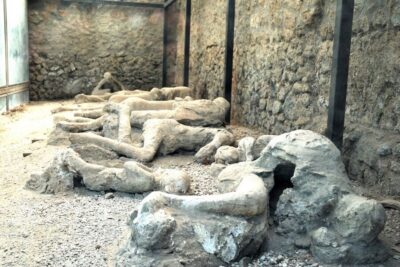
You will also want to know the scope. The book and map are meant to cover major anchors like the amphitheater and the casts of victims, plus day-to-day life areas such as frescoed houses, spas, temples, shops, and even a Thermopolis, the time period’s version of a fast food spot.
Entering Pompeii at Piazza Anfiteatro: how to reduce stress
Your reservation entrance is listed as Piazza Anfiteatro. That matters because Pompeii has multiple entry points and you do not want to burn your best energy wandering the wrong side.
Meet the team outside their office, usually wearing blue and yellow jackets. Then staff will point you to the information point at VIA ROMA 123, POMPEI. When you arrive, show your voucher to get access in an easier, more direct way.
Here is a practical consideration that can save you time. If your booking needs an exchange for paper tickets once you get near the gate, you may be directed to a nearby shop before security. That can happen even if you already feel like you are on the right track. I suggest arriving with a little cushion, and keep your patience for the moment when you realize you need one extra step before the main entry process.
Pompeii in 2, 4, or 6 hours: choosing the right pace
Pompeii does not politely fit into a standard half-day. With this format, you pick your time, then the guidebook suggests which sights to hit so your visit feels intentional instead of frantic.
About 2 hours, aim for the biggest emotional anchors
If you only have a short window, focus on the sites that set the tone for everything else. You will want the amphitheater area, the victim casts, and a quick hit of street life details so you see how the city looked in everyday moments.
In a shorter visit, the goal is not to see everything. It is to see enough that you understand what you are walking through. Two hours can work if you move with purpose and do not get stuck reading every wall inscription for 30 minutes.
About 4 hours, you get the full “wow and understand” package
Four hours is a sweet spot. You can slow down enough to take in the frescoes in houses, make sense of public spaces like theaters, and still cover the eruption-related sections that make Pompeii unforgettable.
This is also a good window for the more specific everyday stops. Think spas and bathing spaces, the Thermopolis, and shopfronts. When you can connect those dots, Pompeii feels less like a museum and more like a living city frozen mid-day.
About 6 hours, you can wander like a careful historian
With six hours, you can reduce pressure. You can spend more time in each district and choose moments that catch your eye instead of only the top list.
You can also include more of the “how people lived” details. That can mean additional houses with wall painting, more temple and public area context, and more of the amphitheater’s atmosphere beyond a quick look. If you love architecture and want time to look up, six hours makes your visit feel complete.
Major sights you will want on your route
Even without a live guide, you can still visit like a pro. Use the map to navigate between key zones, then treat each stop as a mini-story.
The amphitheater: where scale hits you fast
Pompeii’s amphitheater is one of the best-preserved Roman show-spaces. When you stand inside, you immediately get why crowds came here for entertainment and status.
In a self-guided visit, I recommend you pause on the seating level and then look toward the arena space. That short loop helps you understand the building’s design and makes your photos more than just snapshots.
Potential drawback: if you rush, you miss how the space is meant to work. Even 5 minutes of slowing down makes the amphitheater more meaningful.
Casts of victims: the part you cannot speed through
One of Pompeii’s most haunting experiences is seeing the casts of victims of the eruption. They are startling, and you will likely feel pulled into silence.
You do not need to linger for hours, but do give yourself enough time to process what you see. In a fast itinerary, this stop becomes a quick stop that feels off. In a paced one, it becomes the anchor that gives the whole city its weight.
Frescoed houses: look for what people decorated
Frescoes are the reason Pompeii feels personal. The houses show you how walls communicated taste, wealth, and identity.
When you are using the guidebook, treat it like a photo caption turned into context. Before you look closely, scan the guidebook’s prompts for what to notice. Then read the wall details with intention, not just as decoration.
Tip: in hotter months, fresco houses can be a welcome pause because your walking breaks up the day. Wear comfortable shoes and plan for uneven ground.
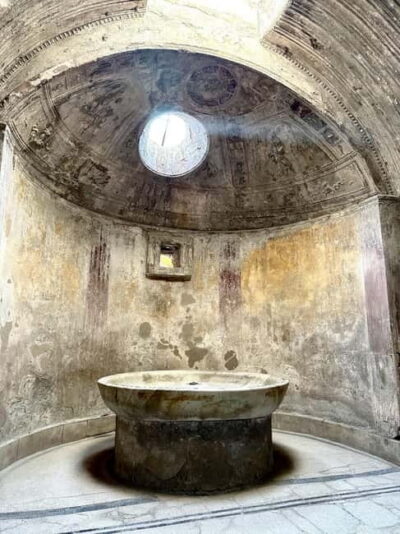
Spas and bathing spaces: everyday hygiene and social life
The spas and bathing areas help you understand that Pompeii was not only temples and grand buildings. It had routines, meeting spots, and places where people interacted.
Even if you do not know Roman plumbing from Roman politics, the physical layout tells the story. Use the map to find these zones, then spend a bit of time comparing how rooms connect.
Thermopolis: the ancient fast food clue
A Thermopolis is one of those fun details that makes ancient life click. This was the place for quick meals and beverages, likely aimed at people who needed food without waiting for a full sit-down meal.
I love this stop because it is so concrete. It helps you think like a resident, not just a visitor. You can almost imagine someone stopping by on their way through the neighborhood.
Temples, shops, and theaters: public space meets daily trade
Temples, shopfronts, and theaters build the full picture of a city that balanced sacred life, commerce, and entertainment.
If you are doing a shorter plan, you might see these as a quick sweep. If you have time, use the guidebook to focus on how these spaces connect by walking the street segments between them. That is where Pompeii stops feeling like random ruins and starts feeling like a city plan.
Brothels: architecture plus historical context
Brothels are part of Pompeii’s story and appear within the preserved areas. You will see how the buildings were designed and positioned in the urban grid.
This is not a stop you rush. Even if you feel awkward, take the time to understand the context the guidebook is pointing out. You will end up with a more honest picture of daily life.
Practical value: why the $41 price can work for you
At about $41 per person with a skip-the-line ticket, guidebook, and map, this can be good value if you like independence. You are paying for two things beyond the ticket itself: time savings and a structured way to use the site.
If you would otherwise hire a guide or rely on a phone map with limited context, this package fills that gap. The book is meant to keep you moving toward meaningful stops and gives you suggested timing so you do not end up disappointed that you saw only a fraction.
If you prefer a human interpreter who explains everything in real time, then the value might feel off. In that case, you might compare against a guided tour option that includes live commentary.
What the guidebook helps you do (and what it cannot)
The guidebook and map are made for getting your bearings quickly. I like that it offers time-based routes, because it removes the guesswork.
It is also helpful for history and the eruption context. When you understand what you are looking at, even a short visit feels less like walking through leftovers and more like walking through a preserved moment.
But it cannot replace a live guide’s ability to read your interests. If you are the type who wants to ask questions, or if you love back-and-forth discussion, you might want a guided option instead. Here, you do the learning by following the prompts and choosing your stops.
The small details that make your day smoother
There are a few basics that decide whether Pompeii feels relaxing or chaotic.
Start early in your entry window. The ticket allows entry between 9AM and 5PM, so try to arrive closer to opening. You’ll generally find the site more manageable and you will have more time buffer for any ticket exchange step.
Wear comfortable shoes. The ground can be uneven, and Pompeii is a walking day.
Bring your passport or ID card. It is listed as required.
If you want easy navigation, double-check the meeting and entry instructions before you go. One common snag is finding the right spot to start, especially if signage or guidance is not in English when you arrive.
Who this Pompeii option fits best
This package suits you if you:
- Prefer to explore at your own rhythm
- Like having a plan but not a strict schedule
- Want to learn through a guidebook and map rather than a lecture
- Have 2 to 6 hours and want routes that match your time
It may not be ideal if you:
- Want a live guide to explain everything from start to finish
- Are uncomfortable reading site context as you go
- Need very clear, in-person directions and get anxious at ticket exchanges
Should you book this skip-the-line Pompeii ticket with guidebook itineraries?
I think you should book it if you want a practical Pompeii day with structure. The combination of skip-the-line entry plus a route-based guidebook is the right fit for many independent travelers, especially if you can plan around the site’s pace and want to come away with a clearer understanding of the city.
Skip this option if you expected a fully guided experience with a person leading you through Pompeii. This is mainly about self-guided exploration using the included itineraries and map.
If you want the best outcome, come with comfortable shoes, give yourself a little extra time for any paper ticket exchange step, then pick a route length that matches your energy. With that, Pompeii stops feeling like a checklist and starts feeling like a story you can walk through.
FAQ
What is the duration of this Pompeii experience?
It is listed as a 1 day experience.
What times can I enter Pompeii?
The ticket allows entry from 9AM to 5PM.
Where is the entrance to the archaeological park?
Your reservation entrance is Piazza Anfiteatro.
Where do I meet the team?
You meet the team outside their office, usually with blue and yellow jackets. The staff information point is at VIA ROMA 123, POMPEI.
What is included with the ticket?
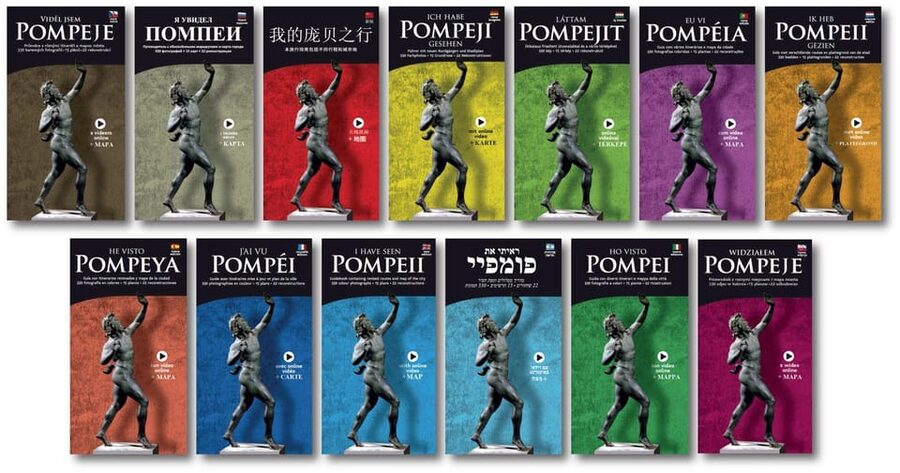
You get a skip-the-line ticket, a guidebook (in multiple languages), and a Pompeii Ruins map with 3 itineraries.
Are food and beverages included?
No, food and beverages are not included.
What transportation is included?
Transportation is not included.
Do I need identification to enter?
Yes. You should bring a passport or ID card.
Is there a guide, or is it self-guided?
You manage your visit independently using the guidebook and map with itineraries.
Is there a youth price and who qualifies?
A youth price reduction is for ages 18 to 24, and it is only for EU citizens.
Is free cancellation available?
Yes. You can cancel up to 24 hours in advance for a full refund.
More Skip the Line in Pompei Campania
- Pompeii: Skip-the-Line Entrance Ticket with Audio Guide★ 4.0 · 2,509 reviews
- Pompeii: Skip-the-line-Ticket and Guided Tour★ 4.6 · 1,152 reviews
- Pompeii: Guided Tour with Skip-the-Line Entry★ 4.9 · 812 reviews
- Pompeii: Skip-the-Line Entry Ticket with Digital Guide App★ 4.1 · 770 reviews
- Pompeii: Tour with Archaeologist Guide & Skip-the-Line Entry★ 4.5 · 478 reviews
Choose the Right Entry
- Pompeii: Entry Ticket and Guided Tour with an Archaeologist★ 4.8 · 19,459 reviews
- Pompeii: Skip-the-Line Entrance Ticket with Audio Guide★ 4.0 · 2,509 reviews
- Pompeii: Skip-the-line-Ticket and Guided Tour★ 4.6 · 1,152 reviews
- Pompeii: Skip-the-Line Entry Ticket with Digital Guide App★ 4.1 · 770 reviews
- Pompeii: Afternoon to Sunset Guided Tour with Ticket★ 4.9 · 484 reviews
More Tour Reviews in Pompei Campania
- Pompeii: Entry Ticket and Guided Tour with an Archaeologist★ 4.8 · 19,459 reviews
- Pompeii: Small Group Tour with an Archaeologist★ 4.8 · 12,264 reviews
- Pompeii: Skip-the-Line Entrance Ticket with Audio Guide★ 4.0 · 2,509 reviews
- Naples: Pompeii and Mt. Vesuvius with Lunch and Wine Tasting★ 4.5 · 2,454 reviews
- Pompeii: Skip-the-line-Ticket and Guided Tour★ 4.6 · 1,152 reviews
More ways into Tickets.
 ★ 4.8Pompeii: Entry Ticket and Guided Tour with an ArchaeologistFrom $3519,459 reviews
 ★ 4.2Pompeii: Entry Ticket with Optional Audio GuideFrom $2612,360 reviews
 ★ 4.0Pompeii: Skip-the-Line Entrance Ticket with Audio GuideFrom $392,509 reviews
 ★ 4.5Pompeii: Archaeological Park Tour with Ticket on requestFrom $312,283 reviews
 ★ 4.6Pompeii: Skip-the-line-Ticket and Guided TourFrom $641,152 reviews
 ★ 4.1Pompeii: Skip-the-Line Entry Ticket with Digital Guide AppFrom $22770 reviews
 ★ 5.0Pompeii Ticket + Tour with Optional Tasting Experience at PompeiiFrom $35663 reviews
 ★ 4.9Pompeii: Exclusive Tour with Archaeologist and Entry TicketsFrom $50634 reviews
Other useful routes from here