
REVIEW · TICKETS
Pompeii Skip the Line Ticket + Guide Book with itineraries
Pompeii is massive, but you can handle it. This self-guided option combines a skip-the-line ticket with a take-home guidebook and map, so you can choose how long you stay and move at your own pace from 9:00 am to 5:00 pm.
What I like most is that you are not stuck in a rigid schedule, and the book helps you aim for the best stops without guesswork. The one thing to plan for, though, is that skip-the-line usually does not remove all waiting, since you may still queue for security bag checks before you reach the main entrance turnstiles.
Key Points at a Glance
- Skip-the-line entry to Pompeii’s archaeological park, starting from Piazza Anfiteatro
- Take-home guidebook with suggested routes for 2, 4, or 6 hours
- Updated map to help you find the main sights faster
- You set the pace, which matters on a site this spread out
- Good value when you want history in your pocket, without paying for a private guide
- Timing tip: it tends to feel quieter after 4:30 pm, so later is often better
Where You Go First: Piazza Anfiteatro and the Voucher Flow
The “start line” for your day is Piazza Anfiteatro, at the entrance to the archaeological park. When you arrive, you meet the staff at the information point at Via Roma 123, Pompeii, and you show your voucher for access.
Here is the practical mindset shift: you’re not just buying a normal ticket and wandering in right away. You’re trading a little upfront effort for smoother entry once you get through the checkpoints. One verified booking described the experience as a security bag scan first, then a quick barcode scan and turnstile entry around 2:00 pm.
So yes, this is a skip-the-line style product, but your day can still start with a short queue at security. Plan for that, bring your patience, and think of the ticket as saving time at the main entry point rather than making the whole process instant.
What the Ticket Actually Includes (and What It Does Not)
For about $41 per person, you get the Pompeii entrance ticket plus a guidebook and updated map. The guidebook matters here because it gives suggested itineraries for shorter or longer visits, so you are not walking in blind.
You do not get transfers, food, or a live instructor on site. That means you should budget for your own pacing and refreshments, and you should plan transport to Pompeii separately.
Also note the book logistics: one guide book is provided for every two reservations. If you are traveling as a pair, this is fine. If you are a solo traveler, you might want to plan how you will share the book and the pages with your group so you both stay on the same plan.
How the 2, 4, or 6 Hour Itinerary Makes Pompeii Feel Smaller
Pompeii can overwhelm you fast. The site is huge, and the streets, buildings, and corridors can blur together if you don’t have a route. The guidebook’s itineraries are designed to reduce that feeling by giving you a structure for different time windows.
Even if you don’t follow the route word-for-word, the itineraries are useful because they tell you what to prioritize. If you only have time for a 2-hour loop, you’ll want to focus on the most recognizable areas and the “big story” sites. If you have 4 hours, you can add more variety, like mixing residential areas with public spaces. If you manage 6 hours, you can slow down and take breaks between major clusters.
One helpful detail is that the book is not just lists of buildings. It’s paired with an updated map, and it focuses on history and ruins, so you spend less time wondering what you are looking at and more time understanding it.
The big idea for your planning
Use the itinerary as a compass, not a cage. You can still wander. But when you want to “check your progress,” the time-based plan gives you a way to re-center without panic.
First Sights: Houses, Frescoes, Temples, and Everyday Trade
Once you’re inside, the best strategy is to start with what connects the whole city together: the mix of residential, religious, and commercial life. The guidebook approach is built for this, because Pompeii isn’t one monument, it’s a living layout frozen in time.
Here are the types of places you should look for early in your visit:
Frescoed houses
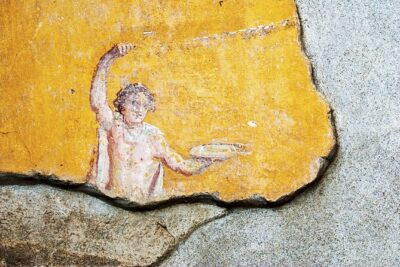
These are the windows into how people decorated, lived, and displayed status. Frescoes make the city feel human, not just archaeological. When you hit a house with wall art, slow down. Even a quick glance at details helps you feel the scale of what’s preserved.
Spas and public relaxation spaces
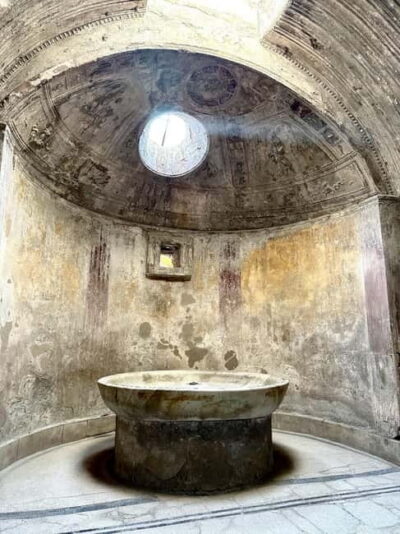
Pompeii’s spas show how health, routine, and community life overlapped. If you’re trying to understand daily rhythms, spas are a strong early pick.
Temples and religious spaces
You’ll see how public worship shaped city life. A temple stop can also act like a natural break, since religious spaces often give you room to pause and reorient.
Shops and street life
Pompeii is full of the small signals of trade. You’re not just looking at big buildings, you’re reading the city through what people bought, sold, and used.
Thermopolis (the Roman coffee and fast-food equivalent)
This one is especially fun because the concept is so familiar. A thermopolis helps you picture snacking and quick stops, long before modern cafes existed.
If you’re the type who likes to “collect impressions,” start with this cluster of everyday life. It sets you up to appreciate the more dramatic and emotional sections later, because you understand the normal life that existed before the eruption.
Pompeii’s Drama: Amphitheater, Theaters, and the Human Side of Ruins
After you’ve absorbed the daily life elements, Pompeii’s performance spaces and social venues hit harder. This is where the city can feel especially vivid, because you can imagine crowds and gatherings.
One major highlight included in the experience is one of the best-preserved Roman amphitheaters. This is the kind of structure that anchors your visit. Even if you only spend a short time there, it gives you scale, and it helps you understand the city’s public energy.
From there, add:
Theaters
Theaters push the idea of public life into view. You get a sense of how people gathered for entertainment and shared culture.
Brothels
This is not everyone’s favorite topic, but it matters for realism. Pompeii includes these spaces as part of a full picture, not a sanitized one. If you’d rather keep your day light, you can treat brothel areas as a quick stop and then move on.
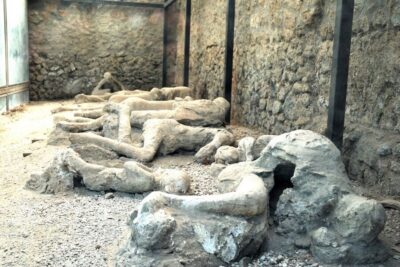
The casts of the victims of the eruption
This is the emotional core of Pompeii. Seeing the cast figures is a reminder that this wasn’t just a ruin, it was human tragedy. Plan for a moment of silence in your own head, even if you don’t stay long.
A practical note: because Pompeii is open-air and you walk a lot, you may not want to “power through” the most intense sections back-to-back. Give yourself breathing space between heavy stops and easier visual areas like frescoes and streets.
The Real Map Skills: How to Avoid Getting Lost in a Massive Site
The updated map is included, and it helps you navigate key points. Still, Pompeii can feel disorienting, especially when you’re tired or heat is high.
One verified booking wished the map made it clearer where facilities like toilets and cafes are located. That’s a good hint for you even if you get a different map version. Before you start walking too far, take a minute to scan for practical services so you don’t lose time later.
Also, be ready for a lot of ground. One review noted it can become a long walk if you are unsure where to go. That means good shoes are not optional. If you wear uncomfortable footwear, the time you saved at the entrance gets eaten up later by slow walking and frequent stops.
My simple on-site technique
I recommend you pick your first priority sight, then give yourself permission to wander within that “zone.” When you want another cluster, use the itinerary book to jump to the next target. This keeps the city from turning into one long loop.
Timing That Works: Going Later for a Calmer Pompeii
If your schedule can flex, aim to spend more time later. One verified booking found Pompeii felt much quieter after 4:30 pm, and that matches what you’d hope for at a major heritage site.
The reason this matters is mental. When the crowds thin out, you can look longer at frescoes, take photos without shoulder-to-shoulder pressure, and actually read the history in the book rather than rushing past it.
Since entry is available from 9:00 am to 5:00 pm, you can build a day that balances energy and atmosphere. You might start earlier to get through the larger entry flow, then shift into slower sightseeing in the last hour or so.
Price and Value: Is $41 a Good Deal for a Self-Guided Day?
At $41 per person, this works out best if you want three things at once:
1) entrance access
2) a keep-it guidebook you can use on-site
3) an updated map and suggested time routes
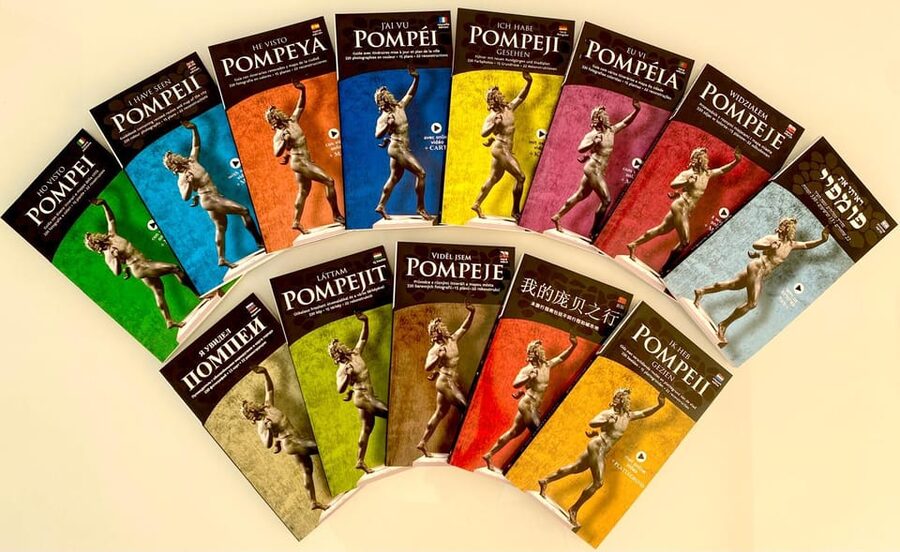
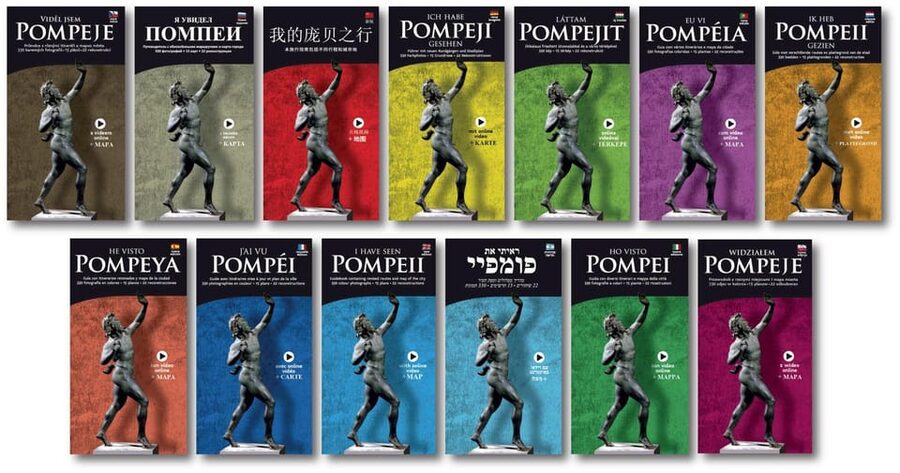
If you were going to visit Pompeii anyway, the entrance ticket cost is a baseline. The added value is that you’re not paying for a live guide, but you’re still getting structured learning, plus a souvenir book that translates into 13 languages.
Now, what about the “skip the line” promise? In practice, at least some waiting may still happen for security. Also, if you are expecting zero lines anywhere, you may feel disappointed. That doesn’t mean the product is useless. It means you should adjust expectations: think “faster main entry,” not “instant access with no waits.”
So, is it worth it? For most independent travelers who enjoy planning their own day and like to read a bit on-site, the value is strong. If you want a full service package with transfers and a guide walking you through the story in real time, you would likely prefer a guided tour instead.
Who This Pompeii Ticket Fits Best
This experience is a great match if you:
- want a no-stress visit where you can pause whenever you want
- prefer self-guided learning with a structured plan
- like history and ruins, but don’t want to rely on a group’s pace
- are visiting for a full day and can handle a lot of walking
It’s less ideal if you:
- are dependent on a live guide for interpretation
- want included transportation from your starting point
- dislike navigating a large site without clear facility markers
Also consider group dynamics. The book is provided for every two reservations. If you’re traveling in a larger group, you may want to coordinate who holds the book so everyone can follow the same timeline.
Should You Book This Skip-the-Line Pompeii Ticket?
Book this if you want a flexible, structured Pompeii day with skip-the-line entry at the main point of access, plus a take-home guidebook that keeps your sightseeing focused. The best part is the combination of independence with planning, especially if you use the 2, 4, or 6 hour itineraries like a road map.
Skip it or choose something else if you expect the skip-the-line feature to erase every queue, including security checks. And if you need included transfers or a guided walkthrough, this one is built for self direction.
If your goal is to see Pompeii at your pace, learn as you go, and avoid a hard group schedule, this is a solid way to do it.
FAQ
How long is the Pompeii visit with this ticket?
The ticket is valid for 1 day, and the site entry window is 9:00 am to 5:00 pm.
Where is the meeting point?
You meet staff at the information point located at Via Roma 123, Pompeii. The park entrance for your reservation is Piazza Anfiteatro.
What is included in the price?
You get the Pompeii entrance ticket, an English/Italian/Spanish/French guidebook (one book for every two reservations), an updated map, and itineraries for two, four, or six hours.
Is there a live guide during the visit?
No guide is included. The experience provides a guidebook and map with itineraries for you to use independently.
Can I enter Pompeii on my own schedule during the day?
Yes. You can enter independently and explore at your own pace within the 9:00 am to 5:00 pm window.
What language options are available?
The experience offers English, Italian, Spanish, and French.
Do I get a physical book as a souvenir?
Yes. The guide book is provided and can remain with you as a souvenir of your visit.
Is food included?
No. Food and drinks are not included.
Does the ticket include transfers to Pompeii?
No. Transfer is not included.
What should I bring?
Bring a passport or ID card, comfortable shoes, sun hat, and water. Comfortable clothes are also recommended.
With a Local Guide
- Pompeii: Entry Ticket and Guided Tour with an Archaeologist★ 4.8 · 19,459 reviews
- Pompeii: Skip-the-Line Entrance Ticket with Audio Guide★ 4.0 · 2,509 reviews
- Pompeii: Skip-the-line-Ticket and Guided Tour★ 4.6 · 1,152 reviews
- Pompeii: Guided Tour with Skip-the-Line Entry★ 4.9 · 812 reviews
- Pompeii: Skip-the-Line Entry Ticket with Digital Guide App★ 4.1 · 770 reviews
Choose the Right Entry
- Pompeii: Entry Ticket and Guided Tour with an Archaeologist★ 4.8 · 19,459 reviews
- Pompeii: Skip-the-Line Entrance Ticket with Audio Guide★ 4.0 · 2,509 reviews
- Pompeii: Skip-the-line-Ticket and Guided Tour★ 4.6 · 1,152 reviews
- Pompeii: Skip-the-Line Entry Ticket with Digital Guide App★ 4.1 · 770 reviews
- Pompeii: Afternoon to Sunset Guided Tour with Ticket★ 4.9 · 484 reviews
More Tour Reviews in Pompei Campania
- Pompeii: Entry Ticket and Guided Tour with an Archaeologist★ 4.8 · 19,459 reviews
- Pompeii: Small Group Tour with an Archaeologist★ 4.8 · 12,264 reviews
- Pompeii: Skip-the-Line Entrance Ticket with Audio Guide★ 4.0 · 2,509 reviews
- Naples: Pompeii and Mt. Vesuvius with Lunch and Wine Tasting★ 4.5 · 2,454 reviews
- Pompeii: Skip-the-line-Ticket and Guided Tour★ 4.6 · 1,152 reviews
More ways into Tickets.
 ★ 4.8Pompeii: Entry Ticket and Guided Tour with an ArchaeologistFrom $3519,459 reviews
 ★ 4.2Pompeii: Entry Ticket with Optional Audio GuideFrom $2612,360 reviews
 ★ 4.0Pompeii: Skip-the-Line Entrance Ticket with Audio GuideFrom $392,509 reviews
 ★ 4.5Pompeii: Archaeological Park Tour with Ticket on requestFrom $312,283 reviews
 ★ 4.6Pompeii: Skip-the-line-Ticket and Guided TourFrom $641,152 reviews
 ★ 4.1Pompeii: Skip-the-Line Entry Ticket with Digital Guide AppFrom $22770 reviews
 ★ 5.0Pompeii Ticket + Tour with Optional Tasting Experience at PompeiiFrom $35663 reviews
 ★ 4.9Pompeii: Exclusive Tour with Archaeologist and Entry TicketsFrom $50634 reviews
Other useful routes from here