

REVIEW · HERCULANEUM TOURS
Pompeii & Herculaneum: Skip-the-line & Digital Guide App
Stepping into ash-buried streets feels surreal. This one-day combo pairs skip-the-line entry with a smart digital guide so you can move at your pace through Pompeii’s streets and Herculaneum’s unusually preserved interiors. The big win is doing two major sites without being stuck on a rigid group schedule.
I especially like how fast you get tickets at the office in Pompeii, then get walking toward the ruins with little waiting. I also like that the app-style guidance helps you make sense of what you’re seeing in both places, with plenty of small story-style context. One drawback to consider: if you want a classic guided lecture, this is self-guided, so you’ll need your own rhythm and attention.
Pompeii can easily eat up the whole day. That matters because you’re splitting time between the two sites, and some people end up feeling Pompeii was the main event. Another thing to plan for is the practical stuff, like charging your phone and bringing headphones, since they are not included.
Key Highlights You’ll Actually Feel on the Ground
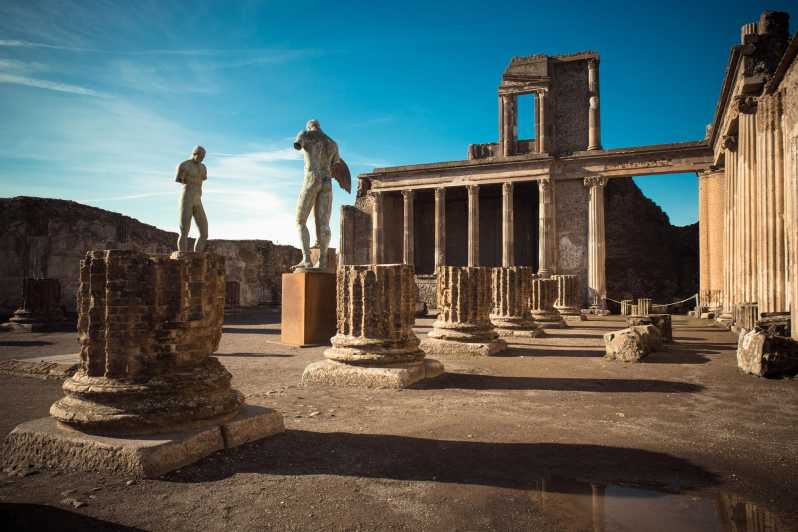
- Skip-the-line entry for both Pompeii and Herculaneum, so you spend more time walking ruins and less time waiting.
- Smartphone digital guide app that keeps you moving independently, not trapped to a fixed tour pace.
- Tickets collected at the Pompeii FS train station office are designed to be quick and straightforward.
- Under 10 minutes on foot from the ticket office to the Pompeii ruins means you start fast.
- Two sites in one day, with Pompeii’s streets and temples plus Herculaneum’s preserved homes, mosaics, and everyday objects.
Getting Your Skip-the-Line Tickets in Pompeii (No Guide Waiting for You)

This experience is built around convenience. You do not meet a person in person at a formal start time, and you get ticket information by WhatsApp the day before. Still, you should plan to physically collect your tickets from the provider’s office at the FS train station in Pompei.
What I like here is the low-friction start. Collecting tickets from the office in Pompeii is described as quick and uncomplicated, and the whole point is to avoid wasting your morning in paperwork lines. Once you have your tickets in hand, you are set up to head directly to the ruins.
Also, note the language support. The experience lists a host or greeter in multiple languages, but the flow is still self-guided. In practice, that means you’re not relying on a person to lead you minute by minute.
One practical consideration: keep your phone ready for the digital guide setup. The day before gives you the WhatsApp info, but you’ll still want a charged smartphone and time to download and test the app before you need it.
From Phone App to Headphones: How the Digital Guide Really Helps
The digital guide app is included, and it’s designed to work on your smartphone as you walk. In Pompeii, the app leads you through streets, temples, and houses, which is exactly what you need in a large open archaeological site. Without a guide, Pompeii can feel like a collection of viewpoints. With structured audio guidance, the same walk becomes a story of daily Roman life.
At Herculaneum, the app shifts to a different kind of experience. You’re looking at better-preserved houses, mosaics, and everyday objects. That means the guidance helps you pay attention to smaller details, like what you’re seeing and why it mattered to ordinary people.
Headphones matter here because headphones are not included. The tour instructions explicitly say to bring them, and they also say your phone should be charged. If you show up with a low battery or plan to listen through the phone speaker, you might end up annoyed by volume issues and ambient noise.
A small tip that helps: once you’re inside the ruins, pause for 30 seconds at a key starting spot and confirm the audio is working. It saves you from repeating the first part of a route while you’re already walking.
Pompeii Ruins: Walking the Streets, Temples, and Houses

Pompeii is where the day gets real. After collecting tickets at the FS train station office, you reach the ruins in just under ten minutes on foot. That quick walk is great because it keeps your first impressions fresh and avoids a long idle period.
Inside Pompeii, the app is your “choose-your-own-pace” guide. It helps you navigate ancient streets and shows you how temples and houses fit into the everyday rhythm of the city. I like this approach because Pompeii rewards curiosity, not speed. If you want extra time at a certain overlook or you want to linger where you can picture how people lived, you can.
A review detail that lines up with your planning: Pompeii often needs almost a full day to do justice to it. That doesn’t mean you have to rush, it means you should treat Pompeii as the main course. If you go in expecting a quick scan, you’ll feel squeezed when the time comes to switch gears for Herculaneum.
Pompeii also benefits from the skip-the-line setup. Archaeological sites can have crowded entrance moments, and those minutes add up. Here, your tickets are made to reduce that friction, so you can start walking sooner.
What can feel challenging: Pompeii is big and the layout can be wide open. If you’re the type who gets lost easily, rely on the app prompts and keep your phone volume comfortable. Your best strategy is not to try to cover everything, but to cover what the app tells you in a logical sequence.
Herculaneum Ruins: Preserved Homes and Everyday Objects

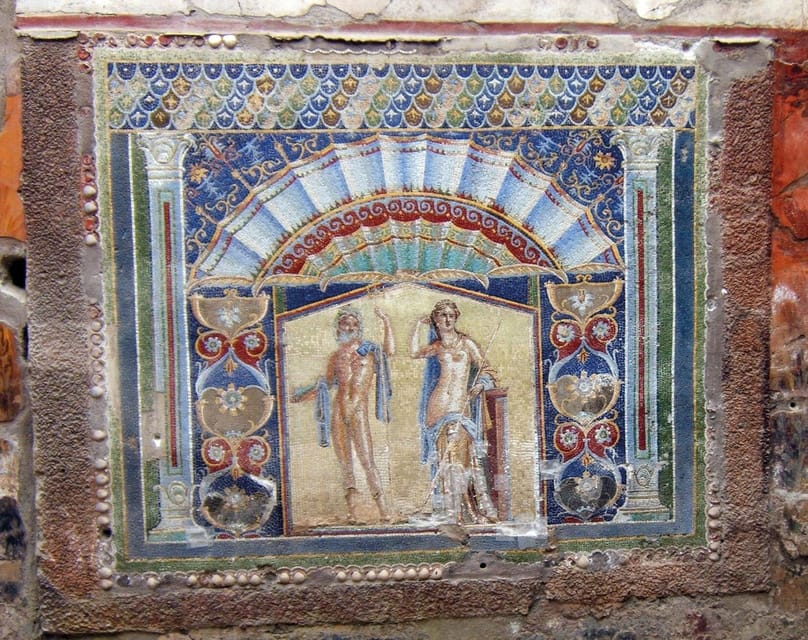
Herculaneum is different in feel, even if it’s equally important. The experience describes Herculaneum as lesser-known compared to Pompeii, and it focuses on remarkable preservation: houses, mosaics, and the extraordinary conservation of everyday objects.
That preservation is why Herculaneum can be so compelling. It’s one thing to see a ruin from the outside. It’s another thing to look at interiors and small details that help you imagine daily life, not just monumental architecture. If Pompeii is about big-city layout, Herculaneum can feel more intimate and close to ordinary routines.
Still, you should be aware of the tradeoff. One of the real-world takeaways from feedback is that some visitors end up finding Herculaneum less interesting than Pompeii. That might happen if you spend too little time in Herculaneum, or if you’re mainly excited by Pompeii’s scale and streets.
Also consider logistics if you’re traveling by car. Parking can be difficult around Herculaneum, based on feedback from a recent booking. Even if your day is mostly about the ruins, getting there and getting out matters when you only have one day total.
If you do Herculaneum, my advice is to approach it like a slower stop. Let the app guide you through the preserved elements, especially mosaics and the everyday-object details. Those are the moments that justify the switch from Pompeii.
Timing a One-Day Pompeii and Herculaneum Plan

This is a true one-day itinerary, and that means your success depends on pacing. You’ll start in Pompeii with skip-the-line tickets and a short walk to the ruins. Then you’ll move on to Herculaneum for the second site.
I’d plan for Pompeii to take longer than your first instinct. The experience includes a full-day outing, and the on-the-ground reality is that Pompeii is huge. If you want to take photos, read what you can, and follow the app at a thoughtful pace, give Pompeii the bulk of your time.
For Herculaneum, keep your expectations realistic. It’s absolutely worth seeing, but it can feel like a follow-up after Pompeii’s scale. The app can help, but you still have to manage your energy and attention for a second archaeological area in one day.
One more timing note: charge your phone before you leave. You’re relying on a digital guide app throughout the day, and the experience explicitly asks for a charged smartphone.
Price and Value: Is $72 a Smart Deal?
At $72 per person, you’re paying for two things that can be costly in time and convenience: skip-the-line entry for both Pompeii and Herculaneum, and an included smartphone digital guide app.
That combination is where the value comes from. If you had to buy separate entries without skip-the-line access, or if you needed a formal guided tour for both sites, costs and waiting time could add up. Here, the plan is built to let you spend your money on access and information rather than waiting.
You should also understand what you’re not getting. Lunch is not included, train is not included, and headphones are not included. If you arrive needing to buy everything at the last minute, your day can get pricier than the base amount.
My take: $72 is fair if you want independent control and you plan to use your phone guide properly. It’s less of a bargain if you prefer a live guide who answers questions on the spot, since this is self-guided.
What You’ll Miss Without a Live Guide
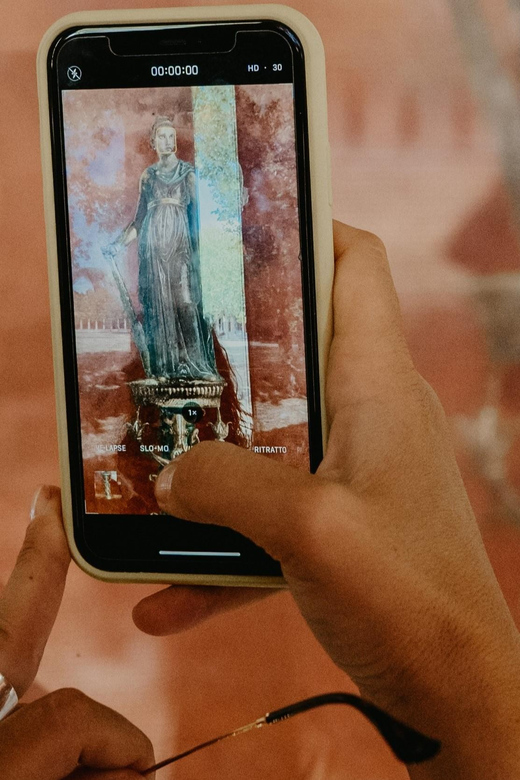
This experience is designed to feel modern: you get audio guidance through an app and skip-the-line tickets, but there is no person guiding you through the ruins. That’s the core tradeoff.
What you gain is freedom. The app encourages exploration at your own pace, so you can slow down where you care and speed up where you don’t. That also helps if your group has different interests, like one person wanting to focus on houses while another wants more streets and temples.
What you might miss is spontaneous clarification. If you like asking questions like, Why is this specific object placed here, or What’s the best thing to photograph, a live guide can be more responsive. With an app, you’ll get the provided audio route, and your questions have to be self-sourced.
If you’re comfortable reading signs, using the app prompts, and moving with intent, you’ll likely love this setup. If you want interaction, consider pairing this style with a separate guided add-on on another day.
Who Should Book This Pompeii and Herculaneum App Tour?

This fits best if you like independence. You’re getting skip-the-line access and a guided narrative through the app, but you’re not locked into one group’s pace. It’s also a good match for people who know they’ll want time in Pompeii, not just a quick photo sprint.
I’d especially recommend it to:
- Solo travelers or couples who like making their own route.
- Families who want a structured guide but fewer rigid group stops.
- Visitors who hate waiting in queues and want more time inside the ruins.
- Anyone comfortable using a smartphone for audio during walking days.
It may be less ideal for:
- People who strongly want a live guide to answer questions in real time.
- Anyone who does not want to plan around phone battery life and bringing headphones.
Should You Book This Tour?
Yes, if your priority is skipping lines and getting an audio-guided walk through both Pompeii and Herculaneum on your own schedule. The combination of quick ticket pickup in Pompeii, a short walk to the ruins, and a smartphone guide that explains what you’re seeing is a practical way to get value from a limited one-day window.
Before you book, make one key decision: treat Pompeii as the main event. If you go in planning to spend very little time there, you might end up feeling shortchanged when it’s time to move to Herculaneum.
If you want a clear success recipe, it’s this: download and test the app early, bring headphones, give Pompeii most of the day, and let Herculaneum be your slower, detail-focused finish.
FAQ
Where is the meeting point?
There is no in-person meeting. You collect your tickets from the provider’s office at the FS train station in Pompei.
How do I get my tickets?
You receive your tickets the day before via WhatsApp.
Do I need headphones?
Yes. Headphones are not included, and the instructions specifically say to bring them.
Do tickets skip the line at both sites?
Yes. The experience includes skip-the-line entry tickets for Pompeii and for Herculaneum.
Is lunch included?
No. Lunch is not included, so you’ll need to plan your own meal during the day.
What is the cancellation policy?
This activity is non-refundable.
What languages is the guide available in?
The experience lists languages as English, French, Italian, German, and Spanish.
Is the experience wheelchair accessible?
Yes, it is listed as wheelchair accessible.
Does the provider handle discounted tickets for minors or EU citizens aged 18 to 24?
No. The ticket office at the entrance allows free tickets for minors and reduced tickets for European citizens aged 18 to 24, but the activity provider does not offer this type of service. There is also no skip-the-line option for those categories.
With a Local Guide
- Pompeii: Entry Ticket and Guided Tour with an Archaeologist★ 4.8 · 19,459 reviews
- Pompeii: Skip-the-Line Entrance Ticket with Audio Guide★ 4.0 · 2,509 reviews
- Pompeii: Skip-the-line-Ticket and Guided Tour★ 4.6 · 1,152 reviews
- Pompeii: Guided Tour with Skip-the-Line Entry★ 4.9 · 812 reviews
- Pompeii: Skip-the-Line Entry Ticket with Digital Guide App★ 4.1 · 770 reviews
More Tour Reviews in Pompei Campania
- Pompeii: Entry Ticket and Guided Tour with an Archaeologist★ 4.8 · 19,459 reviews
- Pompeii: Small Group Tour with an Archaeologist★ 4.8 · 12,264 reviews
- Pompeii: Skip-the-Line Entrance Ticket with Audio Guide★ 4.0 · 2,509 reviews
- Naples: Pompeii and Mt. Vesuvius with Lunch and Wine Tasting★ 4.5 · 2,454 reviews
- Pompeii: Skip-the-line-Ticket and Guided Tour★ 4.6 · 1,152 reviews
More Days in Herculaneum
- Pompeii: Small-Group Tour of Pompeii and Herculaneum★ 4.8 · 867 reviews
- Pompeii and Herculaneum: Guided Tour with an Archaeologist★ 5.0 · 164 reviews
- From Naples: Pompeii and Herculaneum VIP Tour with Lunch★ 4.4 · 129 reviews
- Pompeii, Herculaneum, and Vesuvius: Full-Day Tour★ 3.7 · 21 reviews
- From Herculaneum to Pompeii: Audioguides + Entrance Tickets★ 3.6 · 19 reviews
More ways into Herculaneum Tours.
 ★ 5.0Pompeii and Herculaneum Small Group Tour with an ArchaeologistFrom $771,350 reviews
 ★ 4.8Pompeii: Small-Group Tour of Pompeii and Herculaneum867 reviews
 ★ 4.1Ercolano: Herculaneum Entry Ticket with Optional Audio GuideFrom $21581 reviews
 ★ 4.3Herculaneum: 3D Walking Tour with Skip-the-Line TicketFrom $45313 reviews
 ★ 4.5Guided Day Tour of Pompeii and Herculaneum with Light LunchFrom $185311 reviews
 ★ 5.0Private Day Tour to Vesuvius, Herculaneum & Pompeii with Pick UpFrom $120279 reviews
 ★ 4.0Ercolano: Herculaneum Skip-the-Line Ticket & Audio GuideFrom $35275 reviews
 ★ 4.3Herculaneum: Skip The Line Entrance ticket + AudioguideFrom $35266 reviews
Other useful routes from here