
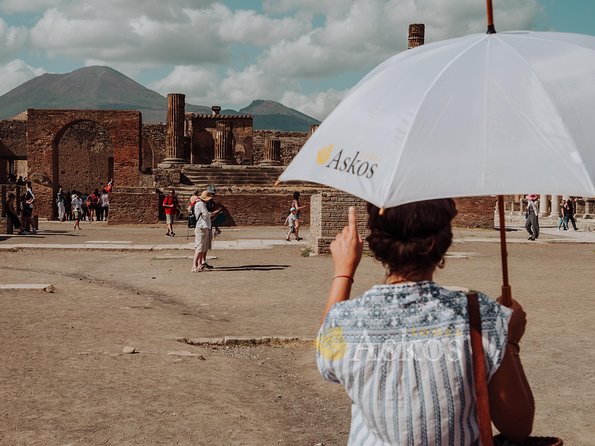
REVIEW · TOURS
Pompeii: Small Group Tour with an Archaeologist
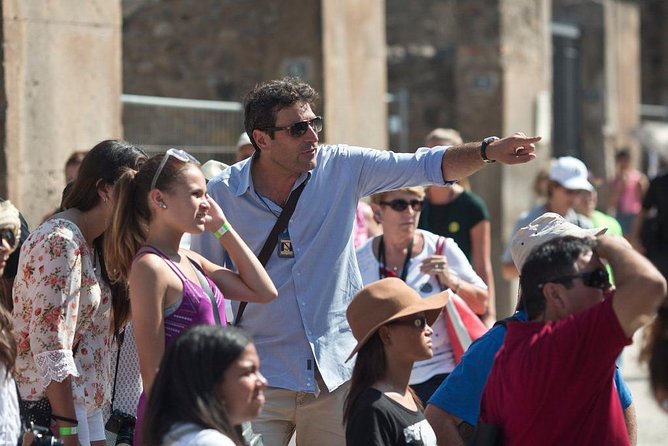
Pompeii hits different with an archaeologist leading. You walk through streets frozen in time, explained by experts who know what to point out, from the Great Theatre to the everyday details hidden in plain sight. I like that the tour is built for real listening, with a guide who keeps things moving and headsets that help you catch every word, including from guides like Roxanne and Paolo.
Two things I especially like: first, you get the big must-see hits with context, like the Forum and the market-breath of public life, so you stop seeing ruins as random rocks. Second, the tour leaves you time to wander on your own after the guided portion, so you can linger over mosaics and frescoes that catch your eye. One drawback to keep in mind is that the site has uneven ground, steps, and ramps, so this tour is not a good match for wheelchair users or travelers with mobility impairments.
- Porta Marina Superiore as your entry point, a great starting line for understanding the city layout fast
- Forum and civic landmarks like the Basilica, baths, temples, and Great Theatre, explained in plain language
- Up-close frescoes, mosaics, and wall art, with guidance on what you are actually looking at
- Lupanar stop included, with the name explained and the preserved stone beds and frescoes in view
- Villa of the Mysteries option (3 hours) for visitors who want the frescos with more time
- Headsets for larger groups, which makes a huge difference in Pompeii’s noisy crowds
Pompeii changes when the guide is an archaeologist
Pompeii is one of those places where the “where do I look?” question can swallow your whole day. This tour solves that fast. An archaeologist guide doesn’t just recite dates, they teach you how the city worked, what certain buildings signaled, and why the eruption created such a clear snapshot of everyday Roman life.
I also like the energy of the better guides on this route. People have highlighted archaeologists such as Alexandra, Alessandra, and Teresa for clear storytelling and quick answers to questions. That matters, because Pompeii is full of small clues, and without a guide you can easily miss what makes those clues important.
Starting at Porta Marina Superiore, and why it matters

Your tour enters Pompeii at Porta Marina Superiore, one of the city’s seven gates. That single choice helps you orient yourself. Instead of starting deep inside and guessing how things connect, you begin at the edge, then work your way through major streets and key public areas.
One practical perk is that there is a free cloakroom service near the Porta Marina Superiore entrance, subject to availability. If you have a small bag, this can keep your hands free for photos and headsets later, and it helps you avoid lugging extra weight through the site.
Timing is another real-world factor. Pompeii gets crowded, and the guide’s route choices can affect how often you hit bottlenecks. Multiple guides have been praised for steering the group away from the heaviest congestion, which is exactly what you want when you only have a couple hours.
The Forum and civic Pompeii: the city’s public heartbeat
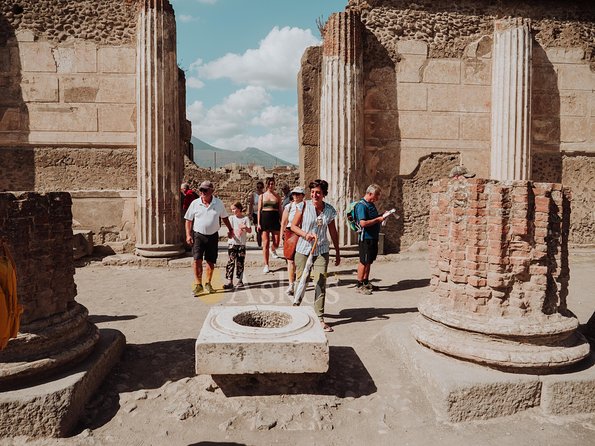
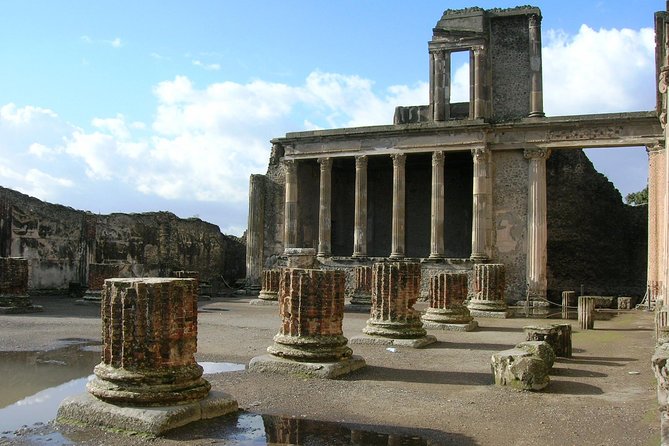
After you get oriented, you move into the heart of public life. The tour includes the Forum and nearby civic buildings, including the Basilica and stops along the way that connect daily behavior to real spaces.
Here is why the Forum stop is worth paying for. Roman public life was not just speeches and statues. It was commerce, legal decisions, announcements, meetings, and noise. When a guide explains how the space functioned, the buildings stop being “pretty” and start being useful, like a map of how people lived.
You will also hear how Pompeii’s layout reflects its status and growth. The eruption in 79 AD preserved a whole working city under volcanic ash from Mount Vesuvius, which is why Pompeii can feel shockingly personal. The guide helps you translate that preserved stillness into human routine: where people gathered, where transactions happened, and where social power played out.
Great Theatre, temples, baths, and the daily rhythm
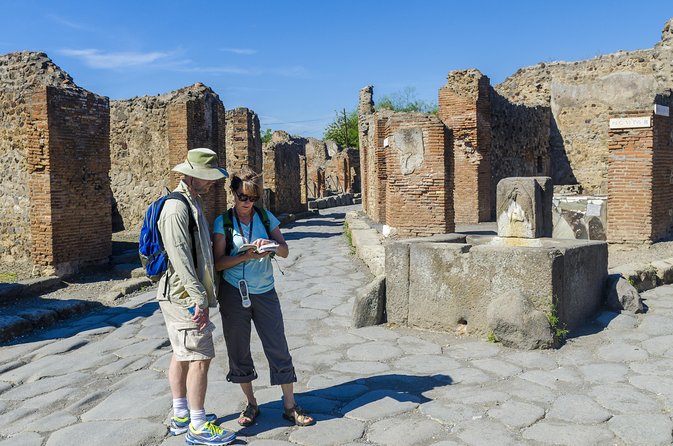
The route typically includes major cultural and religious landmarks, plus the parts of town where people cleaned up and socialized. Expect stops that can include the Temple of Apollo, the Temple of Jupiter, Forum Baths, and the Great Theatre.
This is a strong combo for first-timers because it covers more than one side of Roman life. The theatre reveals what people did for entertainment and status. Temples show how faith and civic identity blended. Baths are where you see daily habits in stone, including the idea that hygiene and leisure were a big deal, not an afterthought.
A small but important detail: some visitors find the walking pace very manageable for a short tour, but you still need sturdy shoes. The terrain is uneven, and the group covers a lot of ground in a short time. If you are sensitive to steps or ramps, plan accordingly.
Houses and wall art: learning to read Pompeii’s interiors
Pompeii is not just streets. It is also houses, shops, and the art that decorated walls. On this tour, you get inside or closely view key homes and architectural highlights, including the House of the Faun and the House of the Vettii.
What makes these stops valuable is interpretation. A guide can explain why certain layouts or decorations mattered, and what the frescoes and mosaics suggest about wealth, taste, and social messaging. Up close, the paint and stonework can feel more vivid than you expect from photos.
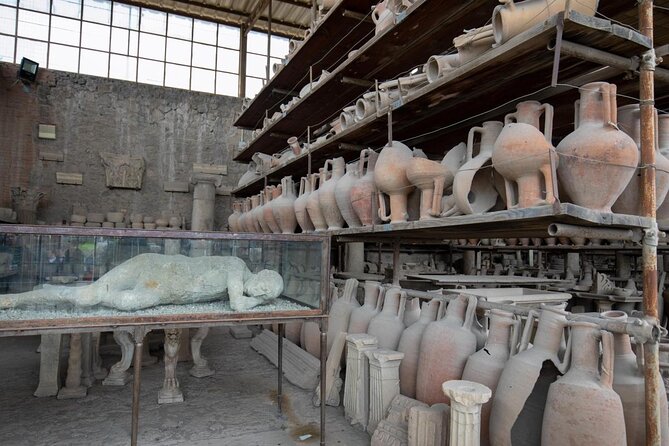
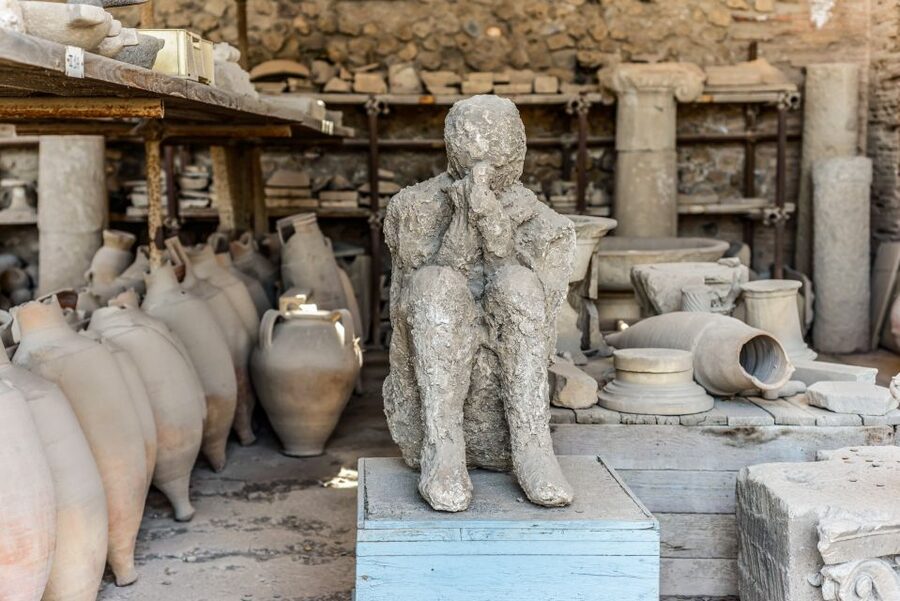
You may also see plaster casts of people from the eruption. These are powerful in a way that is hard to describe until you stand close. One practical note to set expectations: plaster casts may be displayed in sealed glass cases rather than in their original places throughout the site, so you should not assume you will see them embedded in dwellings like you might imagine.
The Lupanar stop: history with adult context
One of the most talked-about moments on this route is the visit to Lupanar, often described as Pompeii’s famous brothel. The tour includes how the name is understood, plus preserved elements like stone beds and frescoes.
This stop can come with adult themes due to the subject matter and the kinds of markings you may see in that area. The good news is that experienced guides tend to handle this with sensitivity and keep the focus on historical context rather than shock value. If you are traveling with teens or asking about what will be addressed, it is worth asking what your guide plans to highlight during the stop.
Even if you are not interested in the topic itself, this is a useful Pompeii lesson. It shows how the city’s social systems and economic realities worked, and it underlines that the ruins are not sanitized. Roman life included everything from religion and politics to commerce and temptation.
The Villa of the Mysteries for the 3-hour option
If you choose the longer experience, you add a visit to the Villa of the Mysteries. This is where the tour’s pacing becomes more relaxed and the artwork gets more attention.
The Villa stop is often a favorite because the frescos invite slow looking. You can stand there longer than you would on a rushed, no-guide wander. A guide’s job here is to help you notice recurring scenes and details that are easy to miss when you are just scanning.
If you are deciding between the 2-hour and 3-hour versions, ask yourself one question: do you want the highlights and a chance to roam, or do you want more time for one of Pompeii’s most visually intense stops? The 3-hour tour is the better choice for art-focused visitors and anyone who wants a deeper narrative before self-exploring.
After the guided walk: how to use your free time

A key value of this tour is that you do not end with the last stop and a hard stop. You get freedom to explore the archaeological site on your own after the guided portion.
How should you use that time? First, return to anything that grabbed your attention during the guide’s walk. If you loved the frescoes, go back to where the guide pointed out the most telling details. If the public buildings made sense to you, you can spend extra time in those civic areas to get your bearings.
Second, consider timing. Pompeii closes in the late afternoon, and finishing later can shrink your available wandering time. If you want more than a quick second pass, pick an earlier departure when you can.
Third, use your questions. If your guide mentions specific things to watch for, keep an eye out. People have said they ended up exploring for additional hours after the tour because the guide gave them a “what to look for” mental checklist.
Price and value: where the $40 ticket really pays off
This tour runs about $40 per person, with a 2- to 3-hour format. That is not just paying for someone to walk you around. You are buying three practical advantages.
First, the ticket includes Pompeii entry via the operator, so you are not scrambling for separate admissions. Second, you pay for an archaeologist guide who can connect spaces to stories, and that connection is the difference between seeing ruins and understanding them. Third, you get headsets for larger groups, which can save you from the frustrating problem of missing key explanations.
Also, small-group design matters. Even with a shared experience, the guide’s ability to keep the group moving and answer questions is more noticeable than on mega tours. If you prefer a more private rhythm, there is a private group option as well.
Food and drinks are not included, so plan on buying something after or carrying light snacks if allowed by your day plan. Transportation is also not included, so build your day around getting to the meeting area and then returning.
Languages and guide style: you want clarity, not just translation
The tour offers live guidance in multiple languages, including English, French, Spanish, German, Portuguese, and Italian. One important detail is that shared group and private options do not always provide the same languages, so check what language you need before you commit.
For your comfort, headsets help a lot when you are in a crowd. Still, if you are sensitive to accents, you might notice it depending on the guide and your language comfort. The best guides build in comprehension by asking if everyone has questions, which is exactly how you should want a history tour to work.
What to bring, what to avoid, and quick ground rules
This tour is straightforward, but the rules matter in an outdoor site.
Bring a passport or ID card. A copy is accepted. Wear sturdy, grippy shoes, because Pompeii’s surfaces are uneven. If you have a problem with stairs or steep climbs, it is not recommended, and the company notes it is not suitable for wheelchair users.
What is not allowed: smoking, luggage or large bags, and mobility scooters. If you arrive with a larger bag, plan for storage near the entrance if cloakroom services are available.
Children must be accompanied by an adult. Dogs larger than 10 kg are not allowed.
Who should book this Pompeii tour, and who should consider alternatives
This experience is a great fit if you want to get oriented quickly and you like learning from someone who can explain why each stop matters. It is also a strong match for families who want structure, since the tour is short enough to keep attention and paced walkways manageable for many visitors.
It may not be ideal if you need step-free access. Pompeii is not designed for modern mobility, and this route includes steps and ramps with limited accessibility.
If you are the type who loves art and wants extra time at the Villa of the Mysteries, the 3-hour option is worth choosing. If you want a quick highlight reel and then lots of freedom afterward, the 2-hour option often hits the right balance.
Should you book the Pompeii Small Group Tour with an Archaeologist?
Yes, if your goal is to see Pompeii and understand it without spending your whole day guessing. The strongest reason to book is the combination of expert interpretation, major sites like the Forum and Great Theatre, and the ability to walk on your own afterward.
Choose the 3-hour version if you really want the fresco time at the Villa of the Mysteries. Choose the 2-hour version if you want the key landmarks and then a flexible afternoon to follow your own interests.
Just be honest about your mobility comfort, and pick the language option you can fully follow. If you do those two things, this tour is one of the simplest ways to turn Pompeii from ruins you saw into a city you understood.
FAQ
How long is the Pompeii tour?
The experience runs about 2 to 3 hours, depending on whether you select the standard 2-hour tour or the 3-hour option that includes an additional visit.
What’s included in the tour price?
It includes the Pompei Express entry ticket, a 2- or 3-hour guided tour led by an archaeologist, and headsets for listening for groups of 16 or more. You also get time to explore the archaeological site on your own after the guided portion.
Do you get a guided tour inside the archaeological site?
Yes. You enter Pompeii and receive a guided tour that includes multiple Pompeii highlights as part of the planned route.
Where does the tour start?
The meeting point may vary depending on the option you book. The tour enters Pompeii at Porta Marina Superiore.
Is there a private tour option?
Yes, private group tours are available in addition to shared small-group tours.
Is this tour suitable for wheelchair users or mobility impairments?
No. The tour is not recommended for travelers with mobility issues or impairments due to steps, ramps, and uneven terrain. It is not suitable for wheelchair users.
More Tours in Pompei Campania
- Pompeii: Entry Ticket and Guided Tour with an Archaeologist★ 4.8 · 19,459 reviews
- Pompeii: Skip-the-line-Ticket and Guided Tour★ 4.6 · 1,152 reviews
- Pompeii: Small-Group Tour of Pompeii and Herculaneum★ 4.8 · 867 reviews
- Pompeii: Guided Tour with Skip-the-Line Entry★ 4.9 · 812 reviews
- Pompeii 3hours Villa of Mysteries tour with an Archaeologist★ 4.8 · 486 reviews
More Tour Reviews in Pompei Campania
- Pompeii: Entry Ticket and Guided Tour with an Archaeologist★ 4.8 · 19,459 reviews
- Pompeii: Skip-the-Line Entrance Ticket with Audio Guide★ 4.0 · 2,509 reviews
- Naples: Pompeii and Mt. Vesuvius with Lunch and Wine Tasting★ 4.5 · 2,454 reviews
- Pompeii: Skip-the-line-Ticket and Guided Tour★ 4.6 · 1,152 reviews
- Pompeii: Small-Group Tour of Pompeii and Herculaneum★ 4.8 · 867 reviews
More ways into Tours.
 ★ 4.8Pompeii: Entry Ticket and Guided Tour with an ArchaeologistFrom $3519,459 reviews
 ★ 4.6From Naples: Sorrento, Positano and Amalfi Full-Day TourFrom $10710,988 reviews
 ★ 5.0From Naples: Sorrento, Positano & Amalfi Coast – Small Group TourFrom $768,643 reviews
 ★ 5.0Pompeii Small Group Tour with an ArchaeologistFrom $356,593 reviews
 ★ 4.6Naples or Sorrento: Full-Day Pompeii and Mount Vesuvius TourFrom $1044,235 reviews
 ★ 4.8From Naples: Premium Tour of Sorrento, Positano, AmalfiFrom $853,606 reviews
 ★ 4.8Exclusive Capri Boat Tour and Optional Blue GrottoFrom $1433,170 reviews
 ★ 4.4From Naples or Sorrento: Pompei Half-Day TourFrom $752,645 reviews