
REVIEW · 2-HOUR EXPERIENCES
Pompeii: 2-Hour Guided Tour with an Archaeologist
Pompeii becomes personal with one smart guide. This 2-hour walk through the western part of Pompeii is built around how the city worked, not just what it looked like, with expert interpretation of the 79 AD eruption and what survived. You’ll follow Roman streets, public buildings, and house interiors, with story-first context that helps the ruins click into place.
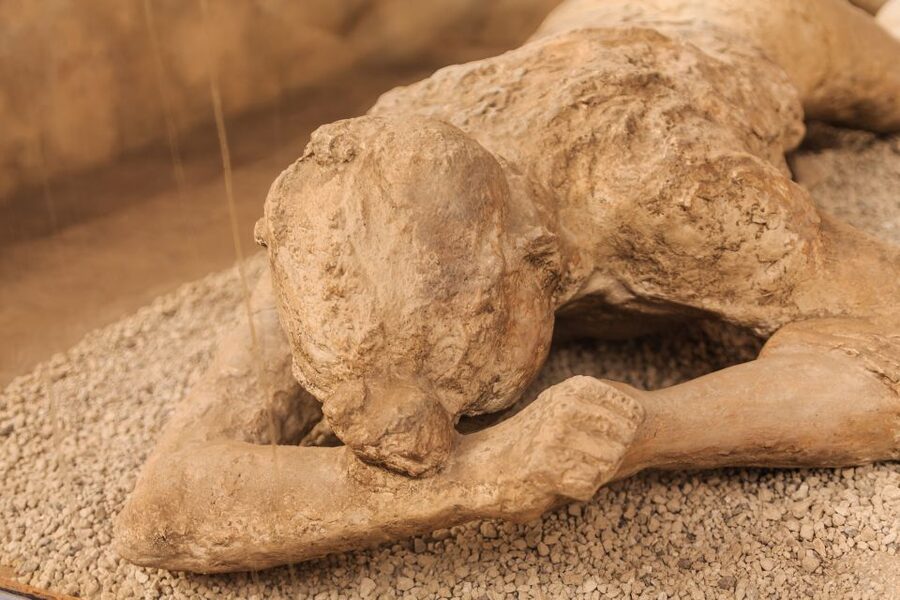
What I love most is the mix of big public life and small human details. I especially like the focus on the Forum and Basilica areas, where politics and daily business played out, and then the stark stop for plaster casts of people and animals caught in the moment of death.
One thing to consider: Pompeii is huge, and two hours is tight. You also start at a meeting point that can be hard to find if your GPS struggles with the area, so give yourself a few extra minutes to locate Porta Marina confidently.
Key highlights worth planning for
- Archaeologist-led storytelling that turns ruins into real daily routines
- Forum and Basilica focus on political and social life in Pompeii
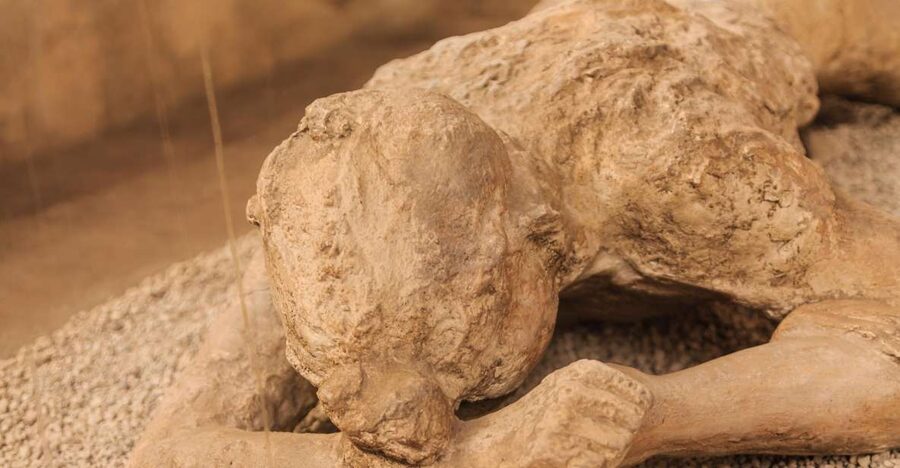
- Plaster casts that make the 79 AD tragedy feel immediate and specific
- Lupanar visit for a frank look at how commerce and culture mixed in Roman town life
- House stops (like the House of Menander and House of the Faun) that show how wealth and taste worked
- Theater and amphitheater time to connect entertainment with the shape of the city
Pompeii in two hours: what a guided archaeologist walk really gives you
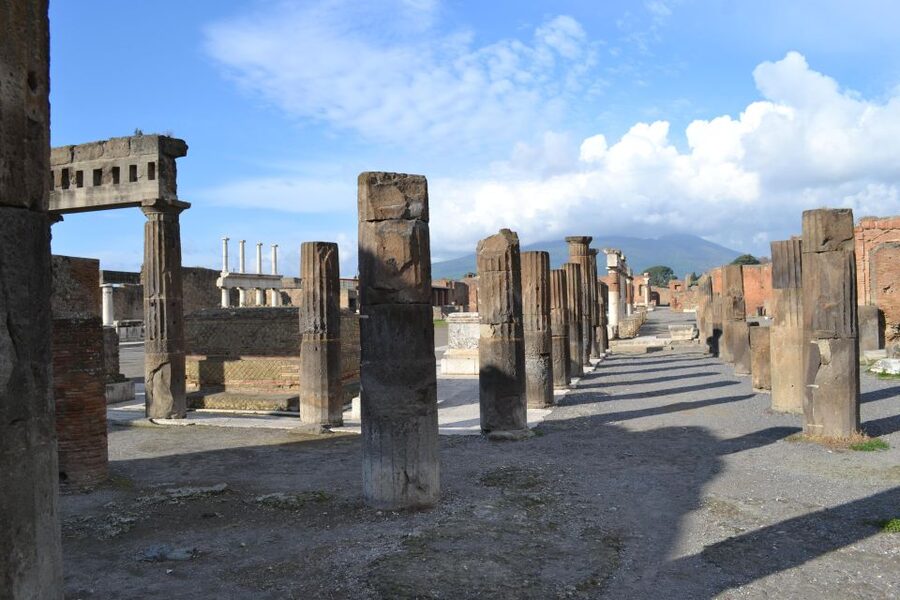
Pompeii can feel like a museum maze if you show up without a plan. This tour is short on purpose, which is good news if you want the highlights without spending the whole day fighting crowds and confusion. The payoff is structure: you move through a focused slice of Pompeii while your guide connects what you see to how Romans lived and governed.
The best part is the why behind each stop. You’re not only staring at ancient stone. You’re learning how Pompeii’s buildings fit together as a functioning city, from public squares to baths to domestic spaces. And because the guide is an archaeologist, the explanations stay grounded in what archaeologists can actually interpret from the site.
You’ll also hear the big picture version of the tragedy. The city was buried under molten ash and lava from Mount Vesuvius in 79 AD, and those layers are part of why the town is preserved so clearly. Your guide brings that event down to street level, so the ruins feel less like random ruins and more like a place with a daily rhythm.
Starting at Porta Marina Superiore: the western entry point that makes sense
You meet near Porta Marina Superiore, the starting zone given for this tour. Depending on the option booked, the listed meeting points include Via Villa dei Misteri, 2, close to Porta Marina. Either way, you’re entering from the side that leads you into western Pompeii, where many of the most important public buildings and major neighborhoods are concentrated.
This choice matters. If you’re only doing Pompeii for a couple hours, starting in the right area can save you from wasting time crossing the site at random. Here, your route is designed so the big landmarks stack in a logical order, and your guide keeps momentum going as you move from exterior spaces to interiors and semi-interior areas.
Practical tip: plan to arrive early enough to find the meeting spot comfortably. One issue that comes up is that the meeting location may not be easy to locate in GPS, so a buffer helps you start the tour calm instead of rushed.
The Forum and Basilica zone: where politics and commerce meet stone
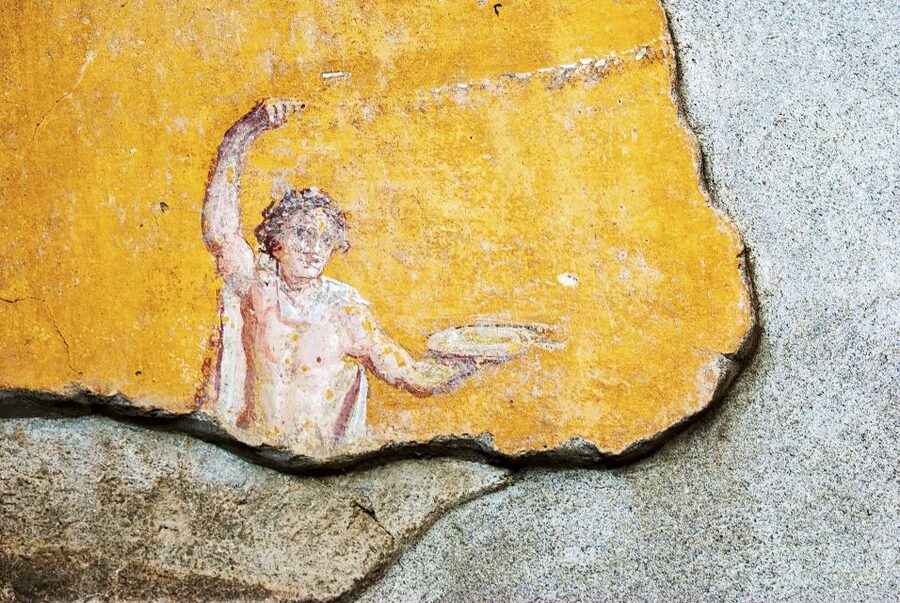
Soon after you’re in motion, the tour concentrates on the heart of public life. You’ll visit the Foro Civile di Pompei (Forum) and the Basilica, and these are the stops that give you the clearest sense of how Pompeii ran.
The Forum is where political and social life happened, and it’s more than a big open space. Think of it as the city’s meeting point for decisions, announcements, and everyday business. The Basilica supports that role, functioning like a court and civic hub where people gathered around public procedures.
What I like about this focus is that it prevents a common Pompeii mistake: wandering from building to building without connecting the dots. Once you understand the Forum and Basilica, other stops start to make sense, even when you’re looking at something as specific as a shop frontage or a domestic doorway.
Thermal baths, food culture, and how daily routines show up in ruins
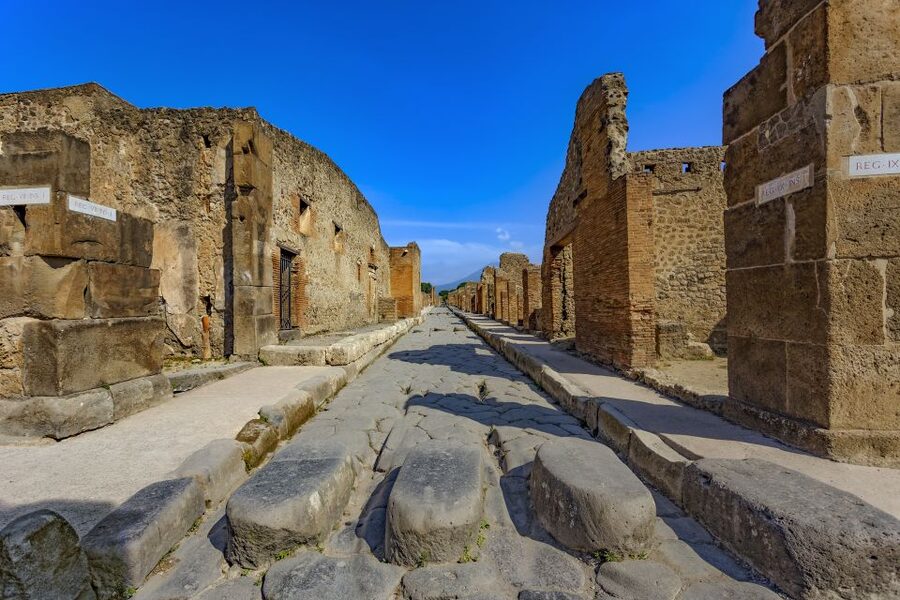
A Pompeii tour is only half history unless it also answers the question, how did people spend ordinary hours? This one includes the Forum Baths and also brings in Roman daily life through smaller details.
You’ll see how public bathing worked as social routine, not just hygiene. Baths were places to talk, relax, and move through the rhythm of the day. In ruins, you often read the layout as much as the decoration, and this tour gives you the right framing so you can interpret what you see instead of guessing.
Food culture is also part of the experience. The tour description includes a stop at a bakery where you can still see remains of utensils, and it even notes the presence of food remnants. That kind of detail is why Pompeii feels different from many other ancient sites. You’re not just observing architecture; you’re seeing traces of daily production.
If you care about the texture of daily life, this is one of the best “value per minute” parts of the route.
House stops that matter: Menander, Faun, Tragic Poet, and Vettii
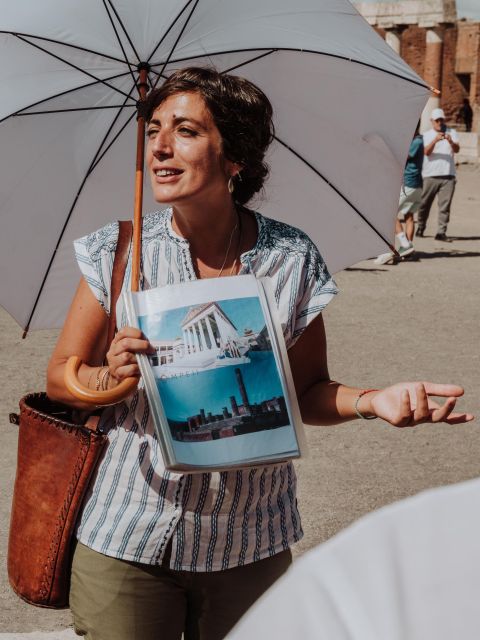
Pompeii’s residential areas are where you see how wealth, taste, and family life played out. This tour includes multiple houses, and each one supports a different angle on how people lived.
You’ll visit the House of Menander, and you’ll also see the House of the Faun. Houses like these are often where you expect art and opulence, but the real lesson is layout and function. Rooms connect in ways that reflect daily movement and social hierarchy inside the home.
The tour also references other standout domestic stops like the House of the Tragic Poet and the House of the Vettii. Even if you only catch certain focal points during the two-hour window, the guide’s job is to point out what makes each house distinct, rather than letting you skim past them like a checklist.
Why this works for you: once you’ve seen public Pompeii at the Forum and Basilica, you can compare it to private space. The contrast helps you understand what was shared versus what was guarded.
Lupanar and the uneasy side of Roman city life
Yes, the tour includes the Lupanare, also known as an old brothel, and it does so as part of understanding real Roman society. This is not handled as sensationalism. It’s presented in the context of how commerce, entertainment, and everyday needs shaped the city.
The reason this stop lands well on a short tour is that it broadens your understanding beyond politics and domestic life. Pompeii wasn’t a tidy textbook. It was a functioning city with services that people used, and the built environment reflects that.
If you prefer your ancient sites only in “pretty and quiet” mode, this might feel a bit uncomfortable. But if you want Pompeii to feel human and real, it’s a key piece of the puzzle.
Plaster casts and the bakery detail: when the past hits harder
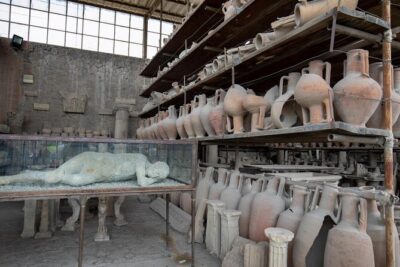
The most emotionally memorable elements are often the ones that make the tragedy concrete. This tour includes viewing plaster casts of humans and animals at the time of their death. That moment is hard to shake once you see it, because it turns the eruption from a historic date into visible evidence of what happened.
The guide’s interpretation matters here. Without context, you might focus on the shock factor only. With an archaeologist-led explanation, you’re better able to connect the casts to what’s known from the site and to understand why Pompeii and neighboring sites were rediscovered and preserved in a way that still matters today.
There’s also that bakery stop, where you can see remains of utensils and even the note that food remnants are present. Again, the point isn’t just the novelty. It’s the way it makes daily life feel close, which then makes the disaster feel even more immediate.
Theatre and amphitheater: entertainment, crowd design, and city energy
Entertainment shows up in Pompeii in dramatic ways. This tour includes the Large Theatre and the Amphitheater of Pompeii.
What I like about pairing these is that it helps you understand that entertainment wasn’t one-size-fits-all. The different venues suggest different event types, seating patterns, and ways crowds gathered. Even in a two-hour format, you can pick up the idea that public life centered around scheduled moments where people gathered as a community.
This section also helps if you’re the type who enjoys “how people used space” questions. You can look at the shape of seating and structure and connect it to how the city moved and socialized.
Price and value: is $175.74 per person worth it?
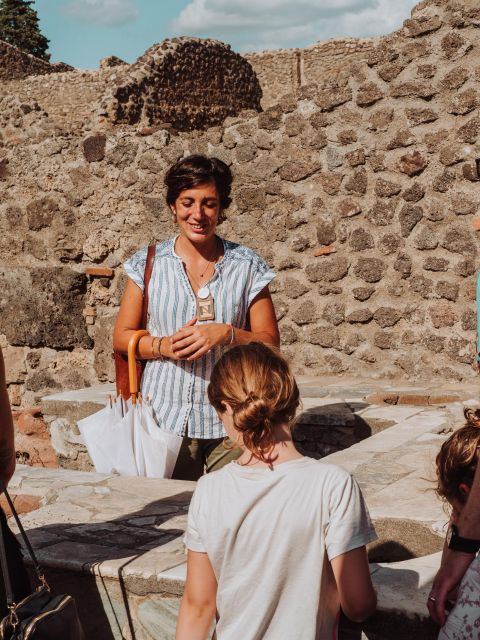
At $175.74 per person for a two-hour guided visit, this is not a budget Pompeii add-on. For some travelers, that’s exactly the point. The value here is speed with meaning. Instead of spending your time trying to figure out what you’re looking at, you get an archaeologist guide framing the site so the highlights land faster.
You’re also getting Pompeii entry tickets included, which matters when you’re budgeting daily activities. Plus, the tour provides disposable earphones for bigger groups, which helps with audio clarity even when crowds swell.
Is it worth it for you? It’s best if you want a high-impact visit and you plan to see other sites afterward, like additional Naples area stops or another ancient ruin. If you only like slow wandering and you’re fine researching on your own, you might choose a self-guided approach. But if you want a guided “greatest hits” that feels grounded and not fluffy, the price is easier to justify.
Language options and group style: what to expect from the experience format
This is set up as a private group experience, with a live guide offered in multiple languages: French, German, Spanish, Italian, and English. For me, that matters because Pompeii rewards listening. A clear guide narrative helps you notice features you might miss when you’re moving fast.
One more practical note: even though it’s listed as a private group, the tour includes disposable earphones for bigger groups. That tells you this provider is used to different group sizes and still wants audio to work on site.
If you like having your questions answered in real time, the structure of a guided walk helps. Many of the guide names tied to the experience in feedback include people like Rosalina, Tonia, Enzo, Paola, Alessandro, Giancarlo, Sergio, Ana, Felicia, and Chiara, and they’re repeatedly praised for keeping the tour engaging and well paced within the short time window.
Should you book this Pompeii archaeologist tour?
I’d book it if you want Pompeii to feel like a coherent story in two hours, especially if it’s your first visit. The combination of public spaces (Forum and Basilica), private houses (Menander, Faun, and others), and “real life” stops (baths, a bakery with traces, and the Lupanar) gives you a well-rounded view without the time sink.
I might skip or reconsider if you strongly need a flexible pace for your entire visit, because Pompeii is big and the tour is short. Also, double-check mobility needs ahead of time. The tour info lists both wheelchair accessibility and a statement that it is not suitable for wheelchair users, so it’s smart to confirm what will work for your specific situation before paying.
If you want a guided experience that turns ruins into everyday Roman life with an archaeologist’s lens, this is one of the more efficient ways to do it.
FAQ
How long is the Pompeii guided tour with an archaeologist?
It lasts 2 hours.
Where do I meet the guide for this tour?
The meeting point is listed as Pompei – Porta Marina, Via Villa dei Misteri, 2 (with starting location options depending on what you book).
What is included in the price?
The tour includes a guide, Pompeii entry tickets, and disposable earphones for bigger groups.
Which languages are available for the live tour guide?
Live guide languages listed are French, German, Spanish, Italian, and English.
What should I bring for the Pompeii tour?
Bring comfortable shoes, sunglasses, a sun hat, and water.
Is it free to enter Pompeii on the first Sunday of the month?
Entrance is free on the first Sunday of each month, but tickets cannot be reserved ahead of time, so entry is not guaranteed.
Is this tour wheelchair accessible?
The information includes wheelchair accessible, but it also states not suitable for wheelchair users. You should confirm directly with the tour provider before booking to avoid surprises.
With a Local Guide
- Pompeii: Entry Ticket and Guided Tour with an Archaeologist★ 4.8 · 19,459 reviews
- Pompeii: Skip-the-Line Entrance Ticket with Audio Guide★ 4.0 · 2,509 reviews
- Pompeii: Skip-the-line-Ticket and Guided Tour★ 4.6 · 1,152 reviews
- Pompeii: Guided Tour with Skip-the-Line Entry★ 4.9 · 812 reviews
- Pompeii: Skip-the-Line Entry Ticket with Digital Guide App★ 4.1 · 770 reviews
More Tours in Pompei Campania
- Pompeii: Entry Ticket and Guided Tour with an Archaeologist★ 4.8 · 19,459 reviews
- Pompeii: Small Group Tour with an Archaeologist★ 4.8 · 12,264 reviews
- Pompeii: Skip-the-line-Ticket and Guided Tour★ 4.6 · 1,152 reviews
- Pompeii: Small-Group Tour of Pompeii and Herculaneum★ 4.8 · 867 reviews
- Pompeii: Guided Tour with Skip-the-Line Entry★ 4.9 · 812 reviews
More Tour Reviews in Pompei Campania
- Pompeii: Entry Ticket and Guided Tour with an Archaeologist★ 4.8 · 19,459 reviews
- Pompeii: Small Group Tour with an Archaeologist★ 4.8 · 12,264 reviews
- Pompeii: Skip-the-Line Entrance Ticket with Audio Guide★ 4.0 · 2,509 reviews
- Naples: Pompeii and Mt. Vesuvius with Lunch and Wine Tasting★ 4.5 · 2,454 reviews
- Pompeii: Skip-the-line-Ticket and Guided Tour★ 4.6 · 1,152 reviews
More ways into 2-Hour Experiences.
 ★ 5.0Pompeii 2h Small-Group Tour with Expert ArchaeologistFrom $32385 reviews
 ★ 5.02 hours Pompeii Tour with Local Historian – Ticket IncludedFrom $48335 reviews
 ★ 4.8Capri: 2-Hour Boat Tour with Happy HourFrom $105286 reviews
 ★ 5.0Pompeii: 2 Hour Private Tour with an Archeologist GuideFrom $193214 reviews
 ★ 5.0Pompeii 2-hour Private Tour with an Archaeologist-Ticket includedFrom $214181 reviews
 ★ 4.9Herculaneum 2-Hour Private Guided TourFrom $283139 reviews
 ★ 5.02 Hours Private Tour in Pompeii with ArchaeologistFrom $267123 reviews
 ★ 4.9Pompeii 2-Hour Private TourFrom $181121 reviews
Other useful routes from here