
REVIEW · WALKING TOURS
Pompeii walking tour (2hrs)
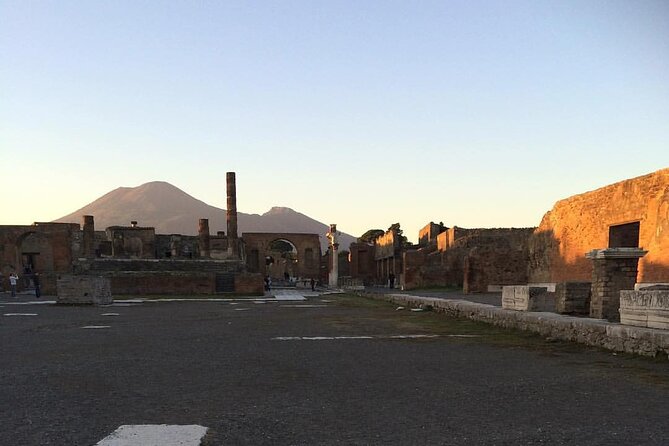
Pompeii hits harder with a guide. In just 2 hours, you walk inside the Archaeological Park of Pompeii, a Roman city preserved after Mount Vesuvius buried it in 79 A.D., and you get the stories that turn ruins into real places. You’ll meet at the Pompeii site in Piazza Esedra and start from there, with a licensed guide leading the pace.
I especially like how the tour focuses on the parts people miss when they wander on their own: the theatres, shops, and richly decorated houses where you can still spot frescoes and marble details. I also like the way the guide connects daily life and entertainment, from thermal baths to a gladiators’ training area, so Pompeii feels like a living city rather than a museum.
One thing to consider: park admission tickets are not included, and Pompeii is spread out, so comfy shoes matter. Also, the experience requires good weather, so plan to stay flexible.
Key highlights to know before you go
- Two-hour structure that fits Pompeii without turning it into a full day grind.
- Licensed guide in English who keeps the walk focused and easy to follow.
- Frescoes, marble, and street-level views that show how Romans actually lived.
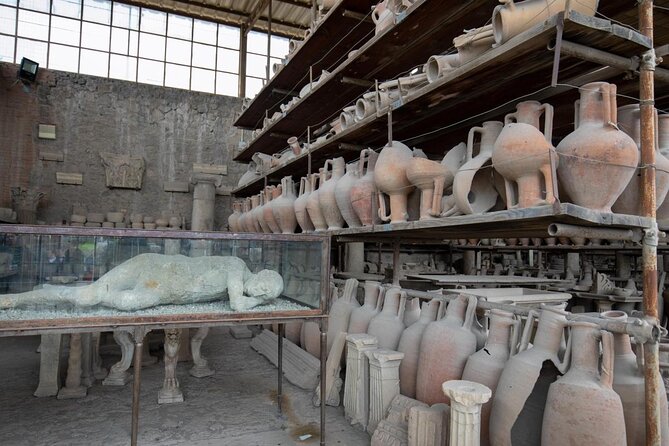
- Thermal baths and gladiator training areas that explain how entertainment worked.
- Private group format so you can ask questions and move at a human pace.
- Mobile ticket included, so you’re not stuck chasing paperwork at the start.
Meeting in Piazza Esedra, then getting your bearings fast
Pompeii is huge, and even if you have a map, it can feel like a lot of stone blocks and long corridors. The payoff of this tour is that you start with a guide right in the right spot, in front of the ticket office in Piazza Esedra, at the Archaeological Park of Pompeii.
That first moment matters more than you’d think. When you know what you’re looking at, you stop walking past the best stuff. You start noticing how streets were laid out, how people moved between public spaces and homes, and why certain buildings were placed where they were.
The tour ends back at the meeting point, which is great if you want an efficient plan and don’t want to guess how far you’ll wander before you’re done. For a 2-hour visit, this “start here, finish here” approach keeps your day simpler.
Pompeii after 79 A.D.: why the ruins still feel personal
The big story is the same one that brings everyone here: Mount Vesuvius destroyed the city in 79 A.D. But the best tours make that fact feel less like a slogan and more like a timeline.
With this walk, you’re not just shown buildings. You’re guided through what these spaces meant when the city was active. You’ll see the contrast between the scale of public Rome, and the practical rhythms of daily life: shops, streets, homes, and the routines that made the city run.
I like that the tour frames Pompeii as a place with habits and hobbies, not only tragedy. When the guide ties architecture to behavior, you start imagining conversations, food smells, and the noise of crowds in the right places.
Theatres, shops, and frescoed homes you can actually spot
Pompeii has plenty of “wow” moments, but not all of them are obvious when you’re standing in the open. In this walking tour, the focus is on big, recognizable sights that also have real details.
You’ll spend time around original Roman theatres, and that matters because theatres weren’t just for entertainment. They were social hubs. The guide helps you understand how people used them, what kind of gatherings might have filled these spaces, and how theatre life fit into the wider city.
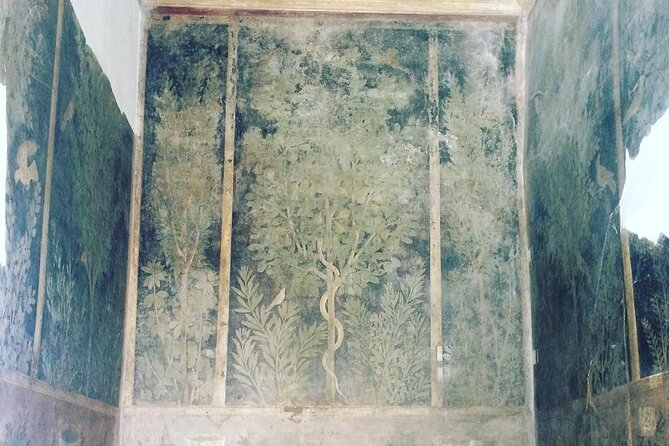
Then you move into the places that show how commerce and creativity worked. Shops are more than storefronts. They’re evidence of trade and neighborhood routines. And the houses are where you can really slow down, because Pompeii is famous for decoration that survived, including frescoes and marble features.
If you care about art and everyday design, this is where the tour pays off. You won’t just see surfaces. You’ll get pointers on what details to look for and why they mattered to the people who lived around them.
Thermal baths: how Romans cooled off and caught up
One of the tour’s best practical choices is including the thermal baths. Even if you’ve never studied Roman culture, you know the idea. Baths were for hygiene, sure, but they were also about meeting people and shifting from work mode to social mode.
In 2 hours, you need to pick the right “anchors” so your visit makes sense. The baths are an anchor. Once you understand the logic of the spaces, you can interpret Pompeii’s layout better as you walk.
The guide explains how the baths worked, which helps you read the remaining structures without needing an encyclopedia open in your lap. Instead, you can connect the rooms you see to the sequence of use, and you’ll likely find yourself imagining the steam, water sounds, and chatter that would have filled them.
Gladiators’ training and the city’s way of having fun
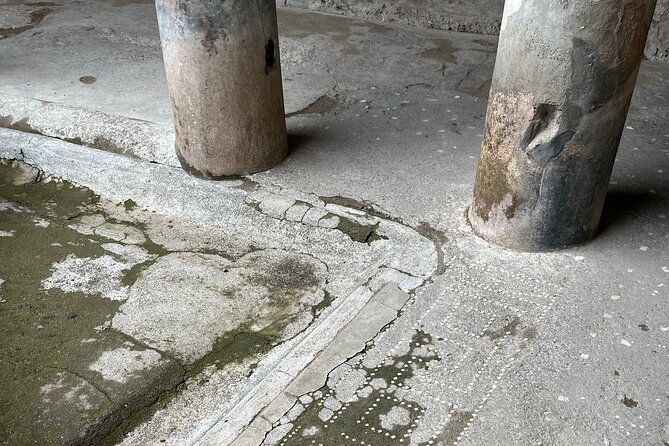
Pompeii wasn’t only a place for quiet home life. It was also built for spectacle. This is where the gladiators’ gym, and the broader idea of Roman entertainment, bring the city to life.
The tour includes the gladiator training area, and that gives you a look at a side of Roman culture that can feel dramatic on paper but makes sense in real space. The guide helps you see how training and performance were part of civic identity, not just random violence.
What I like here is the balanced framing. The city isn’t presented as a single grim chapter. You get the contrast: public spaces for gatherings, training spaces for disciplined work, and the structures that supported crowds and events.
When you can connect the ruins to the entertainment system, your photos stop looking like generic ruins. They start looking like infrastructure for a culture.
English-language guidance, and why the pace feels right
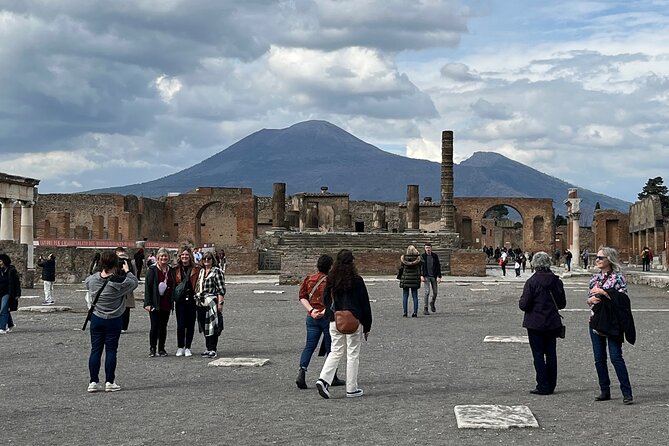
This tour runs in English, and that matters at Pompeii where signage and self-guided interpretation can vary. A good guide doesn’t only translate facts, they decide what to highlight so you don’t miss the best connections.
Because it’s private, it’s only your group. That changes the feel of the walk. You’re not squeezed into someone else’s pace, and questions are easier to fit in. It also means the guide can adjust timing if your group is walking fast or stopping often for details.
Duration is about 2 hours, which is a sweet spot. Long enough to see key highlights and understand the city’s flow, short enough that you’re not completely cooked by the time you finish. If you’re also juggling Naples time, this kind of visit fits better than a full day that might pull you too far from the rest of your trip.
Price and value: what you’re paying for at $60.08

The price is $60.08 per person, and the guide cost is included: you get a licensed guide for the 2-hour walking tour. What’s not included is the park admission ticket.
That separation is important for value. You’re not paying for the entry ticket in the headline price, so your total day cost will be higher once you add admission. Still, the guide component can be worth it, especially at Pompeii, where the best experience often depends on knowing where to look.
Here’s how I think about the value. You’re paying for:
- time savings (you go to the right places in a tight window)
- interpretation (you learn what buildings were for)
- a more coherent route (the city feels connected instead of random)
If you’re the type who wants pictures, this also helps. With a guide, you’re more likely to photograph meaningful details, not only wide shots.
What Margherita’s style adds to the walk
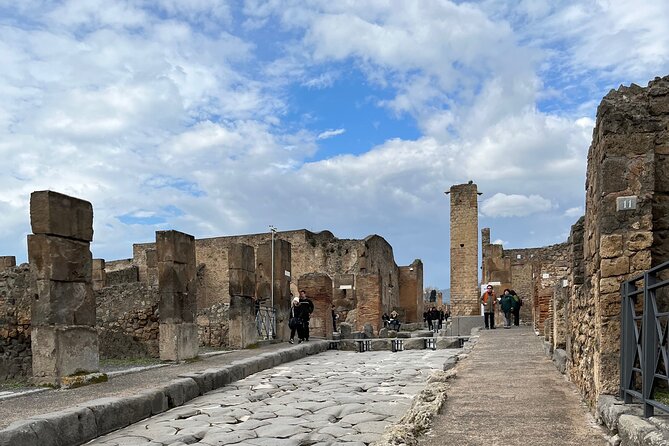
The tour provider is Bites of History with Margherita, and the guide name matters because it signals a personal approach. Margherita’s focus, based on past guests’ experiences, includes making Pompeii feel active and human, not only academic.
A recurring theme is engagement. Margherita is described as funny, professional, and able to keep the walk moving while still teaching you plenty. Another plus is how she connects Pompeii to modern life in the region, including pointers on Neapolitan culture and even food suggestions in Naples.
That last part is small, but useful. It helps you stitch your Pompeii day into the rest of your itinerary. After you see an ancient city, you don’t want your Naples plans to feel like an afterthought.
Practical tips so your 2 hours feel smooth
Pompeii is outdoor walking with lots of uneven surfaces, so practical planning helps.
- Bring comfortable walking shoes you trust.
- Keep your expectations realistic: 2 hours is not “see everything,” it’s see the best-structured highlights with context.
- If you’re sensitive to heat, time your visit when conditions are easiest. The experience requires good weather, so check conditions and be ready for rescheduling if needed.
- Since admission tickets are not included, plan to handle entry separately so you don’t lose tour time at the start.
Also, this is near public transportation, which is helpful if you’re arriving from elsewhere in the Naples area. And service animals are allowed, which is good to know for animal-friendly travel planning.
Who should book this Pompeii walking tour
This tour works best if you want Pompeii to feel understandable fast. It’s a strong fit for:
- first-time visitors who don’t want to get lost
- couples and small groups who prefer a private experience
- travelers who want hands-on interpretation, not just wandering
If you’re a hardcore archaeologist who wants to linger for hours in every corridor, you might feel the time limit. But for most people, the 2-hour format gives you the “greatest hits” with enough context to remember what you saw.
Should you book this Pompeii walking tour?
I’d book it if you want a guide-driven Pompeii visit that’s efficient, structured, and rich in details that matter. The combination of a licensed English guide, a private group format, and a route built around the city’s best-preserved highlights makes the experience feel like more than a ticket and a map.
Book it especially if you’re arriving with limited time or you’re worried that Pompeii will feel overwhelming on your own. With Margherita leading the walk, the ruins tend to come with explanations that make the buildings click.
If you’re traveling in uncertain weather, keep an eye on conditions and be ready for possible changes. Otherwise, this is a smart way to get real value out of a short Pompeii stop.
FAQ
How long is the Pompeii walking tour?
The tour lasts about 2 hours.
Where do we meet for the tour?
You meet in front of the ticket office in Piazza Esedra at the Archaeological Park of Pompeii (80045 Pompei).
Is the admission ticket included in the price?
No. The listed price includes the licensed guide, but park admission tickets are not included.
Is this tour private?
Yes. It is a private tour or activity, and only your group participates.
What language is the tour offered in?
The tour is offered in English.
Do I receive a mobile ticket?
Yes. The experience includes a mobile ticket.
When will I get confirmation after booking?
Confirmation is received within 48 hours of booking, subject to availability.
What happens if the weather is bad?
The experience requires good weather. If it’s canceled due to poor weather, you’ll be offered a different date or a full refund.
Is the tour suitable for most people?
Most travelers can participate.
Pompeii on Foot
- Pompeii 3 Hours Walking Tour Led by an Archaeologist★ 5.0 · 126 reviews
- Explore Pompeii: 2-Hour Guided Walking Tour with Included Ticket★ 4.5 · 77 reviews
- Pompeii: walking tour with 3D glasses and with entrance ticket★ 4.5 · 61 reviews
- Pompeii walking tour★ 5.0 · 29 reviews
- Small Group Guided Walking Tour of Ancient Pompeii Highlights★ 5.0 · 27 reviews
More Tours in Pompeii
- Pompeii Small Group Tour with an Archaeologist★ 5.0 · 6,593 reviews
- Pompeii and Herculaneum Small Group Tour with an Archaeologist★ 5.0 · 1,350 reviews
- Skip the Line Guided Tour of Pompeii led by an Archaeologist★ 5.0 · 703 reviews
- Pompeii Ticket + Tour with Optional Tasting Experience at Pompeii★ 5.0 · 663 reviews
- Pompeii private tour with an Official Guide★ 5.0 · 631 reviews
More Tour Reviews in Pompeii
- Pompeii Small Group Tour with an Archaeologist★ 5.0 · 6,593 reviews
- Discover the Ancient Ruins of Pompeii: Day Trip from Rome★ 3.5 · 2,247 reviews
- Pompeii and Herculaneum Small Group Tour with an Archaeologist★ 5.0 · 1,350 reviews
- Skip the Line Guided Tour of Pompeii led by an Archaeologist★ 5.0 · 703 reviews
- Pompeii Ticket + Tour with Optional Tasting Experience at Pompeii★ 5.0 · 663 reviews
More ways into Walking Tours.
 ★ 4.5Walking Food Tour in Sorrento w/ Limoncello Factory Lemon GroveFrom $125821 reviews
 ★ 5.0Guided Walking Tour & Limoncello TastingFrom $41472 reviews
 ★ 4.3Herculaneum: 3D Walking Tour with Skip-the-Line TicketFrom $45313 reviews
 ★ 5.0Capri Walking Tour with local guideFrom $104300 reviews
 ★ 4.8Discover Pompeii: French Walking Tour of the Buried CityFrom $41253 reviews
 ★ 4.5From Salerno: Pompeii Guided Walking TourFrom $94235 reviews
 ★ 5.0Night time Walking Tour & Limoncello TastingFrom $28155 reviews
 ★ 4.6Guided Walking Tour & Street Food ExperienceFrom $55152 reviews
Other useful routes from here