
REVIEW · CITY TOURS
Pompeii the Buried city
Pompeii feels personal when the crowd thins. This private, 2 hour walk through the Pompeii Archaeological Park is built around uncrowded southern ruins and a guide authorized by the Campania Region, so the story feels local, not scripted. You’ll move at a human pace, with real time to ask questions as you go.
I especially like the way this tour hits the places that show daily life and street culture, not just postcards. The Lupanare frescoes can be startling in the best way, and the tour also points you toward the plaster casts of victims from the 79 A.D. eruption of Mount Vesuvius. That mix of art, architecture, and human tragedy makes Pompeii stick in your memory.
One thing to plan for: admission tickets are not included in the tour price, so budget an extra 16 euro per person (free for under 18 with valid ID). Also, this is a weather dependent experience, and Pompeii visits can get uncomfortable fast when conditions turn.
Key points before you go
- Authorized Campania Region guides guide the route, with a focus on high professionalism
- Uncrowded southern ruins help the city feel lived in, not rushed
- Lupanare stop includes the brothel and its erotic frescoes, with context for what you’re seeing
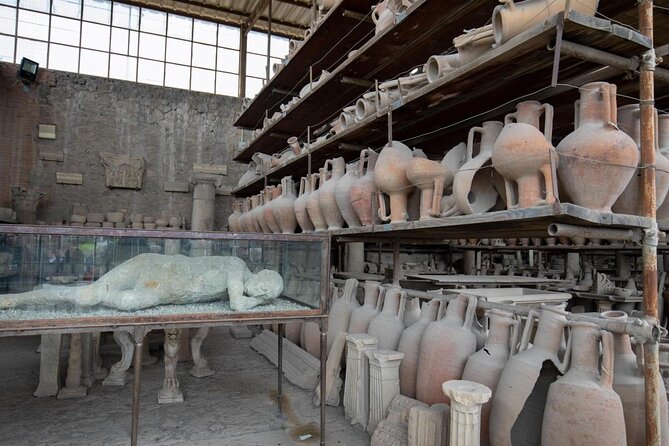
- Plaster casts of victims add a powerful, visual layer to the 79 A.D. story
- Forum, Baths, and major homes cover public life plus private spaces
- Private group format means it’s just your group, no mingling with strangers
Pompeii with a real guide, not a conveyor belt
Pompeii is famous for a reason, but it’s also easy to experience it like a checklist. This tour tries to fix that. You’re led by a professional local guide authorized by the Campania Region, and the route is designed to get you past the standard crowd rhythm.
What I like about that approach is simple: the guide can explain what you’re looking at while you’re still standing in front of it. One minute you’re seeing the layout of the Forum, the next you’re hearing how water and heat worked in the public Thermal Baths. That flow matters, because Pompeii is big, and details can blur when you’re on your own.
You’ll also get the benefit of a private setup. With only your group participating, the guide can slow down for questions and adjust the pace if your group prefers more looking and less marching. Based on what people highlight about the experience, the guides like Ilaria tend to give clear insight into how people lived, and that alone can make a huge difference in a place like this.
Timing, meeting point, and how not to waste your best hours
This experience runs about 2 hours and takes place at the Pompeii Archaeological Park. The meeting point is Pompei Porta Marina, Scavi (80045 Pompei). It’s a workable start point because it’s near public transportation, which is helpful if you’re combining Pompeii with other stops in the Naples area.
The official opening window listed for this period is 9:00 AM to 1:00 PM, Monday through Sunday, from 01/10/2025 to 11/30/2026. That means you’ll typically want to plan your day so you’re not arriving late and scrambling. Pompeii is not a place where you want to start your visit with stress, because the sites you’ll see are spread out and you’ll feel every minute.
Also, the tour says you should have moderate physical fitness. That usually translates to uneven ground and steady walking in an ancient site. You do not need to be an athlete, but you should plan for your legs to do real work. Comfortable shoes are not optional.
The heart of Pompeii: Forum, public life, and the Baths
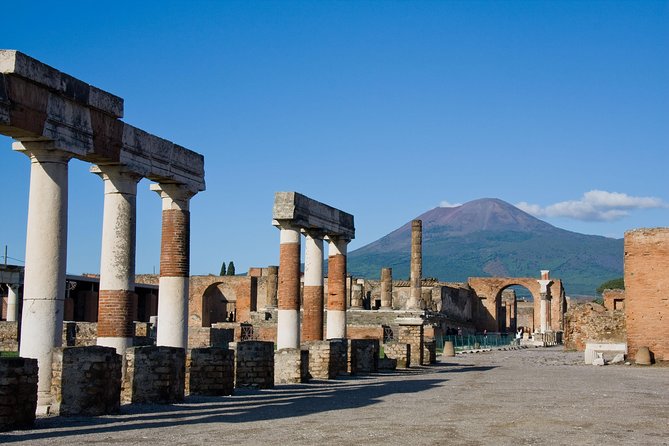
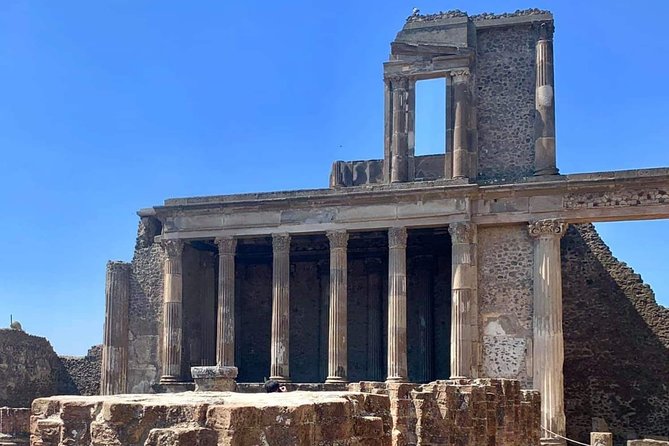
The tour begins in the Pompeii Archaeological Park, and you’ll cover the main public spaces that make Pompeii feel like a functioning town, not a time capsule. A highlight is time at the Forum, Pompeii’s central meeting ground where politics, business, and everyday conversations would have happened. Even if you’ve seen photos, it’s the scale and layout that land. Standing there, you can understand why this was the social center.
Then comes the Thermal Baths, which is one of the best ways to understand Roman life in Pompeii. Baths weren’t just about cleaning. They were where people relaxed, socialized, and kept routines that made the city feel normal even while it was on borrowed time. The guide’s job here is to help you connect the building’s design to how people used it hour to hour.
A practical note: public spaces in Pompeii can feel crowded, so I like that this tour is oriented toward quieter stretches too. You’ll get the big hits, but you’re not only trapped in the busiest corridors.
Menandro’s House and the private side of the city
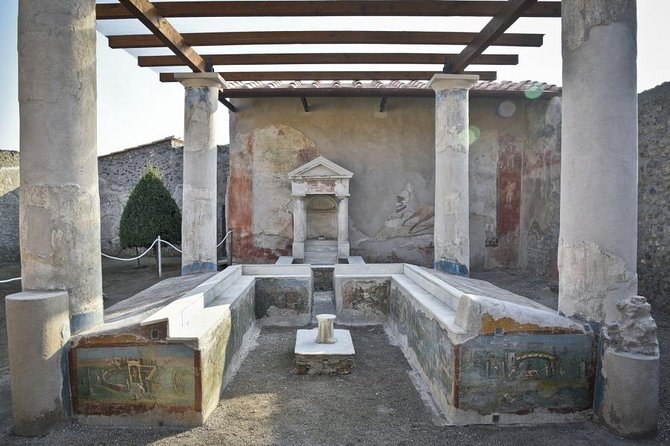
One of the reasons Pompeii is so gripping is the contrast between public architecture and private homes. You’ll visit Menandro’s House, a reminder that Pompeii is not just about temples and plazas. Homes show wealth, taste, and family routines, and they also show what residents wanted to display.
This is where a good guide matters most. Without context, a house can look like walls and rooms. With context, you start recognizing how circulation worked, how light would have moved through spaces, and what kinds of features signaled status. The effect is that Pompeii becomes readable. You stop thinking, I am looking at ruins, and start thinking, I am looking at a city’s layout and priorities.
If you’re a history lover, you’ll probably enjoy how the tour connects the household details to the wider city system, like how neighborhoods and daily schedules would have linked back to the Forum and baths.
Lupanare and erotic frescoes: what you’ll see and how to handle it
Let’s talk about the stop that gives people pause: the Lupanare, Pompeii’s brothel. The tour includes the space and the erotic frescoes. This is not a graphic show, but it is adult subject matter. The value here is that you’re seeing how Roman society expressed sex, commerce, and entertainment in public artistic form, not in sanitized modern terms.
My advice: go in with respect and curiosity, not shock for shock’s sake. If you’re traveling with kids or anyone uncomfortable with adult themes, this could be a deal breaker, because it’s part of the core route. If that’s your situation, you’ll want to check whether your group can comfortably handle it before booking.
When a guide brings the right tone, the stop can feel educational, not voyeuristic. People who loved this tour often say the guide gave key insights into what life was like in Pompeii, and this is one of the moments where that interpretive layer matters.
Uncrowded southern streets and the plaster casts that stop you cold
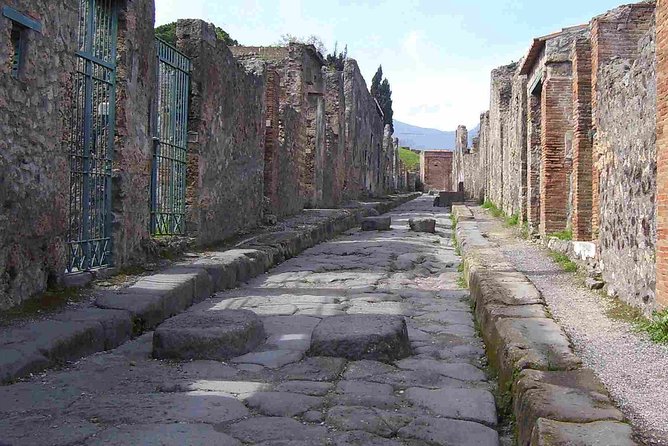
After the main sights, you’ll stroll into the uncrowded southern part of the ruins. This is a smart choice because it changes the emotional texture of Pompeii. Instead of feeling like you’re constantly weaving through the busiest photo points, you get pockets where the city feels quieter and more coherent.
In this area, you’ll also see the famous plaster casts, the bodies of people who died during the eruption of Mount Vesuvius in 79 A.D. Seeing these casts in person hits differently than reading about them. It’s not abstract tragedy. It’s people caught in a moment, displayed as physical evidence that Pompeii’s story is human, not just archaeological.
I appreciate that this tour doesn’t skip past that weight. It includes it as a real stop, not a drive-by moment. It’s also the kind of place where you’ll want to pause, take a slow look, and let the guide explain what you’re seeing. If your group tends to race through sites, this is one moment where you might need to consciously slow down.
Theaters and the north side streets: Pompeii as movement
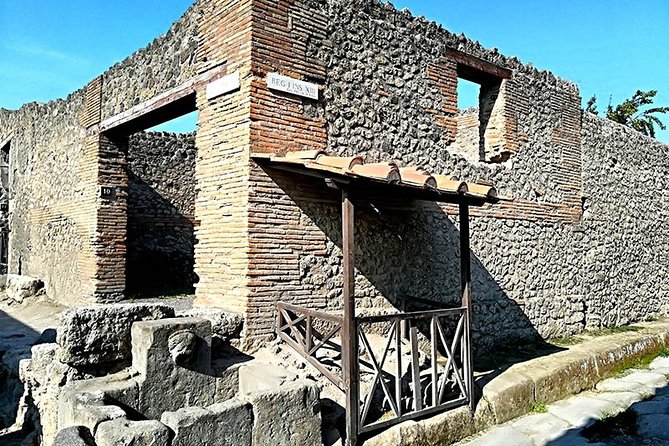
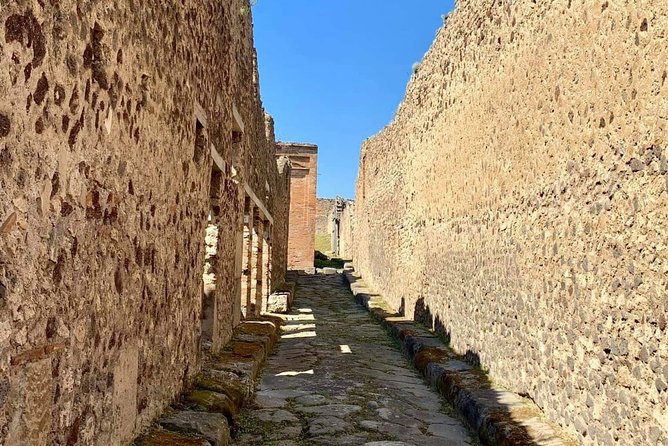
The tour doesn’t stay only in the south. After the plaster cast area, you’ll head toward the theaters and then cross streets along the north side. This part helps you understand Pompeii as a city of movement. People weren’t just living in houses and going to baths. They gathered for performances and social time, and the street network supported that daily flow.
In practical terms, this routing also helps you feel the city’s size without spending your whole time in the same zone. You’ll get a sense of how different districts relate, and you’ll be better oriented for future exploration if you add more time on your own later.
How long is enough time, and what a 2 hour tour does well
A 2 hour Pompeii tour is a smart format if you want guidance without burning your entire day. You’ll cover major highlights, including public spaces like the Forum and baths, plus private architecture like Menandro’s House, plus the Lupanare, plus the plaster casts, plus theaters and streets along the north side.
What it does well is give you the story spine. What it might not do is satisfy someone who wants to linger for long periods at every single detail. Pompeii is huge, and your time can run out faster than you expect. If you like to take your time at museums, you might feel slightly rushed at the very end.
That said, many people find the tradeoff worth it. You leave with a coherent understanding, not just scattered impressions.
Price and value: what $229.28 really covers
The price is $229.28 per group, up to 6 people, and it runs about 2 hours. For groups, this can be good value because the guide experience is shared. Your real cost check is what happens with entrance fees.
Tickets are not included. The additional admission cost is 16 euro per person, with free entrance for under 18 with valid ID. So the total you pay depends on your group size and ages.
Here’s the value logic I’d use:
- If you travel as a couple or small group, the per-person guided cost often still feels fair compared to paying for multiple private explanations elsewhere.
- If you’re a family or group of 5 or 6, the flat per group rate can make the guided portion feel like a bargain, especially since Pompeii needs context to really land.
- If your group is very price sensitive and you’re happy doing Pompeii without a guide, you can always compare the cost of guidance to what you’d pay for tickets and self-navigation.
Also, this tour uses a mobile ticket, which tends to simplify the “day-of” experience. Less time sorting things out means more time standing in the right places.
Weather reality in Pompeii, and how to stay comfortable
Pompeii is outdoor walking plus uneven surfaces. The tour also states it requires good weather. In practice, that means rain can disrupt your plans, and it can make the ruins feel harder to enjoy. A couple of people noted weather problems like rain, lightning, hail, and floods, even if they still managed to see Pompeii.
My advice is to treat Pompeii like a weather-dependent outing. Pack for changeable conditions: a light layer, something water resistant, and shoes that won’t turn the walk into a slip hazard. If your dates are flexible, you’ll likely enjoy the visit more on a dry, mild day.
Who this tour suits best
This tour fits best if you want:
- a guide-led Pompeii visit that helps you interpret what you see
- a route that spends time on the uncrowded southern area and includes the key dramatic stops
- a private group format, so your questions and pace are respected
It might not fit if:
- your group includes kids or anyone who cannot handle adult-themed content like the Lupanare
- you want a very long, slow exploration with lots of free roaming
- your group has limited mobility needs, since the tour calls for moderate physical fitness
If you’re a first-time visitor, I think this is especially useful. Pompeii is too big for most people to understand quickly without help. A strong guide turns ruins into a readable city.
Should you book this Pompeii tour?
If your goal is to understand Pompeii in 2 hours, with help from a local professional and a route that avoids feeling like a cattle line, I’d book it. The big selling points are the mix of major structures and the stops that bring Pompeii’s story into focus, especially the plaster casts and the Lupanare within a guided framework.
Before booking, do two quick checks: confirm your group can comfortably handle the walking and the adult-themed stop, and budget for entrance tickets at 16 euro per person (plus ID for under 18). If those boxes are checked, you’ll likely come away with a Pompeii visit that feels cohesive, not chaotic.
FAQ
How long does the Pompeii buried city tour last?
It lasts about 2 hours.
How much does the tour cost?
The price is $229.28 per group, for up to 6 people.
Are admission tickets included in the price?
No. Admission tickets cost 16 euro per person, and under 18 can enter free with a valid ID document.
Where do we meet for the tour?
The meeting point is Pompei Porta Marina, Scavi, 80045 Pompei, Metropolitan City of Naples, Italy.
What time is the tour available?
The listed operating hours are 9:00 AM to 1:00 PM, Monday to Sunday, from 01/10/2025 to 11/30/2026.
What fitness level is required?
The tour suggests travelers should have a moderate physical fitness level.
Is this tour private?
Yes. It is a private tour/activity, and only your group will participate.
More City Tours in Pompeii
- Pompeii Ancient City Walking Tour – Italian & English Guide★ 4.5 · 10 reviews
- Discover Pompeii on this Guided Walking Tour of the Buried City★ 4.0 · 9 reviews
More Tour Reviews in Pompeii
- Pompeii Small Group Tour with an Archaeologist★ 5.0 · 6,593 reviews
- Discover the Ancient Ruins of Pompeii: Day Trip from Rome★ 3.5 · 2,247 reviews
- Pompeii and Herculaneum Small Group Tour with an Archaeologist★ 5.0 · 1,350 reviews
- Skip the Line Guided Tour of Pompeii led by an Archaeologist★ 5.0 · 703 reviews
- Pompeii Ticket + Tour with Optional Tasting Experience at Pompeii★ 5.0 · 663 reviews
More ways into City Tours.
 ★ 4.5Capri in a Day All Inclusive Premium Boat Tour + City VisitFrom $288307 reviews
 ★ 4.8Discover Pompeii: French Walking Tour of the Buried CityFrom $41253 reviews
 ★ 4.5All-Inclusive Capri Boat Tour with City Visit from PositanoFrom $337151 reviews
 ★ 4.8Capri Boat Trip with City Visit & Swim StopsFrom $14652 reviews
 ★ 4.5Capri Premium Private Boat Tour + City VisitFrom $3,59248 reviews
 ★ 5.0Capri Premium Boat Tour and City Visit Free Bar and AperitifFrom $28827 reviews
 ★ 4.2Discover Pompeii: English Walking Tour of the Buried CityFrom $4124 reviews
 ★ 5.0Capri Boat Tour and City Visit from SorrentoFrom $25121 reviews
Other useful routes from here