
REVIEW · TOURS
Pompeii Small Group Tour with an Archaeologist
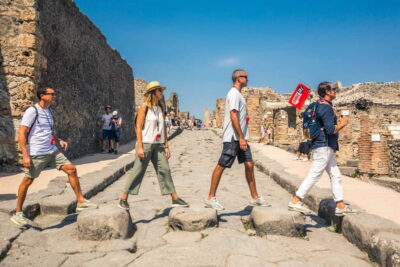
Pompeii feels personal, fast. This small-group tour gets you into the site with skip-the-line access and an archaeologist guide who turns ruins into real human stories. I love that the route starts with the Basilica and Forum, so you understand where you are instead of just snapping photos.
I also like the pacing for a first visit. In about two hours you hit the big highlights without the day dragging, and you get enough context to wander afterward on your own. The main drawback is that Pompeii is still ancient stone and uneven ground, plus mobility scooters are not allowed, so plan for a physical walk.
Key Pompeii takeaways before you go
- Archaeologist guidance that makes scenes make sense, with guides such as Alessandra and Paolo highlighted in past departures
- Pompeii Express skip-the-line entry that starts at Porta Marina Superiore
- A route through the city’s core: Basilica, Forum, granaries, major houses, baths, and theaters
- Granaries plaster casts stop, including details like a dog and a tree, not just human victims
- Small group cap (max 20), and headsets when the group is 16 or more
Starting at Porta Marina Superiore With Skip-the-Line Entry
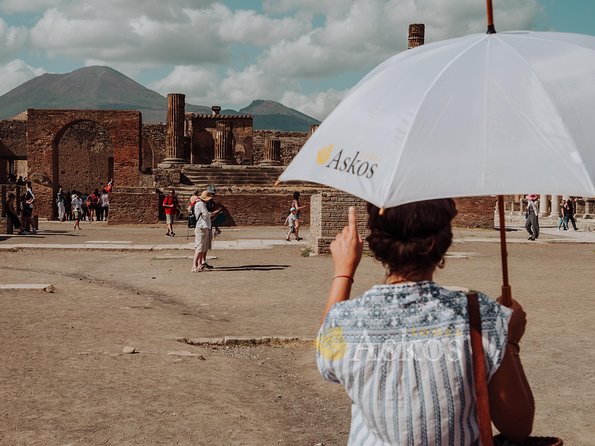
The biggest stress reducer on a Pompeii visit is time. This tour is built around a timed entry setup and starts at the Porta Marina Superiore entrance, with the guide holding an Askos Tours sign. You go straight inside the ruins rather than wandering around the entrance area trying to figure out where the “main stuff” starts.
You also get a Pompeii Express entrance ticket included in the price. That matters because Pompeii can be a queue-and-stand kind of place if you arrive unprepared, and time vanishes fast once you’re inside. With this format, you are already moving when other visitors are still sorting tickets.
One more practical point: it’s offered in English year-round, rain or shine. If you have a tight schedule and want to lock in a time slot, I like that you’re not forced into “perfect weather first.”
Basilica and Forum: Your Quick Map of Pompeii’s Daily Life
Pompeii feels huge until someone gives you a mental map. The tour begins by anchoring you in two of the most important civic spaces: the Basilica and the Forum.
First up is the Basilica. In plain terms, it was an open portico that gave shelter to merchants and other activity. Your guide’s job here is to help you see it as more than a big room. You’re learning how people moved through commerce and public business, which changes the way you notice everything else later.
Then you step into the Foro de Pompeya, the ancient main square. This stop is short, but it’s a smart use of time. Knowing that the Forum was the social and political center helps you understand why the road network and nearby buildings matter. You also get a sense of the rhythm of the city, how people would have gathered, talked, and waited in a place that was designed for constant flow.
If you’ve ever visited a ruin and thought, I don’t know what I’m looking at, this first stretch is your fix.
Granaries of the Forum and the Plaster Casts Stop You’ll Remember

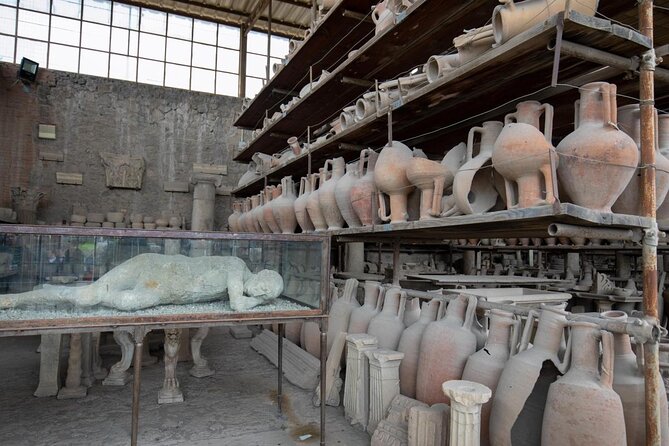
Next comes one of the most moving moments on the tour: the Granaries of the Forum. This is where you pause and really look at the plaster casts of victims of the famous eruption.
What makes this stop more than a sad photo op is the specific context. You see marble tables and old installations tied to baths and fountain basins that once adorned entrances to houses. Then the human story lands: casts show victims, and there are also casts of a dog and a tree. That combination is important. It reminds you that this catastrophe didn’t just end lives, it froze everyday surroundings in place.
I also appreciate the “pause” element here. You are not rushing past something heavy. You’re given a moment to think, ask questions, and connect the tragedy to the architecture you just learned.
Practical note: this part can be emotionally intense, but it also makes the rest of Pompeii feel more real. After you’ve seen what survived as impressions, frescoes and household details stop looking decorative and start looking like life.
House of Menander: Rich Rooms, Real Details, and Painted Surfaces
From the Forum area, you move along the main street and into residential stops that show what wealthy life could look like in Pompeii.
The House of Menander is one of the richest houses in town, and the emphasis here is on architecture, decoration, and contents. You’re also set up to admire frescoes and mosaics, which is where many self-guided visitors feel lost. A guide helps you notice what’s visually important instead of just guessing what you’re seeing.
This is one of the stops where I think the tour pays off most. Pompeii’s houses can be overwhelming if you don’t know what to look for. With an archaeologist background, the story tends to connect layout and decoration to status, daily routine, and how people used space.
There’s also a subtle benefit. Even when you have only a few minutes in each area, you come away with a way to “read” the next room. You start asking, Why is this placed here? What does that style suggest? That is how a two-hour tour can feel longer.
Stabian Baths and the Lupanar: Hygiene, Social Life, and Shock Value
After the richer household scenes, the tour pivots to a public-facing block of Pompeii: the Stabian Baths, then the Lupanar.
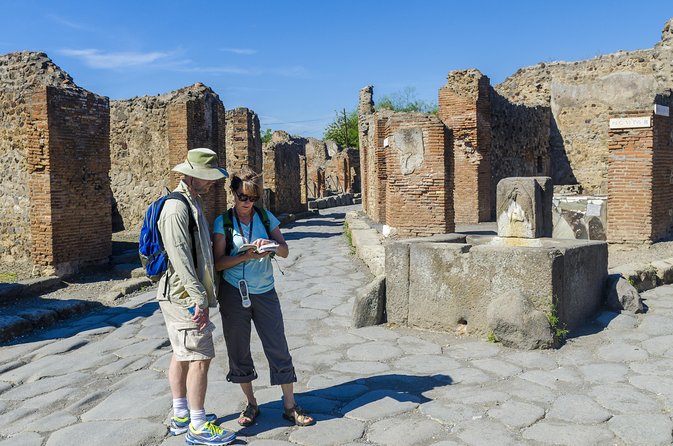
The Stabian Baths (Terme Stabiane) take up a vast area and are described as the oldest thermal complex in the city. This is a fun stop because baths were a daily social hub, not just a luxury. The guide’s framing helps you see how bathing tied into community life, routines, and public interaction.
You’ll also be paying attention to details like the room layout and how the complex functioned as a system. If you like anthropology as much as architecture, this is the kind of stop you’ll enjoy.
Then comes the Lupanar, the most famous brothel ruins in Pompeii. This is the stop that most people recognize, and the guide helps you see it beyond scandal. You get a glimpse of what the site preserves, and you’re given the historical context that makes the architecture and layout part of a bigger story.
Be ready for a quick emotional whiplash here. Baths can feel social and organized, and the brothel can feel jarring. That contrast is part of what makes Pompeii such a powerful city. It shows how ordinary life could include very human messiness.
House of the Faun, Odeon, and Teatro Grande Inside the City’s Stage
As the tour moves toward its final stretch, it shifts from homes and public buildings into entertainment and civic spectacle.
The House of the Faun is next, and it’s described as one of the largest and most impressive private residences in Pompeii. This stop again reinforces the idea that Pompeii was not just temples and streets. It was a city of households with big ambitions.
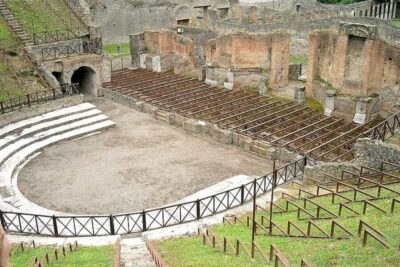
Afterward, you get brief looks around two entertainment-related stops: the Odeon and a quick peek at the Teatro Piccolo. These aren’t long visits, but they help you understand that Pompeii had multiple venues for performances, not one single theater.
Then you land at the Teatro Grande, Pompeii’s largest theater, where you visit inside. This is a strong ending. It brings all the earlier pieces together, because now you’re looking at a place designed for crowds and collective experience.
If you tend to remember places by how they feel, the theater finale often sticks. Even if you only spend a short time there, you get the sense of scale and purpose that’s harder to grasp from street-level views alone.
What the 2-Hour Format Really Means for Your Day
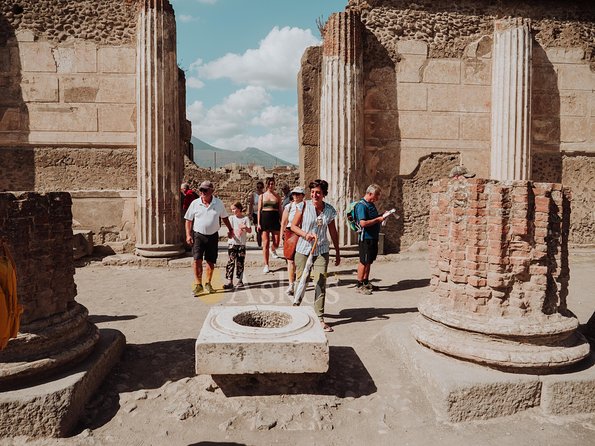
A two-hour Pompeii tour is not meant to cover everything. It’s meant to cover the right things, in the right order, so you understand the city without trying to sprint across the park.
That’s why the route is built around core locations first: Basilica, Forum, granaries, then houses, baths, brothel ruins, and ends in the major theater. You see a cross-section of civic life, private life, and public entertainment.
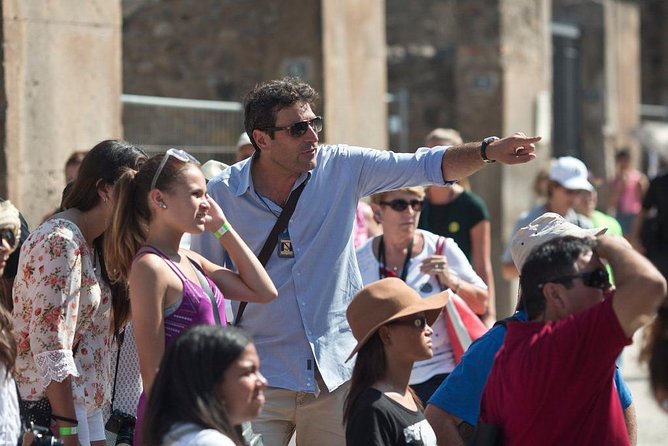
The small group cap also matters. This tour runs with a maximum of 20 people per guide. When groups hit 16 or more, you get headsets to improve listening. In my view, this is the difference between a tour that feels like a lecture from far away and one where you can actually hear the stories and details.
Still, there’s one realistic tradeoff. When you’re moving with a group through popular areas, you cannot linger like you might on a self-guided visit. If you want a slow, scrapbook-style day, plan to pair this with extra time inside the park after the tour finishes.
Good news: the tour ends inside the ruins, so you can keep walking and make use of what you just learned.
Getting Comfortable: Uneven Ground, Sun, and Simple Packing Tips
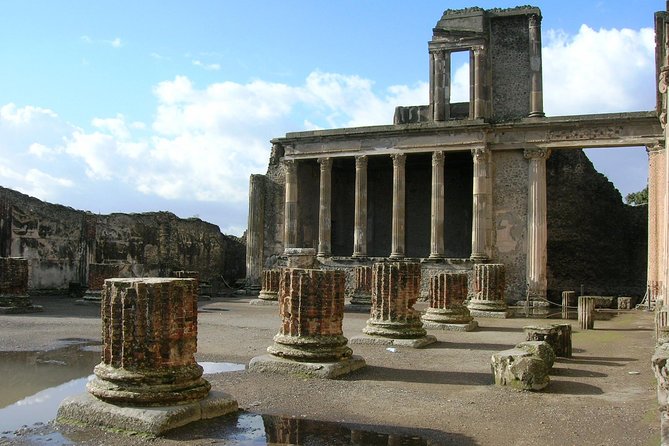
Pompeii is outdoors, and you’ll cover uneven stone and real steps. The tour is doable for most people, but it’s not a casual stroll.
I’d treat comfortable shoes as mandatory, not optional. One review-style caution that matches the site reality is that parts of Pompeii have hardly any shade. On sunny days, bring sunglasses and sunscreen, and think about water as non-negotiable.
The tour suggests bringing a small bottle of water, and I agree. In summer heat, you’ll feel it. If you get warm easily, add a hat too, especially on the main streets where sunlight can hit hard.
One more important constraint: mobility scooters are not allowed, and it’s not recommended for travelers with mobility issues or impairments because of steps and ramps. If that’s your situation, you’ll want to ask for a suitable private alternative.
Finally, service animals are allowed, and small dogs are permitted with limits (10 kg max weight and 40 cm max height), on a leash and held in the arms inside buildings. It’s a specific rule set, so check before you arrive.
Price and Value: Why $35.67 Can Be a Smart Spend

At $35.67 per person for an archaeologist-led, small-group tour, the price is low enough to feel easy to justify, especially when you factor in the included ticket and the structure.
Here’s what you’re paying for in real terms:
- Skip-the-line Pompeii Express entry, saving you time on arrival
- A licensed guide with an archaeological background, not just a general storyteller
- A route that focuses on major sites and connects them so you don’t feel lost
- Small group size (max 20), plus headsets when needed to hear the guide
For a first visit, this package often beats going fully self-guided because Pompeii can be confusing without context. You can absolutely DIY it, but you’ll spend energy figuring out what matters most. With this tour, your guide helps you learn the “why” while you’re standing there.
It also helps that the experience is commonly booked about 31 days in advance. That’s a clue to treat it as a real plan, not a last-minute gamble, especially during busier periods.
Should You Book This Pompeii Archaeologist Tour?
I’d book it if you fit one of these situations:
- You want the highlights, but you also want the meaning behind what you see
- You like learning from guides with archaeology training, and you want stories tied to specific locations
- You have about half a day to spend, and you want a route that makes you feel oriented fast
I might skip it if you:
- Need a low-movement visit due to mobility constraints, because scooters are not allowed and the ground is uneven with steps and ramps
- Want to fully wander at your own pace without a set path, because two hours means you’re following a guided sequence
If you do book, arrive with good shoes and a flexible mindset. You’re not just collecting sights. You’re getting a guided way to understand a whole city that stopped suddenly and still speaks through its stones. That’s the payoff.
More Tours in Pompeii
- Pompeii and Herculaneum Small Group Tour with an Archaeologist★ 5.0 · 1,350 reviews
- Skip the Line Guided Tour of Pompeii led by an Archaeologist★ 5.0 · 703 reviews
- Pompeii Ticket + Tour with Optional Tasting Experience at Pompeii★ 5.0 · 663 reviews
- Pompeii private tour with an Official Guide★ 5.0 · 631 reviews
- Pompeii Private Tour with an Archaeologist and Skip The Line – 3 hours★ 5.0 · 564 reviews
More Tour Reviews in Pompeii
- Discover the Ancient Ruins of Pompeii: Day Trip from Rome★ 3.5 · 2,247 reviews
- Pompeii and Herculaneum Small Group Tour with an Archaeologist★ 5.0 · 1,350 reviews
- Skip the Line Guided Tour of Pompeii led by an Archaeologist★ 5.0 · 703 reviews
- Pompeii Ticket + Tour with Optional Tasting Experience at Pompeii★ 5.0 · 663 reviews
- Pompeii private tour with an Official Guide★ 5.0 · 631 reviews
More ways into Tours.
 ★ 4.8Pompeii: Entry Ticket and Guided Tour with an ArchaeologistFrom $3519,459 reviews
 ★ 4.8Pompeii: Small Group Tour with an ArchaeologistFrom $4012,264 reviews
 ★ 4.6From Naples: Sorrento, Positano and Amalfi Full-Day TourFrom $10710,988 reviews
 ★ 5.0From Naples: Sorrento, Positano & Amalfi Coast – Small Group TourFrom $768,643 reviews
 ★ 4.6Naples or Sorrento: Full-Day Pompeii and Mount Vesuvius TourFrom $1044,235 reviews
 ★ 4.8From Naples: Premium Tour of Sorrento, Positano, AmalfiFrom $853,606 reviews
 ★ 4.8Exclusive Capri Boat Tour and Optional Blue GrottoFrom $1433,170 reviews
 ★ 4.4From Naples or Sorrento: Pompei Half-Day TourFrom $752,645 reviews