
REVIEW · HERCULANEUM TOURS
Pompeii and Herculaneum Small Group Tour with an Archaeologist
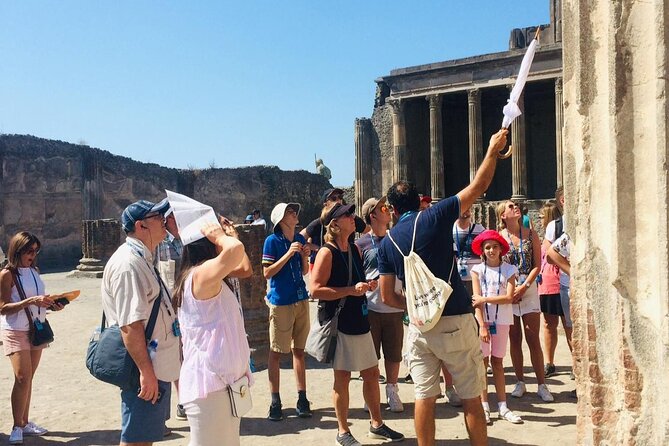
Two Pompeii towns, one archaeologist, zero map fights. I loved how your archaeologist guide steers you straight through the best stops in Pompeii and Herculaneum, so you are not guessing what you are looking at. You also get headsets, which helps you follow along without turning your head every five seconds.
My second big win is the built-in transport. Depending on where you start, you ride with the guide by modern minibus or you transfer by train, so the day stays efficient. It also runs with a small group, capped at 20 people, which makes questions actually fit into the schedule.
The only real drawback is pace. Pompeii is covered in about two hours, and if you like to linger you can feel pulled along. The lunch stop can also break the ruins mood, and the headset signal can be a little spotty at times.
Key highlights worth caring about
- Archaeologist-guided Pompeii and Herculaneum for context, not just walking
- Headsets for everyone so you hear the explanations while moving
- Skip-the-line entry at both archaeological parks
- Transport between sites is handled (minibus or Circumvesuviana train depending on start)
- Small group size up to 20 people for a calmer, more question-friendly day
- Herculaneum’s preserved details stand out when your guide points them out clearly
How the meeting points and transport shape your day
This is a full-day outing built around two archaeological stops: Pompeii first, then Herculaneum. Total time runs about 6 to 11 hours, depending on which departure option you choose and how the transfers line up.
You meet your archaeologist guide at a location that matches your start point:
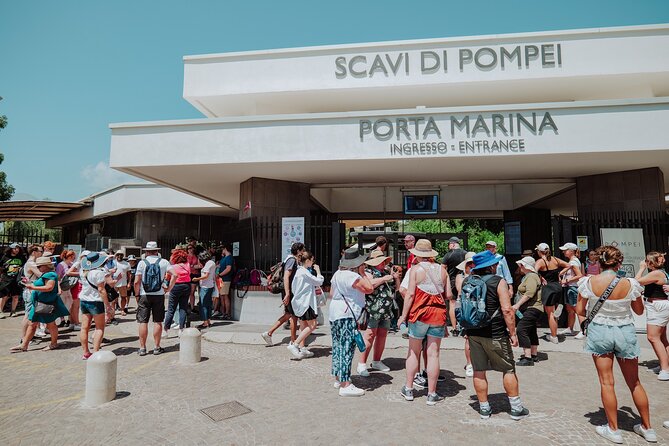
- Pompeii option: Porta Marina Superiore
- Naples and Rome option: Starhotels Terminus
- Sorrento option: Piazza Angelina Lauro
From Naples, Rome, and Sorrento, you travel with the guide by modern minibus for the full day. If you start in Pompeii, you get an included Circumvesuviana one-way train ticket to Herculaneum, plus a short walk from the station with your guide.
That transport setup matters more than people think. Pompeii is huge, and Herculaneum is compact, so the day feels best when you do not spend mental energy on schedules, ticket queues, and directions. You stay focused on what you came for.
Pompeii first: Basilica to Teatro Grande in about two hours
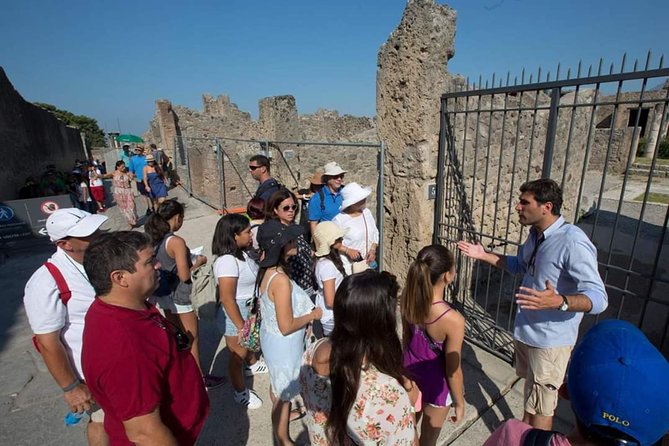
In Pompeii, you start your guided walk with a “what you are seeing” mindset. Your guide keeps you moving through the major zones that show how public life, private homes, and city engineering worked together.
Here are the Pompeii stops that make the most sense as a visitor, and why each one is worth your attention.
Basilica: the covered space where city life flowed
You begin near the Basilica, described as an open portico that sheltered merchants and everyday activities. Even with only a short stop, this frames Pompeii as a living city, not just a pile of ruins.
Foro de Pompeya (Forum): the main square you can still feel
Next comes the Forum, Pompeii’s ancient main square. This is where power and daily routine overlap, and your guide’s job is to connect the layout to how people moved, traded, and gathered.
The main street walk: get oriented fast
You then walk through the main street, a simple move that helps you understand the city’s rhythm. After this, the next houses and public buildings make more sense because you have a mental map.
House of Menander: mosaics and the look of wealth
One of the most important private residences you see is the House of Menander. It is famous for architecture, decoration, and the kind of curated rooms that signal serious status.
Granaries of the Forum: marble tables, fountain baths, and casts
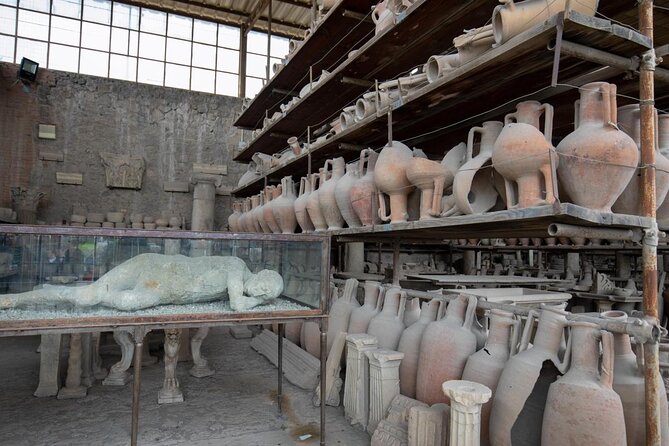
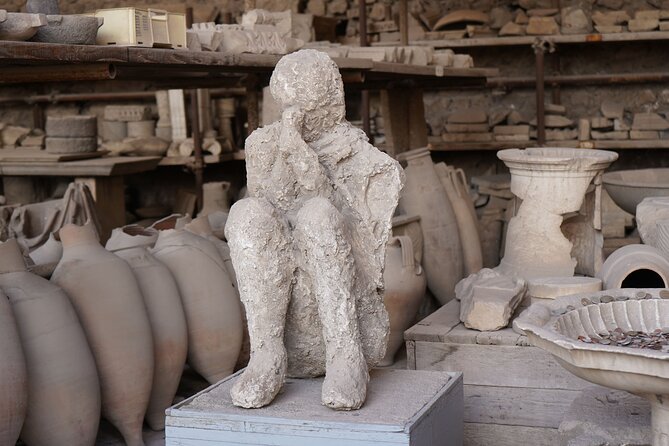
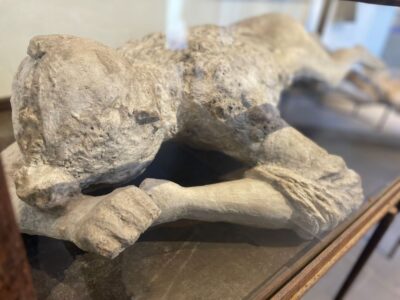
At the granaries of the Forum, you get a mix of everyday objects and striking visual material. You can see marble tables and baths for fountains at entrances of houses, and you also encounter casts of victims plus details like a dog and a tree. This stop is heavy, but it is also the moment when Pompeii stops feeling abstract.
Stabian Baths (Terme Stabiane): the thermal complex that shows engineering
The Stabian Baths cover a vast area and are noted as the oldest thermal complex in the city. If you like city planning, this is a great “how it all worked” stop because baths were social infrastructure, not just a luxury.
Lupanar: the city’s famous brothel
The Lupanar is Pompeii’s most famous brothel. Your guide’s explanations help you read it beyond shock value, as part of how entertainment and business functioned in the city.
House of the Faun: large scale private living
The House of the Faun is one of Pompeii’s largest and most impressive residences. This is where you can see how grand private spaces were organized around light, courtyards, and decoration.
Odeon (Teatro Piccolo) and Teatro Grande: performance spaces
You finish with the Odeon, also called Teatro Piccolo, and then the Teatro Grande, Pompeii’s most important theater. Even on a short visit, these stops help you understand how public gathering worked, and why architecture mattered for acoustics and crowd flow.
What I like about Pompeii on this tour: you hit the big, meaningful zones without getting lost. The guide does the translation work, so the site feels readable instead of overwhelming.
What to watch for: Pompeii is large, and your guided time there is around two hours. If you want to linger over plaster casts, mosaics, or side streets for long stretches, you may wish you had more time.
Headsets, skip-the-line entry, and why the group size helps
A big part of why this works is the “how you experience the site” design.
You get headsets for all participants, which means you can walk and listen at the same time. The tradeoff is practical: if you are near signal interference or you have a headset fit that is not quite right, the audio can occasionally cut out. Still, the overall setup makes it far easier to hear your guide than trying to chase voices across a crowded route.
Entry is also handled with skip-the-line tickets for both parks. That matters because queues can eat the best part of your morning, and you only have limited hours at each site.
And with a maximum of 20 travelers, you get a calmer flow than the huge group tours. When your guide stops at something like a doorway, a room layout, or a specific public area, you are not fighting your way to the front to hear the explanation.
Transfer and lunch planning between Pompeii and Herculaneum
After Pompeii, you get a short lunch break, but it is own expense. The point is speed and logistics: you need time to regroup before the Herculaneum transfer.
For many people, the lunch stop is the moment where the day either feels smooth or starts to grate. The tour includes a quick break at a mall, which is convenient and helps avoid wandering into low-quality tourist stops near the ruins. At the same time, if you wanted a picnic-style lunch with ruins nearby, this could feel like a mood mismatch.
My practical advice: decide your lunch style in advance.
- If you like convenience, use the mall stop and move on.
- If you want atmosphere, grab something before you go and keep it simple during the break.
Then it is off to Herculaneum.
Herculaneum in two hours: a smaller site that hits differently
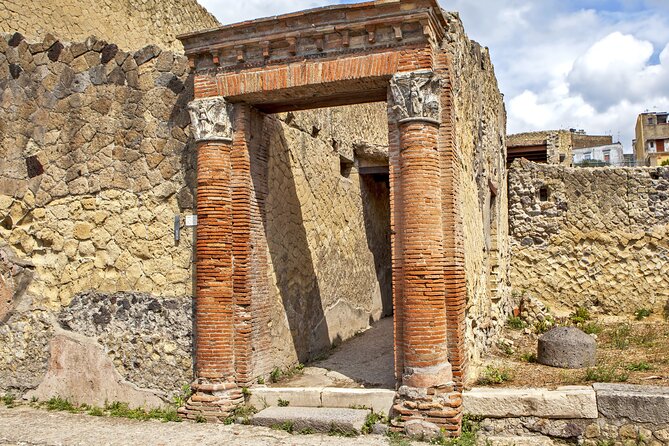
Herculaneum often feels like Pompeii’s “contrast partner.” You get to see remarkably preserved structures and details, and the compact layout makes the guided route feel more focused.
When you arrive, your archaeologist guide leads you directly to the ticket office.
- By minibus (Naples, Sorrento, Rome options): direct drop-off near the entrance
- By train (Pompeii option): about a 10-minute walk from Ercolano Scavi station
You then spend about two hours inside Herculaneum with your guide, and entry tickets for Herculaneum are included.
House of the Deer: named for marble stags
You start with the House of the Deer, named for marble statues of stags or deer found in the peristyle. This is the kind of detail that is easy to miss without a guide telling you what to look for.
Terrazza di M. Nonio Balbo: the benefactor story in stone
Next is La Terrazza di M. Nonio Balbo. The site is tied to the city’s major benefactor, and you can see the long inscription honoring him. It is a clear example of how public recognition worked in this city.
College of the Augustales: Emperor cult and local power
At the College of the Augustales, you are pointed toward how the cult of Augustus and the Collegium Augustalium may have connected, possibly even tied to local civic functions. Even in a quick stop, it helps you understand Herculaneum was not just homes and streets.
Casa del Rilievo di Telefo: a benefactor-adjacent mystery
The Casa del Rilievo di Telefo is described as unusual, and possibly connected to leading figures like Marcus Nonius Balbus. The guide’s framing is what makes this stop feel more than a name on a map.
Partem Domus lignea (Casa del Tramezzo di Legno): the wooden partition you will notice
This is one of the most memorable Herculaneum stops: Partem Domus lignea, also called Casa del Tramezzo di Legno, featuring an elegant wooden partition that remains. If you care about everyday interiors and how rooms were divided, this is the kind of detail that sticks with you.
House of the Skeleton: a strange, sobering find
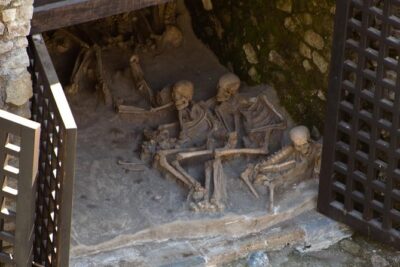
The House of the Skeleton gets its name from human remains discovered in 1831 in a second-floor room. It is not a “fun photo” stop, but it is part of why these towns hit hard.
Central Thermae: men and women separated at the baths
The Central Thermae show baths divided with separate entrances for men and women, which is exactly the kind of practical social detail a guide can bring to life.
House of the Black Salon: carbonised door parts and luxury scale
The House of the Black Salon stands out for its monumental entrance and the carbonised remains of doorposts and lintel. The stop also reinforces that Herculaneum contained wealthy private homes, not just public buildings.
Casa Sannitica and Casa del Bel Cortile: fresco rooms and original courtyard design
You then see:
- Casa Sannitica, with an atrium, gallery, Ionic columns, and fresco decoration
- Casa del Bel Cortile, with a courtyard and a stairway plus a stone balcony instead of an atrium
These two stops help you spot that house design varied, even when all you really want is to understand what living spaces felt like.
House of the Grand Portal: charred wooden remains and fine decoration
The House of the Grand Portal is the final big named stop. It is described as having collonnati and frescoes, plus charred remains of wooden parts. The guide helps you connect these fragments to how rooms likely looked and functioned.
What I like about Herculaneum here: the two-hour structure keeps you from burning time, and the named houses and public spaces make it feel organized.
What to watch for: because it is tightly scheduled, you will not get long, slow wandering. If you love reading every inscription or zooming in on textures for an hour, you may want a follow-up self-guided visit.
Lunch, crowds, and the headset reality check
One repeated theme in people’s experiences is that the tour works best when you accept the format. It is designed to cover many highlights, so you are trading time for context.
A mall lunch break can be a vibe killer if you expected to keep the ruins feeling going. But it also gives you predictable options and prevents the “grab anything anywhere” chaos that can happen around Pompeii.
Also, the headset system is a huge help, and it is a modern solution to a very old problem: people talking over each other in open-air ruins. If you end up with audio gaps, stay close to your guide and keep your phone volume low so you do not fight multiple sound sources.
Quick tip: bring a small snack for the train or walking parts. Even if lunch is available, it can be late enough that you will feel it.
Price and value: what $77.09 really covers
At $77.09 per person, this tour is not “budget,” but it is also not just a casual walk. You are paying for coordination, expertise, and logistics that would cost you time and money if you did it on your own.
Here is what your price buys:
- Guided visits in both Pompeii and Herculaneum with an archaeologist
- Headsets for all participants
- Skip-the-line entry for both parks
- Entrance tickets included for Herculaneum and Pompeii
- Transport between Pompeii and Herculaneum, handled by minibus or Circumvesuviana train depending on your start point
- Additional included transport depending on whether you start in Naples, Sorrento, or Rome
It also helps that you are not starting from scratch on ticket costs. Herculaneum admission is listed as 16 euros for adults (with EU citizens ages 18 to 25 at 2 euros), and Pompeii is listed at 20 euros for adults. Your tour price includes both, plus the guide and the transfer.
What it does not include is also clear: meals and drinks, and personal expenses. So if you want a full sit-down lunch, you will pay extra.
Bottom line: the value is strongest if you want both sites in one day, and you want the explanation as you walk instead of reading after the fact.
Who should book this Pompeii and Herculaneum day
This tour fits best if you:
- want an efficient overview of major highlights in both towns
- prefer a guide to interpret what you see, especially in houses and bath areas
- like small groups, with a max of 20 people
- want transport handled so you do not lose time
It might feel wrong if you:
- want to spend half a day just on Pompeii with no time pressure
- strongly dislike the idea of a mall lunch stop
- need accessibility support beyond what the standard group format can handle
The tour is also not recommended for visually impaired guests unless accompanied by a dedicated personal assistant, so choose accordingly.
Should you book this Pompeii and Herculaneum small-group tour?
I think you should book it if you want a guided, time-managed day that covers the best-known Pompeii and then shifts gears to Herculaneum’s preserved interiors. The headsets, skip-the-line entry, and included transfers reduce the hassle that can turn these ruins into a stress test.
I would hesitate if you are the type who plans to wander slowly and read everything for hours. In that case, consider booking a longer Pompeii-focused day on its own, then add Herculaneum later when you can slow down.
If you want the highlights with expert storytelling and you are okay with a structured pace, this one is a smart pick.
FAQ
FAQ
How long is the Pompeii and Herculaneum small-group tour?
It runs about 6 to 11 hours depending on your departure option and transport plan.
Is the tour offered in English?
Yes, the tour is offered in English.
Are admission tickets included for both Pompeii and Herculaneum?
Yes. Entrance fees are included for both Pompeii and Herculaneum.
Do I need to buy train tickets for the Pompeii to Herculaneum transfer?
If you start in Pompeii, you receive an included Circumvesuviana one-way train ticket to reach Herculaneum.
How do transfers work if I start in Naples, Sorrento, or Rome?
If you start in Naples, Sorrento, or Rome, you travel with your guide using a modern minibus for the included transport between the two sites.
Where do I meet my archaeologist guide?
It depends on your option: Porta Marina Superiore (Pompeii), Starhotels Terminus (Naples and Rome), or Piazza Angelina Lauro (Sorrento).
Is lunch included?
No. Meals and drinks are not included, but a quick lunch break is available before the transfer and you will pay on your own.
How big is the group?
The tour has a maximum of 20 travelers.
Do you provide headsets?
Yes. Headsets are provided for all participants.
Is the tour suitable for visually impaired guests?
It is not recommended for visually impaired guests unless accompanied by a dedicated personal assistant.
Can I cancel for a full refund?
Yes. You can cancel up to 24 hours in advance for a full refund.
More Tours in Pompeii
- Pompeii Small Group Tour with an Archaeologist★ 5.0 · 6,593 reviews
- Skip the Line Guided Tour of Pompeii led by an Archaeologist★ 5.0 · 703 reviews
- Pompeii Ticket + Tour with Optional Tasting Experience at Pompeii★ 5.0 · 663 reviews
- Pompeii private tour with an Official Guide★ 5.0 · 631 reviews
- Pompeii Private Tour with an Archaeologist and Skip The Line – 3 hours★ 5.0 · 564 reviews
More Tour Reviews in Pompeii
- Pompeii Small Group Tour with an Archaeologist★ 5.0 · 6,593 reviews
- Discover the Ancient Ruins of Pompeii: Day Trip from Rome★ 3.5 · 2,247 reviews
- Skip the Line Guided Tour of Pompeii led by an Archaeologist★ 5.0 · 703 reviews
- Pompeii Ticket + Tour with Optional Tasting Experience at Pompeii★ 5.0 · 663 reviews
- Pompeii private tour with an Official Guide★ 5.0 · 631 reviews
More Days in Herculaneum
- Private Day Tour to Vesuvius, Herculaneum & Pompeii with Pick Up★ 5.0 · 279 reviews
- The Ultimate Ruins of Pompeii and Herculaneum Private Day Trip★ 5.0 · 103 reviews
- Naples: Pompeii & Herculaneum Day Trip – Small Group Tour★ 4.5 · 72 reviews
- Pompeii and Herculaneum small group Excursion from Naples★ 5.0 · 70 reviews
- Half-Day Exclusive Private Tour of Pompeii and Herculaneum★ 5.0 · 49 reviews
More ways into Herculaneum Tours.
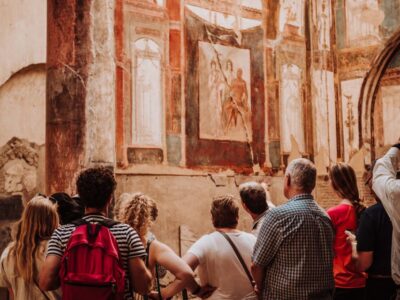 ★ 4.8Pompeii: Small-Group Tour of Pompeii and Herculaneum867 reviews
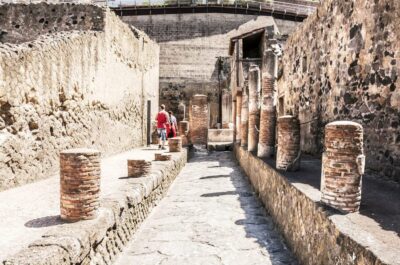 ★ 4.1Ercolano: Herculaneum Entry Ticket with Optional Audio GuideFrom $21581 reviews
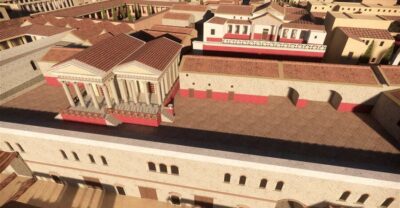 ★ 4.3Herculaneum: 3D Walking Tour with Skip-the-Line TicketFrom $45313 reviews
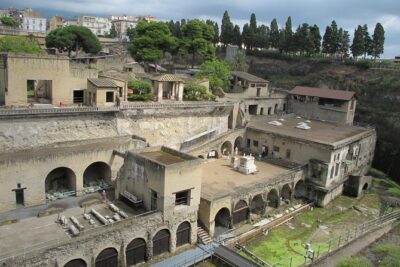 ★ 4.5Guided Day Tour of Pompeii and Herculaneum with Light LunchFrom $185311 reviews
 ★ 5.0Private Day Tour to Vesuvius, Herculaneum & Pompeii with Pick UpFrom $120279 reviews
 ★ 4.0Ercolano: Herculaneum Skip-the-Line Ticket & Audio GuideFrom $35275 reviews
 ★ 4.3Herculaneum: Skip The Line Entrance ticket + AudioguideFrom $35266 reviews
 ★ 5.0Pompeii and Herculaneum: Guided Tour with an ArchaeologistFrom $141164 reviews
Other useful routes from here