
REVIEW · 2-HOUR EXPERIENCES
2-Hour Pompeii Child-Friendly Tour
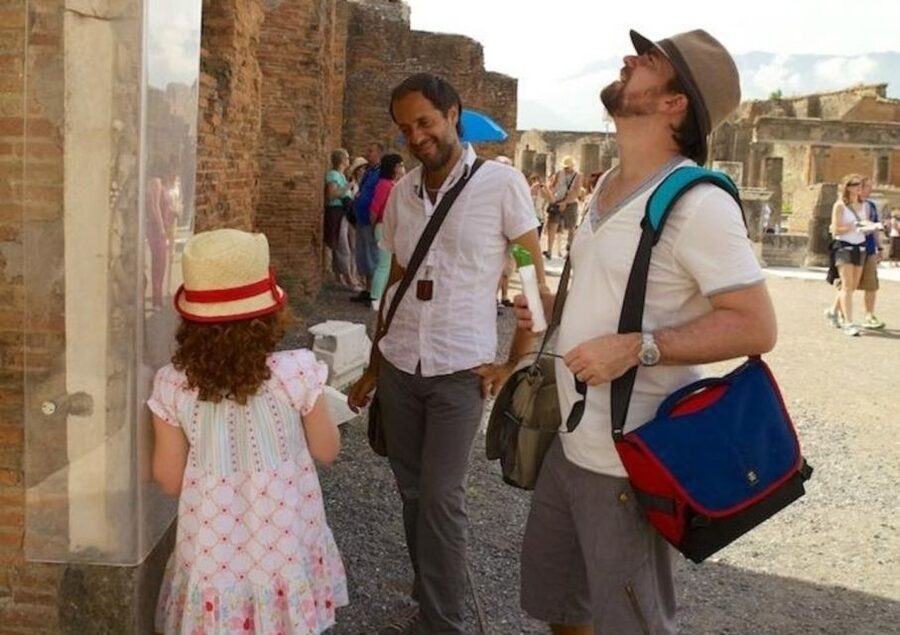
Pompeii is easier with kids in tow. This 2-hour Pompeii child-friendly tour is built to keep both parents and children focused, using tablets, reconstructions, and multimedia to explain what you are seeing in the ruins. I love how it hits the big-name areas fast, then slows down just enough to let kids connect the dots. I also like that you get inside houses and key public buildings instead of doing a quick drive-by. One possible drawback: at only 2 hours, you will move at a brisk pace through a lot of ground, so you may need snacks and patience.
The best part is the feel of Pompeii life. You get a guided walk through the town ruins, including places like the Forum area, the basilica (court house), and residential stops such as the House of Menander and the House of the Faun. This is a walking tour with no transportation, so comfortable shoes matter more than clever packing.
Key things to know before you go
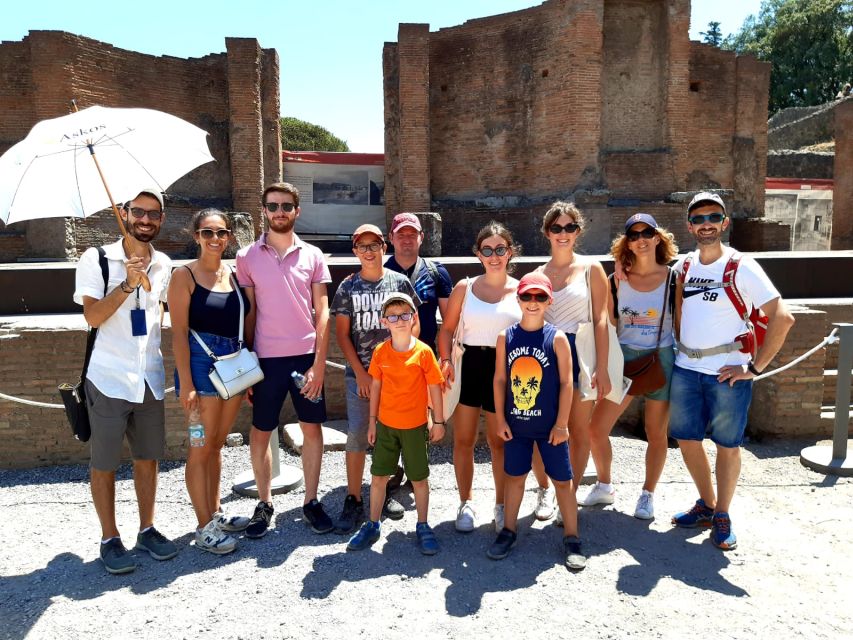
- Tablets and multimedia are part of the tour, not just an optional extra, so kids have something to do while you listen.
- You skip the ticket line, because the guide can buy tickets quickly for you.
- You cover major highlights in a tight loop, from Porta Marina to temples, baths, theatres, and several homes.
- Short guided stops keep energy up, with timed visits like 10 minutes here and 20 minutes there.
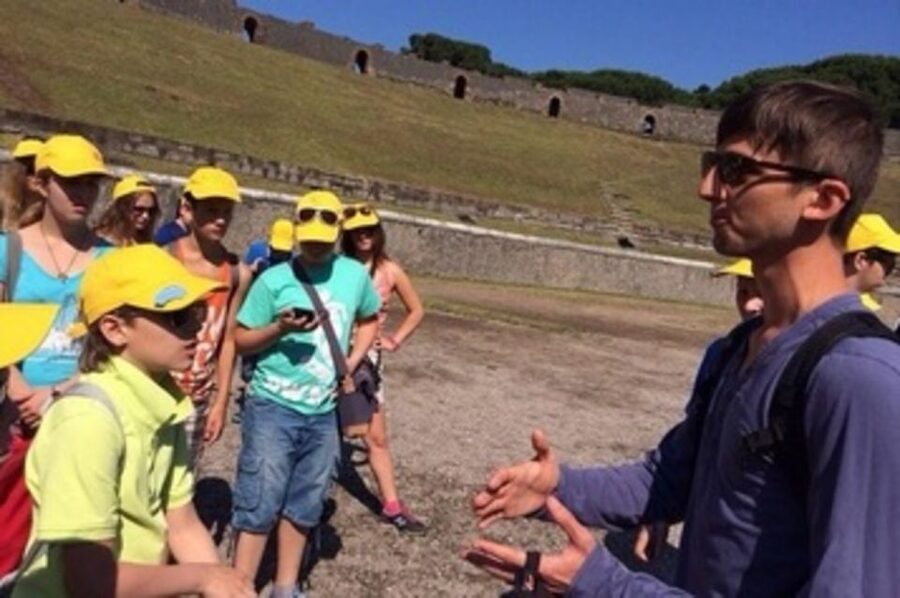
- Private group experience, so the guide can focus on your family’s attention and needs.
Getting oriented at Porta Marina Superiore (and why it matters)
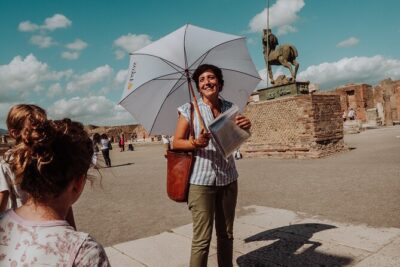
You meet at the main entrance of the Pompeii ruins called Porta Marina Superiore. The guide is on the opposite side of the bar-restaurant Hortus, holding a sign with your name. This small detail helps a lot with families. When you are wrangling kids, not having to hunt for your group is a real win.
From there, the tour is designed for quick momentum. Stop 1 starts at Via Villa dei Misteri, 2, then you move into the ruins. The pacing is purposeful. You are not waiting around for a long orientation talk, and you do not get stuck listening while everyone’s feet go numb.
The 2-hour plan, built for family attention spans
This tour is short on purpose: 2 hours from start to finish, with the expectation that the group stays in motion. You will walk, stop, enter key areas, and keep going. No bus. No long transfers. Just Pompeii, and the plan to make it understandable fast.
Here is how the route is structured, with what each part is likely to do for your kids and you.
Stop 2, Porta Marina: the entry point into ancient Pompeii life
The tour begins with Porta Marina for a guided visit of about 10 minutes. Think of this as your “start here” moment. City gates are natural story openers because they connect movement, daily life, and the idea of coming and going.
For families, the value is simple. You get oriented at the start while your attention is still fresh. Kids often do better when the first stop gives context quickly, rather than jumping straight into buildings.
Temple of Apollo: quick wonder, then learning
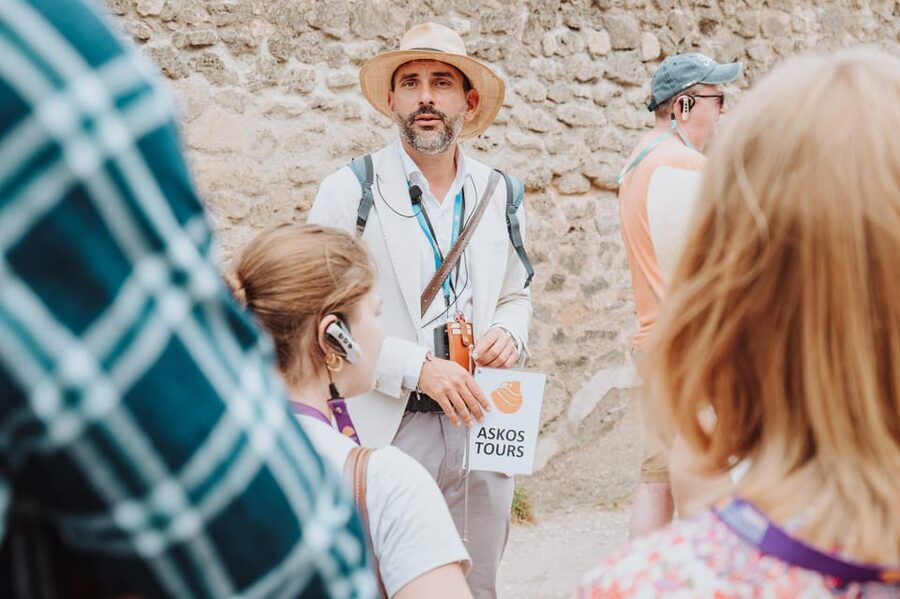
Next up is the Temple of Apollo, another 10-minute guided visit. Temples can be abstract for kids unless the guide frames them clearly. That is where the tour’s tablet and multimedia approach is meant to help, giving you prompts and visuals tied to what you are looking at in front of you.
The practical upside: temples are often easier for children to “see” than more complex layouts. The drawback: if your group is tired or the sun is intense, this is one of the stops where a quick pacing adjustment helps. Since the tour is timed, you may have less time to linger than you would on a free-form visit.
Foro Civile di Pompei: the main square that kids can picture
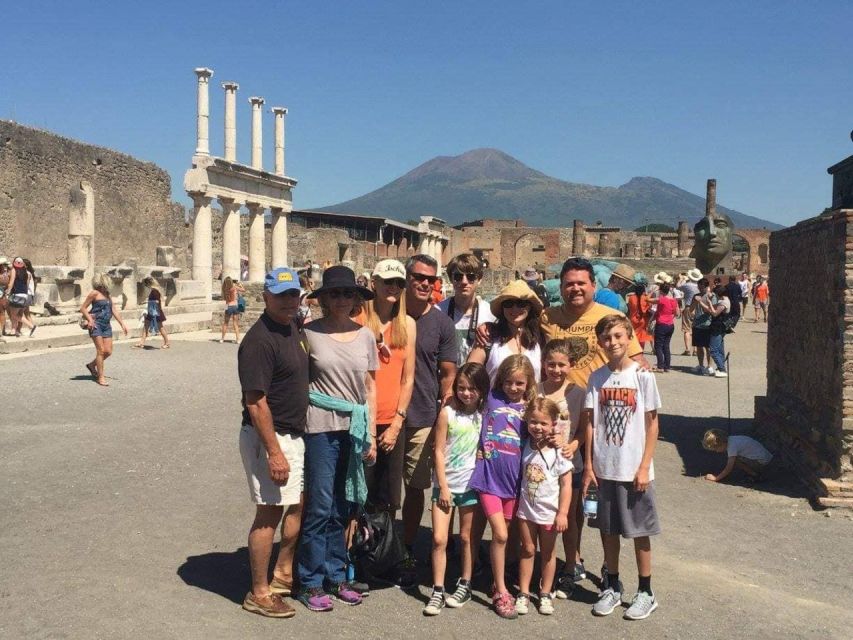
The Foro Civile di Pompei is a 20-minute guided stop, which makes it one of the longer segments. This is your window into the “town center” idea. The tour is set up to connect the Forum with daily activity, including market temples and municipal buildings.
Why this works for families: a Forum is conceptually easier than a maze of rooms. Kids can grasp the idea of a gathering place faster when the guide uses reconstructions and multimedia tied to what a public square would have meant. You also get a bit more time here, suggesting the guide wants you to understand the setting, not just pass through it.
Possible consideration: public spaces can be lively visually, and kids may want to run or wander. The guide’s focus on your needs is what keeps this stop from becoming chaos.
Basilica (court house): where rules and power show up
Then comes the Basilica for about 10 minutes. It is described as a court house, which is a useful label. Even if your kids do not care about law, they can understand the idea of a place where decisions happened.
This stop is shorter than the Forum, so you will likely get a clear explanation with minimal back-and-forth. That is good for time management. If you are hoping for a deep architectural discussion, you may want to do an additional self-guided visit later, because this tour is designed for focus, not long lectures.
House of Menander: entering a home instead of just looking
Next is the House of Menander, about 20 minutes. This is one of the big ticket items for families because you get to enter a residential space, not just view ruins from the outside.
A home is often where children’s curiosity turns on. What you are walking through feels more personal. The tour supports that with tablets and multimedia materials meant for kids, plus reconstructions that help bridge the gap between the present-day site and how it may have looked when it was inhabited.
The payoff for you as the adult: you start to see Pompeii as a place where real families lived, not only a dramatic archaeological site. The drawback: homes in ruins can have uneven surfaces and open areas, so comfortable shoes and careful steps help.
Forum Baths: everyday routines, not just big monuments
The Forum Baths are a short stop at about 10 minutes. Baths are a smart inclusion on a child-friendly itinerary because they connect to human routines, hygiene, and social life.
Since you only have 10 minutes, this part is likely built for quick comprehension: what the space was, how it fit into daily life, and what visual cues to notice. Kids often like the “people did this every day” angle more than they like “this building is important” wording.
House of the Faun: a classic residential highlight
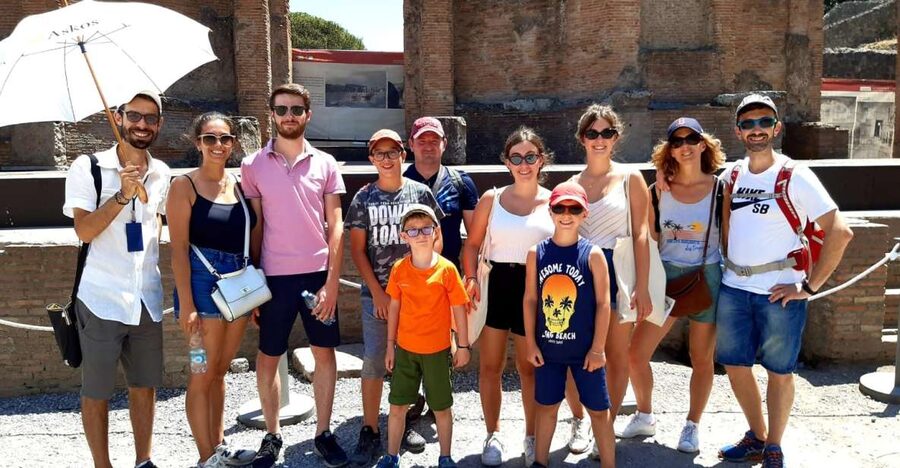
The House of the Faun is another 10-minute guided visit. The tour’s structure keeps things moving, so you will likely get guided attention to the most relevant parts of the house layout.
For parents, the value is momentum. You are not stuck in one location long enough for everyone to lose interest. For kids, you are not stuck in one place long enough for boredom to kick in. That balance is exactly what you want in a short family tour.
Large Theatre: the performance side of Roman life
Then you reach the Large Theatre for about 10 minutes. The tour is described as covering theatres, so this stop fits the promise of seeing more than just temples and houses.
A theatre is a great “story” stop because it naturally connects to imagination. Kids can picture crowds, performances, and noise. The guide’s multimedia and reconstructions can turn empty spaces into something more understandable, even when you are surrounded by stone remnants.
Possible drawback: if your group is sensitive to loud crowds or has highly active kids, theatres are open areas where kids may want to move. The group format and your guide’s focus on your needs should help manage this, but bring the mindset that you are walking together, not sightseeing independently.
House of the Vettii: another home stop with kid-friendly framing
The House of the Vettii gets about 20 minutes, matching the longer home segments. Two longer residential stops in a 2-hour itinerary tells you what the tour values. It wants you to feel Roman life as daily life, not only public buildings.
This is also where the tour’s tablet-based approach becomes extra valuable. Kids can follow along with the guide’s explanations tied to what they see, instead of needing to invent their own context from scratch.
Thermopolium: a snack-stop concept, minus the food
Next is the Thermopolium, visited for about 10 minutes. A thermopolium is commonly described as a kind of street-side food place, and the tour uses it as part of the lived-experience theme.
Even without details beyond the tour description, this stop helps families connect Pompeii to everyday moments: grabbing something to eat, passing time, and social routines. For kids, it can be a fun mental bridge between ancient life and modern street food culture.
Wrap-up back at Via Villa dei Misteri, 2
You finish back at Via Villa dei Misteri, 2. The route is a loop designed for timing. In practice, that means you are unlikely to lose track of where you are or have to navigate your own way out while tired kids and adult legs are both asking questions.
Also, because it is a private group, the guide can pace you to your group’s attention span. That makes the final minutes smoother, even if the morning was hectic.
What is included, and what you are paying for
This tour includes guidance by a certified guide and admission fees, plus the promise to skip the ticket line. You also get tablets, reconstructions, and multimedia materials aimed at children.
The price is listed at $212.41 per person for a 2-hour private group. That sounds steep until you factor in three things you would otherwise pay separately:
- entrance tickets for Pompeii
- a guide who has structured time into the visit so you do not lose your group’s momentum
- the “translation layer” for kids, meaning the tech and explanations are part of how the tour works
In other words, you are paying for less stress and more meaning per minute. If you are traveling as a family and you know kids need structure to stay engaged, the value can make sense. If you are visiting as adults who are happy to self-navigate, you may prefer cheaper entry and a longer independent plan.
The real strength: tablets and reconstructions that keep kids listening
A lot of family tours say they are kid-friendly. This one is kid-friendly by design. The guide uses tablets, reconstructions, and multimedia material to explain what you are seeing, including the buried city concept.
That is not just entertainment. It is a practical tool for comprehension. Pompeii is visually fragmented. A child looking at a broken wall has no built-in context. The multimedia content provides that missing piece, and the guide can point to it while you are standing right there.
Where the tour shines most (and where it may not)
I think this tour is at its best for families who want a structured first Pompeii experience. It includes major stops, plus residential areas, baths, and a theatre. That mix supports a full “daily life” story, which is usually what kids remember.
If your goal is a slow, photo-heavy wander with lots of free time, this may feel a bit fast. The timed stops help families stay together, but they also limit how long you can linger at your favorite corner.
Who should book this tour
You’ll likely be happy with this tour if:
- you have kids who need visual prompts to stay interested
- you want a guided introduction without spending half a day planning a route
- you like the idea of entering multiple houses, not only seeing monuments from outside
- you want admissions handled and the line skipped by your guide
You might want a different approach if you have very slow mobility needs or you want long independent exploration.
FAQ
How long is the Pompeii child-friendly tour?
The tour duration is 2 hours.
Where do we meet the guide?
Meet your guide at the Pompeii main gate called Porta Marina Superiore, on the opposite side of the bar-restaurant Hortus. The guide holds a sign with your name. The itinerary also references Via Villa dei Misteri, 2 as the starting and ending point.
Does this tour skip the ticket line?
Yes. The tour description says you skip the ticket line, and the guide can buy the tickets for you in about 5 to 10 minutes.
What stops are included during the 2 hours?
The listed stops include Porta Marina, the Temple of Apollo, the Foro Civile di Pompei, the Basilica (court house), the House of Menander, the Forum Baths, the House of the Faun, the Large Theatre, the House of the Vettii, and the Thermopolium, then back to Via Villa dei Misteri, 2.
Is the tour private and what language is it in?
It is a private group tour, and the guide is listed as available in English and Italian.
What is the total price and what is included?
The price is $212.41 per person, and it includes admission fees and guidance and assistance by a certified guide.
Is it wheelchair accessible?
The information provided says the tour is wheelchair accessible, but it also lists not suitable for wheelchair users. If wheelchair access is important for you, you should confirm directly with Askos Tours before booking.
Should you book this Pompeii family tour?
If you want Pompeii that feels understandable and kid-friendly, I would lean yes. The strongest reason to book is the way the tour is structured around attention and learning, with tablets and multimedia tied directly to what you are walking through. Add in skip-the-line entry and admissions handled, and you are buying back time and energy, two things families rarely have to spare.
Book it especially if this is your first Pompeii visit and you want a route that covers temples, public spaces, baths, and several houses without turning the day into a self-guided puzzle. Just go in knowing it is a walking tour and the 2-hour plan moves you through a lot, so plan footwear and snacks like you mean it.
More 2-Hour Experiences in Pompei Campania
- Pompeii: 2-Hour Guided Tour with an Archaeologist★ 4.9 · 151 reviews
- Pompeii: 2 Hours Skip the Line Visit with a Licensed Guide★ 4.4 · 16 reviews
- Pompeii: 2H group guided tour with a certified guide★ 3.4 · 8 reviews
- Pompeii in 2h and 30mnt: walk with local guide★ 3.0 · 6 reviews
More Tours in Pompei Campania
- Pompeii: Entry Ticket and Guided Tour with an Archaeologist★ 4.8 · 19,459 reviews
- Pompeii: Small Group Tour with an Archaeologist★ 4.8 · 12,264 reviews
- Pompeii: Skip-the-line-Ticket and Guided Tour★ 4.6 · 1,152 reviews
- Pompeii: Small-Group Tour of Pompeii and Herculaneum★ 4.8 · 867 reviews
- Pompeii: Guided Tour with Skip-the-Line Entry★ 4.9 · 812 reviews
More Tour Reviews in Pompei Campania
- Pompeii: Entry Ticket and Guided Tour with an Archaeologist★ 4.8 · 19,459 reviews
- Pompeii: Small Group Tour with an Archaeologist★ 4.8 · 12,264 reviews
- Pompeii: Skip-the-Line Entrance Ticket with Audio Guide★ 4.0 · 2,509 reviews
- Naples: Pompeii and Mt. Vesuvius with Lunch and Wine Tasting★ 4.5 · 2,454 reviews
- Pompeii: Skip-the-line-Ticket and Guided Tour★ 4.6 · 1,152 reviews
More ways into 2-Hour Experiences.
 ★ 5.0Pompeii 2h Small-Group Tour with Expert ArchaeologistFrom $32385 reviews
 ★ 5.02 hours Pompeii Tour with Local Historian – Ticket IncludedFrom $48335 reviews
 ★ 4.8Capri: 2-Hour Boat Tour with Happy HourFrom $105286 reviews
 ★ 5.0Pompeii: 2 Hour Private Tour with an Archeologist GuideFrom $193214 reviews
 ★ 5.0Pompeii 2-hour Private Tour with an Archaeologist-Ticket includedFrom $214181 reviews
 ★ 4.9Pompeii: 2-Hour Guided Tour with an ArchaeologistFrom $175151 reviews
 ★ 4.9Herculaneum 2-Hour Private Guided TourFrom $283139 reviews
 ★ 5.02 Hours Private Tour in Pompeii with ArchaeologistFrom $267123 reviews
Other useful routes from here