

REVIEW · POMPEII TOURS FROM SORRENTO
VIP Pompeii Tour including Newly Opened Houses With Archaeologist
Pompeii hits different with a great guide. This VIP tour gets you inside fast and then walks you through the city’s highlights with extra focus on the newly opened domus. I like that you get skip-the-line tickets plus a truly guided route, not just a map and a hope-and-pray strategy for finding the best rooms. I also like the art-focused house time, with restored frescoes and mosaics that bring Pompeii’s everyday luxury into sharper view. One thing to keep in mind: the specific domus you see can vary because some houses rotate based on what is open that day.
The “VIP” part also means you should expect personalized attention. In practice, that shows up as smoother pacing and fewer dead ends in a huge site, and guides like Laylo, Giada, Italo, and Fiorenza are praised for turning ruins into stories you can actually follow. A possible drawback is that the tour is advertised with archaeologist language, but at least one guide review made it sound more art-historian or interpretation-led than strictly academic archaeology. If you are picky about credential type, you may want to ask what background your guide has before you book.
Key things that make this tour worth your time
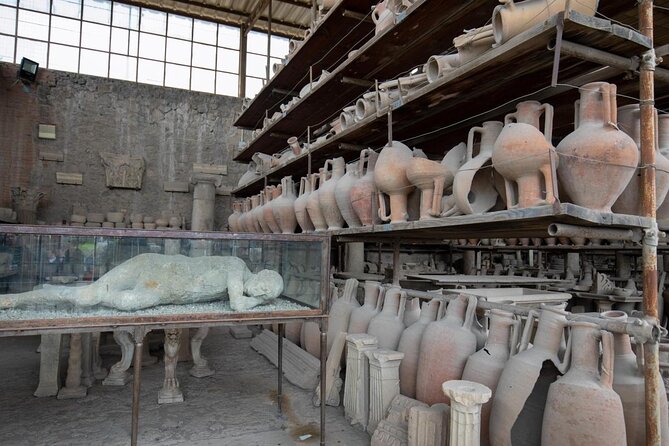
- Skip-the-line entry helps you start seeing the good stuff sooner, instead of burning your energy in queues
- Newly opened domus (opened to the public in March 2017) add fresh, restored rooms to the standard Pompeii route
- A private format means you get guided flow, not a group shuffle
- Rotating house access means you should expect variety, not a fixed set of every domus every day
- Big-ruins plus art stops gives you both the street-level story of Pompeii and the visual details of frescoes and mosaics
- Guides with strong storytelling get repeatedly praised for making the city feel lived-in, not just buried
Meeting at Porta Marina, then pushing straight into Pompeii
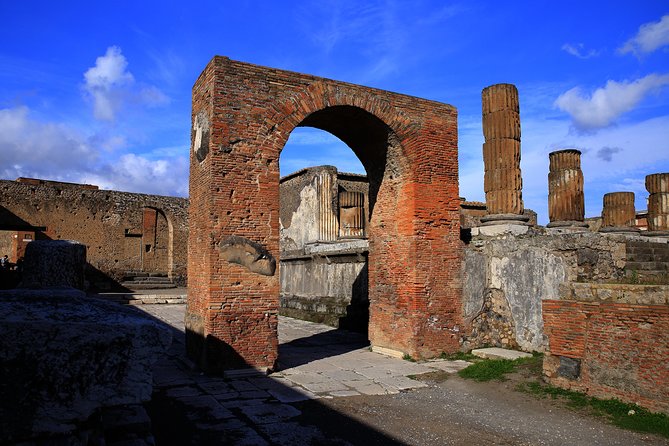
You meet at the Coffee Shop Vittoria on Via Mare in central Pompeii, near Piazza Porta Marina. The payoff of this setup is straightforward: you are not wandering around trying to locate entrances, and you are not negotiating the site on your own before the tour even starts. Once you have your skip-the-line tickets, you can head straight inside and start the day while the crowds are still thick.
This kind of fast entry matters more than people think. Pompeii is big, uneven underfoot, and easy to exhaust yourself in. Getting inside quickly buys you something you cannot replace later: energy. It also helps your guide set the pace, since you are not starting behind schedule.
Hotel or port pickup is not included, but it can be arranged for an additional cost. If you are staying in Naples or on the Amalfi Coast, this can be the difference between a stress-filled day and a calm one. If you are already in Pompeii, you will probably prefer meeting at the center so you keep time for actual site walking.
Forum, Teatro Grande, and the Odeon: the fastest way to get your bearings
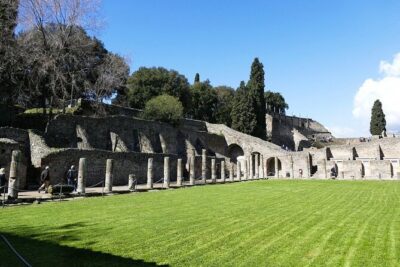
Early on, you will walk through Pompeii’s main streets and end at the Forum, the city’s central public space. This is a smart first anchor because it gives you a mental map of where things mattered: politics, public life, and the rhythm of daily movement through the city.
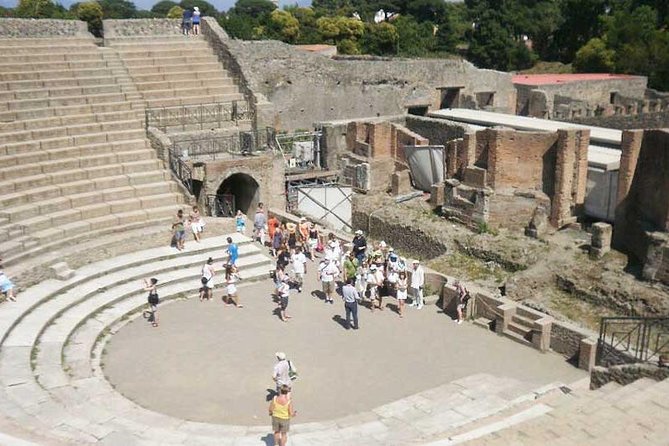
From there, you shift to the entertainment spaces, starting with the Teatro Grande. Then you move to the Odeon, also called Teatro Piccolo, where the tour focuses on the acoustic quality of this smaller theater. Even if you are not a sound-tech person, this stop helps you understand why theaters were more than just places to sit. The design shaped how performances traveled through the architecture.
A practical note: these stops are brief compared with the domus time, so treat them like orientation boosters. Your guide’s job here is to point out what you might miss if you only stare at stone. If you want photos, this is the part where you can get them quickly before the day becomes all walking and detail-reading.
Baths, a termopolium, and the House of the Tragic Poet: daily life under ash
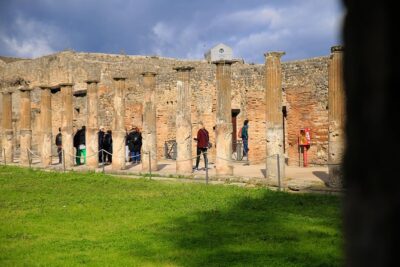
After the big public landmarks, you get into the heart of why Pompeii is so famous. You will see preserved Roman Baths and the Termopolium Capuano, plus the House of the Tragic Poet. This mix is key because it shows different sides of the same city: hygiene and leisure, fast food culture, and domestic life.
I like this portion because it is easy to imagine what a day might have looked like. Baths were social. A termopolium was practical. A house was identity, status, and taste. Pompeii’s preservation helps you see the bones of how people lived, not just the famous walls and columns.
One drawback to plan for: you are still walking during these stops, so the day can add up faster than you expect if you start out slow. Wear comfortable shoes and be ready for uneven surfaces and steps. If you pace yourself here, you will thank yourself later when the tour moves into the newly restored domus.
Why the domus in this tour feel different
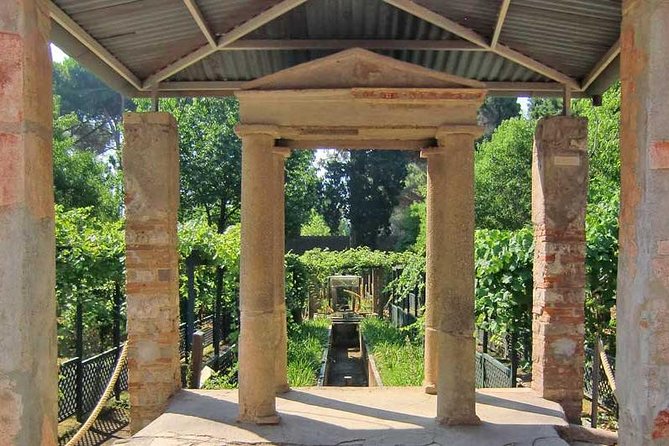
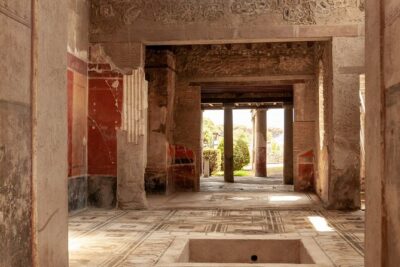
Here’s where this VIP experience separates itself. You go beyond the common “top sights” and into homes that were once private spaces for rich aristocrats. The standout is that these domus were only opened to the public in March 2017, so you are seeing restored rooms that many first-time Pompeii visitors never experience.
The tour’s house time is also guided in an art-forward way. You will be looking for mosaics, frescoes, and garden details with mythological decoration. Your guide is meant to help you connect the visuals to the stories behind them, like what the art signaled about status and how owners wanted visitors to see them.
There is one important reality check. Not all houses open together at once, and access rotates. That means your exact set of domus can shift depending on opening schedules on your day. If your dream list is extremely specific, you will want to ask the operator what is likely to be available during your date range.
Domus of Venus: colonnades, a courtyard, and the Birth of Venus scene
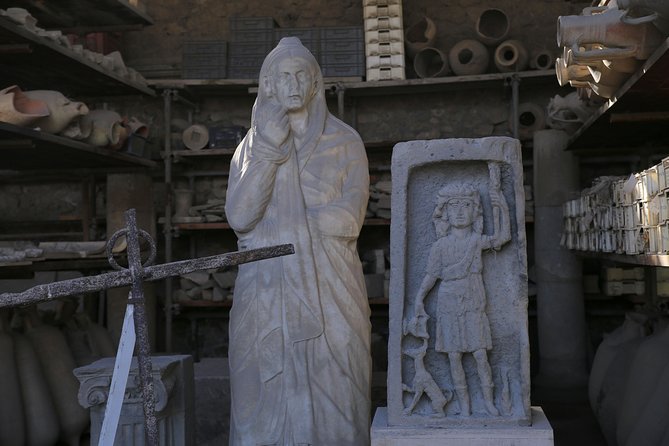
The Domus of Venus is a highlight for a reason. You get the colonnaded façade, then move into a courtyard that sets up the house’s mood. The focal point many people come for is the famous painting of the Birth of Venus, where Venus is shown emerging from a seashell.
What I like about doing this house with a guide is the difference between seeing art and understanding why it is placed where it is. Fresco placement in Roman houses often worked like storytelling. Rooms and courtyards were designed to shape the visitor’s path, and the Venus image is the kind of subject that signals high cultural taste.
This stop is also a good break from the bigger walking segments because the pacing naturally slows. You can spend time looking, ask questions, and absorb the finer details without feeling like you are sprinting to the next corner.
House of Octavius Quartius: Narcissus and the drama of myth
Next you visit the House of Octavius Quartius. The headline detail here is a painting of Narcissus. This is a different tone from Venus. Narcissus brings mythic themes around admiration, self-identity, and consequences, which helps you see how Roman homes used stories to communicate values and entertainment.
If you enjoy art and symbols, this is where the tour becomes especially satisfying. It is not just, Look at this wall. It is more like, Here is how myth traveled into private space, and here is why a homeowner would want a particular story in a particular setting.
You will still be walking between houses, but the time inside the domus tends to feel more restorative. It is the kind of stop where you can pause and actually look, not just pass through.
When the tour adds the Fruit Trees and Iulia Felix spa retreat
Depending on what is open, you may also see the House of the Fruit Trees, known for its exquisite frescos. Another possible stop is the House of Iulia Felix, which served as a spa retreat.
Iulia Felix is a reminder that Roman luxury was not only about beauty. It was also about comfort and routines. The idea of a spa within a home feels modern in a way, and it helps you connect the dots between baths as a public institution and relaxation as a private privilege.
The House of the Fruit Trees is another great choice for visual detail. Gardens and decorative motifs made the house feel alive, and mythological themes gave personal spaces a sense of theater. If you are the type who likes to zoom in on paintwork, mosaics, and garden statuary, you will likely enjoy this added house time.
The tour format: private, flexible, and guide-led
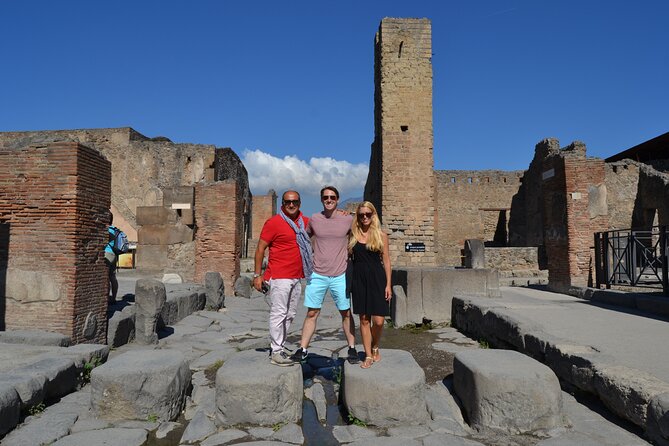
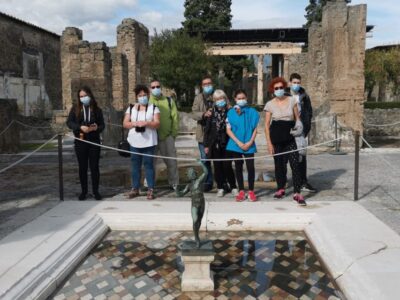
This tour is private, meaning only your group participates. That matters because Pompeii is a place where you do not want to be pulled along at the speed of the slowest person in a big group. With a private guide, you can move at your pace, stop for questions, and spend the right amount of time where you care most.
Flexible departure times are also a benefit. Pompeii can vary wildly by crowd level depending on the day and hour, and you want your most important stops to happen when you can actually see details.
This tour also includes a local guide and a professional art historian guide in the mix, plus a guaranteed skip-the-line plan. That combination is designed to cover both storytelling and the visual art details that make the domus special.
One thing to watch is the archaeology wording. Some guidance can lean toward interpretation and art history more than field archaeology. If you want a strictly archaeological focus, you might confirm the guide role before you go. The good news is that even interpretation-led guiding often gives a more usable experience for regular visitors, because it translates the site into human behavior and design.
How long it really takes, and where your time goes
The experience is listed around four hours, and the tour itself often lands in the 3 to 4 hour exploring range. At the same time, many people report it can feel like closer to five hours depending on pace, which domus are open, and how much you stop for photos and questions.
Either way, plan your day as a serious walking block. Pompeii is not a sit-down museum visit. You will move through the Forum, theater areas, baths and houses, and then spend time in multiple domus. If you schedule dinner right after without buffer, you will probably feel rushed.
If you want a simple plan for the rest of your trip, keep Naples and Vesuvius in mind as follow-ons. People also recommend pairing Pompeii with time at the archaeological museum in Naples, where you can see mosaics and artifacts in a less weather-dependent setting. The museum tip shows up a lot because the mosaics look even more intricate there.
Value check: what you are paying $359.22 for
At $359.22 per person, this is not a budget tour. So you should think of the price as a bundle of three things you are buying: time, access, and interpretation quality.
Time comes from the skip-the-line ticket use and the fact that you are not wasting half the morning figuring out how to route the site. Access comes from the VIP flow and priority entry approach. Interpretation quality comes from the art-historian style guidance tied to the domus, plus a guide who can connect what you see to what it meant in Roman life.
You also get value from the private format. If you have ever been frustrated by big groups that force you to rush past frescoes or miss context because someone is always behind, you will appreciate the controlled pace here. Several guide names are praised for making the day feel like it goes fast while staying structured, including Laylo, Raphael-associated guides like Italo, and guides like Giada and Fiorenza.
The main reason you might hesitate is the cost, especially if you are visiting with someone who does not care about art details or domus interiors. If you mostly want scenic ruins without close inspection, you might prefer a cheaper route with only the core highlights. But if you want the domus art and a guide to make the whole city click, this price starts to make sense.
What to bring and how to make the day easier
This is a walking tour, so pack like it. Comfortable shoes are non-negotiable. If you run hot, add a hat and plan for sun exposure, since there is often limited shade on-site.
Bring water with you. Once you are inside the grounds, you might find water options limited, and people commonly advise bringing a bottle from the start. Restrooms exist at multiple spots on the grounds and tend to stay clean, so you should not panic about access, but you will still want to use them at natural breaks.
A passport is required on the day of travel. Also note that confirmation is received at booking, and the tour is offered in English.
Who should book this VIP Pompeii tour
I would book this tour if you want more than the postcard version of Pompeii. You want the newly opened domus, you like art details like mosaics and frescoes, and you prefer a guided route that keeps you from wandering and guessing.
It is also a good fit if you care about theaters, public spaces, and daily-life context. The Forum and theater stops give you the city structure, then the baths and domestic houses explain what people did when they were not in public.
You might reconsider if you are on a strict budget, or if you do not care about interiors and art. Pompeii can still be great without a guide, but the whole point of paying more here is getting the domus experience shaped by expert explanation.
Should you book it
Yes, I think you should book this tour if you want a guided, high-value Pompeii experience with skip-the-line entry and a strong focus on newly restored houses. The biggest return is clarity. Pompeii is huge, and this style of guiding helps you see the city as an actual place with routines, status, and design choices, not just a pile of stone.
If the domus access is a top priority for your trip, this VIP format is the way to make that happen without wasting precious hours in crowd chaos. Just do one smart check before you go: ask whether your guide is best suited for the kind of archaeology focus you want, since the tone can lean art and interpretation depending on the person.
FAQ
How long is the Pompeii VIP tour?
The tour is listed at about 4 hours, with exploring time described as around 3 to 4 hours.
Where do I meet the guide?
You meet at Coffee Shop Vittoria, Via Mare, 80045 Pompei NA, Italy. The tour ends back in the same area.
Is hotel pickup included?
Hotel or port pickup is not included, but it can be arranged for an additional cost.
What is included with admission?
Admission tickets for the stops are included, and you use skip-the-line tickets to enter Pompeii faster.
Will I see all the newly opened houses?
Not always. The tour is customized based on what houses are open at the time, and the houses rotate, so you may not see every domus in one visit.
Do I need anything besides comfortable shoes?
Yes. A current valid passport is required on the day of travel.
More Tours in Pompeii
- Pompeii Small Group Tour with an Archaeologist★ 5.0 · 6,593 reviews
- Pompeii and Herculaneum Small Group Tour with an Archaeologist★ 5.0 · 1,350 reviews
- Skip the Line Guided Tour of Pompeii led by an Archaeologist★ 5.0 · 703 reviews
- Pompeii Ticket + Tour with Optional Tasting Experience at Pompeii★ 5.0 · 663 reviews
- Pompeii private tour with an Official Guide★ 5.0 · 631 reviews
More Tour Reviews in Pompeii
- Pompeii Small Group Tour with an Archaeologist★ 5.0 · 6,593 reviews
- Discover the Ancient Ruins of Pompeii: Day Trip from Rome★ 3.5 · 2,247 reviews
- Pompeii and Herculaneum Small Group Tour with an Archaeologist★ 5.0 · 1,350 reviews
- Skip the Line Guided Tour of Pompeii led by an Archaeologist★ 5.0 · 703 reviews
- Pompeii Ticket + Tour with Optional Tasting Experience at Pompeii★ 5.0 · 663 reviews
Sorrento to Pompeii, More Ways
- Skip the Line Guided Tour of Pompeii led by an Archaeologist★ 5.0 · 703 reviews
- Sharing Tour of Pompeii★ 5.0 · 487 reviews
- Pompeii Tour & Lunch with Wine Tasting Experience★ 5.0 · 383 reviews
- 2 hours Pompeii Tour with Local Historian – Ticket Included★ 5.0 · 335 reviews
- Private Day Tour of Pompeii, Sorrento and Positano with Pick Up★ 5.0 · 110 reviews
More ways into Pompeii Tours from Sorrento.
 ★ 4.8Pompeii: Small-Group Tour of Pompeii and Herculaneum867 reviews
 ★ 4.9Pompeii Ruins Private Tour with Optional Skip-the-Line EntryFrom $254732 reviews
 ★ 4.0Pompeii Ruins Half-Day Tour from Sorrento with GuideFrom $97714 reviews
 ★ 5.0Skip the Line Guided Tour of Pompeii led by an ArchaeologistFrom $95703 reviews
 ★ 4.3Day Tour to Pompeii Ruins and Mount VesuviusFrom $130489 reviews
 ★ 5.0Sharing Tour of PompeiiFrom $193487 reviews
 ★ 5.0Pompeii Tour & Lunch with Wine Tasting ExperienceFrom $120383 reviews
 ★ 5.02 hours Pompeii Tour with Local Historian – Ticket IncludedFrom $48335 reviews
Other useful routes from here