
REVIEW · POMPEII TOURS FROM SORRENTO
Private Pompeii Tour with 3D Virtual Reality Headset – Tour Assistant Only
Pompeii does time travel, right on your feet. You get 3D VR recreations paired with headset audio commentary, which makes the stones feel like a living street. The tradeoff is real: your assistant is not a licensed Pompeii guide, so they cannot answer archaeology questions on the spot.
I also like the pacing. You start with a short VR training, then you walk with an escort through the ruins while the experience adds up to as many as 15 3D videos. One more consideration before you book: the site involves uneven ground, and VR is not a good fit for everyone with balance, vision, or medical concerns.
Key highlights worth knowing before you go
- 5-minute headset training at the start, so you are not fumbling while the history starts
- One headset per adult and youth (minimum age 9), with limited manufacturer guidance for kids under 13
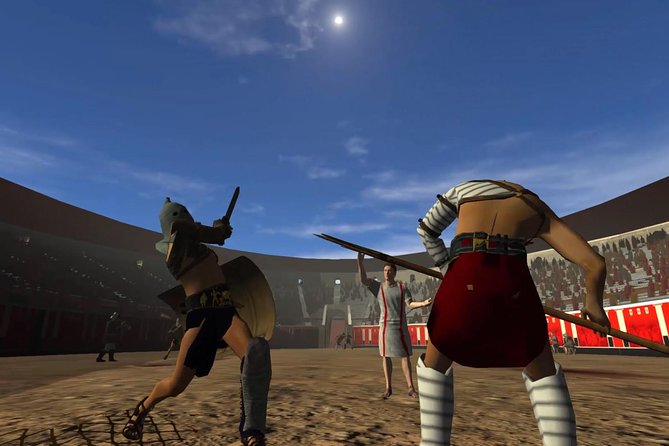
- Up to 15 3D VR videos showing Pompeii as it looked before Vesuvius
- Assistant escort, not a licensed guide, with history delivered mainly through the headset audio
- Headset audio in 6 languages: English, Italian, German, French, Spanish, and Russian
- Skip-the-line entry included, plus a skip ahead feel that helps your time on-site
What this private Pompeii VR tour really feels like
This is a private group experience led by a tour assistant, plus a VR add-on that rebuilds ancient Pompeii in 3D right where you are standing. That combination is the whole point. Regular Pompeii tours tell you what you are looking at. This one tries to show you what it looked like, then lets you keep walking through the real ruins.
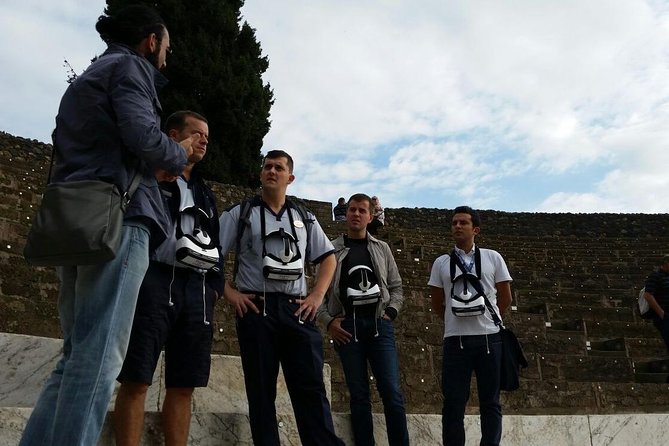
Here is what you should expect from the setup. You will get a brief training on the VR headsets first. Then your assistant leads you through the archaeological park. At different moments you will switch into the headset to watch short recreated scenes, covering everyday places like homes, shops, streets, and markets, along with bigger public spots like temples and theaters.
A key detail that affects your expectations: the assistant is not a licensed guide. That means questions about the archaeology itself are off-limits in the way you might be used to. The tour leans on the headset commentary for your main learning, while the assistant focuses on helping you move, timing the experience, and keeping the day smooth.
The walk through Pompeii: from VR training to the ruins
Your visit starts at Hotel Vittoria in Pompeii, at Piazza Esedra. The tour ends at Piazza Immacolata, so you are not returning to the exact same point. Plan for that when you think about transit and any later plans in town.
At the beginning, a staff member gives you about 5 minutes of training on how to use the VR headsets. This is short, but it matters. If you have ever used VR tech at home, you know that comfort, fit, and basic controls can make or break the experience. Here, they want you ready quickly so the time inside the ruins stays the star.
Once you are equipped, you enter the Pompeii Archaeological Park with your tour assistant. The assistant walks with you, guiding you through the route and signaling when it is time for the next headset moment. In the VR portion, you can watch up to 15 3D virtual reality videos. The idea is simple and effective: you see the modern ruin, then you view a recreated scene of what that space may have looked like around 2,000 years ago, before the eruption of Mount Vesuvius.
Between VR moments, you are on foot through the real site. Pompeii is not flat or tidy, so comfortable shoes are not optional. The experience relies on you being able to walk over uneven terrain while you switch between the physical ruins and the virtual layers.
VR headset basics: languages, ages, and comfort rules
The headsets are Samsung/Oculus Gear VR. You get one headset per adult and youth, with a minimum age of 9 to use one. There is also a manufacturer recommendation that the headsets should not be used by children under 13. If you are traveling with kids in that range, use the recommendation as your decision anchor, not just the minimum age requirement.
The learning side is handled by the headset audio. Your tour assistant speaks only English and Italian, but the VR commentary is available in six languages: English, Italian, German, French, Spanish, and Russian. If your group includes multiple languages, you can still match everyone to the audio that works for them, which is a nice way to keep the experience inclusive without needing a multi-language human guide.
Comfort and safety are not afterthoughts here, and you should take the warnings seriously. VR is not recommended if you are pregnant, elderly, have pre-existing binocular vision abnormalities, psychiatric disorders, or a heart condition or other serious medical condition. People with a history of seizures or loss of awareness should consult a doctor first. If you have a pacemaker or other implanted medical device, the Gear VR can emit radio waves and you should consult your doctor or the device manufacturer.
If you start feeling symptoms like dizziness, disorientation, eye strain, nausea, or blurred vision, you should stop right away. And if you tend to get motion sickness, I would treat this as a “try and adjust” situation, not a sure thing.
When the assistant cannot answer archaeology questions
This is the biggest reality check, and it is why I urge you to go in with the right expectations.
Your tour assistant is an escort, and the tour explicitly notes they are not allowed to answer questions about the archaeological site. That does not mean they are unhelpful. It means the assistant’s job is different: keeping you on track, helping with VR timing and logistics, and supporting the flow of the experience.
So how do you still get the history? The headset audio is your main classroom. That commentary is the piece designed to explain what you are seeing. If you want to ask deep follow-up questions like why a certain layout changed or what a specific artifact means, this is not the tour to count on for those answers.
Practical tip: if you want to maximize learning, use two modes. Let the headset do the storytelling while you are in motion. Then, after the VR stops, take a few minutes to read any on-site signage or notes with fresh eyes. You will get the benefit of interpretation without needing a licensed guide to answer every question.
Timing and logistics: morning or afternoon, and the walking pace
You can choose a morning or afternoon departure, and the whole tour runs about 2 hours 30 minutes including the admission ticket. That duration is long enough to feel like you saw meaningful parts of Pompeii, but short enough that you are not trapped for the entire day.
The meeting point is Hotel Vittoria at Piazza Esedra. The tour ends at Piazza Immacolata. Because those are different locations, I recommend planning your next step early. Choose your train or bus time with extra buffer, and avoid booking anything tight right after your finish.
The good news: the start is near public transportation. That helps you build the day without a complicated car plan. Still, you should keep in mind the on-site walking covers uneven terrain, so you want light layers and sturdy shoes more than you want perfect footwear photos.
Also, travel light. The guidance is to minimize bags and keep pockets and backpacks down. A lightweight shoulder bag is usually easiest for a walking-heavy experience where you will not want to wrestle with straps.
Skip-the-line entry and what you actually pay for
At $124.02 per person, this tour is not cheap in the way a casual ticket is cheap. The value comes from what is bundled.
You are paying for:
- Skip-the-line entrance to the Pompeii ruins
- VR headsets (one per adult or youth)
- A tour escort or host
- The headset experience itself, including up to 15 3D videos and multilingual audio
You are not paying for transportation, and you are not paying for a licensed guide. That is a major part of the math. If you would strongly prefer a traditional guide who can answer archaeology questions, this format may feel restrictive. If you like learning through visuals and audio and you value the time-saver of skip-the-line entry, the price can start to look more reasonable.
I also think the “private” angle matters. Only your group participates. For families, couples, and small friend groups, that means less waiting around and less coordination with strangers. In Pompeii, where your day depends on timing, that kind of control adds real comfort.
Who this tour fits best (and who should be cautious)
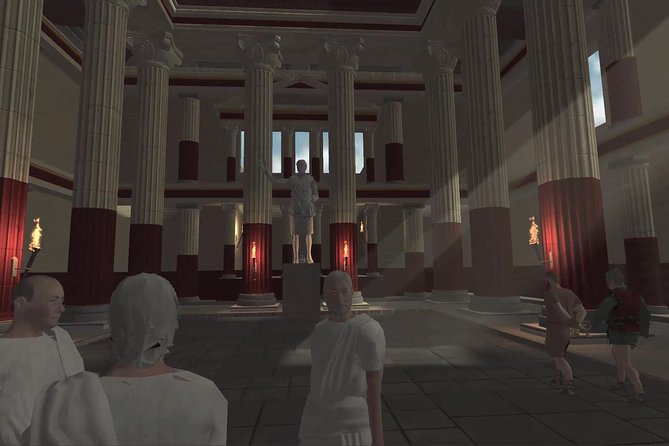
This is ideal if you want to see Pompeii in two layers: the real ruins and the reconstructed ancient life. It is also a strong pick if your group enjoys tech that changes how you perceive a place, especially if someone in your party is used to video games or VR at home.
If you are traveling with teens, the VR age guidance still needs careful thought. Kids can use headsets starting at age 9, but the manufacturer recommendation says under 13 is not advised. If you do bring a younger teen or child, I would plan for close monitoring and a comfort-first attitude.
If someone in your party has medical or comfort concerns related to VR, this may not be the right choice. Balance and motion tolerance matter, and the tour notes that VR requires an unimpaired sense of motion and balance. Vision issues, seizure history, and heart or implanted device concerns all mean you should consult a doctor.
Finally, consider your learning style. If you love asking lots of questions of a licensed human guide, you may find this tour frustrates you. If you enjoy audio learning and want the visual experience to do the heavy lifting, you will probably appreciate this format.
Should you book this private Pompeii VR tour?
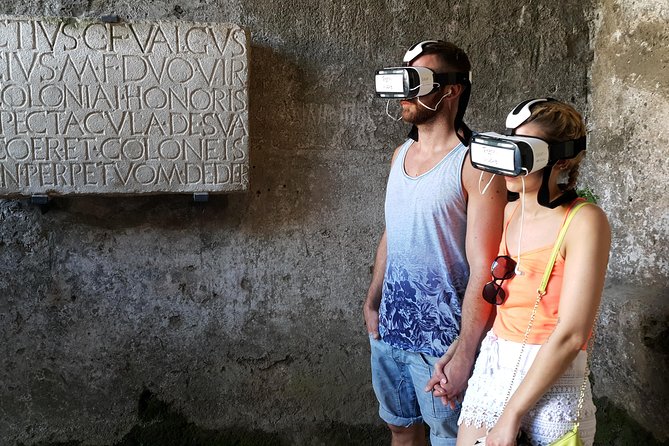
Book it if you want a modern way to understand Pompeii without spending your entire time reading stone labels. The VR recreations plus multilingual audio can make the ruins feel less like ruins and more like lived-in places. The skip-the-line entry and the private group setup help your day stay on schedule.
Skip it or choose another option if you know you need a licensed guide who can answer archaeology questions in depth. Also think twice if VR safety or comfort is a concern for anyone in your group, especially for kids under 13, anyone with seizure history, or anyone with implanted medical devices.
If your group is flexible, comfortable walking uneven ground, and excited by the idea of stepping into a 3D reconstruction, this can be a smart use of limited time in Pompeii.
FAQ
What is included in the $124.02 price?
Your ticket includes the Pompeii admission entry (with skip-the-line access) and the 3D virtual reality headsets, plus a tour escort or host during the walk. You also get the audio commentary in multiple languages delivered through the headsets.
How long is the tour?
It lasts about 2 hours 30 minutes. The duration includes the admission ticket time as part of the experience.
Do I get a licensed guide?
No. The tour uses a tour assistant who is not a licensed guide and is not allowed to answer archaeology questions about the site. The main history content is delivered through the headset audio.
What languages are available for the headset commentary?
The headset commentary is available in six languages: English, Italian, German, French, Spanish, and Russian. The tour assistant speaks only English and Italian.
What is the minimum age to use the VR headset?
The minimum age to use the VR headset is 9. The manufacturer also recommends that children under 13 should not use the headsets, so that age group needs extra caution.
Where does the tour start and end?
The tour starts at Hotel Vittoria in Piazza Esedra, 80045 Pompei NA, Italy. It ends at Piazza Immacolata, 80045 Pompei NA, Italy.
Is transportation or hotel pickup included?
No. Transportation to and from the area is not included, and there is no hotel pickup or drop-off.
Can I cancel for a full refund?
Yes, free cancellation is available up to 24 hours in advance of the experience start time for a full refund. If you cancel less than 24 hours before the start time, the amount you paid is not refunded.
More Tours in Pompeii
- Pompeii Small Group Tour with an Archaeologist★ 5.0 · 6,593 reviews
- Pompeii and Herculaneum Small Group Tour with an Archaeologist★ 5.0 · 1,350 reviews
- Skip the Line Guided Tour of Pompeii led by an Archaeologist★ 5.0 · 703 reviews
- Pompeii Ticket + Tour with Optional Tasting Experience at Pompeii★ 5.0 · 663 reviews
- Pompeii private tour with an Official Guide★ 5.0 · 631 reviews
More Tour Reviews in Pompeii
- Pompeii Small Group Tour with an Archaeologist★ 5.0 · 6,593 reviews
- Discover the Ancient Ruins of Pompeii: Day Trip from Rome★ 3.5 · 2,247 reviews
- Pompeii and Herculaneum Small Group Tour with an Archaeologist★ 5.0 · 1,350 reviews
- Skip the Line Guided Tour of Pompeii led by an Archaeologist★ 5.0 · 703 reviews
- Pompeii Ticket + Tour with Optional Tasting Experience at Pompeii★ 5.0 · 663 reviews
Sorrento to Pompeii, More Ways
- Skip the Line Guided Tour of Pompeii led by an Archaeologist★ 5.0 · 703 reviews
- Sharing Tour of Pompeii★ 5.0 · 487 reviews
- Pompeii Tour & Lunch with Wine Tasting Experience★ 5.0 · 383 reviews
- 2 hours Pompeii Tour with Local Historian – Ticket Included★ 5.0 · 335 reviews
- Private Day Tour of Pompeii, Sorrento and Positano with Pick Up★ 5.0 · 110 reviews
More ways into Pompeii Tours from Sorrento.
 ★ 4.8Pompeii: Small-Group Tour of Pompeii and Herculaneum867 reviews
 ★ 4.9Pompeii Ruins Private Tour with Optional Skip-the-Line EntryFrom $254732 reviews
 ★ 4.0Pompeii Ruins Half-Day Tour from Sorrento with GuideFrom $97714 reviews
 ★ 5.0Skip the Line Guided Tour of Pompeii led by an ArchaeologistFrom $95703 reviews
 ★ 4.3Day Tour to Pompeii Ruins and Mount VesuviusFrom $130489 reviews
 ★ 5.0Sharing Tour of PompeiiFrom $193487 reviews
 ★ 5.0Pompeii Tour & Lunch with Wine Tasting ExperienceFrom $120383 reviews
 ★ 5.02 hours Pompeii Tour with Local Historian – Ticket IncludedFrom $48335 reviews
Other useful routes from here