
REVIEW · POMPEII TOURS FROM SORRENTO
Pompeii tour with archaeologist
Pompeii makes sense fast. You get a guided walk through the city’s key sights, with an archaeologist explaining what you are actually looking at, from the Forum to the entertainment and everyday corners that tell you how people lived until 79 AD. I especially like the way Dr. Pina Esposito builds clear context while you move.
I also like the pace of the route. It is structured like a guided storyline, with stops that link government, religion, homes, and street life, including the mosaic masterpieces that usually confuse first-time visitors.
One thing to factor in: the tour price does not include the Pompeii entrance ticket, so you still need to plan for that extra cost and arrive ready to walk.
Key highlights I’d bet on
- Forum-to-beyond route that ends at Foro di Pompei, so you can keep exploring after the tour
- Archaeologist-led explanations in English (also Italian or German), designed for real understanding, not just facts
- Small group size (max 15), which makes questions feel doable instead of rushing through them
- Big-name Pompeii stops in one outing, including the House of the Faun, Stabian Baths, and the Lupanar
- Practical tour setup with a mobile ticket and a meeting point at Pompei Scavi Villa Dei Misteri
Pompeii in 2.5 Hours With Dr. Pina Esposito
This is a 2 hours 30 minutes Pompeii experience built for focus. Pompeii is huge, and without a plan you can end up “reading plaques” while the city’s story stays jumbled in your head. Here, you get an archaeologist guide who turns the ruins into a sequence: how the city worked, what Romans believed, and what daily routines looked like right before the eruption.
The group is limited to 15 people max. That matters more than you might think. When there are fewer people, you get time to ask a follow-up question, and the guide can correct misconceptions on the spot. The reviews tied to Dr. Pina Esposito are full of praise for how she answers questions and gives context that makes you see the place differently, not just bigger.
Language options are a plus. You can choose English, or Italian or German if that fits your trip. Since the tour is only a couple of hours, going in the language you are most comfortable with helps you catch the details that make Pompeii feel real.
Where You Meet (Villa Dei Misteri) and Why Ending at Foro Helps
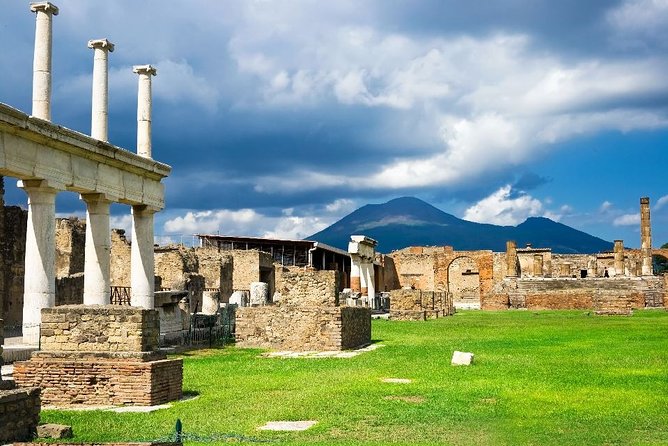
The meeting point is Pompei Scavi Villa Dei Misteri, and the walk ends at Foro di Pompei (Pompeii Forum). That ending is practical. If you want more time in the excavations, you are not forced to stop right when your energy is peaking. You can stay inside the site and keep going under your own steam.
The tour uses a mobile ticket, which is convenient if you are juggling a Naples itinerary and don’t want paperwork. The site itself is near public transportation, so you are not locked into a taxi plan.
Also, the tour needs good weather. Pompeii ruins are outdoors, and the experience is designed around walking between stops. If you are visiting in shoulder season, I’d keep a flexible day in your plan so you are not stuck rescheduling later.
Foro di Pompei and the Granai del Foro: The City’s Engine
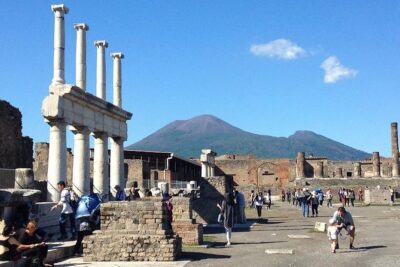
You start with the Foro di Pompei, which is where Pompeii’s civic life lived. This is not just a pretty plaza. It is the political and social backbone of the city. The guide shows the Forum’s role from Pompeii’s early roots up to the shock of 79 AD, so you understand why this area mattered every single day, not only in textbooks.
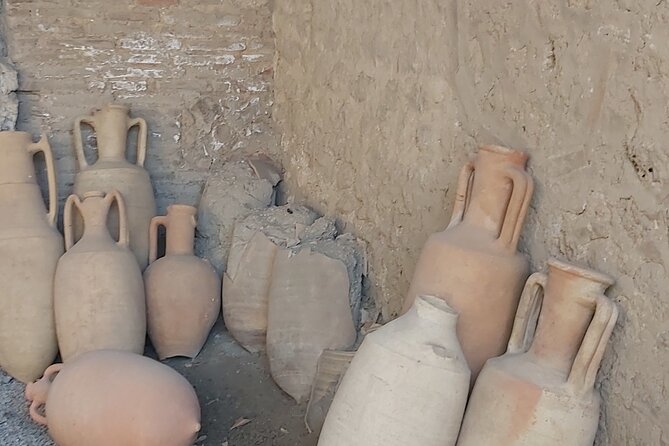
Next comes Granai del Foro, the granaries. This is one of those stops that helps you shift from “I see columns and arches” to “I see systems.” Granaries mean food supply and storage, and storage means logistics, economics, and power. You also get guided attention to important finds from the area, including items like amphorae, sculptures, and inscriptions.
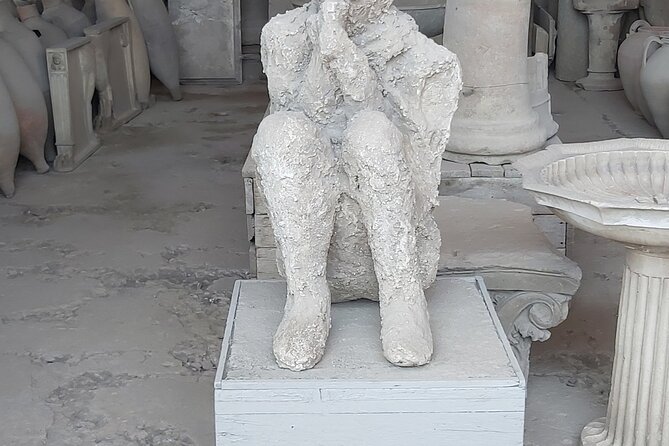
Perhaps the most haunting part is how the plaster casts of the victims are presented in this context. Even if you have seen images before, the guide’s framing changes the experience. You stop thinking of them as a single tragic snapshot and start to understand the human scale of what happened.
Basilica and Temple of Apollo: Where Power Meets Belief
The tour moves to Pompei La Basilica, one of the most spectacular and monumental buildings in Pompeii. A basilica sounds like a church word, but in Roman cities it often meant a civic building. The guide explains what people did there, which helps you picture the Forum district as a working place, not a ceremonial stage.
Then you get to the Temple of Apollo, a highlight for anyone who loves religion, architecture, and Roman craftsmanship. The guide focuses on original finds tied to the temple, including sculptures, altar details, a fountain, inscriptions, columns, and even a Roman sundial. If you have ever wondered why ancient monuments can feel both artistic and practical, this stop gives a clear answer: they were built to function as well as to symbolize.
A quick practical takeaway: take your time here. Temples and civic buildings can look similar at first glance, but the guide helps you see what is specific. That is where a guide earns its fee.
Hotel Vittoria and the Cave Canem Mosaic
After the big public buildings, you slow down for the more intimate side of Pompeii. Hotel Vittoria is explained as an ancient gateway to the city and to the surrounding area. That kind of stop is not always on first-time itineraries, but it matters, because it helps you orient the ruins spatially. You start thinking like a visitor in Pompeii, entering and moving through a recognizable flow of spaces.
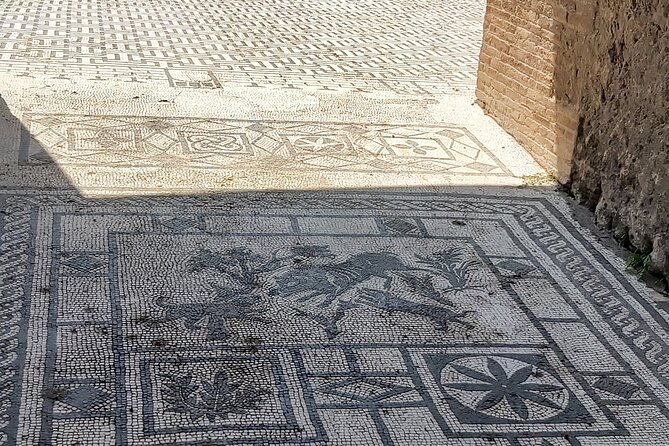
Next is the Cave Canem mosaic, placed at the entrance of the House of the Tragic Poet. It is famous for a reason. This is street-level messaging in mosaic form, the kind of detail that makes Pompeii feel like a real place with personalities, not a staged museum. The guide ties it to the setting so it stops being a random photo spot.
If you like small, specific details, you will enjoy this part. It reminds you that Roman homes and businesses advertised themselves and communicated with visitors.
Casa del Fauno: The Dancing Faun and the Battle of Alexander
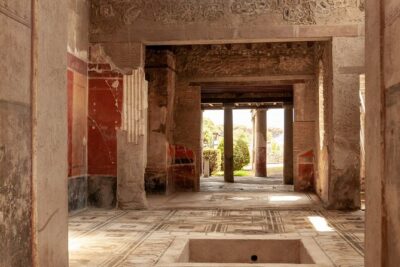
You then step into Casa del Fauno, the largest house in Pompeii. The guide explains the story of the house and why it became known as a flagship location for ancient art. You are not just looking at rooms. You are looking at wealth, taste, and how art signaled status.
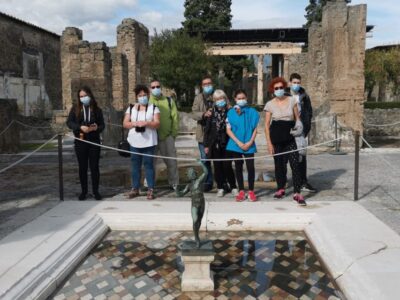
Two works in particular get attention. First, the bronze sculpture of the dancing Faun. Second, the mosaic of the Battle of Alexander, made with more than a million tiny colored tiles. This mosaic is so famous that you might think you already know it from pictures. The guided experience changes that by helping you understand how such an artwork would have been experienced in person, in a lived-in space.
Here is the value of having an archaeologist guide: you get helped “read” the house’s layout. You learn what spaces suggest about daily movement, visitors, and how private life operated in the city.
If you are a first-timer, this stop is one of the best places to ask questions. The guide can explain what is unique about Pompeii’s domestic world compared with other Roman sites.
Thermopolium Regio VI, Insula VIII, 8 and the Stabian Baths
Pompeii does not run on monuments alone. It also runs on food, routine, and social spaces. Thermopolium Regio VI, Insula VIII, 8 is presented as a preserved example of an ancient fast-food setup. The guide connects it to social life and to nutrition habits, so you can picture people grabbing hot meals and eating in a public or semi-public setting.
This stop is surprisingly useful even if you are not a food history person. It gives you a grounded view of the city’s rhythms. You stop seeing Pompeii as only tragic. You also see it as normal, busy, and practical.
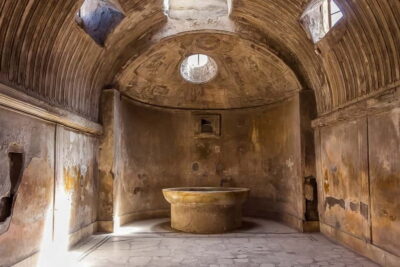
Next comes the Stabian Baths (Terme Stabiane), which the guide frames as an extraordinary example of Roman thermal architecture. The baths explain how Romans mixed hygiene with entertainment and conversation. A bath building is also a clue to the city’s social map: who went, how they interacted, and what “relaxation” looked like.
Practical tip: baths and food stops can feel less “big and cinematic” than the Forum, but they are some of the most revealing. If you want Pompeii to feel like real life, do not skip these.
Temple of Vespasian and the Roman Imperial Cult Mindset
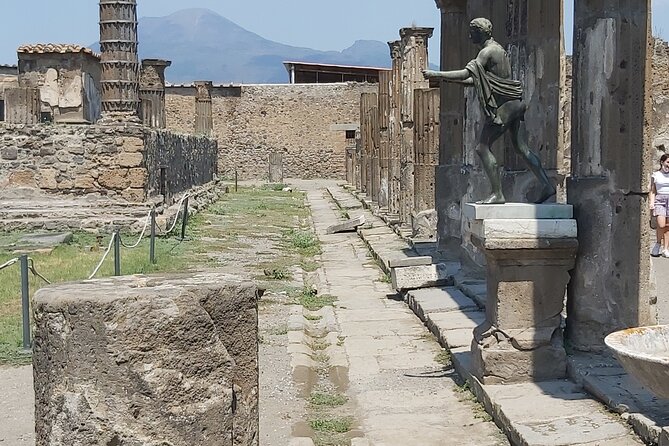
Then you get to Temple of Vespasian, also known as the temple of Genius Augusti. The guide’s focus here is the Roman imperial cult and why it mattered. This is where Pompeii’s political reality becomes visible in stone.
You can stand in these ruins and admire architecture, but the guide helps you connect it to power. Temples like this were not just religious spaces. They were part of how Rome maintained unity and authority across the empire.
If you care about how empires work, this stop is one of the key reasons to choose a guided archaeologist experience. Without guidance, it is easy to miss why one temple is different from another. With guidance, you see the logic.
Via dell’Abbondanza and Teatro Grande: Streets and Stages
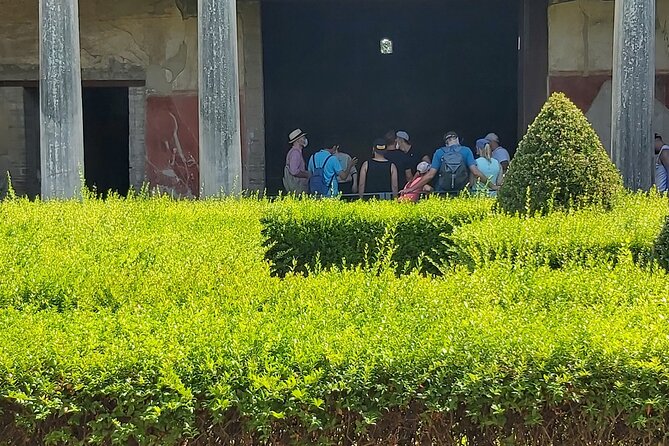
You walk through Via dell’Abbondanza, one of Pompeii’s most famous main streets. The guide explains the road network and urban plan, so you understand why certain areas received more attention and traffic. Streets are how a city breathes. Once you get the plan, Pompeii stops feeling like a random scatter of walls.
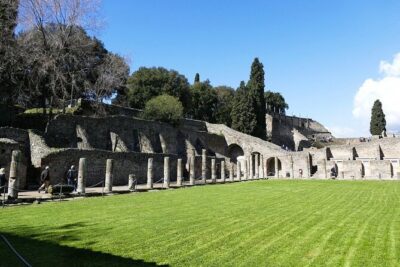
Next is the Theater District, including the Teatro Grande, and also reference to the Teatro Piccolo and the Quadriportico dei Teatri. The guide helps you read the theater area as a cultural center, not just a building.
I like this combination because it works with what you just learned at Via dell’Abbondanza. A Roman city designed its movement for civic life, and theaters were a major part of that civic rhythm.
If you have ever wondered why ancient people cared about public performances, this is your answer. It was entertainment, yes, but also community.
Doric Temple and the Triangular Forum: Pompeii’s Older Layer
The Doric Temple is explained as the remains of the oldest temple in Pompeii, along with the Triangular Forum. This stop is short, but it changes how you see the site. Newer cities often cover older ones. Pompeii preserves that layered feeling, and the guide points out what makes this area earlier and distinct.
Even if you are tired from walking, it is worth giving the Doric Temple a bit of attention. The “oldest” angle makes it a useful anchor in your mental map. It also makes you more alert to the idea that Pompeii kept evolving right up to 79 AD.
Lupanar: A Famous, Sensitive Stop You Should Expect
The final stop is the Lupanar, Pompeii’s most spectacular example of an ancient brothel. The guide talks about it as a very famous site due to the exceptional state of conservation, especially of the bedrooms and the erotic frescoes showing different sexual positions.
This is the stop that can feel awkward or uncomfortable, depending on your comfort level. That is not a reason to avoid the tour. It is a reason to approach it with eyes open. Pompeii includes adult life in plain view, and a guided archaeologist approach helps you understand the context rather than just react to the visuals.
If you have teens or you are sensitive about adult content, you might want to plan accordingly. The tour itself includes the stop as part of the route, so it is best to decide ahead of time whether that works for your group.
Price and Value: What $42.01 Buys You Here
At $42.01 per person for about 2 hours 30 minutes, this tour sits in the “more than a casual walk, less than a private museum day” category. It is not just sightseeing. You are paying for an archaeologist-led interpretation of major Pompeii zones, with a route that uses your time efficiently.
The big value move is that you do not waste energy figuring out what you are seeing. Pompeii can be overwhelming fast. Here, you get a sequence of stops that guide you through government spaces, religious architecture, elite homes, and everyday hubs like the thermopolium and baths.
The tradeoff is the one you should remember: entrance fee is not included. So your total day cost will be a bit higher once you add Pompeii admission. Still, you can treat this tour as a way to “unlock” the meaning of the admission you already plan to pay for.
One more practical note: the tour is commonly booked about 44 days in advance. If you want a specific date or language, book early and lock it in.
Should You Book This Pompeii Archaeologist Tour?
Book it if you want Pompeii to make sense without turning into a scavenger hunt. This route is strong because it balances big monuments like the Forum and Basilica with the details that make daily life real, including mosaics, a thermopolium, and the Stabian Baths. Dr. Pina Esposito’s style, highlighted again and again in feedback, is about context and good answers, which is exactly what you want in a place like Pompeii.
Consider skipping or choosing a different format if your group strongly prefers only the most general “top sights,” or if adult content at the Lupanar would be a problem for your comfort level. Also plan for walking and for entrance tickets that are not included.
If you are visiting Pompeii for the first time, and you care about understanding what you see, this is one of the smarter ways to spend a half-day in Campania.
FAQ
How long is the Pompeii tour with an archaeologist?
It lasts about 2 hours 30 minutes.
What is the price per person?
The price is $42.01 per person.
Where does the tour start and end?
It starts at Pompei Scavi Villa Dei Misteri, 80045 Pompei, Italy, and ends at the Pompeii Forum (Foro di Pompei), at Via Villa dei Misteri, 2, 80045 Pompei NA, Italy.
What languages are offered?
The guided tour is offered in Italian, English, or German.
Is the Pompeii entrance fee included?
No. The entrance fee is not included, and food, drink, and tips are also not included.
How big is the group?
The maximum group size is 15 travelers.
Is there a mobile ticket?
Yes, the tour includes a mobile ticket.
What is the policy if weather is bad?
The experience requires good weather. If it is canceled due to poor weather, you will be offered a different date or a full refund.
More Tours in Pompeii
- Pompeii Small Group Tour with an Archaeologist★ 5.0 · 6,593 reviews
- Pompeii and Herculaneum Small Group Tour with an Archaeologist★ 5.0 · 1,350 reviews
- Skip the Line Guided Tour of Pompeii led by an Archaeologist★ 5.0 · 703 reviews
- Pompeii Ticket + Tour with Optional Tasting Experience at Pompeii★ 5.0 · 663 reviews
- Pompeii private tour with an Official Guide★ 5.0 · 631 reviews
More Tour Reviews in Pompeii
- Pompeii Small Group Tour with an Archaeologist★ 5.0 · 6,593 reviews
- Discover the Ancient Ruins of Pompeii: Day Trip from Rome★ 3.5 · 2,247 reviews
- Pompeii and Herculaneum Small Group Tour with an Archaeologist★ 5.0 · 1,350 reviews
- Skip the Line Guided Tour of Pompeii led by an Archaeologist★ 5.0 · 703 reviews
- Pompeii Ticket + Tour with Optional Tasting Experience at Pompeii★ 5.0 · 663 reviews
Sorrento to Pompeii, More Ways
- Skip the Line Guided Tour of Pompeii led by an Archaeologist★ 5.0 · 703 reviews
- Sharing Tour of Pompeii★ 5.0 · 487 reviews
- Pompeii Tour & Lunch with Wine Tasting Experience★ 5.0 · 383 reviews
- 2 hours Pompeii Tour with Local Historian – Ticket Included★ 5.0 · 335 reviews
- Private Day Tour of Pompeii, Sorrento and Positano with Pick Up★ 5.0 · 110 reviews
More ways into Pompeii Tours from Sorrento.
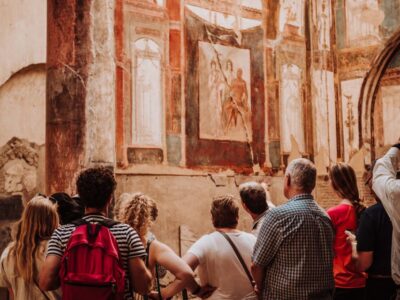 ★ 4.8Pompeii: Small-Group Tour of Pompeii and Herculaneum867 reviews
 ★ 4.9Pompeii Ruins Private Tour with Optional Skip-the-Line EntryFrom $254732 reviews
 ★ 4.0Pompeii Ruins Half-Day Tour from Sorrento with GuideFrom $97714 reviews
 ★ 5.0Skip the Line Guided Tour of Pompeii led by an ArchaeologistFrom $95703 reviews
 ★ 4.3Day Tour to Pompeii Ruins and Mount VesuviusFrom $130489 reviews
 ★ 5.0Sharing Tour of PompeiiFrom $193487 reviews
 ★ 5.0Pompeii Tour & Lunch with Wine Tasting ExperienceFrom $120383 reviews
 ★ 5.02 hours Pompeii Tour with Local Historian – Ticket IncludedFrom $48335 reviews
Other useful routes from here