
REVIEW · MOUNT VESUVIUS TOURS FROM SORRENTO
Pompeii and Mount Vesuvius Small Group Tour
Two ancient worlds in one day. This Pompeii and Vesuvius small-group tour packs an archaeologist-led walk through the ruins and a guided hike to the crater edge, so you get context fast instead of wandering. I love the Pompeii side for how it connects the layout of the city to everyday Roman life, and I love the Vesuvius portion for the geology explanations and encouragement on the climb. One drawback to plan around: the hike has steps early and a steep final push, so bring solid closed-in shoes and don’t treat it like a casual stroll.
Logistics are built for staying sane. You travel by modern minibus with a small cap, and you meet at Porta Marina Superiore with the Askos Tours sign before your archaeologist guide starts. I also like that there is a Herculaneum option if Vesuvius is closed, so your day rarely turns into dead time.
Just know the day is long enough that food becomes your responsibility. Admission and guidance are included, but food and drinks are not, and you’ll have short windows to grab something before the volcano. If you’re going in summer, wear sunglasses and sunscreen, and expect wind and chill higher up.
Quick Hits Before You Go
- Small groups make the day feel manageable: max 14 on the minibus, with a Pompeii guidance size that can go up to 20.
- Two guides, two skill sets: an archaeologist at Pompeii and a licensed hiking guide on Mount Vesuvius.
- Stop-by-stop Pompeii story: Forum square, Granaries, House of Menander, Stabian Baths, Lupanar, House of Faun, Teatro Grande.
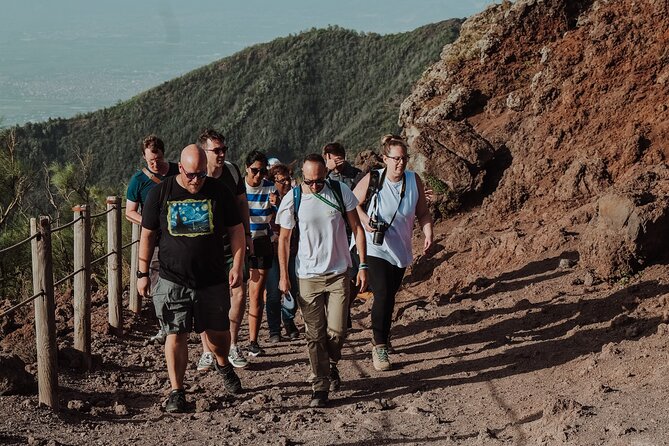
- The Vesuvius walk is the main workout: steps for the first 30 minutes and a very steep final segment.
- Crater edge views are the goal: Bay of Naples, Capri, Ischia, and the Sorrento coast on clear days.
- Weather plan B is real: if Vesuvius is inaccessible, the tour swaps in Herculaneum.
Small-Group Setup and Porta Marina Superiore Meeting
This is the kind of tour that respects your time. You’re not just buying tickets and hoping for the best, you’re joining a planned route with a guide who knows where to point and what to explain. With a smaller group, you also lose less time to bottlenecks at entrances and tight lanes.
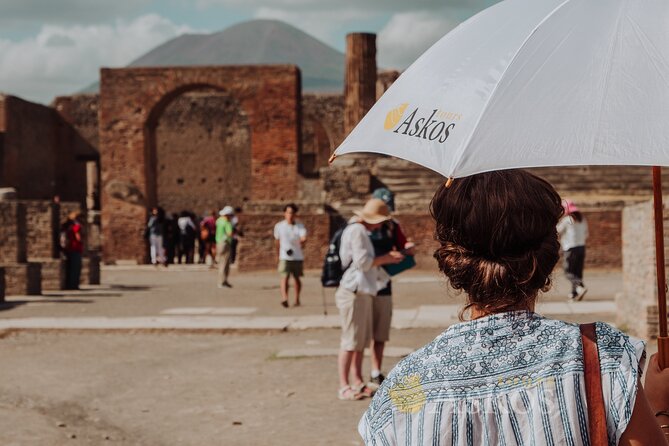
You start at Via Villa dei Misteri, 2 in Pompeii, and then you meet your Pompeii guide at the main entrance of the archaeological site, Porta Marina Superiore. The guide holds an Askos Tours sign, which helps when you’re arriving with jet lag or a crush of other visitors nearby.
On the Pompeii side, your archaeologist-led time is about two hours. On the Vesuvius side, you switch gears to a hiking-licensed guide and a crater-focused route, with the day designed around modern minibus transport from Pompeii to the national park and back.
Pompeii in Focus: Forum Square, Granaries, Baths, Brothel Lane
Pompeii is huge, and without a plan it’s easy to feel like you’re ticking off buildings instead of understanding a city. This tour’s strength is that it walks you through the main stages of Pompeii’s public and private life, then ties it together with eruption context.
You begin with a guided circuit that functions like a fast city course. Even if each stop is relatively short, the guide adds structure: what you’re looking at, what its role was, and how it fit into daily routines.
Here’s what you can expect as you move through Pompeii:
The Forum and the heartbeat of the city
The ancient main square, the Foro, is a short stop but a powerful one. In about 10 minutes you get the sense of where people gathered, discussed, did business, and moved through public life. For many people, the Forum is where the whole site starts to click, because it’s the part of Pompeii that looks most like a place you could imagine walking through today.
Granaries of the Forum and the chilling casts
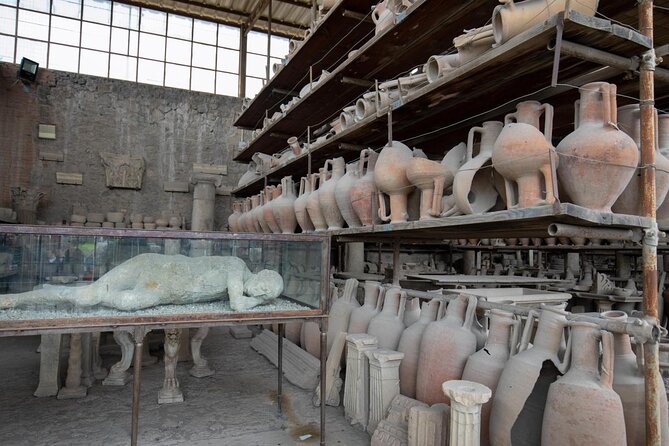
Next come the Granaries of the Forum. This stop is about 15 minutes, but it hits hard emotionally and visually. You’ll see marble tables and bathing areas that once lined fountains at entrances. You’ll also see casts of victims, and even casts of a dog and a tree. That mix of ordinary city infrastructure plus the human tragedy is what makes this part memorable.
If you’re the type who likes the story behind the stones, this is one of the best pauses of the day. It’s also a good reminder that Pompeii wasn’t just destroyed, it was interrupted mid-life.
House of Menander and the big house mindset
The House of Menander is where the tour turns toward wealth, style, and status. It’s about a 15-minute stop, and the focus is on architecture, decoration, and what the contents reveal about owners who lived surrounded by art and display.
This is a smart inclusion because it balances the public spaces. You start with a civic snapshot, then move into what private luxury looked like, so you see both sides of the city.
Stabian Baths: the oldest thermal complex in Pompeii
The Stabian Baths, or Terme Stabiane, are about 15 minutes. This is the oldest thermal complex in the city, and the value here is the mental picture it gives you of Roman leisure and hygiene. Baths weren’t just about water, they were social hubs with routines built into daily life.
Lupanar: a blunt look at the brothel economy
Then you hit the Lupanar, the most famous brothel in Pompeii. It’s another 15-minute stop. The tour doesn’t treat it like a sensational side quest. Instead, it frames what the brothel tells you about commerce, entertainment, and social dynamics in the Roman city.
It’s also a good moment to remember that Pompeii contains frank, sometimes uncomfortable evidence. If that’s not your style, you might want to mentally prepare yourself before the stop.
House of Faun and the scale of domestic life
The House of Faun is about 15 minutes and is one of the largest and most impressive private residences in Pompeii. If Menander shows wealth and decoration, Faun gives you a sense of scale, planning, and how much space elite households commanded.
This stop is especially good for people who like visual impact, because Pompeii’s domestic areas can feel like a set of rooms that once opened onto a courtyard life.
Teatro Piccolo and Teatro Grande
The itinerary includes a look at Teatro Piccolo and then a visit to Teatro Grande, the most important theater in Pompeii, with Teatro Grande taking about 10 minutes. These stops make Pompeii feel less like an archaeological museum and more like a city where people watched performances, not just worked and shopped.
If your time is limited, theater is a great return on investment, because it connects architecture to culture fast.
Pompeii Guidance That Makes Short Stops Work
One real advantage of this tour is that the Pompeii part is timed to fit guidance, not just walking. You’re given about two hours with an archaeologist guide, and the route is paced so you don’t spend your energy trying to figure out what you’re seeing.
Many people leave Pompeii feeling overwhelmed, because they’re staring at walls without a framework. Here you get that framework early, and then you still have enough time to absorb the most striking areas before shifting to the volcano.
There is a practical tradeoff: you won’t see every corner of Pompeii in a single day. If your goal is total coverage, you’d need a longer, more flexible plan. But if your goal is to understand Pompeii quickly and then still climb Vesuvius, this format is built for that exact balance.
Up Vesuvius: Steps First, Steep Climb Last, Crater Views Always the Goal
The Vesuvius portion starts with a transfer to Mount Vesuvius from Pompeii. Once you arrive, you get set up for a guided hike that’s focused on reaching the crater area and looking out over the Bay of Naples.
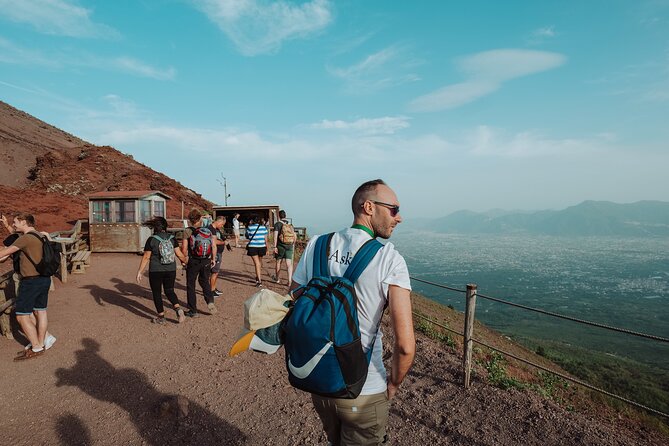
The tour includes time at the national park with views. On a clear day, the panorama can reach across Naples and out toward Capri and Ischia, plus stretches of the Sorrento coast. The crater area may even show slight smoke, since Vesuvius is active.
Now for the part you must take seriously: walking difficulty.
From the entrance of Vesuvius, the first 30 minutes involve step walking. Then, near the end, the last 500 meters is a very steep uphill walk, and the guidance is clear that closed-in shoes are essential. In real terms, plan for a slow-to-moderate climb with moments where you’ll want to pause and catch your breath.
Pace and encouragement matter
This is where your hiking guide can make or break the experience. Guides like Mario are described as patient, and they seem to adjust pace for the whole group. That matters, because not everyone arrives in the same physical shape.
Also, expect the top to feel different than the parking area. Several experiences describe wind and chill near the crater. Even if it’s hot in Pompeii, bring a mindset for cooler air up on the rim.
What you’ll hear at the top
Once you reach the crater edge, the guide focuses on how the eruption worked and what it changed around Pompeii and Herculaneum. In some cases, you may also get additional scientific explanation from someone on site, which adds extra credibility to what you’re seeing.
If you love science, this part is where the entire day turns from sightseeing into understanding.
Weather Changes Everything, But Your Day Won’t Entirely
Vesuvius is a mountain, and mountains make weather decisions quickly. The tour explicitly notes that if Vesuvius is not accessible due to force majeure, you’ll visit Herculaneum instead.
In practice, this means your itinerary can pivot fast if fog rolls in or paths close. One day might still end with a successful crater walk. Another day might end with far less visibility at the top, or a route closure before you can reach the crater edge.
Herculaneum is the smart backup
When Vesuvius doesn’t cooperate, Herculaneum becomes the consolation prize, and it’s a good one. Some people found it more intimate than Pompeii, and the site’s preservation level helps you connect the eruption story in a different way. Instead of feeling like you’re just switching to a second option, it can feel like a different chapter of the same disaster.
You may get a guide like Luciano for the Herculaneum shift, and the tone can stay lively. That helps on days where you’re disappointed about crater views.
Price and Real Value at $119.77 Per Person
At $119.77 per person, this tour is competing with two separate plans: a Pompeii tour and a Vesuvius tour. The reason this combined day often feels like good value is that it bundles the hardest logistics.
You’re paying for:
- A two-hour archaeologist guide at Pompeii
- Pompei Express and Mount Vesuvius admission fees
- Modern minibus transport from Pompeii and back
- A licensed hiking guide for the Vesuvius portion
The Vesuvius entry ticket is listed as 11.00 euros, and with the tour package including admission fees, you’re not stuck figuring out ticket timing on the fly.
The main cost you’ll add yourself is food and drinks. The tour also gives you limited time windows for breaks, so budgeting for a quick sandwich near the route makes your day smoother.
One more value point that’s hard to price: timing. Booking this kind of day tour saves you from the back-and-forth of scheduling transit, finding meeting points, and matching multiple guided tours to the same day.
What to Wear, What to Bring, and How to Keep Your Day Comfortable
This isn’t a tour where comfort is optional. It’s a long day with different surfaces, so you’ll feel what you wear.
The tour guidance is straightforward:
- Wear comfortable shoes
- Bring sunglasses and sunscreen in summer
For Vesuvius specifically, follow the added insistence on closed-in shoes, because the steep final section and sandy or uneven ground can make slipping a real risk. If you’re prone to blisters, consider pre-planning with blister care, because the climb can take longer if you pause to hydrate and rest.
Also, build your day around the idea that weather can change visibility. If you end up with fog or cloud cover, you’ll still gain value from the explanations, but you won’t always get the full panorama. That’s just how Vesuvius works.
Lunch planning tip
Food and drinks are not included. Some breaks are short, so have a plan to buy something quickly rather than hunting for a full sit-down meal. Down-hill cafés near the hiking area can be a practical place to grab a sandwich and then get back into the rhythm.
Who This Tour Suits Best (And Who Might Want Another Plan)
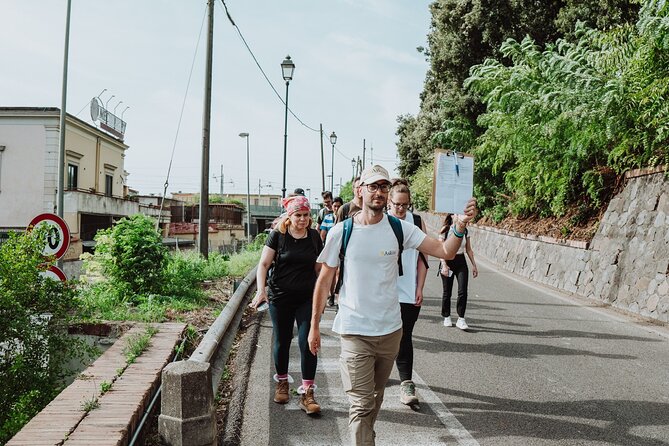
This is best for you if you want:
- Guided interpretation at Pompeii instead of self-guided confusion
- A real crater-edge goal on Vesuvius in the same day
- Small group pacing that feels less chaotic
It’s described as suitable for moderate physical fitness. Children under 6 are not allowed, and it’s not recommended for travelers with mobility or walking impairments due to the walking and steep sections.
Families can do it if kids are comfortable walking and parents can manage the pace. Several experiences note that the climb is doable with patience and good shoes, but it does require a slower, steady approach.
If you’re someone who wants to spend hours in Pompeii without moving on, you may feel rushed. If your priority is the best highlights plus Vesuvius, then this one-day structure is a very efficient way to get there.
Should You Book This Pompeii and Vesuvius Tour?
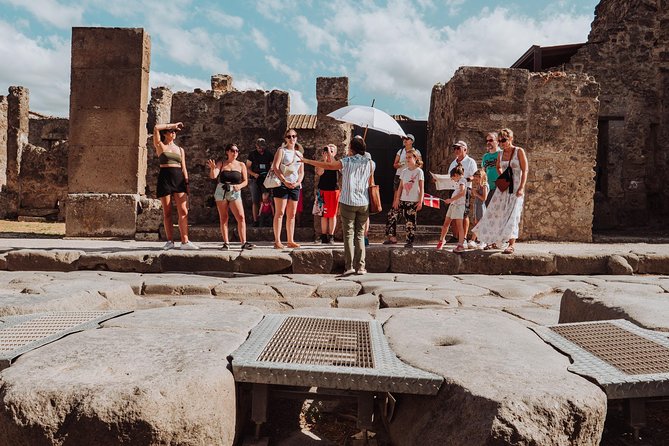
Book it if you want a time-saving combo that still feels guided and human. Pompeii is the right place to go with an archaeologist guide, and Vesuvius is the right place to go with someone who handles pacing and crater details. The small-group size and modern transport reduce stress, and the Herculaneum backup makes the plan resilient.
Think twice or adjust expectations if:
- You’re not comfortable with steps and a steep uphill climb
- You strongly prefer slow wandering with lots of free time in Pompeii
- You’re visiting on a day where you’re not okay with weather-related changes
If you go in with closed-in shoes, a realistic pace, and flexibility for fog or rain, this tour is a solid way to connect Pompeii’s ruins with the volcano that shaped them.
FAQ
How long is the Pompeii and Mount Vesuvius small-group tour?
The tour runs about 8 hours. Pompeii includes a 2-hour guided visit, and the Vesuvius portion includes about 2 hours at the park.
What language is the tour offered in?
The tour is offered in English.
Where do we meet for the tour?
You meet at Via Villa dei Misteri, 2, 80045 Pompei NA, Italy. The Pompeii guide meets you at the archaeological site main entrance, Porta Marina Superiore.
How many people are in the group?
The max group size is 14 travelers on the minibus. The Pompeii archaeologist guidance can be for up to 20 people.
Is the Pompeii and Vesuvius admission included?
Yes. Pompei Express and Mount Vesuvius admission fees are included. The Mount Vesuvius entry ticket is listed as 11.00 euros.
Is there guided time at Pompeii?
Yes. You get about 2 hours of guidance at the Pompeii ruins with an archaeologist.
How much walking is involved on Vesuvius?
You should plan for a hike. The first 30 minutes from the entrance include step walking, and the last 500 meters is a very steep uphill walk.
What should I wear?
Wear comfortable shoes. For Vesuvius, closed-in shoes are essential. Sunglasses and sunscreen are recommended, especially in summer.
Are food and drinks included?
No. Food and drinks are not included.
What happens if Vesuvius is closed?
If Vesuvius is not accessible due to force majeure, the tour includes a visit to Herculaneum instead of Vesuvius.
More Tours in Pompeii
- Pompeii Small Group Tour with an Archaeologist★ 5.0 · 6,593 reviews
- Pompeii and Herculaneum Small Group Tour with an Archaeologist★ 5.0 · 1,350 reviews
- Skip the Line Guided Tour of Pompeii led by an Archaeologist★ 5.0 · 703 reviews
- Pompeii Ticket + Tour with Optional Tasting Experience at Pompeii★ 5.0 · 663 reviews
- Pompeii private tour with an Official Guide★ 5.0 · 631 reviews
More Tour Reviews in Pompeii
- Pompeii Small Group Tour with an Archaeologist★ 5.0 · 6,593 reviews
- Discover the Ancient Ruins of Pompeii: Day Trip from Rome★ 3.5 · 2,247 reviews
- Pompeii and Herculaneum Small Group Tour with an Archaeologist★ 5.0 · 1,350 reviews
- Skip the Line Guided Tour of Pompeii led by an Archaeologist★ 5.0 · 703 reviews
- Pompeii Ticket + Tour with Optional Tasting Experience at Pompeii★ 5.0 · 663 reviews
Up the Volcano from Sorrento
- Pompeii Guided Tour & Horse Riding on Vesuvius with Lunch★ 5.0 · 419 reviews
- Private Day Tour to Vesuvius, Herculaneum & Pompeii with Pick Up★ 5.0 · 279 reviews
- Mount Vesuvius Tour from Pompeii Led by an Expert Guide★ 5.0 · 185 reviews
- Horseback Riding on Vesuvius★ 5.0 · 144 reviews
- From Pompeii: Day Tour of Pompeii and Vesuvius with Bus Transfer★ 4.0 · 32 reviews
More ways into Mount Vesuvius Tours from Sorrento.
 ★ 4.6Naples or Sorrento: Full-Day Pompeii and Mount Vesuvius TourFrom $1044,235 reviews
 ★ 4.5Naples: Pompeii and Mt. Vesuvius with Lunch and Wine TastingFrom $1412,454 reviews
 ★ 4.5Priority Access Pompeii & Mt. Vesuvius Full day from SorrentoFrom $1391,376 reviews
 ★ 4.2From Pompeii: Bus Transfer to Vesuvius with Park Entry FeeFrom $50700 reviews
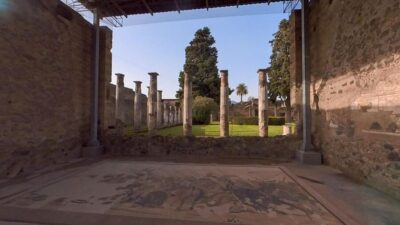 ★ 4.8Pompeii and Vesuvius Guided Tour with LunchFrom $130683 reviews
 ★ 4.2From Naples: All-Inclusive Mount Vesuvius Half-Day TourFrom $75674 reviews
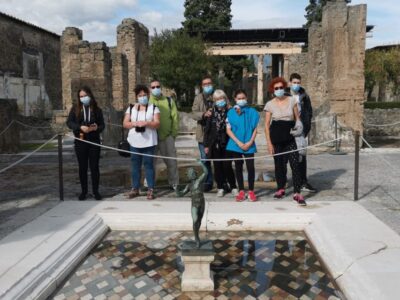 ★ 4.3Day Tour to Pompeii Ruins and Mount VesuviusFrom $130489 reviews
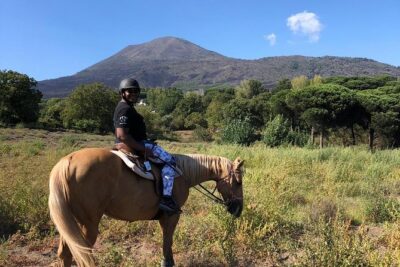 ★ 5.0Pompeii Guided Tour & Horse Riding on Vesuvius with LunchFrom $240419 reviews
Other useful routes from here