
REVIEW · MOUNT VESUVIUS TOURS FROM SORRENTO
Exclusive Pompeii with Wine and Lunch on Vesuvius-Skip-the-line
Pompeii is huge, and this day keeps you sane. The big win is skip-the-line entry plus a private, certified guide, so you spend your energy on seeing and understanding instead of waiting. Then you add Vesuvius views with a winery stop for wine and lunch at Cantina del Vesuvio, run by the Russo family.
I like how the experience gives you real guidance from people such as Natalia and Paola, who turn ruins into daily life. I also like the private guide pacing, since the walk is at your own speed and you can ask for special requests along the way.
One consideration: this is still a walk-heavy Pompeii day, so bring appropriate shoes and plan for a moderate fitness level, especially in warm months (sun gear is recommended from May to September).
Key highlights you’ll feel immediately
- Hotel or port pickup, door-to-door comfort, so you can start relaxed and end the same way
- Skip-the-line tickets that help you zip past crowd friction around entry
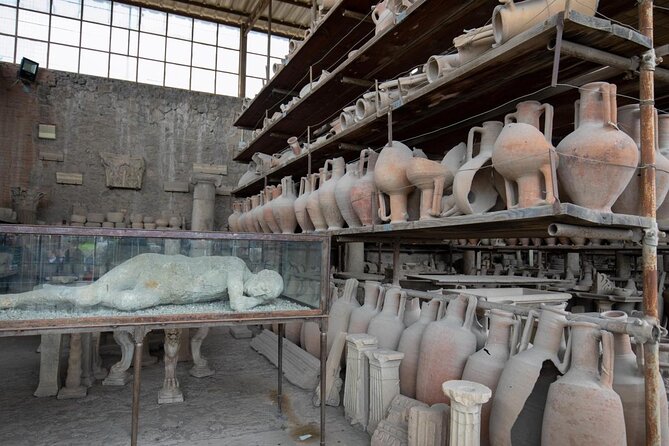
- Private guided Pompeii highlights like the Forum, plaster casts of victims, major houses, and public bath areas
- Vesuvius wine tasting plus lunch at Cantina del Vesuvio, with a guided cellar and vineyard visit
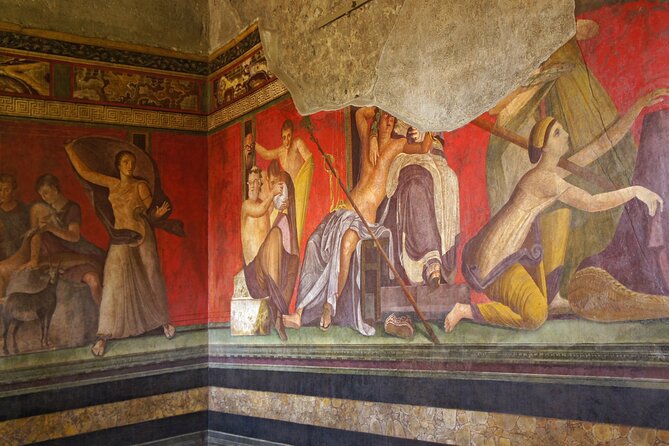
- Premium Plus upgrade includes Villa of the Mysteries, with an extended Pompeii time window
Private Pompeii, skip-the-line, and pickup that saves your day
Here’s what makes this Pompeii tour feel like a “grown-up” plan. You get round-trip transportation, with pickup available from Naples, Sorrento, Pompeii, train stations, airports, and even cruise terminals and ports. That matters because getting to Pompeii can eat time, and when you’re on a schedule, time is basically currency.
Once you arrive, the skip-the-line element reduces the most annoying part of Pompeii: entrance bottlenecks. You’ll still walk, but at least you’re not burning your best daylight shuffling in queues. The tour also uses a mobile ticket, which is one less thing to worry about when you’re standing in line in the sun.
This is also set up as a private experience, so only your group participates. You can ask questions without feeling like you’re interrupting a factory tour. And in the real world, that’s where the value usually shows up.
Your Pompeii walkthrough: Forum, victims casts, and Roman daily life
The heart of the day is a guided visit inside Pompeii’s Archaeological Park. The plan is built around the parts people usually don’t know how to read on their own: the Forum, major public buildings, the places tied to daily work and shopping, and the emotional remnants of what happened in AD 79.
You should expect a mix of big, obvious sights and smaller details that make the city feel real. You’ll see floor mosaics and wall paintings, and you’ll also get context on how advanced Romans were, from everyday routines to building systems. One of the most powerful elements included is seeing the ash and pumice rock that buried the city, plus the plaster casts of the victims. That combo turns the eruption from a textbook event into something you can picture with your own eyes.
A good guide also helps with pacing. The walking tour is described as at your own pace, and you can tell your guide about any special requests or needs. That can be especially helpful in Pompeii, where you could either rush and miss the point, or slow down and actually understand what you’re looking at.
Porta Marina and the city walls, a fast look with big meaning
After the deeper Pompeii highlights, the tour includes a stop at Porta Marina, one of the main gates near the port area. Even if it feels like a brief stop on the schedule, this is a smart one because it shifts you from “ruins as museum objects” to “ruins as a working city system.”
You’ll see how the gate connects with Pompeii’s defensive walls and the original stone ramp. That’s the kind of detail that helps you understand flow, access, and control. Pompeii wasn’t just houses and temples, it was a place managing incoming merchants and travelers arriving by sea.
The site stop time here is short, but it works well as a break from heavier walking. If you like urban planning and street-level logic, you’ll probably enjoy this one more than you expect.
Basilica and Temple of Apollo, the public and the spiritual
The tour moves from civic power to religious power with two key stops.
First is the Basilica, described as the most imposing public building in Pompeii, dating to the 2nd century BC. The big idea here is the Basilica as a hub, tied to law, business, and civic administration. Even in ruins, its scale helps you grasp why the Forum was Pompeii’s center of gravity.
Next is the Temple of Apollo. This spot is anchored in devotion to Apollo, the god of the sun, music, and prophecy. You’ll see it set in a courtyard near the Forum, and you’ll get context on offerings and guidance sought through the temple. It’s also mentioned that the temple once featured elegant columns and statues, including a famous bronze of Apollo aiming his bow.
These quick stops are worth it because they help you map Pompeii in your head. Once you understand where civic life and spiritual life sat, the Forum area makes more sense when you revisit it through the guide’s explanations.
Forum of Pompeii and the Macellum, where people ate and talked
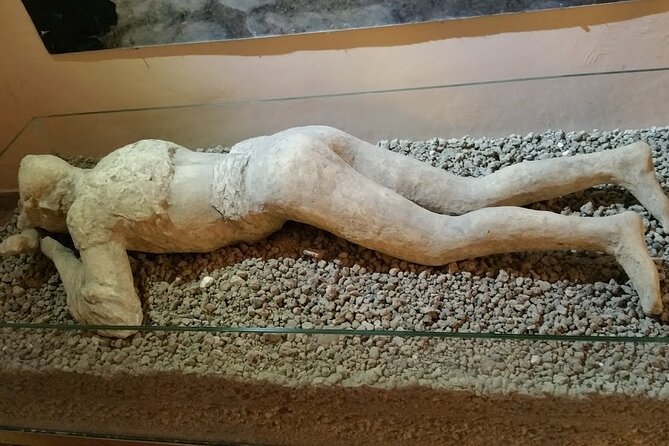
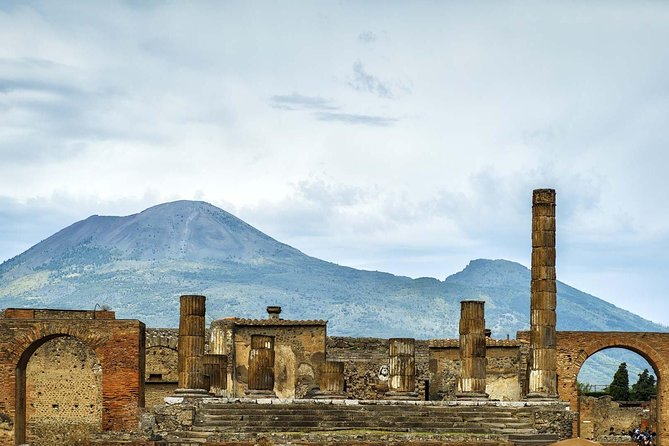
The Forum of Pompeii is the city’s civic heart, and the tour gives you multiple perspectives on it. From elevated walkways and terraces, you can better understand how temples, administrative spaces, and market structures were arranged together. That’s crucial in a place as large as Pompeii, because layout is half the story.
The description also points out that the Forum reveals connections between politics, religion, and commerce, with major buildings visible in the same sightline, including the Capitolium, Basilica, and Macellum. You’re basically learning how one square could function like a daily stage.
Then you shift to the Macellum, Pompeii’s main food market. This stop is a reminder that Pompeii was not only monumental. It was hungry. The Macellum is a covered complex where vendors sold fish, meat, fruit, and imported goods. You’ll see remnants of stall counters, storerooms, and decorative elements that help you imagine the rush of morning commerce.
If you like everyday history, this part is a win. It turns Pompeii from “famous ruins” into “a place where people bought dinner.”
Terme del Foro, the bath house as social space
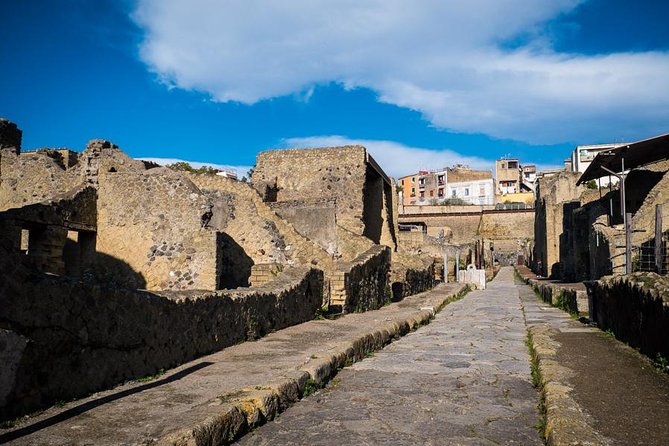
Public baths weren’t just about hygiene, they were a social engine. The tour includes Terme del Foro, the Forum Baths, known for being among the most elegant bath complexes in Pompeii.
This stop is built around preservation, including stucco reliefs and vaulted ceilings that communicate the refined atmosphere of bathing as a daily ritual. You’ll also hear about the advanced hypocaust system, which heated spaces in a way that feels modern in its engineering mindset.
And then there’s the practical human side. The bath complex had changing rooms and warm and hot halls, plus a cold plunge pool, and it was divided into men’s and women’s areas. In other words, it was structured leisure plus routine.
Even with a tight schedule, this is a good moment to pause and let the ruins tell you how people spent time together, not just what power looked like.
Casa dei Vettii and Insula dei Casti Amanti, homes with clues
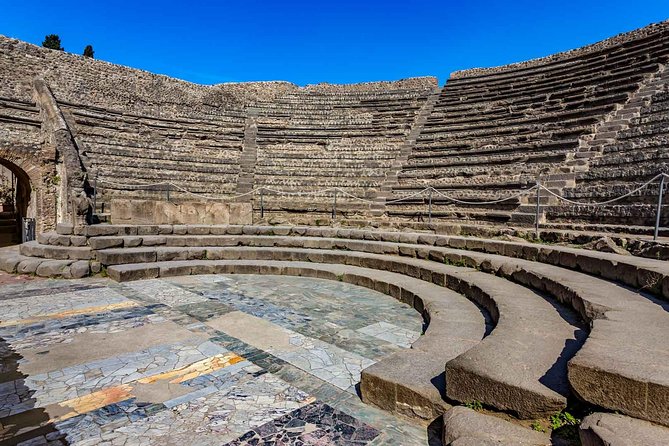
Pompeii’s private homes are where the city stops feeling like a backdrop and starts feeling like a lived-in neighborhood.
You’ll visit Casa dei Vettii, one of the finest aristocratic residences in Pompeii. It’s known for richly decorated frescoes and an architectural layout built around atria and peristyle gardens. The tour description emphasizes mythological paintings and ornamental motifs, plus domestic spaces that show elite taste and ambition in the 1st century AD.
Then you go to Insula dei Casti Amanti, named after a vivid fresco of a pair of lovers. This stop is especially interesting because you access the site via elevated ramps designed to protect fragile surfaces. From above, you can look down into workshops, storerooms, and domestic rooms without disturbing what’s preserved.
What you take away here is the mix of trade and home life. Pompeii was a city where crafts, commerce, and daily routines blended in the same blocks, and the preserved signs and half-finished renovations hint at ordinary life caught mid-motion in AD 79.
Teatro Grande, Roman entertainment with real scale
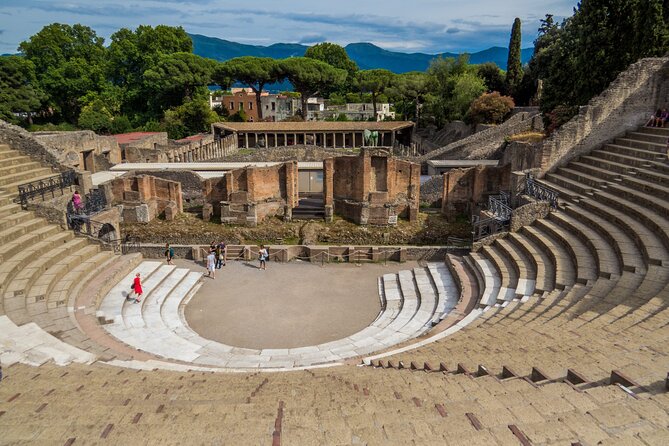
The Teatro Grande is where Pompeii shows off its cultural side. This stop lets you step into the world of Roman drama and public entertainment.
From upper terraces and modern walkways, you can look down onto semicircular seating tiers, the stage building, and the orchestra area. The description also notes excellent acoustics and the views toward the city and Mount Vesuvius, which helps explain why performances drew crowds for comedies, tragedies, and public ceremonies.
Even if you’re not a theatre person, the geometry and the sightlines do the convincing. Standing within the auditorium area helps you picture applause, costumes, and the atmosphere of shared events.
This is also a good breather stop in the sequence, because it can feel less like “walking through rooms” and more like “standing in a designed public space.”
Villa of the Mysteries in Premium Plus, why it’s worth the upgrade
If you choose the Premium Plus option, you get the Villa dei Misteri, one of Pompeii’s most famous sites. The highlight here is the remarkably well-preserved frescoes depicting a mysterious Dionysian ritual.
The key practical difference is time. Premium Plus includes an extended 3-hour private guided tour of Pompeii, and the Villa of the Mysteries visit is included with that upgrade. So if you’re the type who wants more time to ask questions and slower looking, this option can be a good fit.
Why it matters for your experience: the Villa’s frescoes are visual, and frescoes reward time. With less time, you can end up glancing and moving on. With the Premium Plus pacing, you’re more likely to actually understand what you’re seeing, instead of treating it like a checklist.
Antiquarium di Pompei, the emotional frame before you move on
One stop that helps you connect the dots is the Antiquarium di Pompei. It functions like a structured “before and after” space, helping you understand the city before you move through it in ruins.
Inside, the tour includes galleries with statues, household objects, inscriptions, jewelry, and other artifacts recovered during excavations. Elevated platforms and glass cases mean you can examine delicate items you would not have the same access to in the open air.
The most moving part is the final rooms, which present plaster casts of victims and dramatic eruption material. If you found the ash and pumice concept harder to grasp earlier, this stop can give you a clearer emotional and historical frame. It’s also a useful reset if you’ve been walking for hours.
Russo Family Winery on Vesuvius slopes: wine tasting plus a real 3-course lunch
After Pompeii, you shift from ancient streets to modern family-run wine culture. The tour includes Vesuvius views during the day, but it does not include climbing to the summit. Instead, you enjoy the volcano’s presence while you travel, then you head to Cantina del Vesuvio, Russo Family Winery, on the slopes overlooking the Bay of Naples.
Here’s the part that tends to feel like value, not just a tourist extra. You get:
- A guided tour of the vineyard and cellar
- A tasting of 5 wines, classic or superior
- A 3-course lunch using traditional local ingredients
The winery is noted for Lacrima Christi wines, which helps anchor the tasting in a specific regional identity rather than generic wine-pouring.
Lunch is spelled out in the details, and that matters because you know what you’re getting. The appetizer includes salami and cheeses (provolone and ricotta), plus casatiello, roasted eggplant, and bruschetta with Piennolo tomatoes. Then comes pasta with Piennolo cherry tomatoes and basil. Dessert is Neapolitan Pastiera with ricotta, cooked wheat, and candied fruit.
Vegetarian, vegan, and gluten-free options are available, which is a big practical plus if you have dietary restrictions.
What you pay, and what you get for $575.35 per person
At $575.35 per person, this is not a budget Pompeii option. But it’s also not just a ticket and a map.
You’re paying for four main things:
1) Round-trip transportation from your location
2) Skip-the-line admission support that cuts the worst waiting
3) A private certified guide for the Pompeii portion, including Pompeii highlights plus multiple specific stops
4) The Vesuvius wine tasting and a structured 3-course lunch at Cantina del Vesuvio, with a guided vineyard and cellar tour
When you add up what those pieces cost individually, the price starts to make more sense for a couple or small group that wants an efficient, low-stress day. If you’re traveling with kids, older relatives, or anyone who doesn’t want to play archaeologist with a guidebook, the private format pays off fast.
On the flip side, if you love wandering independently, want maximum freedom, and don’t care about organized wine and lunch, you may prefer a cheaper entry-based approach. This tour is built for people who want the day handled.
Should you book this Pompeii with wine and Vesuvius day?
I’d book it if you want Pompeii to feel guided, not overwhelming. You’ll get the Forum and the big monuments, plus homes like Casa dei Vettii and the storytelling-rich Insula dei Casti Amanti. You’ll also get a natural emotional beat with ash and pumice material, plaster casts of victims, and the Antiquarium framing.
I’d skip or think twice if you’re hoping for a light, minimal-walking experience. It’s moderate fitness, and you’re moving through multiple areas, plus the winery day includes its own pacing. Also, if your dream is a full Vesuvius summit climb, this tour won’t deliver that, since it’s views and winery access, not the ascent.
If you do book, send your needs to the operator ahead of time. The walk is at your own pace, and guides like Danilo have been noted for working around mobility issues when possible. With that kind of care, this Pompeii day can end up being one of your most memorable stops in Southern Italy, not just another impressive ruin.
FAQ
Is admission included for the Pompeii sites?
Yes. Admission tickets are included for the Pompeii archaeological stops listed on the tour.
Does this tour include a climb to Mount Vesuvius?
No. You will enjoy stunning views of Mount Vesuvius during the day, but the tour does not include a climb.
What’s included at the winery?
You’ll get a guided tour of the vineyard and cellar, a tasting of 5 wines, and a 3-course lunch with traditional local ingredients.
How long is the Pompeii and wine tour?
It runs about 5 to 7 hours.
Does the tour offer hotel pickup?
Yes. Pickup is offered from hotels and other locations such as Naples, Sorrento, Pompeii, train stations, airports, and cruise terminals or ports. You specify your pickup place when booking.
Is the Villa of the Mysteries included?
The Villa dei Misteri is included only with the Premium Plus option.
Are vegetarian or gluten-free meal options available?
Yes. Vegetarian, vegan, and gluten-free options are available for the lunch.
Is it a private tour?
Yes. It is private, and only your group participates.
What if I need to cancel?
You can cancel for a full refund if you cancel up to 24 hours in advance of the experience start time.
More Wine Tours in Pompeii
- Pompeii Tour & Lunch with Wine Tasting Experience★ 5.0 · 383 reviews
- Pompeii Vineyard Escape: Private Wine Tasting & Lunch★ 5.0 · 329 reviews
- Pompeii Guided Tour & Lunch with Superior Wine Tasting★ 5.0 · 86 reviews
- Private Pompeii Tour with Organic Wine Tasting & Lunch★ 5.0 · 84 reviews
- Explore Pompeii: Private Tour, Wine Tasting & Lunch★ 5.0 · 49 reviews
More Tour Reviews in Pompeii
- Pompeii Small Group Tour with an Archaeologist★ 5.0 · 6,593 reviews
- Discover the Ancient Ruins of Pompeii: Day Trip from Rome★ 3.5 · 2,247 reviews
- Pompeii and Herculaneum Small Group Tour with an Archaeologist★ 5.0 · 1,350 reviews
- Skip the Line Guided Tour of Pompeii led by an Archaeologist★ 5.0 · 703 reviews
- Pompeii Ticket + Tour with Optional Tasting Experience at Pompeii★ 5.0 · 663 reviews
Up the Volcano from Sorrento
- Pompeii Guided Tour & Horse Riding on Vesuvius with Lunch★ 5.0 · 419 reviews
- Private Day Tour to Vesuvius, Herculaneum & Pompeii with Pick Up★ 5.0 · 279 reviews
- Pompeii and Mount Vesuvius Small Group Tour★ 4.5 · 233 reviews
- Mount Vesuvius Tour from Pompeii Led by an Expert Guide★ 5.0 · 185 reviews
- Horseback Riding on Vesuvius★ 5.0 · 144 reviews
More ways into Mount Vesuvius Tours from Sorrento.
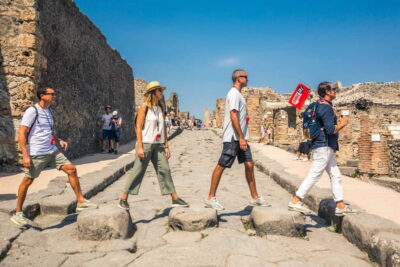 ★ 4.6Naples or Sorrento: Full-Day Pompeii and Mount Vesuvius TourFrom $1044,235 reviews
 ★ 4.5Naples: Pompeii and Mt. Vesuvius with Lunch and Wine TastingFrom $1412,454 reviews
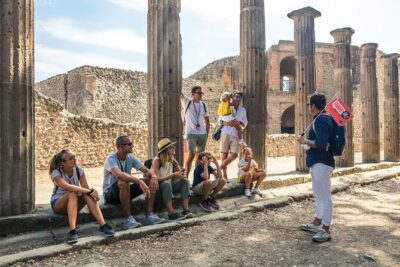 ★ 4.5Priority Access Pompeii & Mt. Vesuvius Full day from SorrentoFrom $1391,376 reviews
 ★ 4.2From Pompeii: Bus Transfer to Vesuvius with Park Entry FeeFrom $50700 reviews
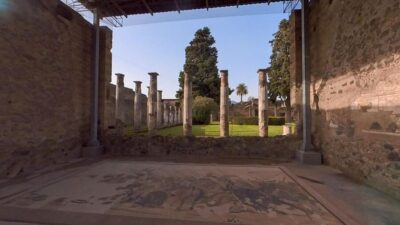 ★ 4.8Pompeii and Vesuvius Guided Tour with LunchFrom $130683 reviews
 ★ 4.2From Naples: All-Inclusive Mount Vesuvius Half-Day TourFrom $75674 reviews
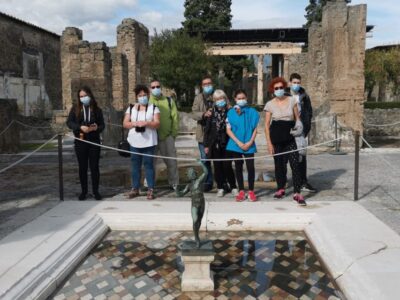 ★ 4.3Day Tour to Pompeii Ruins and Mount VesuviusFrom $130489 reviews
 ★ 5.0Pompeii Guided Tour & Horse Riding on Vesuvius with LunchFrom $240419 reviews
Other useful routes from here