
REVIEW · HERCULANEUM TOURS
Herculaneum: Private Walking Tour with Archeologist Guide
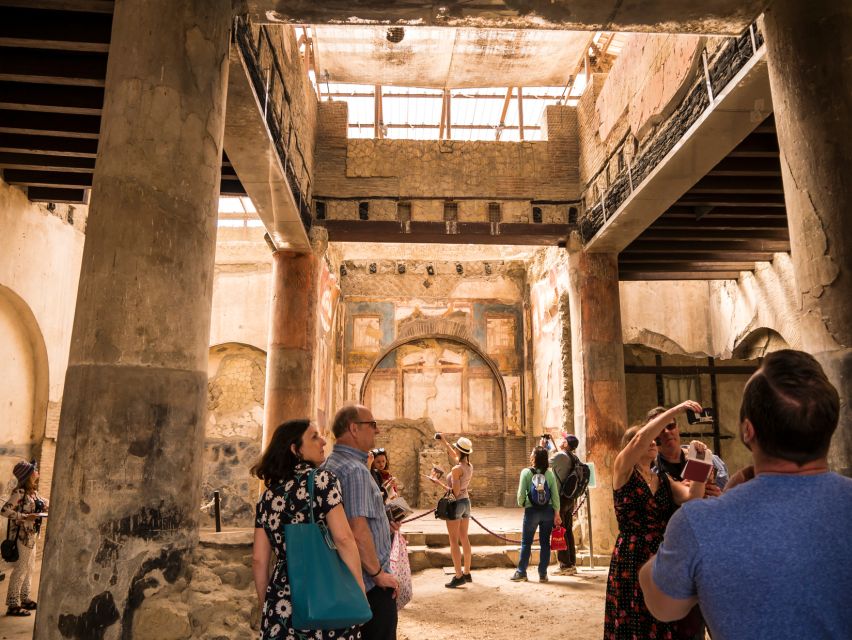
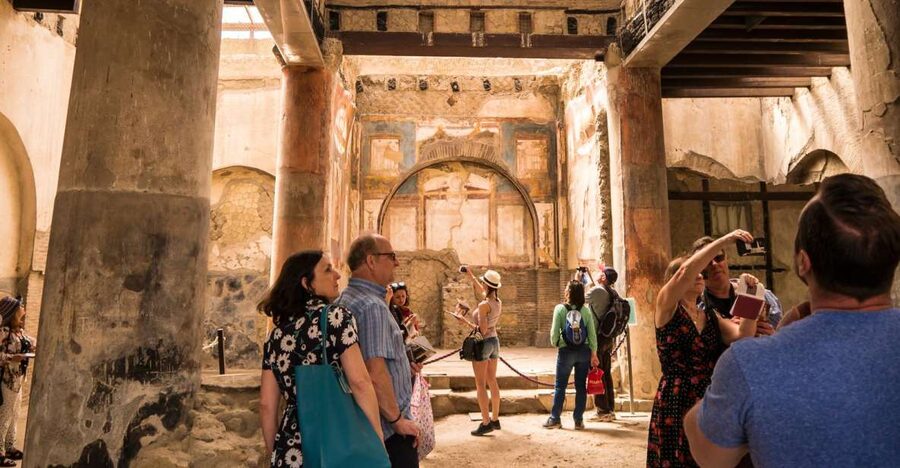
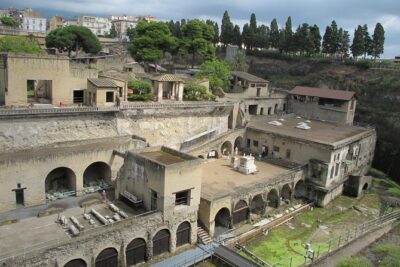
Herculaneum feels eerily close to Roman life. This private, 2-hour walk with a licensed archaeologist guide makes the ruins feel personal, not just old rocks, especially when you see how volcanic ash and mud sealed everyday objects. I also like that your guide can explain what you’re looking at in plain language, and the preserved items are the star of the show, including wooden objects, wall paintings, and mosaics.
My second big favorite is the way the tour hits both public spaces and intimate homes in a tight route, so you leave with a sense of how Romans lived, not just where they lived. You also get to cut time by skipping the ticket line, which matters when the site is busy. One consideration, though, is that the booking notes conflict on mobility: wheelchair accessibility is listed, but it also says it is not suitable for wheelchair users, so you should double-check before you go.
Key points worth your attention
- Two hours, guided pacing: A focused route that keeps the story moving from eruption to daily life.
- Preservation story that makes sense: You’ll learn why Herculaneum stayed so intact, especially compared with Pompeii.
- Homes and everyday stops: Houses, a thermopolium, a bakery, and more, not just sweeping views.
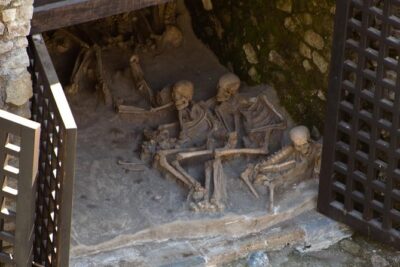
- The human impact is part of the visit: You’ll see the area tied to the victims found near the beach.
- Guide talent is a major win: Names like Antonio, Luciano, and Paola show up for a reason, they make the site feel alive.
- Comfort matters: Comfortable shoes are essential because you’ll be walking among uneven ancient spaces.
Why Herculaneum feels different after Vesuvius
If Pompeii is the headline, Herculaneum is the close-up. Both were buried by the eruption of Vesuvius in 79 AD, but the type of burial changed everything about what survived and how the site feels today.
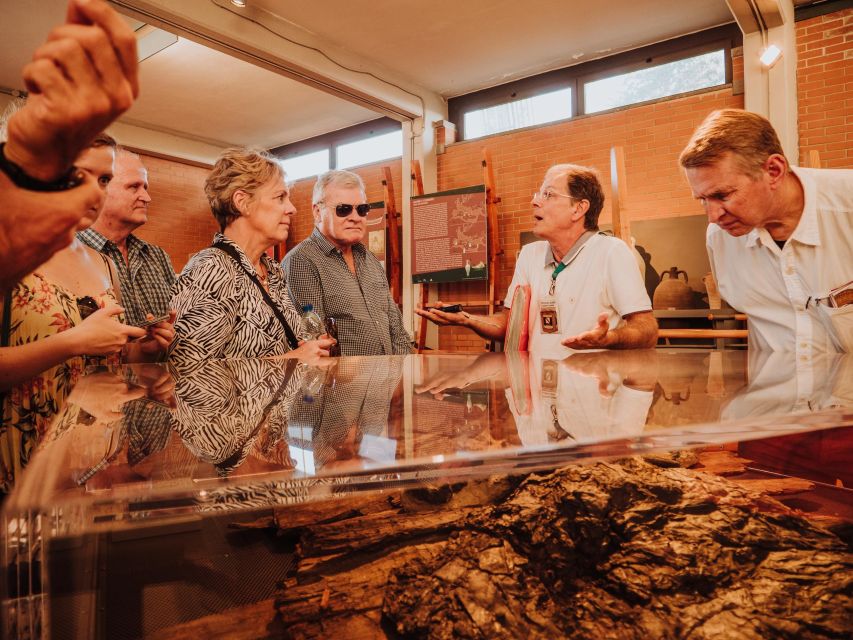
Here’s the practical payoff for you: Pompeii was covered by meters of ash, which did preserve a lot, but Herculaneum was hit by an avalanche of mud about 20 meters deep. That thick mix helped seal buildings and objects in place, and it is why you can often make out details that would be much harder to see elsewhere. When your guide points out preserved wooden pieces, paintings, or mosaic floors, you start to understand that you are not just viewing ruins, you’re looking at something that was protected from air and time in a very specific way.
This is also why a guided tour matters. Left on your own, Herculaneum can feel like a fascinating puzzle. With an archaeologist guide, the puzzle pieces get put back into their Roman context, so you know what you’re seeing, what it was used for, and what the eruption interrupted.
What an archaeologist guide changes (and why it matters)
A private guide can sound like a luxury line item. In this case, it is functional. An archaeologist guide can connect the physical remains to everyday behavior, and you can feel the difference fast.
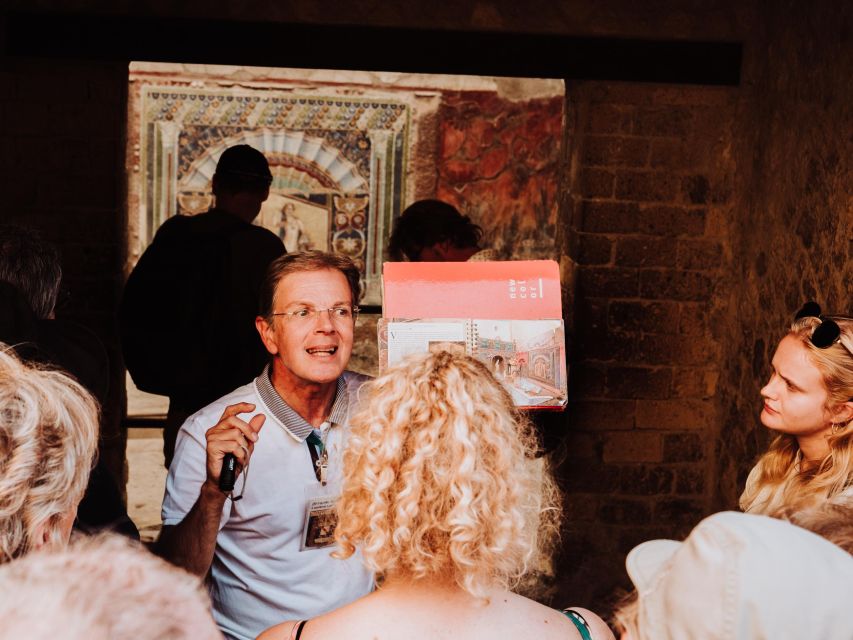
I like tours where the guide does more than recite facts. Here, that skill shows up in the way guides such as Antonio and Luciano are described as engaging, relatable, and able to keep even kids interested. Paola is also highlighted for bringing the site to life while trying to keep the group in the shade as much as possible. Even if you travel without children, that kind of on-the-ground attention helps, because it makes the visit smoother and easier to follow.
You should expect your guide to do three things well:
- Point out specific features you might otherwise miss, like layout clues in domestic spaces.
- Explain the preservation logic, so the buried materials stop being a mystery and start making sense.
- Tell the eruption story without turning it into horror theater, so you understand what happened to a real town, with real routines, right up until it stopped.
Starting at Parco Archeologico di Ercolano, where the route begins
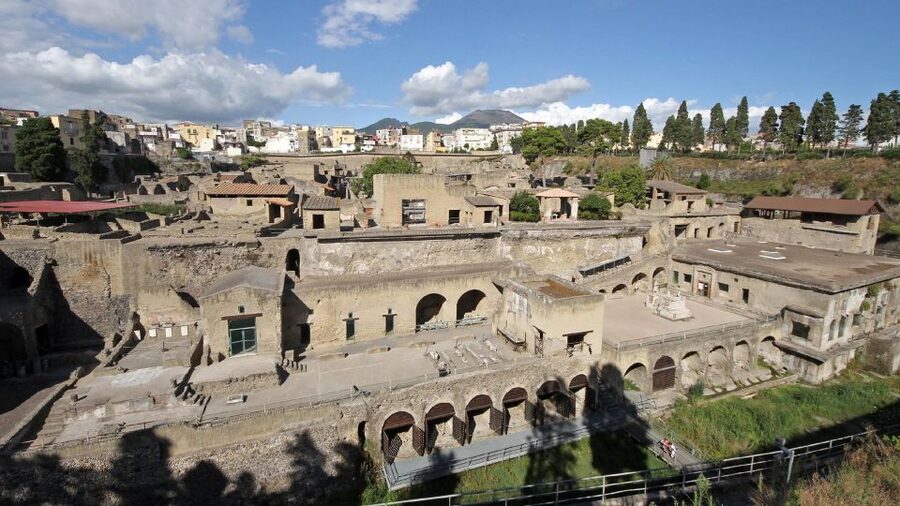
Your meeting point can vary depending on the option you book, but one common start is Parco Archeologico di Ercolano, Via dei Papiri Ercolanesi, 21. The tour ends back at the meeting point, so you don’t have to solve the logistics puzzle in the middle of your visit.
The first moments are about orientation. Your guide will help you get your bearings quickly, so when you move from one house to the next, you understand how the town is organized. This is not just about convenience. Herculaneum’s layout can feel confusing if you’re just chasing your favorite highlights. A guide helps you see the “why” behind the route, like how domestic spaces relate to public areas.
Also, because this is a short, 2-hour private outing, the start sets the tone. You’ll get a clear plan early, and then the rest of the tour feels like a sequence, not a list.
The 2-hour walking route, stop by stop
Stop: Archaeological Site of Herculaneum (the big overview part)
This is where you get the framework. Think of it as the part where your guide turns Herculaneum into a living town in your mind.
You’ll typically see major highlights connected to Roman civic life and the overall story of the eruption. The tour description specifically calls out the Forum, and it also mentions the Terrace of Marcus Nonius Balbus. Even if you’re not a “Roman ruins” person yet, the Forum connection is useful because it anchors the city to how people met, traded, and governed themselves.
You may also hear the contrast with Pompeii explained clearly. The eruption did not land the same way everywhere. Understanding that helps you read the site as a physical record of what happened, not just as a static museum.
Stop: Casa del Salone Nero (House of the Black Saloon)
This house is named for an interior feature, and that matters because it points you toward the Roman obsession with status and display. A guide will help you connect the space to the social role of the household.
What to watch for: your guide should draw your attention to layout and decorative cues that suggest how the house functioned day to day. A “salon” setting is not just a room, it’s part of how owners signaled taste and rank.
A practical note: houses like this can feel visually busy, so lean on the guide to pick out the 2 or 3 details that matter most. In a 2-hour tour, that focus is the whole point.
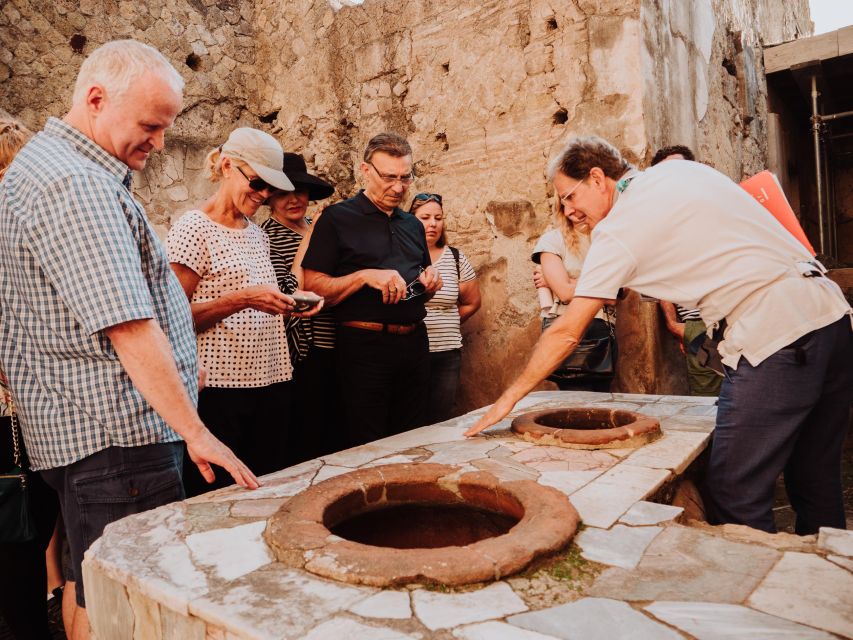
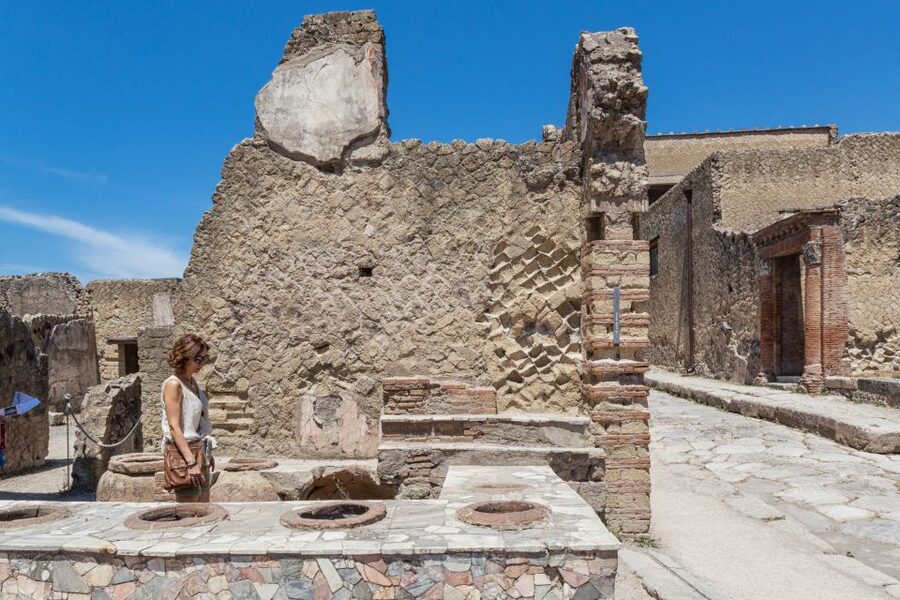
Stop: Herculaneum Thermopolium (a fast-food counter in Roman form)
A thermopolium is the kind of stop that makes the ruins feel real. This is where you learn that Rome had more than marble and politics. People ate, drank, and passed time in places designed for daily traffic.
The value here is the everyday angle. Seeing a thermopolium helps you understand routine life in a way that a grand monument can’t. It also gives your brain a handle on the site’s scale, because you can imagine customers moving through rather than just standing still.
One drawback to consider: thermopoliums are more “read” than “pose for a photo” spots. If you want purely scenic views, you might need to switch gears and let the guide’s explanation do the work.
Stop: Casa dell’Albergo (the lodging home)
This stop is about domestic and semi-domestic function. The name suggests lodging or a guest-handling space, and your guide should connect it to how a town like Herculaneum managed visitors and local life.
This is a good moment to pay attention to how entrances and rooms relate. Even without technical training, you can start to understand flow, privacy, and public versus private zones.
If your guide is strong, this is also where Herculaneum stops being “cool ruins” and becomes “I get how people lived.” That’s the kind of shift worth paying for a private guide.
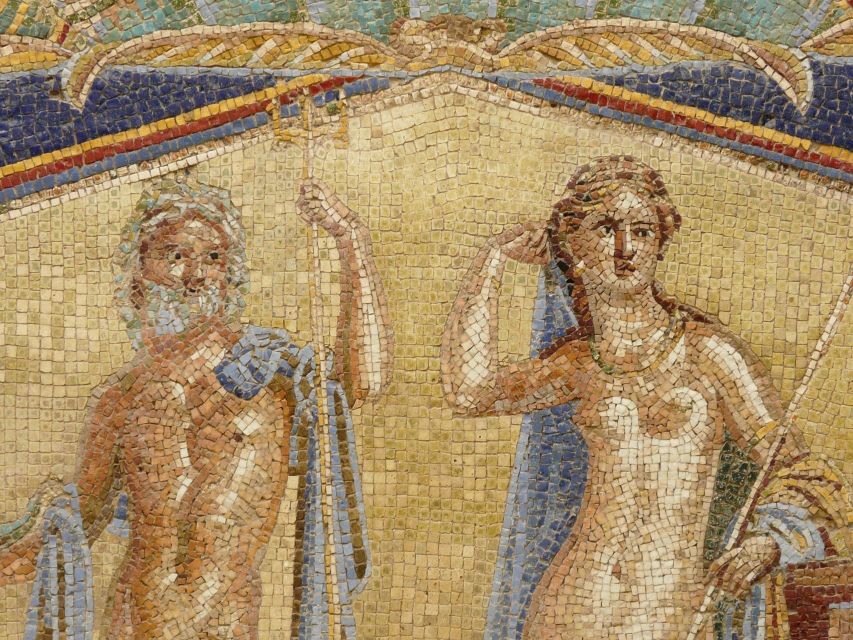
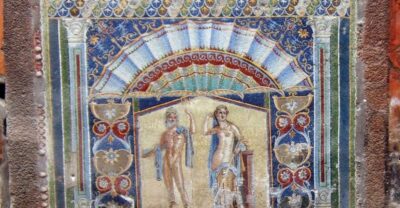
Stop: Casa di Nettuno ed Anfitrite (Neptune and Amphitrite)
This house is named for its myth-linked theme. Myth decoration is not random. It points toward what owners valued, what they wanted to project, and how they used art as messaging.
You’ll want your guide to connect the theme to what you see on walls and floors, especially since the tour notes that painting and mosaics can be exceptionally well preserved here. When your guide explains the meaning of the iconography, decoration becomes readable, not just pretty.
In terms of pacing, this stop is ideal for a pause. You can take in details, then move on with the new context still fresh.
Stop: Casa dei Cervi (House of the Deer)
A house name like this usually reflects a recognizable decorative element. It is an easy hook for understanding how Roman art worked in lived spaces.
What you’ll gain: you start to see a pattern across houses, where decoration, layout, and function all reinforce the identity of the household. With an archaeologist guide, you’re not just learning names. You’re learning how those names connect to visible evidence.
If you love visual detail, this is a strong stop for you. If you’re mostly there for the eruption story, your guide should still keep the narrative tied to how families and daily routines were interrupted.
Stop: House of Skeletons (the human remains area)
This stop is emotionally heavy, but it is also historically necessary. The tour description notes the beach where hundreds of skeletons of victims were discovered, and the House of Skeletons ties directly into that tragic aspect of the event.
A good guide will handle this with care: you get the facts, you understand what was found, and you are not treated like you’re watching a spectacle. In a private format, that tone is easier for the guide to manage.
Even if you prefer lighter sightseeing, I think this stop is the one that changes how you see the whole town. After this, the houses stop being impressive and start being heartbreakingly human.
Stop: Sacellum of The Augustales (a small sacred space)
This is where religious and civic identity show up in a compact form. A sacellum is a shrine-like space, and your guide can explain why small sacred places mattered in everyday life.
This stop also helps you see religion as something embedded in neighborhoods, not only carried out in distant temples.
For practical viewing, the key is to pay attention to what makes the space distinct. Your guide should point out features that show how the room was used and how it fit into local structure.
The value question: what you pay for
The tour price is $317.76 per group up to 1, and admission fees are included at 16.00 euros per person. In plain terms, you’re paying for a private, guided experience plus the entry ticket.
Is it expensive? For a 2-hour private walk, yes, especially if you’re used to group tours. But the value comes from three specific things you can’t easily replicate on your own:
- You get a licensed archaeologist guide, which changes how you read the site.
- You skip the ticket line, which protects your time and reduces frustration.
- You get a tight route that covers multiple kinds of spaces, from public-looking areas to domestic interiors and the site tied to the victims.
If you’re the type of traveler who likes to understand what you’re seeing, this price often feels fair because it compresses learning into a short visit. If you want long, free-form wandering with zero structure, you might feel the cost more.
Practical tips so the visit stays comfortable
Bring comfortable shoes. Herculaneum is not a place for fashion footwear, and the walking surfaces can be uneven.
Also consider the weather. The tour notes that a guide (Paola) tried to keep the group in the shade. That’s a hint that sun and heat can be a factor, and in a two-hour outing, you’ll feel it sooner than you think.
On timing, there’s a special note: on the first Sunday of each month, entrance is free, but tickets cannot be reserved ahead of time, so entry is not guaranteed. If you’re visiting around that window, plan to be flexible, or choose another day for less stress.
Logistics are simple but not automatic. Transportation is not included, so you need to handle getting yourself to the starting area.
Finally, oversize luggage is not allowed, so travel light. A daypack is your best friend here.
Who should book this private Herculaneum tour?
This is ideal if you fit any of these:
- You want a clear 2-hour story from eruption to daily Roman life.
- You like your ruins explained with an archaeologist guide, not just marked with signs.
- You’re traveling with teenagers or kids who need a guide who can keep things engaging. Names like Antonio and Luciano come up for a reason, they’re described as fun and relatable.
- You care about seeing the contrast between preserved domestic life and the tragedy tied to victims near the beach area.
It might be less ideal if you strongly prefer self-guided walking, or if mobility concerns are a major factor. The tour data says wheelchair accessibility is listed, but it also states it is not suitable for wheelchair users, so you should verify details in advance.
Should you book this tour?
If you want Herculaneum to make sense, I think you should seriously consider booking this private walk. The preservation story is one of the main reasons to come, and the tour format is built to explain it as you move through the town. The guide experience is repeatedly the standout feature, with Antonio, Luciano, and Paola specifically called out for bringing the site to life.
Book it if you value understanding what you’re seeing, and you’re happy paying a private-rate price to get that expertise fast. Skip it if you’re planning to spend hours wandering quietly, reading guidebooks at your own pace, and you don’t care much about explanation.
For most people who want the best value out of a short visit to Campania, this strikes a strong balance: admission is included, the route is focused, and the human story behind the ruins is handled with care.
More Tours in Ercolano
- Naples: Pompeii and Herculaneum Tour with Tickets and Lunch★ 4.4 · 136 reviews
- Herculaneum Archaeological Park smart Audio Tour★ 3.8 · 70 reviews
- Herculaneum: 2hour Shared Guided Tour + entry tickets★ 4.3 · 38 reviews
- Herculaneum Guided Walking Tour with Entry Ticket★ 3.7 · 21 reviews
- Herculaneum: Private Tour with Driver from Naples★ 4.6 · 15 reviews
More Tour Reviews in Ercolano
- Ercolano: Herculaneum Entry Ticket with Optional Audio Guide★ 4.1 · 581 reviews
- Herculaneum: Skip The Line Entrance ticket + Audioguide★ 4.3 · 266 reviews
- Naples: Pompeii and Herculaneum Tour with Tickets and Lunch★ 4.4 · 136 reviews
- Vesuvio Skip The Line Ticket With Digital Audioguide★ 3.2 · 91 reviews
- Herculaneum Archaeological Park smart Audio Tour★ 3.8 · 70 reviews
More Days in Herculaneum
- Ercolano: Herculaneum Entry Ticket with Optional Audio Guide★ 4.1 · 581 reviews
- Herculaneum: Skip The Line Entrance ticket + Audioguide★ 4.3 · 266 reviews
- Naples: Pompeii and Herculaneum Tour with Tickets and Lunch★ 4.4 · 136 reviews
- Herculaneum Archaeological Park smart Audio Tour★ 3.8 · 70 reviews
- Herculaneum: 2hour Shared Guided Tour + entry tickets★ 4.3 · 38 reviews
More ways into Herculaneum Tours.
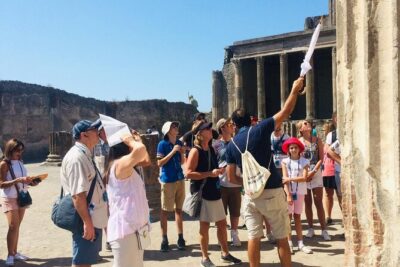 ★ 5.0Pompeii and Herculaneum Small Group Tour with an ArchaeologistFrom $771,350 reviews
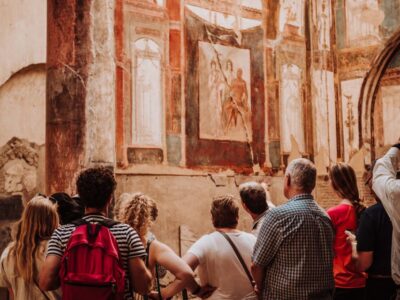 ★ 4.8Pompeii: Small-Group Tour of Pompeii and Herculaneum867 reviews
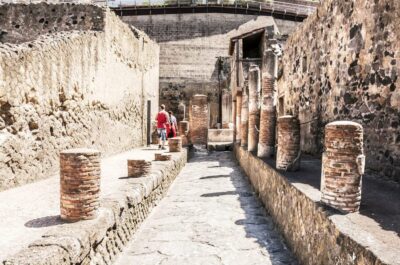 ★ 4.1Ercolano: Herculaneum Entry Ticket with Optional Audio GuideFrom $21581 reviews
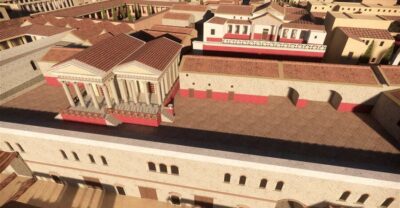 ★ 4.3Herculaneum: 3D Walking Tour with Skip-the-Line TicketFrom $45313 reviews
 ★ 4.5Guided Day Tour of Pompeii and Herculaneum with Light LunchFrom $185311 reviews
 ★ 5.0Private Day Tour to Vesuvius, Herculaneum & Pompeii with Pick UpFrom $120279 reviews
 ★ 4.0Ercolano: Herculaneum Skip-the-Line Ticket & Audio GuideFrom $35275 reviews
 ★ 4.3Herculaneum: Skip The Line Entrance ticket + AudioguideFrom $35266 reviews
Other useful routes from here