
REVIEW · HERCULANEUM TOURS
Pompeii & Herculaneum Family Adventure | Guide+Transport+Tickets
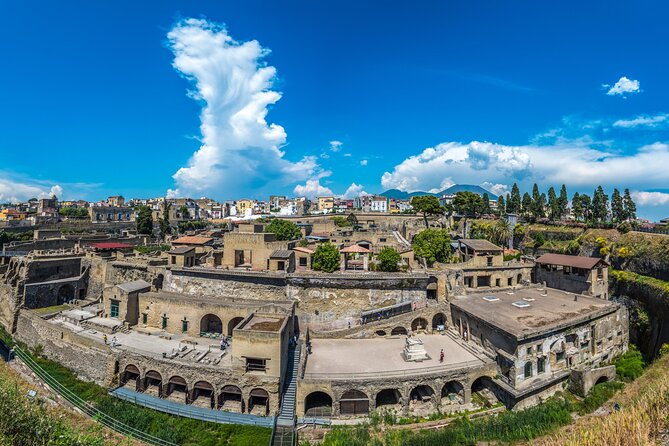
Two cities tell one eruption story. This Pompeii and Herculaneum family day makes the past feel close, not dusty. Herculaneum is the emotional engine of the itinerary, because the town was buried in a way that preserved wood, painted walls, and everyday objects, right down to the textures you can almost picture in your hands. And when your guide is as good as Giuseppe D’Angelo, the explanations click fast for both kids and adults.
I really like how this tour keeps things practical for families. The stops are chosen to help you understand daily life, from the Roman port and the ancient shoreline story at sea level, to homes and baths that show how people actually lived. The guide also uses family-friendly activities during Pompeii, so kids are not just “waiting for adults to look at rocks.”
One consideration: this is still a full 8-hour day with a lot of walking at two major archaeological sites. If anyone in your group needs frequent breaks or struggles with uneven ground, plan for a slower pace and bring good shoes.
Key things you should know before you go
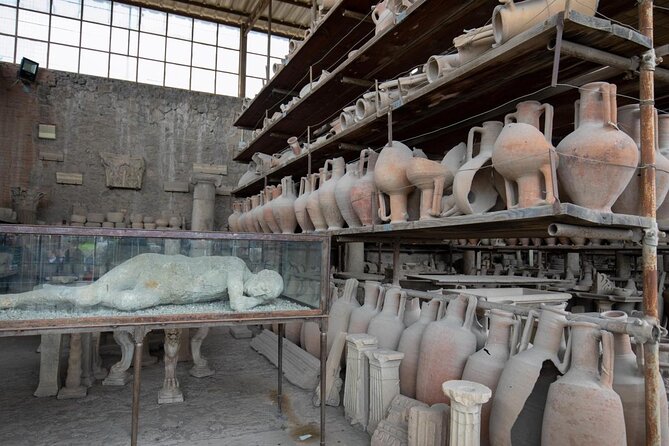
- Herculaneum’s preservation makes ancient details feel shockingly real, from carbonized wood to wall paintings and everyday items.
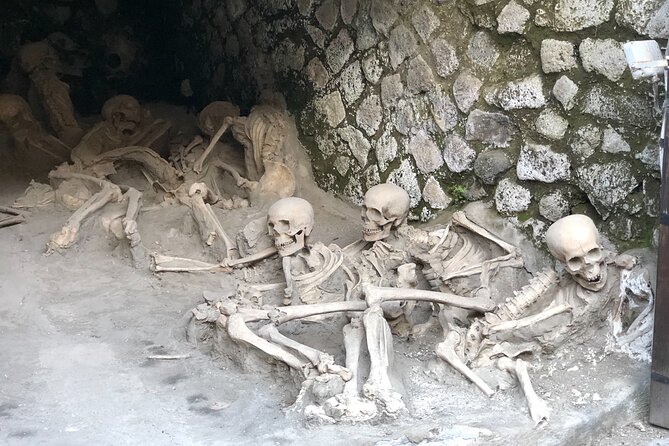
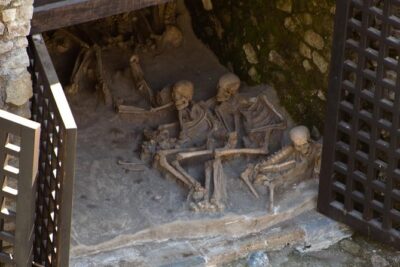
- Boat Pavilion plus shoreline story connects the town to trade by sea, including the graveyard-like discovery from the boathouses.
- Pompeii is guided through “life zones” (civic buildings, markets, baths, homes, theater) so the city reads like a functioning place.
- You get volcano viewing without the climb, with photo-friendly viewpoints from the cities instead of a trip up Vesuvius.
- Private guide for your group only, with a booklet and map and family-friendly activities.
- The tour includes skip-the-line entry for both sites, plus private transport.
Price, duration, and what you’re really paying for
At $738.31 per person for an about 8-hour day, this tour is not a bargain-bin option. But you are paying for three things that matter in this part of Italy: a private Blue Badge guide, private transport, and tickets that include skip-the-line entry at both Pompeii and Herculaneum.
When you do both sites in one day, ticket lines and logistics can eat up your energy. Here, transport and guided timing are built in, so you spend your limited vacation time seeing rather than figuring out. The price also makes more sense if you’re traveling as a family where you want a guide to translate the sites into kid-sized moments and adult-level context at the same time.
Also, this is booked fairly far in advance on average, so if your dates are fixed, don’t wait for a better deal that may never show up.
Starting in Herculaneum, the eruption story that hits hardest
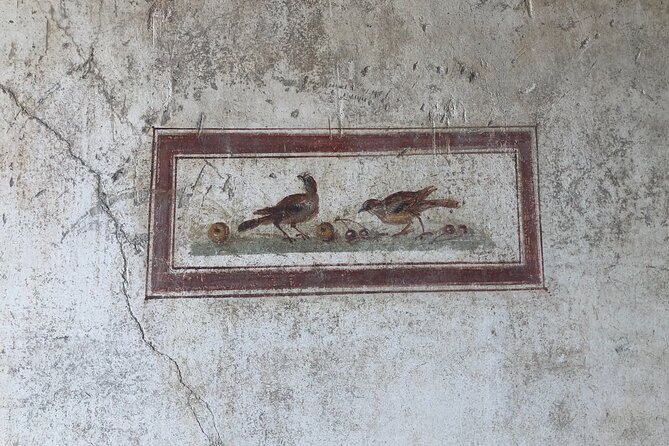
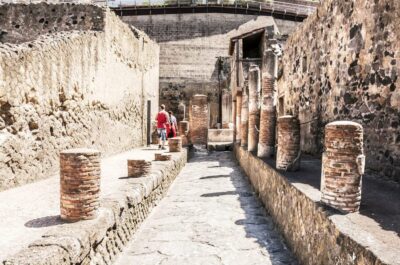
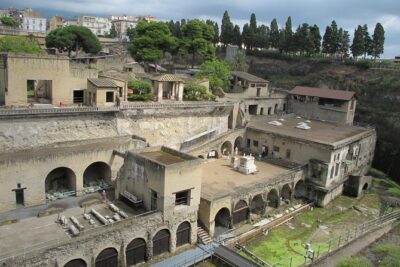
Your day begins at Parco Archeologico di Ercolano, the archaeological park of Herculaneum. This town is smaller than Pompeii, but it hits harder because the preservation is different. Where Pompeii was buried under ash and pumice, Herculaneum was overtaken by a superheated surge that carbonized wood and sealed spaces in a way that helped protect streets and upper levels. That is why you see painted surfaces, wooden beams and doors, and objects that feel personal instead of abstract.
Your guide keeps the pace family-friendly and explains what you are looking at in plain terms: how people moved through a seaside town, where residents worked and relaxed, and how wealth showed up in homes and leisure areas.
Boat Pavilion, Roman maritime life you can picture fast
One of the most memorable stops is the Boat Pavilion, where a Roman vessel and maritime equipment were discovered. Kids tend to latch onto the human imagination side of this, like fishermen and sailors preparing to leave from the harbor. Adults usually appreciate the bigger picture, how Herculaneum connected to trade and travel by sea.
Even if you’ve seen photos of ruins before, seeing a preserved boat and related gear makes the town feel like a real port, not a set.
Antiquarium: carbonized wood that makes you go quiet
Inside the Antiquarium, you focus on objects that survived in extraordinary condition, including carbonized wood from furniture, doors, beams, and shelves. This stop does a great job of explaining why certain materials rarely survive in archaeology, then showing that Herculaneum was sealed in a way that helped lock in detail.
It’s one of those moments where kids get surprised by the science, and adults get a clearer understanding of why this eruption can look different in different places.
The ancient shoreline and the human story at sea level
Next comes a walk down to the ancient shoreline, where your guide helps you picture a seaside town at work, with goods arriving and boats pulled ashore. This stop includes a heavy emotional moment handled with care: in 1980, archaeologists found over 300 skeletons inside boathouses here, men, women, and children who sought to escape by sea.
For families, this part can be intense. The good news is that a private guide can pace the experience so younger kids aren’t hit with more than they can absorb, and adults still get the full context.
House of the Deer, luxury with a story kids remember
Your tour then moves into an elegant seafront villa, famous for marble sculptures of deer attacked by dogs. Kids often remember it because it’s visually dramatic, almost like a movie scene frozen in stone. Adults get the point: Roman luxury was not only indoors. It was art, leisure, and views, staged for daily life.
Exercise courtyard: civic pride and young training
Another smart stop is the large exercise courtyard. This space was used for athletic training and social life, and it ties into the way Rome invested in future citizens through discipline and education. Your guide helps you picture boys running drills, teachers watching from shade, and the social side of training.
It’s a useful reminder that these places were not just about worship and politics. Bodies and community mattered too.
Multi-level residences, wall paintings that still look like rooms
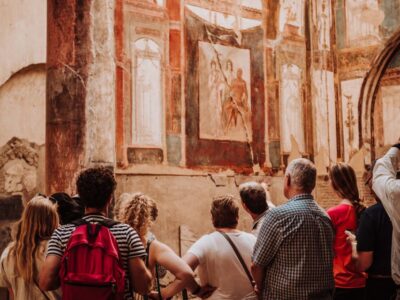
Next you’ll visit one of the celebrated residences that has reopened after restoration. Here you see wall paintings, wooden shutters, and upper-floor structures that reveal what Roman domestic life looked like across levels. The guide’s job is to point out what was restored and what it helps you understand, so you can read the house like a lived-in space.
Ancient shop with terracotta storage jars
Then comes an ancient shop with terracotta jars (cucumae) set into a marble counter. Your guide points out the traces of storage, the serving areas, and even original wooden shelving that survived. This stop is great for families because it gives you a clear mental image: food and drinks sold in a shop counter format that feels familiar, even if the products are Roman.
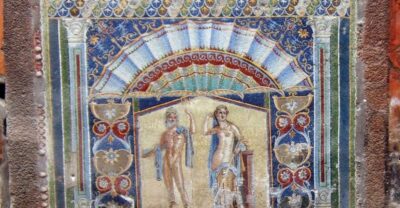
Neptune and Amphitrite mosaic, Roman color that still hits
In another home, you’ll see a vivid mosaic panel of Neptune and Amphitrite. The deep blues and gold glass tesserae make it easier to understand that Roman interiors were not muted and gray. Your guide connects the mosaic to the spaces where dining and gatherings happened, so the art feels tied to daily rhythms, not just decorative detail.
Women’s section public baths, social life with steam implied
Your guide brings you into the women’s section of the public baths, remarkably preserved thanks to the rapid burial of the city. Expect benches, painted walls, and wooden shelving that survived. You also step into changing areas and then move through warm and hot spaces, where steam once filled the air.
This is a fun stop for families because it explains baths as a mix of hygiene and social routine, not only cleanliness. Kids may compare it to a club or spa, while adults get a clearer picture of how routine and community mixed.
Cult of the Emperor hall, religion plus civic power
The final Herculaneum stop is a hall dedicated to the cult of the Emperor. You’ll see frescoes with mythological scenes and get a focused explanation of how religion, civic life, and imperial politics intertwined. Your guide also covers the Augustales, a prestigious local group of freedmen.
This is one of those moments where the art helps explain the politics, and the guide keeps it readable.
Pompeii after Herculaneum, how to see a big city without getting lost
After Herculaneum, you head to Pompeii. This is the famous one, and it is also much more expansive. Your guide will adapt the route, and there’s an added planning tip built into the experience: on some days, an afternoon visit style can reduce crowd pressure, making it easier to keep a comfortable family pace.
The big win here is that the guide creates a logical path through key areas, so Pompeii does not feel like a random walk across scattered streets and foundations.
Porta Marina and the Basilica, civic life at the city’s edge
You start at Porta Marina, a main gateway. Your guide helps you picture merchants and sailors entering from the port, so Pompeii begins with motion, trade, and morning energy.
From there you move into the Basilica, the city’s major civic building where legal disputes were heard and contracts were agreed. Even without its roof, the surviving columns and layout communicate authority. For kids, it becomes a story of negotiations. For adults, it gives you a sense of how Rome governed daily life before modern paperwork existed.
Temple of Apollo and a frame for Mt. Vesuvius
Next is the Temple of Apollo. Kids often enjoy spotting Apollo and Diana imagery, while adults hear how religion influenced identity and politics. On a practical level, this is also a photo stop with a clear view toward Mt. Vesuvius.
A key point for planning: this tour sees the volcano from the bottom. You are not driving to the top.
Forum and Macellum, where business and routine lived
Your guide then leads you into the Forum, Pompeii’s beating civic center. This is where speeches, ceremonies, and daily business overlapped. Kids get invited to imagine crowds, priests, and vendors moving between spaces.
Then you visit the Macellum, Pompeii’s marketplace. This stop is especially valuable because it turns ruins into a picture of real shopping and food buying. Your guide points out the marble counters and storage vessels that support the story of what people ate and how trade fed city life.
Forum Baths: bathing as both hygiene and hanging out
The Forum Baths bring Pompeii’s routines to life. You walk through changing areas and heated bathing spaces, with mosaics and stucco decorations that survived. Kids may treat it like a spa comparison. Adults get something more useful: a clearer sense of how bathing was part of exercise, hygiene, and social time.
Aristocratic homes: gardens, mosaics, and social status
Pompeii includes big house visits, and your guide uses them to explain how wealth showed up in art and architecture.
You’ll see one of the grand aristocratic homes, known for elegant gardens and intricate mosaics. Kids often remember the small bronze statue of the dancing faun, like a house mascot. Adults usually focus on the mosaic floor depicting Alexander the Great and how the space was arranged for entertaining.
Then you visit the restored House of the Vettii, famous for vivid frescoes and a refined garden courtyard. The guide helps you connect the paintings to the way the Vettii brothers rose in wealth and used art to express status. The multi-room layout also makes it easier to imagine household flow between meals, work, and leisure.
Lively street with stepping stones and everyday errands
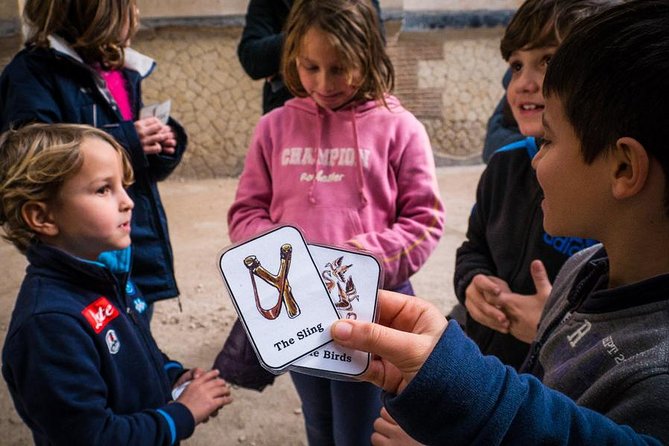
Next comes Pompeii’s liveliest ancient street. You’ll see the street design, including stepping stones, and your guide helps you picture carts rattling over basalt pavement. Along the way, you’ll notice street fountains, shop counters, and signage cues that make the city feel familiar in the most basic way: people ran errands, ate mid-day, and bought things.
Bird’s-eye views and the dollhouse effect
From a raised platform, the tour offers a bird’s-eye look at a whole city block. This creates the so-called dollhouse effect in the best way: without roofs, you can imagine rooms and daily activities. Adults benefit because this helps you understand how archaeologists interpret space when only foundations remain. Kids benefit because it makes Pompeii feel like a play set with rules.
Main theater: sound built into a hillside
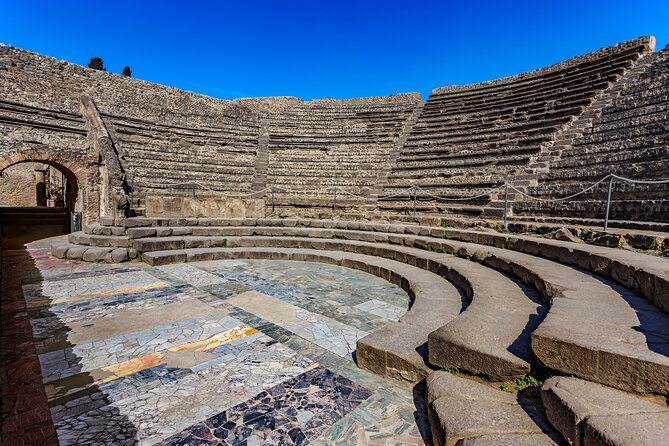
Your Pompeii loop includes the main theater built into the hillside to amplify sound. Kids can test acoustics from the stage, asking if someone can hear them from the steps. Adults learn how public entertainment mattered, from comedies to music.
It’s one of those spots where modern theater habits still feel familiar.
Pompeii Antiquarium: artifacts and sensitive handling of the human story
Finally, you visit the Antiquarium, where real artifacts recovered from excavations help connect ruins to the people who lived there. You’ll see jewelry, coins, tools, and household items. Kids can connect items to what they saw, like linking marketplace stops to bakery-related areas.
Plaster casts of eruption victims are introduced sensitively. That matters because you want the human story without turning the day into trauma time for younger kids.
Family-friendly style that actually works for two ages
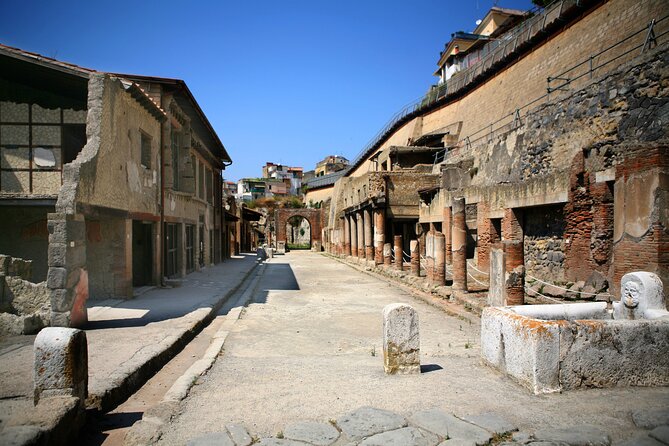
This tour is designed for families, and it does not rely on gimmicks only. In Pompeii, the guide uses hands-on activities like riddles, spotting ancient symbols, and matching stickers to locations. There’s also a family booklet and map.
Why this matters: Roman ruins can be hard for kids because so much is missing. When your guide uses activities to anchor attention, you get better focus, fewer melt-down moments, and a more satisfying visit for adults who want more than a quick photo stop.
What to bring and how to pace your day
You should plan for a full walking day. The tour calls for moderate physical fitness, and it’s wise to bring comfortable walking shoes and sunscreen.
Also, bottled water is not included, so pack a way to buy or carry water. If you know your family runs on snacks, plan small breaks during the guided flow rather than trying to tough it out between stops.
Should you book this Pompeii and Herculaneum family adventure?
Book it if you want a day that tells a coherent story, not two separate site visits. The combination of Herculaneum’s preservation, Pompeii’s civic and everyday-life highlights, and a private guide means your family should leave with real understanding, not just photos.
Skip it or reconsider if someone in your group struggles with long walking days or needs lots of downtime. Pompeii and Herculaneum are both major sites, and even with great guiding, you will be on your feet for a while.
If you are booking for a family, this is one of the smarter ways to do Pompeii, especially because the guide approach and family activities help kids stay engaged while adults get the context they came for. And yes, make a note in your planning that the volcano views are from the bottom, great for photos without a climb.
FAQ
Is this tour private?
Yes. This is a private tour/activity, and only your group participates.
How long does the Pompeii and Herculaneum family tour take?
It runs for about 8 hours.
Does the price include guide and skip-the-line tickets?
Yes. It includes a Blue Badge private guide in Pompeii and Herculaneum, plus Herculaneum and Pompeii Express skip-the-line tickets.
Where can pickup happen?
Pickup is flexible and can be arranged from Naples, Sorrento, Pompeii, and other locations like hotel, vacation rental, train station, airport, and cruise terminal or port. You specify your pickup place when booking.
Are meals included?
Meals are only included if you select the pizza lunch option. Otherwise, meals are not included.
What should we bring for the day?
You should bring comfortable walking shoes and sun block. Bottled water is not included, so plan for water on your own. The tour also advises a moderate physical fitness level.
Choose the Right Entry
- Pompeii Ticket + Tour with Optional Tasting Experience at Pompeii★ 5.0 · 663 reviews
- 2 hours Pompeii Tour with Local Historian – Ticket Included★ 5.0 · 335 reviews
- Pompeii Guided Group Tour with Entry Ticket and Archaeologist★ 4.5 · 269 reviews
- Pompeii 2-hour Private Tour with an Archaeologist-Ticket included★ 5.0 · 181 reviews
- Pompeii: Skip the line ticket (art) + audioguide + map★ 3.5 · 155 reviews
More Tour Reviews in Pompeii
- Pompeii Small Group Tour with an Archaeologist★ 5.0 · 6,593 reviews
- Discover the Ancient Ruins of Pompeii: Day Trip from Rome★ 3.5 · 2,247 reviews
- Pompeii and Herculaneum Small Group Tour with an Archaeologist★ 5.0 · 1,350 reviews
- Skip the Line Guided Tour of Pompeii led by an Archaeologist★ 5.0 · 703 reviews
- Pompeii Ticket + Tour with Optional Tasting Experience at Pompeii★ 5.0 · 663 reviews
More Days in Herculaneum
- Pompeii and Herculaneum Small Group Tour with an Archaeologist★ 5.0 · 1,350 reviews
- Private Day Tour to Vesuvius, Herculaneum & Pompeii with Pick Up★ 5.0 · 279 reviews
- The Ultimate Ruins of Pompeii and Herculaneum Private Day Trip★ 5.0 · 103 reviews
- Naples: Pompeii & Herculaneum Day Trip – Small Group Tour★ 4.5 · 72 reviews
- Pompeii and Herculaneum small group Excursion from Naples★ 5.0 · 70 reviews
More ways into Herculaneum Tours.
 ★ 5.0Pompeii and Herculaneum Small Group Tour with an ArchaeologistFrom $771,350 reviews
 ★ 4.8Pompeii: Small-Group Tour of Pompeii and Herculaneum867 reviews
 ★ 4.1Ercolano: Herculaneum Entry Ticket with Optional Audio GuideFrom $21581 reviews
 ★ 4.3Herculaneum: 3D Walking Tour with Skip-the-Line TicketFrom $45313 reviews
 ★ 4.5Guided Day Tour of Pompeii and Herculaneum with Light LunchFrom $185311 reviews
 ★ 5.0Private Day Tour to Vesuvius, Herculaneum & Pompeii with Pick UpFrom $120279 reviews
 ★ 4.0Ercolano: Herculaneum Skip-the-Line Ticket & Audio GuideFrom $35275 reviews
 ★ 4.3Herculaneum: Skip The Line Entrance ticket + AudioguideFrom $35266 reviews
Other useful routes from here