
REVIEW · HERCULANEUM TOURS
2-Hour Private Tour of the Ruins of Herculaneum
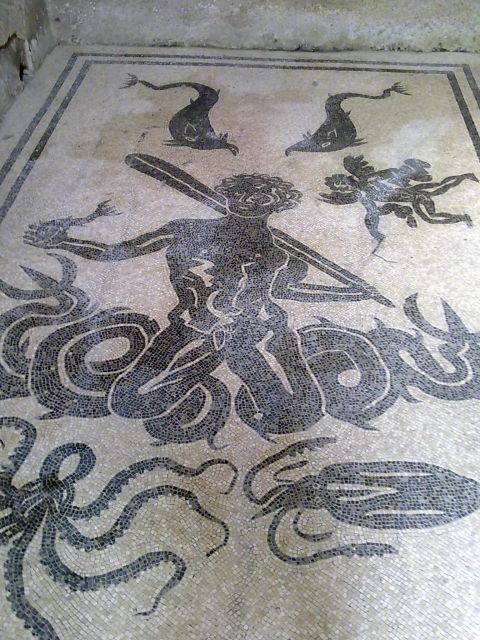
Herculaneum feels eerily close to the past. This private tour lets you walk a Roman town frozen by the 79 AD eruption, with the best parts explained by a real guide. I especially love the mosaic floors and frescoes that make everyday life look almost touchable.
What really makes the experience worth it is the private group pace. You get to zoom in on standout sites like the marina remains and the Big Gym (Grande Palestra), without the usual crowd shuffle. The one drawback to think about is simple: at $167.66 per person for only 2 hours, you are paying for expertise and convenience, so it may feel short if you want a slow, do-it-all wander.
Key highlights to look for
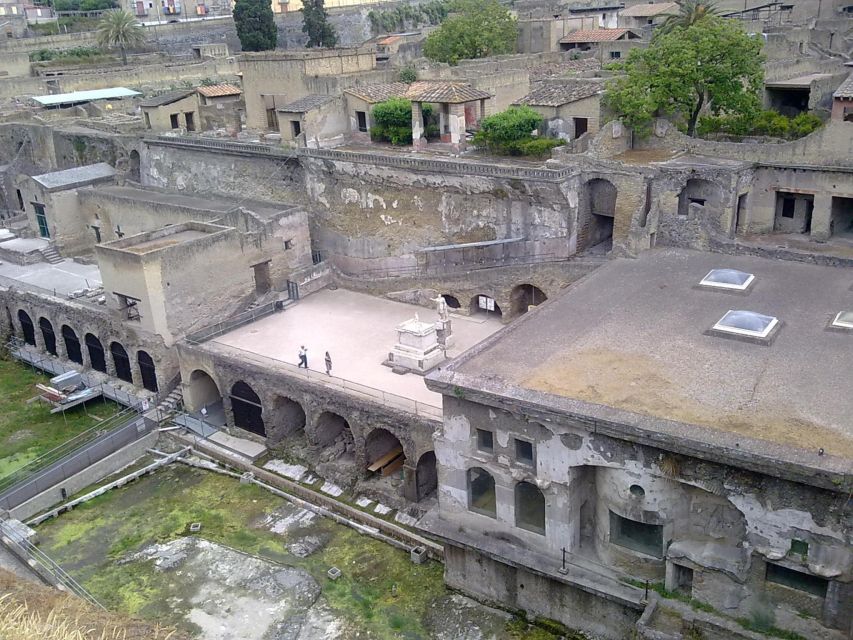
- Volcano-frozen remains in context, including the marina area where skeletons were found
- Mosaics and frescoes you can actually appreciate up close, not just snap and move on
- The House of the Albergo garden and reintroduced quince apple trees, tied to archaeological evidence
- Big Gym at the Grande Palestra, where you can really feel the site as a dig and evidence field
- A well-paced private visit to the main “must-see” zones within a compact layout
Herculaneum: why this town hits differently than Pompeii
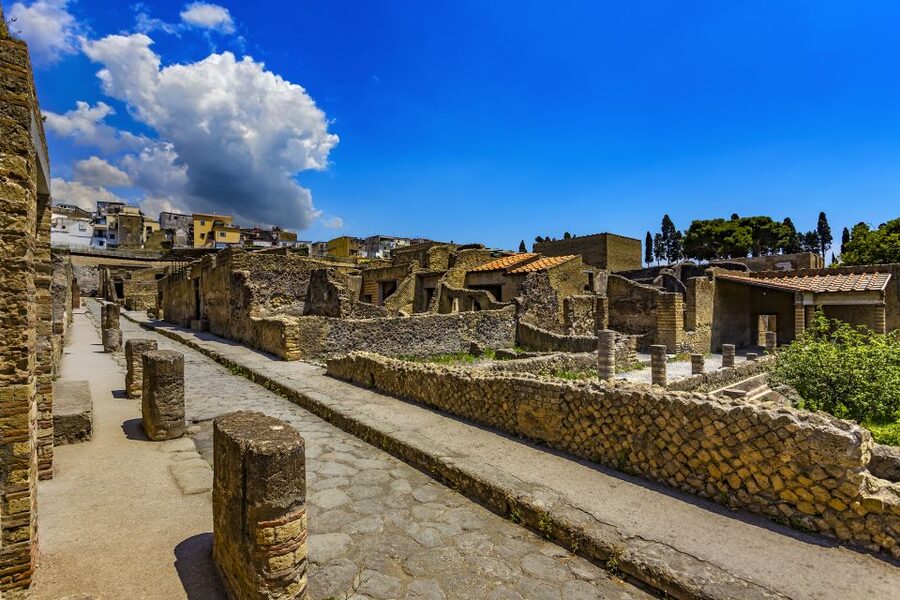
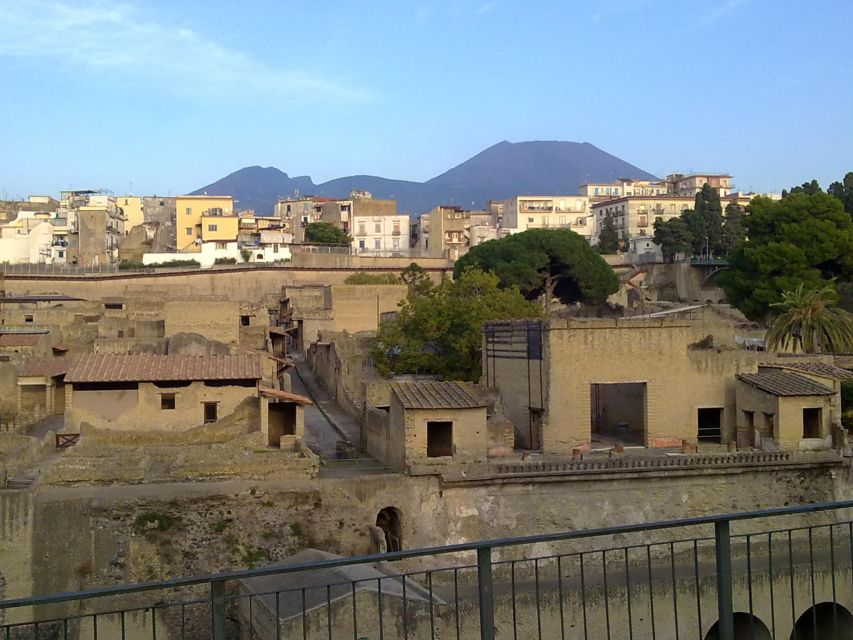
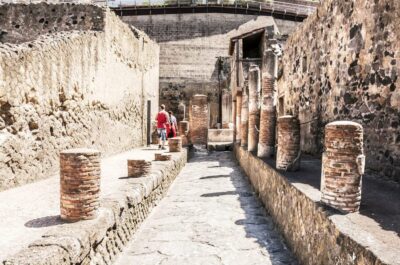
Herculaneum is the smaller sister of Pompeii, but it leaves a big mark. The town was buried during the same catastrophic August 24, 79 AD eruption. The result is a site with a different kind of drama than Pompeii: less open-air wandering, more “time capsule” viewing, where you can still make out Roman spaces as rooms, details, and everyday objects.
I like that Herculaneum is compact. You do not spend your short visit playing catch-up across miles of cobblestones. Instead, a good guide helps you focus on the why behind what you see. You are not just looking at ruins, you are learning how volcanic material preserved them and what the city was doing before the eruption cut everything off.
And because this tour is private, you can move at the pace that fits you. If you want more explanation around mosaics, or you are curious about how the skeletons were found in the marina area, you can ask and get an answer that stays tied to the site right in front of you.
Your 2-hour plan: what fits, what matters, and how not to rush
This is a 2-hour private tour, so it is designed around the big attractions rather than a long, slow crawl. You start at the Herculaneum Archaeological Park with a guide who holds your name on a sign at the only ticket office. From there, the tour ends back at the meeting point.
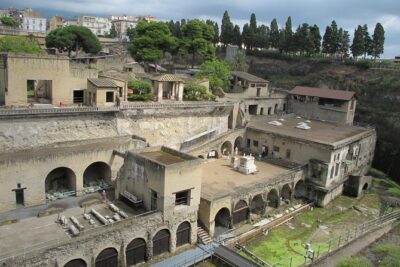
That short, focused window is the whole deal. You will cover the major zones without long gaps. The site sits at the bottom of an archaeological hole, about 75 feet deep, so some of your time is naturally spent simply getting your bearings and navigating the levels.
Bring comfortable shoes, and plan to travel light. Luggage or large bags are not allowed. You will enjoy the tour more when your hands are free for photos, your focus stays on details, and you are not juggling bags while trying to read mosaic patterns or fresco scenes.
Also note: this tour is not suitable for wheelchair users or people with mobility impairments. The ground and the setup around the ruins are not designed for that kind of access.
Meeting point and skip-the-ticket-line convenience
If you like a clean start, you will appreciate how this tour handles entry. Your guide meets you at the only ticket office in Herculaneum Archaeological Park and holds your name on a sign. This matters because Herculaneum can feel like a “timing game” if you show up without a plan.
The tour also includes admission, so you are not juggling separate purchases or trying to figure out entry rules while the clock ticks. And because it is set up to help you skip the ticket line, you spend more of your two hours actually looking at the ruins instead of waiting.
The languages offered are Spanish, English, French, and Italian. If you are strong in one of these, stick with it. The best Herculaneum experience is the one where you can understand the small details, like what a fresco depicts, or why a mosaic pattern shows up where it does.
Marina remains: skeletons, a boat display, and the shock of immediacy
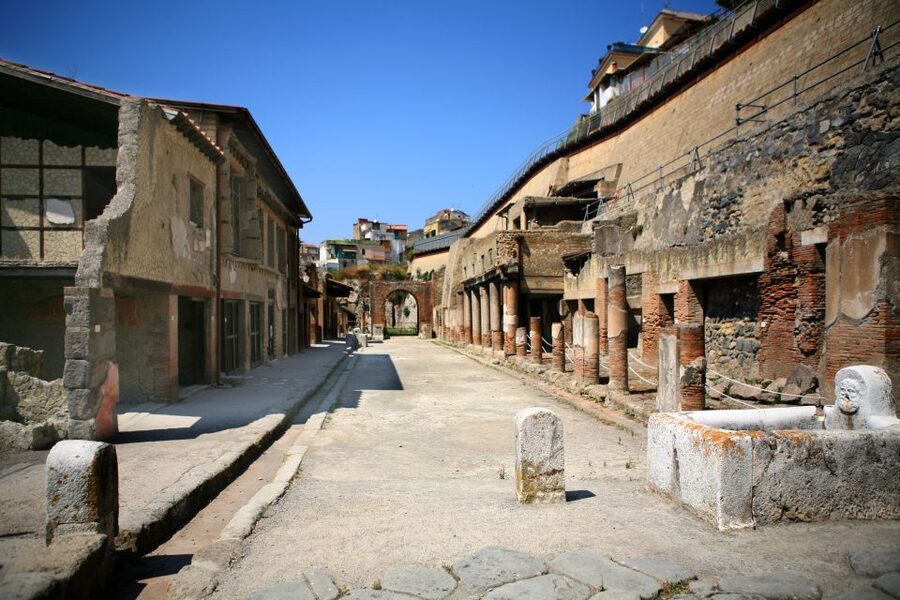
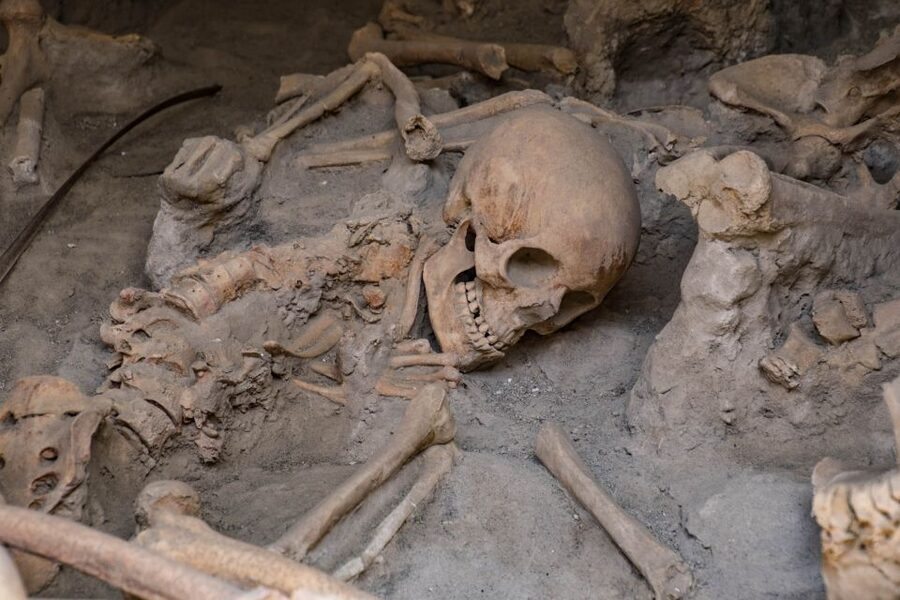
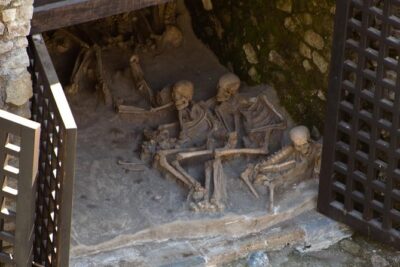
One of the most striking stops is the marina area. This is where around 300 human skeletons were found, along with a boat that is on display on weekends. Even when you do not see the boat display, the area gives you the sense of a harbor that turned into a trap.
I like this stop early or mid-tour because it resets your brain. You go from seeing beautiful floor art to remembering what these people went through. It also helps you understand why the preservation at Herculaneum feels so different. The city is not just a set of walls. It is a lived-in place, and in some locations the eruption left behind evidence you cannot ignore.
A private guide also helps you look beyond shock. You learn what the evidence means and how it ties into the volcanic story. That turn, from emotion to understanding, is where the tour earns its keep.
House of the Albergo garden: quince apple trees and evidence you can see
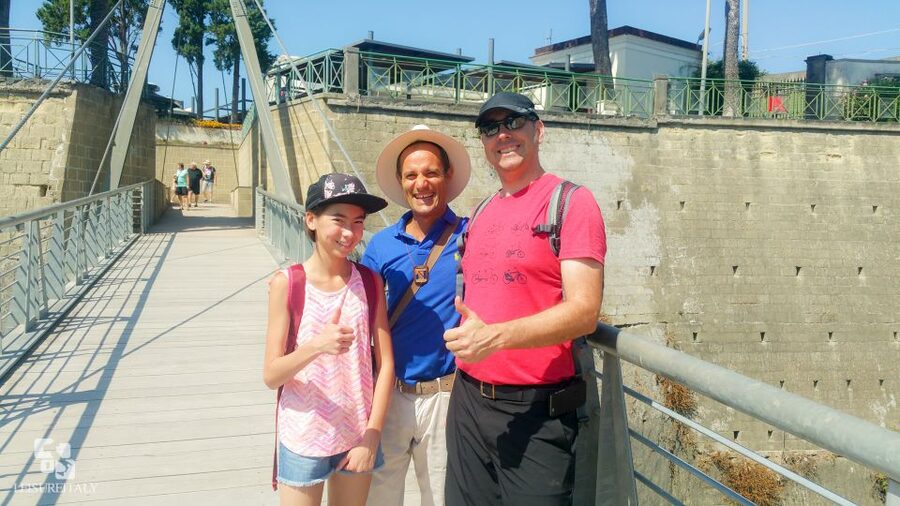
Next, you get a quieter but very smart stop: the garden of the House of the Albergo. Here, the story is about plants and proof. Quince apple trees have been reintroduced to the gardens based on evidence of carbonized roots from the ancient fruit tree.
This is exactly the kind of detail that makes Herculaneum more than a picture-taking stop. You are seeing how archaeology tries to rebuild what life looked like, not just what broke. It also gives you a new way to look at the rest of the site. When a guide points out a garden feature tied to carbonized roots, you start paying attention to other “survived details” that you might otherwise miss.
If you like nature in historical places, or you enjoy learning how scientists connect small traces to real-world life, this garden stop lands well. It is also a good pacing break, because it is calmer than some of the busier mosaic-heavy zones.
Frescoed Council Hall of the Augustali and the Hercules connection
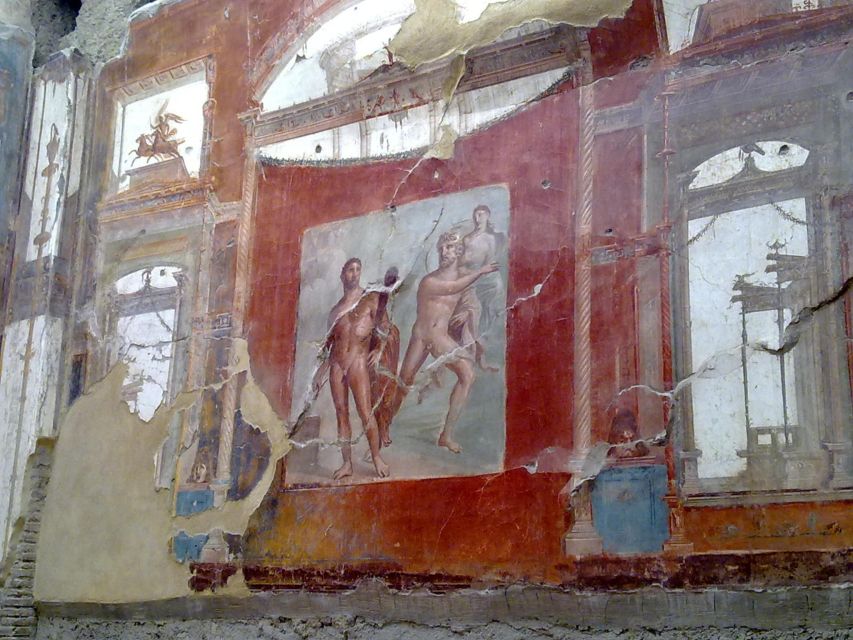
After the garden, you head to the Council Hall of the Augustali. This is where beautiful frescoes decorate the space, including scenes depicting Hercules.
This stop is valuable because it shows the public side of the city. Herculaneum is famous for private homes and decorative floors, but you also want a sense of how community spaces were designed, and how mythology played a role in Roman life. A fresco is not just decoration. In Roman culture, myth could signal values, power, and identity.
In a private tour, the guide can focus your attention where it matters. You will not just glance at color. You learn what you are seeing and how it fits the building. That turns a quick viewing into something that sticks.
House of Neptune and Amphitrite: mosaics, plus food and wine still hanging on walls
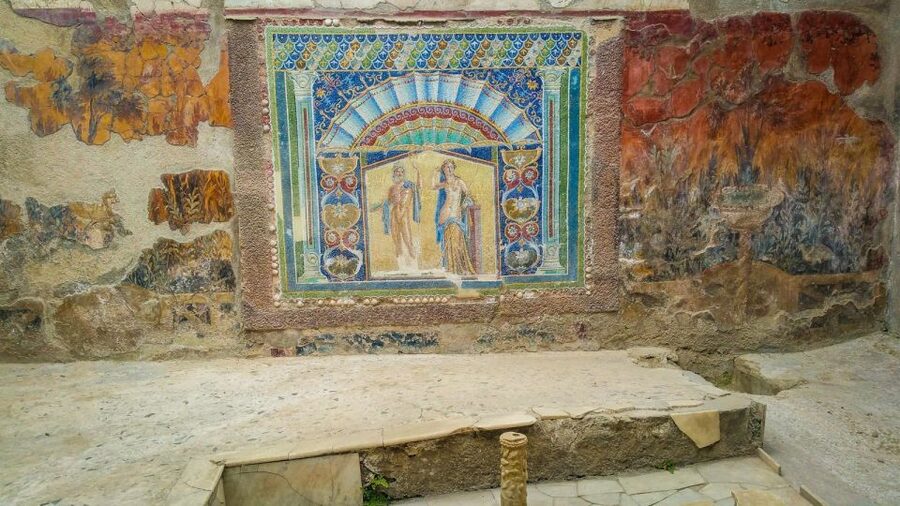
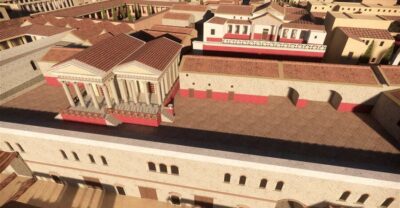
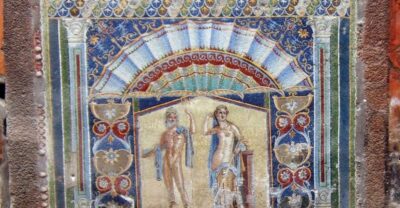
Then comes one of Herculaneum’s signature “wow” stops: the mosaics in the House of Neptune and Amphitrite. Mosaic floors here are often the headline because they show Roman design skill and household taste in a way stone can preserve for centuries.
But I also love that this tour pairs the mosaics with a nearby store where containers of food and wine were carbonised by the volcano and still hang on the walls. That combination matters. The mosaic floor teaches you about style and craft. The carbonised containers teach you about real use, storage, and daily routine.
When a guide connects those two, you get a fuller picture of how the city functioned. Not just art, not just disaster. It is both, and seeing the link makes the ruins feel logical instead of random.
The Grande Palestra Big Gym: a Roman workout space turned evidence field
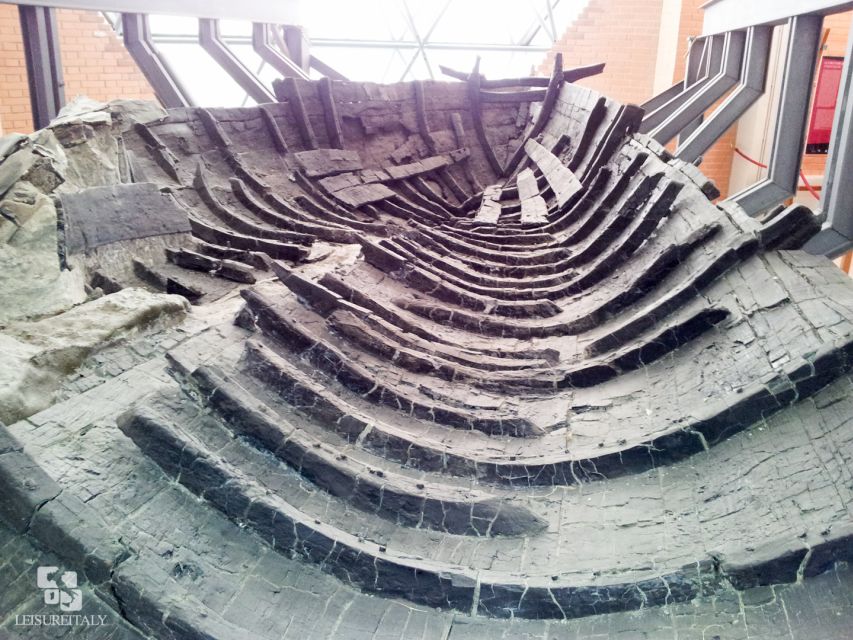
One highlight on this tour is the Grande Palestra, often described as the Big Gym. This is where you can feel like an archaeologist exploring volcanic evidence, because the space is tightly tied to how people used the facility and how the eruption altered it.
Why this stop matters for you: a gym is an everyday Roman place. It is hot rooms, cold tubs, workout rhythms. When you see that type of space in a preserved ruin, you stop thinking of the site as “old rocks” and start picturing human routines.
Also, the Grande Palestra is a great example of how a private guide improves the experience. In a public visit, people often rush through. With a guide, you can ask questions as you look at the structure and learn what the layout suggests about Roman bathing and training habits.
If you enjoy turning observations into a story, you will likely find this to be one of the most satisfying stops in the 2 hours.
Ancient spa time: mosaics from Roman saunas, gyms, hot rooms, and cold tubs
From the Big Gym, the tour moves into the ancient spa area, still covered with mosaics from Roman saunas, gyms, hot rooms, and cold tubs.
This is not just a pretty stop. The spa setup helps you understand Roman bathing culture as a system. Roman health and leisure were organized around different temperature zones, movement, and spaces for recovery. In a preserved site, those zones become easier to grasp.
Look closely at the mosaics and think about how they would have framed the experience. A well-made floor makes a space feel intentional. It turns the act of bathing into a designed ritual.
If you care about practical details of how people lived, the spa stop delivers. It is one of those “this is how the Romans did it” moments, and it is far more interesting with explanations than without them.
Villa dei Cervi finale: mosaics, frescoes, and statues
The tour ends with a big finish at Villa dei Cervi. This is described as Herculaneum’s most spectacular villa, known for luxurious mosaics, frescoes, and statues.
This stop is your reward for paying attention earlier. The villa helps you compare what you saw in homes and public spaces to the lifestyle of wealthier citizens. You also start noticing patterns in the decoration and the way art was used to show status.
I find villa endings work best on private tours. You can let your brain assemble everything you learned in the previous stops, then focus on the villa’s “final impression.” It is a strong close because it swings back from evidence and daily routine to luxury and display.
If you have ever wondered what power looked like in Roman interior spaces, this is where you get part of the answer.
Price and value: is $167.66 per person worth it for 2 hours?
Let’s talk money in a way that helps you decide. At $167.66 per person for a 2-hour private tour, you are paying for three things: an expert guide, admission included, and the convenience of a private pace plus skip-the-ticket-line entry.
Is it good value? For many people, yes, because Herculaneum is not just a ruin stroll. It is a preserved site where details matter. A guide helps you interpret mosaics, frescoes, and the meaning of preserved evidence like carbonised containers and the marina remains.
The only reason to hesitate is that time is limited. Two hours can feel fast once you start caring about what you are looking at. If you want extra time to wander, take your own route, and linger in one or two spaces for longer than the planned rhythm, a private 2-hour format can feel like it ends right when you are starting to feel settled.
My practical take: book this if you want maximum meaning per minute and you like asking questions. If you simply want long, independent wandering, you might get more satisfaction from self-guided time.
Who this tour suits best
This experience is a strong match if you:
- Want a private guide to explain mosaics, frescoes, and preserved evidence
- Prefer a tight route that hits major highlights in a compact site
- Like pairing big sites, especially if you are doing Pompeii earlier and want to compare what the volcano did to each town’s preserved layers
- Enjoy architectural and cultural context, not just photos
It may not be ideal if you:
- Need wheelchair access or mobility-friendly routing
- Want a long, open-ended visit where you decide each turn without a set plan
- Are traveling with large bags or luggage, since those are not allowed
Should you book the private 2-hour tour of Herculaneum?
I recommend booking if you want Herculaneum to feel like a story, not a checklist. The private format, the admission included, and the skip-the-line start help you protect your time. In two hours, you cover the most important zones, and a good guide turns preservation into understanding.
I would think twice if you are on the fence about spending that per-person amount for a short visit. The site is compact, but your sense of “enough time” will depend on your personal pace and how much you like slowing down to study details.
If you can afford the private experience and you care about mosaics, frescoes, and the volcano evidence, this tour is one of the more satisfying ways to see Herculaneum without wasting your day.
FAQ
What is the duration of the private tour?
The tour is 2 hours.
How much does the tour cost?
The price is listed as $167.66 per person.
Does the tour include admission?
Yes. Admission fee is included.
Where do I meet the guide?
You meet the guide at the only ticket office in Herculaneum Archaeological Park. The guide will hold your name on a sign.
What languages are available for the live guide?
The guide is available in Spanish, English, French, and Italian.
Is this tour suitable for wheelchair users or people with mobility impairments?
No. It is not suitable for wheelchair users or people with mobility impairments.
Are luggage or large bags allowed?
No. Luggage or large bags are not allowed.
Is there a day when entrance can be free?
Yes. On the first Sunday of each month, entrance is free of charge, but tickets cannot be reserved ahead of time, so entry is not guaranteed.
More Tours in Archaeological Site Of Herculaneum
- Herculaneum: 3D Walking Tour with Skip-the-Line Ticket★ 4.3 · 313 reviews
- Herculaneum 2-Hour Private Guided Tour★ 4.9 · 139 reviews
More Tour Reviews in Archaeological Site Of Herculaneum
- Herculaneum: 3D Walking Tour with Skip-the-Line Ticket★ 4.3 · 313 reviews
- Ercolano: Herculaneum Skip-the-Line Ticket & Audio Guide★ 4.0 · 275 reviews
- Herculaneum 2-Hour Private Guided Tour★ 4.9 · 139 reviews
- Herculaneum: Half-Day Guided Trip from Naples★ 4.2 · 6 reviews
More Days in Herculaneum
- Herculaneum: 3D Walking Tour with Skip-the-Line Ticket★ 4.3 · 313 reviews
- Ercolano: Herculaneum Skip-the-Line Ticket & Audio Guide★ 4.0 · 275 reviews
- Herculaneum 2-Hour Private Guided Tour★ 4.9 · 139 reviews
- Herculaneum: Half-Day Guided Trip from Naples★ 4.2 · 6 reviews
More ways into Herculaneum Tours.
 ★ 5.0Pompeii and Herculaneum Small Group Tour with an ArchaeologistFrom $771,350 reviews
 ★ 4.8Pompeii: Small-Group Tour of Pompeii and Herculaneum867 reviews
 ★ 4.1Ercolano: Herculaneum Entry Ticket with Optional Audio GuideFrom $21581 reviews
 ★ 4.3Herculaneum: 3D Walking Tour with Skip-the-Line TicketFrom $45313 reviews
 ★ 4.5Guided Day Tour of Pompeii and Herculaneum with Light LunchFrom $185311 reviews
 ★ 5.0Private Day Tour to Vesuvius, Herculaneum & Pompeii with Pick UpFrom $120279 reviews
 ★ 4.0Ercolano: Herculaneum Skip-the-Line Ticket & Audio GuideFrom $35275 reviews
 ★ 4.3Herculaneum: Skip The Line Entrance ticket + AudioguideFrom $35266 reviews
Other useful routes from here