
REVIEW · POSITANO TOURS
Positano: Small-group Cooking Class at a Local’s Home
A home-cooked lesson in Positano feels personal. You learn Italian recipes at a local’s home with an expert host, then eat what you make with local wines. The whole thing is built around hands-on cooking and real conversation in a small group.
I especially love that you cook three dishes from scratch: an appetizer, a regional fresh pasta course, and a typical dessert. I also like that the tasting is part of the experience, with water, wine, and coffee included, so you get to focus on the meal instead of logistics. You might even get a host who teaches with a sense of humor, like Carla and Rocco are known for.
The main consideration is location and logistics. For privacy, you do not get the full address until after booking, and at least one class is associated with Priano, so plan a little extra time to reach your host home.
Key points worth your attention

- Small group up to 10 people, so you can actually ask questions and cook along
- Three-course menu made by you: starter, pasta dish, and dessert
- Wine pairing included (red and white local wines) plus coffee and water
- Family cookbook storytelling from your host, not a script read off a wall
- Hosts you might meet include people praised for teaching like Chef Antonio, and hosting with personality like Carla and Rocco
A Small-Group Kitchen in a Real Positano Home
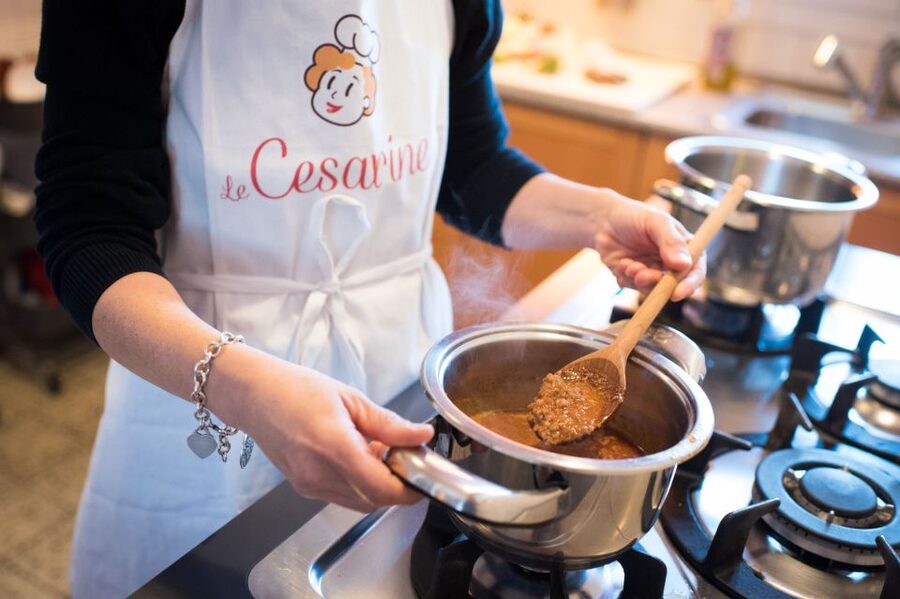
Cesarine runs home-cooking experiences across Italy through a network of local cooks, and this one brings that approach to Positano in a shared class format. Expect a local host in an actual home setting, not a staged show kitchen. The vibe is social, but still practical, because the whole point is getting food into your hands and your skills into motion.
This class is limited to 10 participants, which matters more than you might think. With a bigger group, you watch, you wait, and you lose momentum. Here, you’re more likely to stay busy at your workstation and get feedback when you need it.
You also get instruction in English and Italian, so if your Italian is rusty, you are not stuck guessing. And if you want to understand what you are doing, you’ll likely get plainspoken explanations of how and why Italian recipes work the way they do.
Your 3-Dish Menu: Appetizer, Fresh Pasta, Dessert
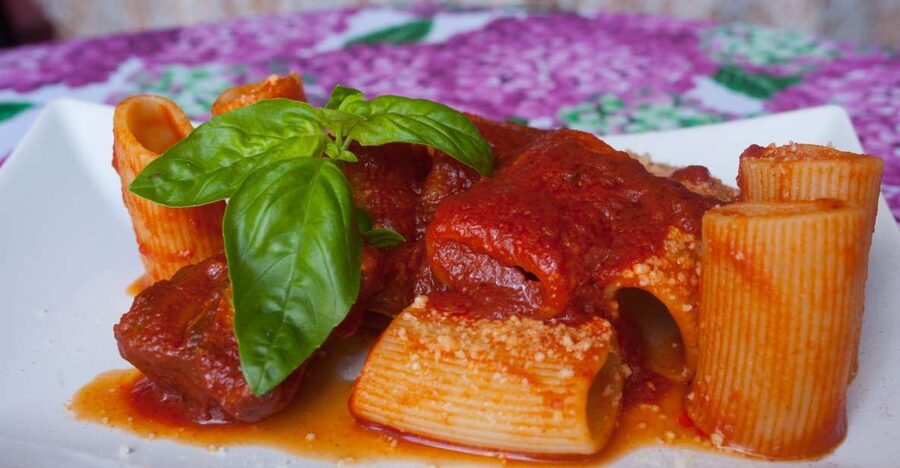
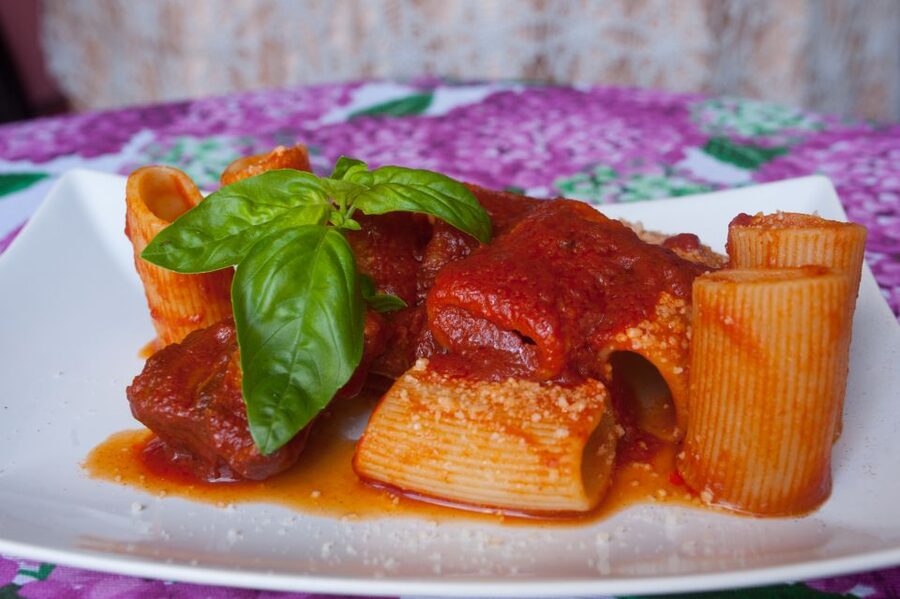
The cooking part is built around three recipes, each one giving you a different kind of Italian skill. You start with an appetizer using seasonal ingredients, then move into a fresh pasta dish tied to the region. Finally, you finish with a typical dessert that rounds out the meal the way an Italian household might.
What I like about the format is that it forces a balanced skill set. Pasta is one thing, but it’s the appetizer and dessert that teach you how Italians think about the full sequence. It’s not just about the main event. It’s about how courses change the pace and flavor so each bite feels intentional.
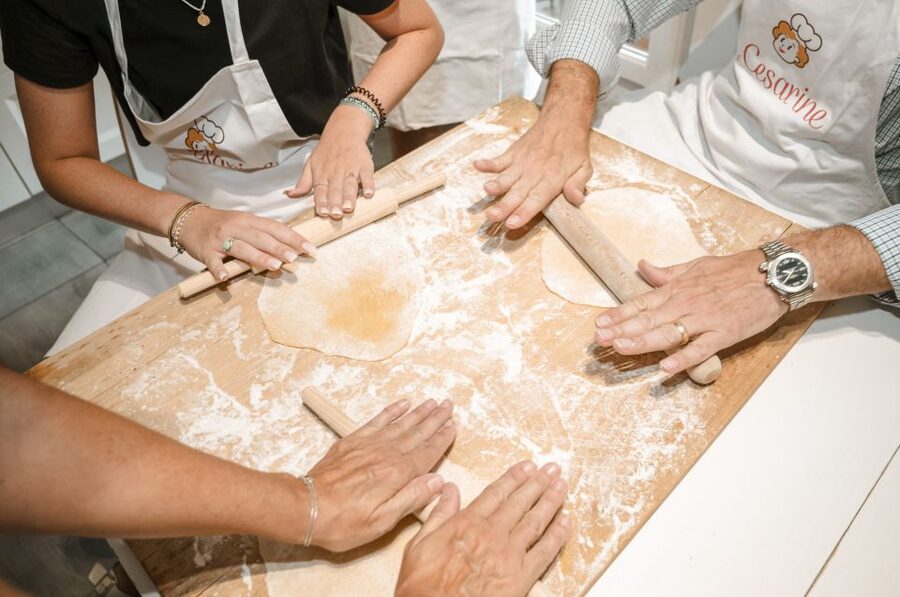
You’ll have a workstation equipped with utensils, plus the ingredients to make the dishes. That means you can focus on technique rather than hunting for specific supplies. For readers who worry about cooking classes being too scripted or too “the instructor does everything,” this one is structured so you do the cooking steps yourself.
Depending on your host, you may also get small “trade tricks” that explain what locals do without overcomplicating it. That is often the difference between eating Italian food and making it. When you understand the logic, you can repeat it later, even if you don’t have the exact same pantry items back home.
The Tasting Part: Wines, Coffee, and Eating What You Made
After the cooking, you sit down and taste everything you prepared. The class includes beverages, including water, local wines, and coffee. The wines are described as a selection of red and white, which is a nice touch because it usually means you won’t be stuck with just one style that only works with one course.
This is not a passive tasting. You’ll be sampling the appetizer, the pasta dish, and the dessert you made, which makes the flavors easier to learn. You can connect what the host told you during cooking with what you actually experience on the plate.
I also like that this part is paced like a real meal. You’re not rushing to check a box and leave. You get time to chat, and those conversations tend to be where you pick up the most useful context, like what people in that region actually pair together at home.
If you’re a bit nervous about cooking, tasting helps calm that down. Even if a step isn’t perfect, the meal still lands as something you made, and that matters for confidence.
Meet the Host: Family Cookbooks and Italian Local Stories
One of the best parts of a home class is the story behind the food. Your host serves local specialties from their family cookbooks, and the idea is to explain the meaning of the dishes and how they fit into traditional regional cuisine. That’s how Italian cooking stops being a list of recipes and becomes a living habit.
This is also where you’ll feel the “home” part most strongly. A Cesarine host isn’t just teaching food temperatures and timing. They’re sharing how recipes live in their family, how they’re adjusted by the season, and what they consider non-negotiable.
From the experiences that have been praised, you’ll sometimes meet hosts with a strong personality and teaching style. Names that come up include Carla and Rocco, praised for being excellent hosts with Rocco’s dry humor and Carla’s sense of humor. Another instructor mentioned is Chef Antonio, praised for teaching in a way that makes the meal feel like a win.
You should not expect the same exact host every time, but you can expect the same core approach: warm welcome, local pride, and a focus on technique you can actually use.
Timing and Getting There: 3 Hours, Hidden Address, Priano Possibility
The class runs for 3 hours, and that time block is tight in a good way. You’ll cook, learn, and eat without a long wait between steps. For planning your day, treat it like a real appointment rather than a casual activity.
Because it’s held in a local home, the full address is not provided until after booking for privacy reasons. That means you’ll want to be ready to look up directions as soon as you receive them, and you’ll want to confirm your route before you leave.
Also, be aware that this experience can be associated with Priano, not only central Positano. One practical takeaway is simple: give yourself a little buffer for travel time and traffic, and do not plan a tight dinner reservation immediately after if you’re coming from farther away.
The activity ends back at the meeting point, so you’re not stuck figuring out your own return plan mid-day. Still, you should plan to be flexible, because home-based experiences depend on the host’s schedule and setup.
Price and Value at About $243 Per Person
At around $243.56 per person, this is not a budget activity. But it’s also not “just a class.” You’re paying for a private-feeling home experience with a small group limit, instruction in cooking three courses, ingredients, and a meal with included beverages.
Here’s the value logic that helps you decide: you get three recipes worth of hands-on time, plus tasting everything you made. The included drinks matter too, because they turn the experience into a full sit-down meal rather than a short snack after class.
You also get local taxes included in the price, and the session is run by Cesarine, which operates through a large network of home cooks. That structure often helps with consistency, even though each host home will feel different.
If you typically pay for a single meal out, think of this as combining that meal cost with the benefits of cooking instruction, recipe learning, and the cultural context your host adds. If your priority is only eating, a restaurant may be cheaper. If your priority is learning and enjoying a paced, social meal, the price starts to make more sense.
Who This Cooking Class Suits Best
This works best if you want hands-on cooking and you enjoy learning through doing. If you like pasta, want to understand Italian flavor basics, and would rather spend time with a host than just watch a demonstration, you’ll likely love the structure.
It’s also a great fit for small groups of friends and couples because the class stays intimate. With a limit of 10 participants, you’re not competing for attention. Solo travelers often like this format too, because it feels social without becoming chaotic.
On the flip side, this experience is not suitable for wheelchair users, so if mobility is a concern, you’ll want to look for a different option.
Should You Book This Positano Home Cooking Experience?

Book it if you want an Italian home-cooking meal with real instruction and a full tasting, plus you enjoy learning from hosts who treat food like family business. I’d especially recommend it if you care about doing the work yourself, not just sampling someone else’s cooking, because the three-course format keeps your hands busy and your brain engaged.
Skip it if you need a predictable, centrally located meeting point and you dislike any element of uncertainty. The address is shared only after booking, and there can be a Priano commute depending on your host. Also, if you’re on a strict budget, you may prefer a cheaper food-focused day with less cooking time.
If you can handle that, this is the kind of experience where you leave with more than photos. You leave with recipes you understand, plus the confidence to recreate at least part of the menu at home.
FAQ
How long is the Positano small-group cooking class?
The cooking class lasts 3 hours.
How many people are in the group?
The group is limited to 10 participants.
What languages are used during the class?
The instructor speaks Italian and English.
What will I cook during the class?
You’ll prepare three items from scratch: an appetizer, a pasta dish, and a dessert.
What is included in the price?
The experience includes the shared cooking class, tasting of the three recipes, beverages (water, wines, and coffee), and local taxes.
Where do I meet, and how do I get the address?
Because it’s held in a local home, you only receive the full address of your host after booking, for privacy reasons. The activity starts at the meeting point and ends back there.
Is it suitable for wheelchair users?
No, it is not suitable for wheelchair users.
Is there cancellation flexibility?
Yes. You can cancel up to 24 hours in advance for a full refund.
Can I pay later?
Yes. You can reserve now and pay later.
More Cooking Classes in Positano
- Cooking class with Pasta, mozzarella and Tiramisu with wine★ 5.0 · 549 reviews
- Small-Group Cooking Class in Positano: Gnocchi, Tiramisù & Drinks★ 5.0 · 191 reviews
- Ravioli & Tagliatelle Cooking Class at a Local’s Home in Positano★ 5.0 · 113 reviews
- Positano: Pasta & Tiramisu Cooking Class at a Local’s Home★ 4.6 · 45 reviews
- Cooking lesson: tagliatelle, mozzarella and tiramisu★ 5.0 · 11 reviews
More Tour Reviews in Positano
- Cooking class with Pasta, mozzarella and Tiramisu with wine★ 5.0 · 549 reviews
- Private Amalfi Coast Boat Trip from Positano, Praiano or Amalfi★ 5.0 · 431 reviews
- Olive oil tasting in Sorrento★ 5.0 · 413 reviews
- Small Group Day Trip to Capri from Positano or Praiano★ 4.5 · 354 reviews
- From Positano: Sorrento Coast & Capri Full-Day Trip by Boat★ 4.7 · 340 reviews
More Paths into Positano
- Private Amalfi Coast Boat Trip from Positano, Praiano or Amalfi★ 5.0 · 431 reviews
- Small Group Day Trip to Capri from Positano or Praiano★ 4.5 · 354 reviews
- From Positano: Sorrento Coast & Capri Full-Day Trip by Boat★ 4.7 · 340 reviews
- Very Small Group Capri Boat Excursion with Transfer from Positano★ 4.5 · 334 reviews
- From Positano, Praiano, or Amalfi: Capri Full-Day Boat Tour★ 4.5 · 318 reviews
More ways into Positano Tours.
 ★ 4.6From Naples: Sorrento, Positano and Amalfi Full-Day TourFrom $10710,988 reviews
 ★ 5.0From Naples: Sorrento, Positano & Amalfi Coast – Small Group TourFrom $768,643 reviews
 ★ 4.8From Naples: Premium Tour of Sorrento, Positano, AmalfiFrom $853,606 reviews
 ★ 4.6From Sorrento/Nerano: Amalfi and Positano Boat TourFrom $702,440 reviews
 ★ 4.5Day Trip to Positano, Amalfi & Ravello from SorrentoFrom $1312,371 reviews
 ★ 4.7From Naples/Salerno: Group Tour to Positano, Amalfi, RavelloFrom $1012,033 reviews
 ★ 4.9Positano and Amalfi Boat Trip with TransferFrom $1741,598 reviews
 ★ 4.0Positano and Amalfi Day CruiseFrom $621,500 reviews
Other useful routes from here